Charitable Remainder Form Trust Buy With 500
Description
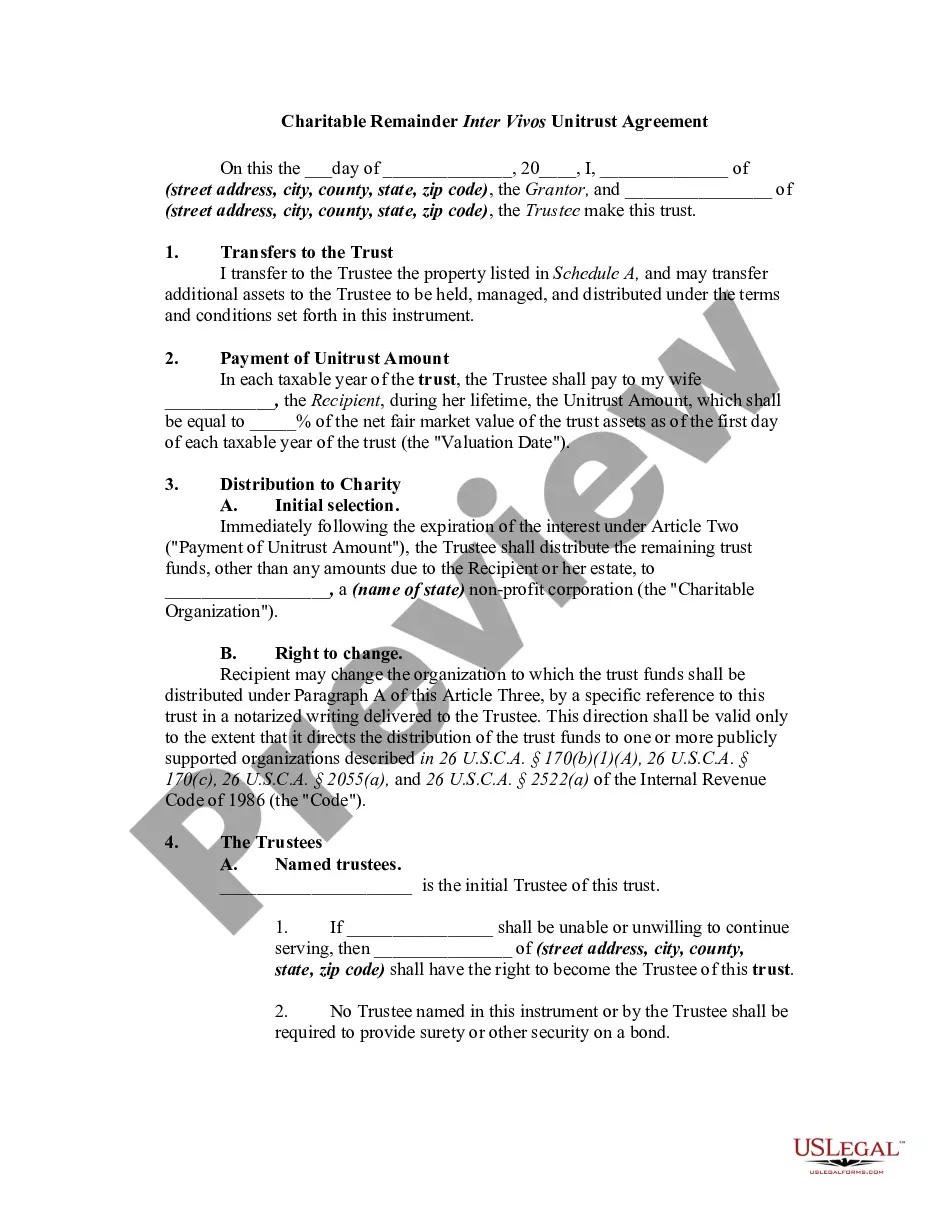
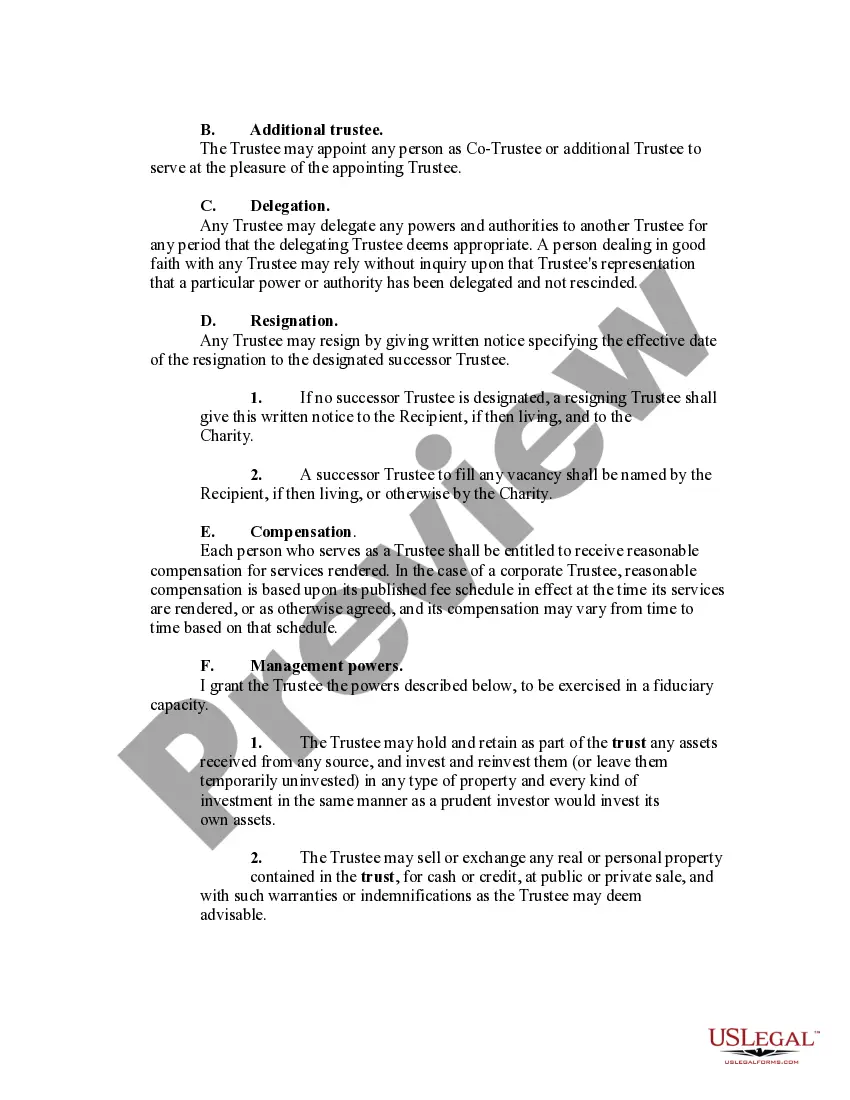
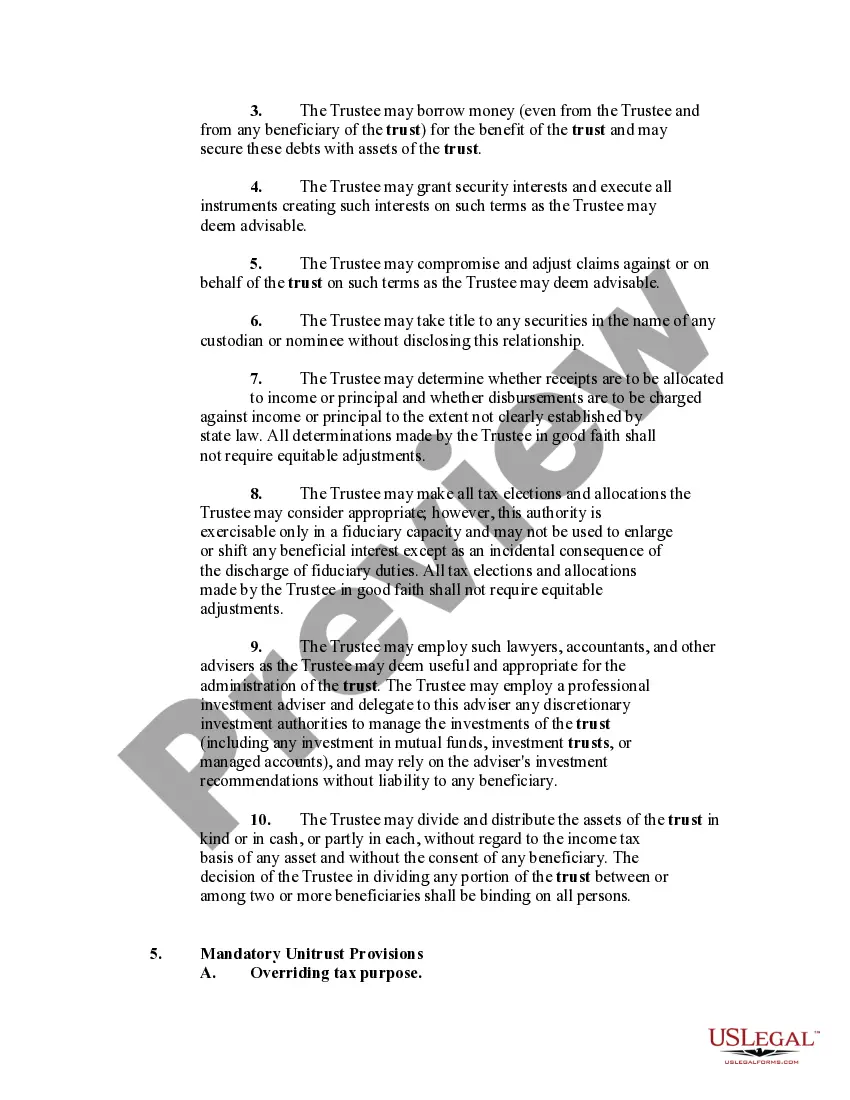
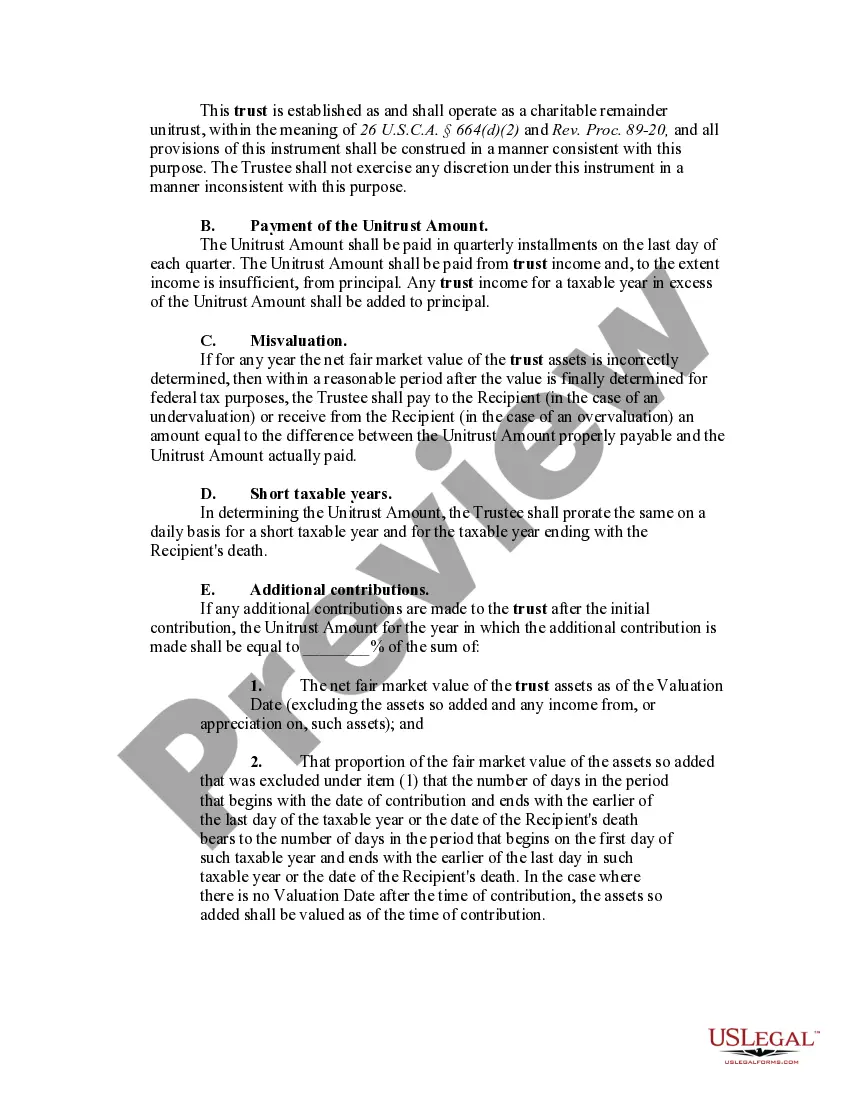
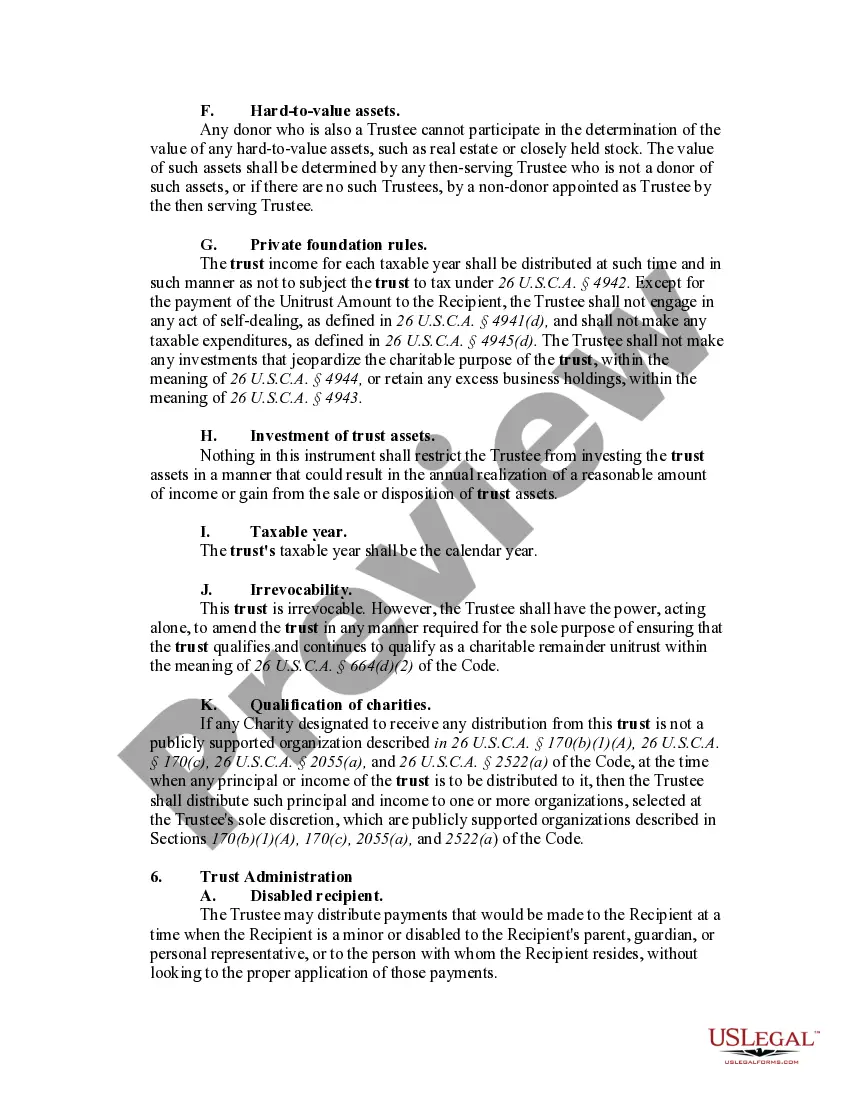
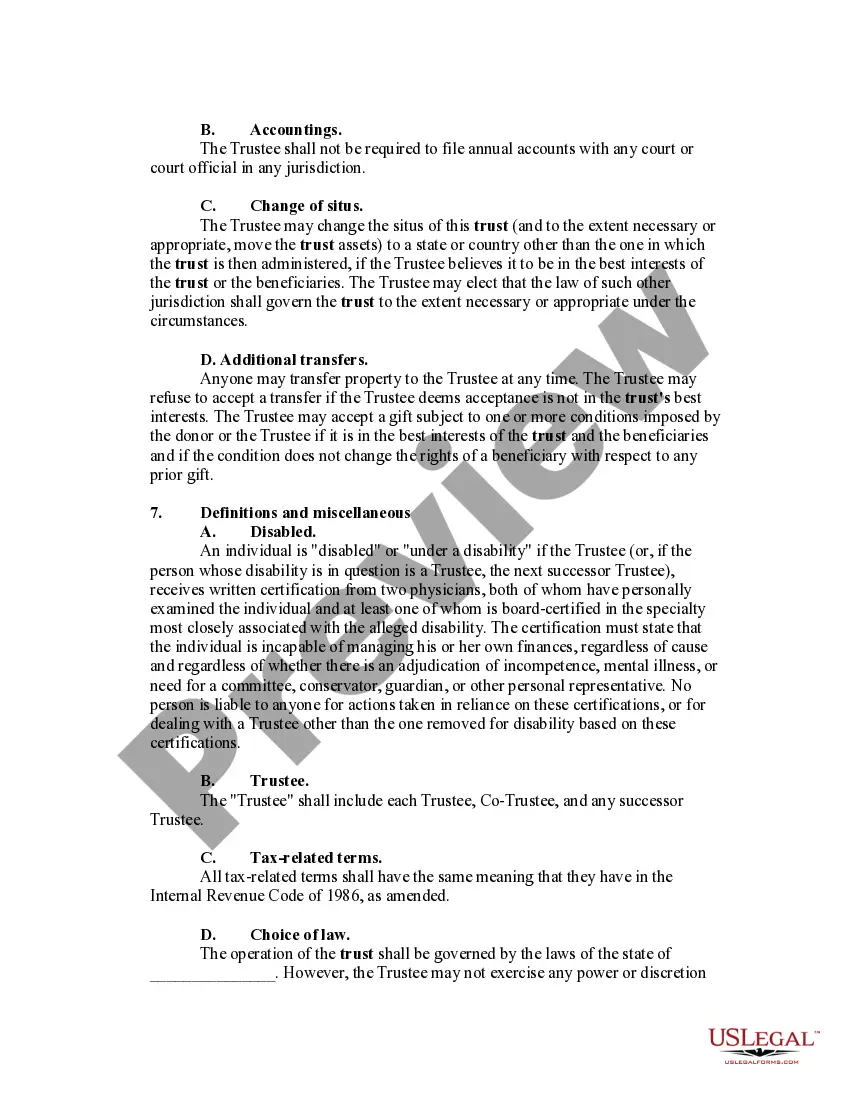
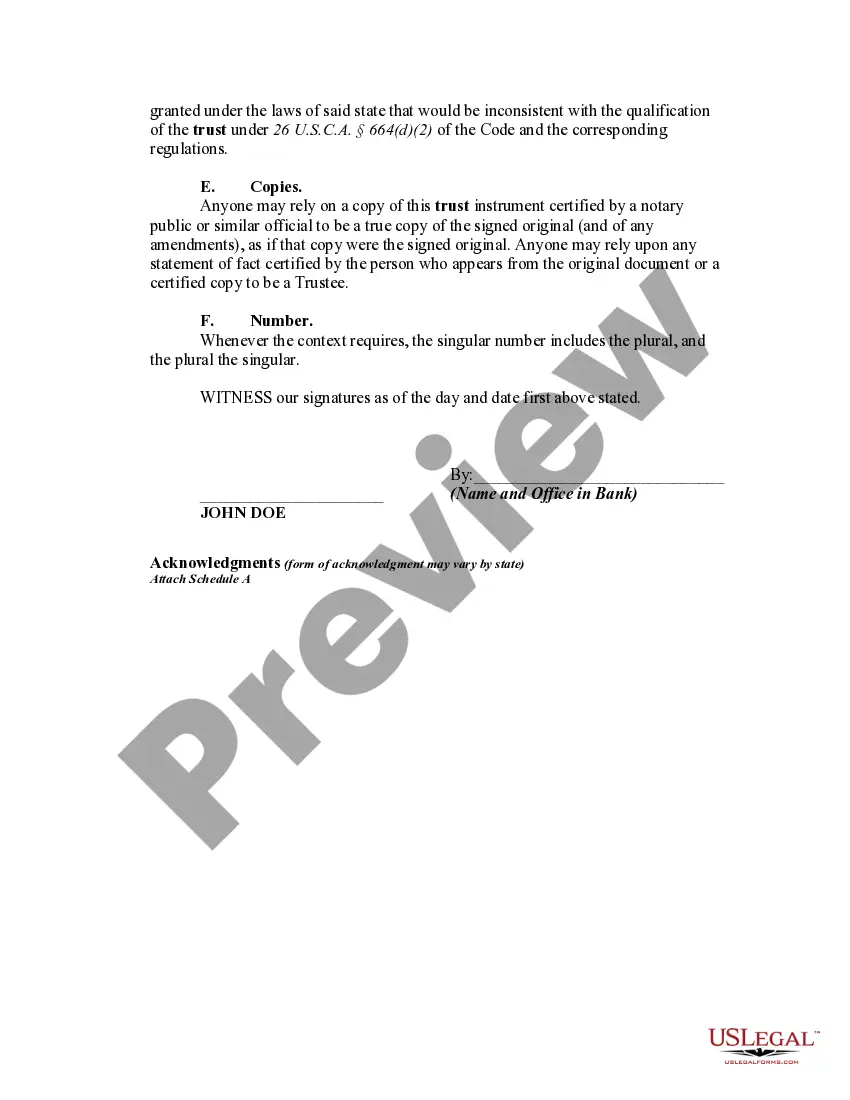
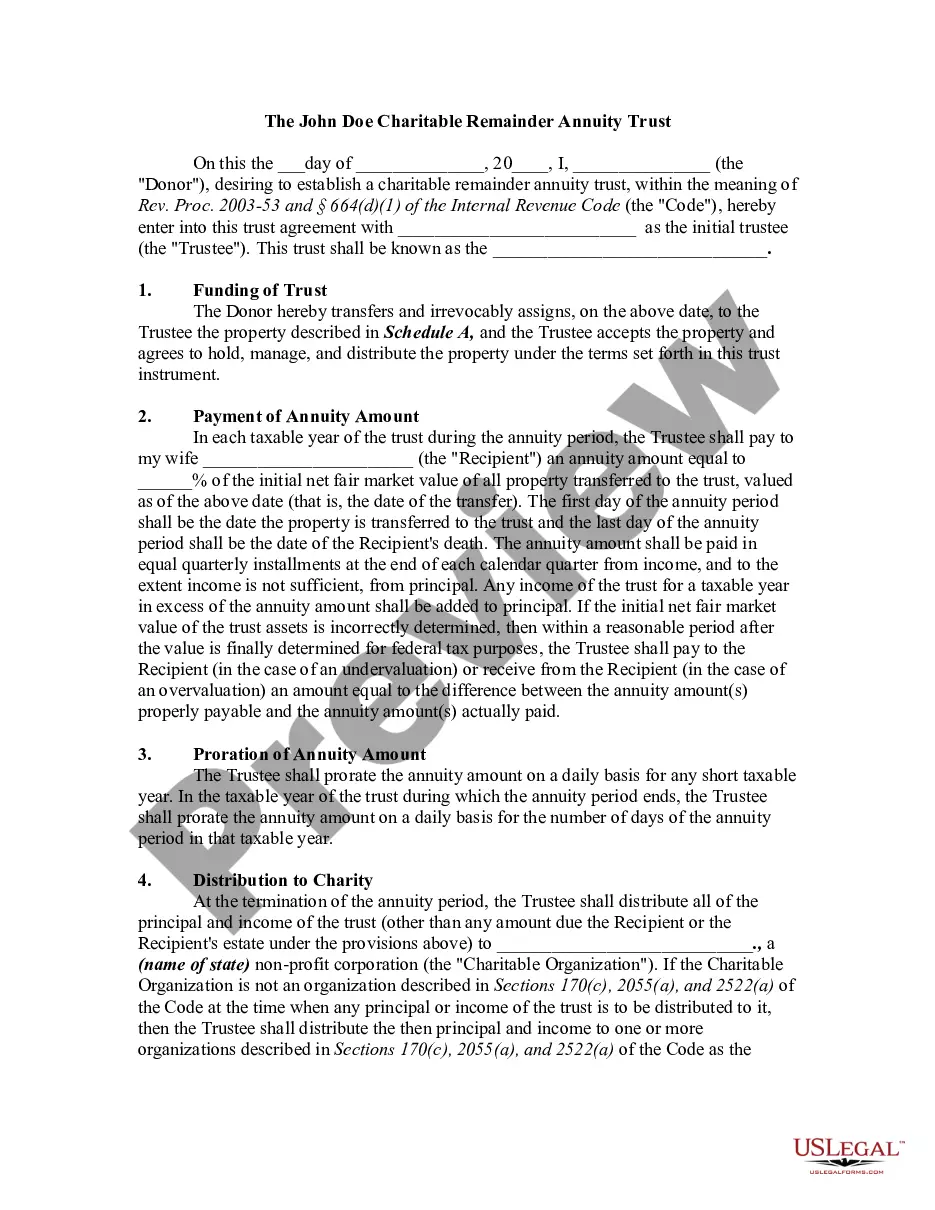
Get your form ready online
Our built-in tools help you complete, sign, share, and store your documents in one place.
Make edits, fill in missing information, and update formatting in US Legal Forms—just like you would in MS Word.
Download a copy, print it, send it by email, or mail it via USPS—whatever works best for your next step.
Sign and collect signatures with our SignNow integration. Send to multiple recipients, set reminders, and more. Go Premium to unlock E-Sign.
If this form requires notarization, complete it online through a secure video call—no need to meet a notary in person or wait for an appointment.
We protect your documents and personal data by following strict security and privacy standards.

Make edits, fill in missing information, and update formatting in US Legal Forms—just like you would in MS Word.

Download a copy, print it, send it by email, or mail it via USPS—whatever works best for your next step.

Sign and collect signatures with our SignNow integration. Send to multiple recipients, set reminders, and more. Go Premium to unlock E-Sign.

If this form requires notarization, complete it online through a secure video call—no need to meet a notary in person or wait for an appointment.

We protect your documents and personal data by following strict security and privacy standards.
Looking for another form?

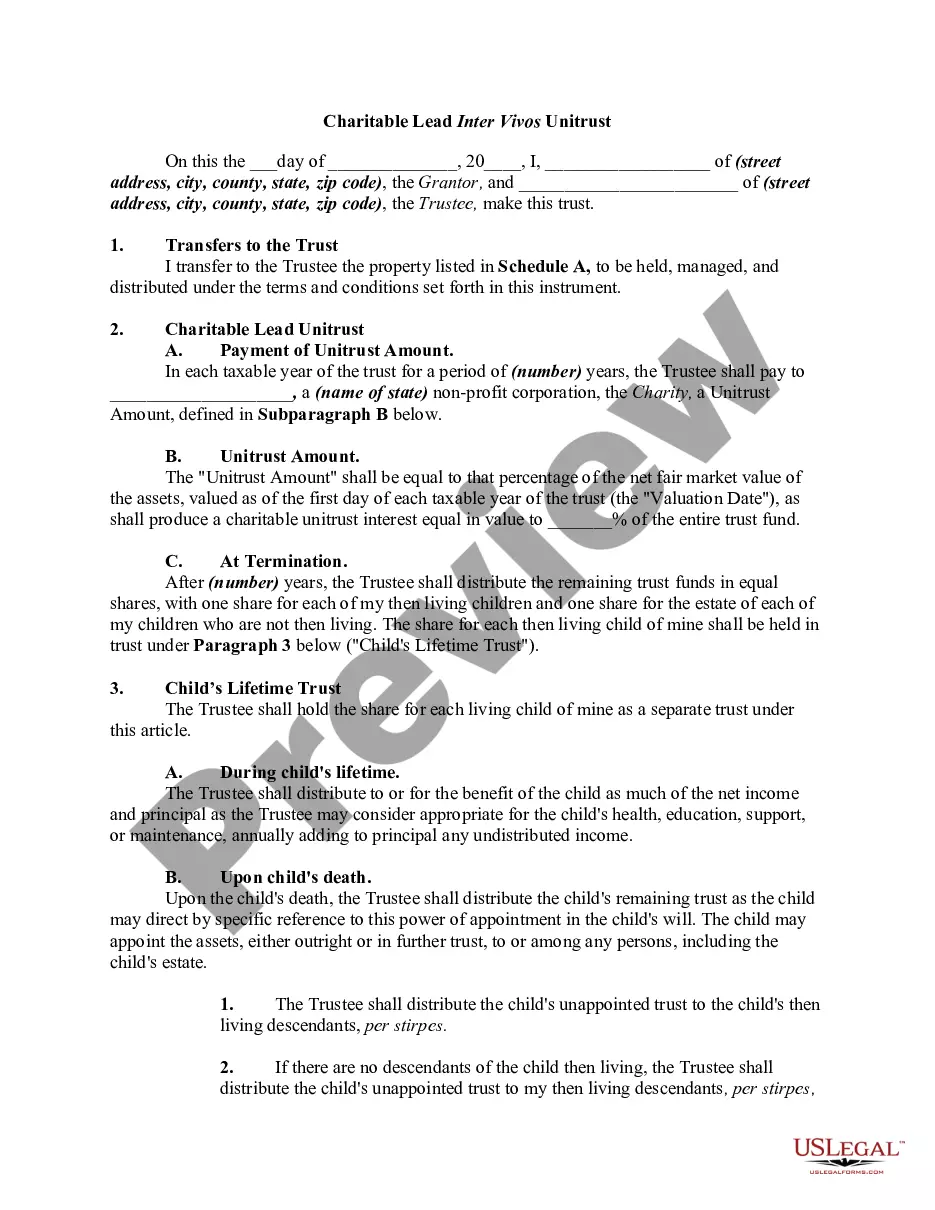
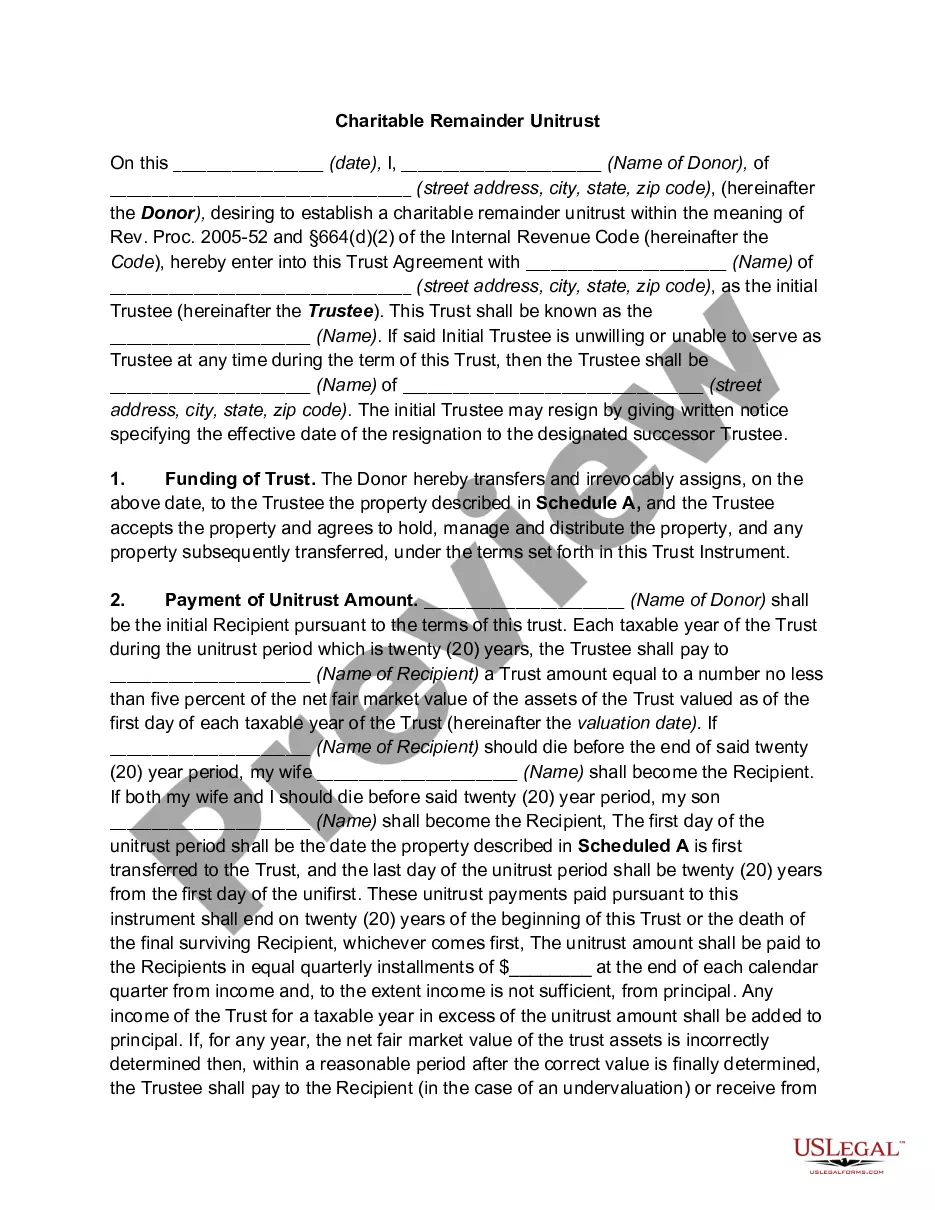
How to fill out Charitable Remainder Inter Vivos Unitrust Agreement?
- If you’re a returning user, start by logging in to your account. Ensure your subscription is active; if not, renew it based on your payment plan.
- For new users, begin by previewing the form description. Confirm that it aligns with your needs and fulfills local jurisdiction requirements.
- If adjustments are necessary, utilize the Search tab to find alternate templates. Ensure the chosen document meets your criteria before proceeding.
- To purchase, click the Buy Now button. Select a subscription plan that suits your needs and create an account for full access.
- Complete your transaction by entering your payment details via credit card or PayPal.
- Finally, download the template to your device and access it later from your My Forms section.
Using US Legal Forms empowers individuals and attorneys alike to swiftly access over 85,000 legal documents. With a robust collection and expert support, users can create legally sound documents with confidence.
Don't hesitate to simplify your document process. Start your journey with US Legal Forms today and ensure all your legal needs are met efficiently!
Form popularity
FAQ
The necessary form for donations over $500 is Form 8283, which is required for noncash contributions. This IRS form helps to substantiate the value of your donations and maintain proper records for your tax filings. Leveraging the Charitable remainder form trust buy with 500 strategy can offer clarity on how to efficiently document your charitable contributions. This approach aids in maximizing your deductions and navigating the complexities of charitable giving.
A charitable remainder trust is a financial tool designed to benefit both the donor and a charitable organization. For instance, you might establish a trust that pays you a percentage of the trust's value for a set number of years, with the remainder going to your chosen charity after that period. This strategy not only supports your philanthropy but also potentially qualifies for deductions through the Charitable remainder form trust buy with 500. Such arrangements can be advantageous for your financial planning.
The $600 charitable deduction no longer exists as a specific benefit for individuals. As tax laws evolve, changes impact how donations can be deducted. However, under certain conditions, you might still receive deductions for charitable giving through strategies like the Charitable remainder form trust buy with 500. Keeping informed about current tax rules can help you make the most of your donations.
To prove fair market value to the IRS, you will need to obtain a qualified appraisal if your property donation is over $5,000. For amounts lower than this, you can typically use reliable sources, such as recent sales data or comparable properties. When establishing a charitable remainder form trust buy with 500, documenting this value clearly will support your tax claims.
The 10% rule states that at least 10% of the initial fair market value of the contributed property must go to the charity at the end of the trust term. This requirement helps maintain the integrity of the charitable remainder form trust buy with 500. Understanding this rule ensures your trust remains compliant with IRS regulations.
The IRS has specific rules regarding property donations that you should follow closely. Generally, you must determine the fair market value, complete the necessary forms, and ensure the charity is qualified to receive contributions. When considering a charitable remainder form trust buy with 500, adhering to these rules will help you maximize your tax deductions.
For donations valued over $500, you must use Form 8283 to report your donation on your tax return. This form details your contributions and is particularly important when establishing a charitable remainder form trust buy with 500. Ensure all required information is complete to avoid any issues with the IRS.
If your charitable donations exceed $500, the IRS requires you to complete additional tax forms, such as Form 8283. This is essential when you wish to secure the tax benefits associated with a charitable remainder form trust buy with 500. Always keep thorough documentation to substantiate the value of your donations.
For charitable contributions of property valued over $500, you need to complete Form 8283 to report the donation and submit it with your tax return. This form is critical when establishing your charitable remainder form trust buy with 500. Remember, the charity must also sign this form to confirm your contribution.
The minimum amount for a charitable remainder trust typically starts around $100,000 for a trust to be considered viable. However, if you are looking to create a charitable remainder form trust buy with 500, consider that substantial contributions often yield better tax benefits and a more significant impact on your chosen charity. Always consult with a financial advisor to determine what works best for your situation.