Fee Cost Plus With Example
Description


Get your form ready online
Our built-in tools help you complete, sign, share, and store your documents in one place.
Make edits, fill in missing information, and update formatting in US Legal Forms—just like you would in MS Word.
Download a copy, print it, send it by email, or mail it via USPS—whatever works best for your next step.
Sign and collect signatures with our SignNow integration. Send to multiple recipients, set reminders, and more. Go Premium to unlock E-Sign.
If this form requires notarization, complete it online through a secure video call—no need to meet a notary in person or wait for an appointment.
We protect your documents and personal data by following strict security and privacy standards.

Make edits, fill in missing information, and update formatting in US Legal Forms—just like you would in MS Word.

Download a copy, print it, send it by email, or mail it via USPS—whatever works best for your next step.

Sign and collect signatures with our SignNow integration. Send to multiple recipients, set reminders, and more. Go Premium to unlock E-Sign.

If this form requires notarization, complete it online through a secure video call—no need to meet a notary in person or wait for an appointment.

We protect your documents and personal data by following strict security and privacy standards.
Looking for another form?


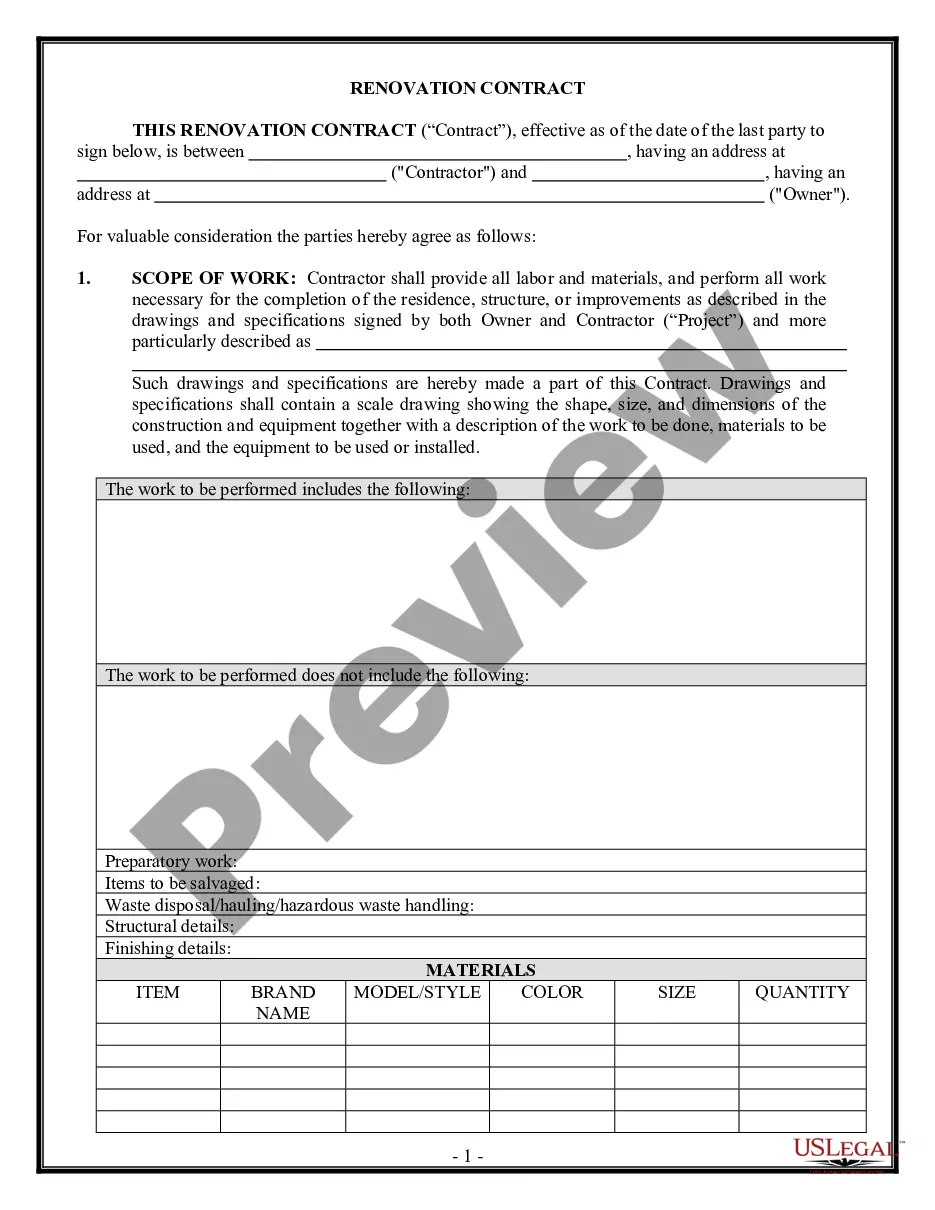

How to fill out Construction Contract For Home - Fixed Fee Or Cost Plus?
The Fee Cost Plus With Example you observe on this page is a versatile formal template crafted by experienced attorneys in compliance with federal and state regulations.
For over 25 years, US Legal Forms has offered individuals, enterprises, and legal professionals more than 85,000 validated, state-specific documents for any business and personal situation. It is the quickest, most straightforward, and most reliable method to obtain the paperwork you require, as the service assures bank-level data protection and anti-malware security.
Select the format you desire for your Fee Cost Plus With Example (PDF, DOCX, RTF) and save the document on your device. Complete and sign the paperwork. Print the template to fill it out manually. Alternatively, use an online multifunctional PDF editor to quickly and accurately complete and sign your form with a valid signature. Download your documents again whenever necessary. Access the My documents tab in your profile to redownload any previously obtained forms. Sign up for US Legal Forms to have validated legal templates for all of life’s situations at your disposal.
- Search for the document you require and review it.
- Examine the sample you found and preview it or review the form description to ensure it meets your needs. If it doesn’t, utilize the search bar to find the correct one. Click Buy Now after you have identified the template you need.
- Register and Log Into your account.
- Choose the pricing option that fits you and sign up for an account. Use PayPal or a credit card to make a rapid payment. If you already possess an account, Log In and verify your subscription to proceed.
- Obtain the editable template.
Form popularity
FAQ
plus fixed fee is a contract where the contractor is reimbursed for their costs and receives a predetermined fee on top. For instance, if a construction company spends $100,000 on materials and labor, and the contract includes a fixed fee of $20,000, the total payment would amount to $120,000. This structure provides clarity on expenses while ensuring the contractor receives a fair profit. You can find more details about fee cost plus with example on US Legal Forms.
plus basis can be illustrated through government contracts, where a contractor receives payment for actual costs incurred plus a fixed percentage. For instance, if a contractor spends $50,000 on a project and the fee cost plus with example is set at 10%, the total payment would amount to $55,000. This method can foster trust, as clients know they are only paying for the actual costs plus a reasonable profit margin.
Check Your Credit Report Most of your debt is listed on your credit report, which you can get a free copy of once a year from each of the three credit bureaus ? Experian, Equifax and Transunion ? at annualcreditreport.com. The credit bureauscompile reports based on input from your creditors.
You can get your free credit report from Annual Credit Report. That is the only free place to get your report. You can get it online: AnnualCreditReport.com, or by phone: 1-877-322-8228.
It's best to make your request in writing if you know the debt collector's mailing address or email address. Otherwise, request a validation letter by phone the next time the debt collector or collection agency contacts you. Make a note of when and how you requested the validation (e.g., ?by phone on July 31, 2023?).
If you don't receive a validation notice within 10 days of the first contact, request one from the debt collector the next time you're contacted. Ask for the debt collector's mailing address at this time as well, in case you decide to request a debt verification letter.
How to Request Debt Verification. To request verification, send a letter to the collection agency stating that you dispute the validity of the debt and that you want documentation verifying the debt. Also, request the name and address of the original creditor.
However, they're required to send a debt validation letter within five days of first contacting you. If you don't receive a debt validation letter within 10 days of initial contact, you can submit a complaint to the Consumer Financial Protection Bureau.
If you've been contacted by a collection agency, the collectors are required to send you a written notice within five days of the first contact. If you have not received a debt validation letter, you have the right to request one by writing a debt verification letter, or a debt dispute letter.
Legally, a debt collector has to send you a debt verification letter within five days of their first contact with you. And if not, you should ask for one. Why? Because it helps you determine if the debt is actually yours and if there's anything fishy going on behind the scenes.