Garbage Collection Contract Template With Time In Ohio
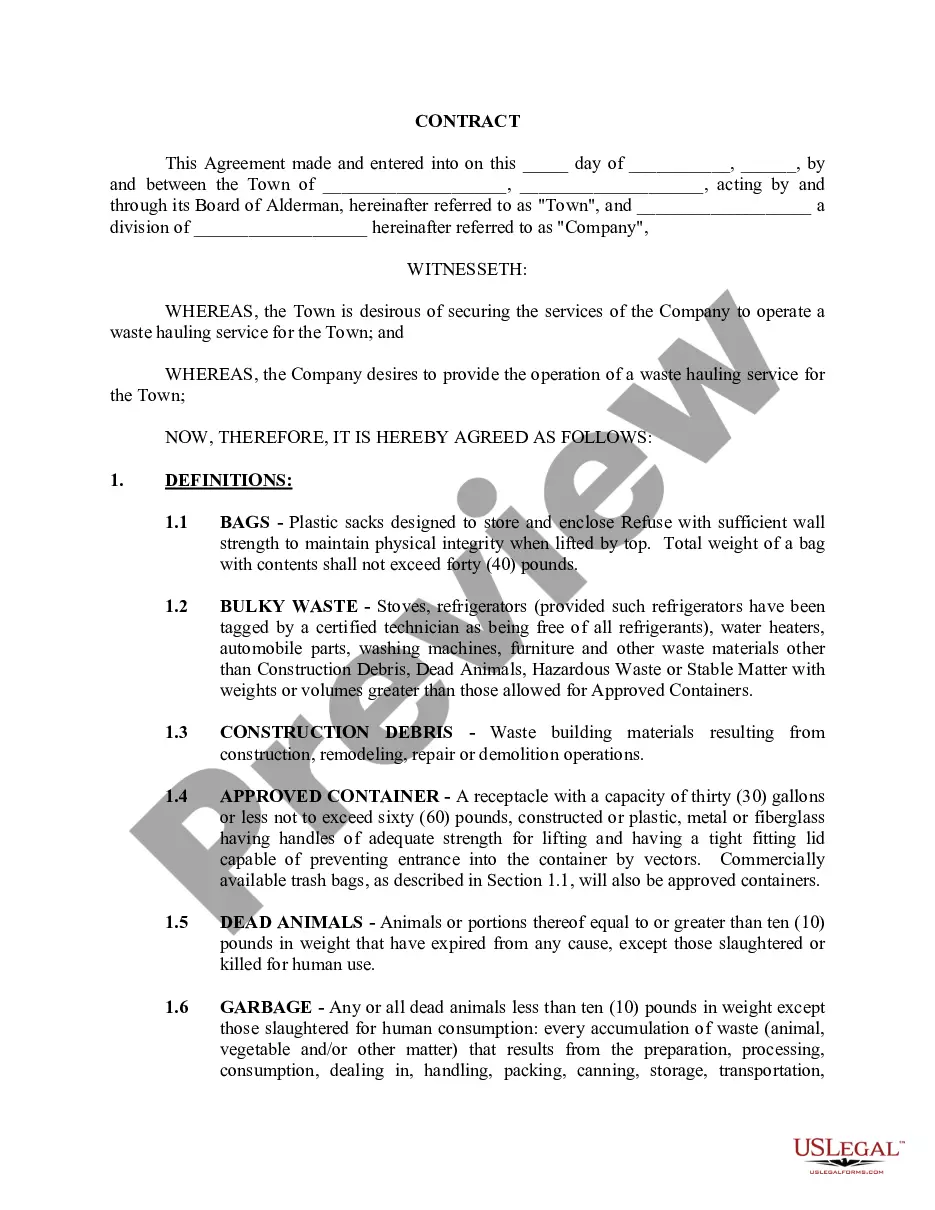
Description



Form popularity
FAQ
Waste Management also includes automatic renewal clauses in their waste management service agreement. Regardless of what the agreed-upon initial term is, typically between 12 and 60 months, the contract automatically renews at the end of each term.
The main types of waste disposal include landfilling, incineration, waste compaction, biogas generation, composting, and vermicomposting. 3. How do waste disposal methods differ? Waste disposal methods vary based on the waste type, environmental impact, and local regulations.
Five actions should respectively be taken if possible before recycling any products. These R's include: refuse, reduce, reuse, repurpose and finally, recycle.
The main types of waste disposal include landfilling, incineration, waste compaction, biogas generation, composting, and vermicomposting. 3. How do waste disposal methods differ? Waste disposal methods vary based on the waste type, environmental impact, and local regulations.
10 Steps for Effective Waste Management Planning Identify the Waste Your Facility Creates. Identify Waste Streams. Establish a Waste Management Team. Assess Current Waste Disposal Methods. Consider Your Waste Hierarchy. Select Waste Management Partners. Set Targets for Waste Reduction. Create a Waste Management Action Plan.
Take your waste to your local recycling centre (or 'tip') - find a recycling centre by checking on your council's website. take your waste to a permitted private waste site. use a registered private business that provides a waste collection service - for example, a skip company or household clearance service.
Below are the seven effective methods of solid waste disposal and management: Preventing or Reducing Waste Generation. Recycling. Incineration. Composting. Sanitary Landfill. Disposal in Ocean/Sea. Plasma Gasification.
