Suing An Estate Executor For Misrepresentation In Montgomery
Description


Get your form ready online
Our built-in tools help you complete, sign, share, and store your documents in one place.
Make edits, fill in missing information, and update formatting in US Legal Forms—just like you would in MS Word.
Download a copy, print it, send it by email, or mail it via USPS—whatever works best for your next step.
Sign and collect signatures with our SignNow integration. Send to multiple recipients, set reminders, and more. Go Premium to unlock E-Sign.
If this form requires notarization, complete it online through a secure video call—no need to meet a notary in person or wait for an appointment.
We protect your documents and personal data by following strict security and privacy standards.
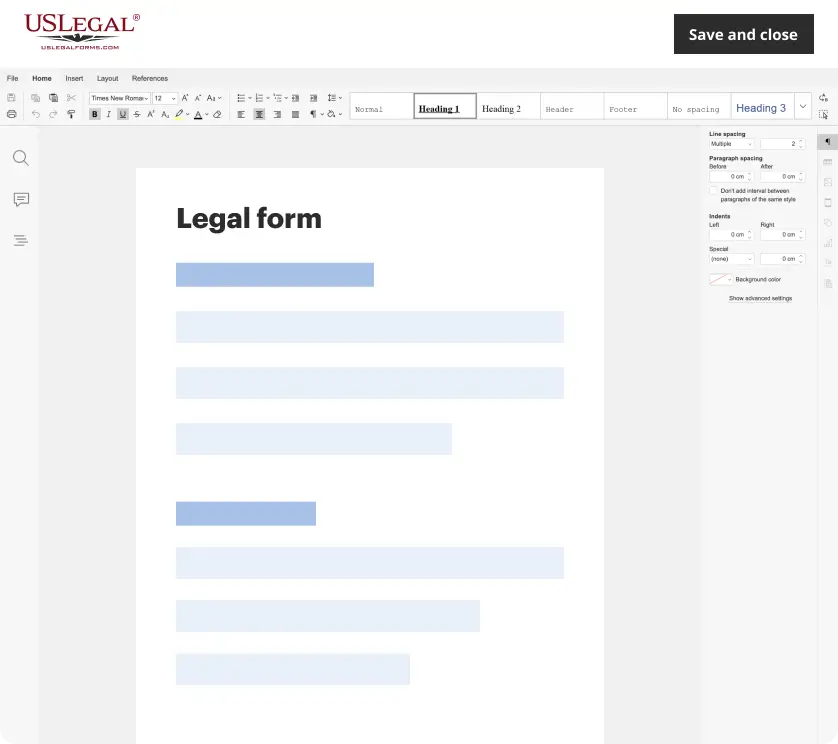
Make edits, fill in missing information, and update formatting in US Legal Forms—just like you would in MS Word.
Download a copy, print it, send it by email, or mail it via USPS—whatever works best for your next step.
Sign and collect signatures with our SignNow integration. Send to multiple recipients, set reminders, and more. Go Premium to unlock E-Sign.

If this form requires notarization, complete it online through a secure video call—no need to meet a notary in person or wait for an appointment.

We protect your documents and personal data by following strict security and privacy standards.
Looking for another form?


Form popularity
FAQ
The fiduciary duties of executors include: Administering the estate ing to the terms of the decedent's Will. This includes marshalling and valuing the assets of the estate, paying debts and taxes, and distributing the remaining assets to the beneficiaries ing to the terms of the Will.
Distribution of assets: Embezzlement, misappropriation, outright theft or any other failure to distribute the assets of the estate or trust as dictated by law constitutes a fiduciary breach.
An executor has a fiduciary duty to always act in the best interest of the estate. This means that if an executor does not act in the best interest of the estate, they may be subject to court intervention and penalties for a breach of their fiduciary duty.
A fiduciary's breach could involve doing something for their own personal advantage or neglecting your best interest, and if you know what to look out for, you stand the best possible chance of avoiding personal liability and limiting potential damage.

