Texas Deed Estate Fort Worth
Description

Get your form ready online
Our built-in tools help you complete, sign, share, and store your documents in one place.
Make edits, fill in missing information, and update formatting in US Legal Forms—just like you would in MS Word.
Download a copy, print it, send it by email, or mail it via USPS—whatever works best for your next step.
Sign and collect signatures with our SignNow integration. Send to multiple recipients, set reminders, and more. Go Premium to unlock E-Sign.
If this form requires notarization, complete it online through a secure video call—no need to meet a notary in person or wait for an appointment.
We protect your documents and personal data by following strict security and privacy standards.

Make edits, fill in missing information, and update formatting in US Legal Forms—just like you would in MS Word.

Download a copy, print it, send it by email, or mail it via USPS—whatever works best for your next step.

Sign and collect signatures with our SignNow integration. Send to multiple recipients, set reminders, and more. Go Premium to unlock E-Sign.

If this form requires notarization, complete it online through a secure video call—no need to meet a notary in person or wait for an appointment.

We protect your documents and personal data by following strict security and privacy standards.
Looking for another form?
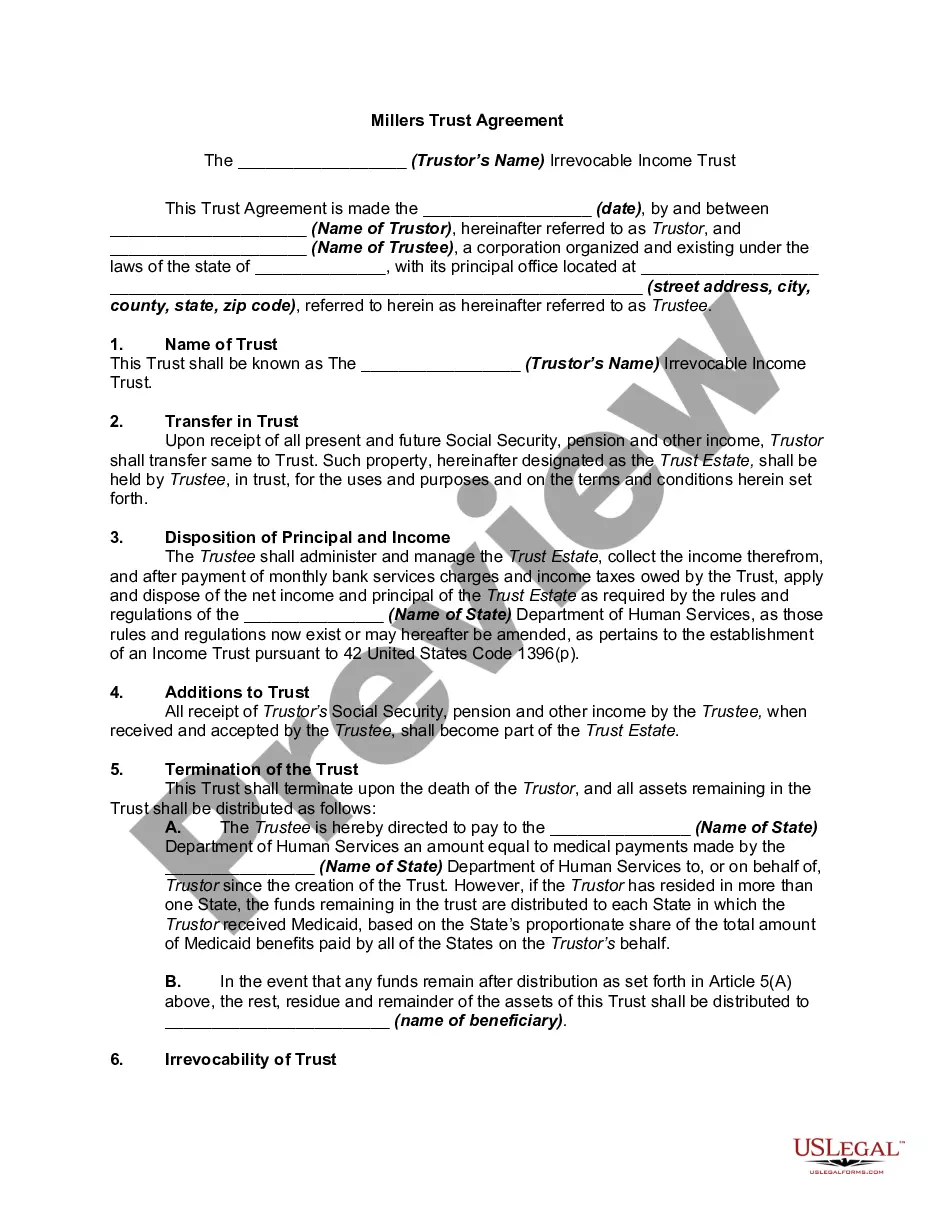

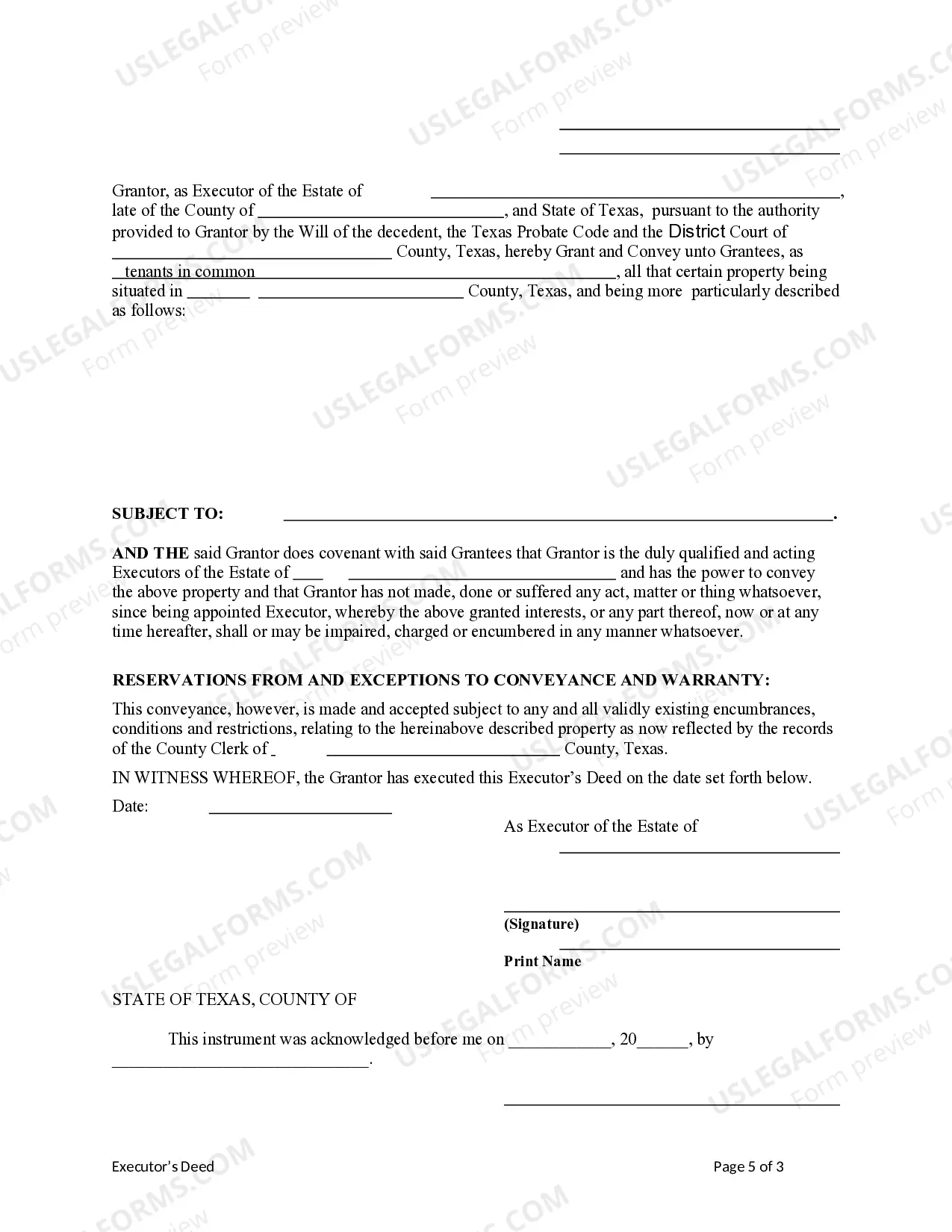
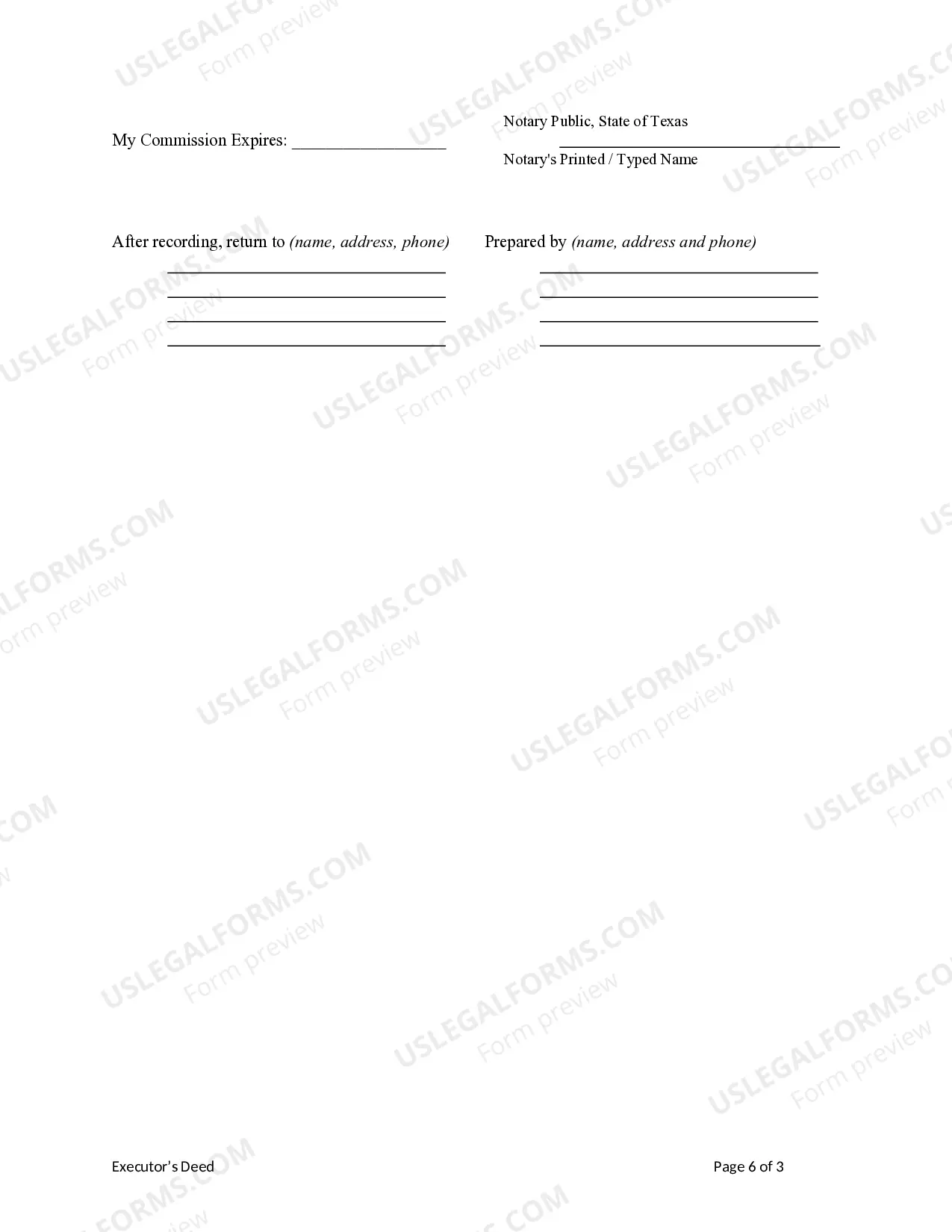
How to fill out Texas Executor's Deed - Estate To Five Beneficiaries?
Handling legal paperwork and operations might be a time-consuming addition to your entire day. Texas Deed Estate Fort Worth and forms like it often require you to look for them and navigate how you can complete them correctly. As a result, regardless if you are taking care of economic, legal, or personal matters, using a thorough and convenient online library of forms at your fingertips will greatly assist.
US Legal Forms is the top online platform of legal templates, featuring over 85,000 state-specific forms and a variety of resources to assist you complete your paperwork easily. Discover the library of appropriate documents available with just a single click.
US Legal Forms offers you state- and county-specific forms available at any moment for downloading. Safeguard your document administration processes with a high quality service that lets you put together any form in minutes with no additional or hidden fees. Simply log in to the account, find Texas Deed Estate Fort Worth and download it right away within the My Forms tab. You may also gain access to previously downloaded forms.
Could it be the first time utilizing US Legal Forms? Register and set up a free account in a few minutes and you will get access to the form library and Texas Deed Estate Fort Worth. Then, follow the steps listed below to complete your form:
- Be sure you have the correct form by using the Review option and looking at the form information.
- Select Buy Now once all set, and select the monthly subscription plan that meets your needs.
- Select Download then complete, eSign, and print the form.
US Legal Forms has twenty five years of experience assisting users control their legal paperwork. Find the form you need right now and improve any operation without breaking a sweat.
Form popularity
FAQ
An Affidavit of Heirship. It is signed in front of a notary by an heir and two witnesses knowledgeable about the family history of the deceased. Once it is signed notarized, the Affidavit of Heirship is ready to be recorded in the deeds records in the county where the property is located.
Can I record a document at one of the Tarrant County Subcourthouses? No, land documents are recorded at 100 W. Weatherford St. Room B20 Fort Worth, TX 76196.
WHERE DO I RECORD THE DEED? After the deed has been signed and notarized, the original needs to be filed and recorded with the county clerk in the county where the property is located. You can mail the deed or take it to the county clerk's office in person. Only original documents may be recorded.
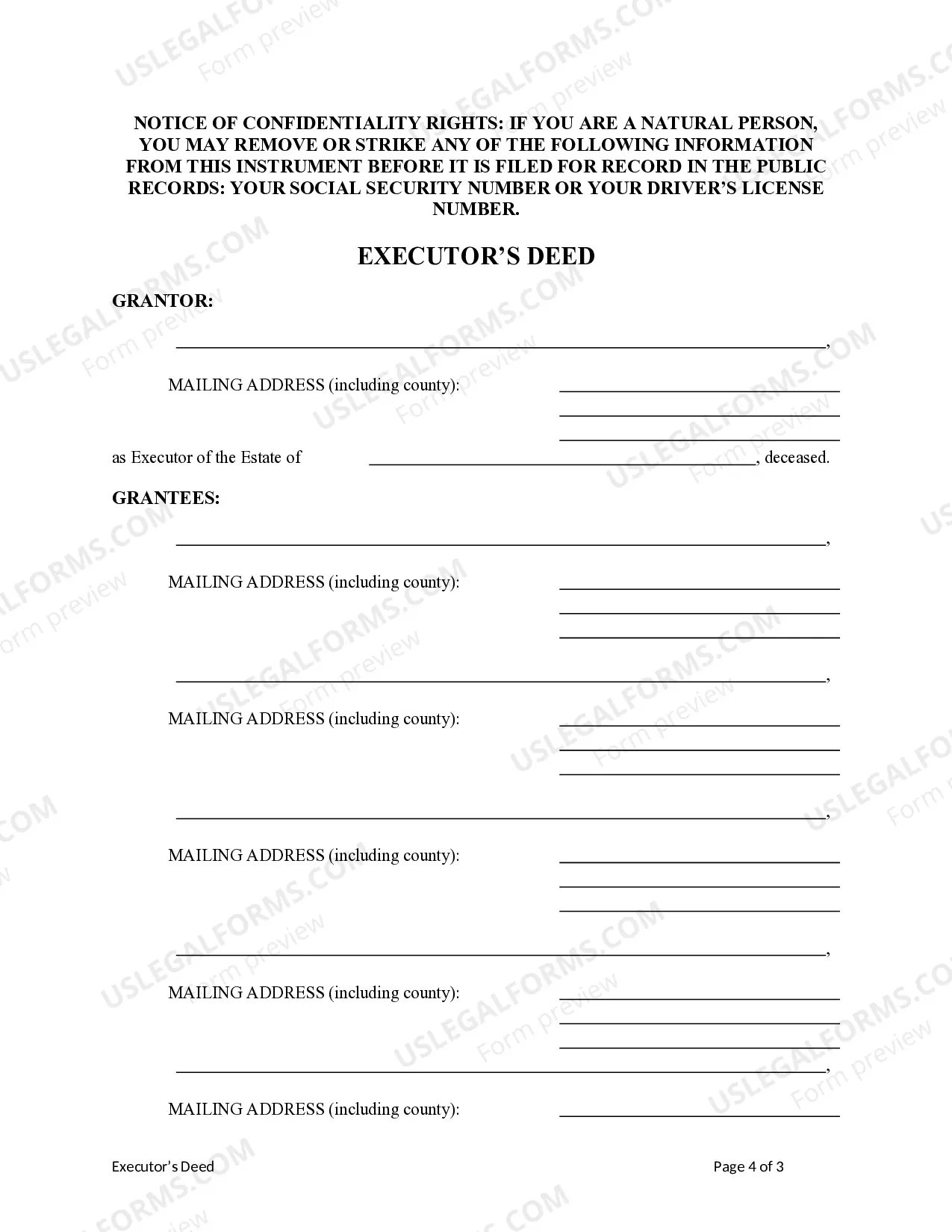
A general warranty deed must include the following to be valid: The name and address of the seller (called the grantor) The name and address of the buyer (called the grantee) A legal description of the property (found on the previous deed) A statement that the grantor is transferring the property to the grantee.
The Transfer on Death Deed must: Be in writing, signed by the owner, and notarized, Have a legal description of the property (The description is found on the deed to the property or in the deed records. ... Have the name and address of one or more beneficiaries, State that the transfer will happen at the owner's death,