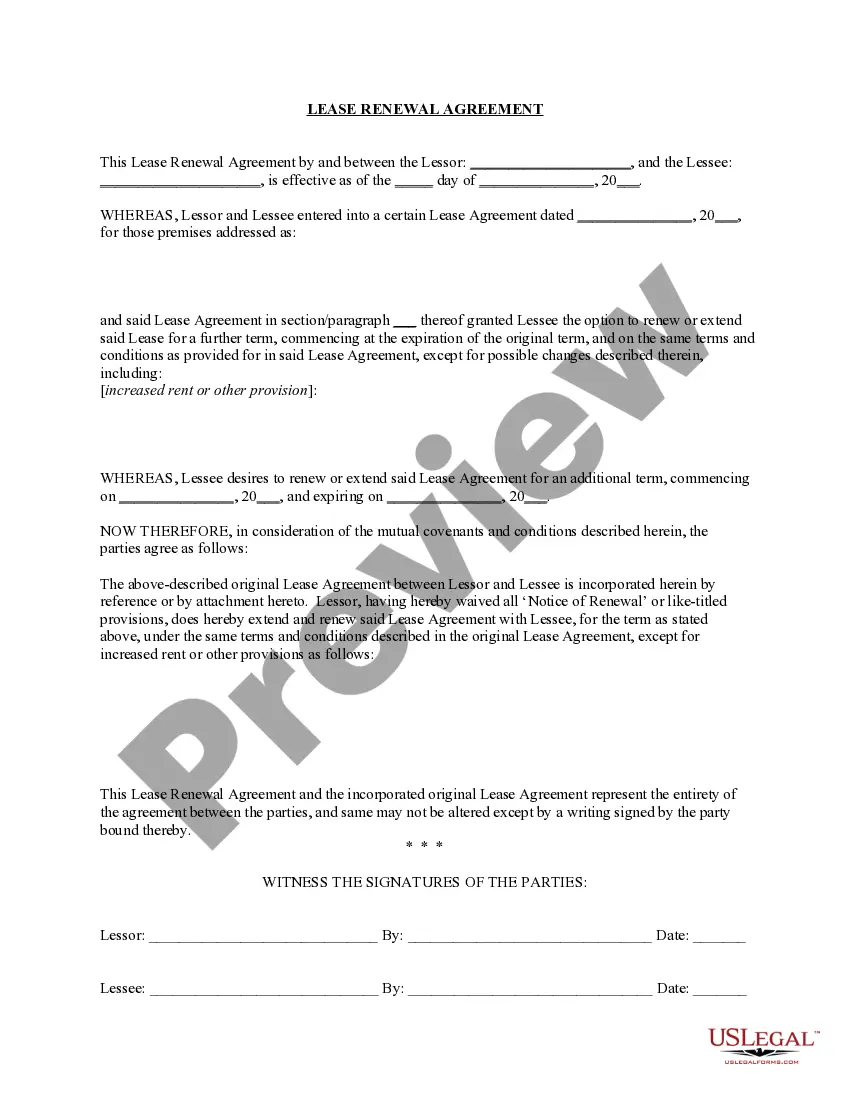
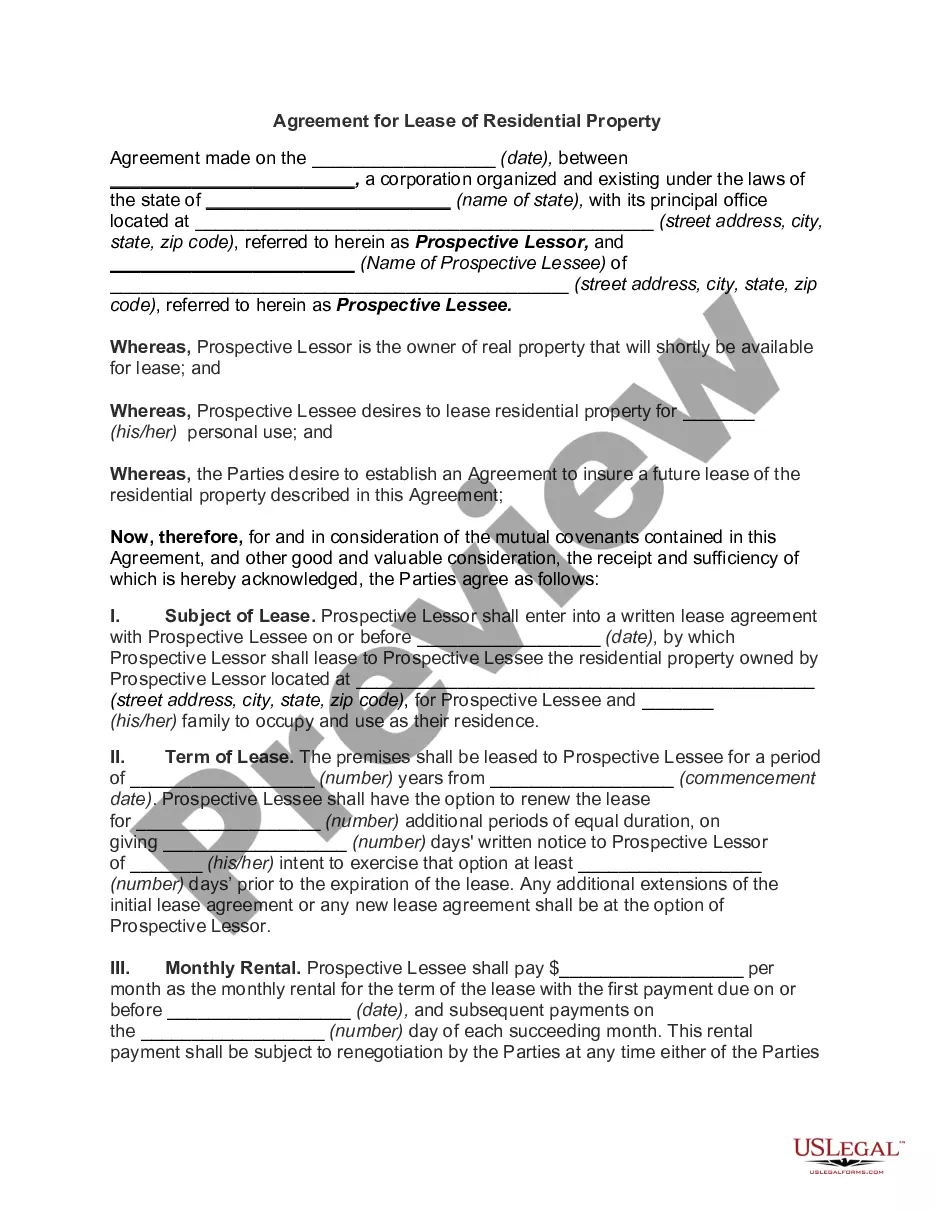
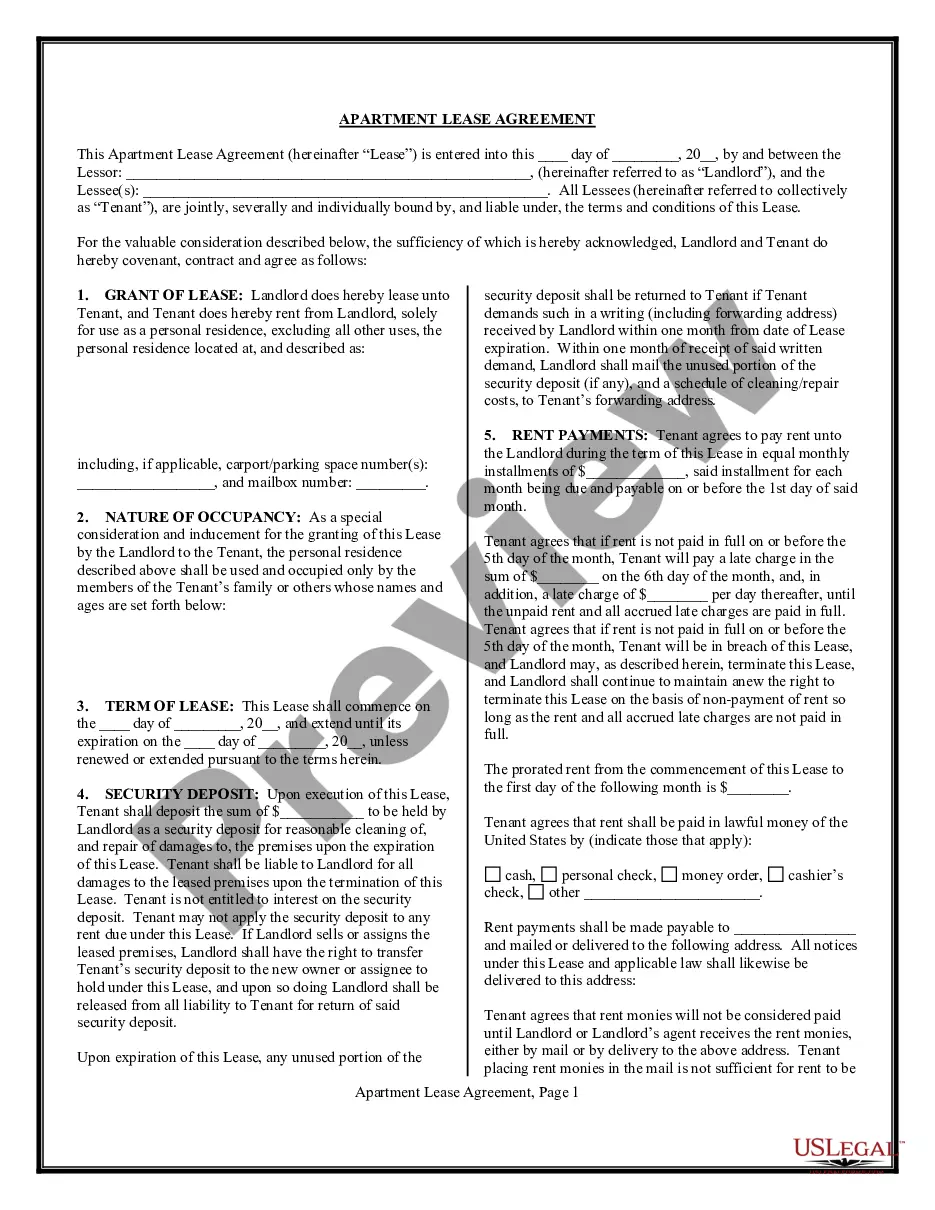
New York City Lease Agreement
Description
Get your form ready online
Our built-in tools help you complete, sign, share, and store your documents in one place.
Make edits, fill in missing information, and update formatting in US Legal Forms—just like you would in MS Word.
Download a copy, print it, send it by email, or mail it via USPS—whatever works best for your next step.
Sign and collect signatures with our SignNow integration. Send to multiple recipients, set reminders, and more. Go Premium to unlock E-Sign.
If this form requires notarization, complete it online through a secure video call—no need to meet a notary in person or wait for an appointment.
We protect your documents and personal data by following strict security and privacy standards.

Make edits, fill in missing information, and update formatting in US Legal Forms—just like you would in MS Word.

Download a copy, print it, send it by email, or mail it via USPS—whatever works best for your next step.

Sign and collect signatures with our SignNow integration. Send to multiple recipients, set reminders, and more. Go Premium to unlock E-Sign.

If this form requires notarization, complete it online through a secure video call—no need to meet a notary in person or wait for an appointment.

We protect your documents and personal data by following strict security and privacy standards.
Looking for another form?





How to fill out New York Residential Lease Renewal Agreement?
Locating a preferred destination to obtain the most recent and suitable legal templates is a significant portion of dealing with bureaucracy.
Selecting the correct legal documents demands precision and meticulousness, which is why it is vital to acquire samples of the New York City Lease Agreement solely from credible sources, such as US Legal Forms.
After obtaining the form on your device, you can either modify it using the editor or print it to fill it out by hand. Alleviate the stress associated with your legal paperwork. Explore the comprehensive US Legal Forms library, where you can find legal samples, assess their appropriateness for your situation, and download them instantly.
- Utilize the library navigation or search bar to locate your template.
- Access the form’s details to verify if it meets the stipulations of your state and locality.
- Examine the form preview, if available, to confirm that the document is indeed the one you are seeking.
- Return to the search and seek the appropriate document should the New York City Lease Agreement not fulfill your requirements.
- Once you are confident about the form’s pertinence, download it.
- If you are a registered user, click Log in to verify and access your selected forms in My documents.
- If you do not possess an account yet, click Buy now to acquire the template.
- Select the payment plan that aligns with your desires.
- Proceed to register to finalize your purchase.
- Complete your transaction by choosing a payment method (credit card or PayPal).
- Select the format for downloading the New York City Lease Agreement.
Form popularity
FAQ
A file wrapper, alternatively referred to as a file history or a prosecution history is associated with each published patent application, whether it issues or not. After 18 months from filing the initial patent application, the patent's file wrapper also becomes available to the public.
Using Ipsum you can: View up to date information on patents. Access some documents from published patent applications. See which classifications and fields of search have been used.
Patents may be searched using the following resources: Patent Public Search. Global Dossier. Patent Application Information Retrieval (PAIR) Public Search Facility. Patent and Trademark Resource Centers (PTRCs) Patent Official Gazette. Common Citation Document (CCD) Search International Patent Offices.
Fortunately, after a patent application has been declared abandoned, it can usually be revived by completing a few simple steps: Filing a petition to revive abandoned patent application. Paying a revival fee and any other fees that are owed. Correcting the issue that resulted in the abandonment.
Free Patent Search Online The U.S. Patent & Trademark Office provides free patent searching of its public databases. Google Patents. A relatively easy database to search which PDF images available. Limited to U.S. patents and U.S. published applications.
United States Patent and Trademark Office (.uspto.gov) Patent searching can be done directly on the USPTO's web site. Full text and images are available for patents from 1976 to the most recent Tuesday. Images, current classification numbers and patent numbers only are available for patents from 1790 to 1975.
An application can also be abandoned if the owner makes a formal request for abandonment. If abandonment happens before the patent application is published, which occurs 18 months after the application is filed, the application will remain private and can't be viewed on the USPTO database.
At the official website of the United States Patent and Trademark Office, , patents issued from 1790 through 1975 are searchable only by patent number, issue date, and current US classifications. The USPTO's text-searchable patent database begins with patents granted from 1976 to present.