Pennsylvania Motion to Reopen Case in Order to Include Qualified Domestic Relations Order in Final Decree or Judgment
Overview of this form
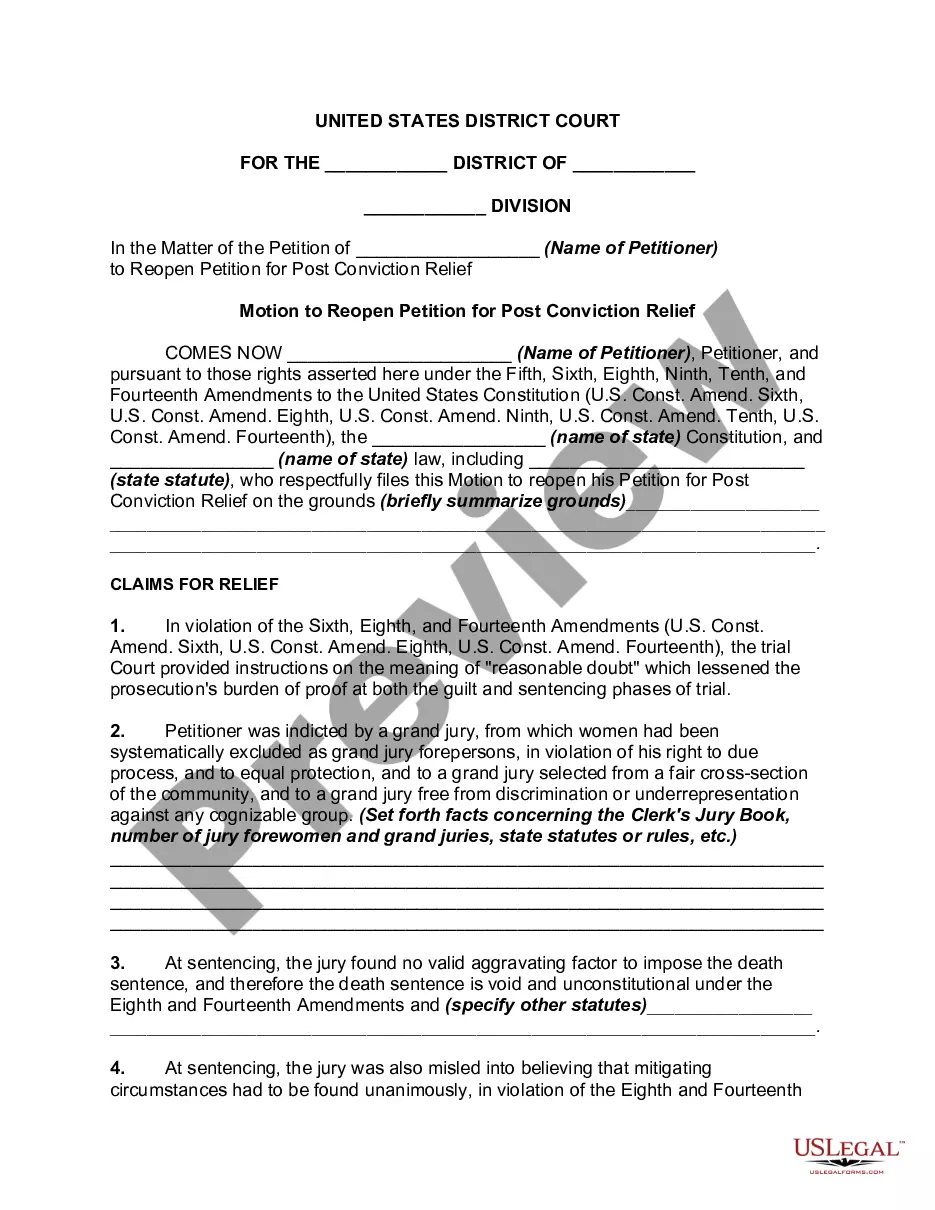
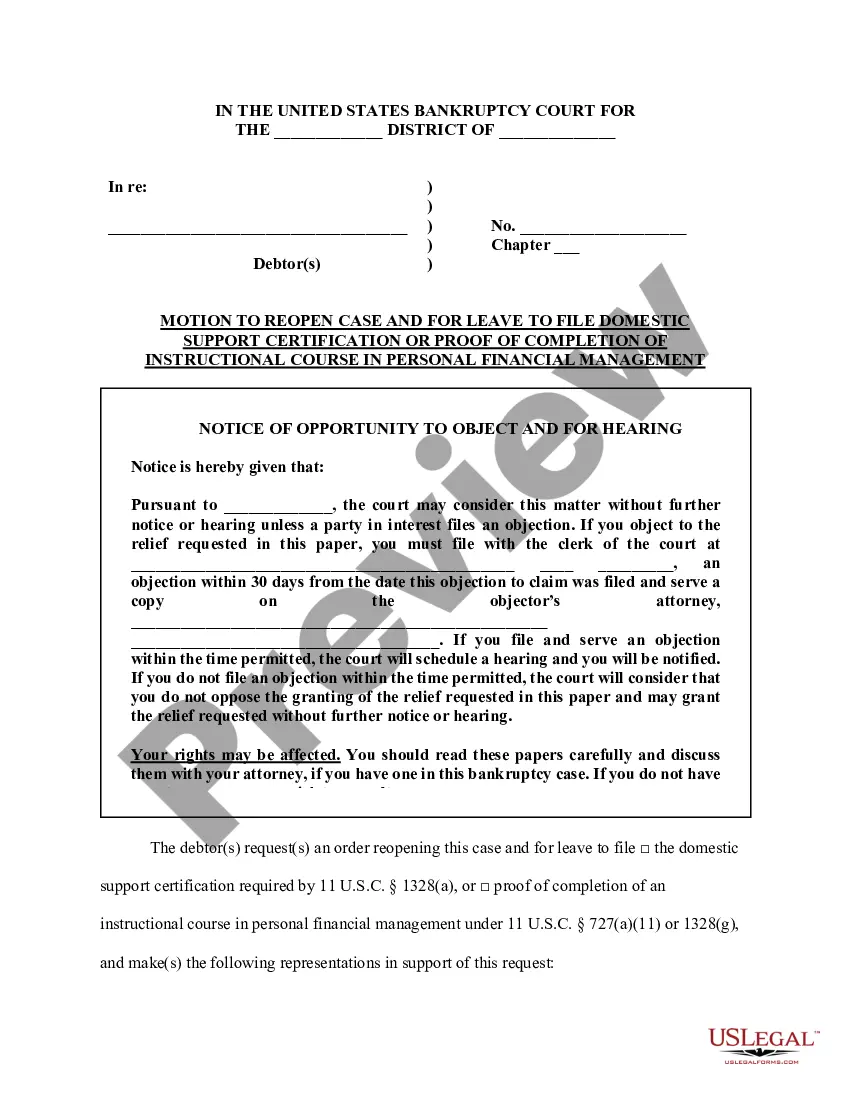
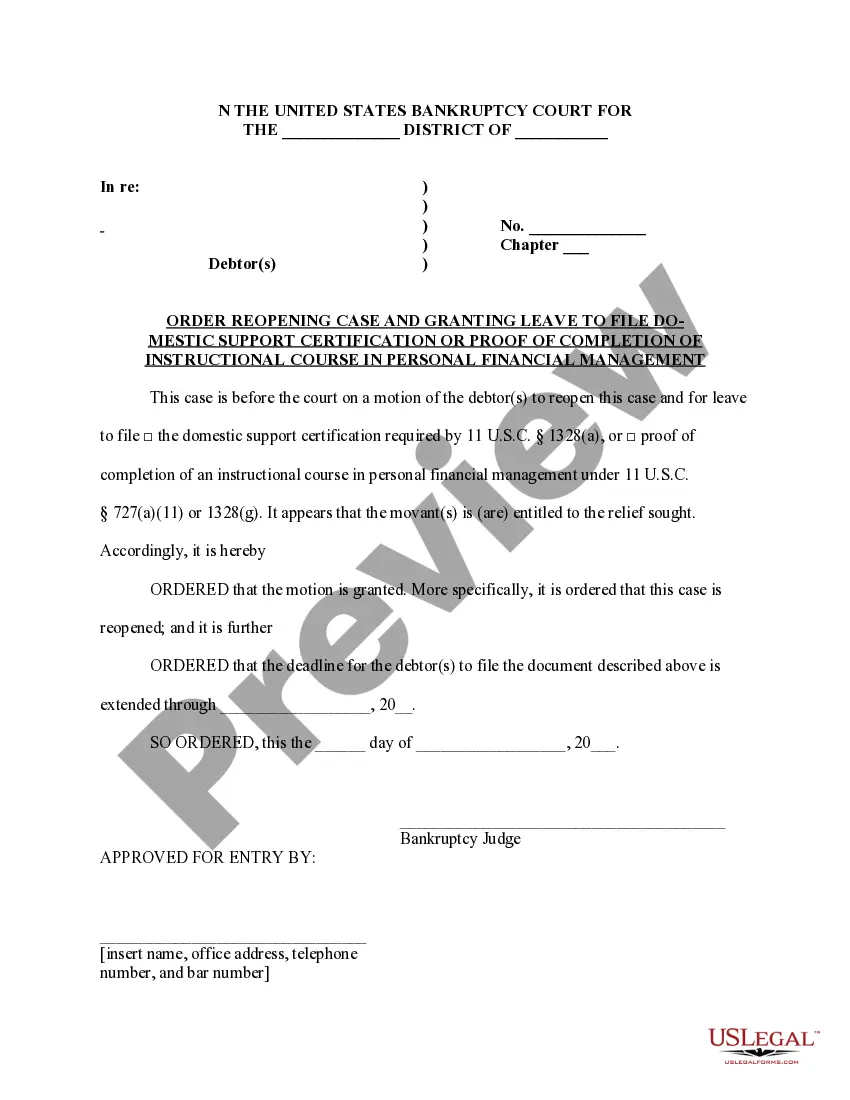
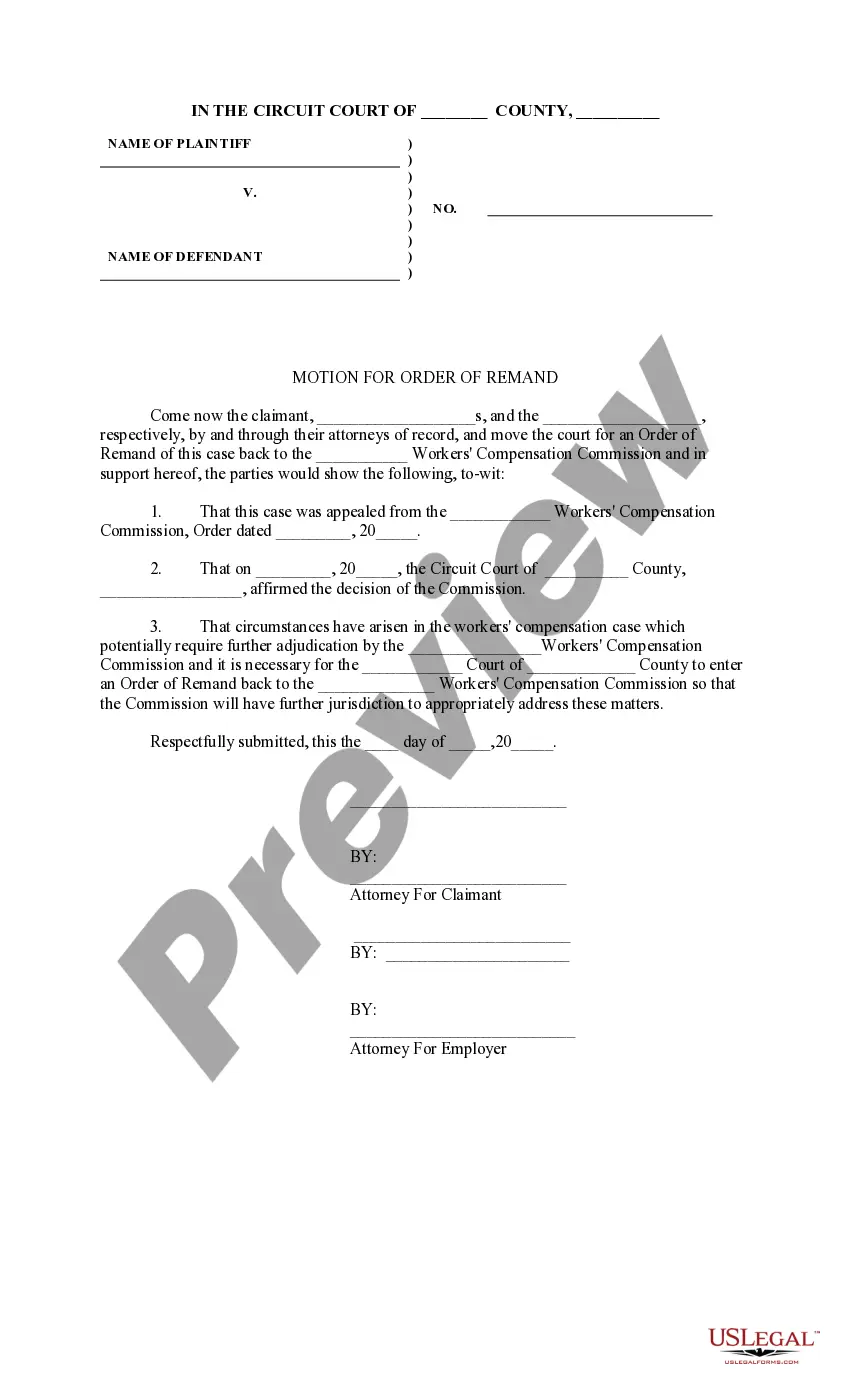
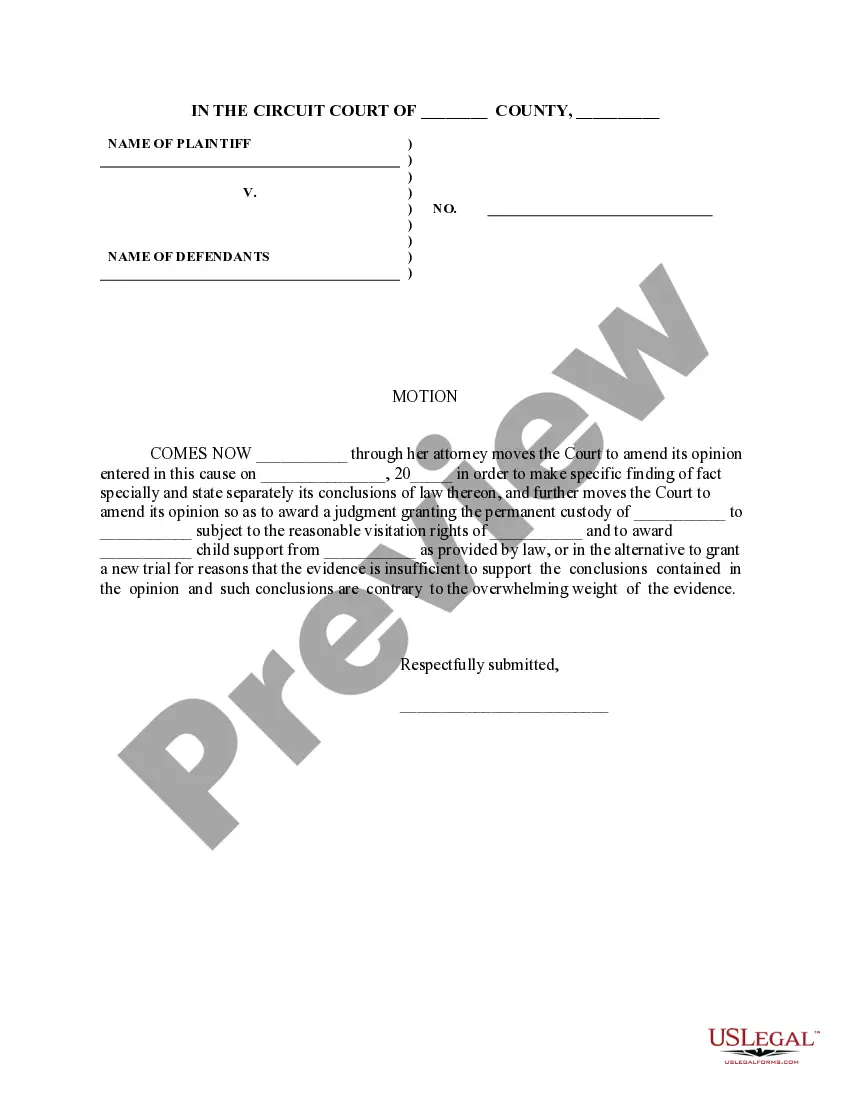
The Motion to Reopen Case in Order to Include Qualified Domestic Relations Order in Final Decree or Judgment is a legal document that allows parties in a divorce or domestic relations case to request the court to reopen their case. This motion is necessary to add a Qualified Domestic Relations Order (QDRO), which is essential for the division of pension or retirement benefits as part of alimony or child support. Unlike other motions, this specific form focuses on outlining precise details required for a QDRO to ensure that benefits are correctly allocated after a divorce settlement.
Key parts of this document
- Names of the parties involved (Plaintiff and Defendant).
- The court's designation and case number.
- Request to include specific language related to the QDRO in the final decree.
- Attached exhibit containing the proposed QDRO language.
- Signatures of both parties indicating their consent.
Common use cases
This form should be utilized when parties have finalized a divorce but need to reopen the case to include a QDRO. This can occur if pension or retirement benefits need to be divided in alignment with a divorce settlement, ensuring that either party receives the entitled benefits. It is particularly relevant when a divorce is finalized without addressing the distribution of such financial assets.
Who should use this form
- Individuals who have finalized their divorce and need to divide retirement benefits.
- Former spouses seeking to ensure compliance with pension plan requirements.
- Couples who initially overlooked the inclusion of a QDRO in their final divorce decree.
Instructions for completing this form
- Identify and enter the full names of the Plaintiff and Defendant at the beginning of the document.
- Insert the case number and the name of the county where the divorce was finalized.
- Attach the proposed QDRO language as an exhibit to the motion.
- Both parties must review and consent to the motion before signing.
- Submit the completed motion to the court for approval.
Does this document require notarization?
Notarization is generally not required for this form. However, certain states or situations might demand it. You can complete notarization online through US Legal Forms, powered by Notarize, using a verified video call available anytime.
Get your form ready online
Our built-in tools help you complete, sign, share, and store your documents in one place.
Make edits, fill in missing information, and update formatting in US Legal Forms—just like you would in MS Word.
Download a copy, print it, send it by email, or mail it via USPS—whatever works best for your next step.
Sign and collect signatures with our SignNow integration. Send to multiple recipients, set reminders, and more. Go Premium to unlock E-Sign.
If this form requires notarization, complete it online through a secure video call—no need to meet a notary in person or wait for an appointment.
We protect your documents and personal data by following strict security and privacy standards.

Make edits, fill in missing information, and update formatting in US Legal Forms—just like you would in MS Word.

Download a copy, print it, send it by email, or mail it via USPS—whatever works best for your next step.

Sign and collect signatures with our SignNow integration. Send to multiple recipients, set reminders, and more. Go Premium to unlock E-Sign.

If this form requires notarization, complete it online through a secure video call—no need to meet a notary in person or wait for an appointment.

We protect your documents and personal data by following strict security and privacy standards.
Typical mistakes to avoid
- Failing to include the correct case number or court information.
- Not providing the specific language for the QDRO as required.
- Leaving out the signatures of both parties, which is crucial for court acceptance.
- Missing deadlines for submitting the motion after the divorce decree is issued.
Benefits of using this form online
- Convenience of downloading and completing the form from home.
- Editability allows for personalized and situation-specific modifications.
- Access to reliable legal templates drafted by licensed attorneys.
- Guidance throughout the process to avoid common filing errors.
Looking for another form?


Form popularity
FAQ
A QDRO distribution that is paid to a child or other dependent is taxed to the plan participant. An individual may be able to roll over tax-free all or part of a distribution from a qualified retirement plan that he or she received under a QDRO.
Step 1 Gathering Information. Step 2 Drafting your QDRO. Step 3 Approval By the Other Party. Step 4 Approval by Plan as Draft. Step 5 Signature of QDRO by Judge of the State Divorce Court. Step 6 Obtain a Certified Copy of the QDRO.
It typically takes a minimum of two months from start to finish to obtain a qualified domestic relations order, or QDRO. But it can also take up to two years because, like answers to all legal questions, it depends on the facts and circumstances of your situation.
The only way to have it changed is to have the courts issue an amendment to the original QDRO, although it would still be up to the administrator of the retirement plan to review the new plans and approve them.
To be more precise, federal law does not contain a time limit for filing a QDRO, though there may be legal or procedural arguments under the divorce laws of a particular state that make it difficult if you or your attorney makes the request long after the divorce.
At a minimum, all QDROs must include: the name and last known mailing address of the participant and alternate payee(s) the dollar amount or percentage of the participant's benefits that will be paid to the alternate payee(s) (Note: A QDRO can't award an amount or form of benefit that's not available under the plan.)
The name and mailing address of the participant and alternate payee. The name of the retirement plan. The dollar amount or percentage of the assets that the payee will receive. The number of payments and the payment time period.
The QDRO does not expire, but you should implement it as soon as possible.
If there is no QDRO in his employee file when he retires and begins collecting benefits, the non-employee spouse will get nothing and may not be able to recover her share retroactively.The Parties May Relocate: The party who applies to the Court for a QDRO is required to provide notice to the other party.