Apartment Rules And Regulations For Tenants
Description
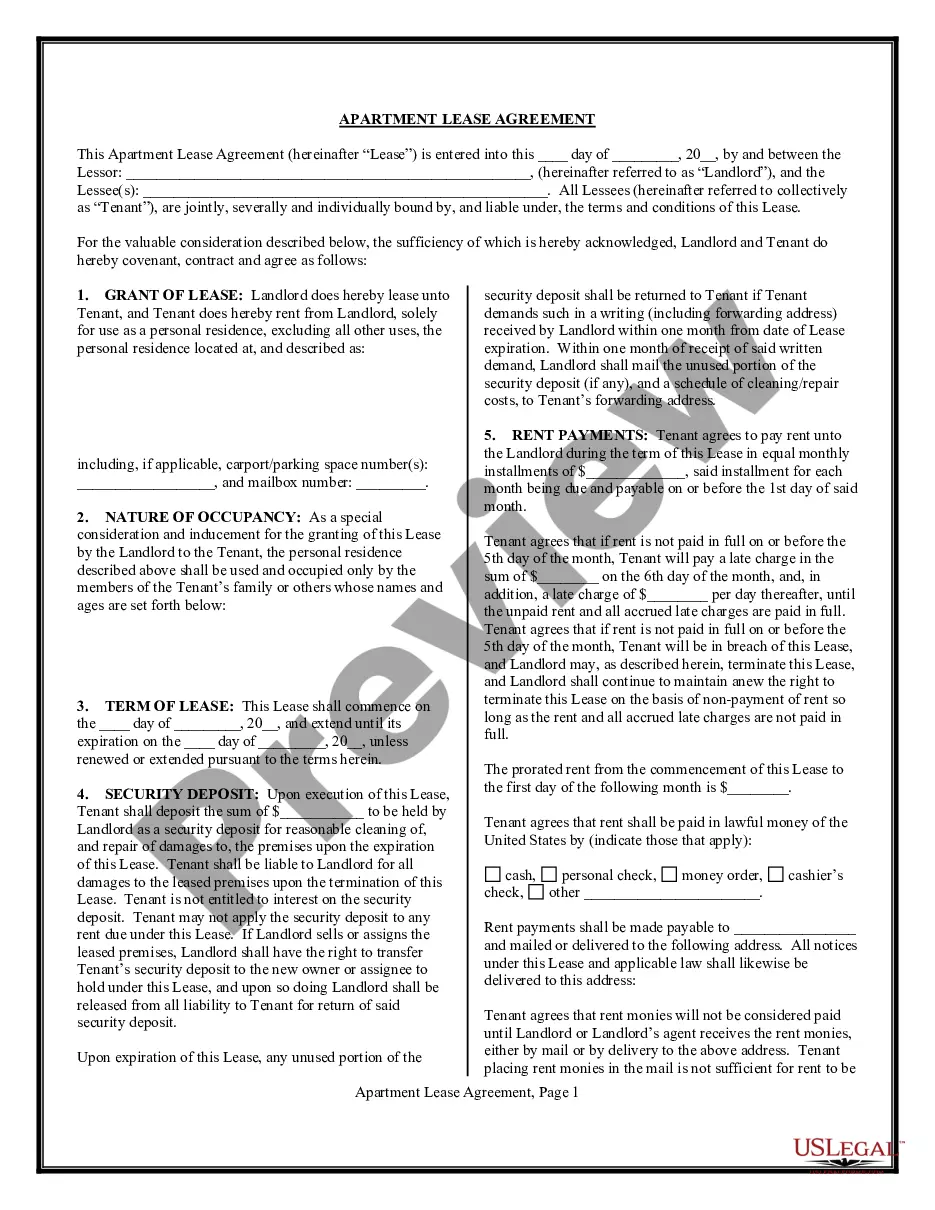
Get your form ready online
Our built-in tools help you complete, sign, share, and store your documents in one place.
Make edits, fill in missing information, and update formatting in US Legal Forms—just like you would in MS Word.
Download a copy, print it, send it by email, or mail it via USPS—whatever works best for your next step.
Sign and collect signatures with our SignNow integration. Send to multiple recipients, set reminders, and more. Go Premium to unlock E-Sign.
If this form requires notarization, complete it online through a secure video call—no need to meet a notary in person or wait for an appointment.
We protect your documents and personal data by following strict security and privacy standards.

Make edits, fill in missing information, and update formatting in US Legal Forms—just like you would in MS Word.

Download a copy, print it, send it by email, or mail it via USPS—whatever works best for your next step.

Sign and collect signatures with our SignNow integration. Send to multiple recipients, set reminders, and more. Go Premium to unlock E-Sign.

If this form requires notarization, complete it online through a secure video call—no need to meet a notary in person or wait for an appointment.

We protect your documents and personal data by following strict security and privacy standards.
Looking for another form?
How to fill out Apartment Lease Agreement?
Legal administration can be perplexing, even for seasoned experts.
When you are looking for Apartment Guidelines and Regulations for Renters and lack the time to devote to finding the accurate and up-to-date version, the process can be taxing.
US Legal Forms caters to all your needs, from personal to corporate papers, all in one location.
Utilize advanced tools to fill out and manage your Apartment Guidelines and Regulations for Renters.
Here are the steps to take after acquiring the form you need: Confirm this is the correct form by reviewing it and checking its description.
- Access a resource pool of articles, tutorials, handbooks, and materials pertinent to your situation and needs.
- Save time and effort searching for the documents you require, using US Legal Forms’ sophisticated search and Preview tool to find Apartment Guidelines and Regulations for Renters and obtain it.
- If you have a membership, Log In to your US Legal Forms account, search for the form, and retrieve it.
- Check out the My documents tab to view the documents you have previously downloaded and organize your folders as needed.
- If it is your first time using US Legal Forms, create a free account to gain unlimited access to all platform benefits.
- A robust online document library can significantly impact those wishing to handle these matters effectively.
- US Legal Forms is a leading provider of online legal documents, offering over 85,000 state-specific legal forms accessible at any time.
- With US Legal Forms, you can access state or county-specific legal and business documents.
Form popularity
FAQ
Landlords may not advertise or rent condemned property. Landlords must disclose housing code violations they have been notified of but have not corrected. They must also reveal structural defects, a lack of hot or cold running water, serious plumbing, or electrical problems, and other hazards.
Under the right to a safe and habitable home, a landlord cannot force a tenant to move into a home or unit ?as-is? and cannot demand that the tenant be responsible for repairs. To be safe, and habitable, a unit or home should have: Working smoke alarms. Working hot water.
North Carolina law says that your landlord must keep your housing fit and safe. It also says that you, the tenant, must pay your rent, keep your home clean, and not damage your home.
The North Carolina Office of Administrative Hearings and the Fair Housing Act prohibit landlords from discriminating against potential tenants because of their race, religion, familial status, sex, gender, etc.
A landlord may not evict a tenant without a court order. The landlord may begin eviction proceedings if a tenant: Damages property. Fails to pay rent.