Power Attorney For Bank Account
Description
Get your form ready online
Our built-in tools help you complete, sign, share, and store your documents in one place.
Make edits, fill in missing information, and update formatting in US Legal Forms—just like you would in MS Word.
Download a copy, print it, send it by email, or mail it via USPS—whatever works best for your next step.
Sign and collect signatures with our SignNow integration. Send to multiple recipients, set reminders, and more. Go Premium to unlock E-Sign.
If this form requires notarization, complete it online through a secure video call—no need to meet a notary in person or wait for an appointment.
We protect your documents and personal data by following strict security and privacy standards.

Make edits, fill in missing information, and update formatting in US Legal Forms—just like you would in MS Word.

Download a copy, print it, send it by email, or mail it via USPS—whatever works best for your next step.

Sign and collect signatures with our SignNow integration. Send to multiple recipients, set reminders, and more. Go Premium to unlock E-Sign.

If this form requires notarization, complete it online through a secure video call—no need to meet a notary in person or wait for an appointment.

We protect your documents and personal data by following strict security and privacy standards.
Looking for another form?

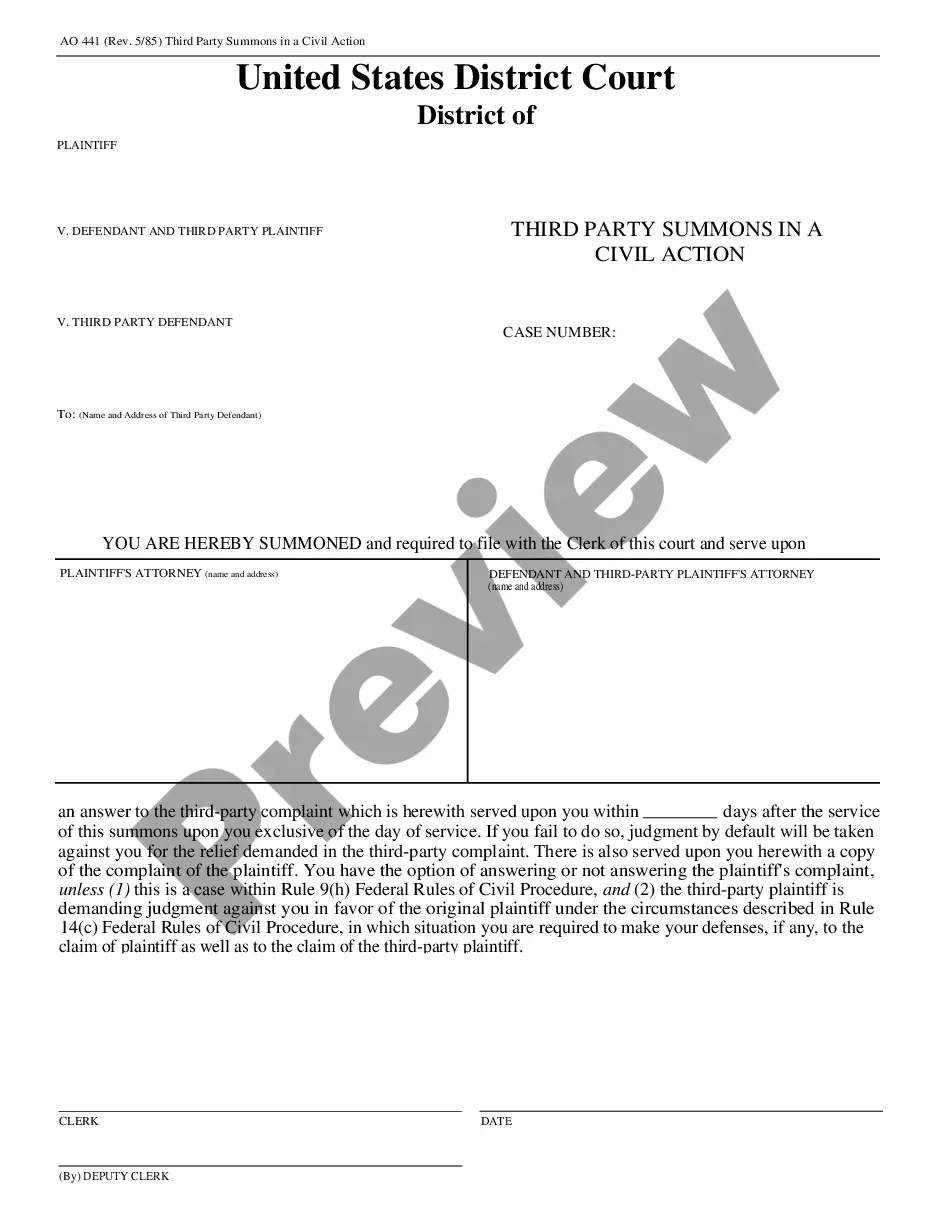
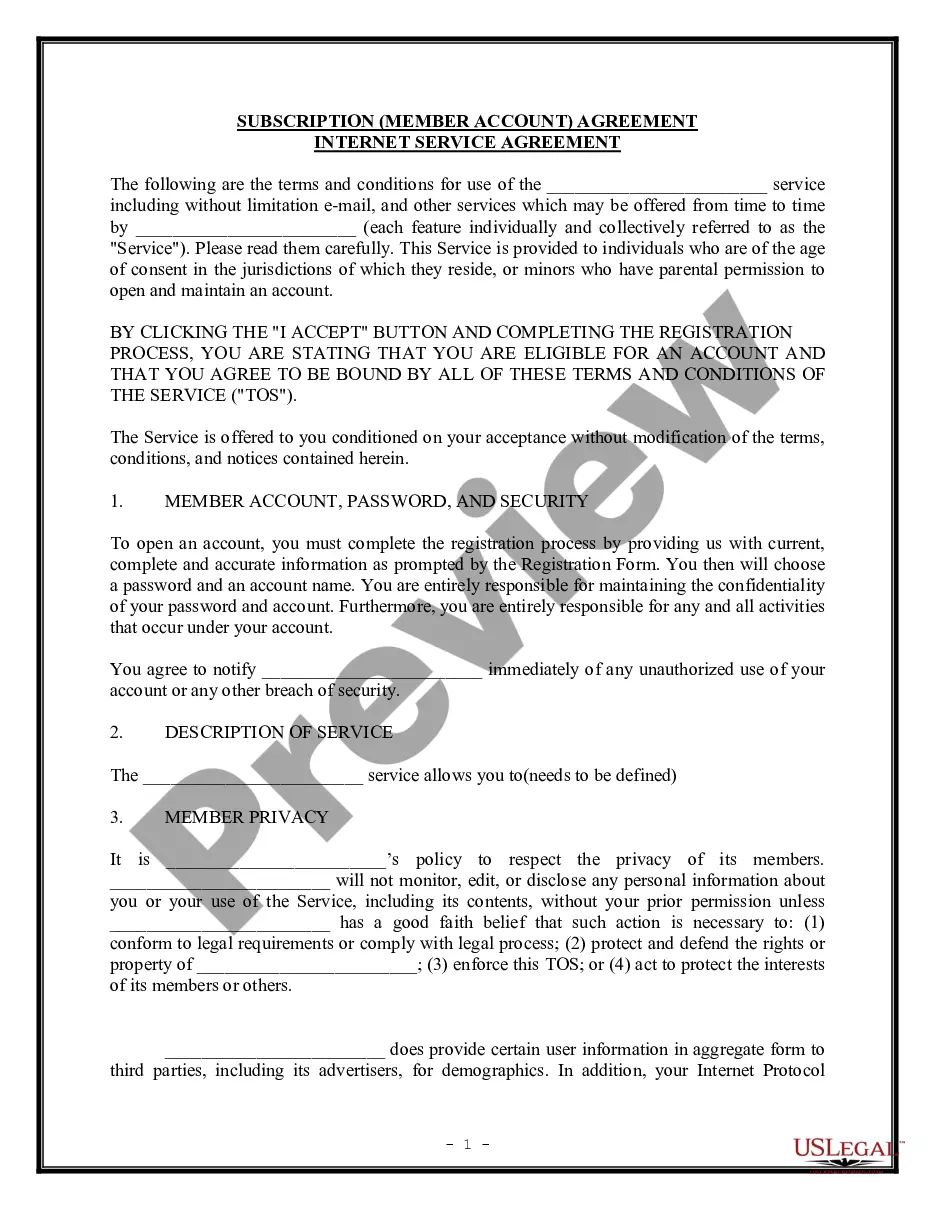
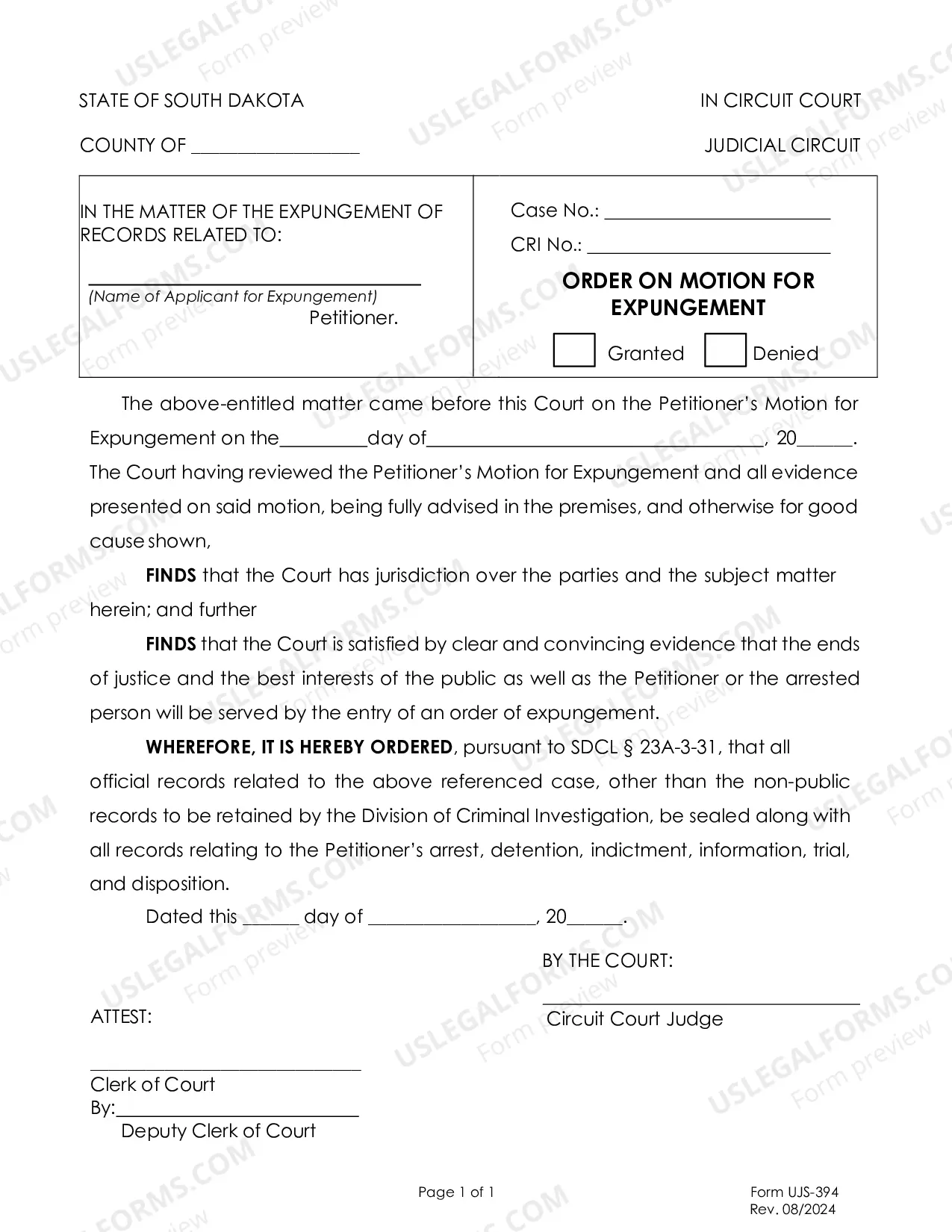
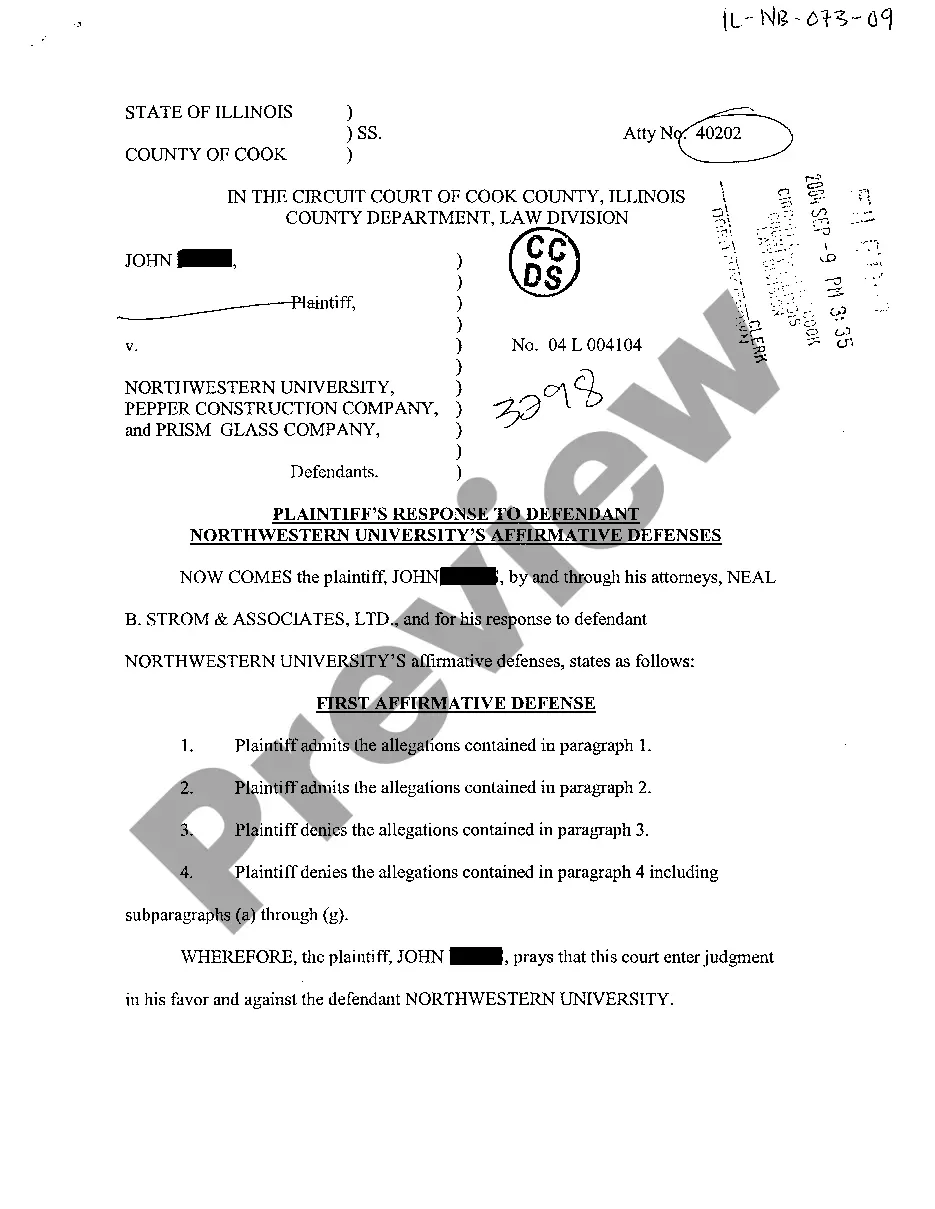
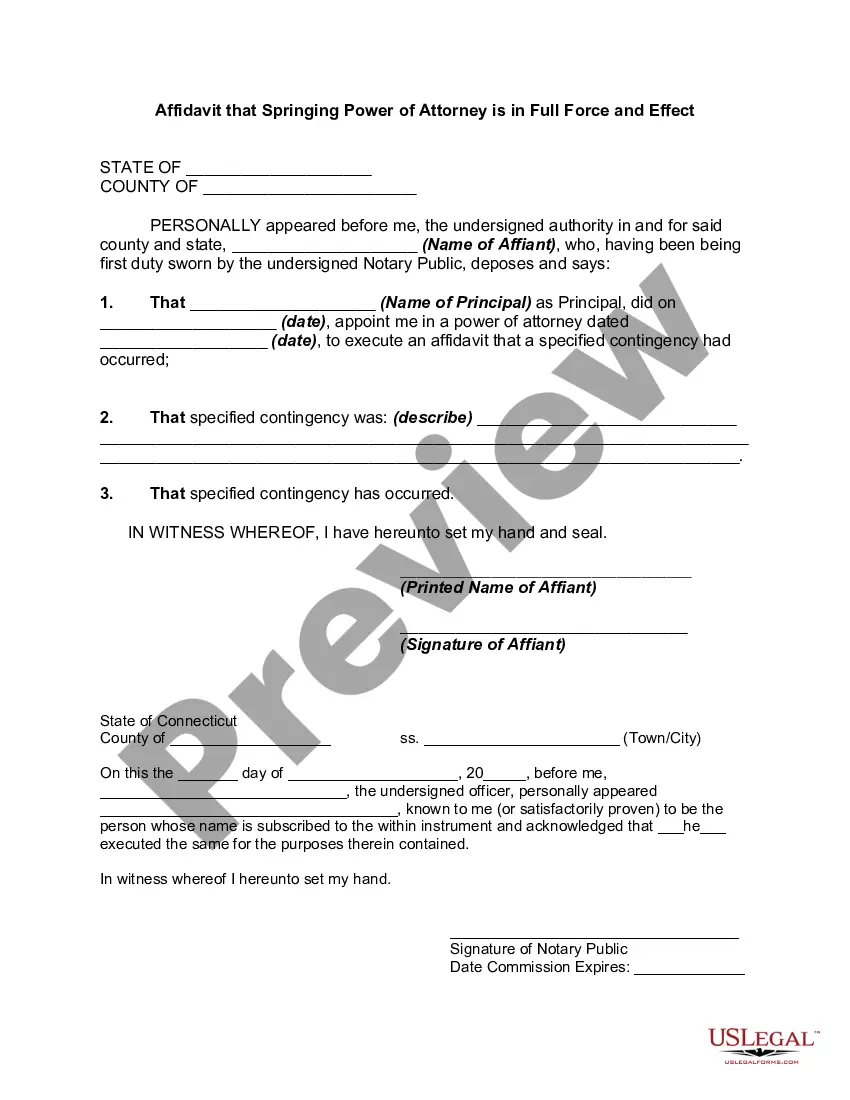
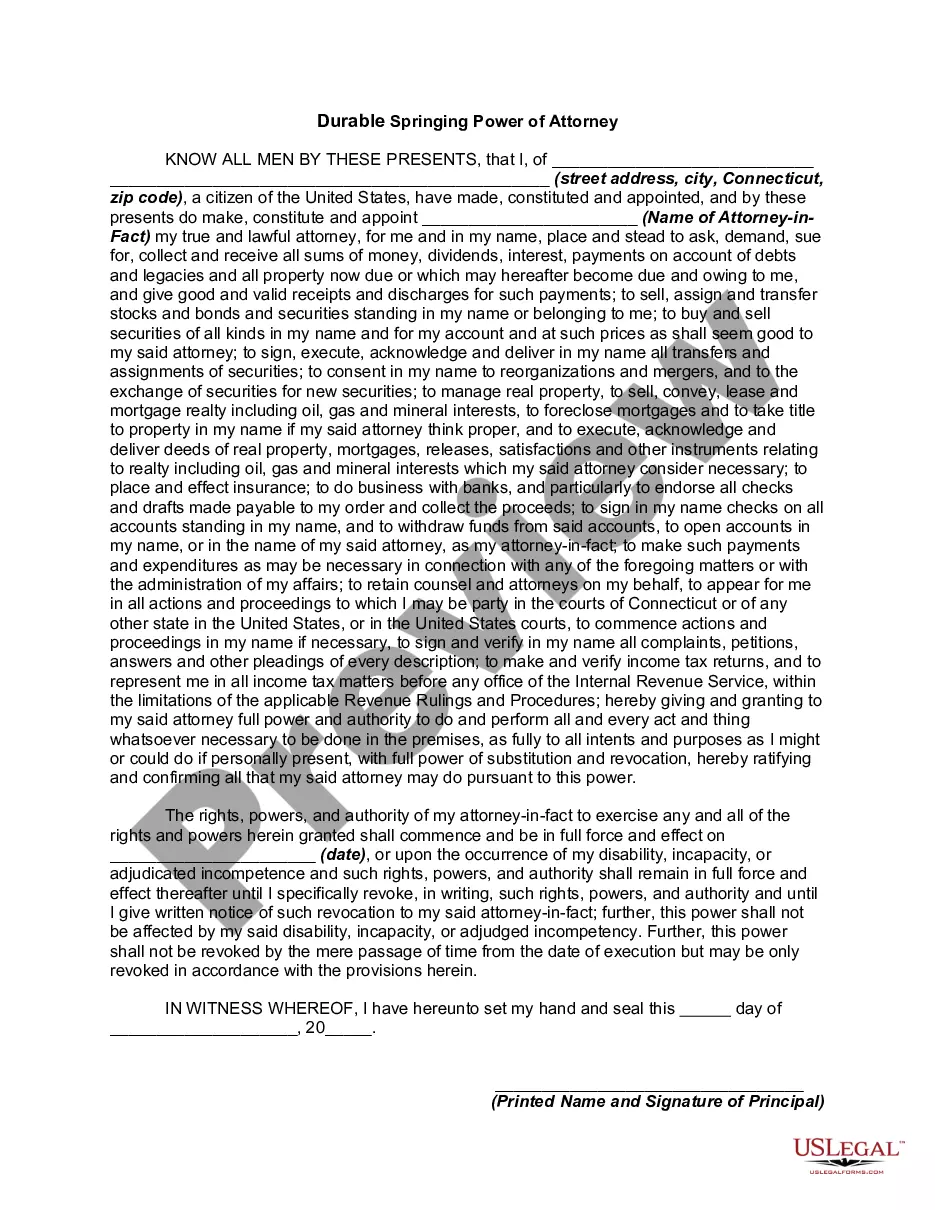
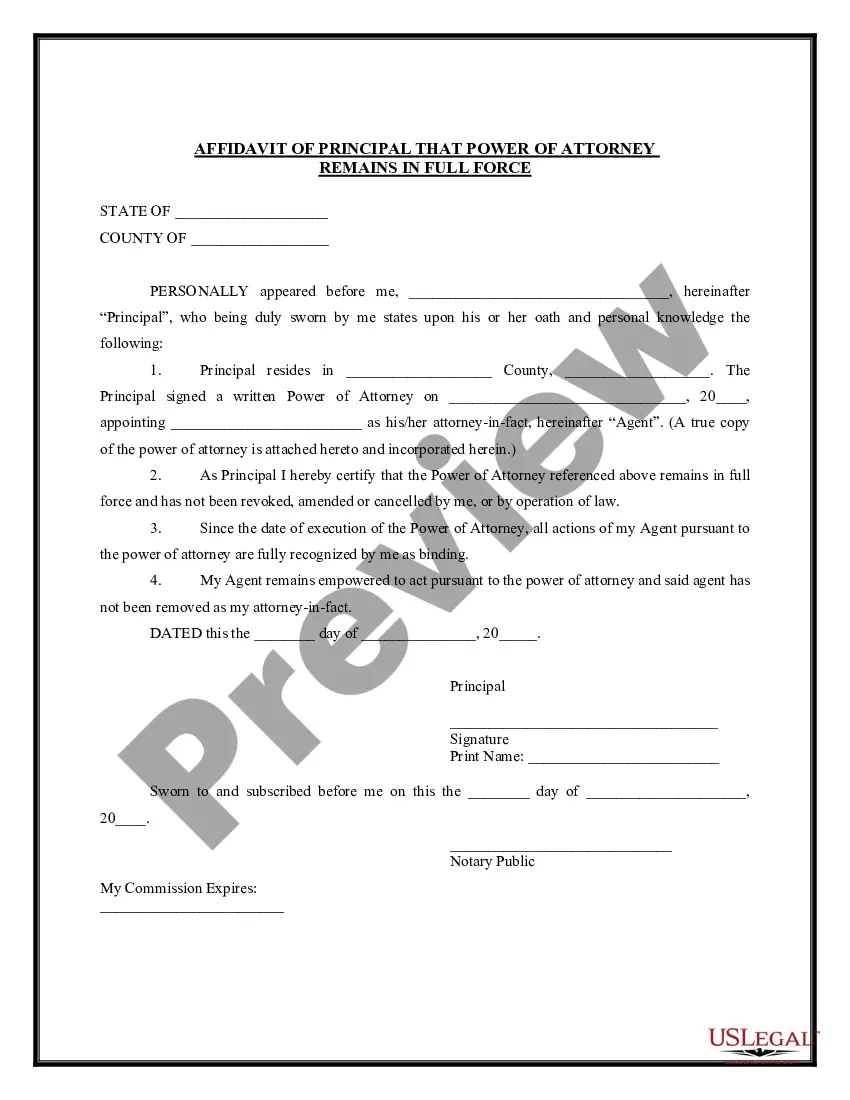
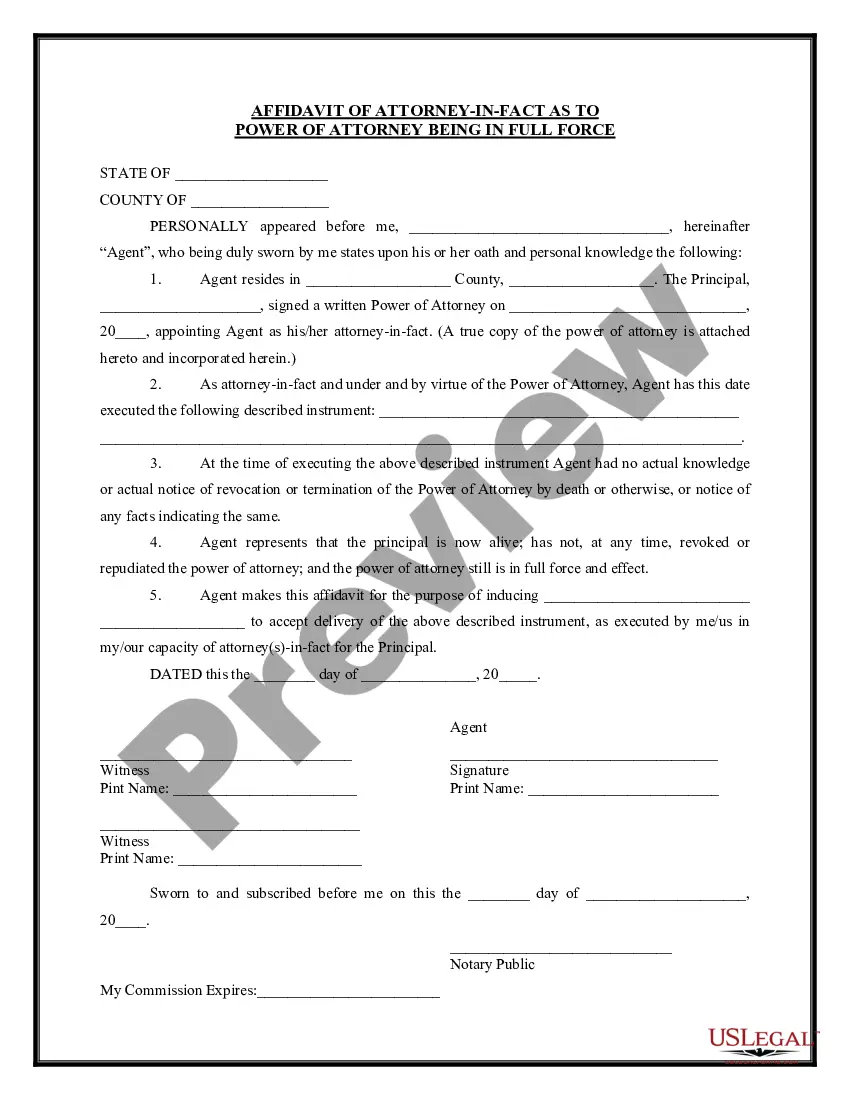
How to fill out Connecticut Affidavit That Springing Power Of Attorney Is In Full Force And Effect?
- If you're a returning user, log into your account and locate the power attorney form, then download it by clicking ‘Download’. Ensure your subscription is current; otherwise, renew it as per your payment plan.
- If you're new to US Legal Forms, start by reviewing the Preview mode and form description to confirm you've selected the correct power attorney form that adheres to your local regulations.
- Should you need another template, utilize the Search tab at the top of the page to find an appropriate document and ensure it meets your specifications.
- Once satisfied, proceed to purchase your document by clicking ‘Buy Now’ and choose your preferred subscription plan. You’ll need to register for an account to access our extensive library.
- Complete your purchase by entering your payment details via credit card or PayPal. After payment, you will be able to download your form.
- Save the template on your device and access it anytime via the My Forms section of your profile.
In conclusion, US Legal Forms provides a comprehensive solution for creating legal documents such as power attorney for bank accounts. Their extensive library and expert assistance ensure you have the tools for success.
Start your journey to legal peace of mind today by exploring our resources!
Form popularity
FAQ
Yes, you can authorize someone to access your bank account through a power of attorney for bank account. This legal arrangement enables you to allow another person to perform banking transactions on your behalf. It is crucial to select someone who you trust implicitly, as they will have access to your funds. Utilizing uslegalforms can simplify the creation of this document, making the authorization process straightforward and secure.
To obtain a power of attorney for your bank account, start by selecting a reliable individual who will act on your behalf. Next, use a trusted resource like uslegalforms to draft the necessary documents according to your personal needs. Complete the forms and have them signed by a notary public to ensure legal validity. This process provides you with peace of mind, knowing that your financial interests are secure.
Yes, it is legal to grant someone access to your bank account through a power of attorney for bank account. This document allows you to designate another person to manage your banking affairs on your behalf. However, it is essential to choose a trustworthy individual, as they will have the ability to withdraw funds and make transactions. Using a reputable platform like uslegalforms can help you create this document easily and ensure it meets legal requirements.
Yes, a Power of Attorney can be denied, particularly if the document does not meet the bank's requirements or state laws. Banks might also seek to verify the identity of the agent or assess the scope of their authority. If your Power of Attorney for bank account is correctly executed and complies with regulations, it is less likely to be challenged. Consider using a reliable service like US Legal Forms to create a valid document.
A Power of Attorney grants an agent the authority to manage your financial affairs, including transactions on your bank account. Once the bank recognizes the Power of Attorney, your designated agent can perform activities such as withdrawals or deposits on your behalf. This arrangement is especially useful if you cannot manage your finances directly. Always ensure that the Power Attorney for bank account is properly created to safeguard your interests.
To add a Power of Attorney to your bank account, start by contacting your bank for their specific requirements. They may ask for a copy of your Power of Attorney document and identification from both you and the agent. After verifying the documents, they will guide you through the necessary steps to ensure that the Power Attorney for bank account is effective. Always check with your bank as procedures can vary between institutions.
Banks may deny a Power of Attorney for various reasons. Commonly, they may question the validity of the document or its compliance with state laws. Additionally, if the Power of Attorney does not explicitly grant the authority needed for the transaction, banks may refuse to honor it. Ensuring that your Power of Attorney for bank account is properly drafted can help avoid these issues.
Banks are cautious about power of attorney to prevent fraud and protect account holders. They want to ensure that the person acting on your behalf is authorized and that the document meets legal standards. This careful approach safeguards both parties and maintains the integrity of the banking system. Using a platform like US Legal Forms can help you create a valid power attorney for bank account, making the process smoother and compliant.
Yes, a holder of a power attorney for bank account can typically add themselves to a checking account, but conditions may apply. The agent must act in your best interest and adhere to the terms outlined in the power of attorney document. Each bank may have its own policies regarding this process, so it’s advisable to check with the bank beforehand. Understanding these nuances can help avoid complications.
A power attorney for bank account gives someone the authority to manage your financial matters. This legal document allows the agent to access funds, make transactions, and conduct banking activities on your behalf. It’s essential to choose a trusted person as your agent, as they will hold significant responsibility over your account. Always consult with your bank to ensure they accept your power of attorney.