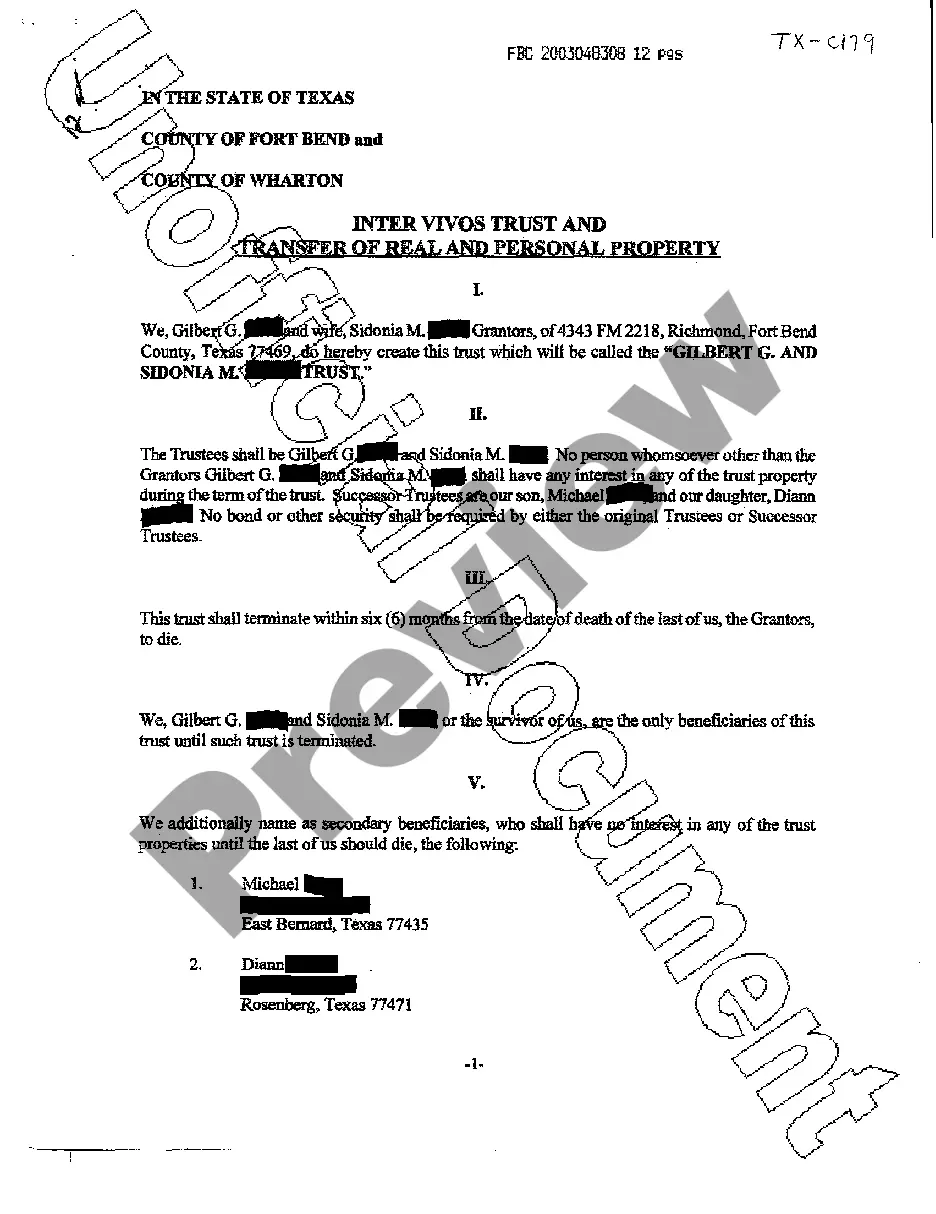
Delaware Last Will and Testament for a Married Person with No Children
Understanding this form
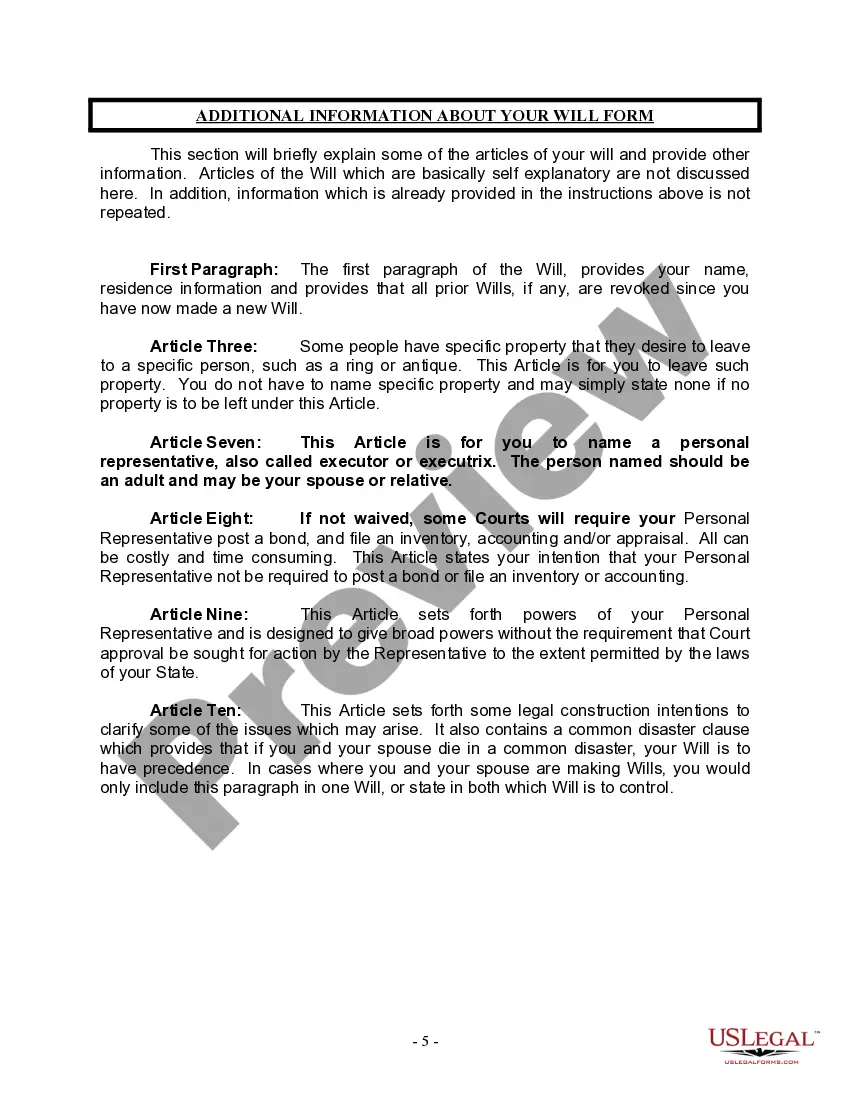
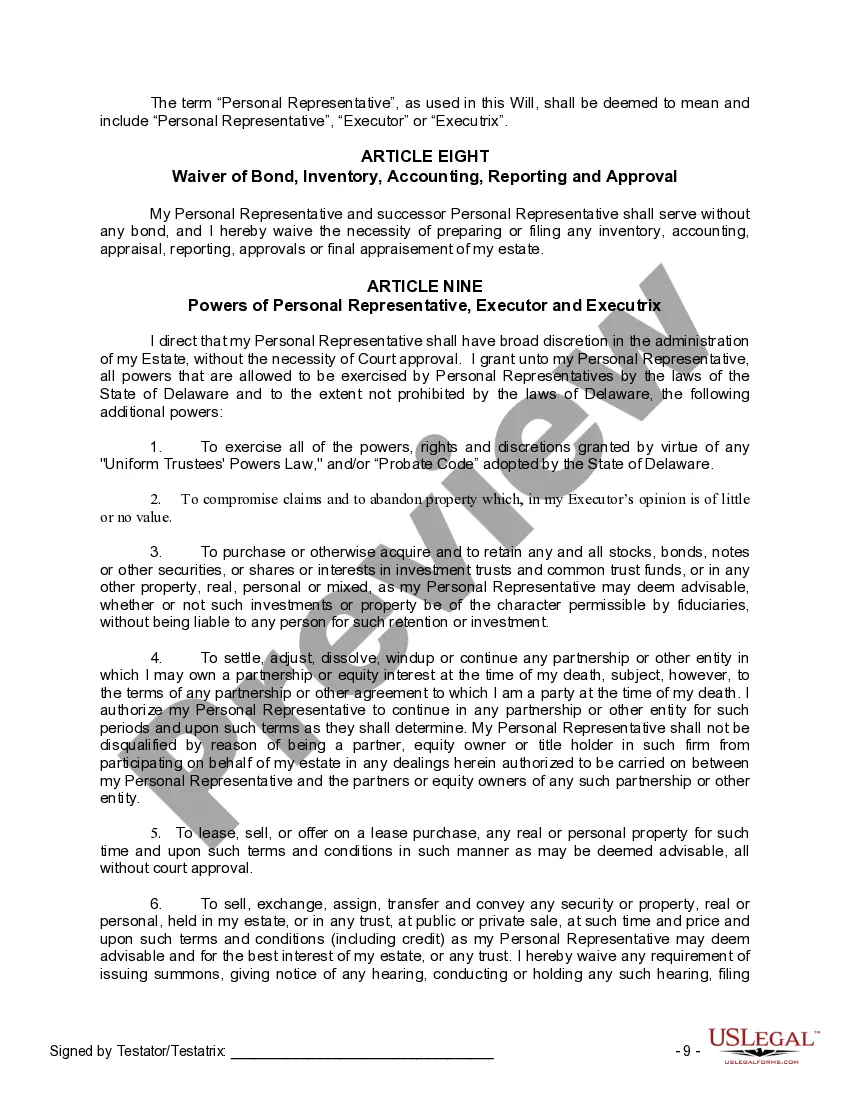
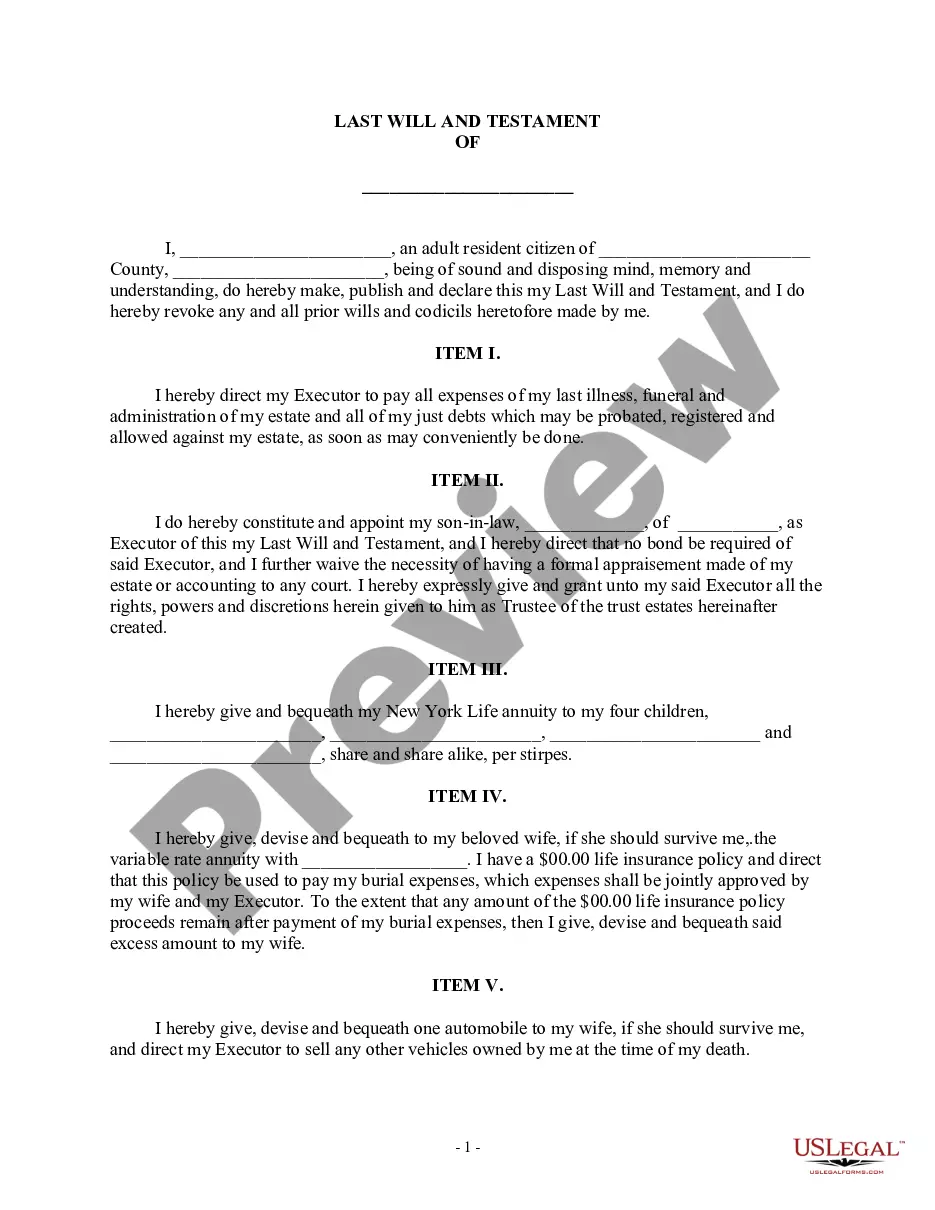
The Last Will and Testament for a Married Person with No Children is a legal document that allows an individual to outline their wishes regarding the distribution of their estate after their death. This particular will is specifically designed for married individuals who do not have children, ensuring that their spouse is the primary beneficiary. The form also includes provisions for appointing a personal representative to manage the estate, making it distinct from other wills that may cater to different family structures.
Form components explained
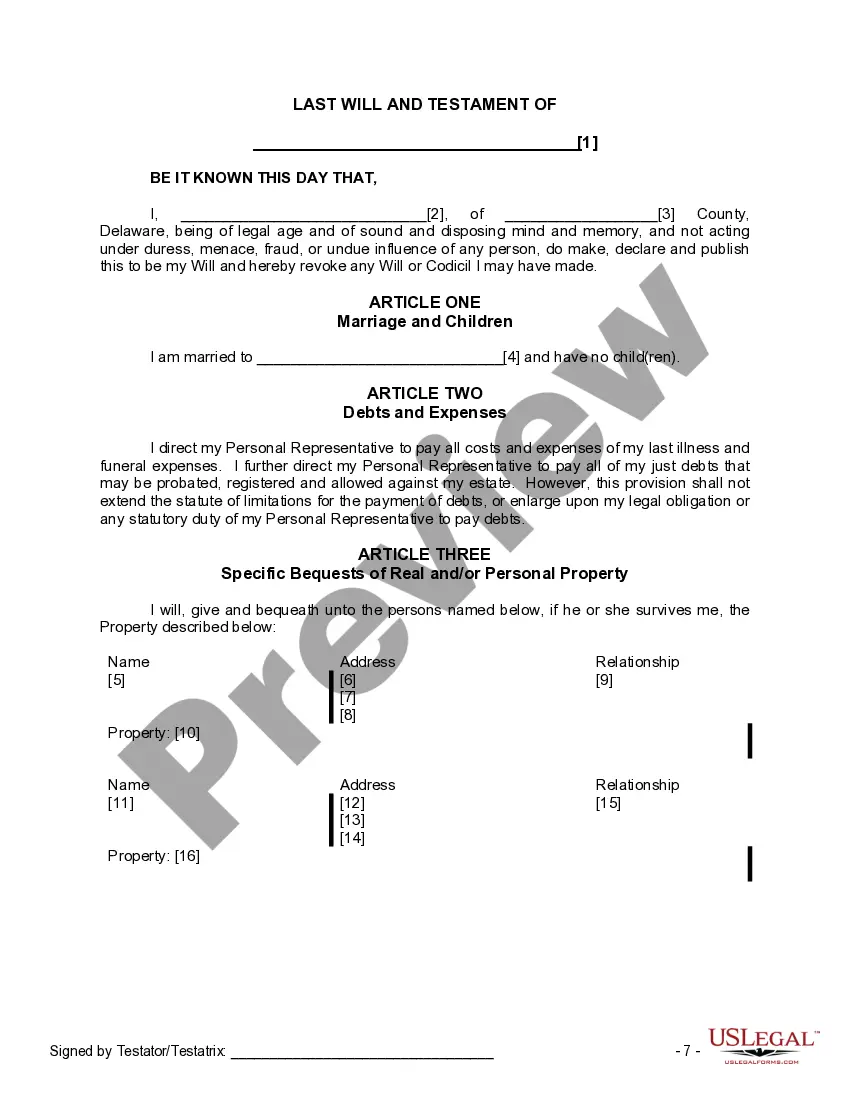
- Identification of the testator and declaration of sound mind.
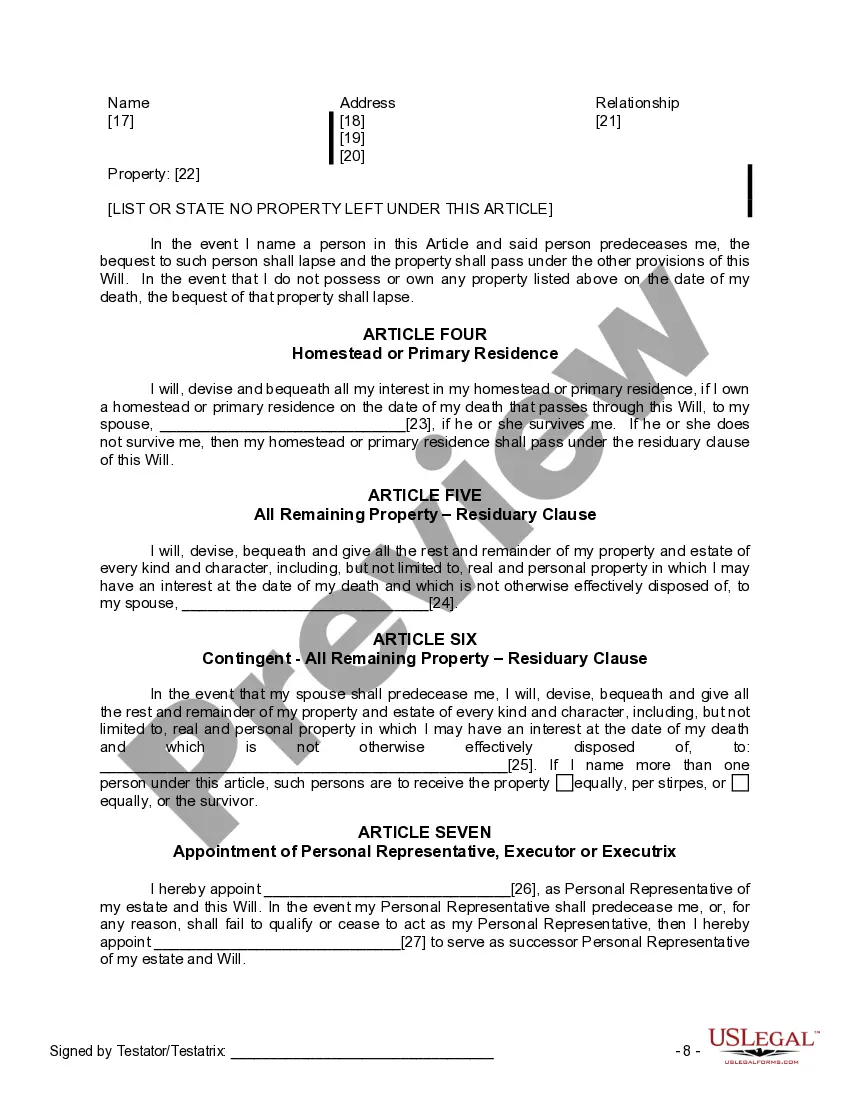
- Appointment of a personal representative to manage the estate.
- Instructions for handling debts and expenses of the estate.
- Specific bequests of property to named individuals.
- Residuary clause detailing distribution of remaining property.
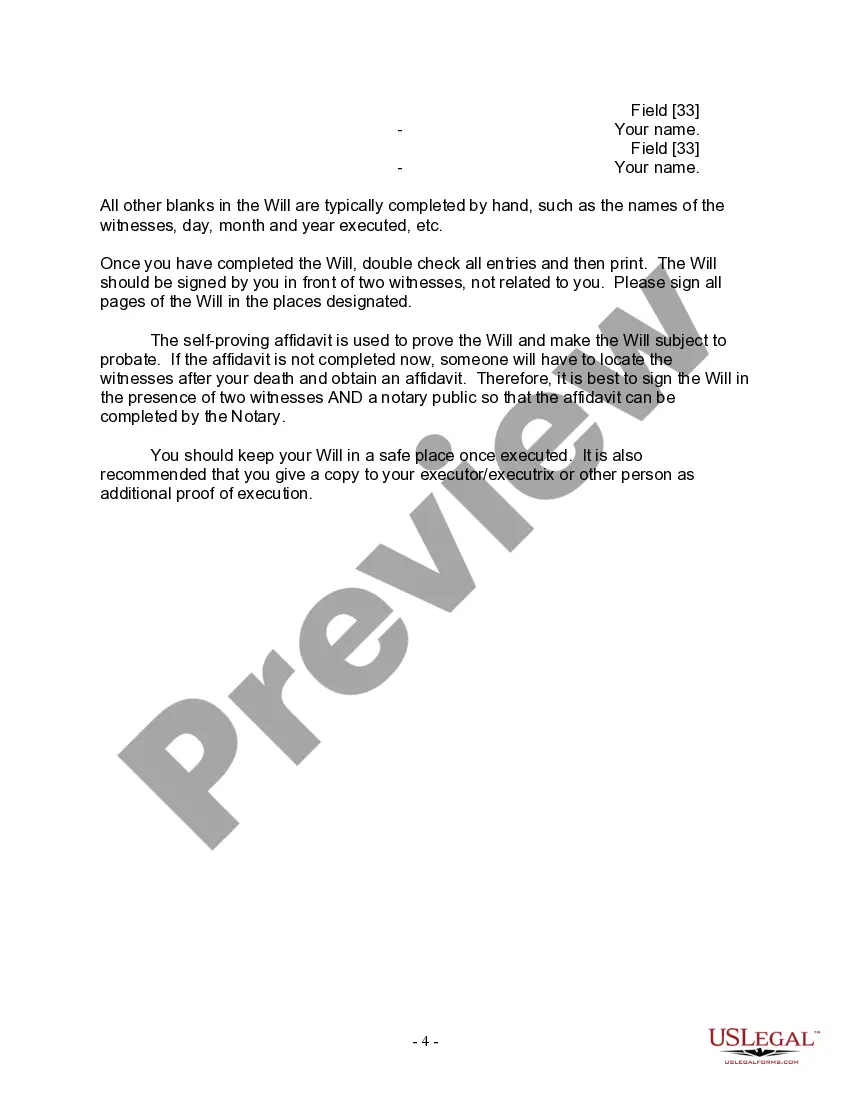
- Signature and witness requirements to ensure legal validity.







When to use this form
This will is essential when a married individual with no children wishes to ensure that their assets are distributed according to their specific preferences upon their death. By using this form, the individual can explicitly designate their spouse as the primary beneficiary and outline any additional wishes regarding their estate, making it a vital tool for estate planning.
Who should use this form
This form is intended for:
- Married individuals without children who want to create a clear will.
- People who wish to ensure their spouse inherits their estate.
- Individuals seeking to appoint a personal representative for their estate.
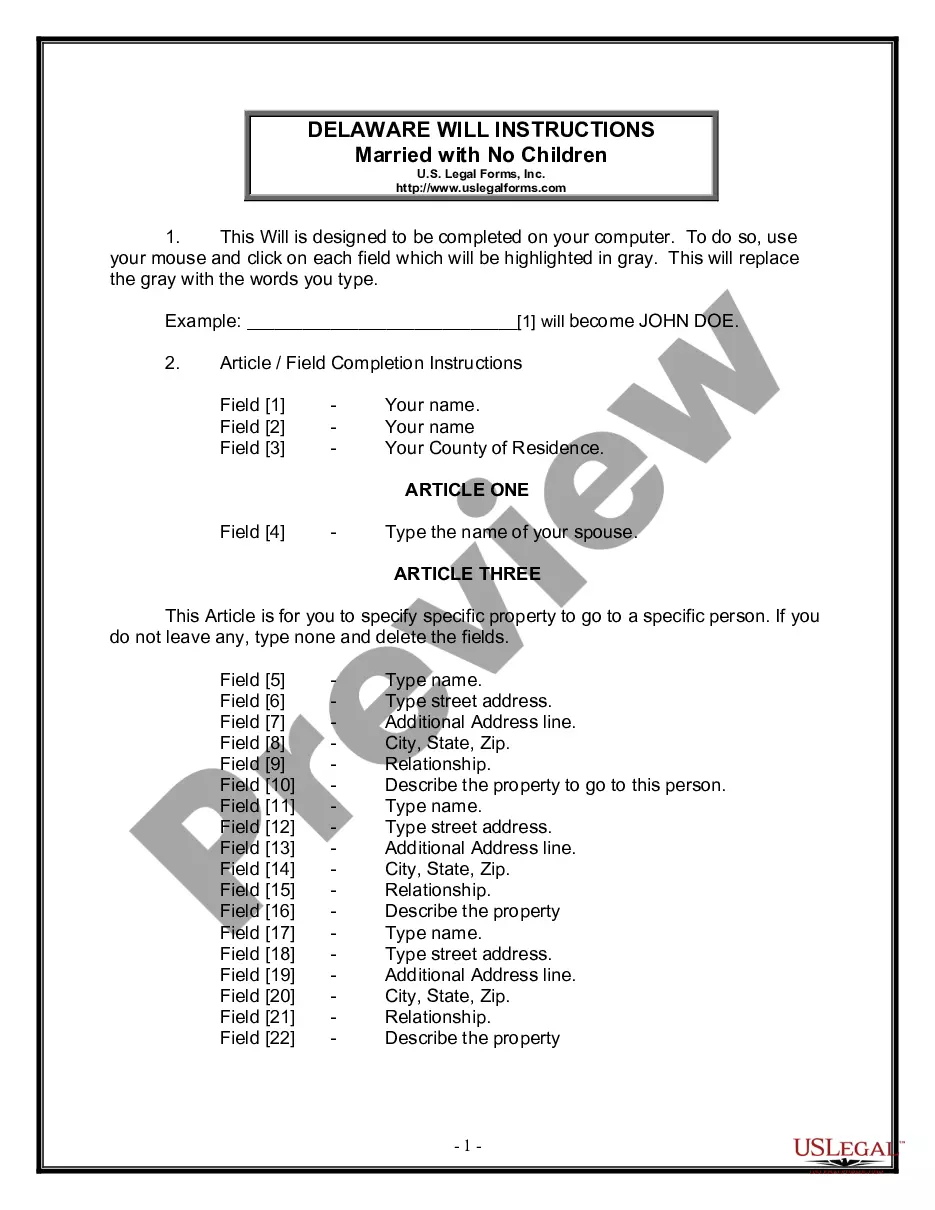
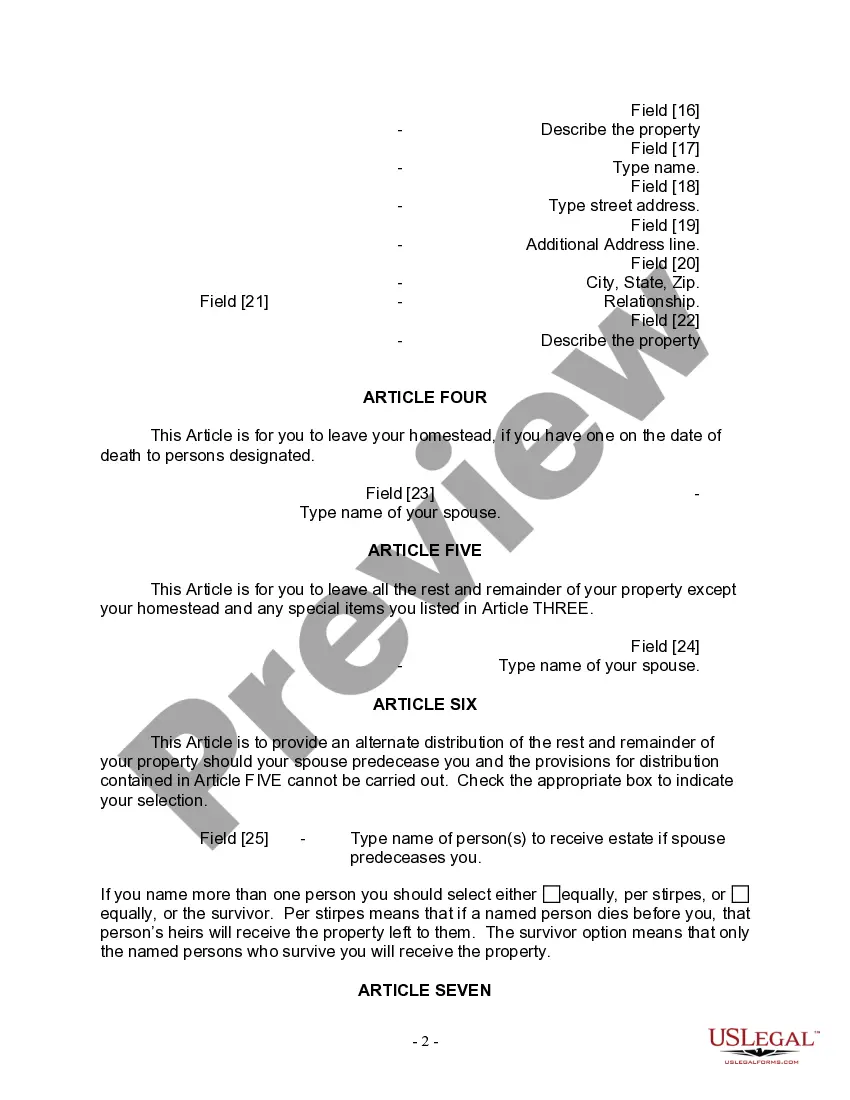
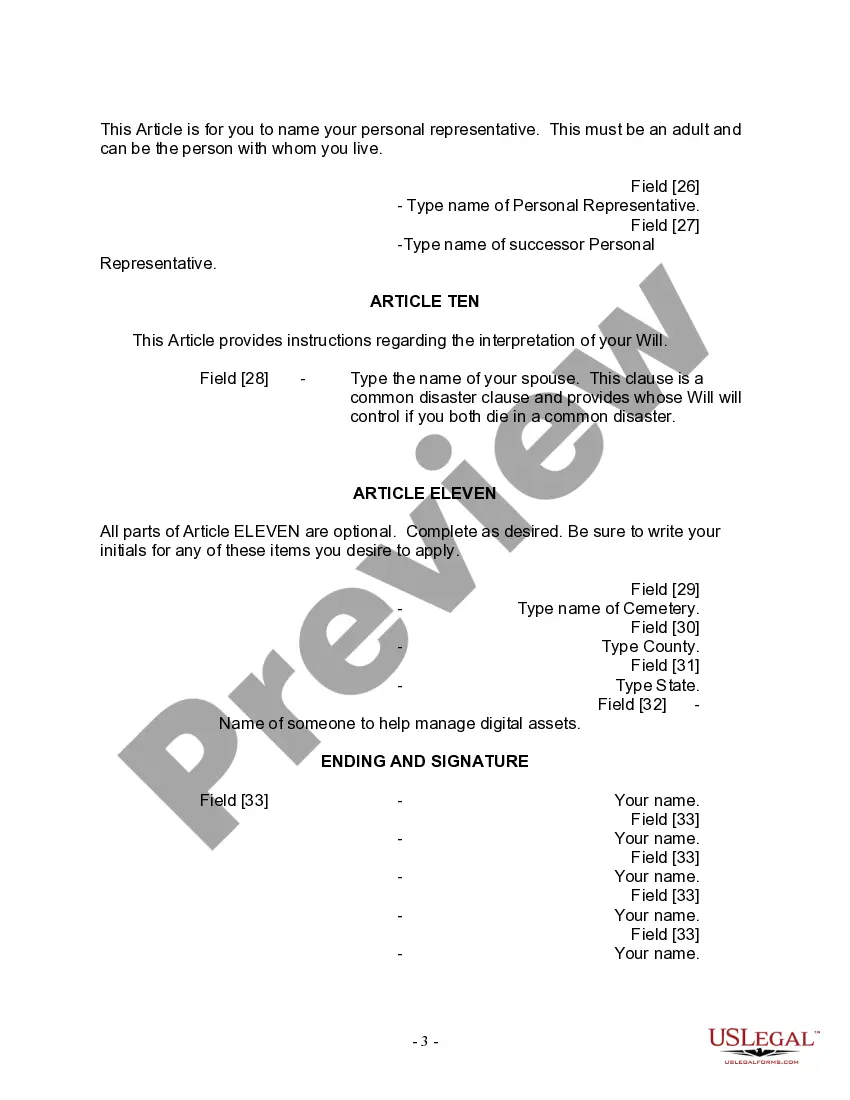
How to complete this form
- Enter the testatorâs full name and residence details.
- Specify the spouse's name and any desired specific bequests.
- Appoint a personal representative and a successor, if applicable.
- Ensure the form is signed in the presence of two disinterested witnesses.
- If needed, have the will notarized according to Delaware requirements.
Notarization requirements for this form
Yes, this form must be notarized to be legally valid. If your state has adopted a self-proving affidavit statute, this will simplify the process of validating the will by incorporating an affidavit that can be signed in the presence of a notary public. US Legal Forms offers integrated online notarization, available 24/7, ensuring a secure and convenient experience.
Get your form ready online
Our built-in tools help you complete, sign, share, and store your documents in one place.
Make edits, fill in missing information, and update formatting in US Legal Forms—just like you would in MS Word.
Download a copy, print it, send it by email, or mail it via USPS—whatever works best for your next step.
Sign and collect signatures with our SignNow integration. Send to multiple recipients, set reminders, and more. Go Premium to unlock E-Sign.
If this form requires notarization, complete it online through a secure video call—no need to meet a notary in person or wait for an appointment.
We protect your documents and personal data by following strict security and privacy standards.

Make edits, fill in missing information, and update formatting in US Legal Forms—just like you would in MS Word.

Download a copy, print it, send it by email, or mail it via USPS—whatever works best for your next step.

Sign and collect signatures with our SignNow integration. Send to multiple recipients, set reminders, and more. Go Premium to unlock E-Sign.

If this form requires notarization, complete it online through a secure video call—no need to meet a notary in person or wait for an appointment.

We protect your documents and personal data by following strict security and privacy standards.
Mistakes to watch out for
- Failing to have the will signed by two witnesses.
- Not appointing a personal representative, leading to default laws being applied.
- Neglecting to update the will after significant life events (e.g., separation, divorce).
Why complete this form online
- Convenience: Access and download the form from anywhere at any time.
- Editability: Modify the document to suit personal needs easily.
- Reliability: Forms are drafted by licensed attorneys to ensure legal compliance.
Quick recap
- Ensure your spouse is the primary beneficiary and specify their rights clearly.
- Designate a trusted personal representative to manage your estate.
- Complete the will alongside witnesses and a notary for legal validity.
- Regularly review and update your will to reflect changes in your life circumstances.
Looking for another form?





Form popularity
FAQ
Yes, a married couple can be included in the same will, typically as co-testators. A joint will allows both partners to designate shared assets and beneficiaries within a single document. However, consider how a Delaware Last Will and Testament for a Married Person with No Children aligns with your individual desires and future estate plans for the best outcomes.
In Delaware, a will must be written, signed by the testator, and witnessed by at least two individuals. Additionally, the testator must be at least 18 years old and mentally competent to create a Delaware Last Will and Testament for a Married Person with No Children. Complying with these requirements ensures your will is valid and enforceable.
A last will and testament does not override a marriage; instead, it complements it by outlining how assets should be distributed upon death. A Delaware Last Will and Testament for a Married Person with No Children serves to clarify your wishes, but it is essential to recognize that marital rights often impact inheritance laws. Therefore, ensuring both partners are informed is crucial.
No, married couples do not have to have separate wills; they can also create joint wills. A joint will may simplify the process, but it can limit future flexibility. A Delaware Last Will and Testament for a Married Person with No Children can be tailored individually or together, depending on your family's needs and preferences.
Having separate wills can be beneficial for married couples, especially if each spouse wishes to designate different beneficiaries or handle specific assets separately. A Delaware Last Will and Testament for a Married Person with No Children allows each partner to tailor their wishes effectively. However, it is essential to communicate openly about your plans to avoid confusion.
For a married couple, the best type of will is often a joint will or two separate wills, depending on individual circumstances. A Delaware Last Will and Testament for a Married Person with No Children can provide clear instructions on asset distribution while ensuring both partners are protected. Each option has its benefits, so discussing your specific needs with a legal professional can help you choose wisely.
In Delaware, a spouse automatically has rights to a portion of the estate, but they do not automatically become the sole beneficiary unless specified in a will. To ensure your spouse inherits what you intend, it is crucial to create a clear Delaware Last Will and Testament for a Married Person with No Children. This document should detail your wishes and any other beneficiaries you may wish to include. Using resources from platforms like US Legal Forms can simplify this process.
Yes, a handwritten will, or holographic will, can be valid in Delaware as long as it is signed by the person writing it and clearly outlines their wishes. However, there are specific requirements that must be met, and these wills may complicate the probate process. Therefore, consider creating a standard Delaware Last Will and Testament for a Married Person with No Children using formal templates available through platforms like US Legal Forms for clarity and adherence to legal standards.
In Delaware, when a husband dies, the wife is entitled to a statutory share of the estate, which varies if there are children or not. If there are no children, she is entitled to the entire estate unless the will states otherwise. It is crucial to write a comprehensive Delaware Last Will and Testament for a Married Person with No Children to ensure her rights are protected. Consulting with a legal expert can help ensure your intentions are clear.
Yes, in Delaware, your spouse typically receives a share of your inheritance, unless you specify otherwise in your Delaware Last Will and Testament for a Married Person with No Children. State laws guarantee that a surviving spouse has inheritance rights, which can include a minimum share of your estate. To clarify your wishes, it is essential to outline your intentions in your will clearly.