Delaware Warranty Deed for Separate or Joint Property to Joint Tenancy
Overview of this form
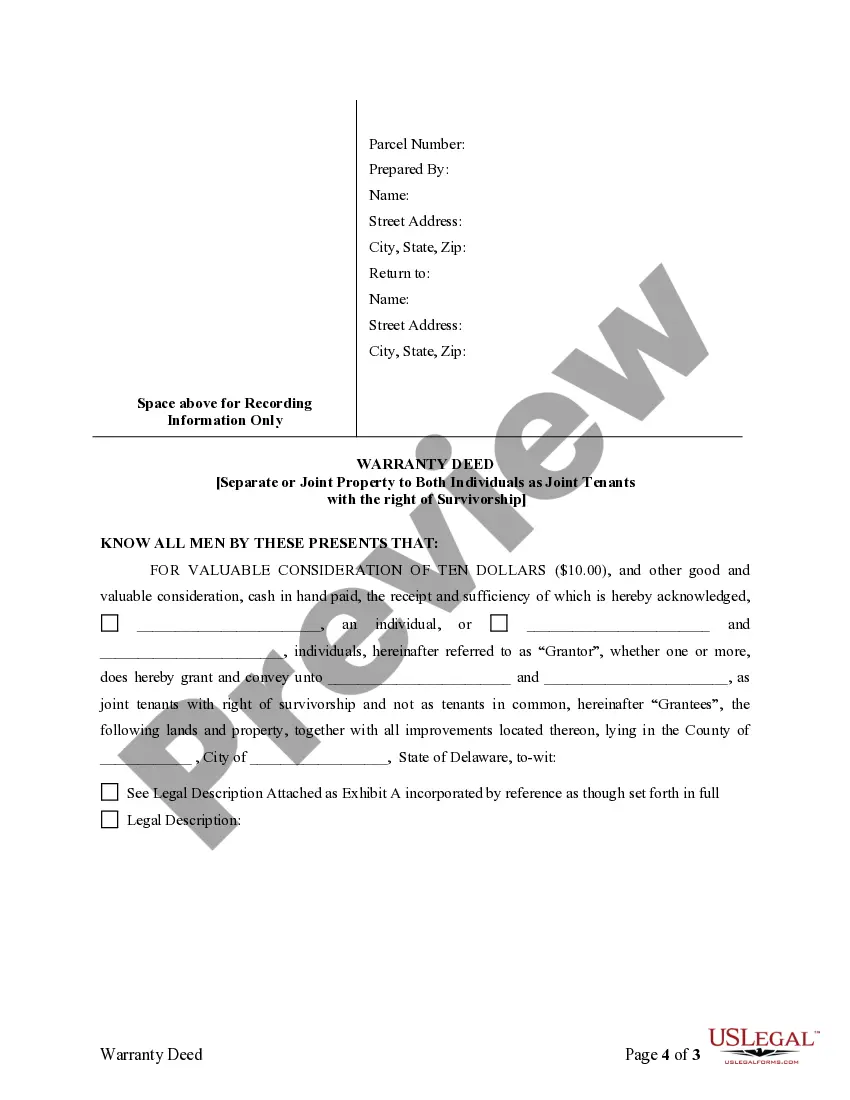
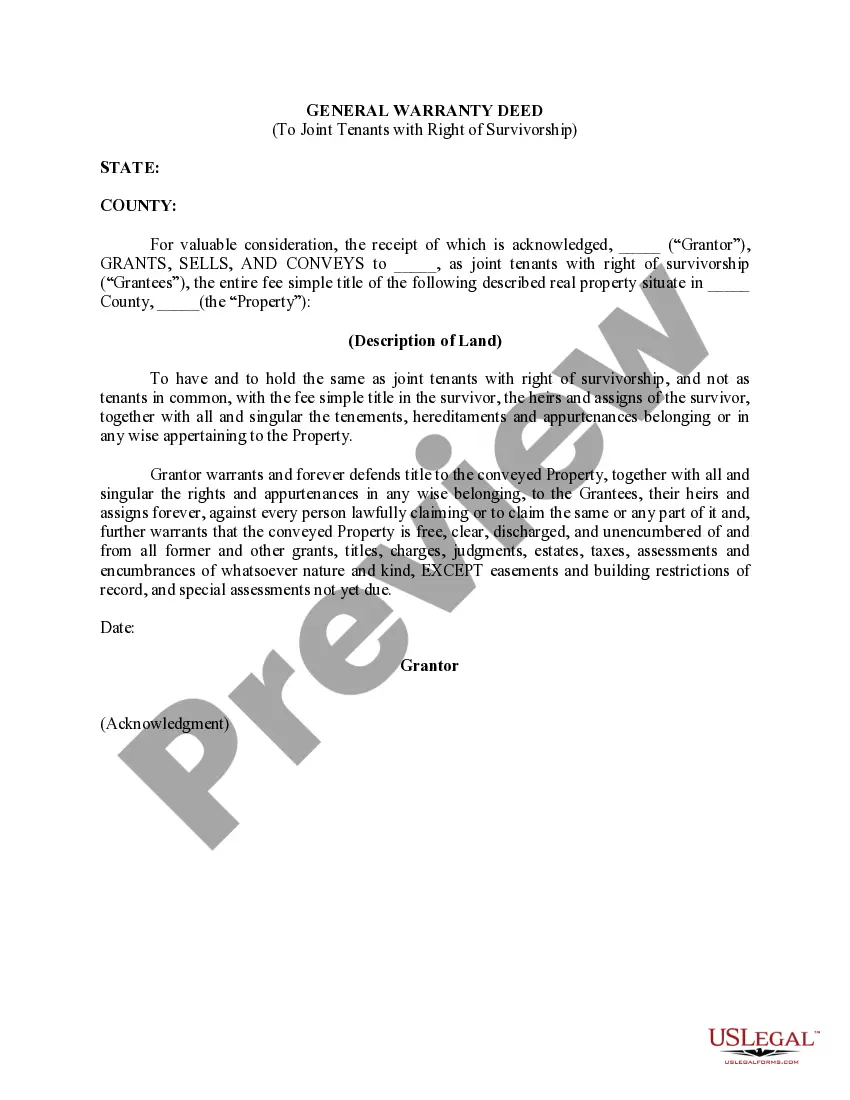
The Warranty Deed for Separate or Joint Property to Joint Tenancy is a legal document that transfers ownership of property from one or more grantors to one or more grantees, establishing joint tenancy with right of survivorship. This means that if one tenant dies, their ownership interest automatically passes to the surviving tenant(s), avoiding probate. This form is specifically tailored for properties in Delaware and assists in ensuring that joint ownership rights are clearly documented and legally enforceable.
Main sections of this form
- Names of grantor(s) and grantee(s), establishing who is transferring and receiving the property.
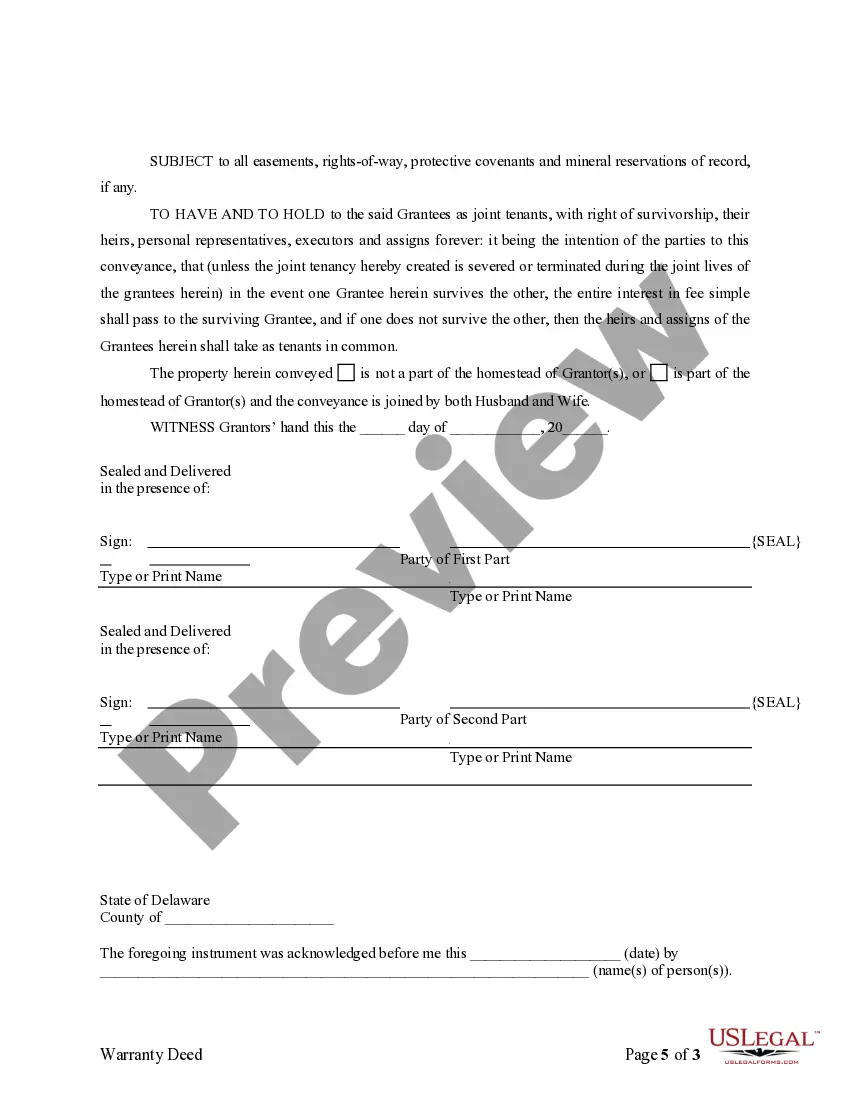
- A declaration of the type of tenancy being created, specifically joint tenancy with right of survivorship.
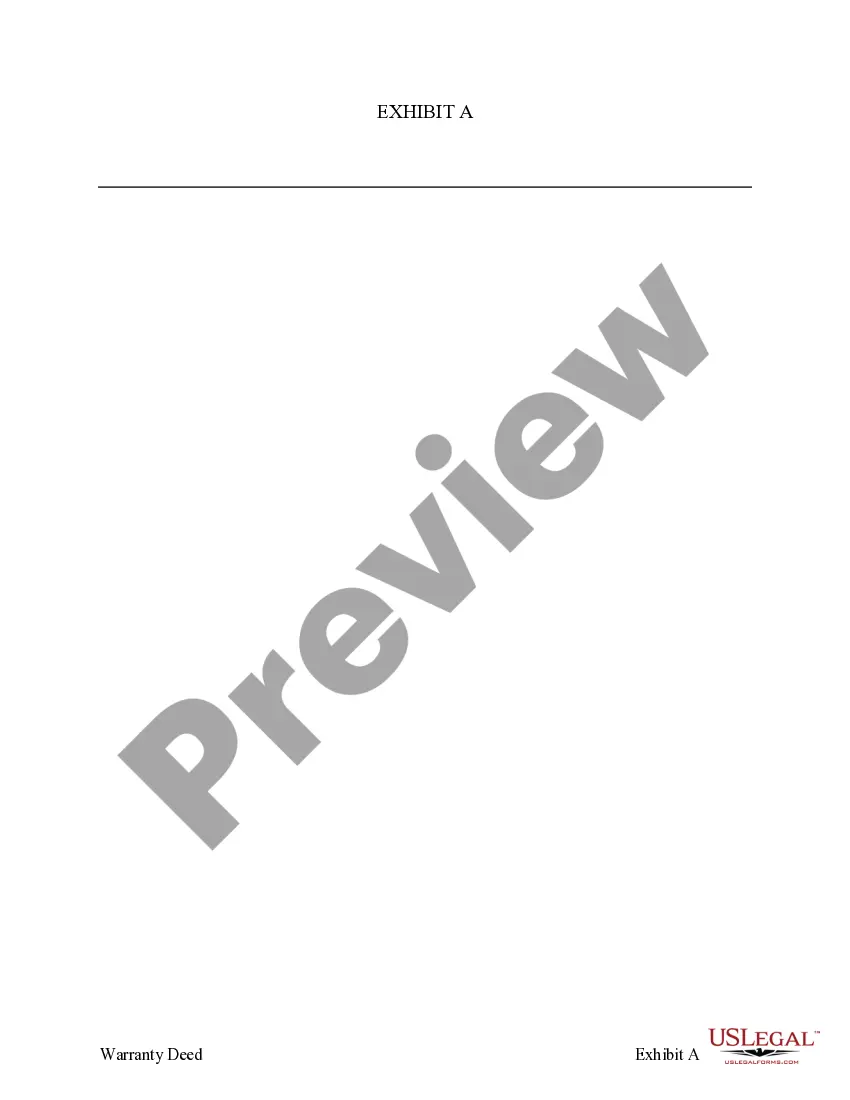
- Description of the property being transferred, including its location and any improvements.
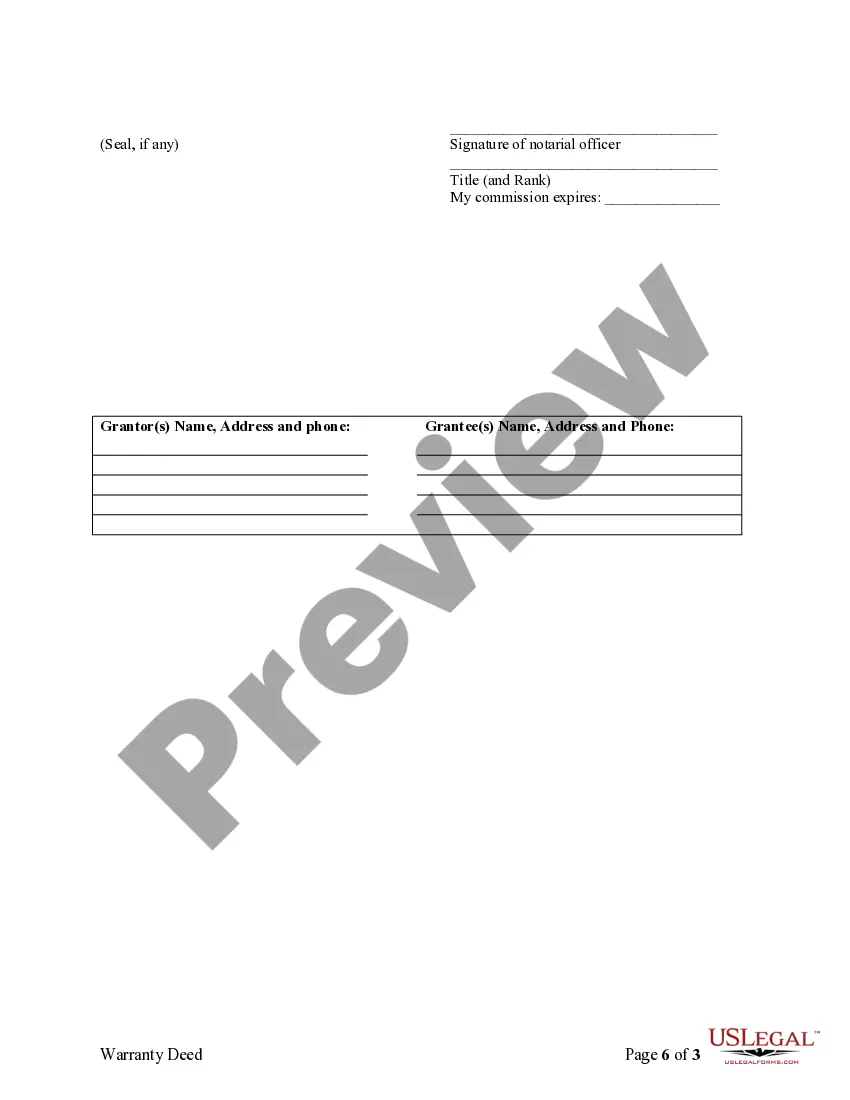
- Spaces for signatures of the grantors and acknowledgments from a notary public.
- Options for indicating whether the property is part of the grantor(s)' homestead.


When this form is needed
This form should be used when individuals wish to transfer property into joint tenancy, particularly in situations where they want to ensure that the surviving tenant(s) will automatically inherit ownership without the need for probate. Common scenarios include transferring property between spouses, family members, or business partners who want to establish clear rights of survivorship.
Who should use this form
This form is suitable for:
- Individuals who own property and wish to add a co-owner to the title.
- Married couples looking to ensure that their property will pass seamlessly to one another upon death.
- Partners or friends who want to jointly own real estate and wish to establish rights of survivorship.
How to prepare this document
- Identify all grantors and grantees, ensuring correct names are used.
- Specify the property being transferred, including location and any relevant details.
- Select whether the property is part of the homestead of the grantor(s) and make the appropriate declaration.
- Sign the form in the presence of a notary public, who will then acknowledge the signatures.
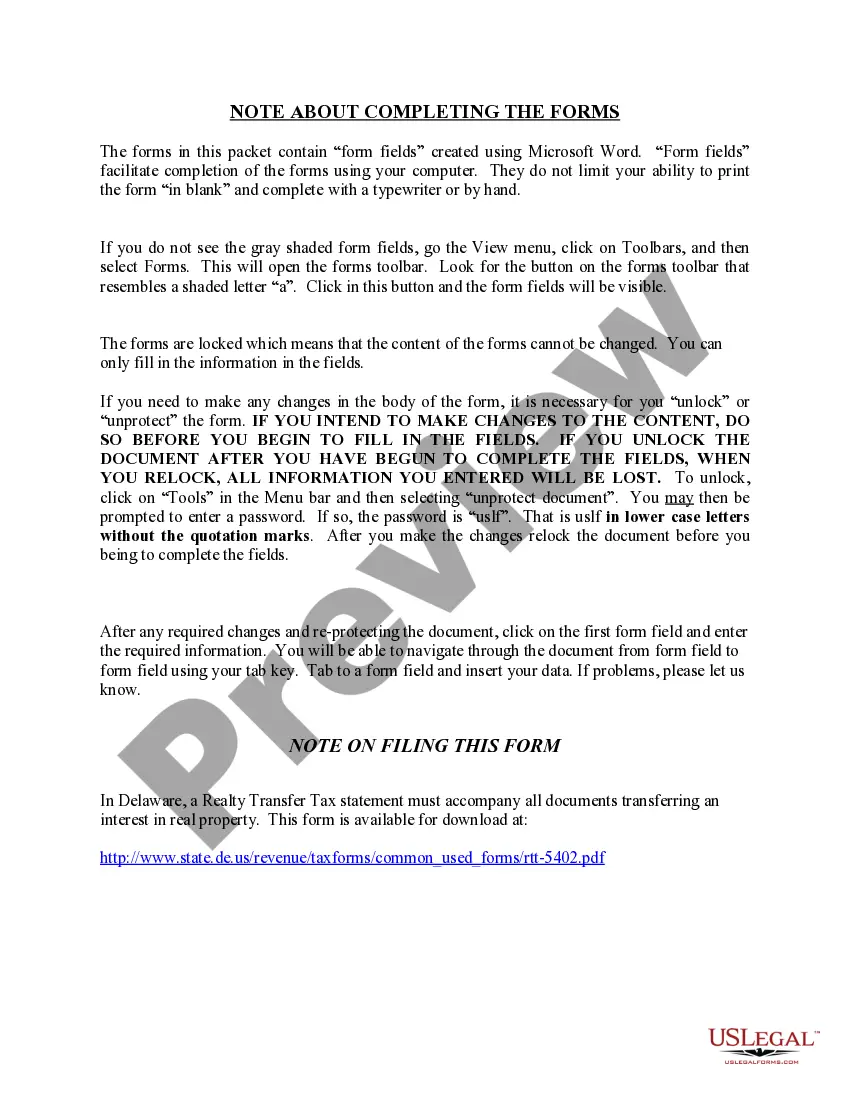
- File the completed warranty deed along with the Realty Transfer Tax statement with the appropriate county office.
Does this form need to be notarized?
To make this form legally binding, it must be notarized. Our online notarization service, powered by Notarize, lets you verify and sign documents remotely through an encrypted video session.
Get your form ready online
Our built-in tools help you complete, sign, share, and store your documents in one place.
Make edits, fill in missing information, and update formatting in US Legal Forms—just like you would in MS Word.
Download a copy, print it, send it by email, or mail it via USPS—whatever works best for your next step.
Sign and collect signatures with our SignNow integration. Send to multiple recipients, set reminders, and more. Go Premium to unlock E-Sign.
If this form requires notarization, complete it online through a secure video call—no need to meet a notary in person or wait for an appointment.
We protect your documents and personal data by following strict security and privacy standards.

Make edits, fill in missing information, and update formatting in US Legal Forms—just like you would in MS Word.

Download a copy, print it, send it by email, or mail it via USPS—whatever works best for your next step.

Sign and collect signatures with our SignNow integration. Send to multiple recipients, set reminders, and more. Go Premium to unlock E-Sign.

If this form requires notarization, complete it online through a secure video call—no need to meet a notary in person or wait for an appointment.

We protect your documents and personal data by following strict security and privacy standards.
Avoid these common issues
- Failing to include all required signatures from grantors.
- Not properly describing the property being transferred.
- Omitting the necessary tax statement when filing.
Advantages of online completion
- Convenient access to a professionally drafted legal form, ensuring accuracy and compliance with Delaware law.
- Editable fields allow users to complete the form digitally, reducing chances of handwritten errors.
- Instant availability for download, allowing for immediate use without waiting for postal delivery.
Summary of main points
- This Warranty Deed establishes joint tenancy with right of survivorship.
- It is important to complete and file the Realty Transfer Tax statement in Delaware.
- Notarization is required for the form to be legally binding.
Looking for another form?
Form popularity
FAQ
To transfer property with a warranty deed, first, you need to draft the deed, including the grantor's and grantee's information. Next, you must sign the deed in the presence of a notary public and file it with your local county office. Utilizing a Delaware Warranty Deed for Separate or Joint Property to Joint Tenancy through US Legal Forms can streamline this process, making it straightforward and efficient.
Yes, a warranty deed serves as proof of ownership of a property. It indicates that the grantor has the legal right to transfer the title, ensuring clear and marketable title to the buyer. Thus, using a Delaware Warranty Deed for Separate or Joint Property to Joint Tenancy establishes ownership while protecting your interests.
Joint tenants signifies that two or more people hold title to the property together. This means that each tenant has equal rights to the property, and if one tenant passes away, their share automatically transfers to the surviving tenants. A Delaware Warranty Deed for Separate or Joint Property to Joint Tenancy ensures that this arrangement is legally recognized.
A warranty deed offers several protections, but it also comes with disadvantages. For instance, it provides full liability for any title defects that may arise after the transfer. Additionally, the Delaware Warranty Deed for Separate or Joint Property to Joint Tenancy may expose you to future legal claims if issues with the property arise.
Yes, you can transfer a deed without an attorney, but it is advisable to have professional guidance. Using a Delaware Warranty Deed for Separate or Joint Property to Joint Tenancy simplifies the process, yet understanding local laws is essential. If you're unsure, consider using resources from US Legal Forms to navigate the process effectively.
Filling out a warranty form involves several key steps to ensure it meets legal standards. Begin with the grantor's and grantee's names, followed by the property's legal description. It is advisable to mention Delaware Warranty Deed for Separate or Joint Property to Joint Tenancy in the ownership clause for clarity. To make this process easier, consider using resources like US Legal Forms, which can provide templates and assistance tailored to your needs.
To complete a warranty deed, start by gathering all pertinent information about the property and its owners. Clearly write the names of both the grantor and grantee, followed by an exact description of the property. When specifying the type of ownership, you may want to include that it’s a Delaware Warranty Deed for Separate or Joint Property to Joint Tenancy. Always double-check your entries for accuracy to avoid complications later.
Filling out a warranty deed form requires accuracy and attention to detail. First, ensure you have the necessary details, such as the names of the grantor and grantee, a legal description of the property, and the type of ownership, like Delaware Warranty Deed for Separate or Joint Property to Joint Tenancy. Follow the form's instructions carefully, and consider utilizing platforms like US Legal Forms for templates and guidance to streamline the process.
Individuals transferring property through a Delaware Warranty Deed for Separate or Joint Property to Joint Tenancy reap significant benefits. This legal document protects both parties by ensuring clear ownership rights. Additionally, it simplifies the process of transferring property interests upon the death of one owner, leading to less legal hassle. Essentially, anyone looking to solidify property arrangements should consider utilizing this deed.
Yes, a joint tenancy can be established using a warranty deed. This type of deed guarantees the grantor's ownership and their right to transfer the property to joint tenants. By using a Delaware Warranty Deed for Separate or Joint Property to Joint Tenancy, you effectively set up the ownership structure that ensures both rights and responsibilities among co-owners. It's essential to complete this process carefully to avoid future conflicts.