Delaware Limited Power of Attorney where you Specify Powers with Sample Powers Included
Understanding this form
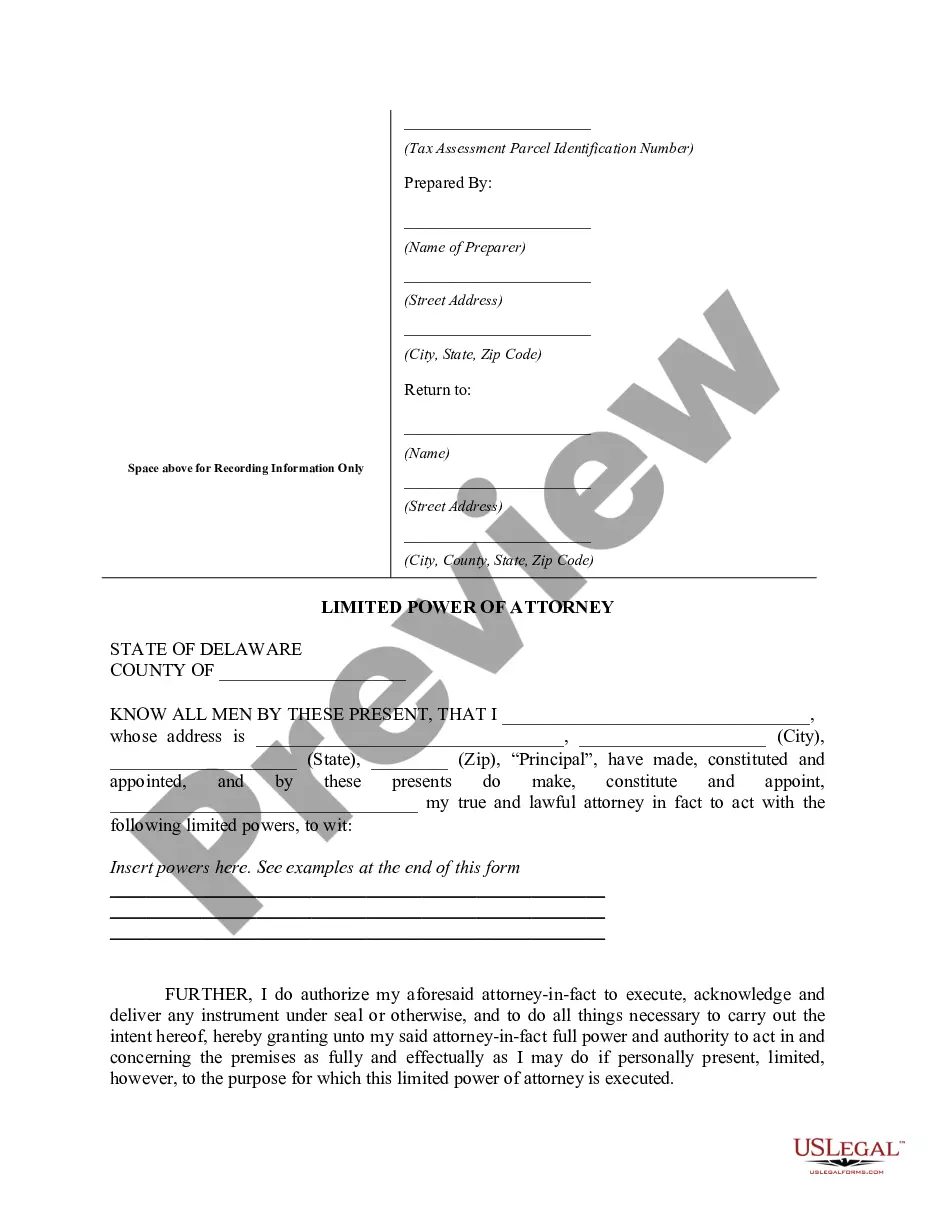
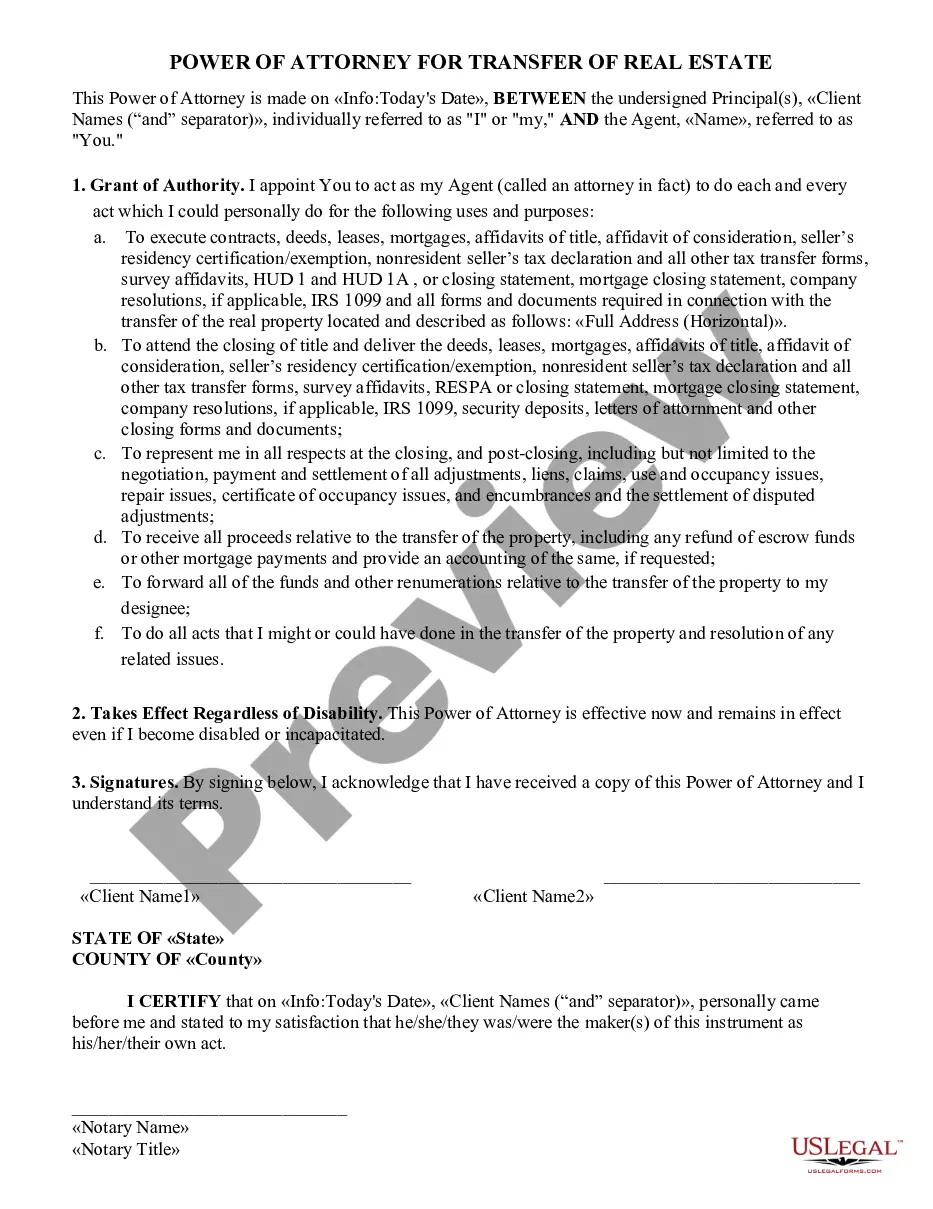
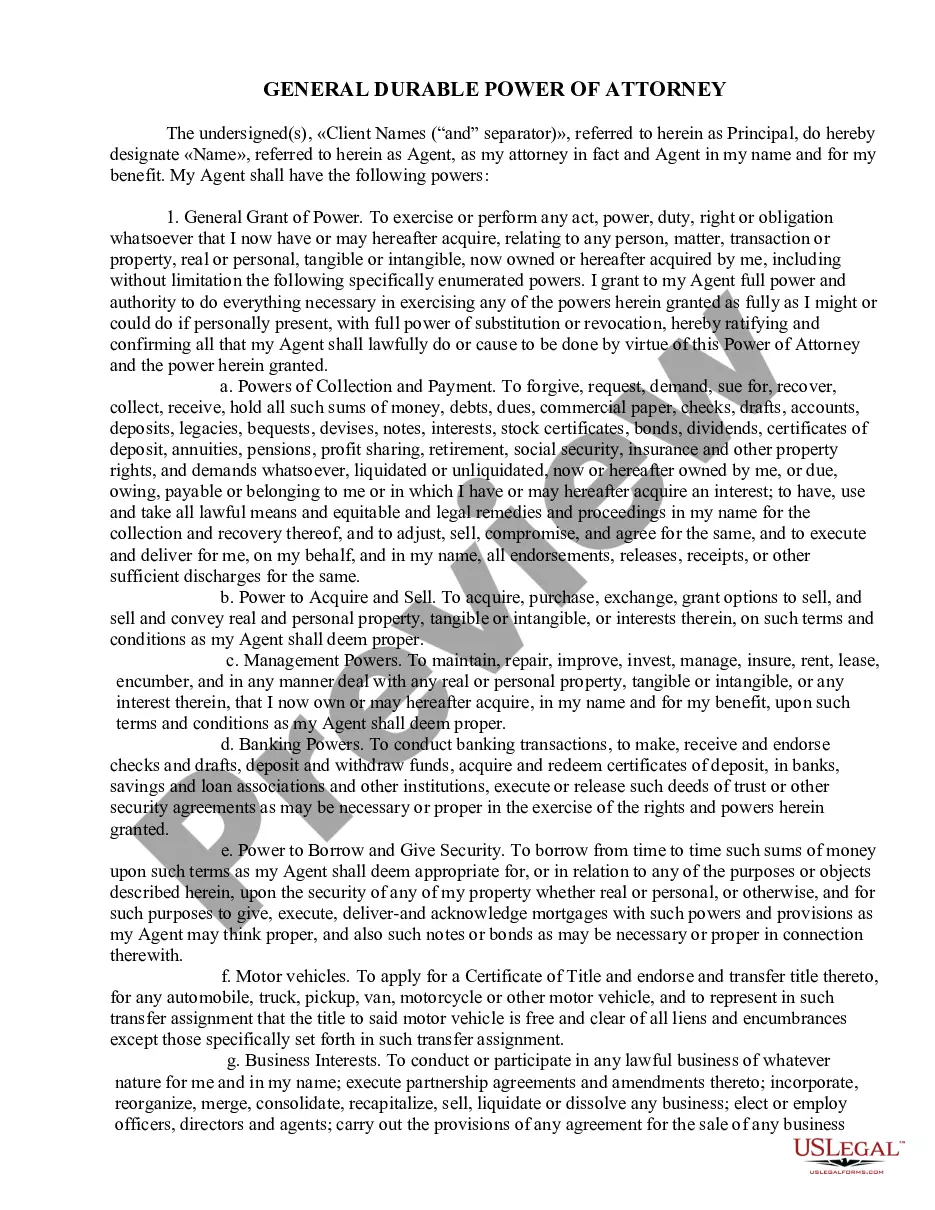
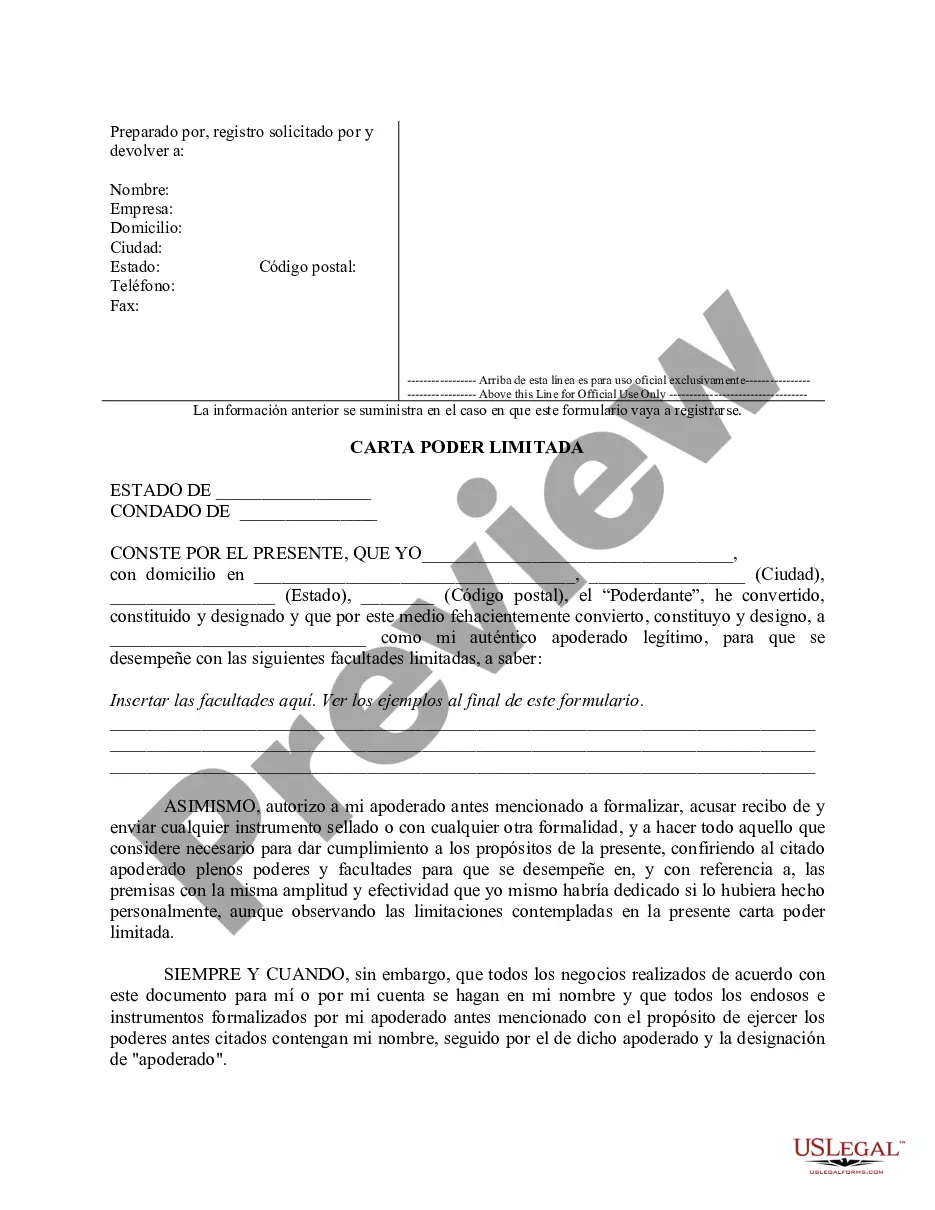
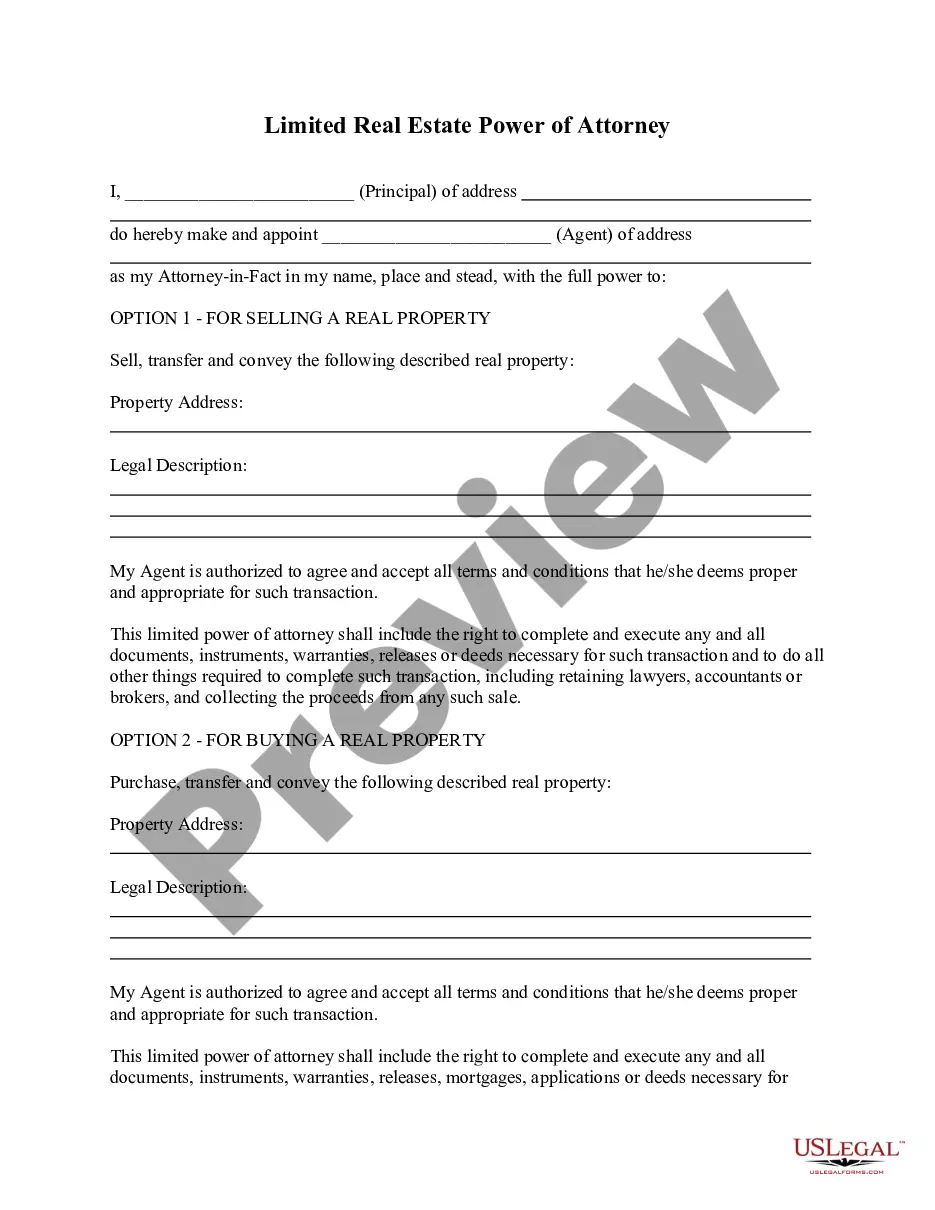
The Limited Power of Attorney is a legal document that allows you, the Principal, to designate a specific individual, known as the Attorney-in-Fact, to act on your behalf with limited powers specified within the form. This power can be tailored to suit your needs, making it distinct from a general power of attorney. Unlike a general power of attorney, which grants broad authority, this form only empowers the agent to perform designated tasks specified by you. It is particularly useful in scenarios where you need someone to handle specific matters, such as financial transactions or decision-making, while retaining control over others.
Key components of this form
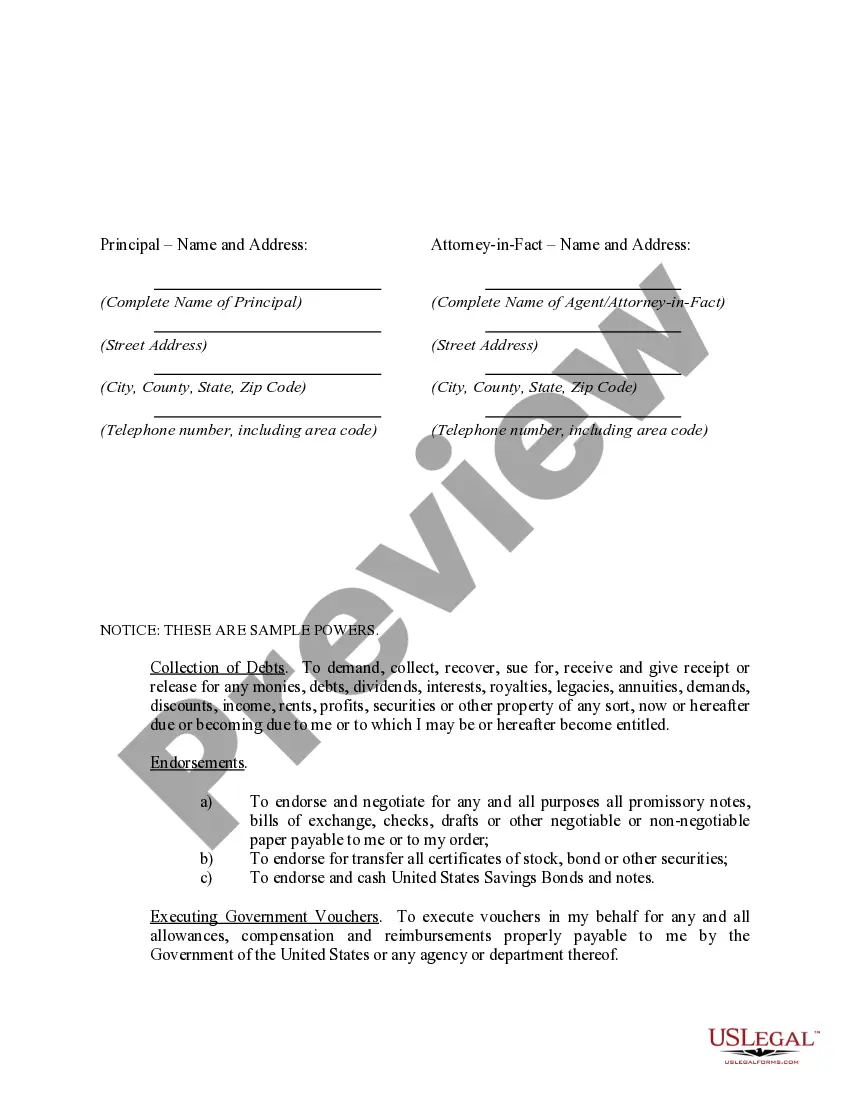
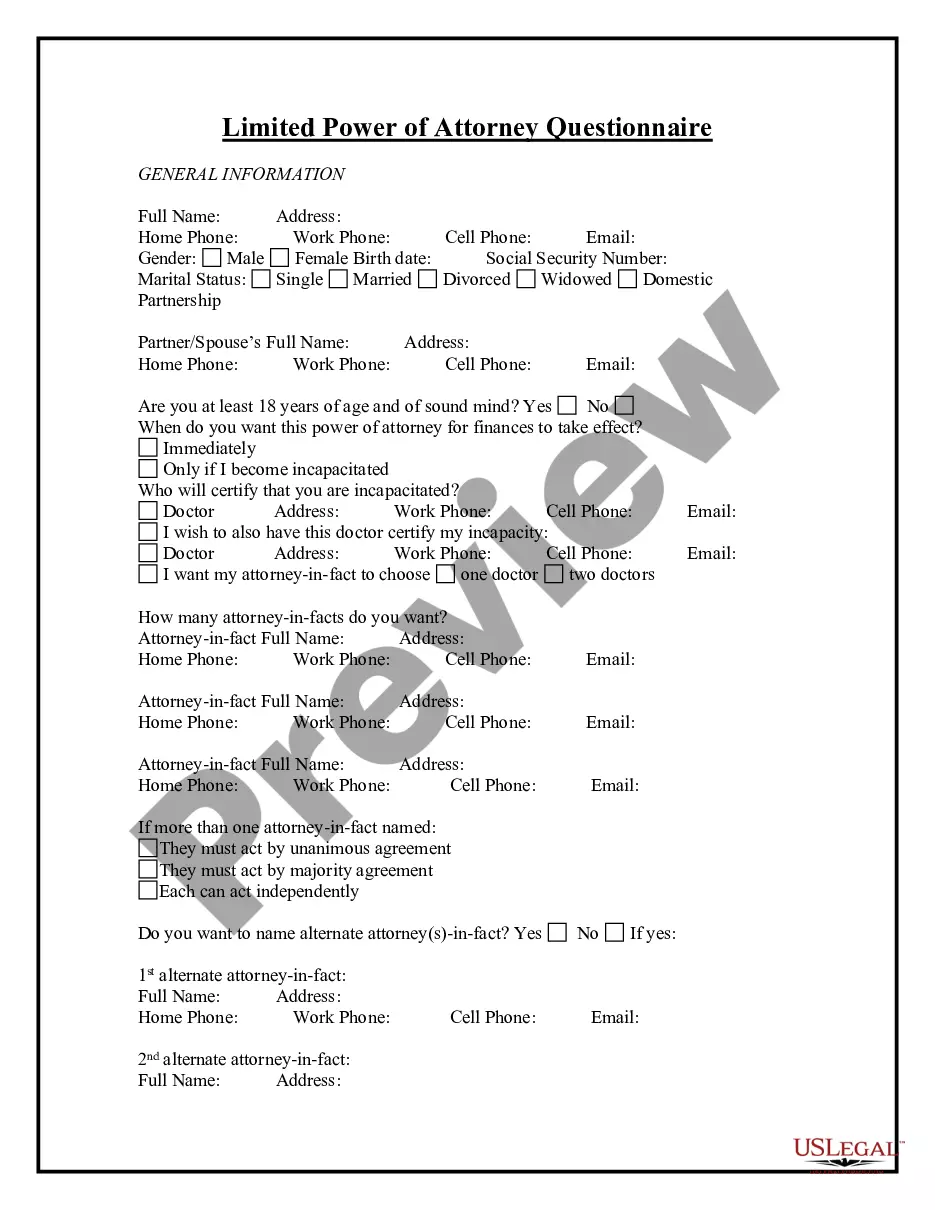
- Principal Information: Details about the person granting the power.
- Attorney-in-Fact Information: Information regarding the designated agent.
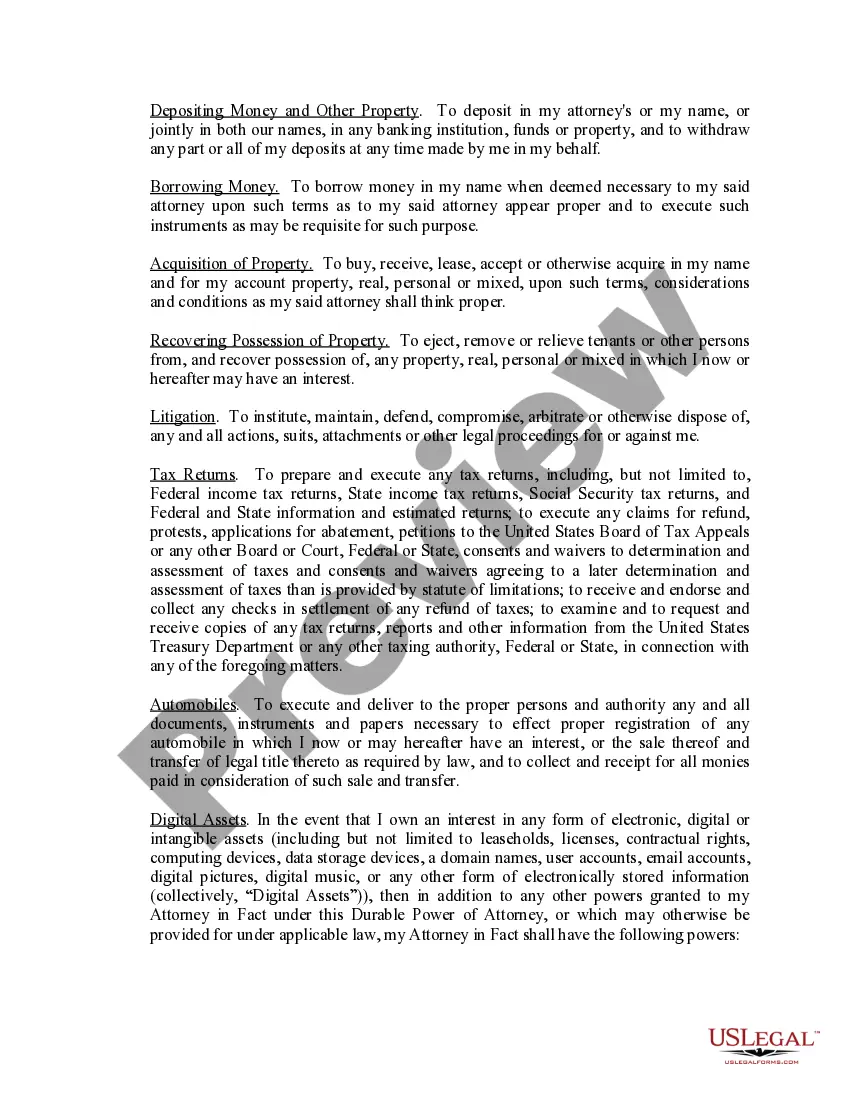
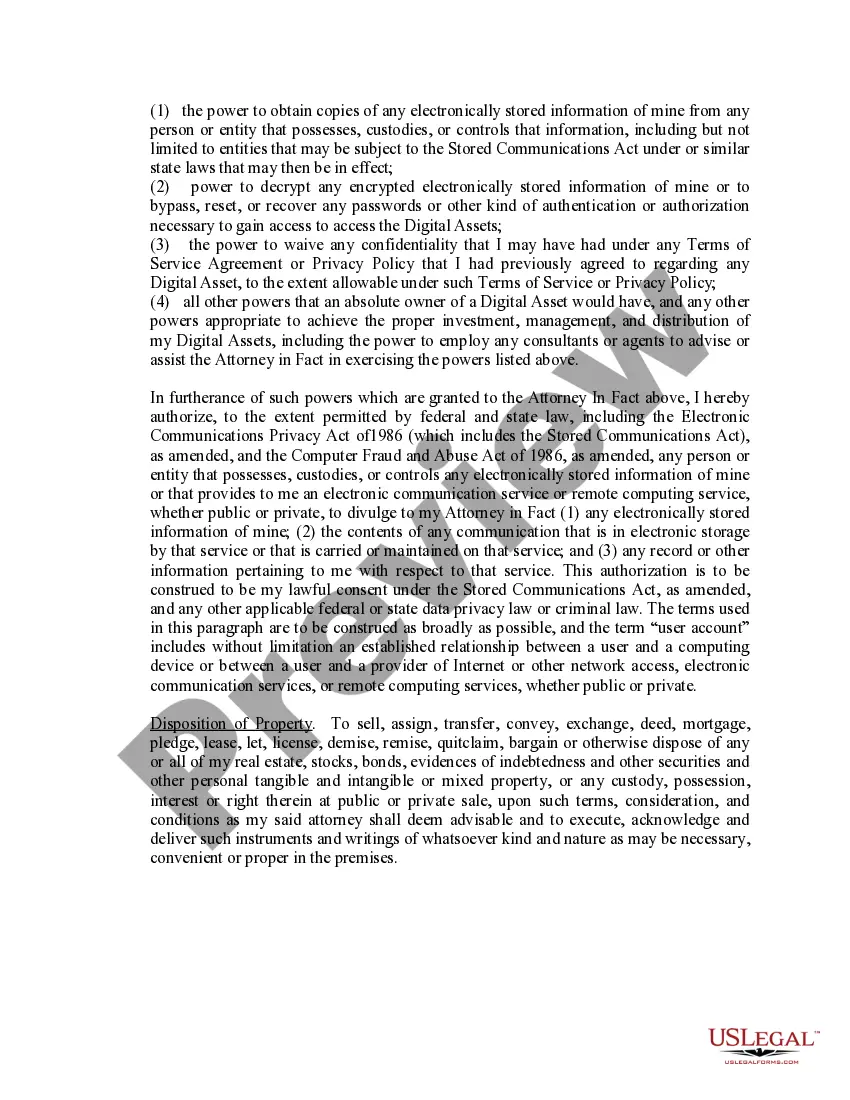
- Specified Powers: Section to insert specific powers the agent will have, with examples provided.
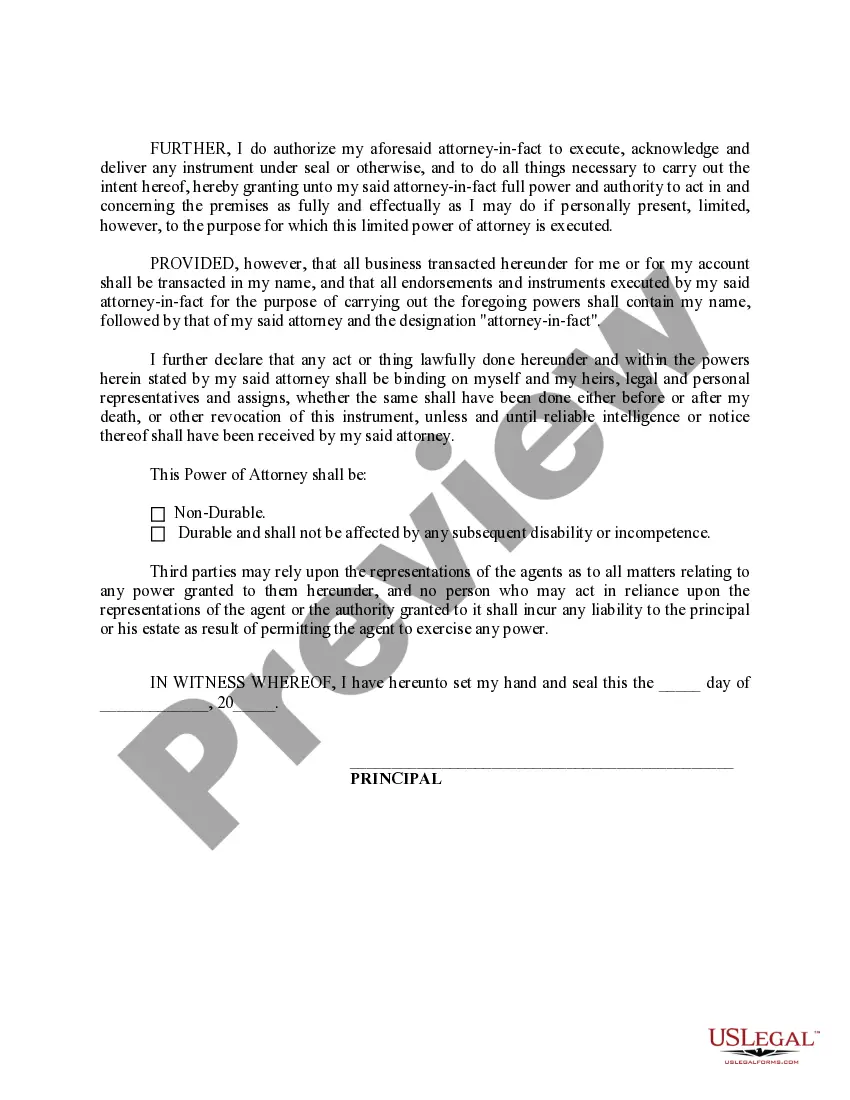
- Durability Clause: Indicates whether the power is durable or non-durable, affecting its validity during disability.
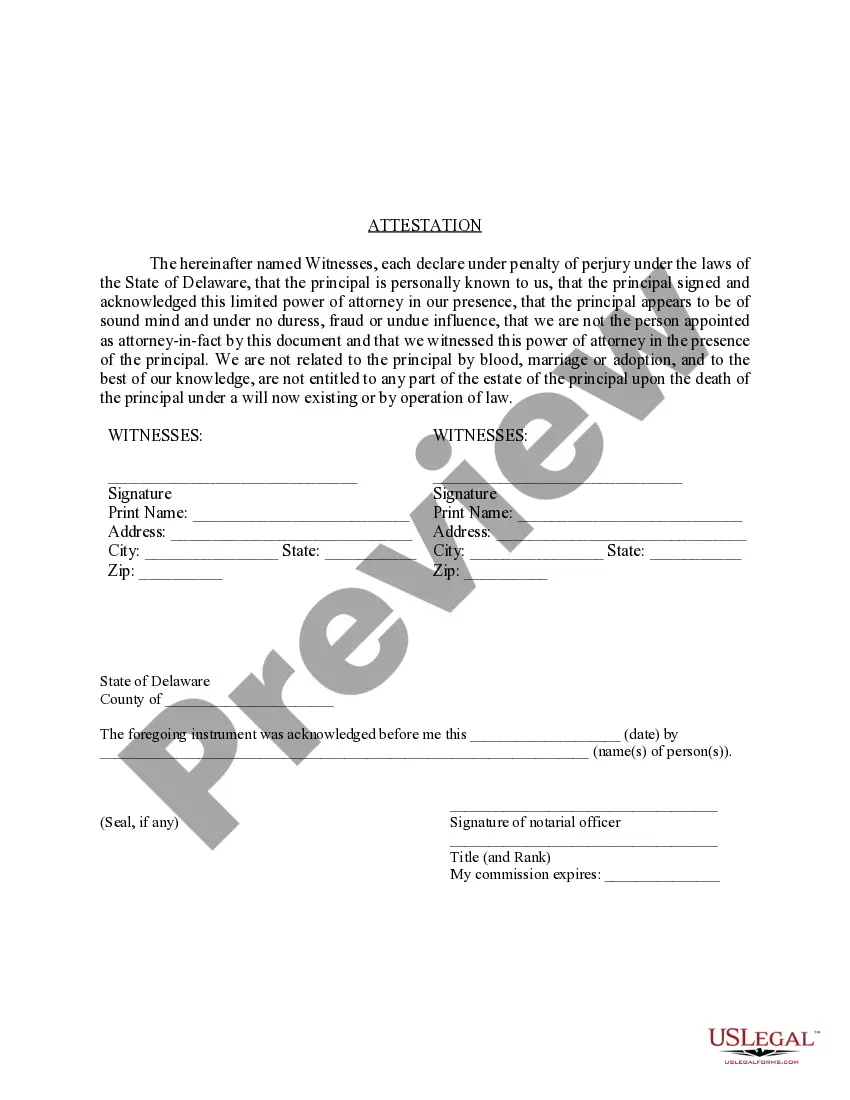
- Witness Acknowledgment: Requires signatures from witnesses to validate the form.
- Notarization Section: Information about the acknowledgment by a notary public, if applicable.
Common use cases
This Limited Power of Attorney should be used in situations where you need to appoint someone to act on your behalf with specific responsibilities while retaining control over other areas. For example, you might use this form if you are traveling and need someone to handle financial transactions, sell property, or manage investments in your absence. It is also beneficial for individuals who wish to assign limited healthcare decisions to a trusted person without relinquishing all decision-making authority.
Who needs this form
- Individuals who require assistance in managing specific financial or legal matters.
- People planning to travel or who may be temporarily incapacitated and need someone to handle affairs.
- Those who want to assign limited powers to someone they trust without sharing full authority.
Instructions for completing this form
- Begin by entering your name and address in the Principal Information section.
- Fill in the name and address of the Attorney-in-Fact you are appointing.
- Specify the powers that you wish to grant the agent, using the provided sample powers as a guide.
- Sign and date the document in the presence of witnesses, each providing their signature and contact details.
- If required, complete the notarization section and ensure it's signed by a notary public.
Is notarization required?
Yes, this form must be notarized to be legally valid in Delaware. Notarization ensures the authenticity of your signature and the integrity of the document. US Legal Forms provides integrated online notarization services, allowing you to complete the process securely through a video call, without the need for in-person visits.
Get your form ready online
Our built-in tools help you complete, sign, share, and store your documents in one place.
Make edits, fill in missing information, and update formatting in US Legal Forms—just like you would in MS Word.
Download a copy, print it, send it by email, or mail it via USPS—whatever works best for your next step.
Sign and collect signatures with our SignNow integration. Send to multiple recipients, set reminders, and more. Go Premium to unlock E-Sign.
If this form requires notarization, complete it online through a secure video call—no need to meet a notary in person or wait for an appointment.
We protect your documents and personal data by following strict security and privacy standards.

Make edits, fill in missing information, and update formatting in US Legal Forms—just like you would in MS Word.

Download a copy, print it, send it by email, or mail it via USPS—whatever works best for your next step.

Sign and collect signatures with our SignNow integration. Send to multiple recipients, set reminders, and more. Go Premium to unlock E-Sign.

If this form requires notarization, complete it online through a secure video call—no need to meet a notary in person or wait for an appointment.

We protect your documents and personal data by following strict security and privacy standards.
Avoid these common issues
- Failing to clearly specify the powers granted, leading to ambiguity in the agent's authority.
- Not having the document signed in the presence of the required number of witnesses.
- Overlooking the notarization requirement, if applicable, which can invalidate the form.
- Using this form without understanding the implications of the designated powers.
Benefits of completing this form online
- Convenience: Easily download and complete the form from the comfort of your home.
- Time-saving: Instant access to a ready-to-use legal template without the need for legal consultations.
- Editability: Customize the document to fit your specific needs.
- Reliability: Access forms drafted by licensed attorneys, ensuring legal accuracy.
Main things to remember
- The Limited Power of Attorney allows you to specify and limit the powers granted to an agent in Delaware.
- It is ideal for individuals needing assistance with specific tasks while maintaining overall control.
- Proper completion, including witness signatures, is essential for the document's validity.
- Sample powers can guide customization, ensuring the document meets your needs.
Looking for another form?
Form popularity
FAQ
Filling out a Delaware Limited Power of Attorney where you Specify Powers with Sample Powers Included requires careful attention. Begin by clearly identifying yourself and your agent. Next, outline each specific power you want to delegate, such as handling real estate transactions or managing bank accounts, ensuring clarity. To complete the form, you must sign it in front of a notary to validate your authority and intentions.
A Delaware Limited Power of Attorney where you Specify Powers with Sample Powers Included grants authority to an agent for specific tasks, unlike a broad power of attorney that covers all decisions. Limited power restricts the agent’s actions to defined powers such as managing property or making financial decisions for a specified period. In contrast, specific power of attorney is more detailed, specifying exact powers and limitations. Choosing the right form depends on your needs and the tasks you want your agent to handle.
When signing as power of attorney, you should write your name followed by 'as attorney-in-fact for Your Name'. For instance, if your name is John Doe, you would sign as 'John Doe, as attorney-in-fact for Jane Smith'. This method clearly indicates your role and ensures the document serves its purpose effectively when utilizing a Delaware Limited Power of Attorney where you specify powers.
Filling out a power of attorney letter involves entering your name and assigning an agent, then specifying the powers you wish to grant. It’s crucial to use clear language and include any limitations or specific tasks you want the agent to handle. If you're using a Delaware Limited Power of Attorney where you specify powers, checking the sample powers included can guide you in drafting the letter correctly.
Filling out POA paperwork requires attention to detail. Begin by downloading the appropriate form for a Delaware Limited Power of Attorney where you specify powers. Follow the instructions carefully, ensuring all sections are completed and signatures are obtained where necessary. Verifying that the document complies with state laws is essential for its effectiveness.
The best person to act as a power of attorney is someone you trust implicitly, such as a family member or close friend. This individual should have the necessary understanding of your wishes and manage your affairs responsibly. Selecting someone with a good understanding of financial or legal matters can also be beneficial, particularly if you are considering a Delaware Limited Power of Attorney where you specify powers.
To write a simple Delaware Limited Power of Attorney where you specify powers, start by clearly stating your name and address, followed by the name of the agent. Outline the specific powers you wish to grant, such as handling financial matters or making medical decisions. It’s important to include effective dates and any limitations on the powers granted to ensure clarity.
A legal power of attorney cannot make decisions regarding the principal's divorce, create a will, or make health decisions after the principal passes away. These actions require different legal processes and cannot be delegated through a power of attorney. When establishing a Delaware Limited Power of Attorney where you Specify Powers with Sample Powers Included, ensure you understand these restrictions.
Limited power of attorney grants authority to an agent for specific tasks or limited duration, while specific power of attorney typically allows the agent to act on clearly defined matters. For example, a limited power might allow someone to sell a property, whereas a specific power could include broader management of finances. When drafting your Delaware Limited Power of Attorney where you Specify Powers with Sample Powers Included, understanding these differences is essential.
Yes, in Delaware, a medical power of attorney must be notarized to be effective. The notarization requirement helps healthcare providers verify the legitimacy of the document. Consider utilizing resources like uslegalforms to create your medical power of attorney that meets these notarization standards.