Connecticut Last Will and Testament for Married person with Minor Children
Overview of this form
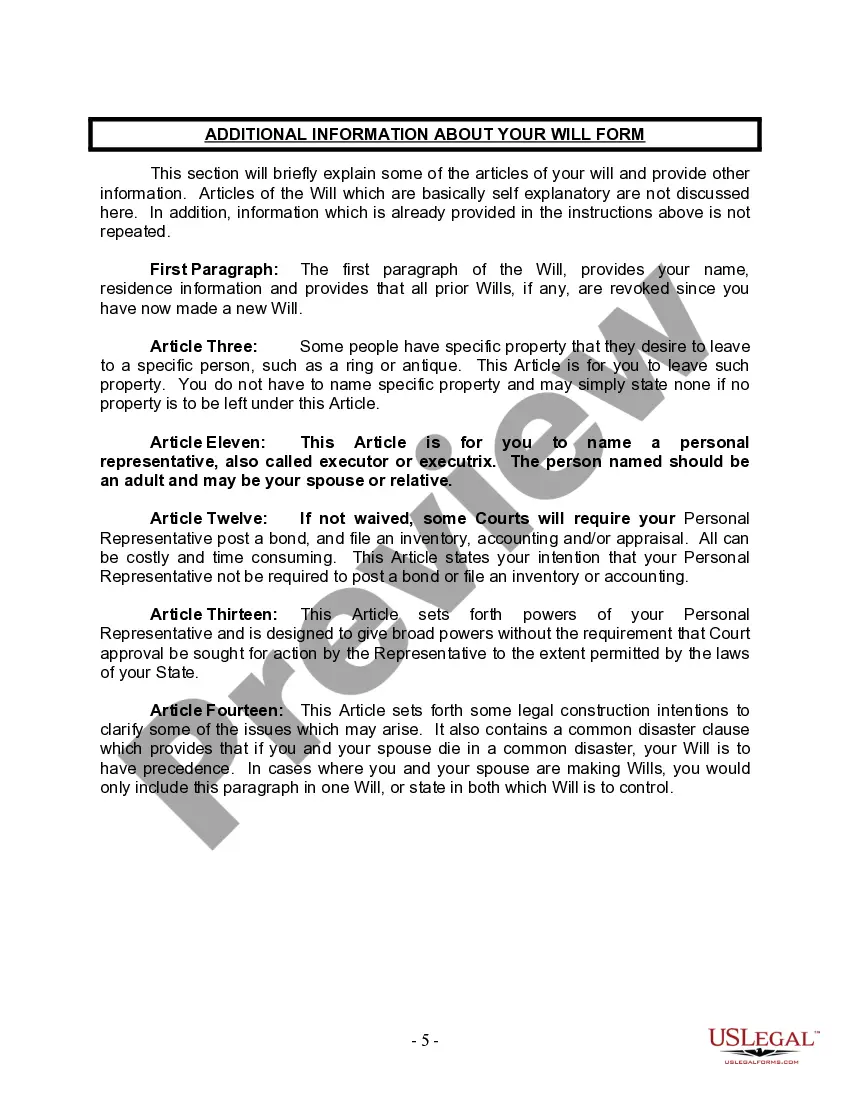
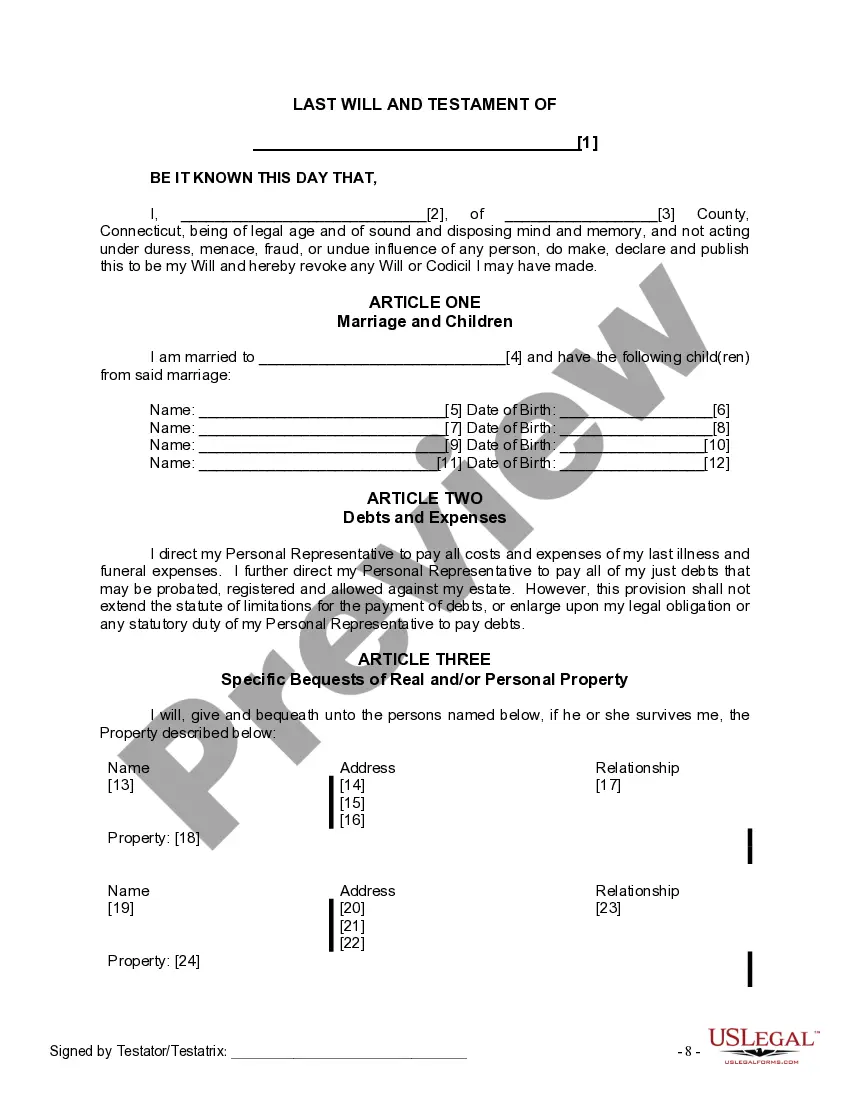
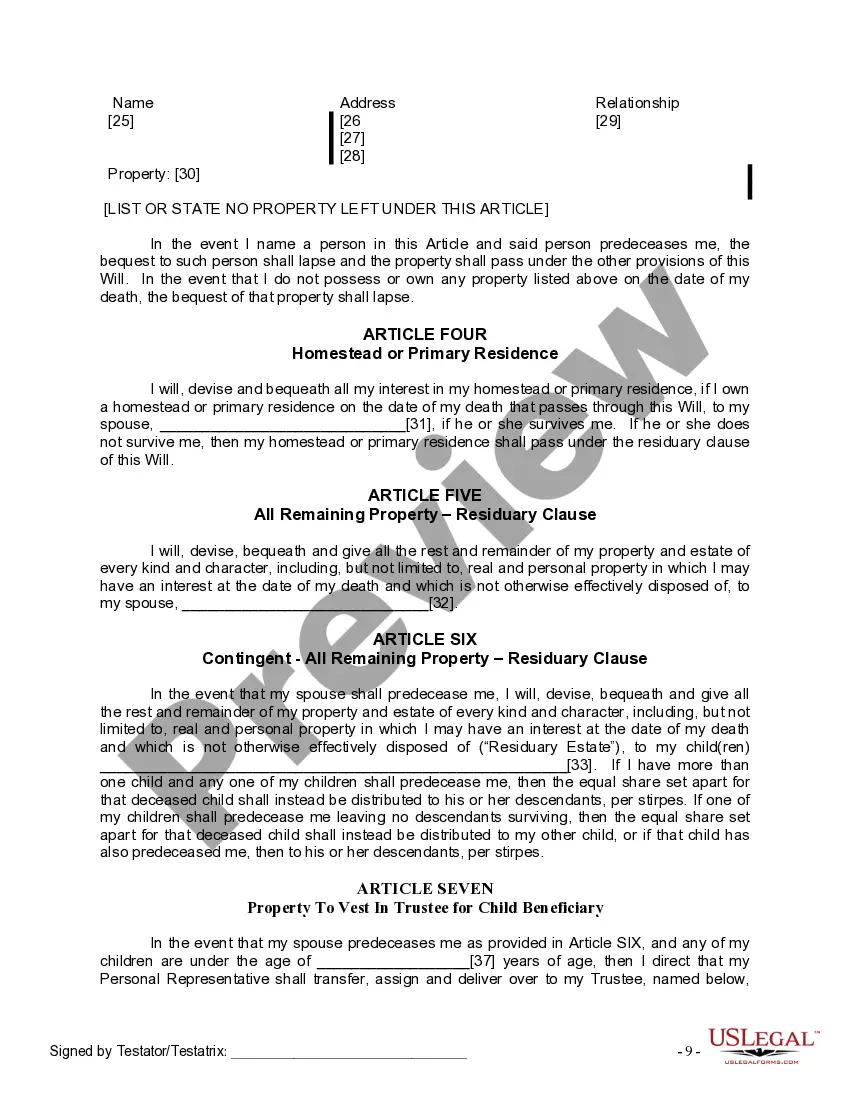
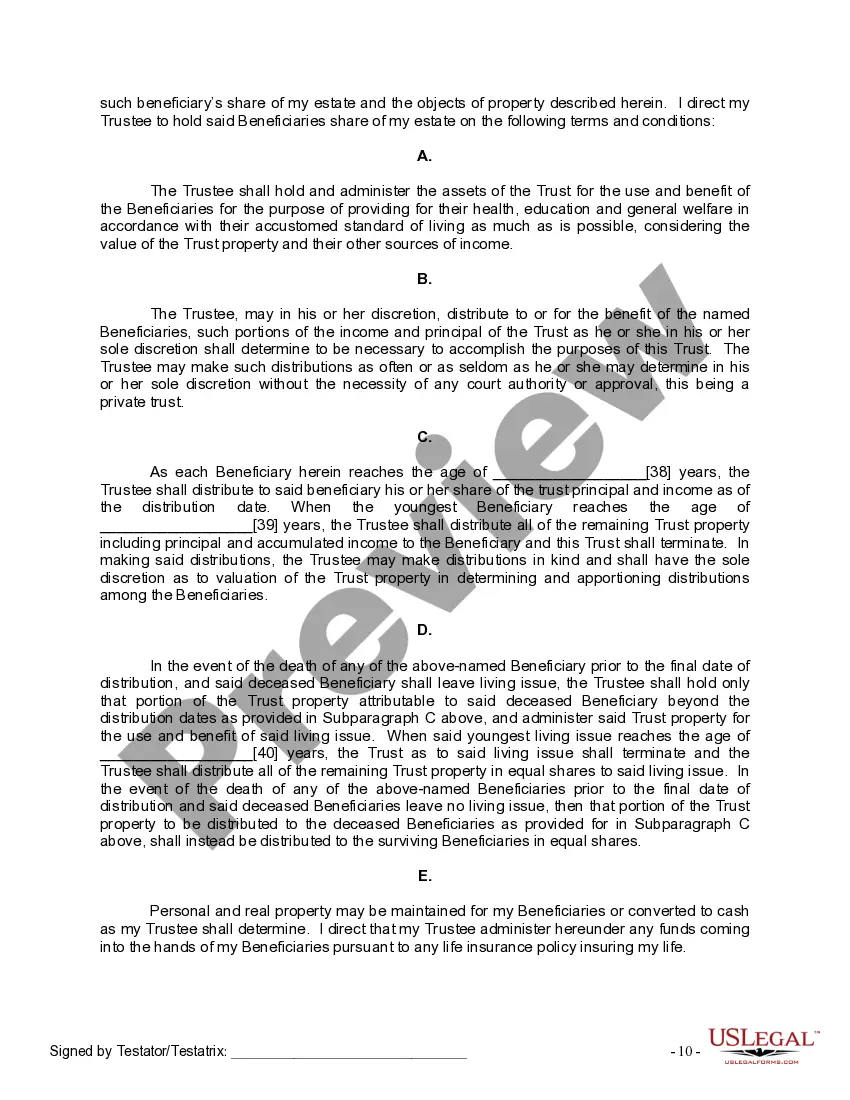
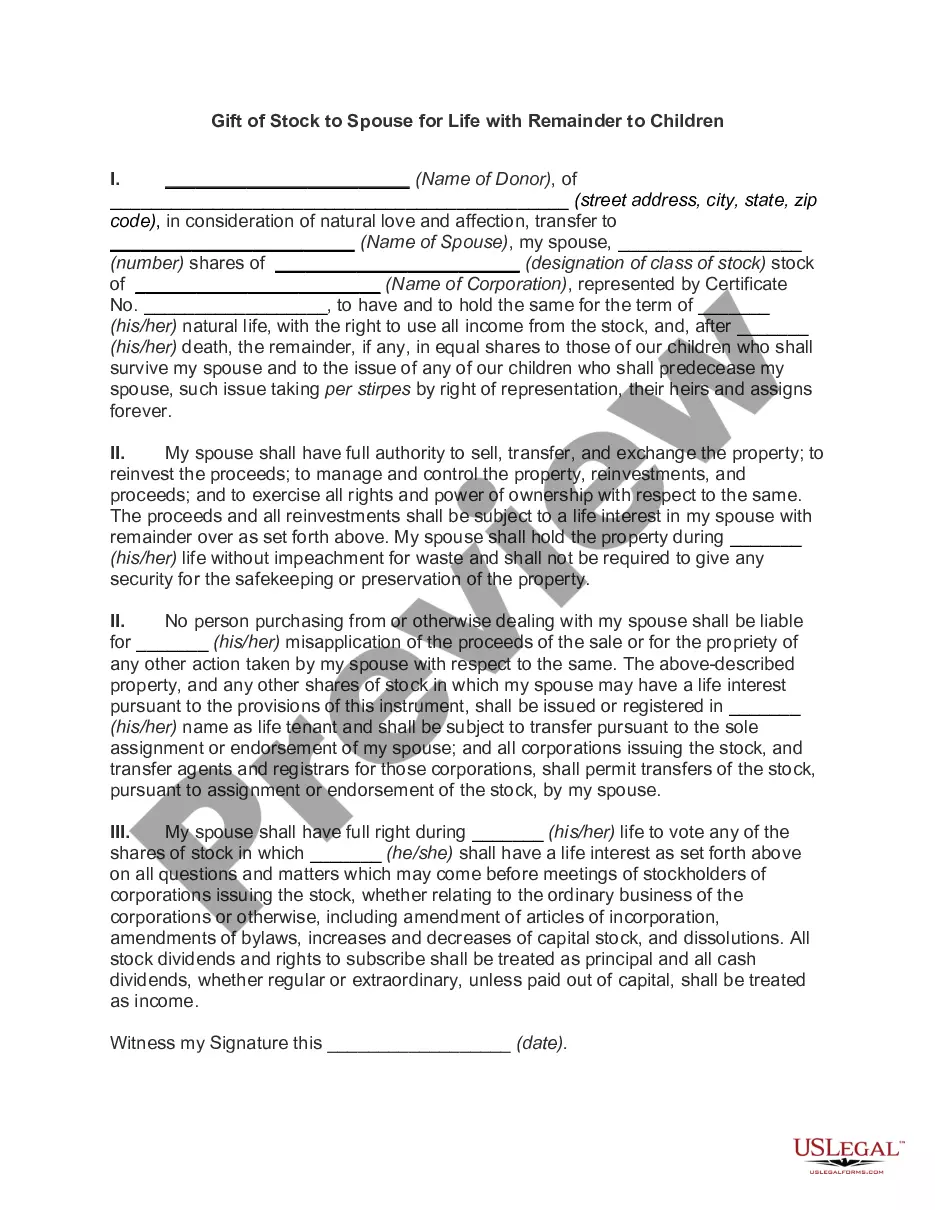
This Last Will and Testament for a married person with minor children is a legal document that outlines how your assets will be distributed after your death. It is designed specifically for individuals who are married and have minor children, ensuring that both the spouse and children are provided for. This form allows you to appoint a personal representative to manage your estate, designate heirs, and establish a trust for your minor children, which distinguishes it from other types of wills.
Key parts of this document
- Appointment of a personal representative (executor) to handle the estate.
- Designation of beneficiaries, including spouse and minor children.
- Provisions for specific property distributions to named individuals.
- Establishment of a trust to manage assets for minor children.
- Appointment of a guardian for minor children if both parents pass away.
- Self-proving affidavit for easier probate process, if applicable.





When to use this form
You should use this form if you are married and have minor children. It is particularly important if you want to ensure that your spouse and children are taken care of according to your wishes in the event of your passing. This will is also beneficial if you wish to avoid complications during the probate process or if you need to designate a guardian for your children.
Who can use this document
- Married individuals with minor children.
- Individuals looking to specify their wishes regarding the distribution of their assets.
- Parents concerned about the guardianship of their minor children.
- Those wanting to establish a trust for their children's inheritance.
How to prepare this document
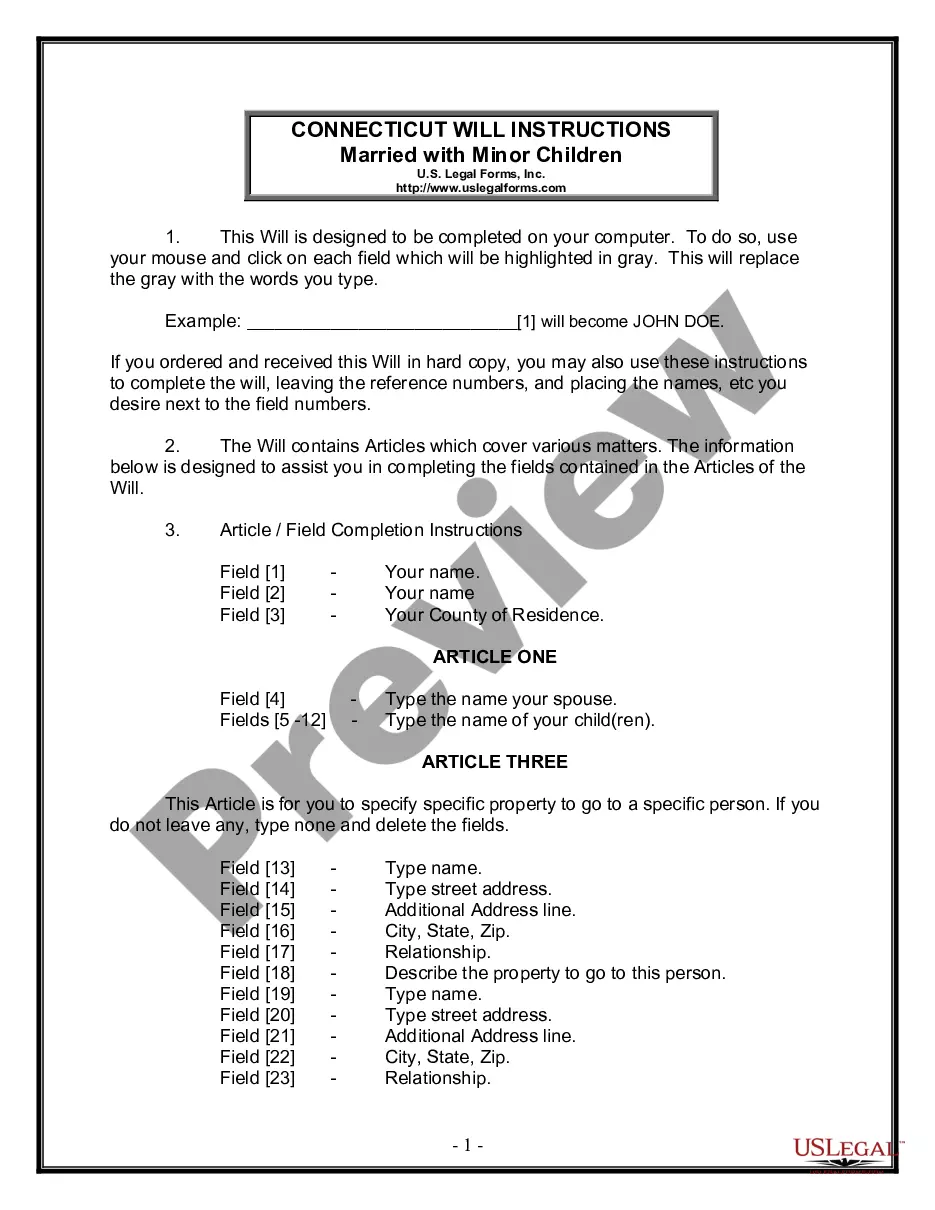
- Identify yourself by entering your full name and county of residence.
- List your spouse's name and the names of your minor children.
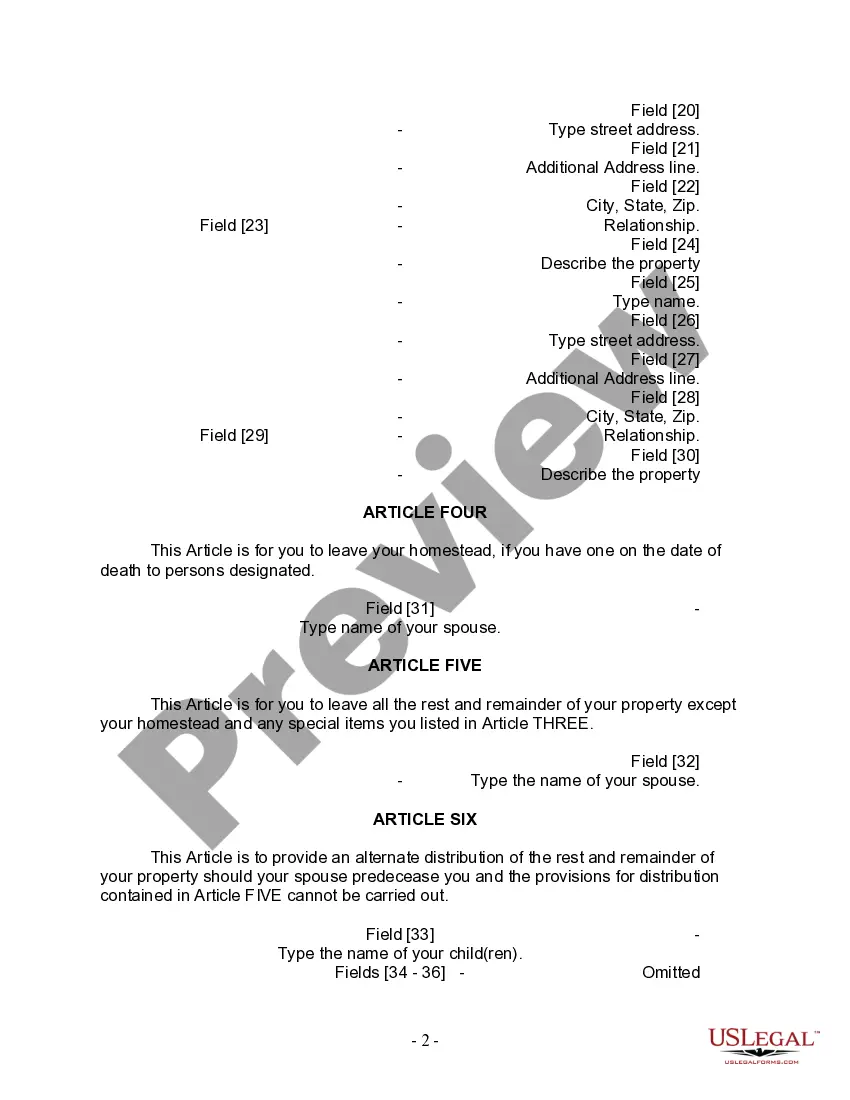
- Designate specific properties and the individuals who will receive them.
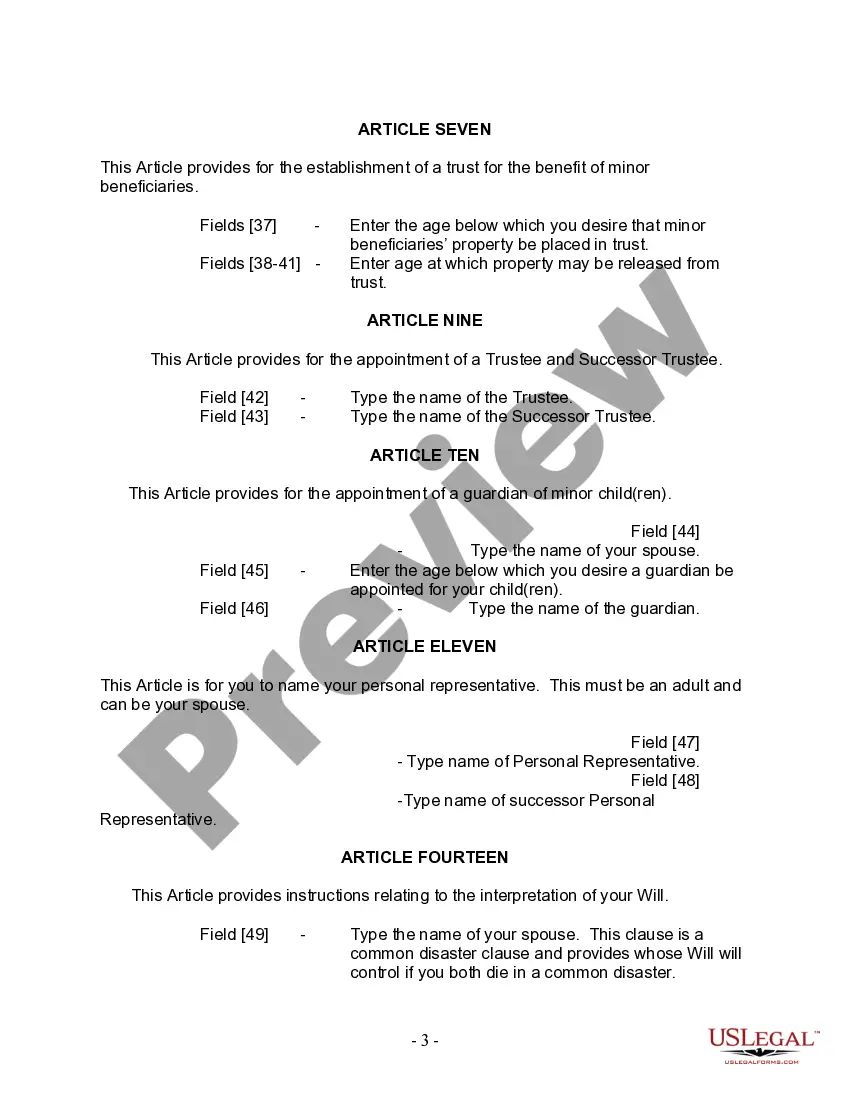
- Appoint a trustee for your children's trust and specify conditions for property distribution.
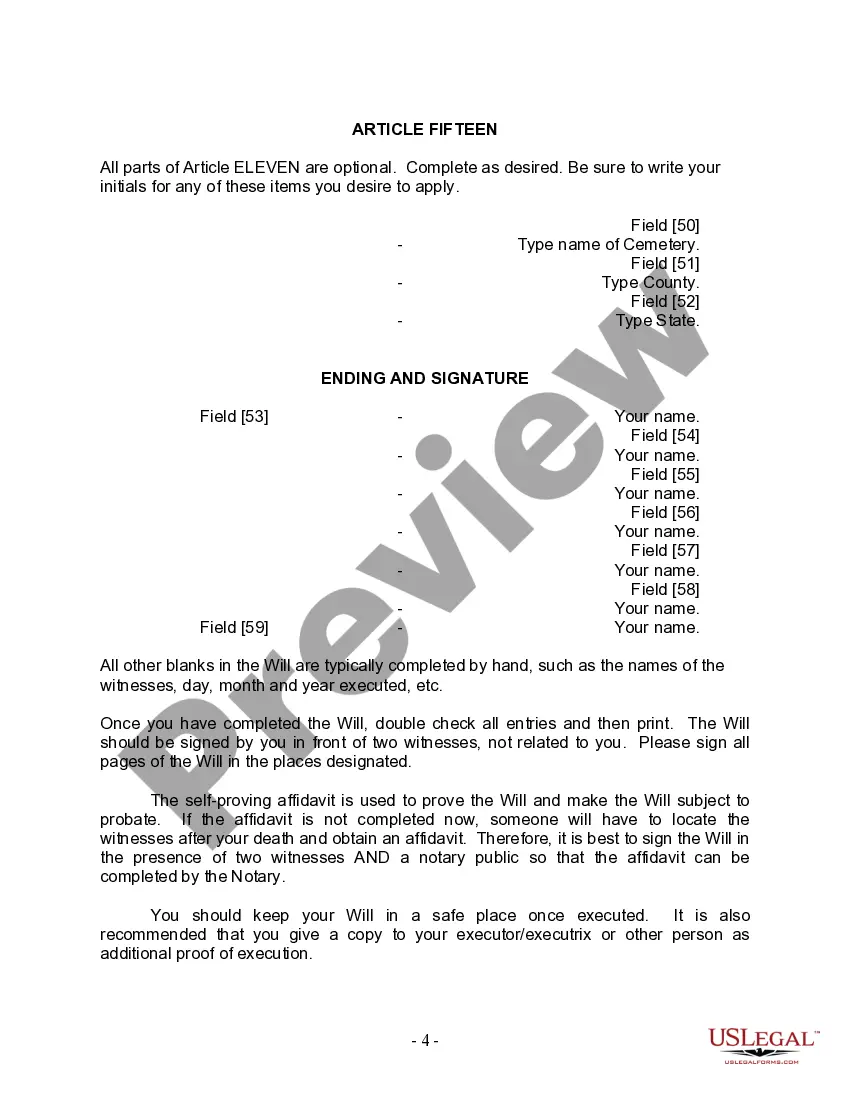
- Sign the will in the presence of two witnesses who are not beneficiaries.
Is notarization required?
Yes, this form must be notarized to be legally valid. Including a self-proving affidavit, which requires notarization, simplifies the probate process, allowing your will to be accepted without additional witness testimony. U.S. Legal Forms provides an integrated online notarization service for your convenience.
Get your form ready online
Our built-in tools help you complete, sign, share, and store your documents in one place.
Make edits, fill in missing information, and update formatting in US Legal Forms—just like you would in MS Word.
Download a copy, print it, send it by email, or mail it via USPS—whatever works best for your next step.
Sign and collect signatures with our SignNow integration. Send to multiple recipients, set reminders, and more. Go Premium to unlock E-Sign.
If this form requires notarization, complete it online through a secure video call—no need to meet a notary in person or wait for an appointment.
We protect your documents and personal data by following strict security and privacy standards.

Make edits, fill in missing information, and update formatting in US Legal Forms—just like you would in MS Word.

Download a copy, print it, send it by email, or mail it via USPS—whatever works best for your next step.

Sign and collect signatures with our SignNow integration. Send to multiple recipients, set reminders, and more. Go Premium to unlock E-Sign.

If this form requires notarization, complete it online through a secure video call—no need to meet a notary in person or wait for an appointment.

We protect your documents and personal data by following strict security and privacy standards.
Common mistakes to avoid
- Failing to sign in front of the required witnesses.
- Not designating a guardian for minor children.
- Leaving out specific property or beneficiaries.
- Not keeping the will in a safe and accessible location.
Benefits of using this form online
- Convenience of completing the form at your own pace from home.
- Editability allows for easy updates as circumstances change.
- Reliability of getting a legally sound document tailored to your needs.
What to keep in mind
- This form is essential for married individuals with minor children to outline their estate distribution.
- Appointing a guardian for children can provide peace of mind about their future care.
- Accurate completion and notarization make the will more straightforward during probate.
Looking for another form?


Form popularity
FAQ
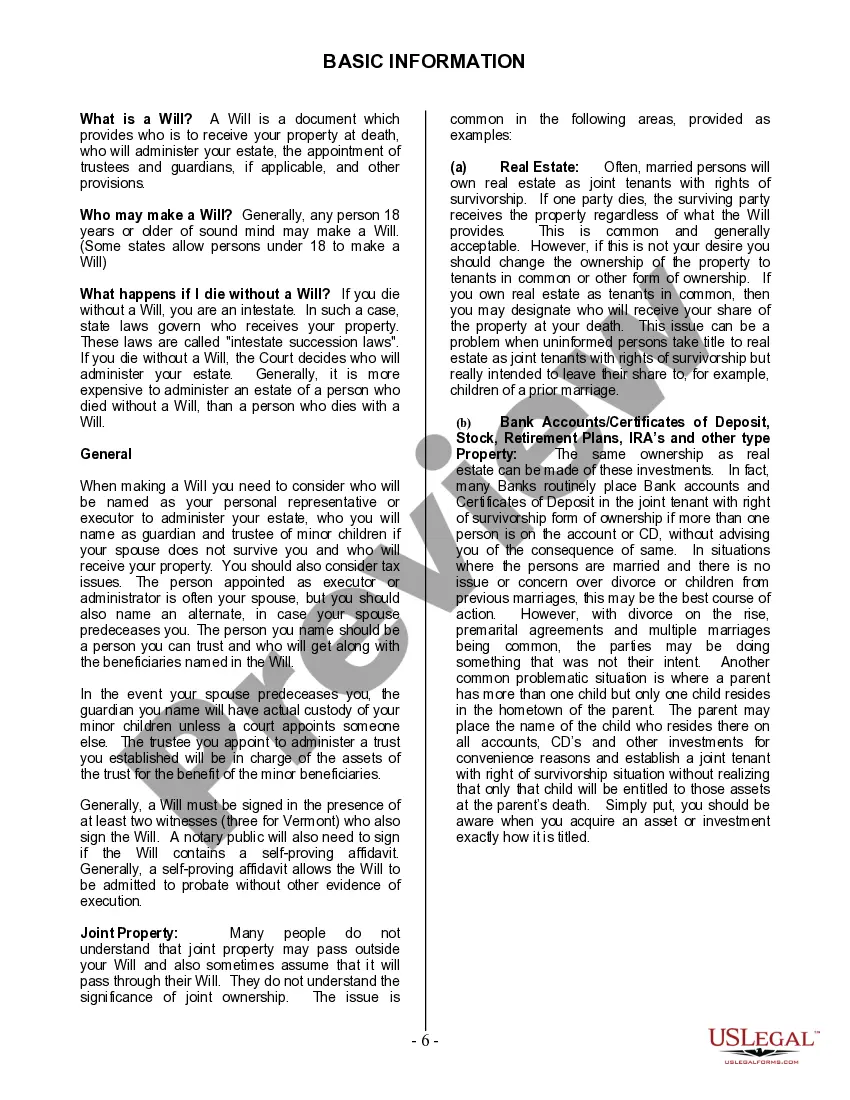
If you do not have a will in Connecticut, the state will determine how your assets are distributed through intestate succession laws. This can lead to complications, especially for a married person with minor children, as the distribution may not align with your wishes. It is wise to create a Connecticut Last Will and Testament using US Legal Forms to ensure your family is taken care of according to your specific desires.
Wills in Connecticut do not need to be notarized to be valid, but notarization can offer additional legal protection. A Connecticut Last Will and Testament for married persons with minor children should be properly signed and witnessed, but if you choose to have it notarized, it can streamline the probate process later. Consider using US Legal Forms, which provides notary services alongside will preparation.
For a will to be valid in Connecticut, it must be written, signed by the testator, and witnessed by two individuals who are not beneficiaries. It is vital for a Connecticut Last Will and Testament for married persons with minor children to include all pertinent details about your assets and responsibilities. Using services like US Legal Forms can help you fulfill these requirements with ease.
In Connecticut, a will is legal if it is written, signed by the testator, and witnessed by at least two individuals. For a Connecticut Last Will and Testament for married persons with minor children, it is important to follow these requirements closely to ensure your wishes are honored. US Legal Forms offers resources to assist in creating a legally binding document that reflects your intentions.
You can write your own will in Connecticut, but it is essential to follow legal standards to ensure it is valid. When drafting your Connecticut Last Will and Testament for married persons with minor children, make sure to include all necessary details, such as beneficiaries and asset distribution. Utilizing tools from US Legal Forms can simplify this process and help ensure compliance with state laws.
Yes, a handwritten will can be legal in Connecticut if it meets certain criteria. However, for a Connecticut Last Will and Testament for married persons with minor children, it is crucial to ensure it is clear and complete. Consider using established templates or services like US Legal Forms to avoid potential legal complications.
Yes, updating your Connecticut Last Will and Testament for Married person with Minor Children is important when your daughter gets married. Marriage can impact asset distribution and beneficiaries, and it’s essential to reflect any changes in your family dynamic. By revisiting your will, you ensure that your wishes align with your current circumstances and obligations towards your children. Using a reliable platform like US Legal Forms can simplify this process and help you create an updated will that meets your needs.
To establish the validity of a will in Connecticut, you must confirm that it meets the legal requirements set forth by the state. Ensure it is signed, witnessed, and properly executed according to Connecticut law. If any issues arise, the Connecticut Last Will and Testament for a married person with minor children can be validated through probate court. Utilizing a platform like USLegalForms can guide you through the necessary steps to secure your will's authenticity.
For a will to be considered legal in Connecticut, it must be in writing, signed by the testator, and witnessed by at least two people. This is crucial for ensuring the validity of the Connecticut Last Will and Testament for a married person with minor children. The witnesses should not be beneficiaries of the will to avoid potential conflicts. Following these guidelines is essential for creating a binding legal document.
Most wills, including the Connecticut Last Will and Testament for a married person with minor children, must go through the probate process. This legal procedure authenticates the will and settles any outstanding debts. However, some small estates may qualify for simplified processes that avoid formal probate. Understanding these options can help you effectively manage your estate planning.