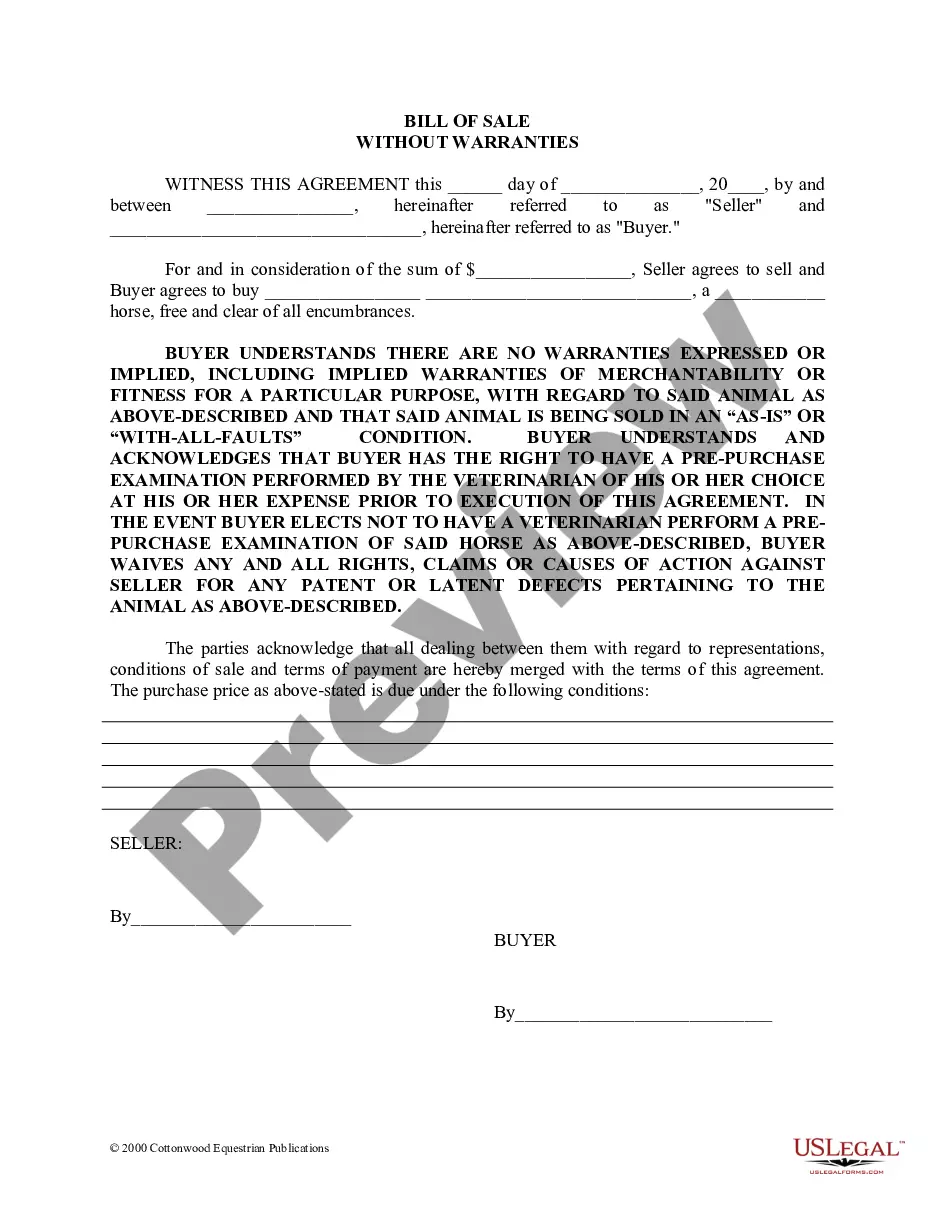
Connecticut Last Will and Testament for a Married Person with No Children
What this document covers
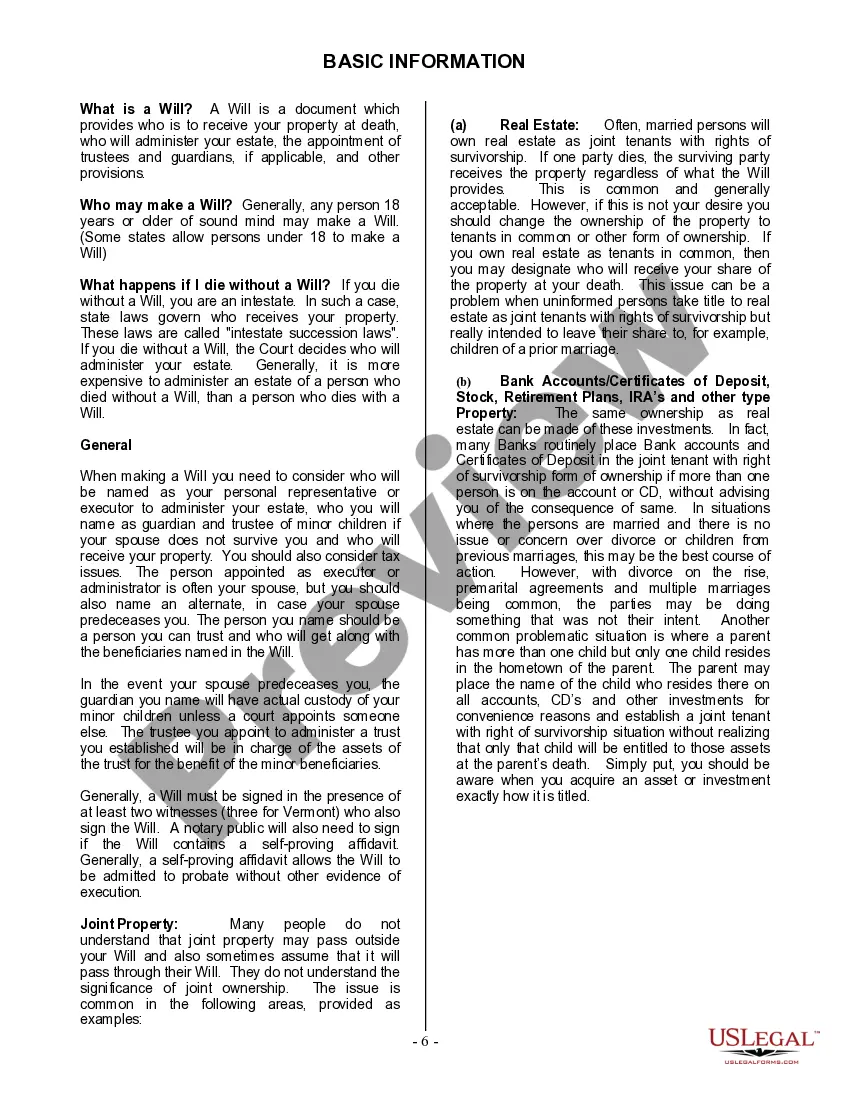
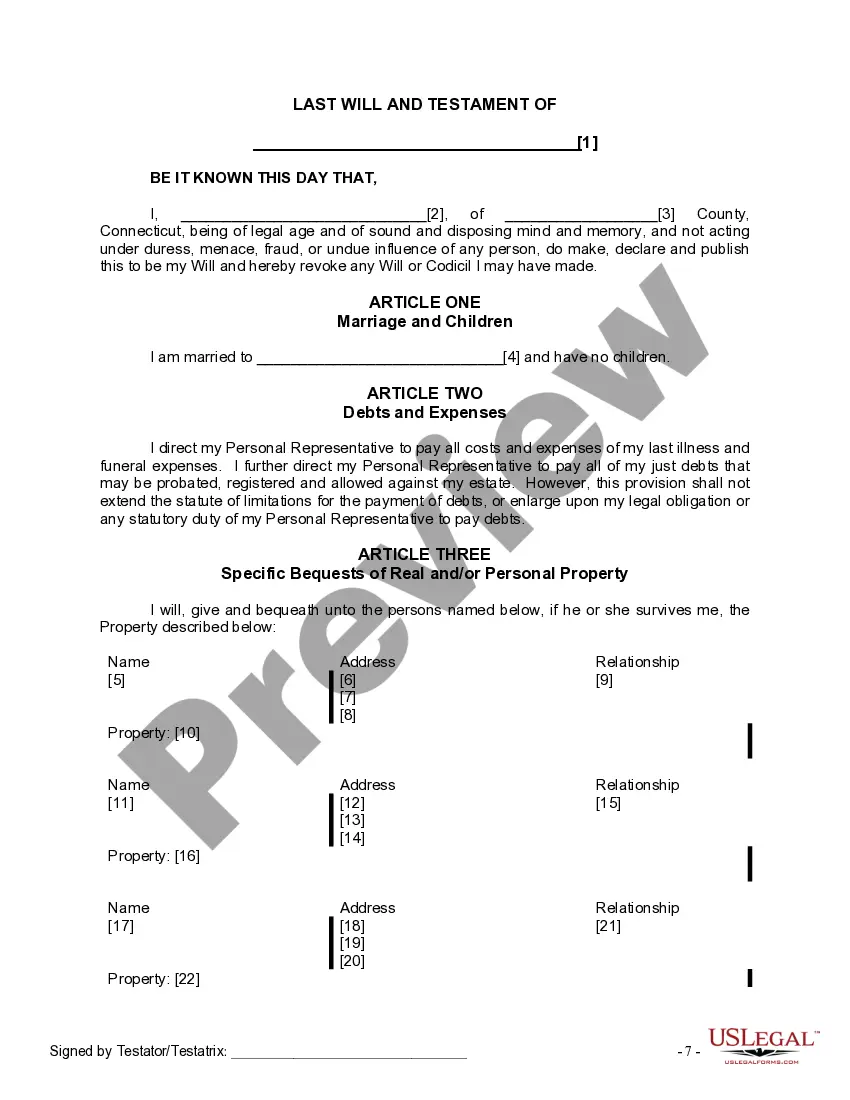
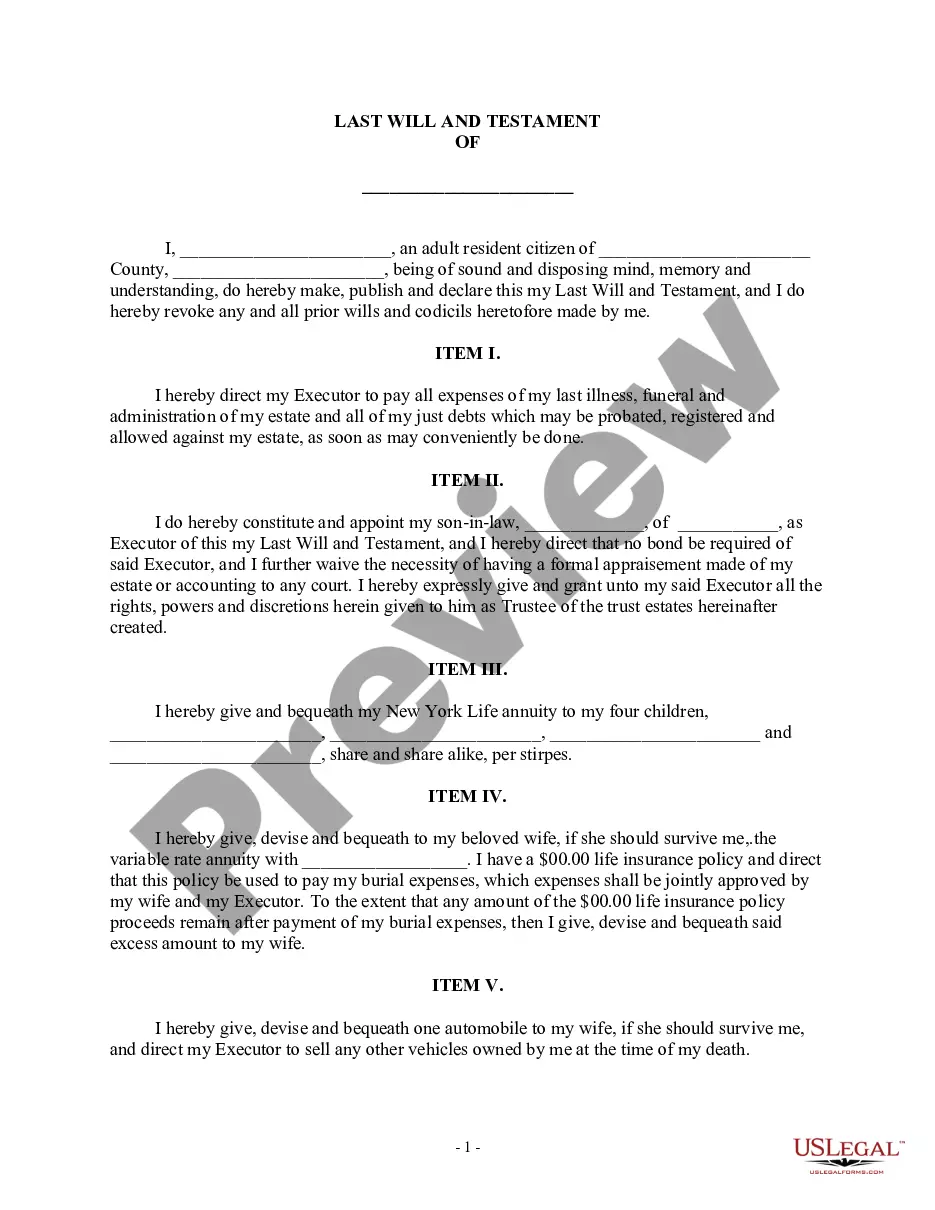
This Last Will and Testament for a Married Person with No Children is a legal document that outlines how your assets will be distributed upon your death. It is specifically tailored for individuals who are married and do not have children, making it distinct from other wills that might include provisions for dependents or children. In this will, you can appoint a personal representative, specify beneficiaries for your property, and set forth other important directives regarding your estate.
Form components explained
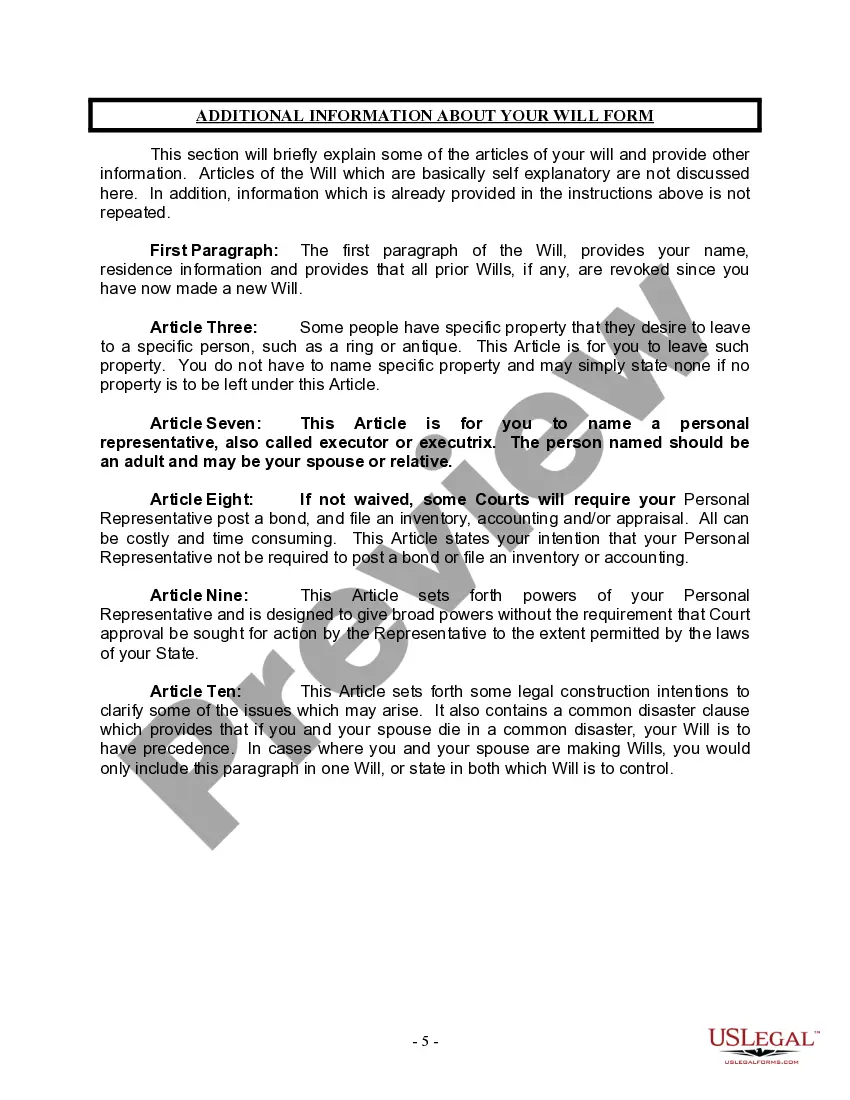
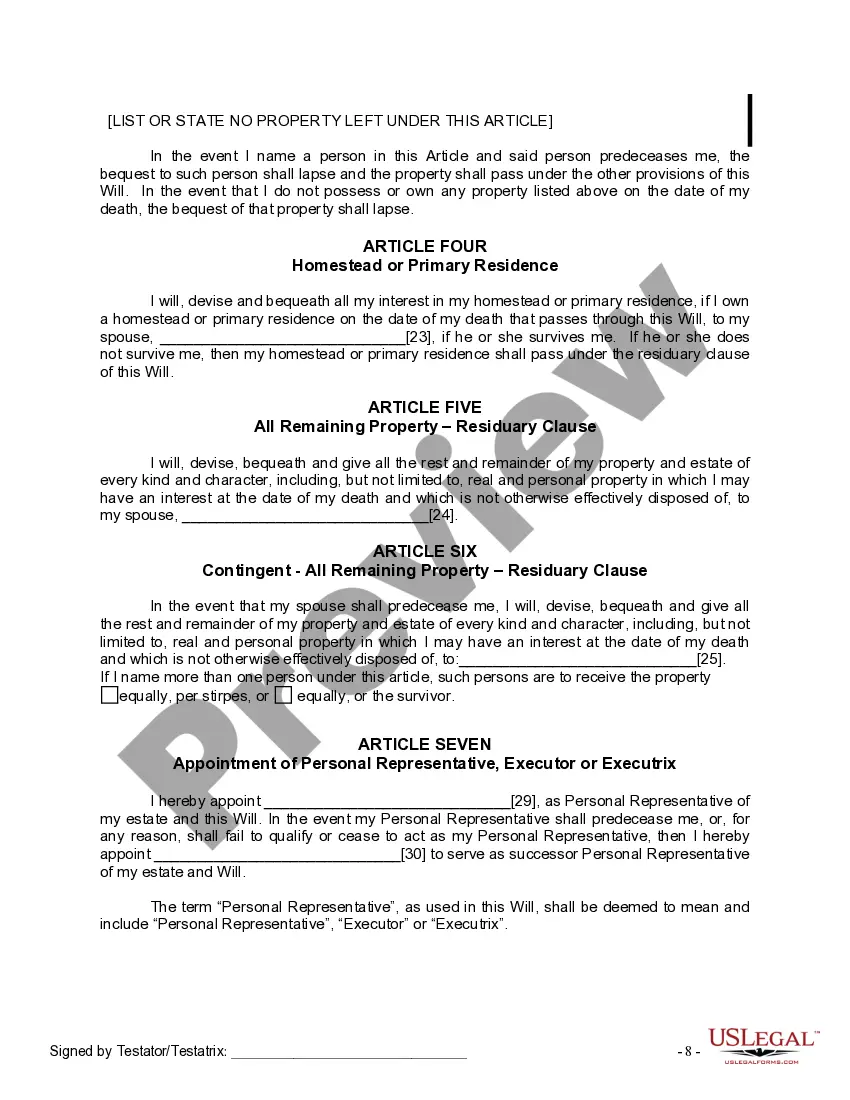
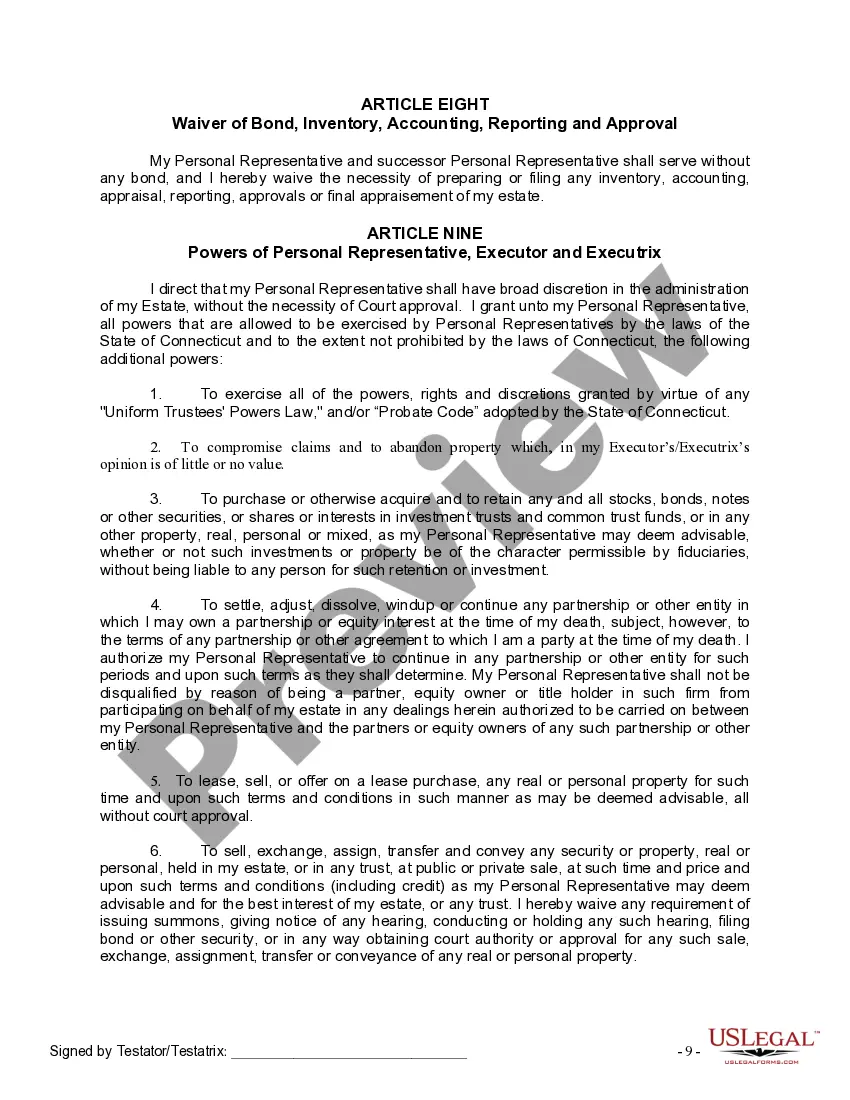
- Appointment of Personal Representative: Designate someone to manage your estate after your death.
- Specific Bequests: List any specific items of property you wish to leave to certain individuals.
- Residuary Clause: State how the remaining assets should be distributed after specific bequests are made.
- Homestead Provision: Specify what happens to your primary residence.
- Signature and Witness Requirements: Details on how to properly sign and witness your will to ensure its validity.




Common use cases
You should use this Last Will and Testament if you are a married individual without children and wish to ensure that your estate is managed according to your wishes after you pass away. If you want to clarify how assets such as your home or personal belongings should be distributed and appoint someone to oversee this process, this is the form you need.
Who this form is for
- Married individuals with no children.
- Those who want to specify the distribution of their assets.
- Persons who wish to appoint a personal representative for their estate.
- Individuals seeking peace of mind that their wishes will be honored after death.
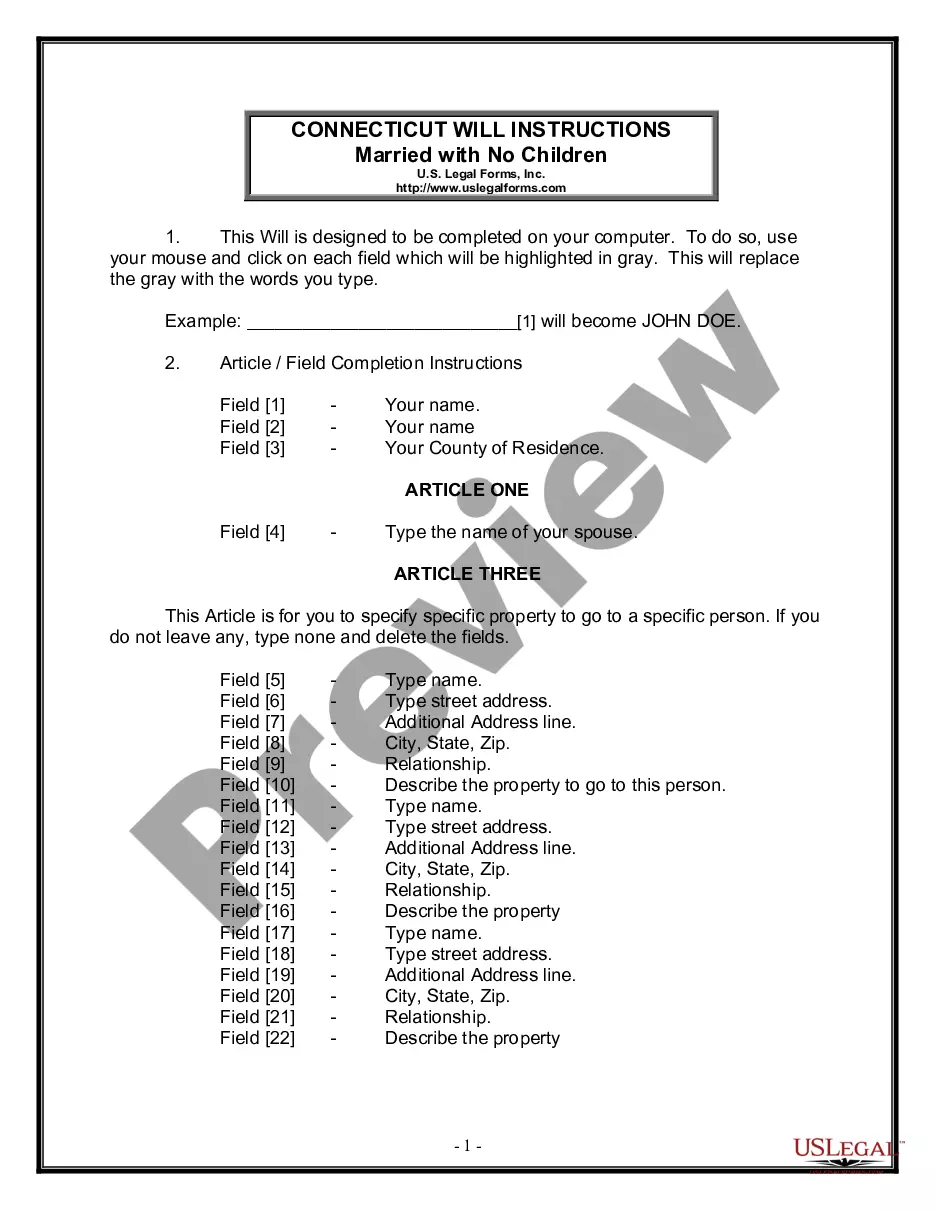
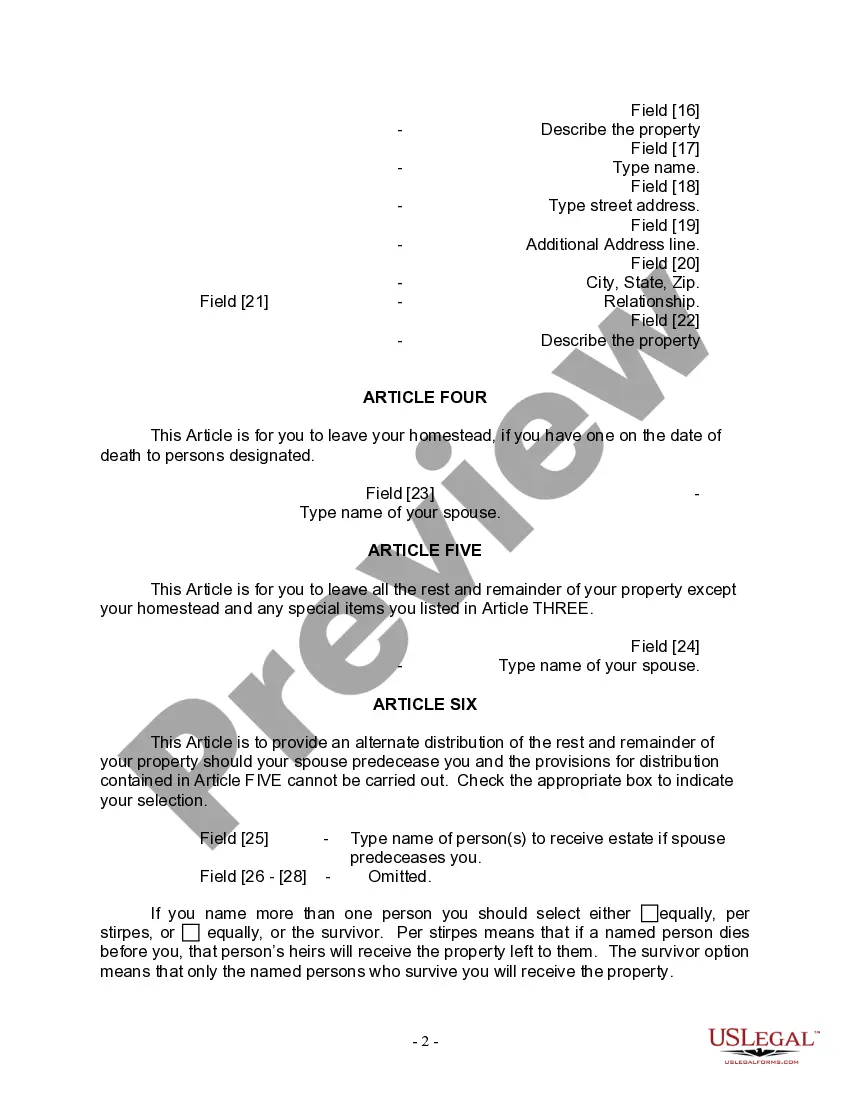
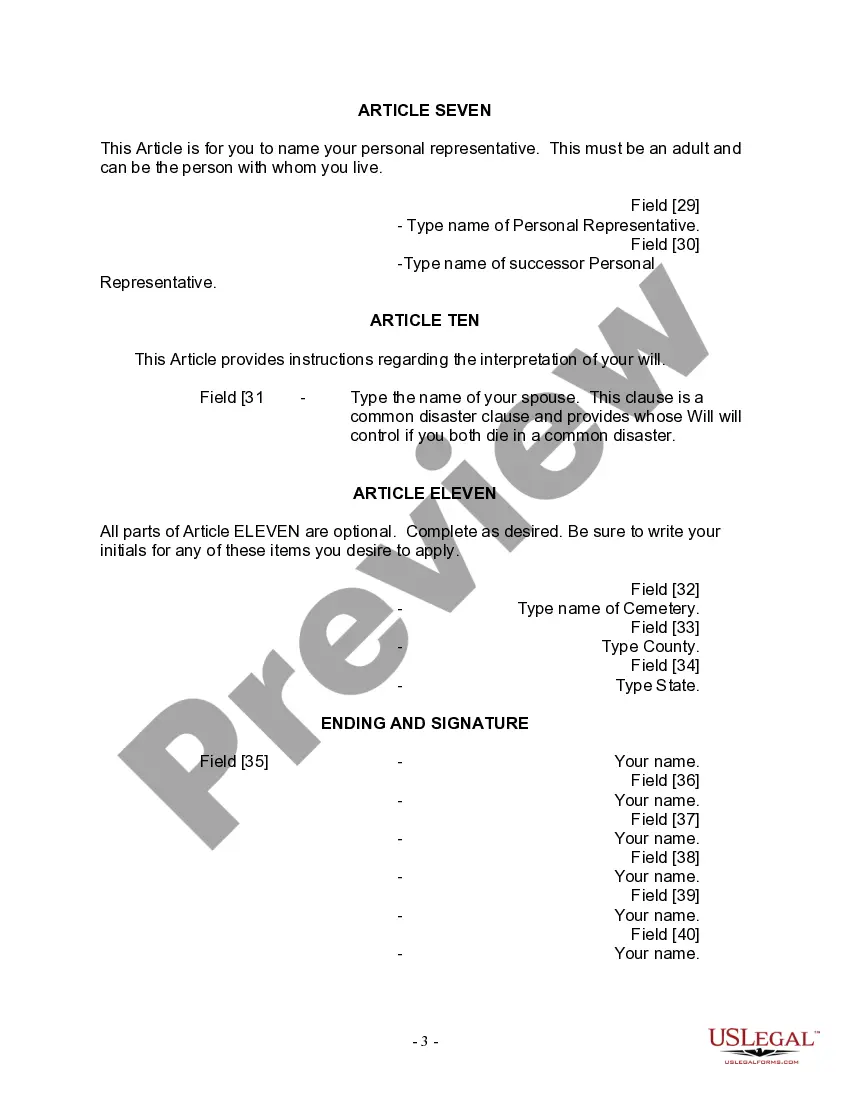
Completing this form step by step
- Fill in your personal details, including your name and county of residence.
- Designate your spouse and any beneficiaries for specific property.
- Complete articles that specify what happens to your homestead and remaining property.
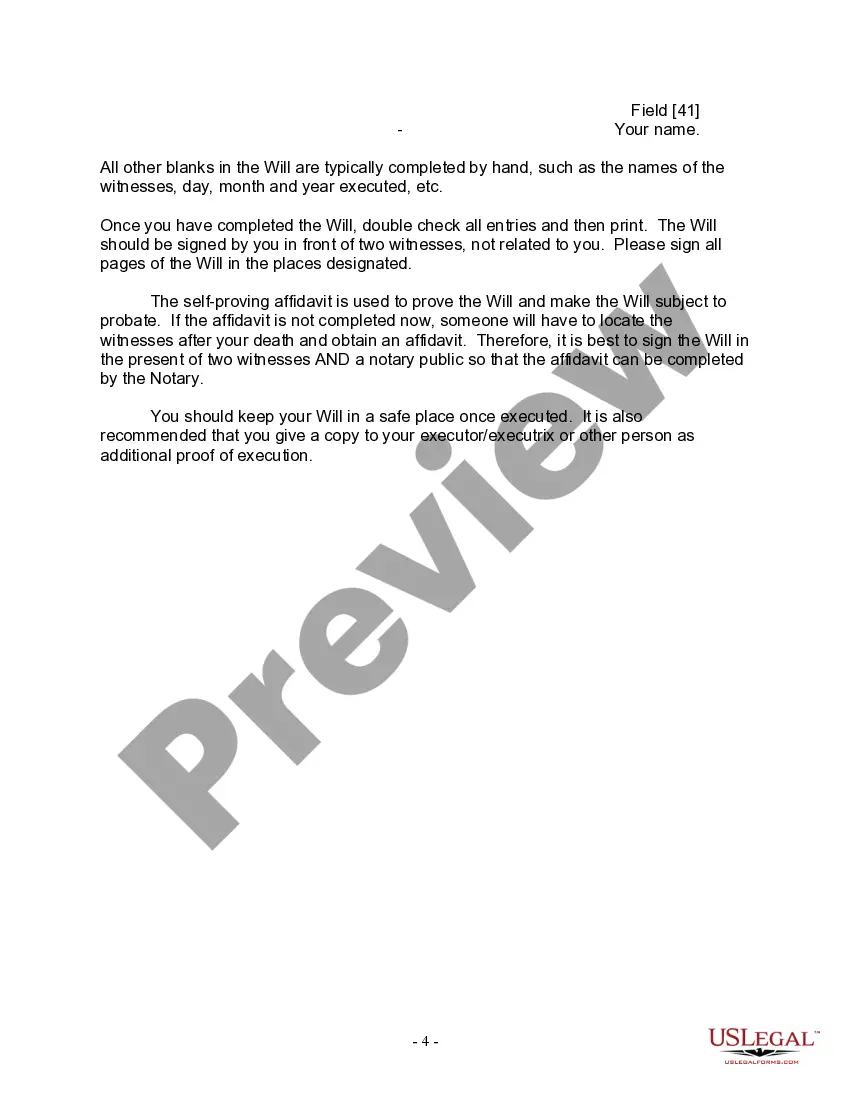
- Sign the will in the presence of two qualified witnesses, ensuring they do not have a vested interest in your estate.
- If applicable, complete the self-proving affidavit to facilitate the probate process.
Is notarization required?
To make this form legally binding, it must be notarized. Our online notarization service, powered by Notarize, lets you verify and sign documents remotely through an encrypted video session.
Get your form ready online
Our built-in tools help you complete, sign, share, and store your documents in one place.
Make edits, fill in missing information, and update formatting in US Legal Forms—just like you would in MS Word.
Download a copy, print it, send it by email, or mail it via USPS—whatever works best for your next step.
Sign and collect signatures with our SignNow integration. Send to multiple recipients, set reminders, and more. Go Premium to unlock E-Sign.
If this form requires notarization, complete it online through a secure video call—no need to meet a notary in person or wait for an appointment.
We protect your documents and personal data by following strict security and privacy standards.

Make edits, fill in missing information, and update formatting in US Legal Forms—just like you would in MS Word.

Download a copy, print it, send it by email, or mail it via USPS—whatever works best for your next step.

Sign and collect signatures with our SignNow integration. Send to multiple recipients, set reminders, and more. Go Premium to unlock E-Sign.

If this form requires notarization, complete it online through a secure video call—no need to meet a notary in person or wait for an appointment.

We protect your documents and personal data by following strict security and privacy standards.
Common mistakes
- Not having enough witnesses or having interested parties as witnesses.
- Failing to sign or dating the will incorrectly.
- Not keeping the will in a secure but accessible location.
- Neglecting to update the will after major life changes.
Why use this form online
- Convenience of completing the form digitally at your own pace.
- Ease of editing and updating the document when necessary.
- Access to attorney-drafted templates ensuring legal compliance.
Looking for another form?

Form popularity
FAQ
The best type of will for married couples is one tailored to their circumstances, like a Connecticut Last Will and Testament for a Married Person with No Children. This document allows couples to outline their unique wishes regarding their assets and other important matters clearly. It also provides the flexibility to update the will as life changes, such as changes in assets or relationships.
If you die without a will in Connecticut, the state's intestacy laws dictate how your assets are distributed. This often leads to an outcome that may not reflect your wishes, which can create complications for your surviving spouse and family. Therefore, having a Connecticut Last Will and Testament for a Married Person with No Children is essential for ensuring your desires are honored.
Separate wills help manage individual assets and preferences effectively. Situations might arise where one spouse wants to leave specific items to extended family or friends, which could differ from the other spouse's intentions. A Connecticut Last Will and Testament for a Married Person with No Children helps ensure both partners can make their unique wishes clear without any confusion.
Married couples typically should consider having separate wills. While joint wills exist, they can limit individual preferences and future changes. A Connecticut Last Will and Testament for a Married Person with No Children offers flexibility, allowing each spouse to express their unique wishes regarding property and other important matters.
Yes, it is wise for each spouse to have their own Connecticut Last Will and Testament for a Married Person with No Children. Individual wills allow each spouse to detail specific wishes regarding assets, guardianship, and personal bequests. This ensures clarity and helps prevent potential conflicts or misunderstandings in the future.
You can write your own will in Connecticut and choose to have it notarized, which can help provide additional legal weight. However, it must still comply with state laws to be considered valid. If you're unsure about the necessary steps, using a trusted resource like USLegalForms can help you create a comprehensive Connecticut Last Will and Testament for a Married Person with No Children, ensuring your wishes are honored.
Yes, you can have a will without your spouse in Connecticut. This is particularly relevant if you want to ensure that specific wishes are honored or if you plan to leave assets to individuals outside your marriage. Crafting a Connecticut Last Will and Testament for a Married Person with No Children allows you to specify your intentions clearly, and USLegalForms can assist in this process.
Creating a DIY will can have its advantages, especially for straightforward situations. However, a Connecticut Last Will and Testament for a Married Person with No Children involves particular nuances that may not be addressed in generic templates. It’s wise to understand potential pitfalls, and USLegalForms can guide you in crafting a proper will that reflects your unique needs.
Yes, handwritten wills can be legal in Connecticut. However, these documents, known as holographic wills, must meet specific criteria. They should be clear and contain your signature. For more peace of mind, consider using USLegalForms, which provides resources to create a valid Connecticut Last Will and Testament for a Married Person with No Children.
You can certainly write your own will in Connecticut, as long as it adheres to the legal requirements of the state. Many people choose to do this for simplicity and to save costs. When preparing your Connecticut Last Will and Testament for a Married Person with No Children, using tools like Legal Forms can help guide you through the necessary steps, ensuring your will is both clear and legally binding.