Oregon Horse Equine Forms Package
What this document covers
The Oregon Horse Equine Forms Package is a comprehensive set of legal templates specifically designed for horse owners and equine professionals in Oregon. This package includes various forms, such as sales agreements, boarding contracts, liability waivers, and veterinary authorization forms, each tailored to address specific equine-related transactions and responsibilities. It differs from other legal forms by focusing solely on the equine industry, making it essential for anyone involved in the training, selling, or caring for horses in Oregon.
Main sections of this form
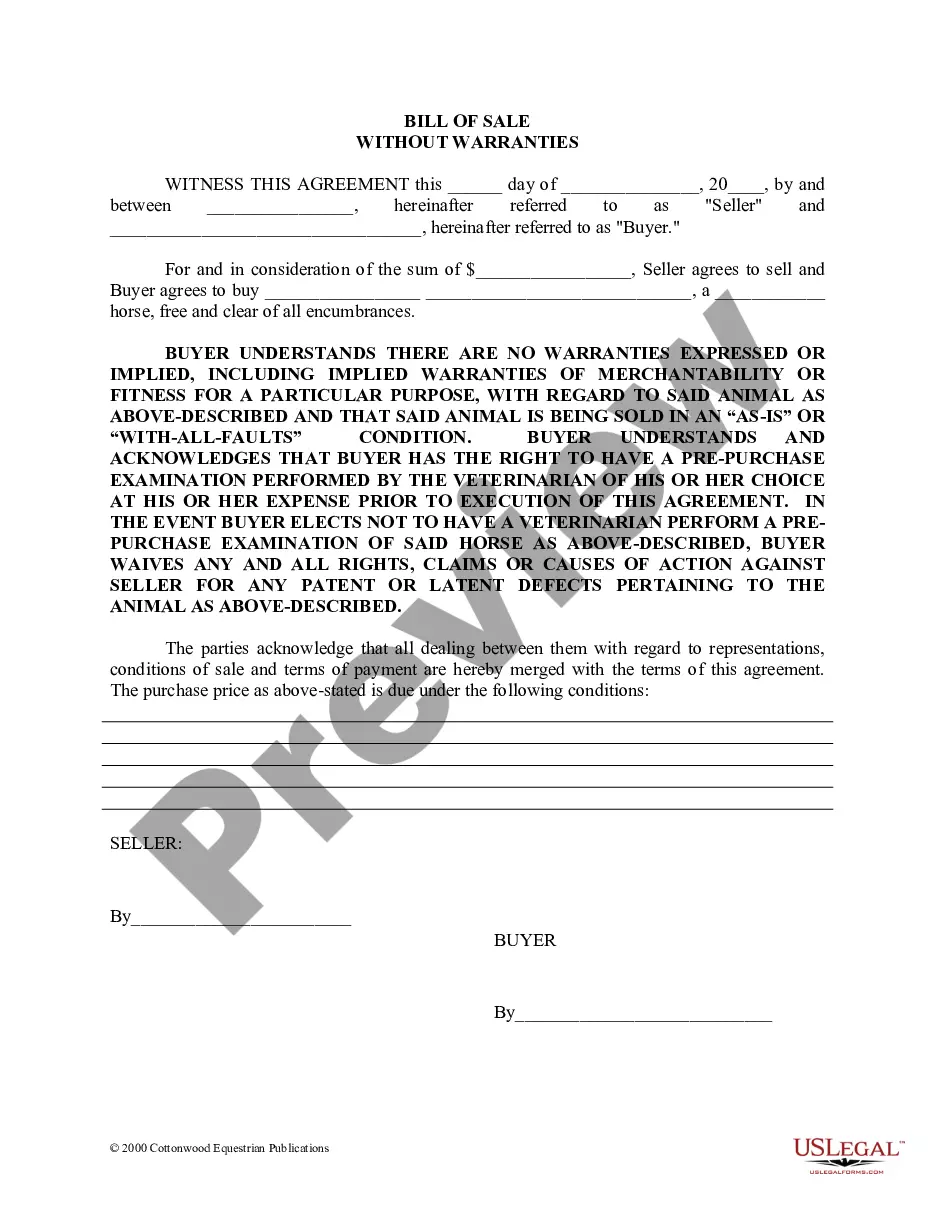
- Bill of Sale Without Warranties
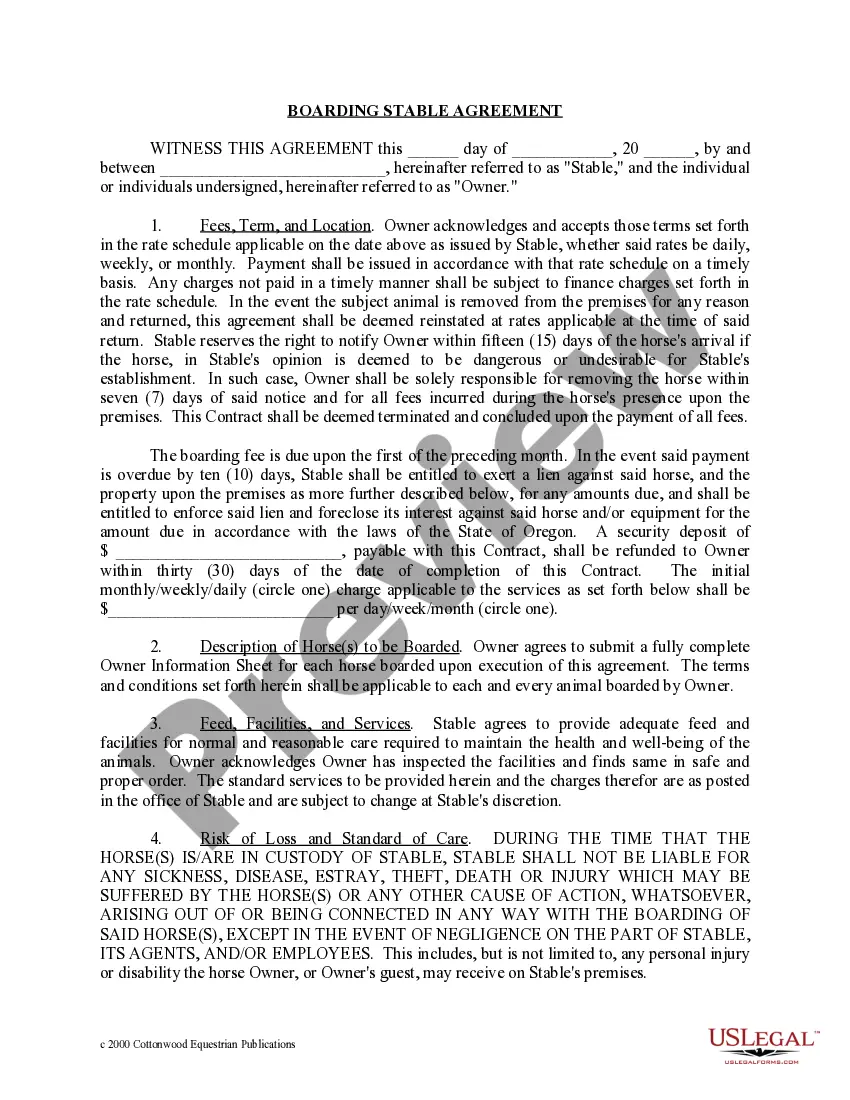
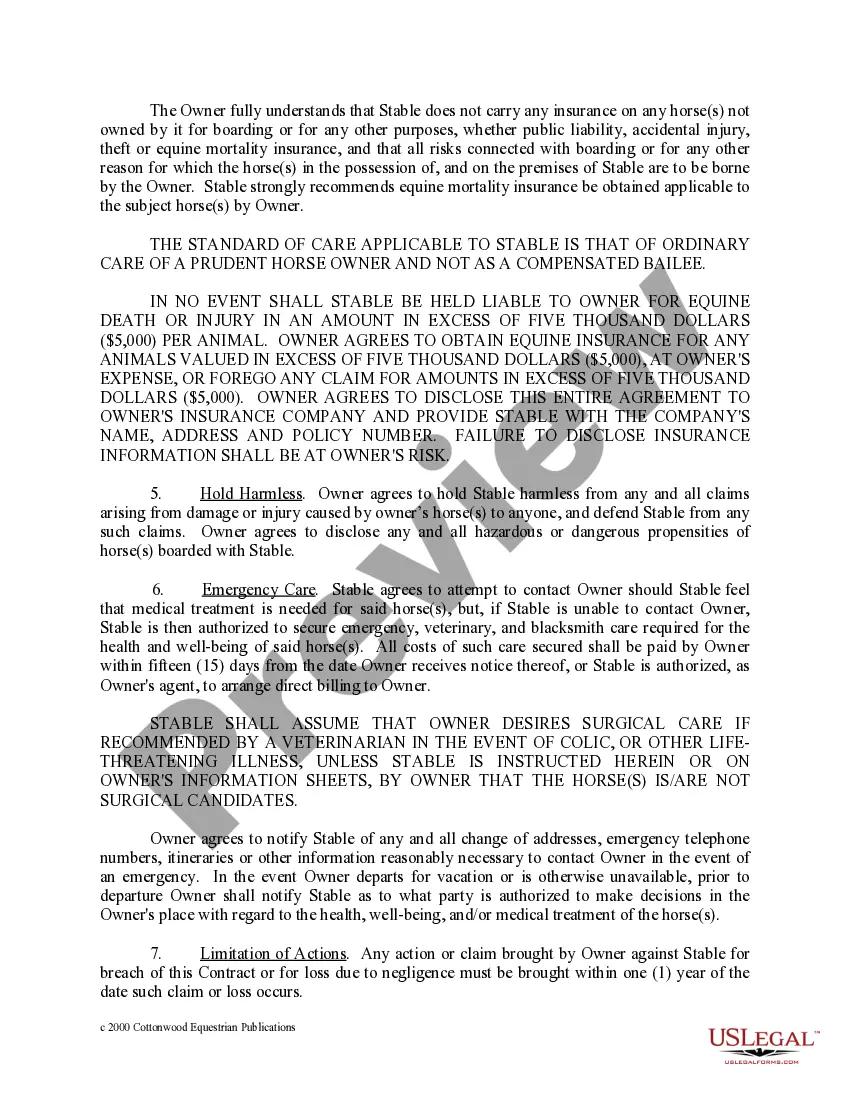
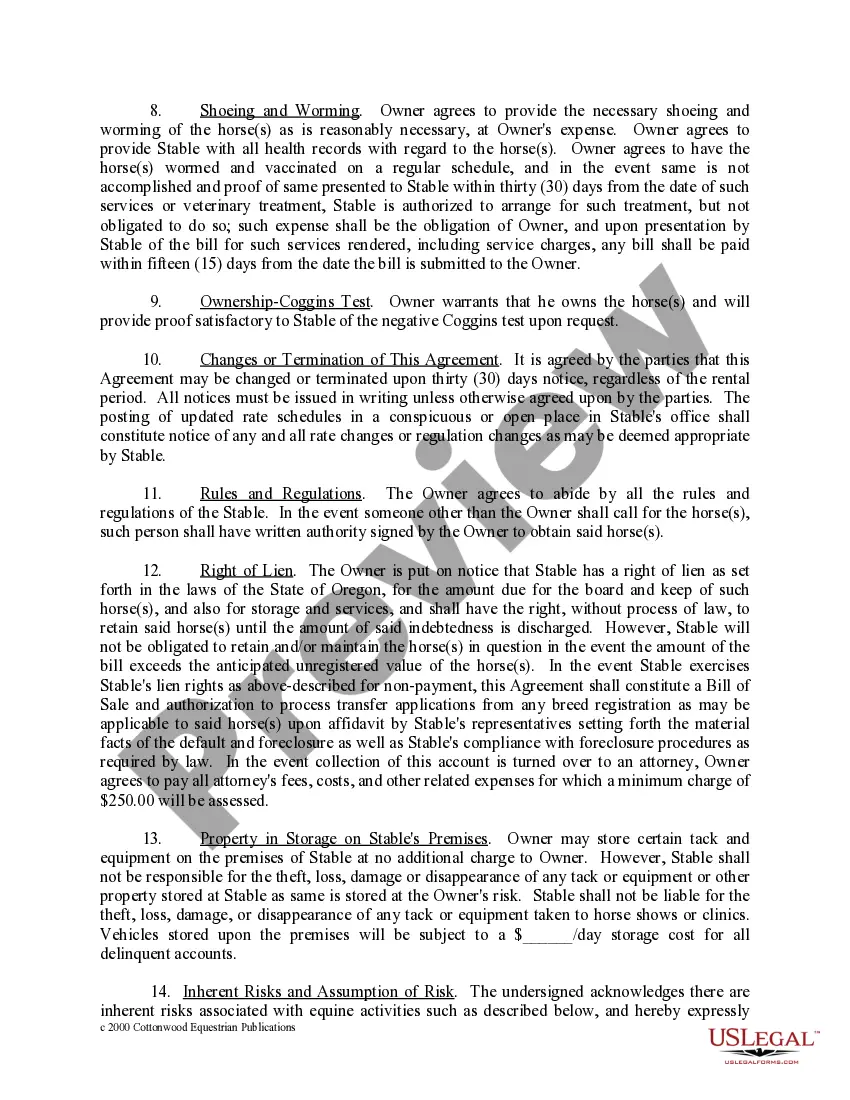
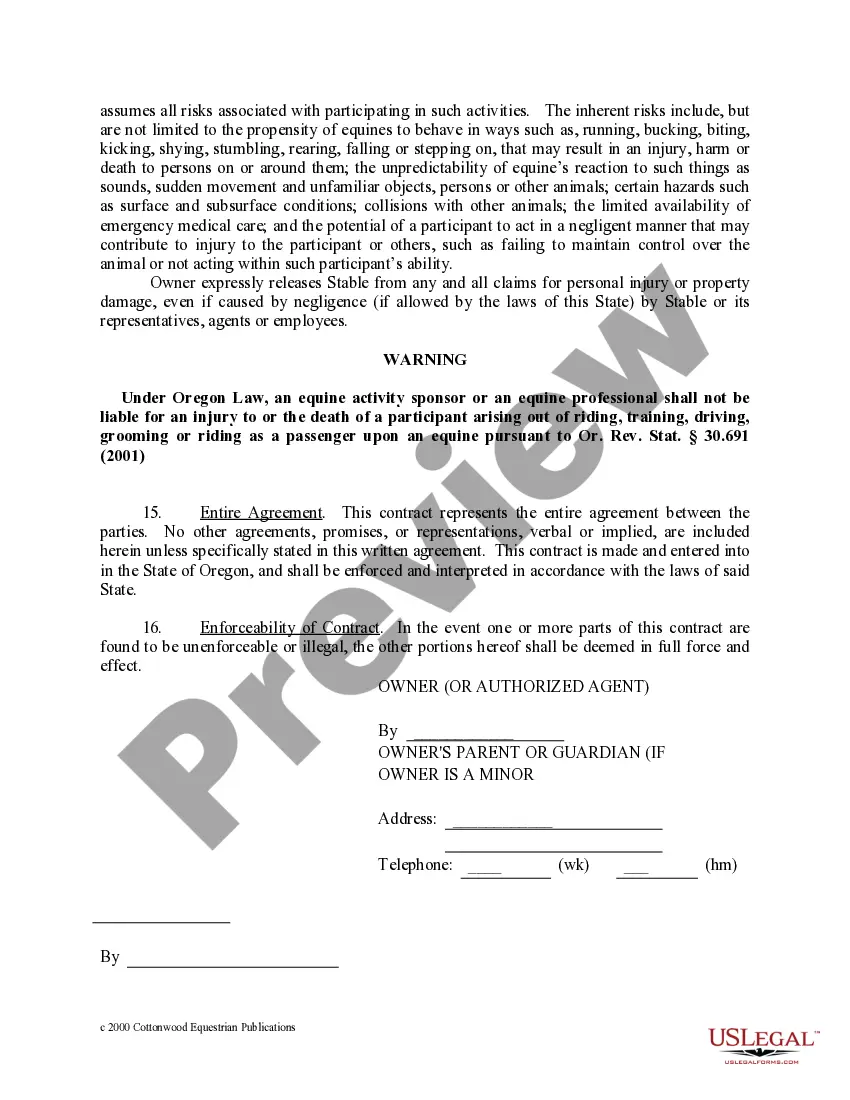
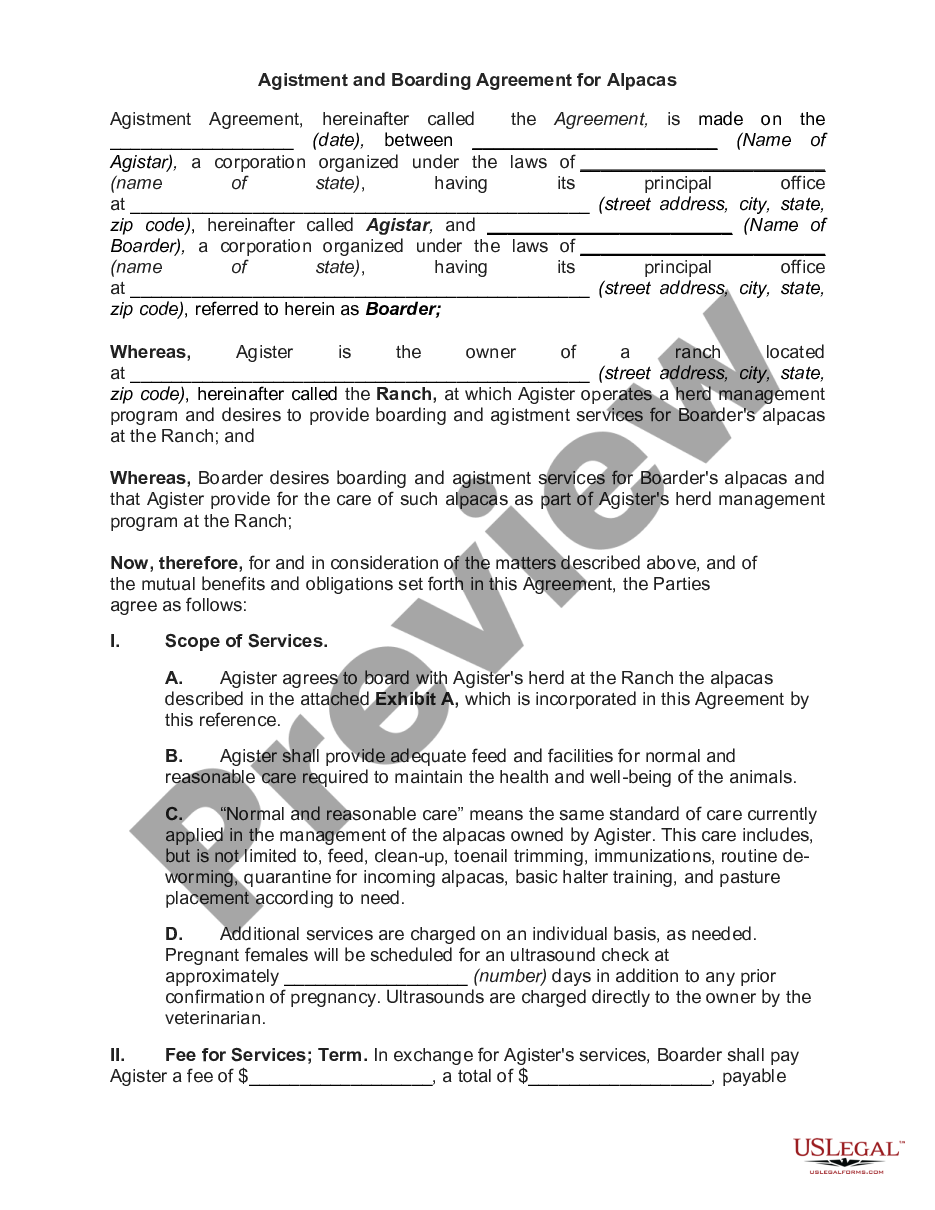
- Boarding Stable Agreement
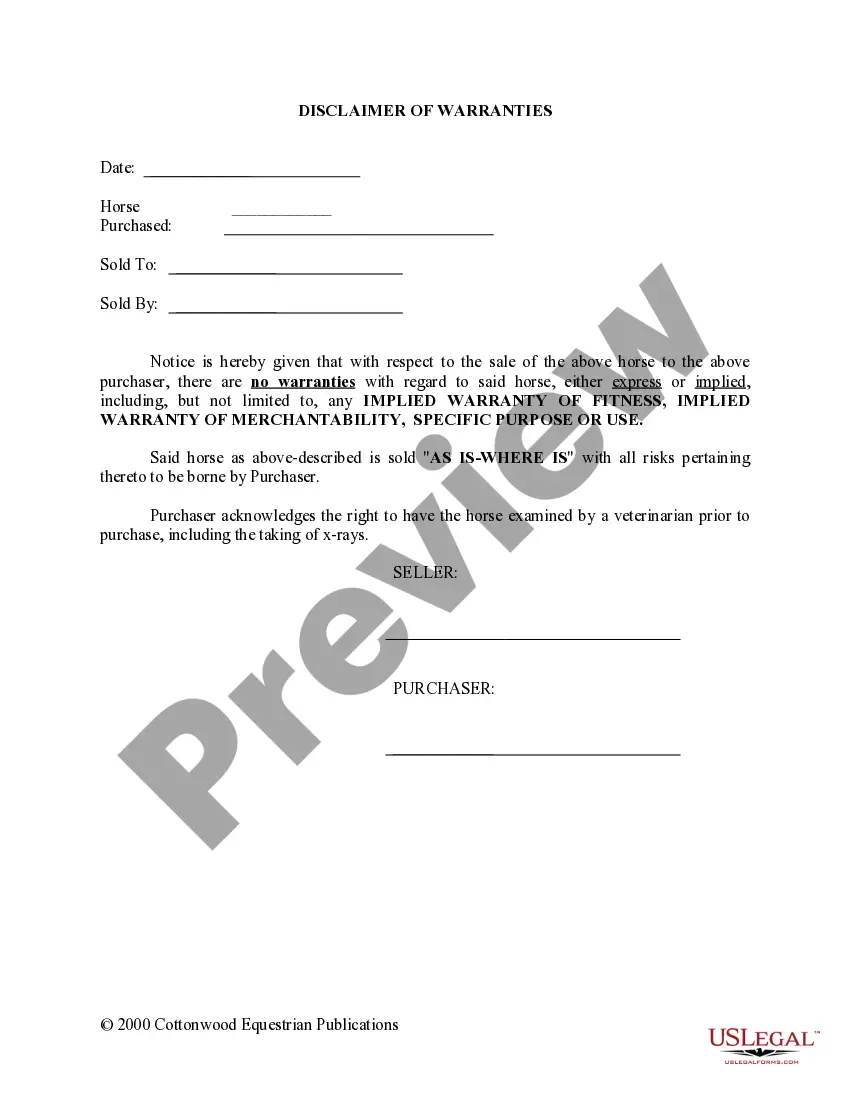
- Disclaimer of Warranties
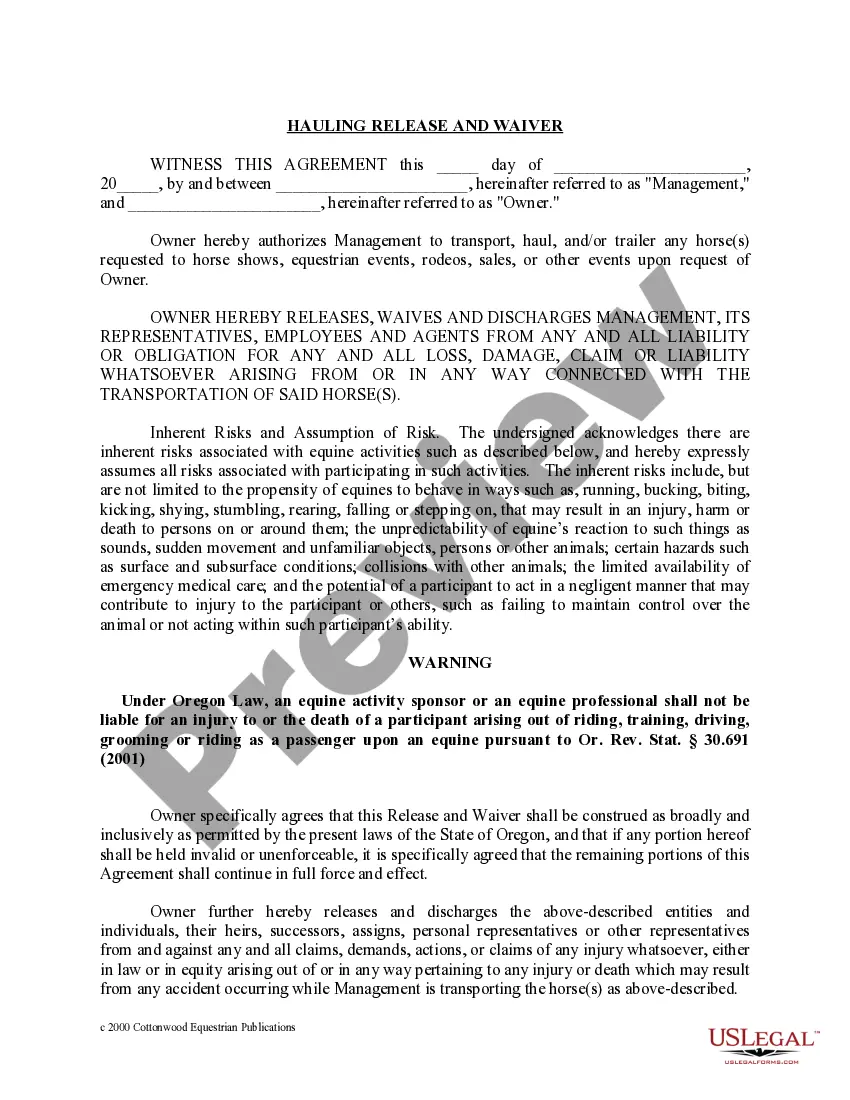
- Hauling Release and Waiver
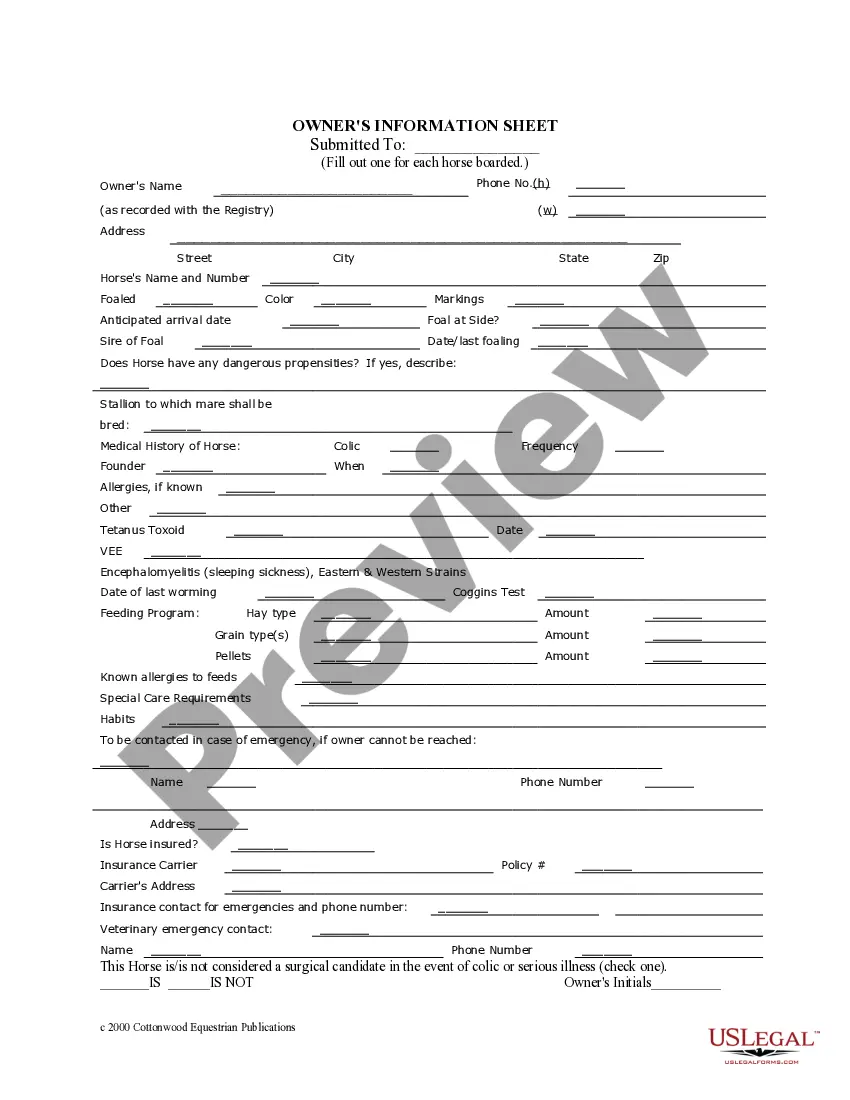
- Owner's Information Sheet
- Lesson, Horse Rental, and Arena Use Release
- Mare Information Sheet
- Authorization to Obtain Medical Treatment for Minor Child
- Release of Liability Owner/Rider
- Release of Liability Parent/Minor
- Installment Purchase and Security Agreement with Limited Warranties
- Installment Purchase and Security Agreement Without Warranties
- Pre-Purchase Recommendations
- Promissory Note
- Facility Use Agreement - Show or Clinic
- Stallion Service Contract
- Trainer's Facility Use Agreement
- Training Contract

Situations where this form applies
This forms package should be used when engaging in transactions or agreements related to horses in Oregon, such as buying or selling a horse, boarding animals, arranging for training or lessons, or managing liability and risk associated with equine activities. For instance, if you are an owner looking to sell a horse, you would utilize the Bill of Sale, while a facility offering services would require the Boarding Stable Agreement along with liability waivers.
Who needs this form
- Horse owners looking to buy or sell horses.
- Equine facilities and boarding stables.
- Training professionals offering lessons or clinics.
- Veterinarians needing authorization for treatment consent.
- Parents or guardians of minors participating in equine activities.
How to complete this form
- Identify the parties involved (buyer, seller, owner, or facility) and enter their details at the top of the relevant forms.
- Clearly specify the horse or horses involved in transactions by providing their registration names and descriptions.
- Complete fields regarding payment terms, including purchase prices, fees, and any deposit amounts.
- Fill out any additional clauses that reflect agreements on liability, veterinary care, or care requirements, as applicable.
- Ensure all parties sign and date the relevant forms where indicated, potentially including witnesses if required.
Is notarization required?
This form does not typically require notarization unless specified by local law. However, it is advisable to check with local regulations to confirm specific requirements for enforceability.
Get your form ready online
Our built-in tools help you complete, sign, share, and store your documents in one place.
Make edits, fill in missing information, and update formatting in US Legal Forms—just like you would in MS Word.
Download a copy, print it, send it by email, or mail it via USPS—whatever works best for your next step.
Sign and collect signatures with our SignNow integration. Send to multiple recipients, set reminders, and more. Go Premium to unlock E-Sign.
If this form requires notarization, complete it online through a secure video call—no need to meet a notary in person or wait for an appointment.
We protect your documents and personal data by following strict security and privacy standards.

Make edits, fill in missing information, and update formatting in US Legal Forms—just like you would in MS Word.

Download a copy, print it, send it by email, or mail it via USPS—whatever works best for your next step.

Sign and collect signatures with our SignNow integration. Send to multiple recipients, set reminders, and more. Go Premium to unlock E-Sign.

If this form requires notarization, complete it online through a secure video call—no need to meet a notary in person or wait for an appointment.

We protect your documents and personal data by following strict security and privacy standards.
Common mistakes
- Failing to include all necessary parties in the agreements.
- Not specifying details about the horse, such as registration numbers and descriptions.
- Omitting signatures or dates, which can render the contract invalid.
Why complete this form online
- Convenience of completing forms from home without needing to visit a lawyer.
- Editability allows for personal adjustments before finalizing.
- Access to templates drafted by licensed attorneys, ensuring legal accuracy.
Legal use & context
- All forms in this package are designed to be legally binding in Oregon.
- Individual agreements can clarify roles, responsibilities, and liabilities between parties in equine transactions.
- Using legally sound templates can help prevent disputes or misunderstandings between horse owners and service providers.
What to keep in mind
- The package provides essential legal documentation for horse ownership and operations.
- It caters to various needs, from buying and selling to boarding and liability waivers.
- Proper completion and understanding of these forms can protect your rights in equine transactions.
Looking for another form?


Form popularity
FAQ
Health paper requirements. a health certificate. This health certificate is good for 30 days from the date the horses were inspected. Some states have developed a 6 month health certificate.
Coggins tests are good for 6 months.
This disease remains active, at low levels, within the US horse population. Prior to introduction of routine testing, 3 in every 100 horses were positive for EIA. Since routine testing was introduced in 1973, the numbers have declined to 0.2% of horses testing positive.
Equine, one of the mammal family of Equidae (order Perissodactyla) that includes the modern horses, zebras, and asses, as well as more than 60 species known only from fossils. North American wild horse (Equus caballus) standing in the sagebrush of the Granite Range, Washoe County, Nevada.
The Coggins test is good for one year and must be done by a USDA certified veterinarian. Health Certificates are to ensure that horses being transported are healthy and not potentially exposing innocent horses to disease.
Generally, yearly testing is required if you will be transporting your horse for any reason, but some states or organized shows may require a negative test within 6 months of importation.
Domesticated, or tamed, horses can live in almost any habitat, but wild horses prefer plains, prairies, and steppes for many reasons. Horses need wide open spaces for defense purposes, and they need some shelter, like trees or cliffs, to protect them from the elements.
The Nilgai or Boselaphus tragocamelus looks kind of like a horse, but isn't one.
(a) Cows, horses, sheep, goats or swine cannot be kept on lots having an area of less than one acre. The minimum area for such animals (other than their young under the age of six months) on less than five acres shall be as follows: Horses One per acre, plus one additional for every 15,000 square feet.