Connecticut Last Will and Testament for Divorced Person not Remarried with Adult Children
Understanding this form
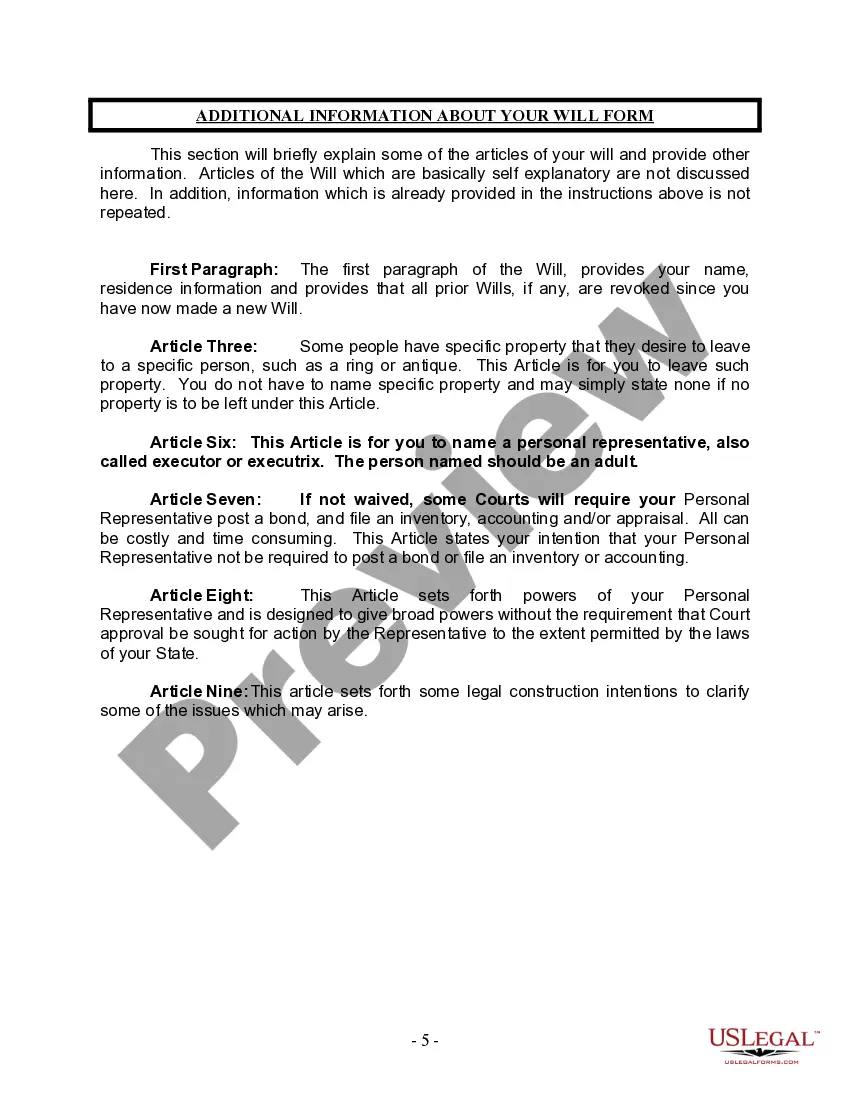
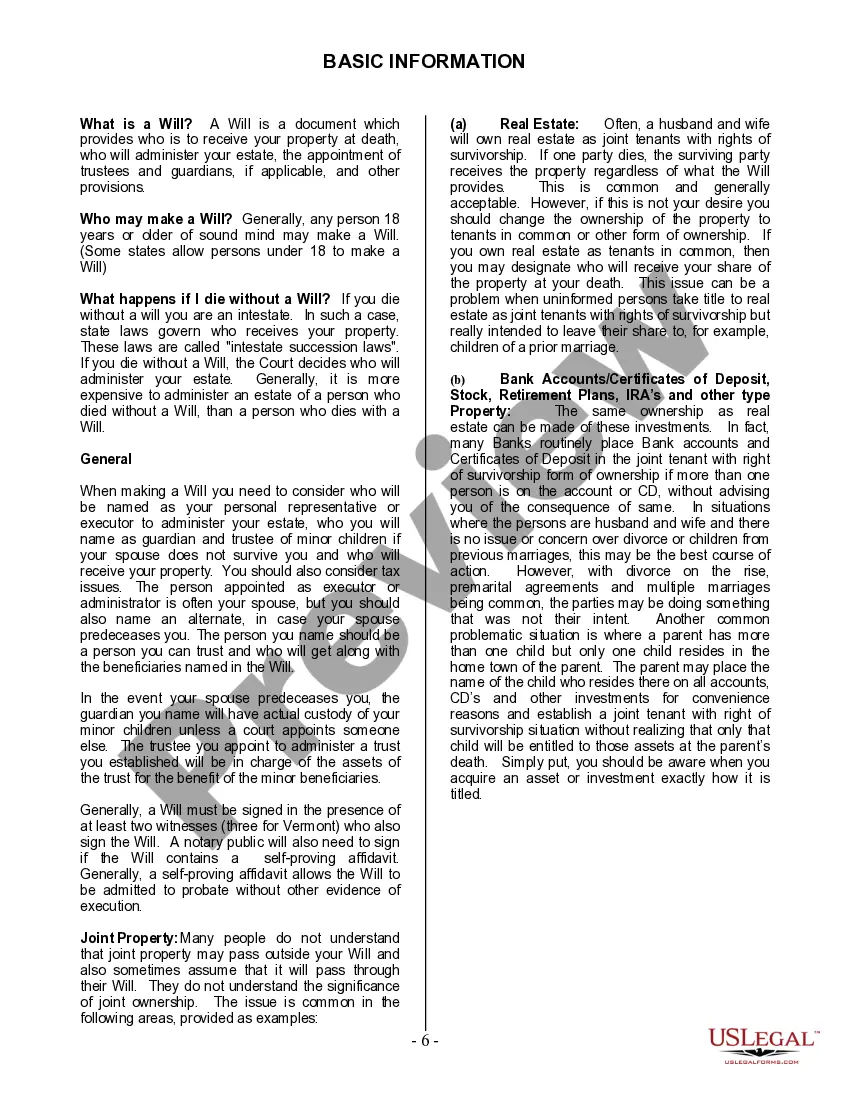
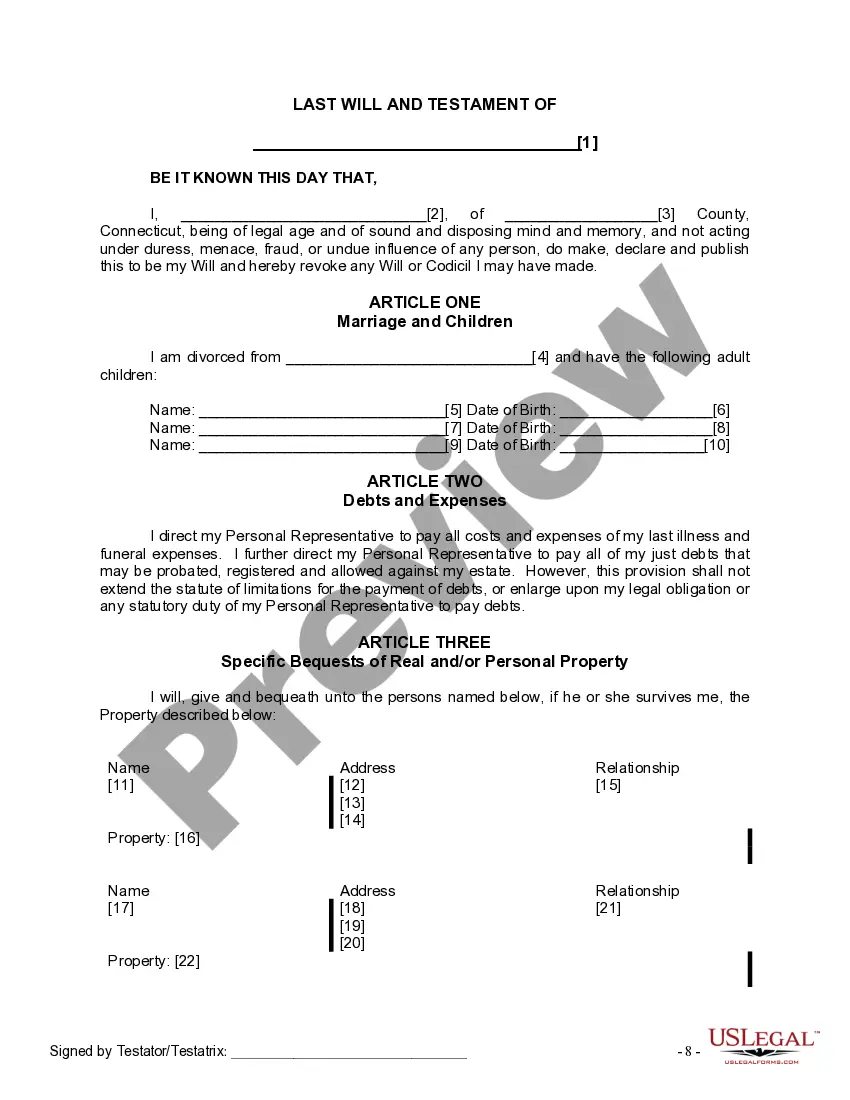
This Last Will and Testament is specifically tailored for a divorced person who has not remarried and has adult children. It outlines how to distribute your property, names an executor to manage your estate, and includes essential provisions dependent on your personal circumstances. This form differs from standard wills by addressing the unique needs of individuals in similar situations, ensuring that your specific wishes are clearly articulated and legally binding.
What’s included in this form
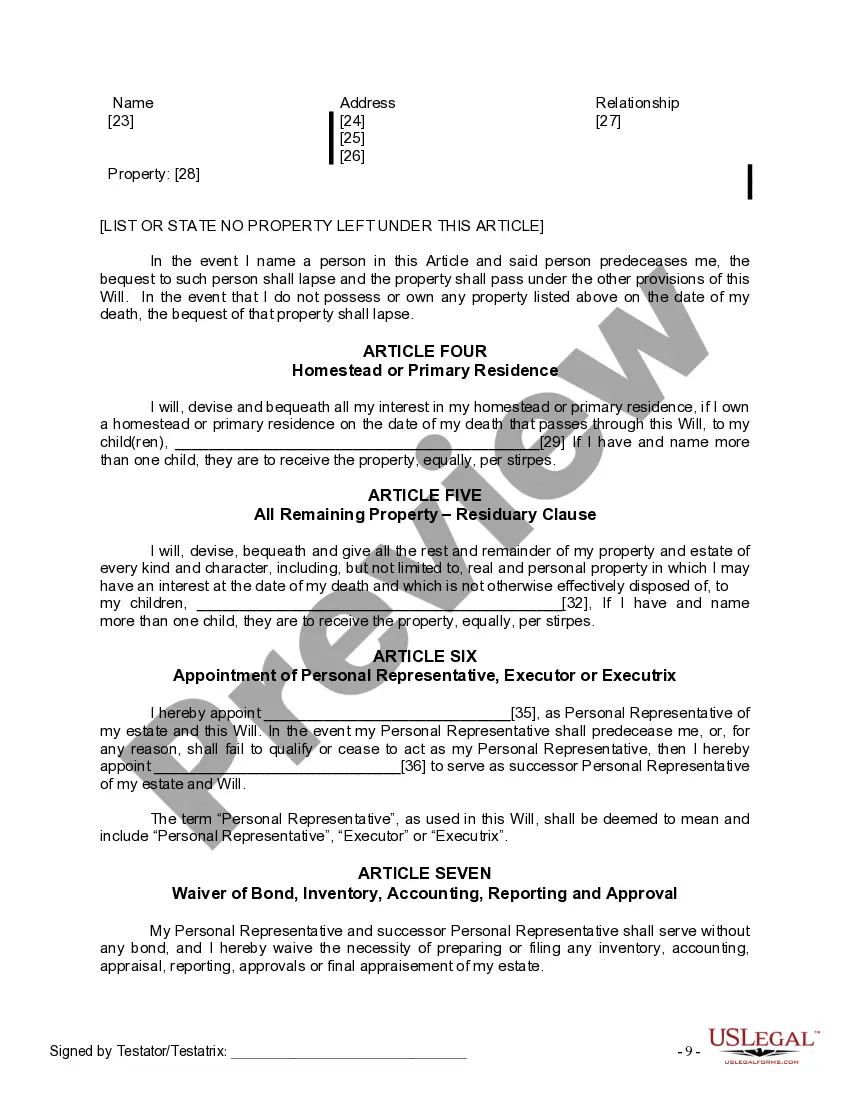
- Personal information: Fields for your name, residence, and the names of your adult children.
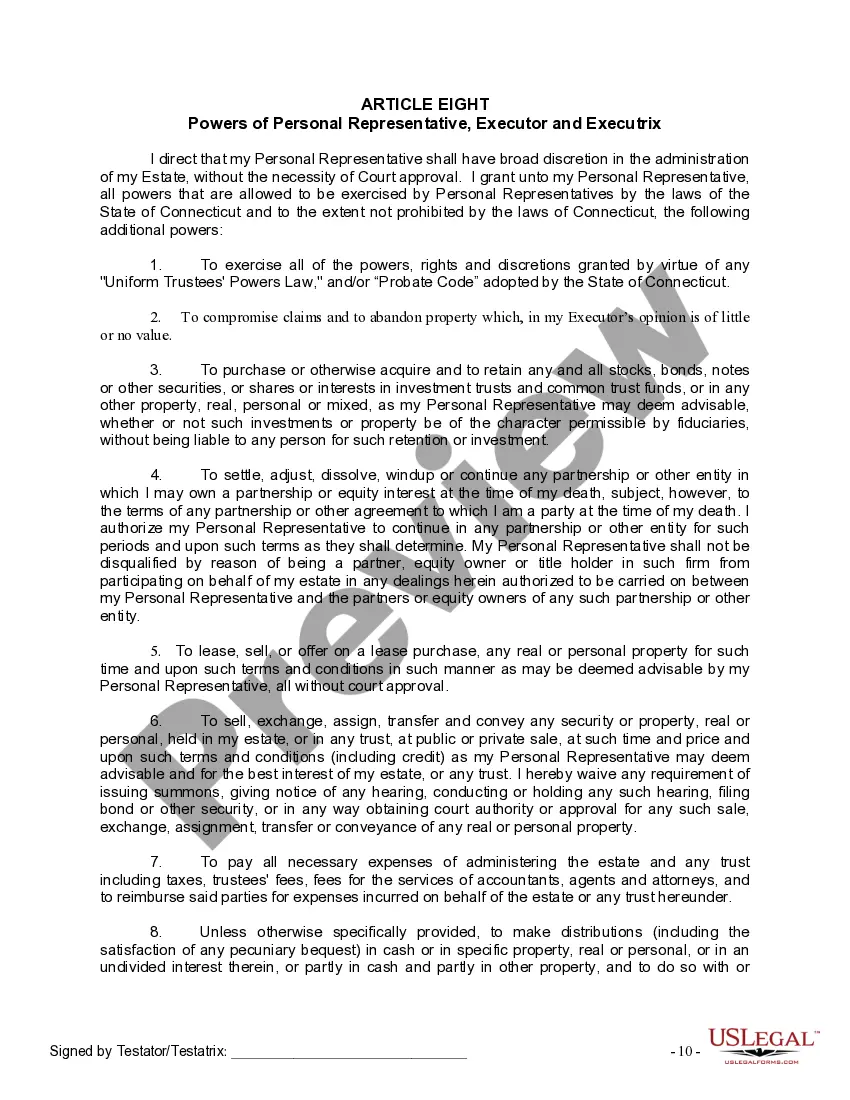
- Appointment of a personal representative: Designation of an executor to handle your estate.
- Specific bequests: Provisions for distributing particular items or assets to chosen individuals.
- Distribution of property: Instructions for how the remaining estate should be allocated among your children.
- Signature and witnessing: Requirements for signing the will in front of witnesses to ensure its validity.





When to use this form
You should use this Last Will and Testament when you wish to clearly outline your wishes regarding the distribution of your assets after your death. It is particularly relevant if you are divorced with adult children and want to ensure your estate is managed according to your specific desires, avoiding potential disputes among your family members.
Who can use this document
- Individuals who are divorced and have not remarried.
- Parents with adult children who wish to specify how their assets will be distributed.
- Anyone looking to create a legally binding document to govern the distribution of their estate.
- People seeking to appoint a trusted personal representative to manage their affairs after death.
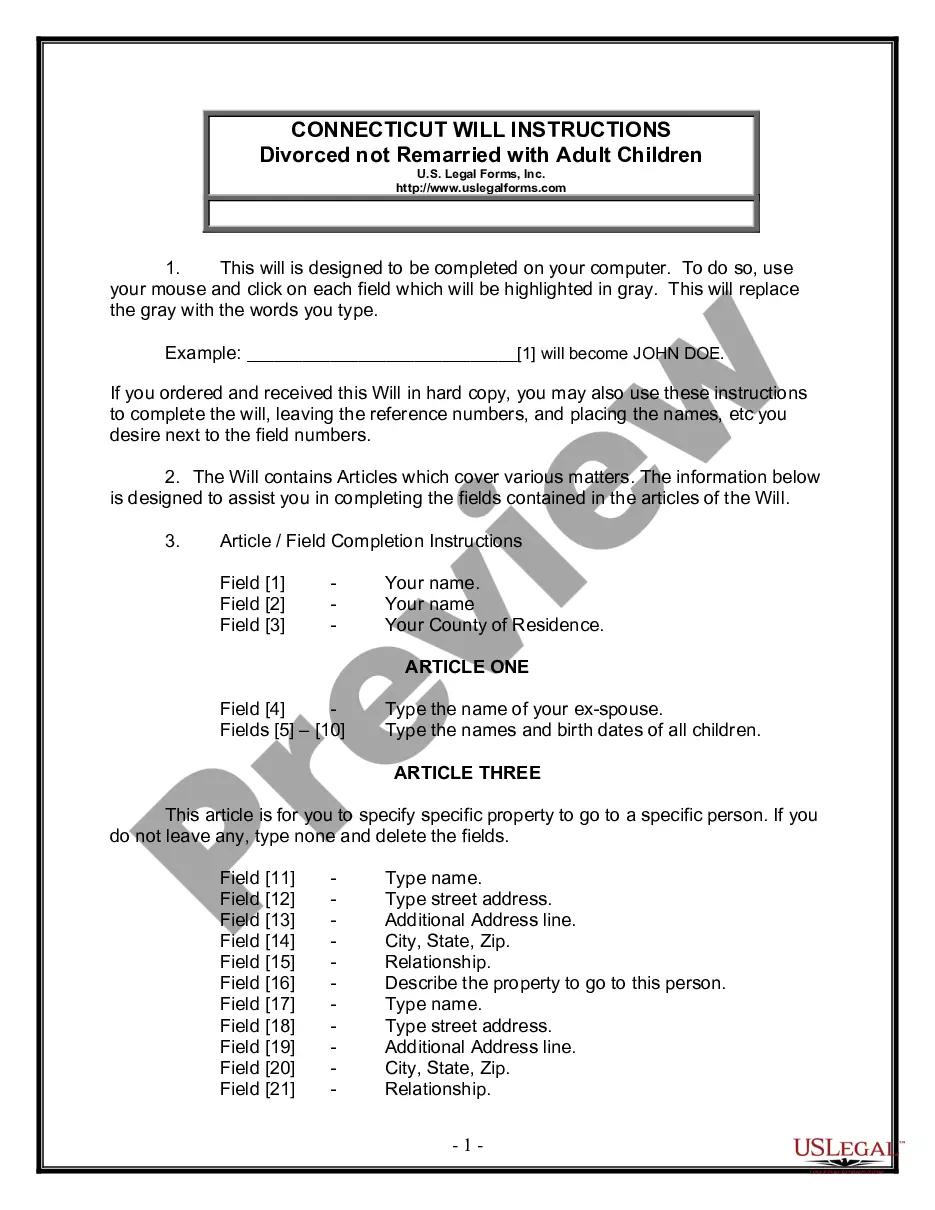
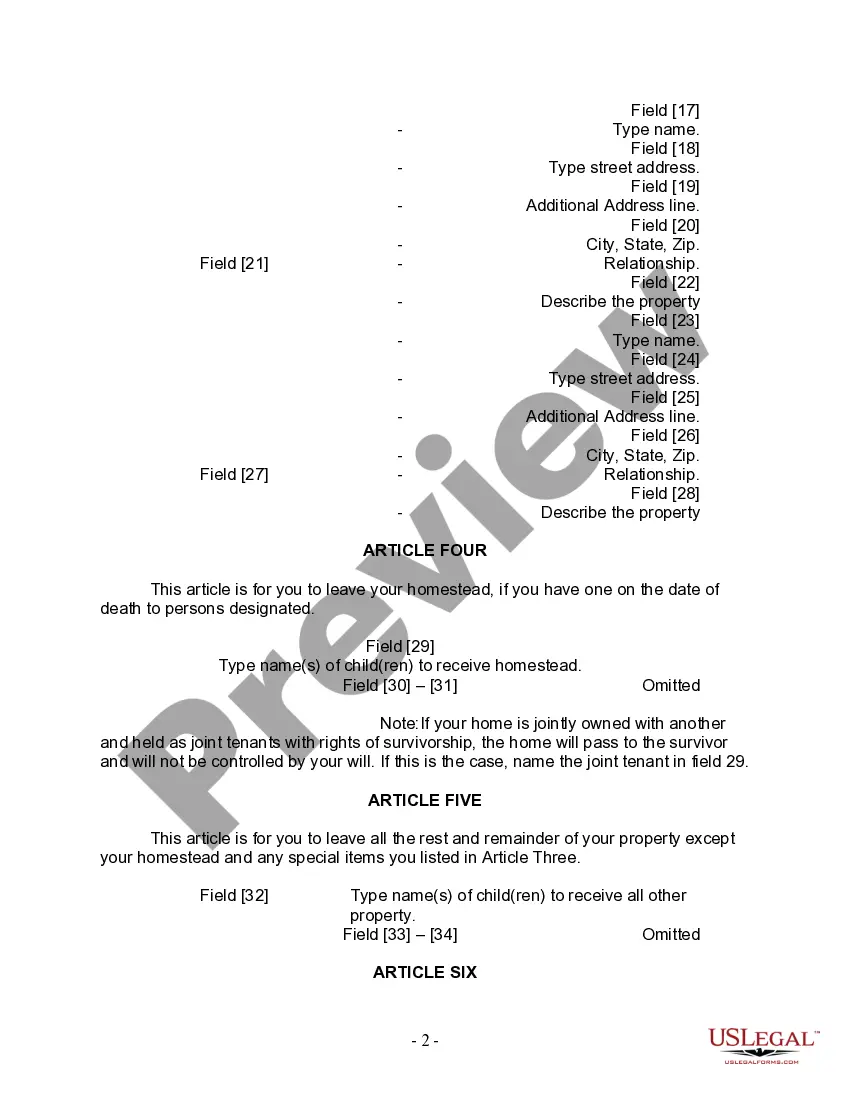
Completing this form step by step
- Enter your personal information including your name and county of residence.
- Designate your personal representative and any successor representatives.
- Specify individual bequests and identify the items or property to distribute to your children.
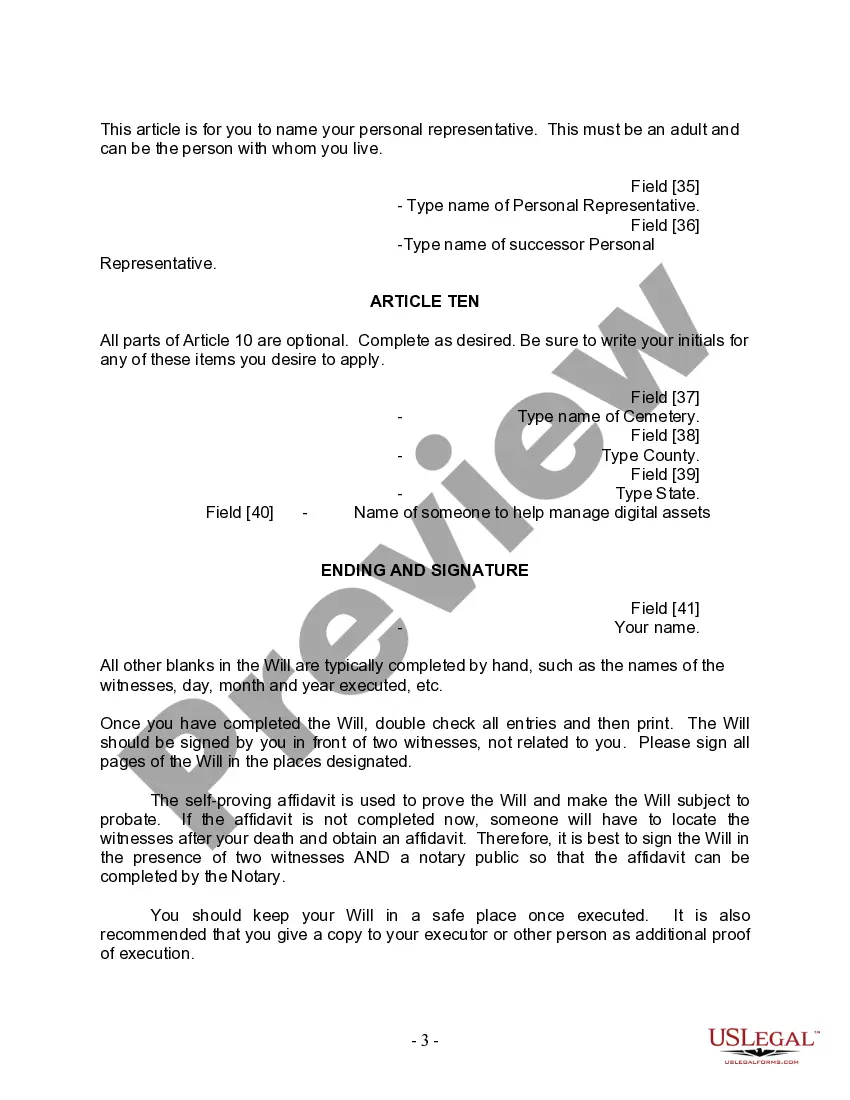
- Review and ensure that all entries are accurate before printing the document.
- Sign the will in the presence of two witnesses, and ensure they sign as well.
Does this document require notarization?
Yes, this form must be notarized to be legally valid if it includes a self-proving affidavit. A notary public will witness your signature and those of the witnesses, enhancing the document's legal standing and facilitating the probate process.
Get your form ready online
Our built-in tools help you complete, sign, share, and store your documents in one place.
Make edits, fill in missing information, and update formatting in US Legal Forms—just like you would in MS Word.
Download a copy, print it, send it by email, or mail it via USPS—whatever works best for your next step.
Sign and collect signatures with our SignNow integration. Send to multiple recipients, set reminders, and more. Go Premium to unlock E-Sign.
If this form requires notarization, complete it online through a secure video call—no need to meet a notary in person or wait for an appointment.
We protect your documents and personal data by following strict security and privacy standards.

Make edits, fill in missing information, and update formatting in US Legal Forms—just like you would in MS Word.

Download a copy, print it, send it by email, or mail it via USPS—whatever works best for your next step.

Sign and collect signatures with our SignNow integration. Send to multiple recipients, set reminders, and more. Go Premium to unlock E-Sign.

If this form requires notarization, complete it online through a secure video call—no need to meet a notary in person or wait for an appointment.

We protect your documents and personal data by following strict security and privacy standards.
Typical mistakes to avoid
- Failing to have the will signed in the presence of two qualified witnesses.
- Not clearly specifying beneficiaries for particular assets.
- Overlooking the need for a notary if a self-proving affidavit is included.
- Not keeping a copy of the signed will in a secure location.
Benefits of completing this form online
- Convenience: Complete the form at your own pace from home.
- Editability: Make changes quickly if your personal circumstances change.
- Reliability: The document is prepared by experienced attorneys to meet legal standards.
Legal use & context
- A Last Will and Testament serves to define your wishes regarding asset distribution upon death.
- A properly executed will can prevent disputes among heirs and simplify the probate process.
- In states with self-proving affidavit laws, notarization can make the will easier to validate in court.
Main things to remember
- A Last Will and Testament is essential for ensuring your wishes are respected after death.
- This specific will is tailored for divorced individuals with adult children.
- Proper execution with witnesses and notarization is crucial for legal validity.
Looking for another form?








Form popularity
FAQ
Wills are not automatically filed upon death; it is the responsibility of the executor or the person in possession of the will to file it with the probate court. If you have prepared a Connecticut Last Will and Testament for Divorced Person not Remarried with Adult Children, make sure your executor knows their duties and the importance of filing your will promptly after your passing. This step initiates the legal process needed to distribute your assets according to your wishes.
In Connecticut, while a will does not need to be recorded with any state agency, it must be filed with the probate court after your death. This step is essential to ensure your wishes, as outlined in your Connecticut Last Will and Testament for Divorced Person not Remarried with Adult Children, are followed during the probate process. Keeping your will safe and easily accessible will help expedite this process.
If you never file a will in Connecticut, your estate will go through intestate succession, according to state laws. This means your assets will be distributed according to predetermined rules, which may not align with your wishes. A Connecticut Last Will and Testament for Divorced Person not Remarried with Adult Children allows you to avoid this situation by clearly stating your intentions.
In Connecticut, if a person dies without a will, their spouse typically inherits the estate. However, if you have a Connecticut Last Will and Testament for Divorced Person not Remarried with Adult Children, you can specify how you want your assets to be distributed. This allows you to ensure that your adult children are considered in your estate planning.
One of the most significant mistakes people make with wills is failing to update them after major life changes, such as divorce. If you have a Connecticut Last Will and Testament for Divorced Person not Remarried with Adult Children, ensure that it reflects your current wishes. Regularly reviewing and updating your will can prevent unintended consequences for your adult children and protect your assets.
In Connecticut, a will must be filed with the probate court after your death to start the probate process. This ensures that your estate is administered according to your wishes. If you have created a Connecticut Last Will and Testament for Divorced Person not Remarried with Adult Children, it is crucial to follow this step to guarantee that your heirs receive their intended inheritance.
You can indeed write your own will in Connecticut, provided it follows the state's legal guidelines. This approach allows you to tailor your Connecticut Last Will and Testament for Divorced Person not Remarried with Adult Children to reflect your wishes accurately. However, using services like US Legal Forms can simplify the process, ensuring that your will meets all legal criteria and accurately represents your intentions.
Yes, a handwritten will, also known as a holographic will, can be legal in Connecticut under certain conditions. It must be in the testator's handwriting and include their signature. However, to ensure that your Connecticut Last Will and Testament for Divorced Person not Remarried with Adult Children holds up in court, it is advisable to consult legal resources or services like US Legal Forms for guidance.
In Connecticut, a will must meet specific requirements to be considered legal. It should be in writing, signed by the testator, and witnessed by at least two individuals who are not beneficiaries. For those creating a Connecticut Last Will and Testament for Divorced Person not Remarried with Adult Children, ensuring compliance with these requirements is essential for the valid execution of your wishes.
Married couples do not have to have separate wills, but having them can be beneficial for clear asset distribution and reflecting individual wishes. Each spouse can create a will that addresses their specific desires, especially in cases where prior relationships or children are involved. For those exploring a Connecticut Last Will and Testament for Divorced Persons not Remarried with Adult Children, using separate wills allows tailored provisions while considering family dynamics.