Connecticut Lease Subordination Agreement
What this document covers
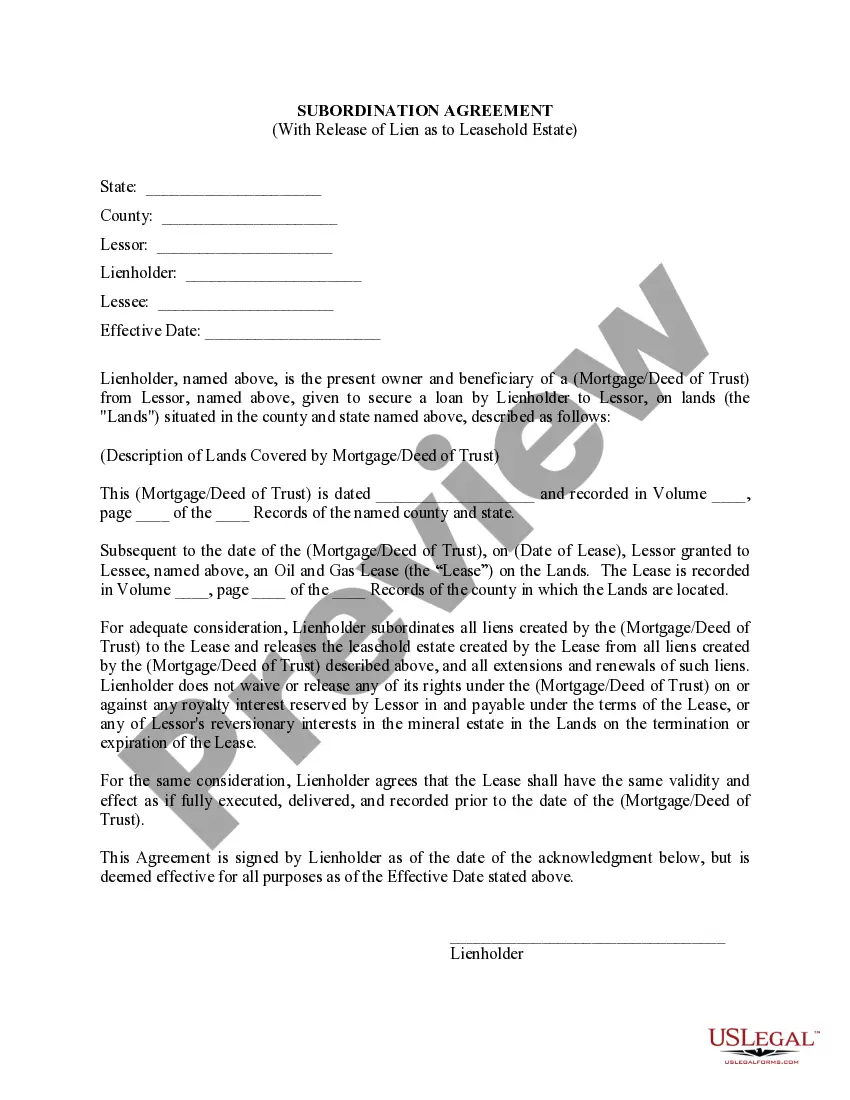
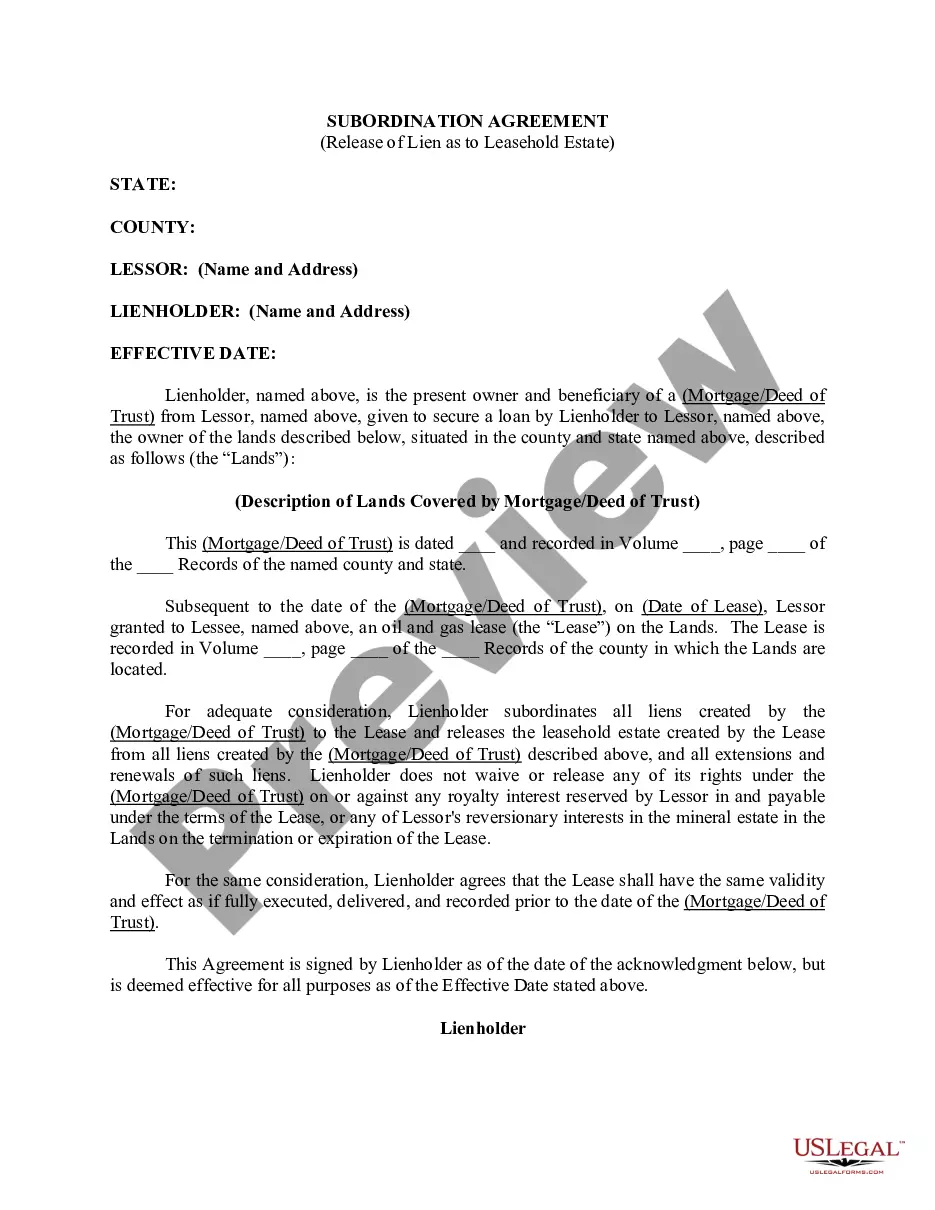
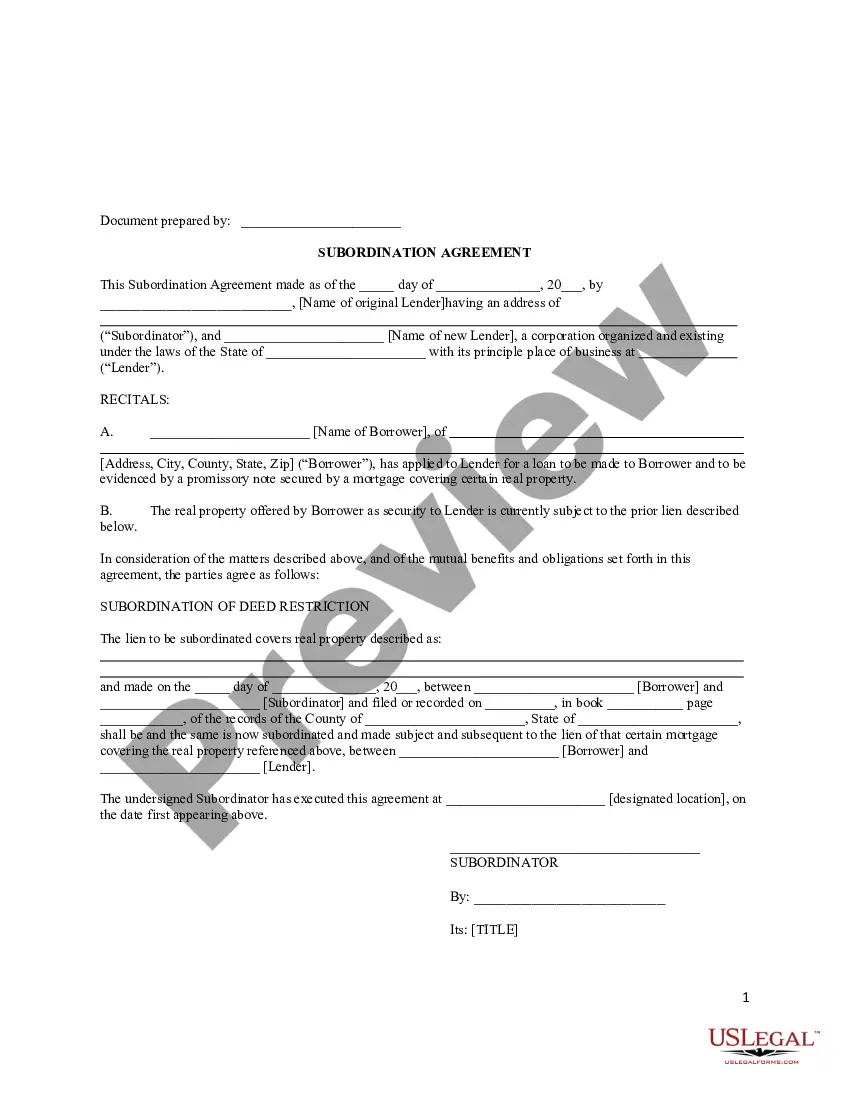
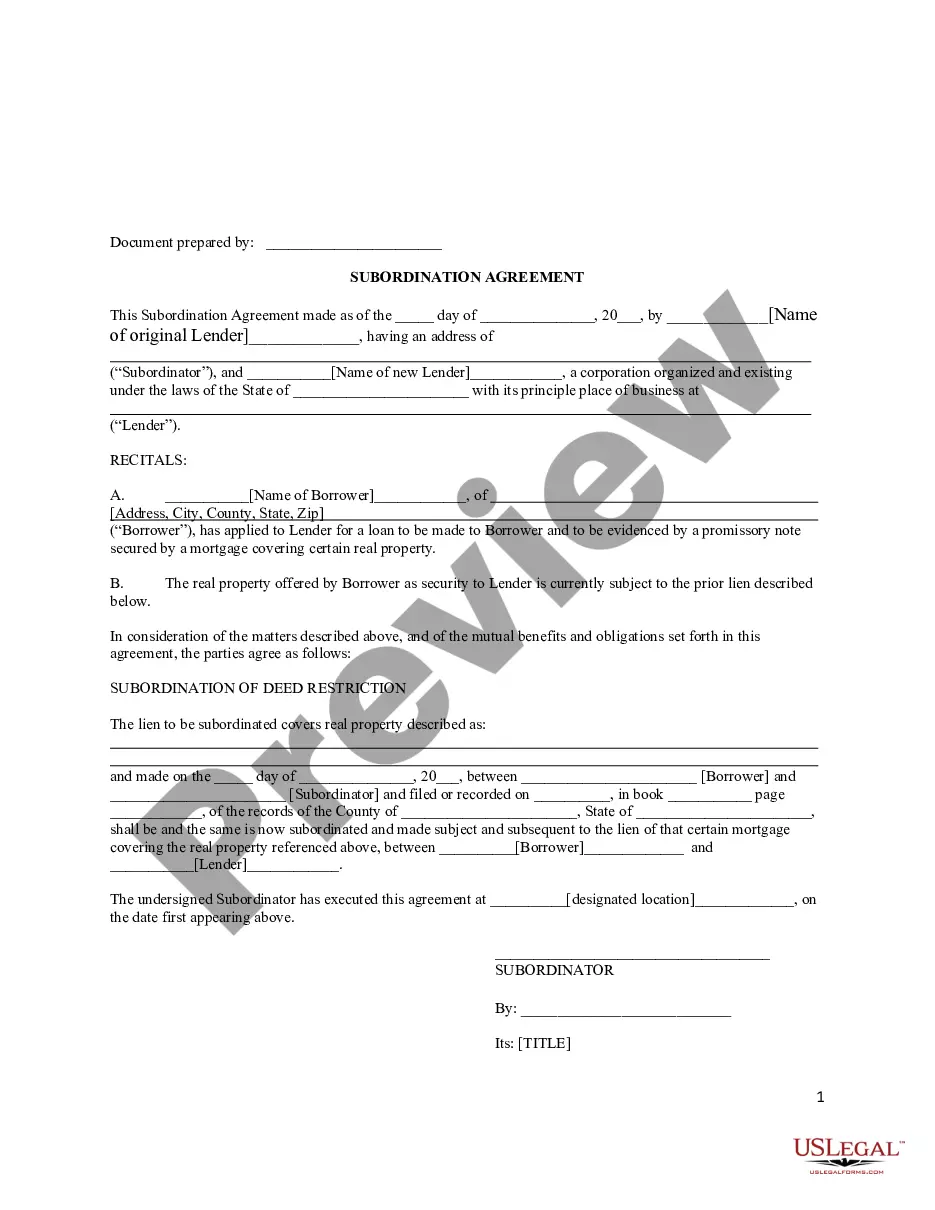
A Lease Subordination Agreement is a legal document that allows a lienholder to place their claims behind a mineral, oil, or gas lease. This agreement ensures that the lease has priority over the debts secured by a mortgage or deed of trust, enabling property owners to secure loans without compromising their leasing agreements. This form is specifically tailored to provide clarity and security in financial transactions involving leasing agreements and subordinated mortgages.
What’s included in this form
- Identification of the Lessor, Lessee, and Lienholder
- Description of the land involved in the lease
- Details of the existing Mortgage or Deed of Trust
- Effective date of the subordination agreement
- Release of lien on the leasehold estate
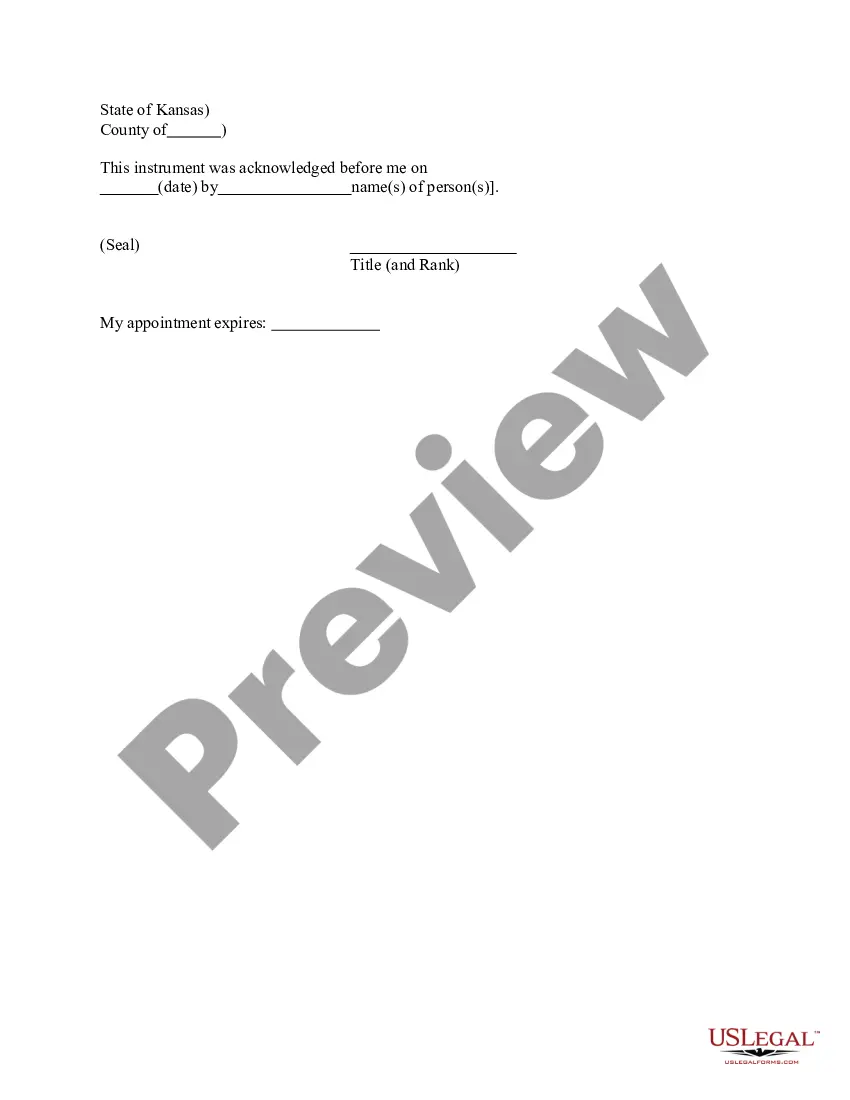
- Acknowledgment and signatures of involved parties
When this form is needed
This form should be used when a property owner seeks to secure a new loan while ensuring that the existing oil and gas lease remains valid and unaffected by prior liens. It is commonly applicable in situations involving refinancing, obtaining a second mortgage, or any new financing structure that requires clear prioritization of financial claims.
Who should use this form
- Property owners seeking to secure financing against properties with existing oil or gas leases
- Lienholders allowing for new loans while protecting lien priority
- Lessee of oil or gas leases requiring assurance against existing debt claims
How to prepare this document
- Identify and clearly state the parties involved: Lessor, Lessee, and Lienholder.
- Provide a detailed description of the property affected by the lease.
- Include the effective date and details of the existing Mortgage or Deed of Trust.
- Specify any release of liens associated with the leasehold estate.
- Ensure all parties sign and date the agreement to validate it.
Does this form need to be notarized?
This form does not typically require notarization unless specified by local law. However, having the document notarized can enhance its legitimacy and enforceability in certain jurisdictions.
Get your form ready online
Our built-in tools help you complete, sign, share, and store your documents in one place.
Make edits, fill in missing information, and update formatting in US Legal Forms—just like you would in MS Word.
Download a copy, print it, send it by email, or mail it via USPS—whatever works best for your next step.
Sign and collect signatures with our SignNow integration. Send to multiple recipients, set reminders, and more. Go Premium to unlock E-Sign.
If this form requires notarization, complete it online through a secure video call—no need to meet a notary in person or wait for an appointment.
We protect your documents and personal data by following strict security and privacy standards.

Make edits, fill in missing information, and update formatting in US Legal Forms—just like you would in MS Word.

Download a copy, print it, send it by email, or mail it via USPS—whatever works best for your next step.

Sign and collect signatures with our SignNow integration. Send to multiple recipients, set reminders, and more. Go Premium to unlock E-Sign.

If this form requires notarization, complete it online through a secure video call—no need to meet a notary in person or wait for an appointment.

We protect your documents and personal data by following strict security and privacy standards.
Common mistakes to avoid
- Failing to accurately describe the property involved.
- Not including effective dates, which can lead to disputes.
- Omitting necessary signatures from all parties involved.
- Ignoring local laws that may affect the agreement's enforceability.
Benefits of completing this form online
- Convenient access to professionally drafted templates.
- Ability to edit and customize the document to meet specific needs.
- Reliable compliance with state-specific legal requirements.
- Instant download for immediate use.
Looking for another form?
Form popularity
FAQ
structured Connecticut Lease Subordination Agreement requires specific elements such as the full names and addresses of all parties involved, a detailed description of the property, and the terms of the subordination. Additionally, signatures from both the landlord and tenant are essential to validate the document. It is advisable to consult with legal professionals to ensure compliance with all applicable laws and regulations.
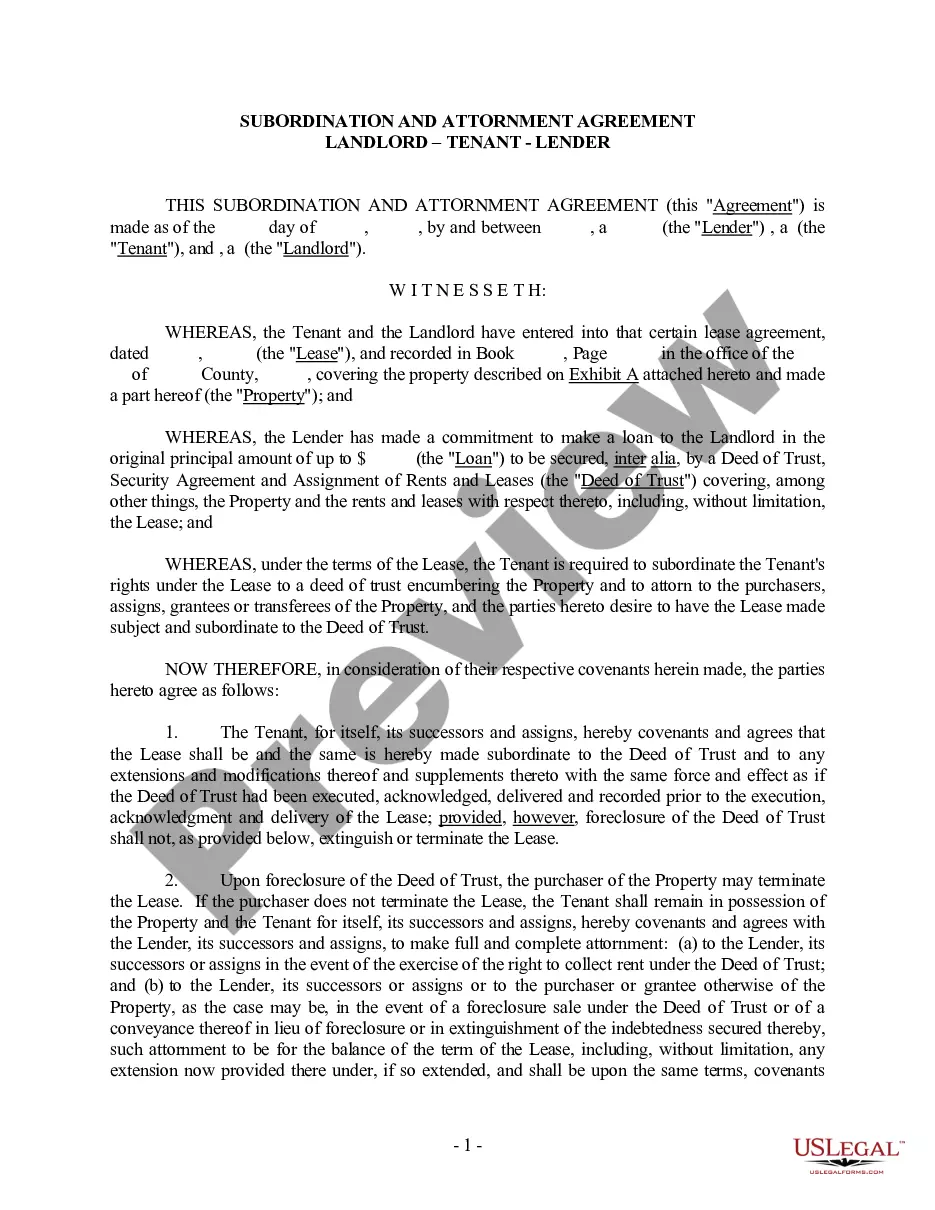
An example of a Connecticut Lease Subordination Agreement might involve a commercial property where the tenant's lease is subordinated to a bank's mortgage. In this scenario, if the property owner defaults on the mortgage, the bank's claim would take priority over the tenant's rights. This arrangement must be clearly outlined in the agreement to ensure that all parties understand their rights and obligations.
The mission of the Connecticut Department of Housing is to promote affordable housing and support the development of sustainable communities across the state. They work on initiatives that aim to improve housing accessibility for all citizens, including strategies related to Connecticut Lease Subordination Agreements. Engaging with their programs can provide valuable resources for tenants, landlords, and developers alike.
The subordination rule generally establishes the order of priority among claims on a property, where not all parties hold equal rights. In the context of a Connecticut Lease Subordination Agreement, this rule ensures that if a property is sold or foreclosed, the lender's rights take precedence over those of the tenant. Understanding this rule is essential for anyone involved in real estate financing or leasing.
The current commissioner of the Connecticut Department of Housing oversees all housing policies and development initiatives within the state. This office plays a significant role in shaping housing laws, including those involving Connecticut Lease Subordination Agreements. Keeping informed about the leadership in this department can help you navigate housing regulations and assistance programs more effectively.
Typically, a lawyer or real estate professional prepares a Connecticut Lease Subordination Agreement. They ensure that all legal requirements are met and that the agreement accurately reflects the intentions of both parties. Engaging a professional helps to minimize potential disputes and clear up any ambiguities that may arise in the lease's terms.
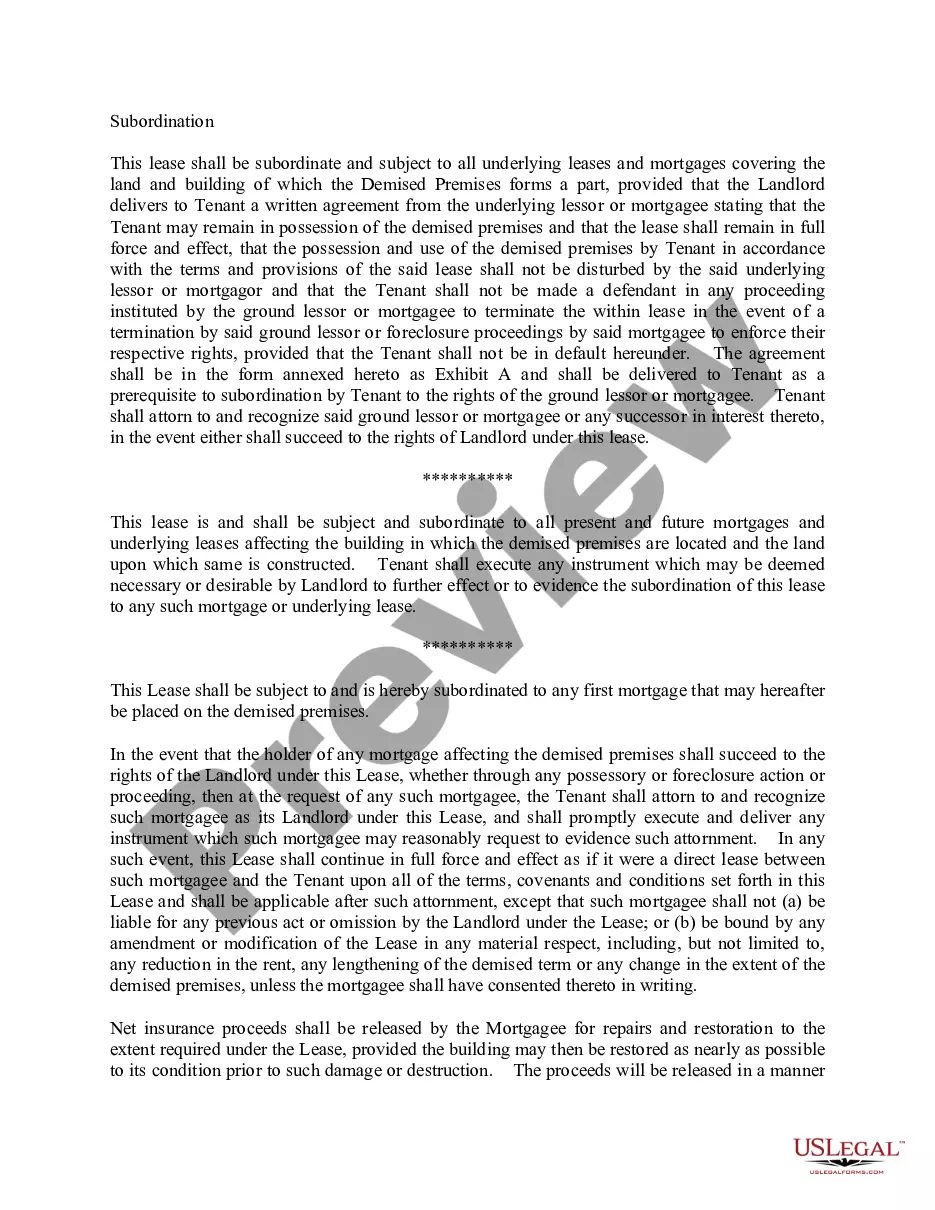
A subordination agreement in a lease is a contractual arrangement that establishes the priority of leases over mortgages or other liens. Specifically, it allows the rights of the landlord or lender to take precedence over the tenant's lease in the event of foreclosure. Understanding this agreement is crucial for tenants and property owners, as it dictates their rights to the property under changing ownership conditions.
The requirements for a Connecticut Lease Subordination Agreement typically include clear identification of the parties involved, a legal description of the property, and the terms under which the lease is subordinated. The agreement must also be signed by the landlord and tenant to be legally binding. Additionally, recording the agreement with the appropriate local authority may be necessary to protect all parties' interests.
An example of a subordination agreement is when a commercial tenant agrees that their lease is subordinate to a new mortgage taken out by the property owner. This allows the property owner to secure financing while the tenant retains their leasing rights under specific conditions. Utilizing a Connecticut Lease Subordination Agreement helps streamline these complexities, making the process straightforward and beneficial for all parties involved.
The purpose of a subordination agreement is to establish the priority of financial claims on a property. It protects lenders by ensuring they have the first right to property in case of default. A well-drafted Connecticut Lease Subordination Agreement can provide peace of mind for landlords and tenants alike, ensuring everyone understands their rights and responsibilities.