Connecticut Letter from Tenant to Landlord containing Notice to landlord to withdraw improper rent increase due to violation of rent control ordinance
What is this form?
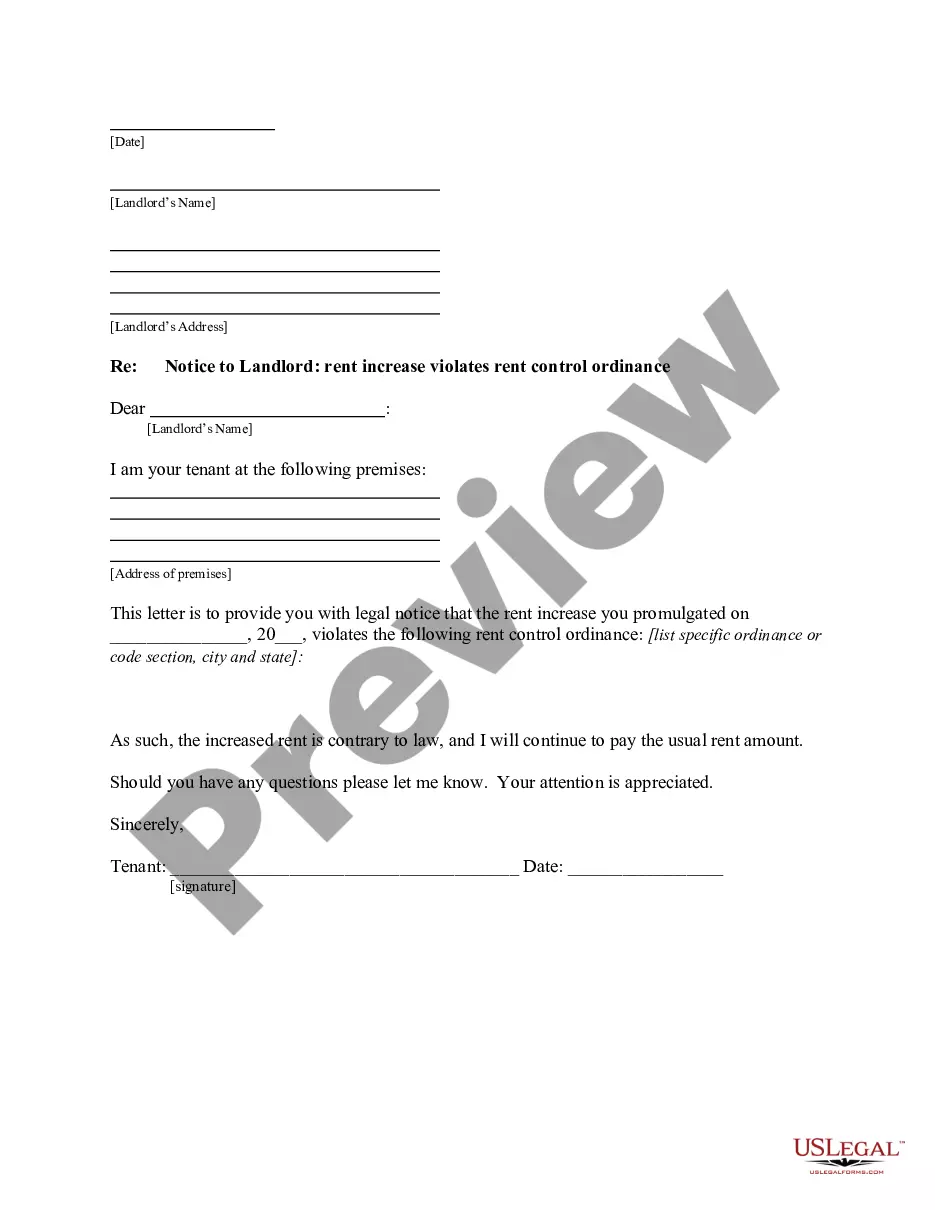
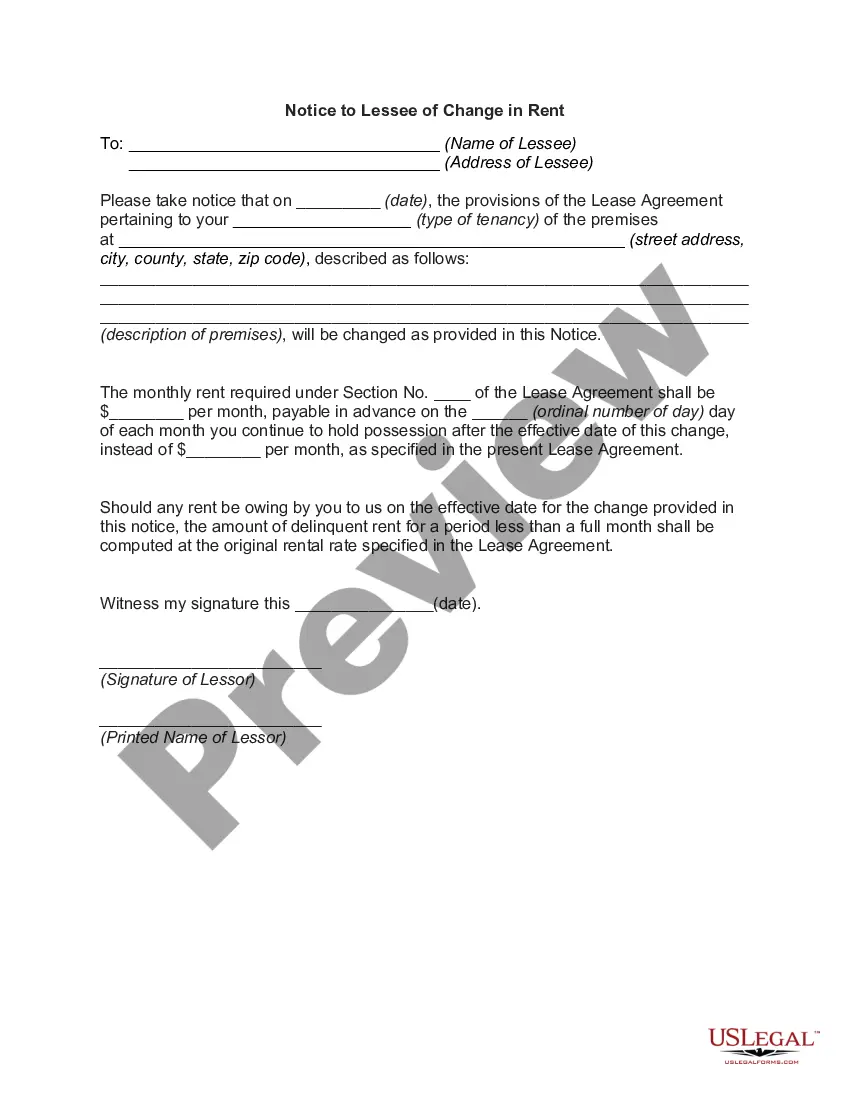
This form is a letter from a tenant to a landlord that serves as a formal notice to withdraw an improper rent increase, citing a violation of local rent control ordinances. It is essential for tenants who believe their rent has been raised unlawfully to document their concerns and request action. This differs from general lease agreements, as it specifically addresses rent control issues and seeks to contest an increase deemed illegal.
Main sections of this form
- Tenant's formal notice to the landlord.
- Details regarding the improper rent increase.
- Citation of applicable rent control ordinances.
- Request for the landlord to withdraw the increase.
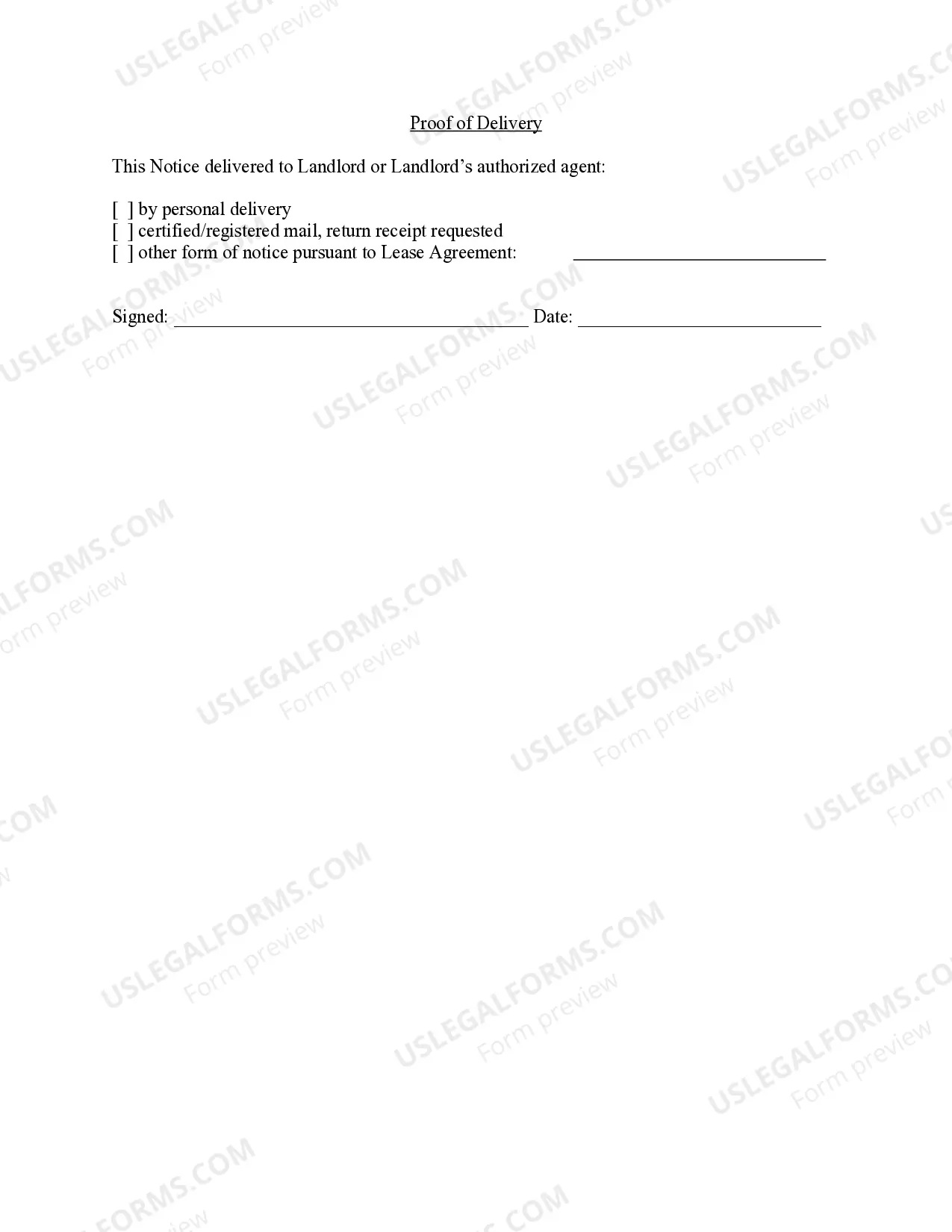
- Proof of delivery to the landlord or their authorized agent.

When to use this form
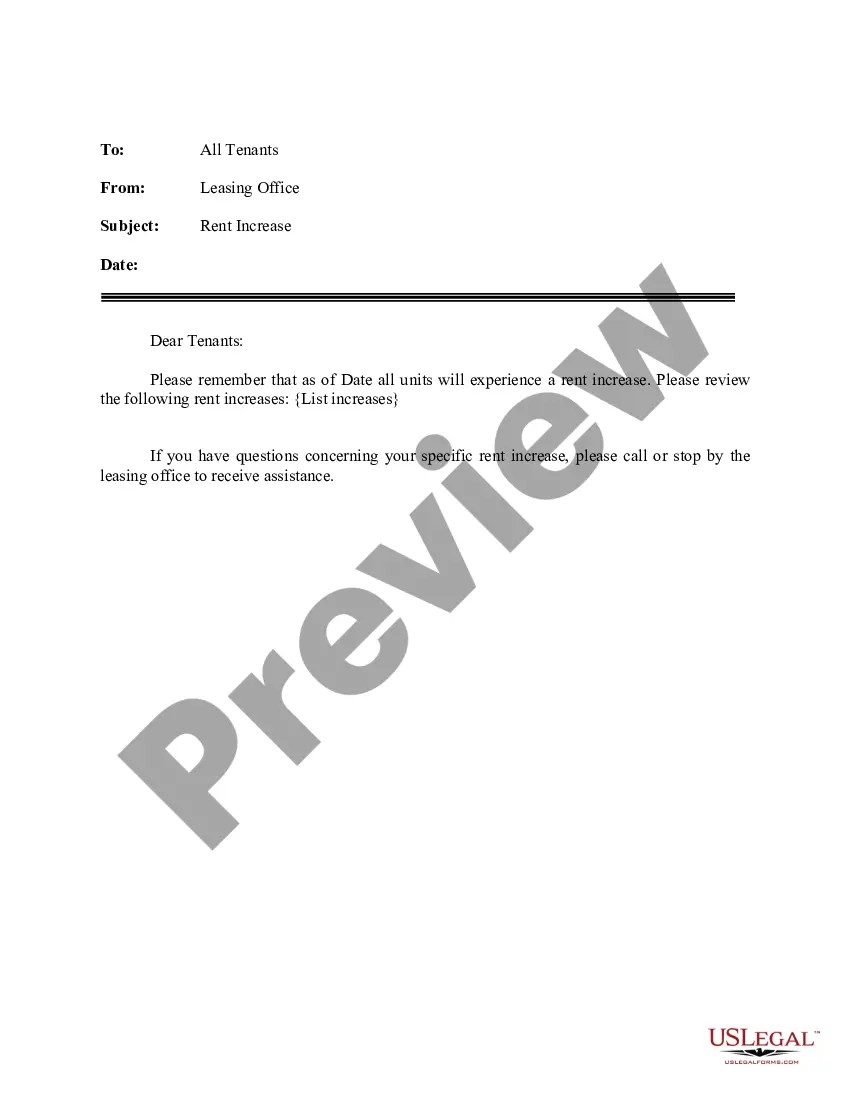
This form should be used when a tenant receives a notice of a rent increase that the tenant believes is invalid due to local rent control laws. It serves as an official communication to the landlord, expressing the tenant's position and formally requesting a review of the increase. Use this form if you suspect your landlord has not followed proper procedures or if the increase exceeds legal limits established by local ordinances.
Who can use this document
- Tenants facing an unjust rent increase.
- Individuals residing in areas with rent control laws.
- Renters seeking to communicate concerns officially to their landlords.
- Those who want to preserve their rights under local housing regulations.
Steps to complete this form
- Identify all parties involved, including the tenant and landlord.
- Clearly state the date of the notice.
- Document the specifics of the rent increase that is being contested.
- Cite the relevant rent control ordinances that support your position.
- Sign the letter and provide a method for proof of delivery.
Notarization requirements for this form
Notarization is generally not required for this form. However, certain states or situations might demand it. You can complete notarization online through US Legal Forms, powered by Notarize, using a verified video call available anytime.
Get your form ready online
Our built-in tools help you complete, sign, share, and store your documents in one place.
Make edits, fill in missing information, and update formatting in US Legal Forms—just like you would in MS Word.
Download a copy, print it, send it by email, or mail it via USPS—whatever works best for your next step.
Sign and collect signatures with our SignNow integration. Send to multiple recipients, set reminders, and more. Go Premium to unlock E-Sign.
If this form requires notarization, complete it online through a secure video call—no need to meet a notary in person or wait for an appointment.
We protect your documents and personal data by following strict security and privacy standards.

Make edits, fill in missing information, and update formatting in US Legal Forms—just like you would in MS Word.

Download a copy, print it, send it by email, or mail it via USPS—whatever works best for your next step.

Sign and collect signatures with our SignNow integration. Send to multiple recipients, set reminders, and more. Go Premium to unlock E-Sign.

If this form requires notarization, complete it online through a secure video call—no need to meet a notary in person or wait for an appointment.

We protect your documents and personal data by following strict security and privacy standards.
Typical mistakes to avoid
- Failing to provide specific details about the rent increase.
- Not citing the correct local ordinances.
- Neglecting to keep a copy of the notice for your records.
- Forgetting to sign the letter or include the date.
- Using informal language instead of professional tone.
Benefits of using this form online
- Convenience of downloading the form and editing it as needed.
- Access to legally-compliant templates that ensure your rights are protected.
- Immediate availability, allowing for a quick response to rent increases.
- Guidance from experienced attorneys incorporated in the document design.
Looking for another form?
Form popularity
FAQ
A landlord can take back a notice to vacate as long as it is done before the tenant has moved out. This action can occur due to changes in circumstances or after resolving the underlying issues. Clear communication regarding the taking back of the notice is essential for both parties. Consider utilizing a Connecticut Letter from Tenant to Landlord containing Notice to landlord to withdraw improper rent increase due to violation of rent control ordinance for effective documentation.
Yes, a landlord has the authority to withdraw a notice to vacate before the tenant leaves the property. This is especially relevant if the notice was issued in error or if the issue prompting the notice has been resolved. It is important that any withdrawal is formally communicated to the tenant, ideally in writing. For clarity and documentation, using a Connecticut Letter from Tenant to Landlord containing Notice to landlord to withdraw improper rent increase due to violation of rent control ordinance may be beneficial.
No, a vacate notice is not the same as an eviction notice. A vacate notice simply informs a tenant to leave the property by a certain date, while an eviction notice is a formal legal document that initiates eviction proceedings. Understanding the distinction helps tenants respond appropriately. If you feel the vacate notice is improper, you may want to prepare a Connecticut Letter from Tenant to Landlord containing Notice to landlord to withdraw improper rent increase due to violation of rent control ordinance.
In Texas, a notice to vacate can be unconditional, but the requirements vary based on the lease terms and the situation. For instance, if you are being asked to vacate due to a lease violation, it may not come with an option to remedy the issue. Always review your lease terms and stay informed about Texas rental laws. If you encounter issues with notices, consider drafting a Connecticut Letter from Tenant to Landlord containing Notice to landlord to withdraw improper rent increase due to violation of rent control ordinance.
Yes, a notice of termination can often be withdrawn, but it depends on state laws and the specific circumstances involved. If a landlord initiates a termination notice in error, they can retract it, provided the tenant has not yet vacated the premises. It is crucial to communicate with your landlord to confirm the withdrawal in writing. Utilizing a Connecticut Letter from Tenant to Landlord containing Notice to landlord to withdraw improper rent increase due to violation of rent control ordinance can streamline this process.
To write a dispute letter to your landlord, start by clearly stating the issue. Include specific details about the improper rent increase and how it violates the rent control ordinance. Use a polite tone to express your concerns, and cite laws or regulations that support your case. You can use a Connecticut Letter from Tenant to Landlord containing Notice to landlord to withdraw improper rent increase due to violation of rent control ordinance template from uslegalforms to format your letter correctly.
The quickest timeline for evicting a tenant in Connecticut begins after the landlord provides proper notice, which varies based on the reason for the eviction. For non-payment of rent, a 9-day notice is sufficient. If an improper rent increase has led to disputes, a tenant may use a Connecticut Letter from Tenant to Landlord containing Notice to landlord to withdraw improper rent increase due to violation of rent control ordinance to address these matters before eviction proceedings.
In Connecticut, if a landlord chooses not to renew a lease, they must provide a written notice of non-renewal. This notice should be given at least 30 days before the lease's expiration for month-to-month tenants, while longer terms may require more notice. If landlords intend to increase rent or alter terms, a Connecticut Letter from Tenant to Landlord containing Notice to landlord to withdraw improper rent increase due to violation of rent control ordinance can clarify these changes.
The maximum rent increase in Connecticut is often determined by local rent control ordinances, which can vary widely by municipality. It's important for both landlords and tenants to understand these limits, as improper increases can be challenged. A well-prepared Connecticut Letter from Tenant to Landlord containing Notice to landlord to withdraw improper rent increase due to violation of rent control ordinance can help address such issues effectively.
The notice period for a landlord to ask a tenant to vacate a property in Connecticut varies by the duration of the tenancy. For leases under one year, a 30-day notice is required; for leases exceeding one year, the notice period extends to 60 days. If you ever feel that your rights are being violated, consider a Connecticut Letter from Tenant to Landlord containing Notice to landlord to withdraw improper rent increase due to violation of rent control ordinance.