Connecticut Letter from Landlord to Tenant about Tenant engaging in illegal activity in premises as documented by law enforcement and if repeated, lease terminates
What this document covers
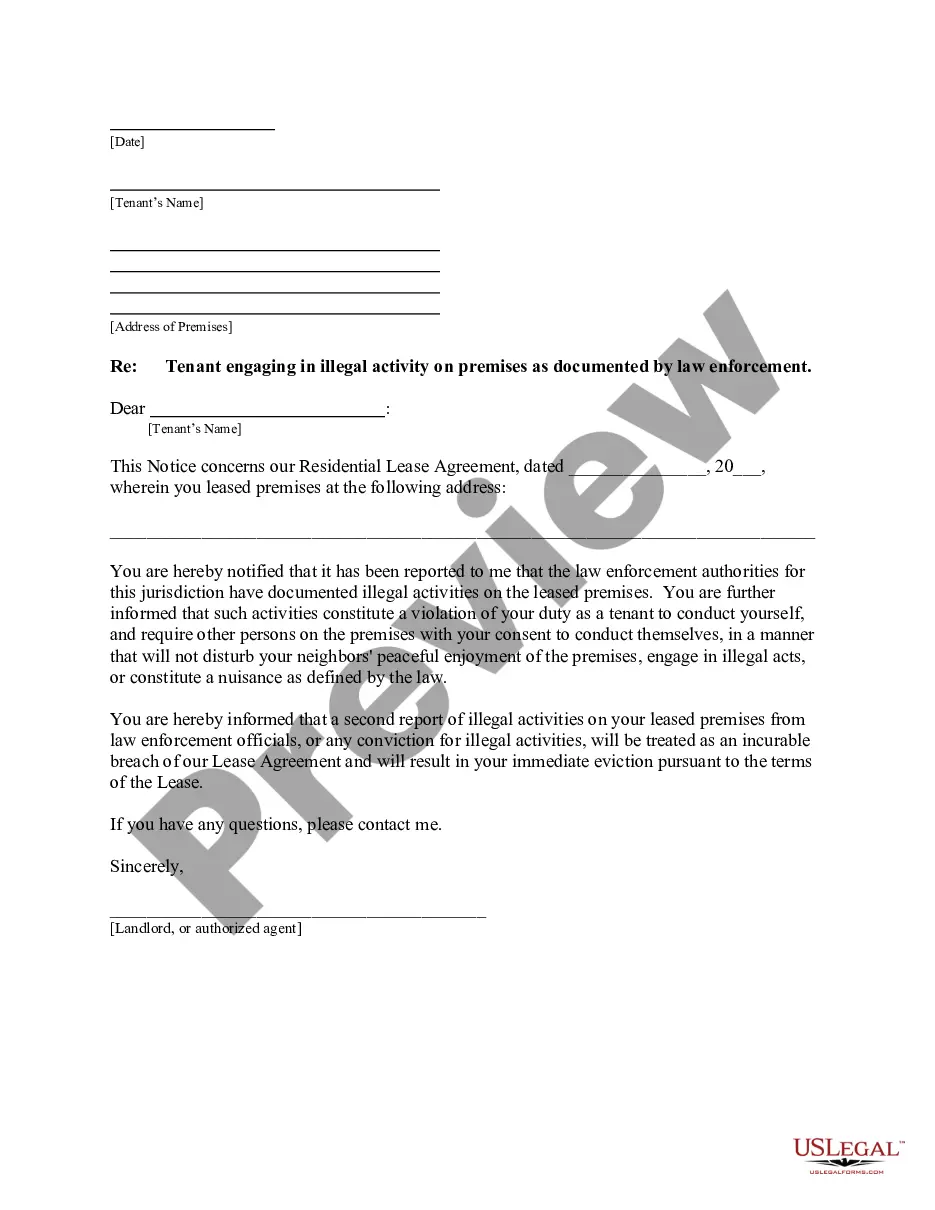
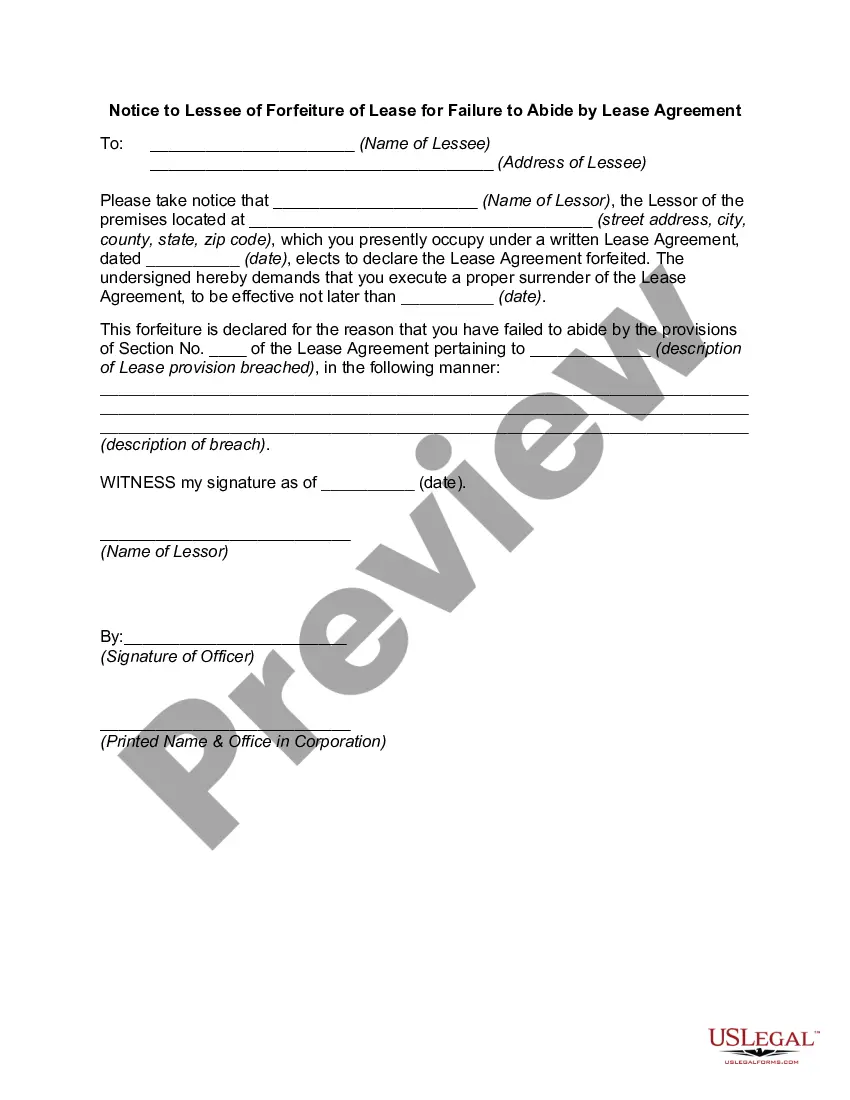
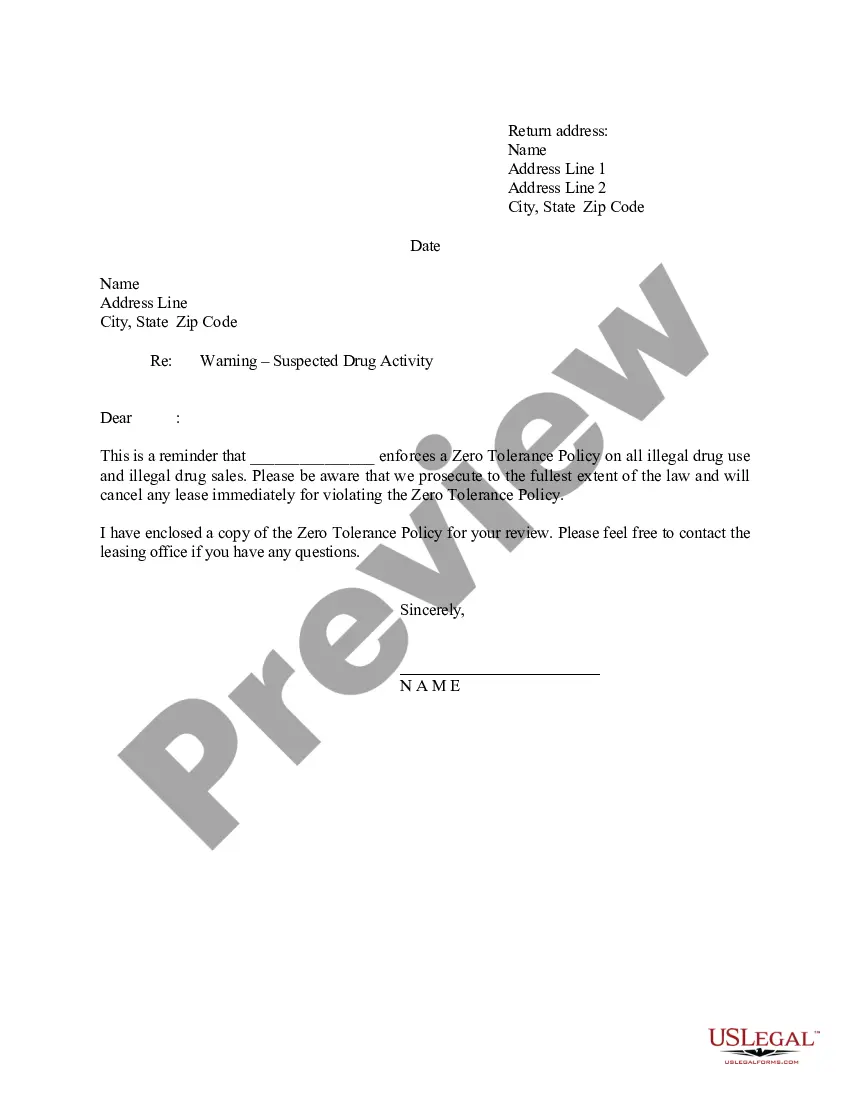
This form is a Letter from Landlord to Tenant about tenant engaging in illegal activity in the premises, as documented by law enforcement. It serves as a formal notification to the tenant, instructing them to cease any illegal activities, with the warning that repeated violations could lead to termination of the lease and possible eviction. This letter is distinct from other landlord-tenant communications as it specifically addresses illegal behavior and its legal implications.
What’s included in this form
- Notification of reported illegal activities documented by law enforcement.
- Explanation of the tenant's responsibilities regarding lawful conduct.
- Warning of potential eviction upon subsequent reports or convictions for illegal activities.
- Contact information for the landlord for further inquiries.

Situations where this form applies
This letter should be used when a landlord has received reports from law enforcement indicating that a tenant is engaged in illegal activities on the leased premises. It is essential to document such communications formally, especially if there is a likelihood of eviction. The form helps to ensure that the tenant is aware of the situation and the consequences that may follow if the behavior continues.
Who should use this form
This form is intended for:
- Landlords who have identified illegal activities occurring in their rental properties.
- Property managers acting on behalf of landlords to enforce lease agreements.
- Landlords seeking to notify tenants of their responsibilities under the lease terms.
Completing this form step by step
- Identify the landlord and tenant names and addresses at the top of the letter.
- Specify the nature of the illegal activity reported by law enforcement.
- Clearly state the warning regarding consequences of continued illegal activities.
- Include relevant dates associated with the reported behavior and tenant response.
- Provide your contact information for any follow-up questions or clarifications.
Notarization guidance
This form usually doesn’t need to be notarized. However, local laws or specific transactions may require it. Our online notarization service, powered by Notarize, lets you complete it remotely through a secure video session, available 24/7.
Get your form ready online
Our built-in tools help you complete, sign, share, and store your documents in one place.
Make edits, fill in missing information, and update formatting in US Legal Forms—just like you would in MS Word.
Download a copy, print it, send it by email, or mail it via USPS—whatever works best for your next step.
Sign and collect signatures with our SignNow integration. Send to multiple recipients, set reminders, and more. Go Premium to unlock E-Sign.
If this form requires notarization, complete it online through a secure video call—no need to meet a notary in person or wait for an appointment.
We protect your documents and personal data by following strict security and privacy standards.

Make edits, fill in missing information, and update formatting in US Legal Forms—just like you would in MS Word.

Download a copy, print it, send it by email, or mail it via USPS—whatever works best for your next step.

Sign and collect signatures with our SignNow integration. Send to multiple recipients, set reminders, and more. Go Premium to unlock E-Sign.

If this form requires notarization, complete it online through a secure video call—no need to meet a notary in person or wait for an appointment.

We protect your documents and personal data by following strict security and privacy standards.
Mistakes to watch out for
- Failing to include specific details of the illegal activity.
- Not documenting the first report before sending the letter.
- Using vague language that does not clearly outline the consequences.
- Neglecting to date the letter or specify a timeline for compliance.
Benefits of completing this form online
- Convenience of downloading and filling out the form from anywhere.
- Editability to customize the letter to fit specific situations.
- Reliable access to legally drafted templates ensuring compliance with laws.
Looking for another form?

Form popularity
FAQ
Recently, Connecticut has enacted new laws aimed at providing better protections for tenants while also clarifying landlords' rights. Landlords must comply with legal protocols before terminating a lease, particularly in cases involving illegal activities on the property. Additionally, tenants now have enhanced rights against eviction and harassment, which may require landlords to be more transparent about tenant agreements. Ensuring you understand the context of any communication, like a Connecticut letter from landlord to tenant about tenant engaging in illegal activity, is crucial.
In Connecticut, once your lease expires, you typically have no legal right to remain on the premises without the landlord's consent. If you continue living at the property without a new lease, you enter into a month-to-month tenancy. However, if the landlord has documented illegal activity in the premises, they may choose to terminate your tenancy immediately. It is wise to understand your situation, especially if your landlord issues a Connecticut letter from landlord to tenant about tenant engaging in illegal activity.
To write a strongly worded letter of complaint to a landlord, start by clearly stating the issue you are facing. Be direct, and include factual information, such as specific incidents and dates, particularly if they involve illegal activities. Make sure to express your expectations for resolution, and mention laws or lease terms that support your position. If necessary, include references to a Connecticut letter from landlord to tenant about tenant engaging in illegal activity, which can reinforce your complaint.
In Connecticut, the notice period for a tenant to move out varies based on the lease violation. If a tenant is engaging in illegal activities, such as outlined in the Connecticut Letter from Landlord to Tenant about Tenant engaging in illegal activity in premises as documented by law enforcement and if repeated, lease terminates, the landlord typically provides a 3-day notice to quit. This time frame underscores the seriousness of the situation while ensuring due process. For tenants and landlords looking to navigate eviction complexities, uslegalforms offers helpful templates and resources.
A landlord in Connecticut cannot engage in 'self-help' measures, such as changing locks or shutting off utilities to evict a tenant. They must adhere to legal procedures, especially when handling situations involving illegal activities, as detailed in the Connecticut Letter from Landlord to Tenant about Tenant engaging in illegal activity in premises documented by law enforcement and if repeated, lease terminates. It's essential for landlords to follow these laws to avoid legal repercussions. For detailed guidance, landlords can benefit from resources available on uslegalforms.
When writing a lease violation notice, it's crucial to clearly state the specific lease terms violated, including details about the tenant's illegal activities, supported by law enforcement documentation. You may want to refer to the Connecticut Letter from Landlord to Tenant about Tenant engaging in illegal activity in premises as documented by law enforcement and if repeated, lease terminates. This clarity helps the tenant understand their responsibilities and the potential consequences. Using uslegalforms can make drafting a comprehensive and legally valid lease violation letter easier.
In Connecticut, landlords cannot retaliate against tenants for exercising their legal rights, such as reporting unsafe living conditions. Additionally, a landlord cannot remove a tenant without proper legal procedures, even if they suspect illegal activities, such as those addressed in a Connecticut Letter from Landlord to Tenant about Tenant engaging in illegal activity documented by law enforcement. Understanding these restrictions is vital for both parties to foster a healthy landlord-tenant relationship. For more clarity, reviewing the relevant laws or utilizing uslegalforms can ensure compliance.
Section 47a 16 of the Connecticut General Statutes addresses lease violations related to illegal activity on rental premises. This law can be specifically relevant when discussing the Connecticut Letter from Landlord to Tenant about Tenant engaging in illegal activity in premises as documented by law enforcement and if repeated, lease terminates. Understanding this statute helps both landlords and tenants navigate the legal frameworks surrounding rental agreements. It reinforces the importance of maintaining a lawful living environment.
Landlords typically fear issues like property damage, unpaid rent, and tenants engaging in illegal activities. Concerns about lease violations often lead them to send a Connecticut Letter from Landlord to Tenant about Tenant engaging in illegal activity in premises as documented by law enforcement. They also worry about drawn-out evictions and legal disputes. Understanding these fears can help you navigate the rental relationship more effectively.
To stand out to a landlord, portray yourself as a responsible and reliable tenant. Provide references that attest to your good payment history, and be proactive about property upkeep and communication. If a situation arises where a Connecticut Letter from Landlord to Tenant about Tenant engaging in illegal activity in premises becomes necessary, showing your willingness to address issues can enhance your standing as a tenant.