Connecticut Letter from Tenant to Landlord containing Notice that premises in uninhabitable in violation of law and demand immediate repair
Understanding this form
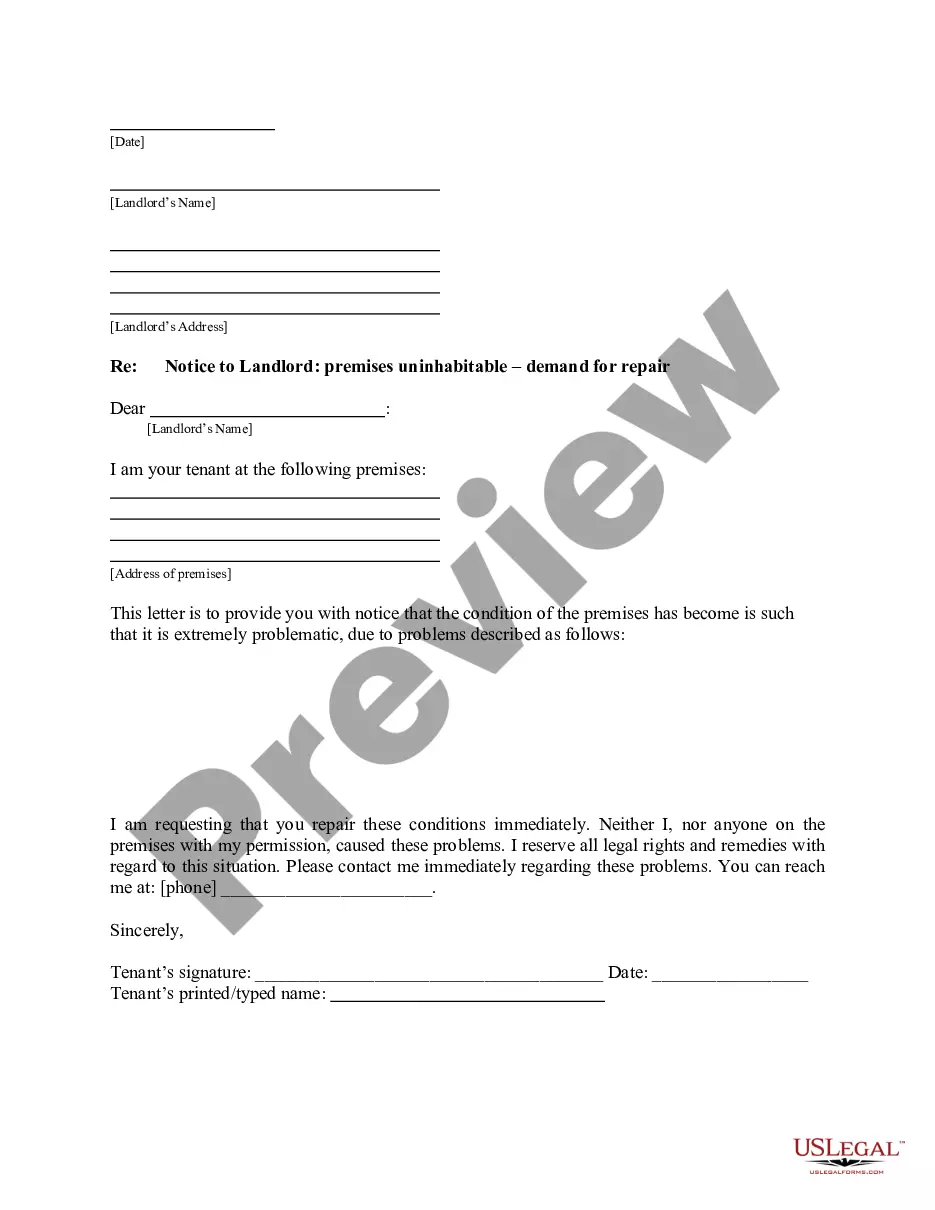
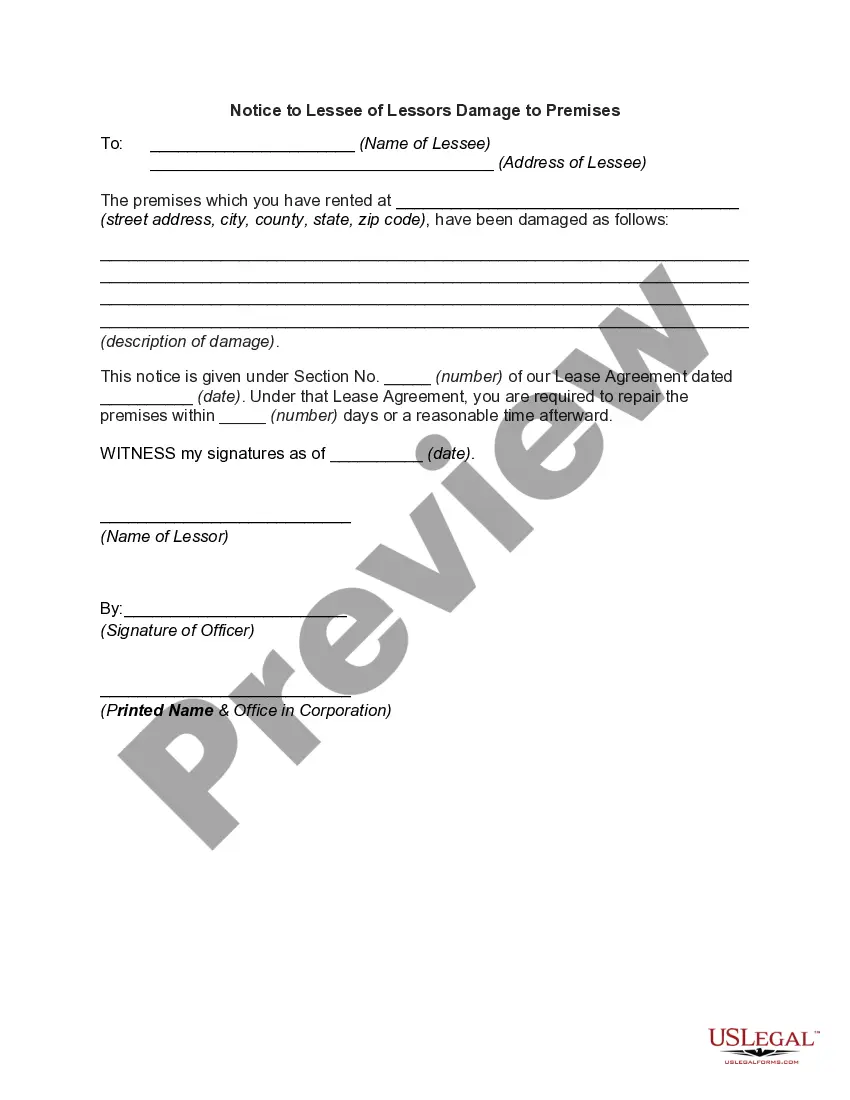
This Letter from Tenant to Landlord is a formal notification that the premises are uninhabitable and not in compliance with housing laws. This document allows tenants to request immediate repairs from their landlord. Unlike general complaint letters, this specific form is designed to ensure the landlord is formally informed of the condition and the tenant's rights to either terminate the lease or withhold rent if repairs are not made.
Main sections of this form
- Tenant's name and contact information.
- Landlord's name and contact details.
- Description of the uninhabitable conditions and any relevant laws violated.
- Demand for immediate repairs and a clear timeline for response.
- Signatures of the tenants and date of the notification.


When this form is needed
This form should be used when a tenant identifies serious issues within the rental property that render it uninhabitableâsuch as severe plumbing problems, infestations, or unsafe conditions. It is necessary to formally notify the landlord of these conditions and demand repairs. This documentation is vital if the tenant considers lease termination or rent abatement if the landlord fails to act.
Who can use this document
- Tenants who believe their living conditions are unsafe or non-compliant with health codes.
- Individuals renting residential properties, including houses and apartments.
- Those intending to formally communicate issues to their landlord for legal protection.
How to complete this form
- Identify and include your name and contact information at the top.
- Clearly state your landlord's name and address.
- Describe the specific issues making the property uninhabitable.
- Specify the repairs needed and a deadline for when you expect them to be completed.
- Sign the letter and date it where indicated.
Notarization guidance
This form does not typically require notarization unless specified by local law. However, ensure you follow any additional requirements set forth by your jurisdiction regarding the submission of tenant-landlord communications.
Get your form ready online
Our built-in tools help you complete, sign, share, and store your documents in one place.
Make edits, fill in missing information, and update formatting in US Legal Forms—just like you would in MS Word.
Download a copy, print it, send it by email, or mail it via USPS—whatever works best for your next step.
Sign and collect signatures with our SignNow integration. Send to multiple recipients, set reminders, and more. Go Premium to unlock E-Sign.
If this form requires notarization, complete it online through a secure video call—no need to meet a notary in person or wait for an appointment.
We protect your documents and personal data by following strict security and privacy standards.

Make edits, fill in missing information, and update formatting in US Legal Forms—just like you would in MS Word.

Download a copy, print it, send it by email, or mail it via USPS—whatever works best for your next step.

Sign and collect signatures with our SignNow integration. Send to multiple recipients, set reminders, and more. Go Premium to unlock E-Sign.

If this form requires notarization, complete it online through a secure video call—no need to meet a notary in person or wait for an appointment.

We protect your documents and personal data by following strict security and privacy standards.
Avoid these common issues
- Failing to mention specific violations of housing laws.
- Not providing a clear deadline for repairs.
- Incomplete contact information for either party.
- Forget to sign or date the letter before sending it.
Benefits of completing this form online
- Quick and easy access to a professionally drafted legal form.
- Edit and customize the form to suit your specific situation.
- Downloadable format allows for immediate use and distribution.
- Reliable source, with forms prepared by licensed attorneys.
Looking for another form?
Form popularity
FAQ
When writing to your landlord about problems, ensure you outline specific issues clearly and provide any relevant dates. Be direct, state the urgency if the problems affect habitability, and assert your rights. Consider using a Connecticut Letter from Tenant to Landlord containing Notice that premises in uninhabitable in violation of law and demand immediate repair for effective communication.
Writing a notification letter to your landlord involves clearly stating your concerns. Start with the date, your address, and a polite but assertive tone. You should include details about the issues you're facing and reference the need for repairs, especially if conditions are uninhabitable; a Connecticut Letter from Tenant to Landlord can provide a solid template.
Residency can be claimed after someone resides in your home for a significant period, usually 30 days. If a guest overstays, they can establish residency rights. To manage this situation effectively, consider utilizing a Connecticut Letter from Tenant to Landlord containing Notice that premises in uninhabitable in violation of law and demand immediate repair.
In Connecticut, a guest typically becomes a tenant if they stay for longer than 30 days. This change in status can affect rights and responsibilities for both parties. If you have a situation with a guest who may become a tenant, understanding the law is crucial, and resources like a Connecticut Letter from Tenant to Landlord can help in communication.
Habitability refers to the condition of a rental property being fit for living. Landlords must ensure that the premises meet health and safety standards. If your home is uninhabitable, you may need to send a Connecticut Letter from Tenant to Landlord containing Notice that premises in uninhabitable in violation of law and demand immediate repair.
In Connecticut, tenants can file complaints with the local housing authority or state Department of Consumer Protection. Additionally, documenting your issues and sending a Connecticut Letter from Tenant to Landlord containing Notice that premises in uninhabitable in violation of law and demand immediate repair can help establish your case. You may also seek legal assistance or mediation services for further support.
To write a demand letter, clearly identify yourself, the rental property, and the specific repairs needed. State the urgency and include any previous communication on the issue. A Connecticut Letter from Tenant to Landlord containing Notice that premises in uninhabitable in violation of law and demand immediate repair serves as an authoritative request and can prompt quicker action from your landlord.
When writing a request letter for repair, start with your contact information and the date. Clearly describe the needed repairs, providing specific examples of any issues in the property. Utilizing a format like a Connecticut Letter from Tenant to Landlord containing Notice that premises in uninhabitable in violation of law and demand immediate repair can ensure clarity and formality.
To write a demand letter without an attorney, begin by clearly stating the issue and your expectations. Include all relevant details, such as dates, communication history, and specific requests for repair. A well-crafted Connecticut Letter from Tenant to Landlord containing Notice that premises in uninhabitable in violation of law and demand immediate repair can effectively communicate your needs.
In Connecticut, landlords are generally expected to make necessary repairs within a reasonable time frame, often considered to be 30 days. However, urgent repairs could demand immediate action. If a landlord fails to comply, tenants may issue a Connecticut Letter from Tenant to Landlord containing Notice that premises in uninhabitable in violation of law and demand immediate repair to prompt attention.