Connecticut Letter from Landlord to Tenant as Notice to remove unauthorized pets from premises
What this document covers
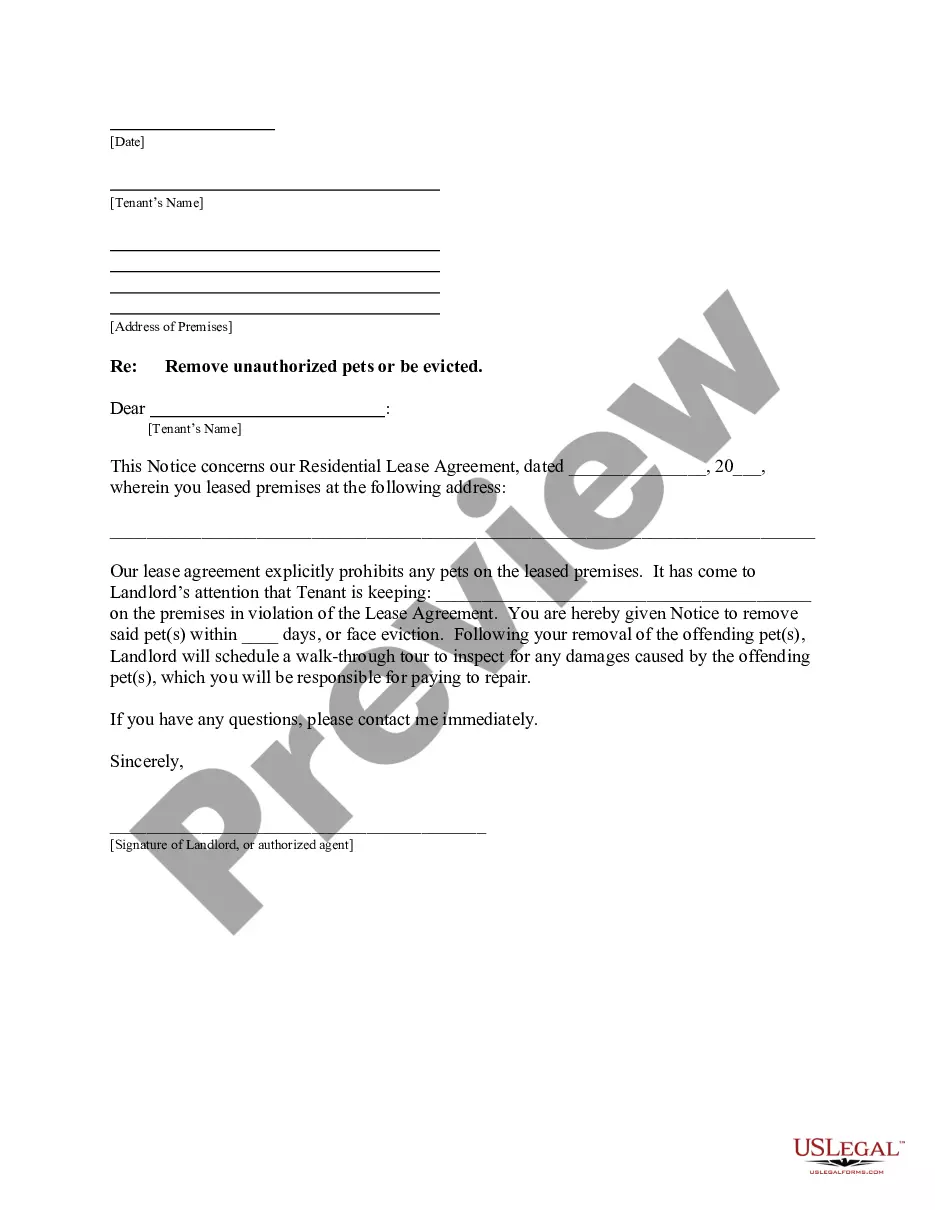
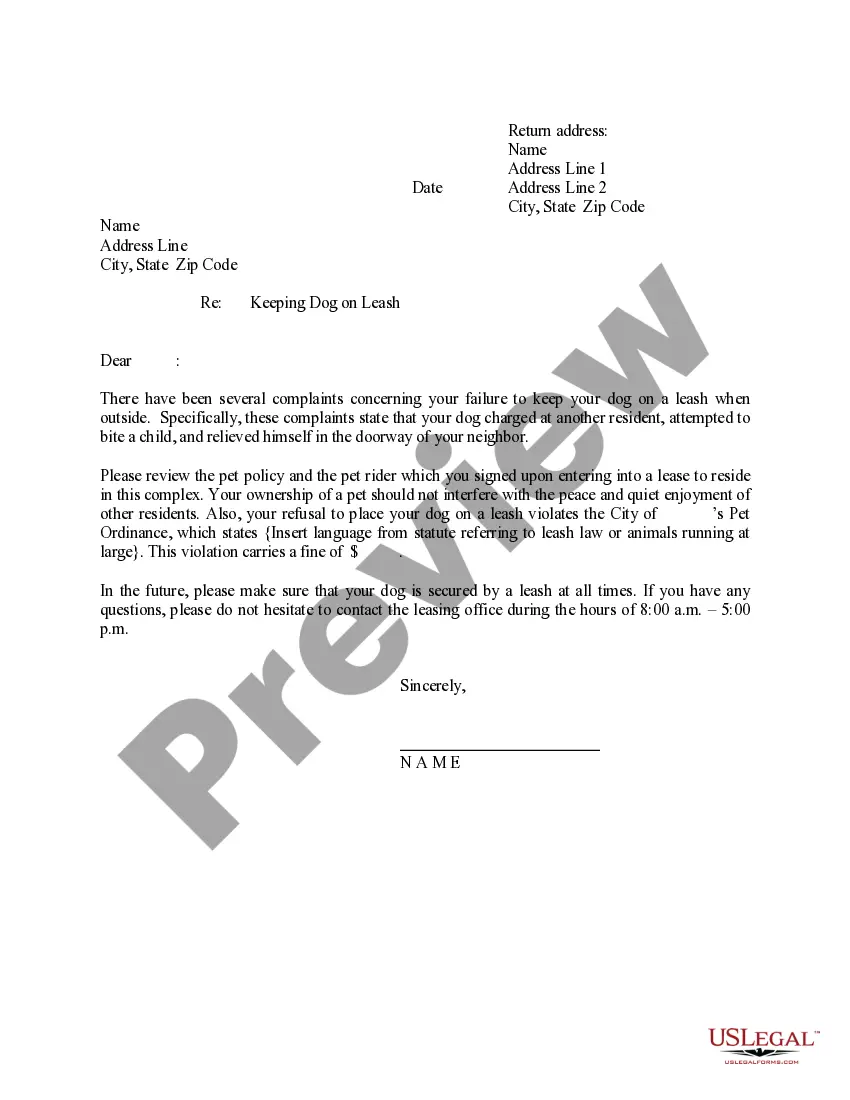
This form is a Letter from Landlord to Tenant as Notice to remove unauthorized pets from premises. Its primary purpose is to formally notify the tenant that they are in breach of the lease agreement by keeping pets that are not allowed. This notice serves as a warning, allowing the tenant a specified period to remove the pets before the landlord may pursue eviction or legal action.
Key components of this form
- The date of the Residential Lease Agreement and the address of the rental property.
- A clear statement regarding the leaseâs prohibition of pets on the premises.
- A description of the unauthorized pet(s) being kept.
- A specified time frame for the tenant to remove the unauthorized pet(s).
- Information about a walk-through inspection for potential damages caused by the pets.
- Contact information for the landlord or authorized agent for further questions.
When to use this form
This form should be used when a landlord becomes aware that a tenant is keeping unauthorized pets in a rental property, violating the terms of the lease. It is appropriate to issue this notice before considering eviction, providing the tenant an opportunity to comply with the lease agreement.
Intended users of this form
- Landlords who have rental agreements that prohibit pets.
- Property managers acting on behalf of landlords.
- Tenant representatives who need to facilitate communication regarding lease violations.
Instructions for completing this form
- Fill in the date of the original Residential Lease Agreement.
- Specify the complete address of the leased premises.
- List the unauthorized pet(s) that need to be removed.
- Indicate the number of days the tenant has to remove the unauthorized pets.
- Sign the letter, including the landlord's or authorized agentâs name and contact information.
Does this form need to be notarized?
This form does not typically require notarization unless specified by local law. It is advisable to check local regulations to confirm.
Get your form ready online
Our built-in tools help you complete, sign, share, and store your documents in one place.
Make edits, fill in missing information, and update formatting in US Legal Forms—just like you would in MS Word.
Download a copy, print it, send it by email, or mail it via USPS—whatever works best for your next step.
Sign and collect signatures with our SignNow integration. Send to multiple recipients, set reminders, and more. Go Premium to unlock E-Sign.
If this form requires notarization, complete it online through a secure video call—no need to meet a notary in person or wait for an appointment.
We protect your documents and personal data by following strict security and privacy standards.

Make edits, fill in missing information, and update formatting in US Legal Forms—just like you would in MS Word.

Download a copy, print it, send it by email, or mail it via USPS—whatever works best for your next step.

Sign and collect signatures with our SignNow integration. Send to multiple recipients, set reminders, and more. Go Premium to unlock E-Sign.

If this form requires notarization, complete it online through a secure video call—no need to meet a notary in person or wait for an appointment.

We protect your documents and personal data by following strict security and privacy standards.
Common mistakes
- Failing to include the correct lease date or property address.
- Not specifying the type or number of unauthorized pets.
- Overlooking the legal required notice period.
- Not signing the notice or including the appropriate contact information.
Benefits of using this form online
- Convenient downloading and printing of the form.
- Customizable fields to meet specific needs.
- Easy access to legal forms drafted by licensed attorneys.
- Time-saving compared to drafting a letter from scratch.
Legal use & context
- This form serves as official documentation of the landlord's request for compliance with the lease terms.
- Failure to comply may lead to eviction proceedings, making this a crucial step in the legal process.
- Providing a written notice establishes a record for potential legal actions in the future.
Summary of main points
- This form is essential for landlords needing to address unauthorized pets in rental properties.
- Timely notification gives tenants an opportunity to correct the violation.
- Ensure compliance with local laws and lease terms to avoid potential legal issues.
Looking for another form?



Form popularity
FAQ
When a landlord discovers a tenant has a pet without permission, they can send a Connecticut Letter from Landlord to Tenant as Notice to remove unauthorized pets from premises. This letter gives tenants the opportunity to rectify the situation by either obtaining permission or removing the pet. If a tenant does not comply, the landlord has the right to pursue eviction. Utilizing USLegalForms can help landlords create effective communication and documentation for this process.
Yes, a landlord can initiate eviction proceedings if a tenant exceeds the pet limit outlined in their lease agreement. In such cases, the landlord may provide a Connecticut Letter from Landlord to Tenant as Notice to remove unauthorized pets from premises. This letter will clarify the situation and set necessary actions. It's always wise for tenants to review their lease agreements regarding pet policies.
If a landlord discovers a pet in a rental property without prior authorization, they can issue a Connecticut Letter from Landlord to Tenant as Notice to remove unauthorized pets from premises. This notice serves as an official warning and outlines the required actions. Tenants should address this promptly to avoid potential legal consequences or eviction. Open communication between landlord and tenant can often resolve the issue amicably.
To evict a pet, a landlord typically issues a Connecticut Letter from Landlord to Tenant as Notice to remove unauthorized pets from premises. This letter formally informs tenants about the violation and gives them a set time to comply. If the tenant does not remove the pet by the deadline, further legal action may be necessary. It's essential to follow local laws and procedures when moving forward.
Having a pet against your lease terms can lead to several consequences, including potential eviction. Landlords may issue a Connecticut Letter from Landlord to Tenant as Notice to remove unauthorized pets from premises as a formal warning. It is advisable to address this issue immediately, either by removing the unauthorized pet or addressing your landlord to find a solution.
To evict a tenant for having a pet, begin by identifying the specific breach of the lease agreement. Serve the tenant with a notice, such as a Connecticut Letter from Landlord to Tenant as Notice to remove unauthorized pets from premises, outlining the requirement to remove the pet. If the tenant does not comply, you may proceed with legal eviction processes.
Yes, if your lease agreement prohibits pets, your landlord has the right to stop you from having one. They can take action by issuing a Connecticut Letter from Landlord to Tenant as Notice to remove unauthorized pets from premises. It is important to review your lease and comply with its terms to avoid potential eviction.
When writing a letter to remove a tenant due to non-compliance with lease agreements regarding pets, clearly state the reason for removal. Reference the lease clauses and provide evidence of unauthorized pets. You may find templates on uslegalforms for crafting a comprehensive letter that covers all necessary legal points.
Yes, you can request to modify your lease to remove any pet provisions. It's advisable to communicate directly with your landlord and document any agreements in writing. Using a Connecticut Letter from Landlord to Tenant as Notice to remove unauthorized pets from premises can formalize this request and clarify your position.
If you are a landlord wishing to remove a tenant's dog, begin by reviewing the lease agreement for any clauses regarding pets. You can then issue a Connecticut Letter from Landlord to Tenant as Notice to remove unauthorized pets from premises, informing the tenant of the requirement. Ensure you provide a reasonable timeframe for compliance and consider offering alternatives or solutions.