Colorado Assumption Agreement of Deed of Trust and Release of Original Mortgagors
Overview of this form
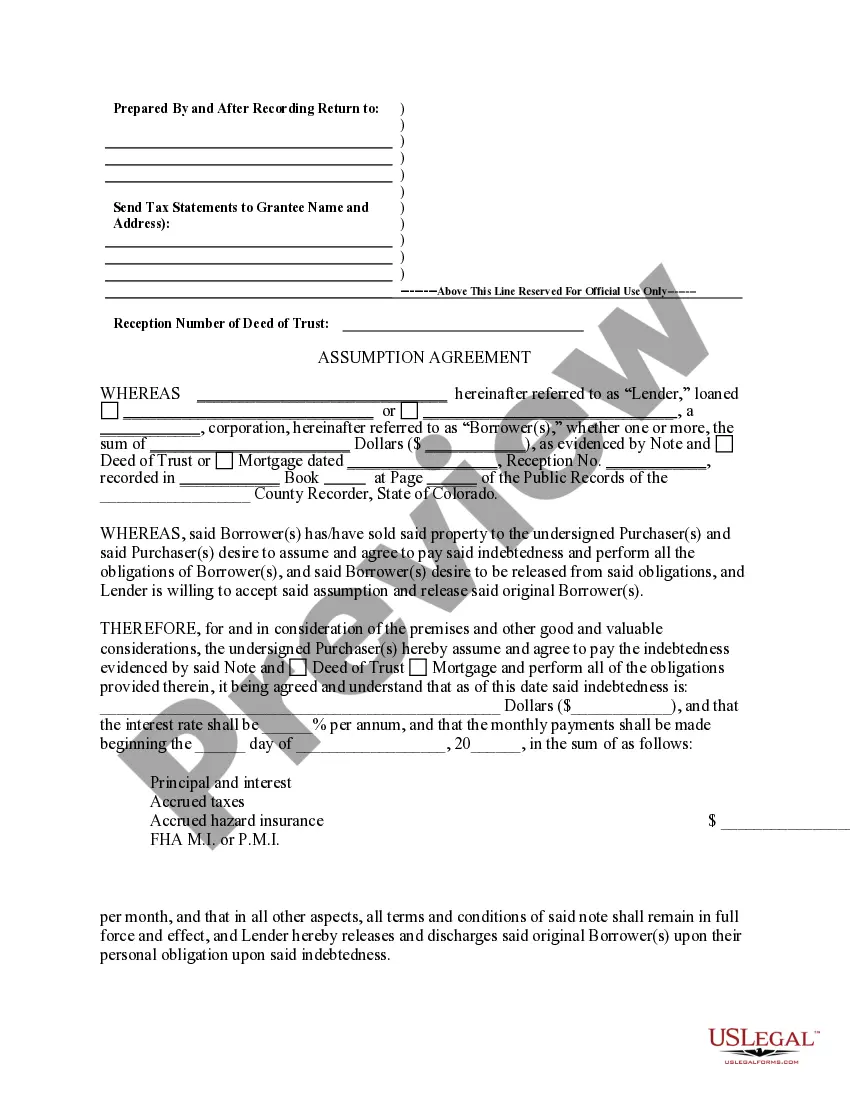
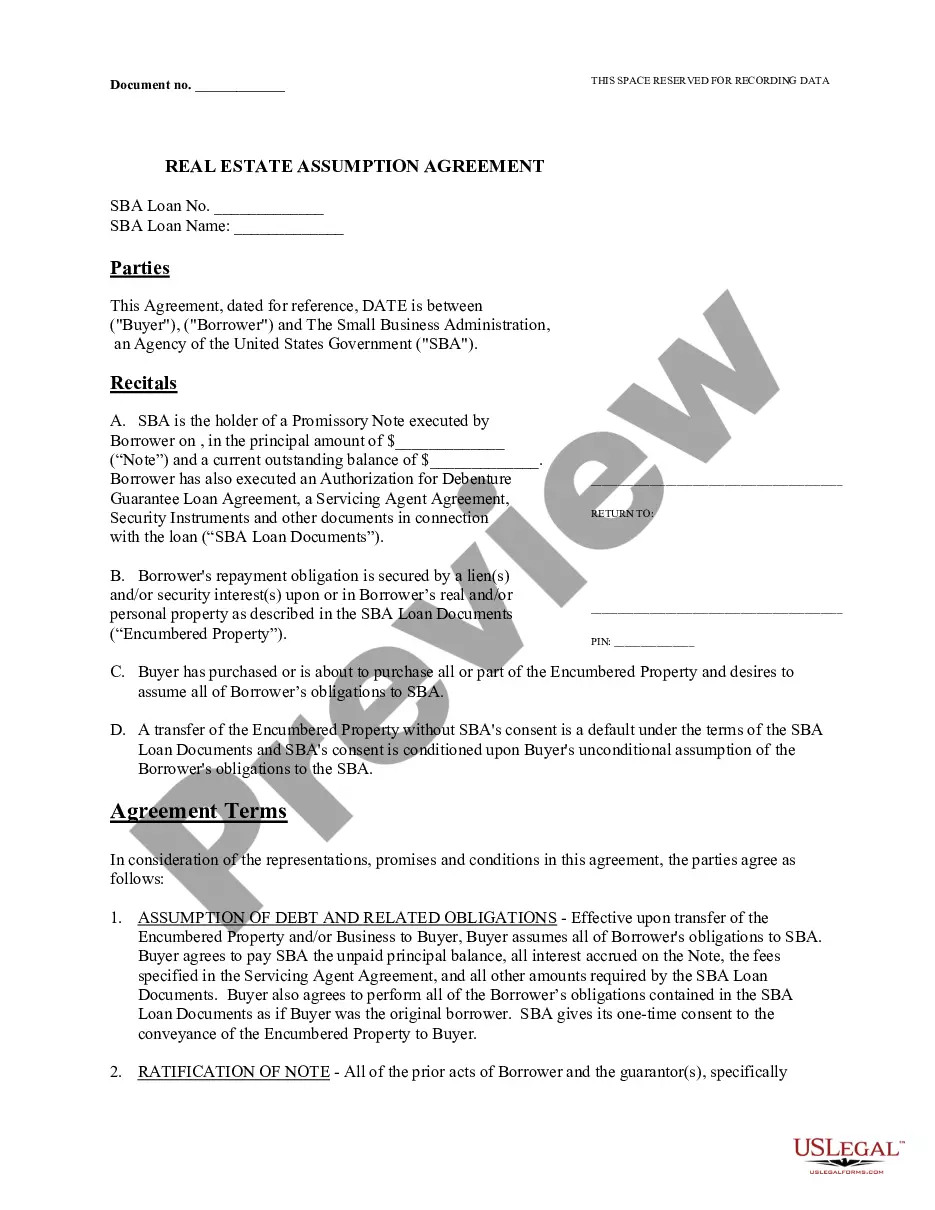
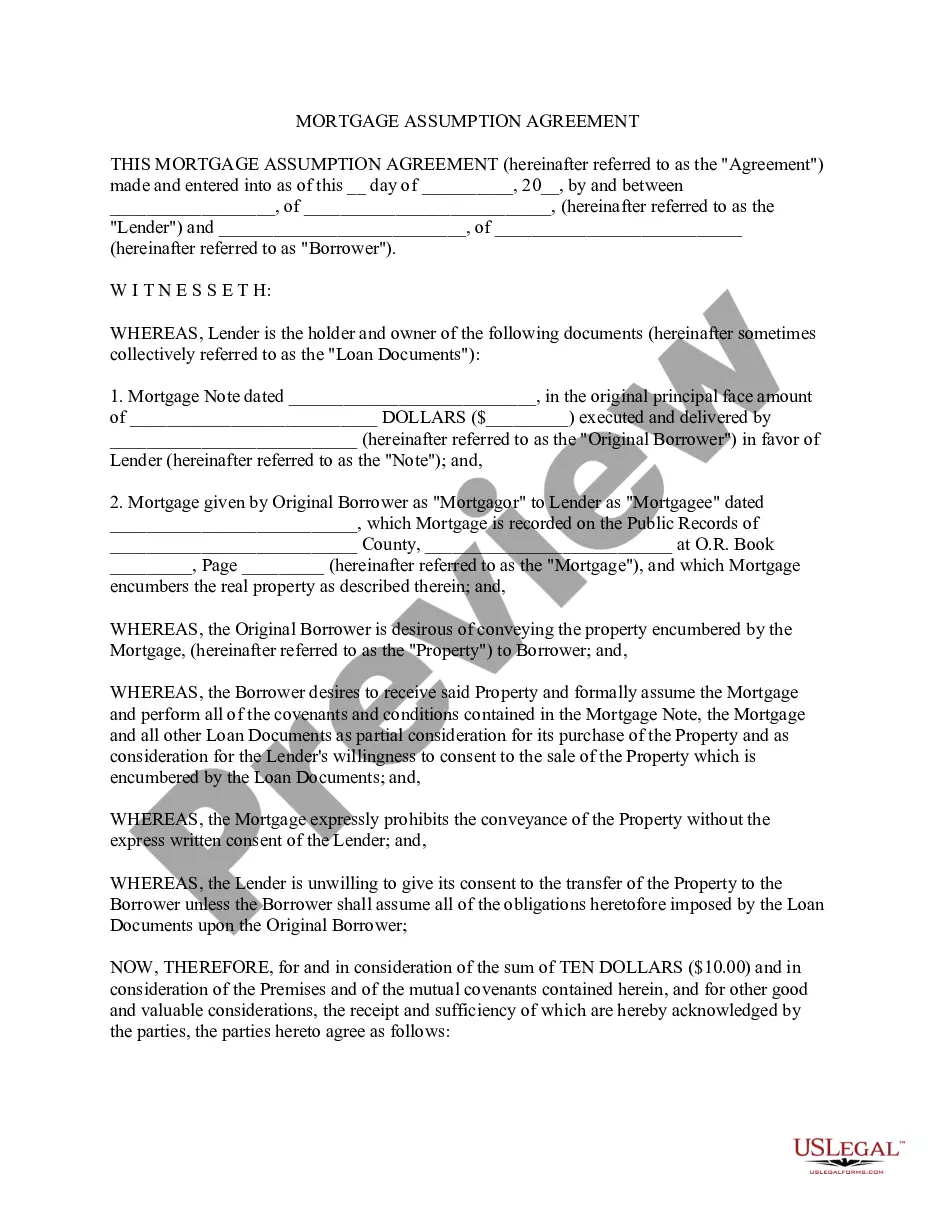
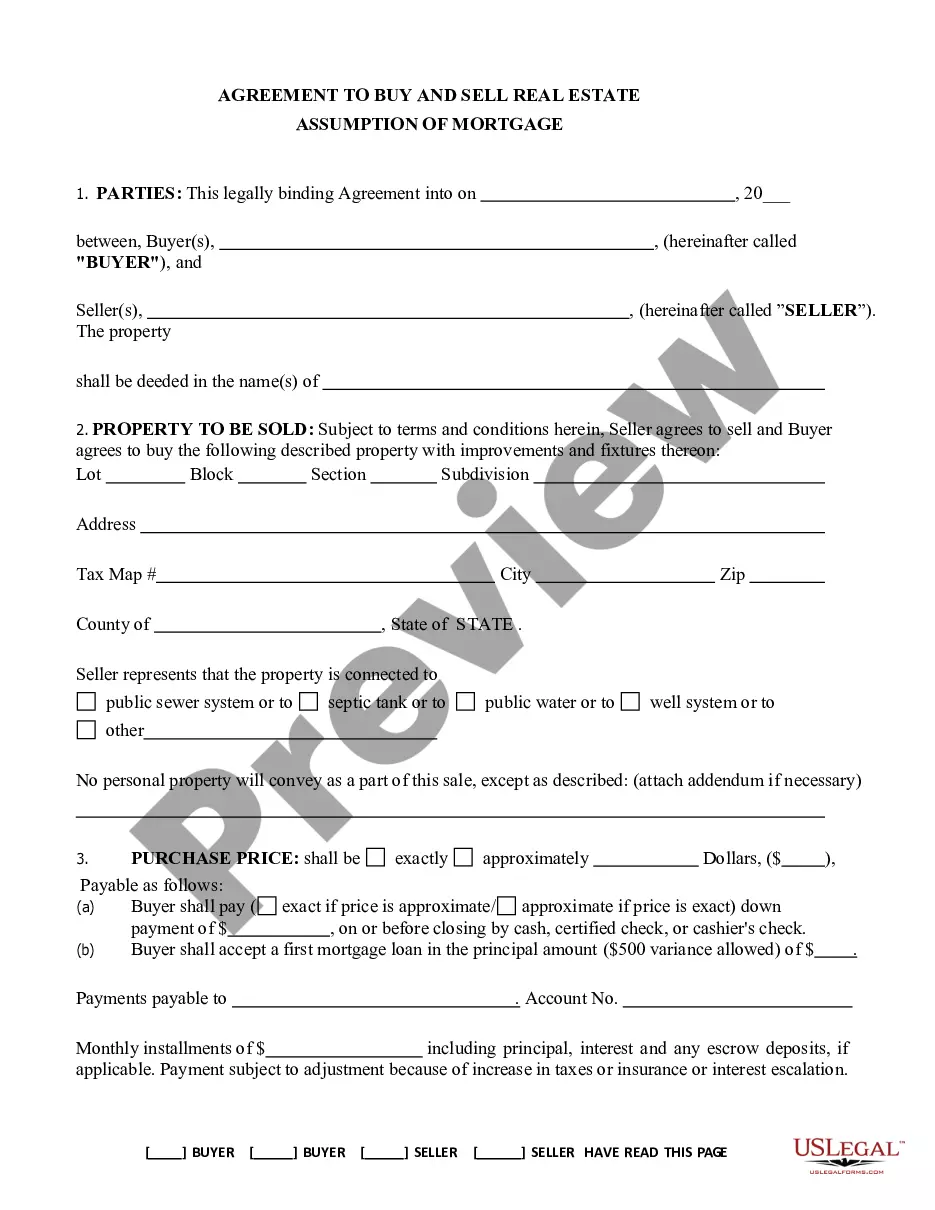
The Assumption Agreement of Deed of Trust and Release of Original Mortgagors is a legal document that facilitates the transfer of mortgage responsibilities from the original mortgagors to new purchasers of a property. In this agreement, new purchasers formally assume the debt owed to the lender, relieving the original mortgagors from any future financial liability on the loan. This form streamlines the process, ensuring all parties are aware of their obligations and rights regarding the mortgage debt, distinguishing it from other real estate agreements such as sales contracts or leases.
Form components explained
- Identification of the parties involved, including the lender, original mortgagors, and new purchasers.
- Details regarding the debt being assumed, including the total amount and interest rate.
- Monthly payment obligations with breakdowns for principal, taxes, and insurance.
- Terms indicating the release of the original mortgagors from liability.
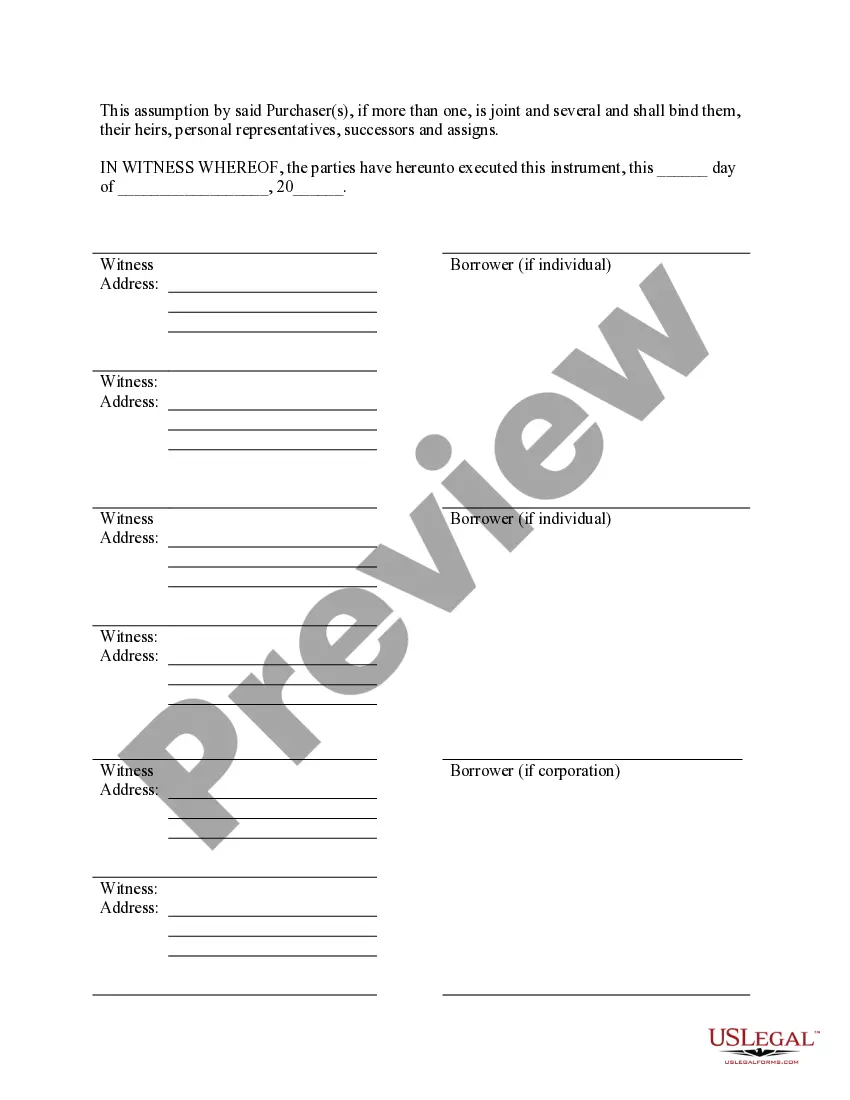
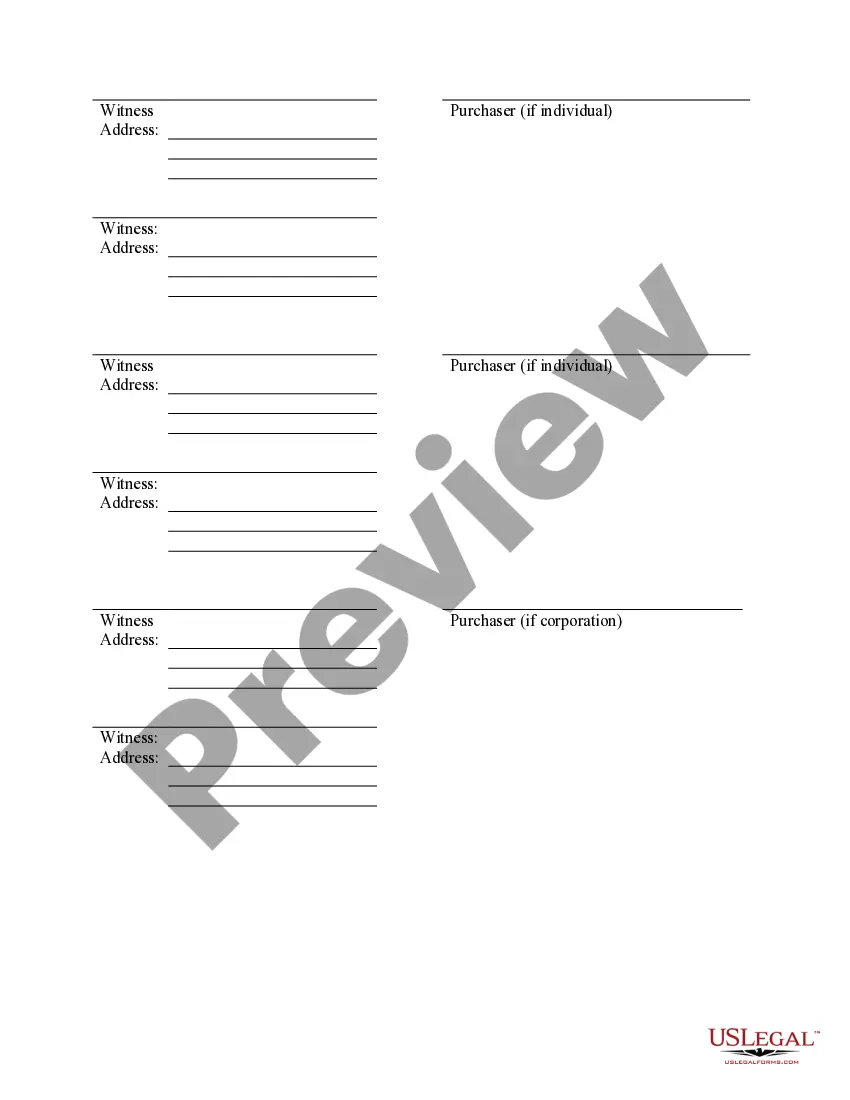
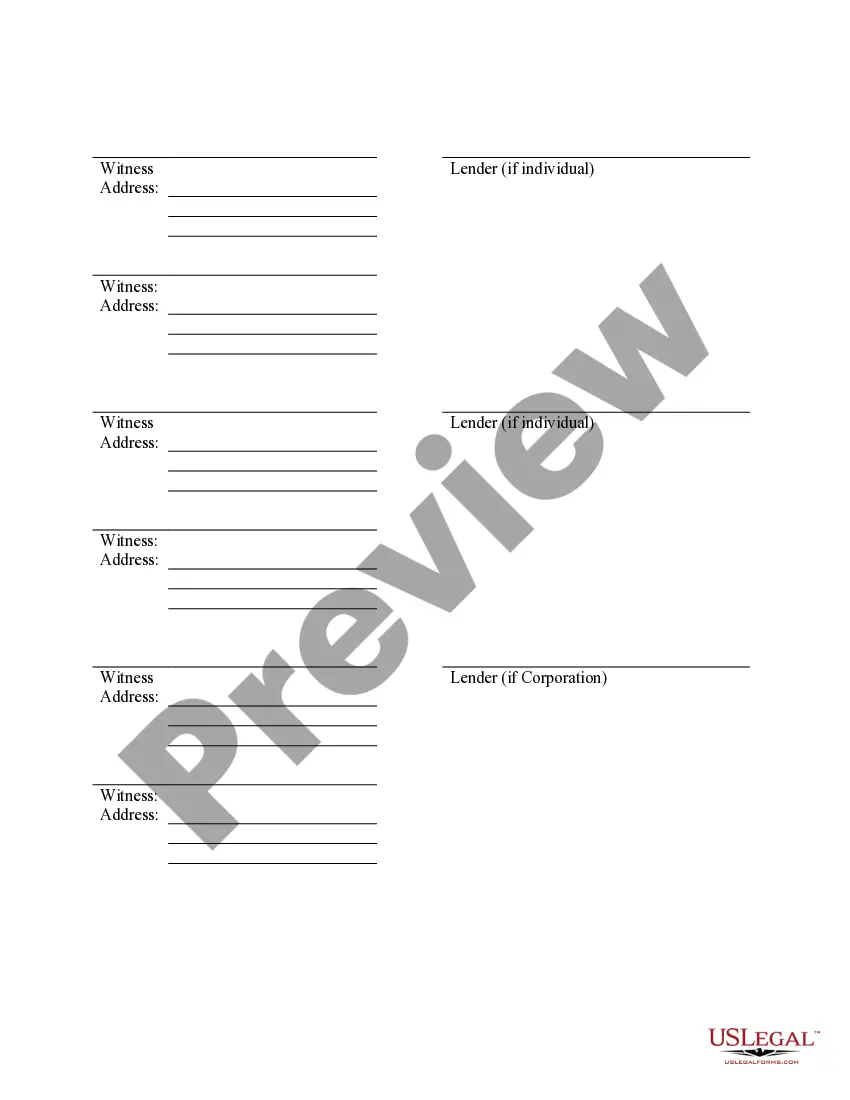
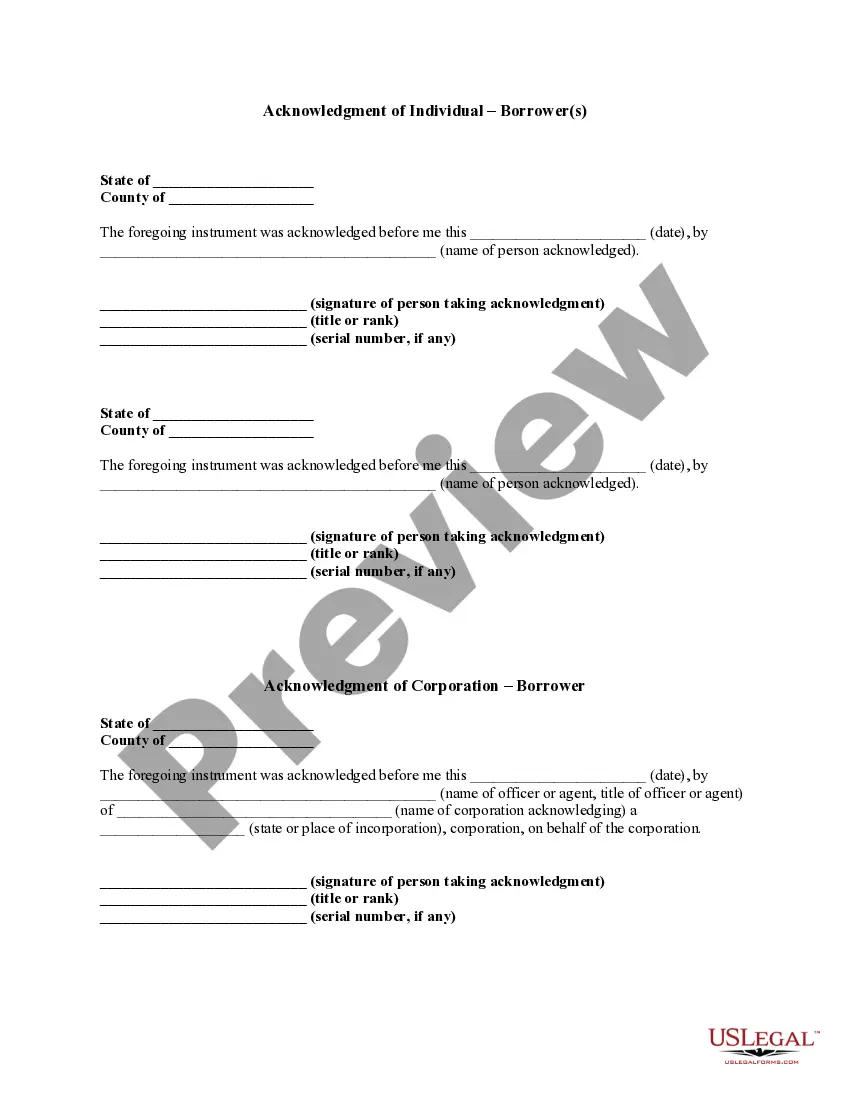
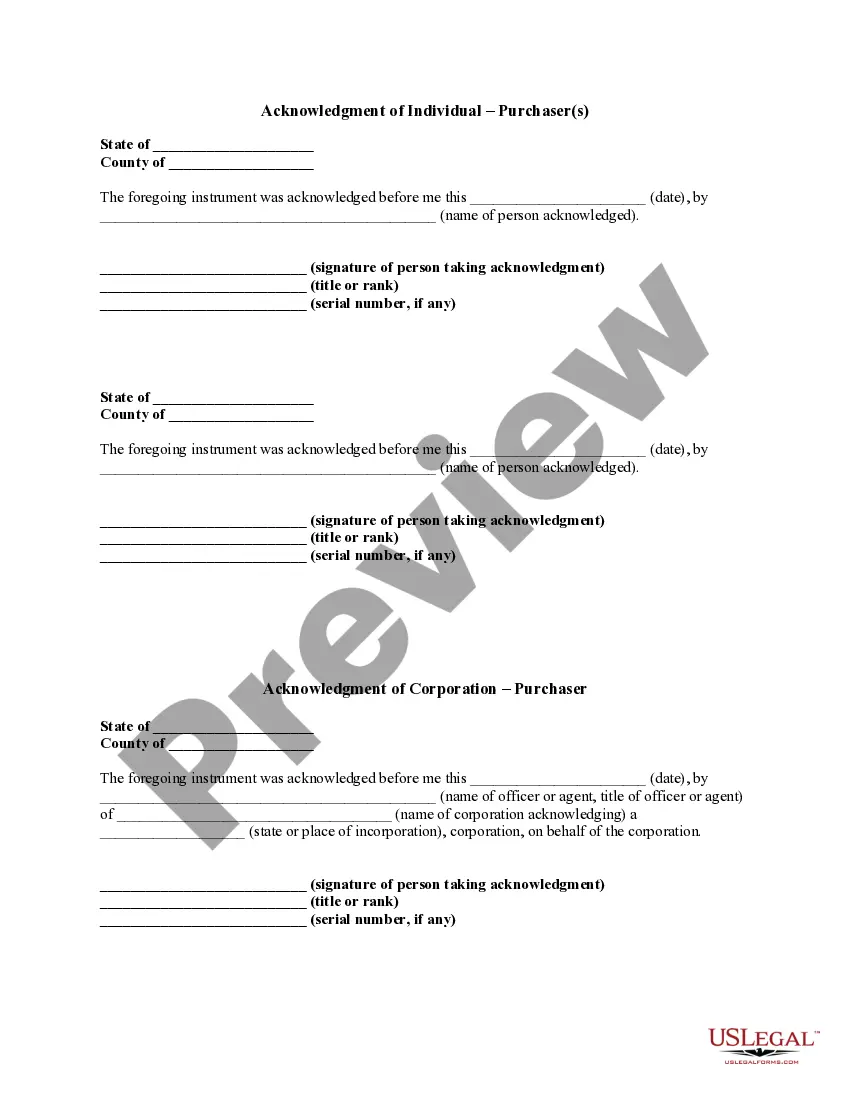
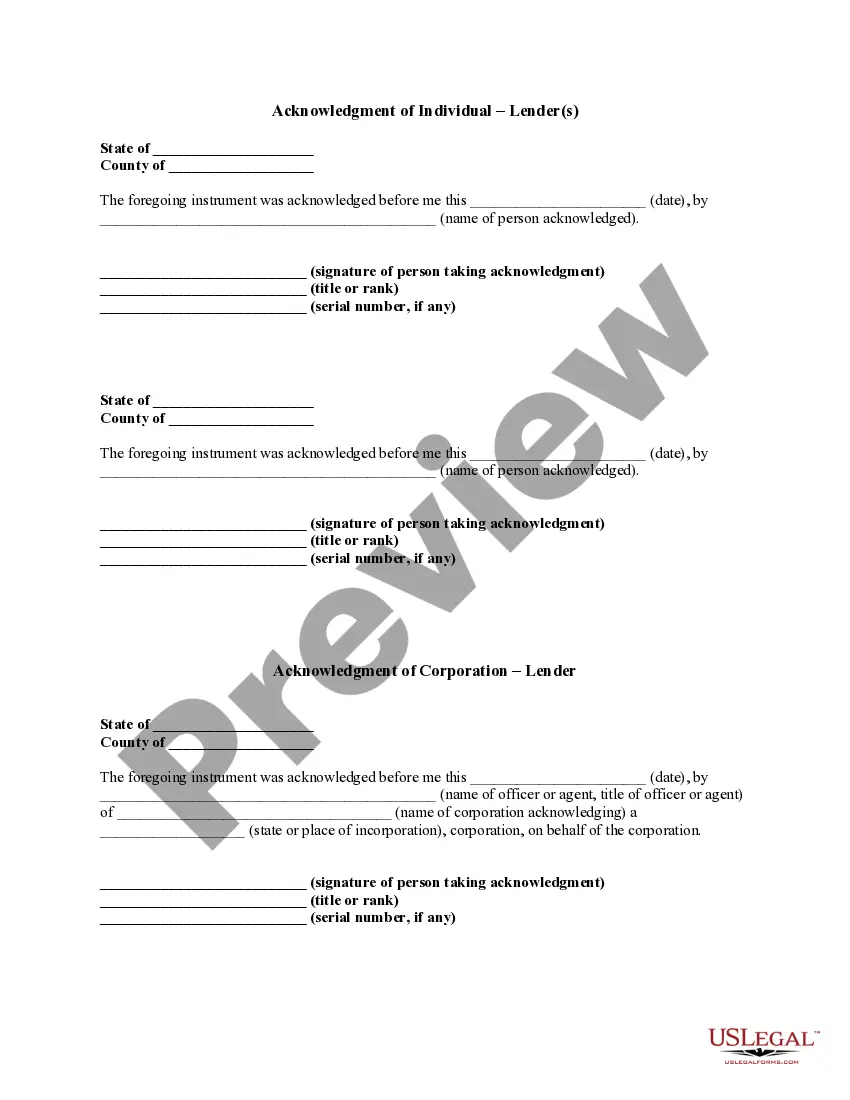
- Signatures of all relevant parties to make the agreement legally binding.


When this form is needed
This form is typically used when a property is sold and the buyer agrees to take over the existing mortgage. It is essential when the original mortgagors want to transfer the mortgage obligation to the new purchasers and want to ensure they are released from any future responsibility for the loan. This situation can arise in various scenarios, such as family transfers, investment property sales, or any time a buyer assumes an existing mortgage rather than obtaining a new loan.
Intended users of this form
- New property purchasers who will assume an existing mortgage.
- Original mortgagors wishing to transfer their mortgage obligations.
- Lenders or mortgagees who need an official record of the assumption of the loan.
- Real estate agents or brokers managing transactions involving assumable loans.
How to prepare this document
- Identify and enter the names of the original mortgagors and the new purchasers.
- Specify the debt amount, interest rate, and monthly payment details.
- Provide the required dates and ensure all parties sign the document.
- Confirm the notarization of signatures as per local legal requirements.
- Make copies of the completed form for all parties involved.
Is notarization required?
This form must be notarized to be legally valid. US Legal Forms provides secure online notarization powered by Notarize, allowing you to complete the process through a verified video call.
Get your form ready online
Our built-in tools help you complete, sign, share, and store your documents in one place.
Make edits, fill in missing information, and update formatting in US Legal Forms—just like you would in MS Word.
Download a copy, print it, send it by email, or mail it via USPS—whatever works best for your next step.
Sign and collect signatures with our SignNow integration. Send to multiple recipients, set reminders, and more. Go Premium to unlock E-Sign.
If this form requires notarization, complete it online through a secure video call—no need to meet a notary in person or wait for an appointment.
We protect your documents and personal data by following strict security and privacy standards.

Make edits, fill in missing information, and update formatting in US Legal Forms—just like you would in MS Word.

Download a copy, print it, send it by email, or mail it via USPS—whatever works best for your next step.

Sign and collect signatures with our SignNow integration. Send to multiple recipients, set reminders, and more. Go Premium to unlock E-Sign.

If this form requires notarization, complete it online through a secure video call—no need to meet a notary in person or wait for an appointment.

We protect your documents and personal data by following strict security and privacy standards.
Mistakes to watch out for
- Failing to properly identify all parties, leading to potential disputes.
- Omitting details regarding the debt, such as interest rate and payment schedule.
- Not obtaining signatures from all necessary parties, rendering the document invalid.
- Neglecting to notarize the document when required by law.
Why complete this form online
- Convenience of completing the form at your own pace from any location.
- Editability allows for corrections or additions before finalizing.
- Reliable templates drafted by licensed attorneys ensure accuracy.
- Immediate access to the form reduces delays in the property transfer process.
Looking for another form?






Form popularity
FAQ
Yes, you can sell a house with a deed of trust. However, the sale process may involve notifying the lender and possibly obtaining their consent for the buyer to assume the existing mortgage. Utilizing the Colorado Assumption Agreement of Deed of Trust and Release of Original Mortgagors can simplify this transaction, ensuring both parties understand their rights and obligations during the sale.
A deed of assumption allows a buyer to take over the existing mortgage of the seller. This agreement typically specifies that the buyer assumes responsibility for the mortgage payments. In the context of the Colorado Assumption Agreement of Deed of Trust and Release of Original Mortgagors, the original mortgagor is released from liability once the buyer steps in. This process helps in transferring obligations smoothly while securing the lender's interests.
To release a deed of trust, you must first obtain a release document from the lender or the party who holds the deed. This release officially states that the obligation secured by the deed has been satisfied. You can utilize the Colorado Assumption Agreement of Deed of Trust and Release of Original Mortgagors as part of this process. Once you have the release document, file it with the county recorder's office to ensure the release is publicly recorded.
To release a trust, you typically need to complete a formal process that involves notifying the beneficiaries and any relevant parties. First, review the terms of the trust document to understand the release requirements. Next, prepare any necessary legal documents, such as a Colorado Assumption Agreement of Deed of Trust and Release of Original Mortgagors. Finally, file these documents with the appropriate county office to finalize the release.
To release a deed of trust, you must prepare and file a release document with the appropriate county office where the deed is recorded. The release typically involves a Colorado Assumption Agreement of Deed of Trust and Release of Original Mortgagors if the responsibility is being transferred. All parties involved need to sign the release, and it should align with legal standards. Utilizing a platform like uslegalforms can simplify this process and provide the necessary templates.
Releasing a deed of trust in Colorado involves submitting a formal release document to the county recorder’s office where the deed is filed. You would typically need a Colorado Assumption Agreement of Deed of Trust and Release of Original Mortgagors if you're transferring responsibilities. Ensure the releasing party signs the document and that it complies with state requirements. Professional guidance can help you navigate this process effectively.
To exit a trust deed, you can utilize a Colorado Assumption Agreement of Deed of Trust and Release of Original Mortgagors. This approach allows you to transfer your obligations to another party, effectively relieving you of your duties under the original deed. It’s essential to consult with legal professionals to ensure all parties agree and necessary documents are properly filed. Having the right resources can make this process smoother.
The release clause in a trust deed is used to discharge the mortgagor's debts associated with the property outlined in the deed. This clause eliminates any future claims the lender might have against the original mortgagors after the conditions of the deed have been met. As you navigate the complexities of the Colorado Assumption Agreement of Deed of Trust and Release of Original Mortgagors, being aware of this function can provide peace of mind.
The release clause in a trust deed is designed to release the original mortgagors from the financial obligations once the debt is settled. This clause effectively prevents ongoing liability, ensuring that the original borrowers are no longer tethered to the trust once it has been satisfied. Understanding this clause is crucial for anyone entering into the Colorado Assumption Agreement of Deed of Trust and Release of Original Mortgagors.