Colorado Warning of Default on Residential Lease
About this form
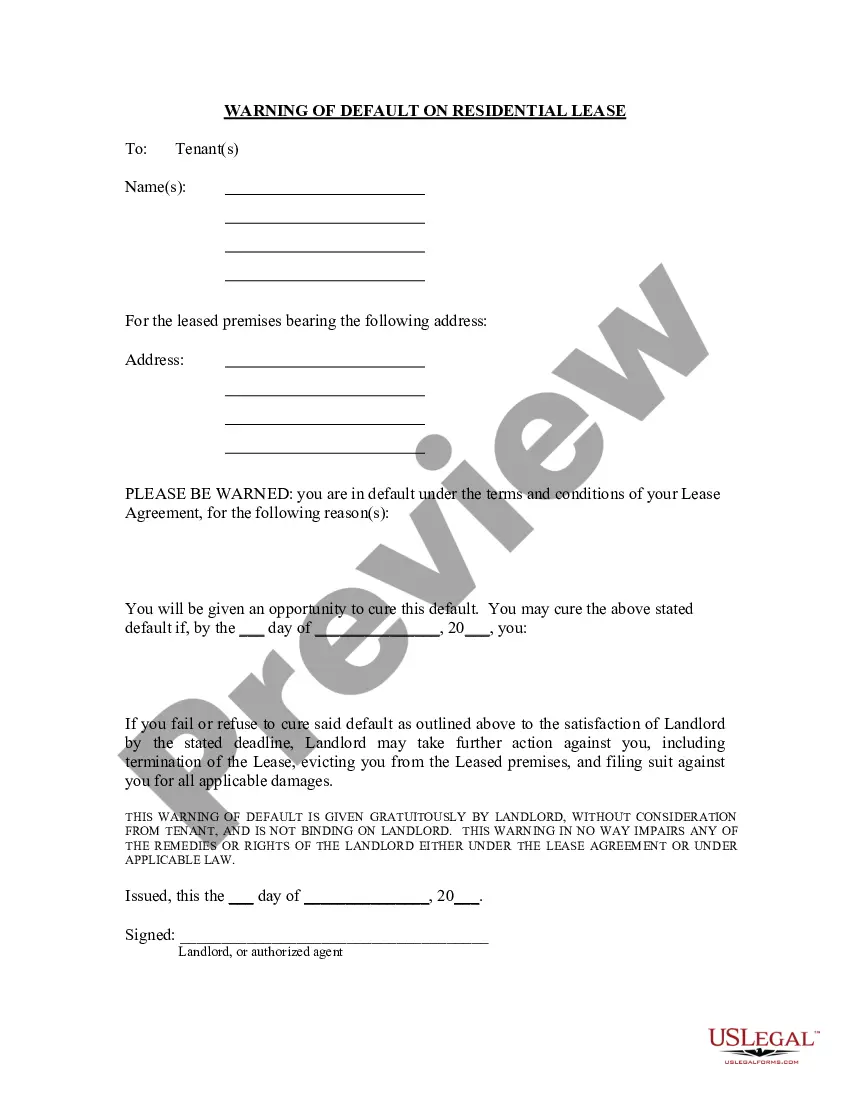
This Warning of Default on Residential Lease is a formal communication from a landlord to a tenant. It notifies the tenant that they are in breach of their lease agreement unless certain conditions are rectified. This form is crucial for landlords to document the default situation, differing from other notices as it serves strictly as a warning rather than a demand for action or payment.
Form components explained
- Date of issuance
- Signature of the landlord or their authorized agent
- Statement about the gratuitous nature of the warning
- Clarification on the non-binding aspect of the warning on the landlord
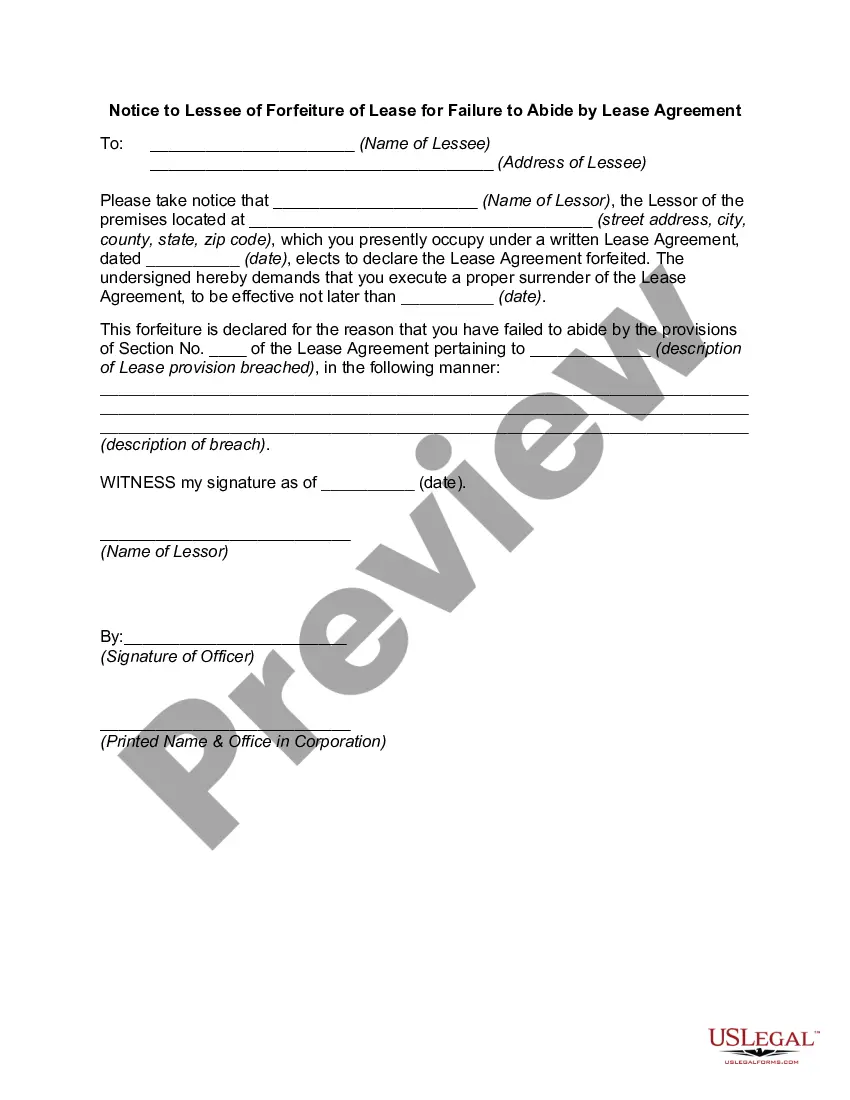
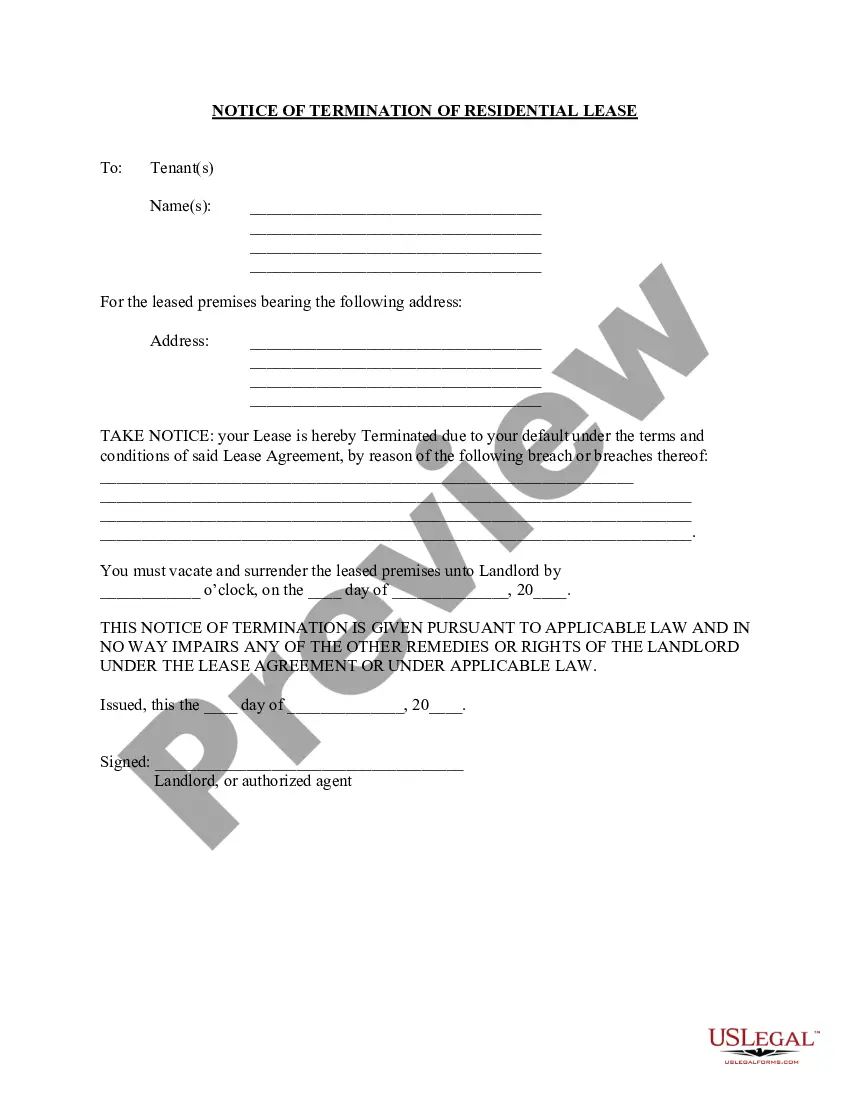
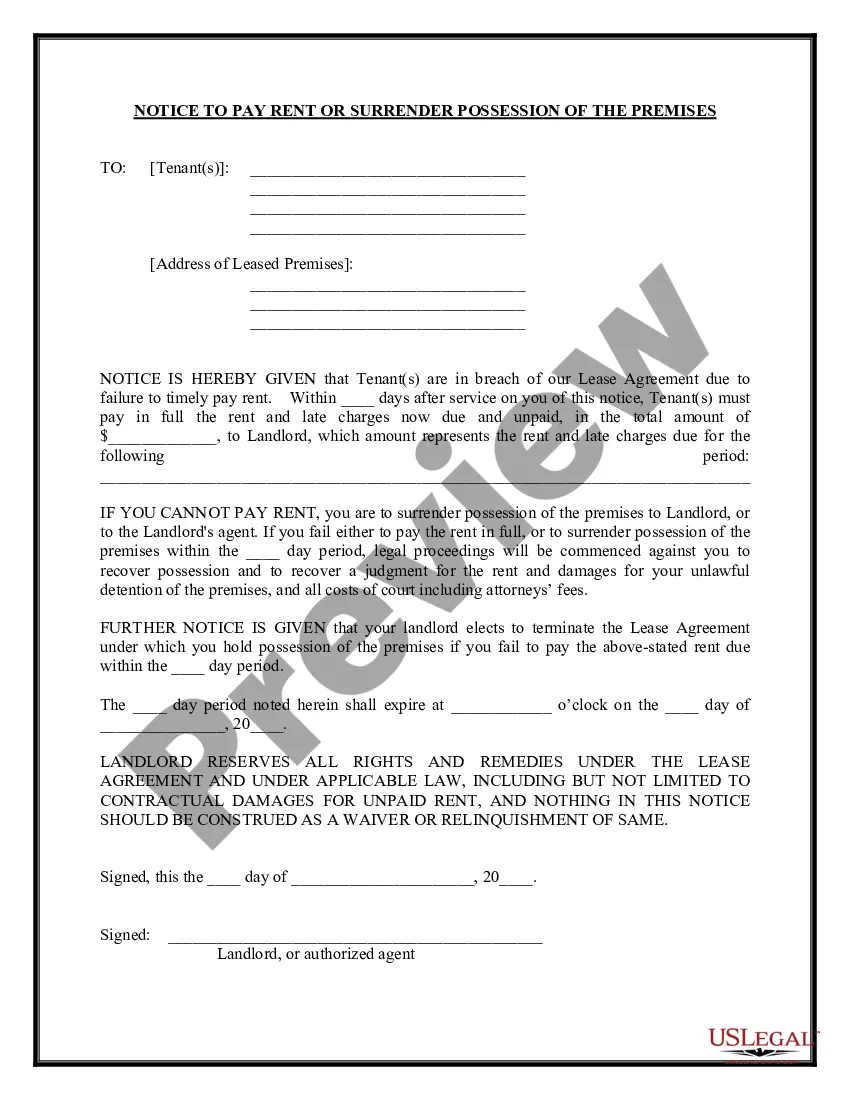
When to use this form
Who this form is for
- Residential landlords concerned about tenant compliance
- Property management companies acting on behalf of landlords
- Real estate professionals managing rental properties
Completing this form step by step
- Identify the date of issuance.
- Enter the name of the tenant and the nature of the lease violation.
- Clearly state the conditions that need to be remedied.
- Provide a date for the tenant to comply if necessary.
- Sign the form, either by the landlord or an authorized agent.
Does this form need to be notarized?
This form does not typically require notarization unless specified by local law.
Get your form ready online
Our built-in tools help you complete, sign, share, and store your documents in one place.
Make edits, fill in missing information, and update formatting in US Legal Forms—just like you would in MS Word.
Download a copy, print it, send it by email, or mail it via USPS—whatever works best for your next step.
Sign and collect signatures with our SignNow integration. Send to multiple recipients, set reminders, and more. Go Premium to unlock E-Sign.
If this form requires notarization, complete it online through a secure video call—no need to meet a notary in person or wait for an appointment.
We protect your documents and personal data by following strict security and privacy standards.

Make edits, fill in missing information, and update formatting in US Legal Forms—just like you would in MS Word.

Download a copy, print it, send it by email, or mail it via USPS—whatever works best for your next step.

Sign and collect signatures with our SignNow integration. Send to multiple recipients, set reminders, and more. Go Premium to unlock E-Sign.

If this form requires notarization, complete it online through a secure video call—no need to meet a notary in person or wait for an appointment.

We protect your documents and personal data by following strict security and privacy standards.
Avoid these common issues
- Failing to include the date of issuance.
- Not providing a clear explanation of the default issue.
- Omitting the signature of the landlord or authorized person.
Benefits of completing this form online
- Convenient access and immediate download options.
- Editable templates that allow customization based on specific circumstances.
- Reliability and accuracy, as forms are drafted by licensed attorneys.
Legal use & context
- This warning serves as a preliminary legal measure before further actions, such as eviction.
- While it is an important step, it does not replace formal eviction procedures.
Main things to remember
- The Warning of Default on Residential Lease is essential for landlords to address tenant breaches.
- Completing this form properly can prevent future legal issues.
- Understanding local laws is important for compliance.
Looking for another form?



Form popularity
FAQ
A letter of default on a contract serves as a notification that one party has not complied with the contract's terms, similar to a warning issued to tenants. When it comes to a Colorado Warning of Default on Residential Lease, this letter highlights specific failures related to the lease, such as non-payment or breaches of duty. Having a clear default letter can help set expectations and provide a chance for resolution before escalating the situation.
For a tenant to default means they have failed to fulfill their obligations under the lease agreement, which could include late rent, property damage, or other violations. In the context of a Colorado Warning of Default on Residential Lease, this default could lead to significant consequences, such as eviction proceedings. Understanding what constitutes a default is essential for tenants to avoid unnecessary disputes with their landlords.
A notice of default letter to a tenant informs them that they are in breach of their lease agreement, typically outlining specific issues that need to be corrected. With a Colorado Warning of Default on Residential Lease, this communication addresses concerns like missed rent payments, unauthorized alterations, or violations of community rules. This letter encourages prompt compliance, providing a clear pathway for the tenant to rectify their standing.
A default notice letter is a document sent by a landlord to notify a tenant of their breach of the lease agreement terms. In the case of a Colorado Warning of Default on Residential Lease, this letter specifies the issues causing the default, such as unpaid rent or property damage. It also outlines the steps the tenant can take to resolve the matter, making it an essential tool for both landlords and tenants to understand their rights and responsibilities.
The purpose of a Colorado Warning of Default on Residential Lease is to inform the tenant that they have failed to meet the obligations of the lease agreement. This notice serves as a formal warning, allowing the tenant a chance to rectify the situation before further action is taken. Additionally, it establishes a record of communication between the landlord and tenant, which can be crucial for any future legal proceedings.
When responding to a lease violation, it’s vital to acknowledge the issue and communicate promptly with your landlord. You may want to clarify any misunderstandings, discuss remedies, or negotiate terms that work for both parties. Utilizing resources like the Colorado Warning of Default on Residential Lease can provide additional insights on your rights and responsibilities during this process.
A lease violation warning serves as an initial alert to tenants about potential breaches of their lease terms. This warning is often a way for landlords to communicate concerns before taking more serious action. Understanding your response options, including referencing the Colorado Warning of Default on Residential Lease, can guide you in necessary negotiations.
A violation notice is a formal document that informs a tenant about a breach of their lease agreement, such as not paying rent or unauthorized modifications to the property. This notice outlines how the tenant can correct the violation and may set a deadline for action. Being informed about your obligations can help you respond adequately to a violation notice, especially in context with the Colorado Warning of Default on Residential Lease.
The new renters' rights in Colorado include expanded protections against unjust evictions and the right to request repairs in a timely manner. These laws also make it more transparent when landlords can increase rent. Understanding these rights ensures you can advocate for yourself effectively. The Colorado Warning of Default on Residential Lease can offer specific guidance on these important changes.
As a renter in Colorado, you have the right to a habitable living environment, timely repairs, and protection against retaliatory actions by your landlord. These rights are designed to ensure you can live safely and comfortably in your home. Always remember to familiarize yourself with your rights, including those outlined in the Colorado Warning of Default on Residential Lease.