Colorado Letter from Landlord to Tenant about Tenant engaging in illegal activity in premises as documented by law enforcement and if repeated, lease terminates
What this document covers
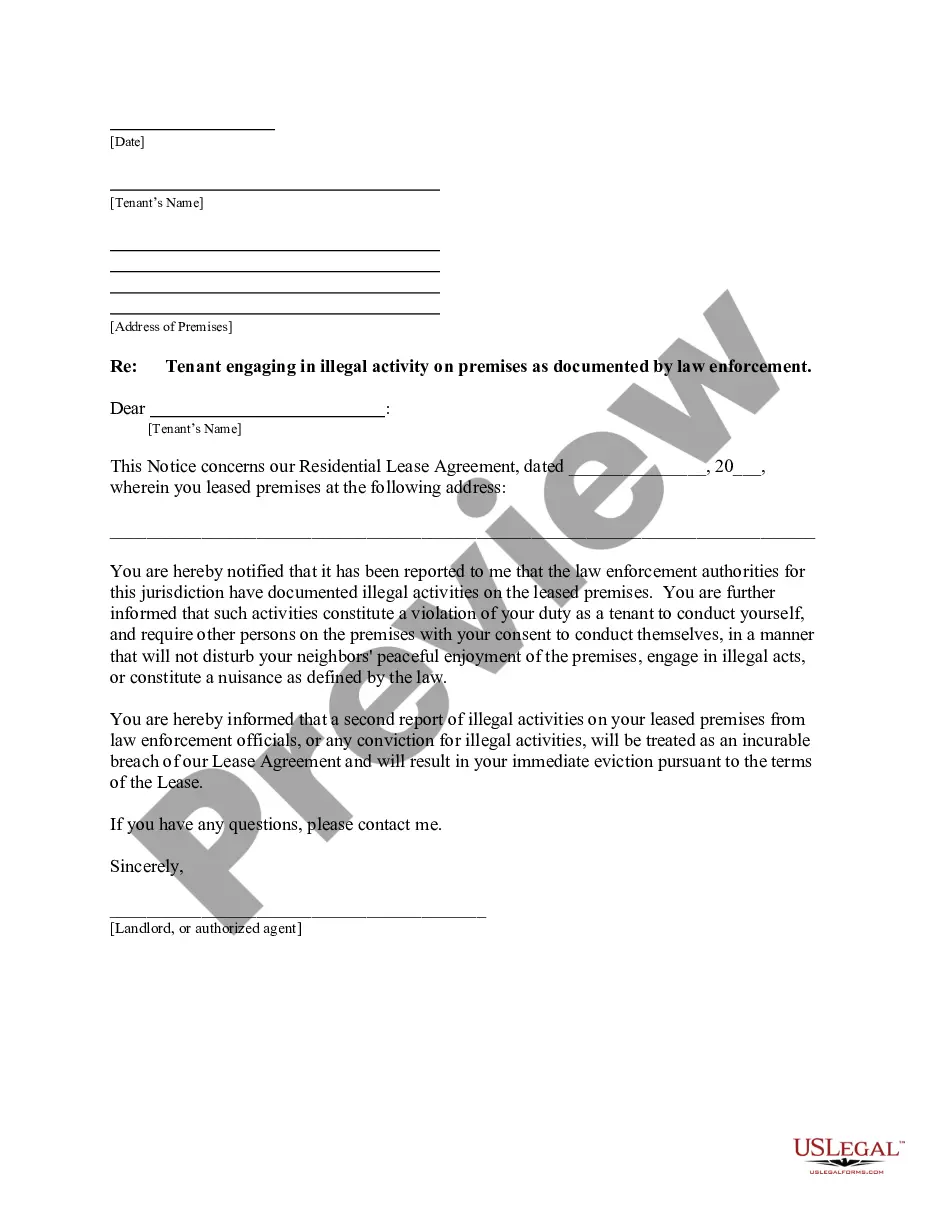
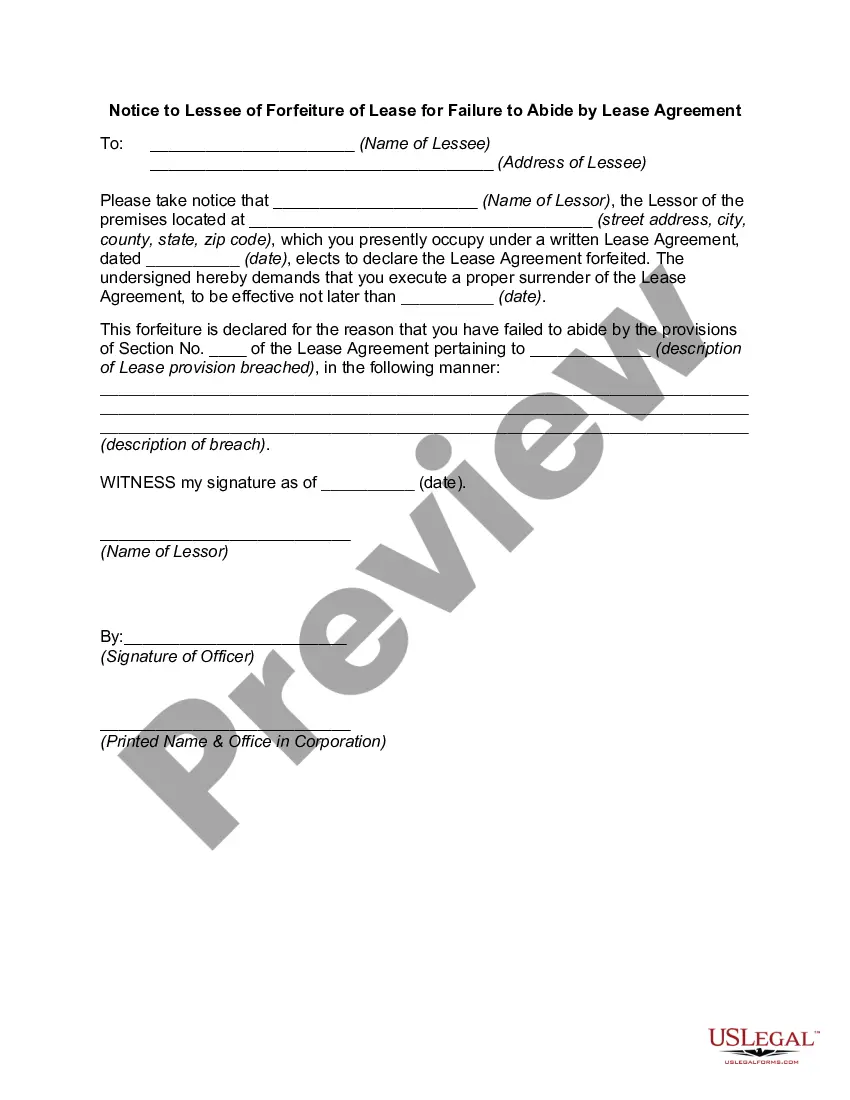
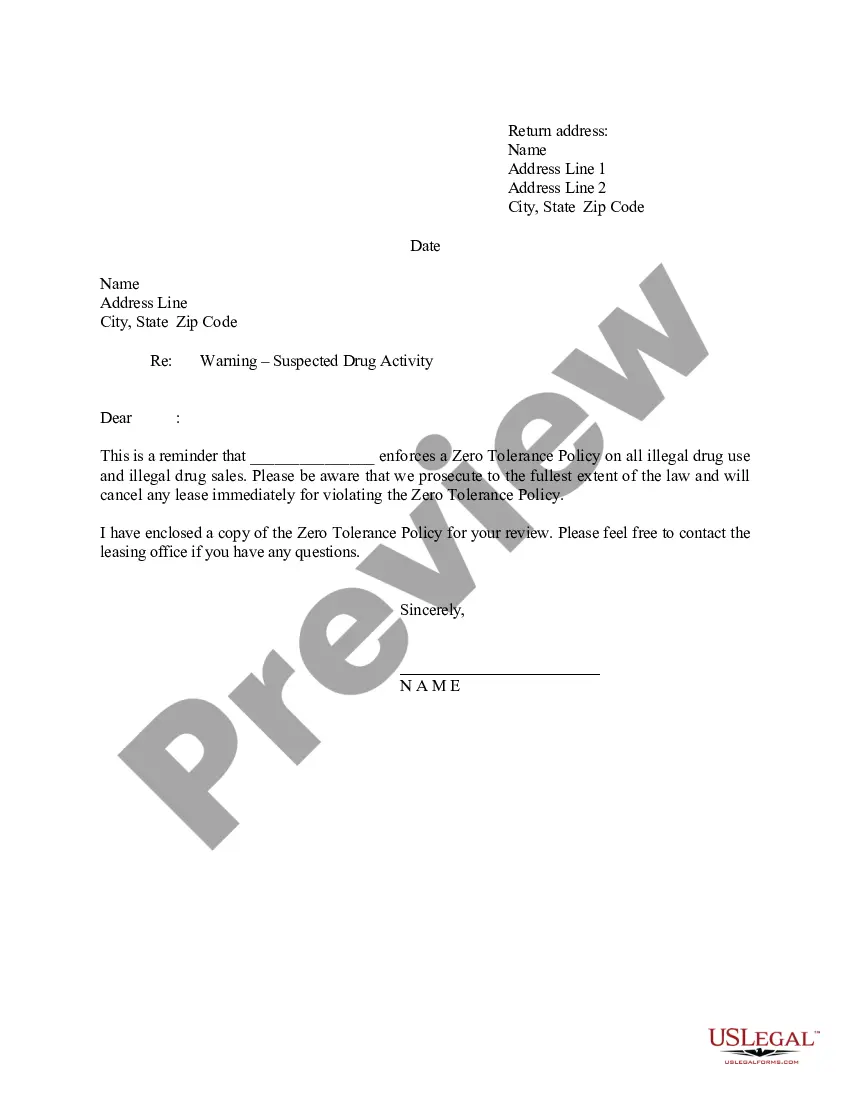
This form is a official letter from a landlord to a tenant addressing documented illegal activity occurring on the leased premises. It informs the tenant of these violations and warns that further infractions may lead to the termination of the lease. This letter serves a critical role in ensuring that tenants understand their responsibilities and the consequences of illegal behavior in contrast to general lease agreements.
Form components explained
- Identification of the landlord and tenant.
- Details of the reported illegal activities as documented by law enforcement.
- Statement addressing the tenant's duty to maintain peace and follow the law.
- Warning regarding potential eviction after repeated violations.
- Contact information for further questions from the tenant.

When to use this document
Who can use this document
- Landlords who have received reports of illegal activity from law enforcement.
- Property managers needing to enforce lease terms regarding illegal conduct.
- Tenants who have been informed of illegal activities on the premises by their landlord.
How to complete this form
- Identify the parties involved by entering the landlord's and tenant's names.
- Document the illegal activity by summarizing the law enforcement report.
- Clearly state the obligations of the tenant and any violations of the lease agreement.
- Specify the potential consequences of repeated illegal activities, including eviction.
- Sign the letter and date it before sending it to the tenant.
Is notarization required?
This form does not typically require notarization unless specified by local law.
Get your form ready online
Our built-in tools help you complete, sign, share, and store your documents in one place.
Make edits, fill in missing information, and update formatting in US Legal Forms—just like you would in MS Word.
Download a copy, print it, send it by email, or mail it via USPS—whatever works best for your next step.
Sign and collect signatures with our SignNow integration. Send to multiple recipients, set reminders, and more. Go Premium to unlock E-Sign.
If this form requires notarization, complete it online through a secure video call—no need to meet a notary in person or wait for an appointment.
We protect your documents and personal data by following strict security and privacy standards.

Make edits, fill in missing information, and update formatting in US Legal Forms—just like you would in MS Word.

Download a copy, print it, send it by email, or mail it via USPS—whatever works best for your next step.

Sign and collect signatures with our SignNow integration. Send to multiple recipients, set reminders, and more. Go Premium to unlock E-Sign.

If this form requires notarization, complete it online through a secure video call—no need to meet a notary in person or wait for an appointment.

We protect your documents and personal data by following strict security and privacy standards.
Common mistakes
- Failing to provide specific details about the illegal activities.
- Not referencing the lease terms violated.
- Ignoring local laws that may affect eviction processes.
- Neglecting to maintain a copy of the communication for future reference.
Why use this form online
- Convenience in downloading and editing the form to fit your needs.
- Access to professionally drafted content ensuring legal compliance.
- Time-saving alternative to traditional legal consultations.
Legal use & context
- This letter serves to document the landlord's notification to the tenant about illegal activities.
- It establishes a clear record of communication, which can be important in future legal proceedings.
- Understanding local laws on eviction is crucial to enforce any potential eviction legally.
Key takeaways
- This form is crucial for formal communication regarding illegal activities on rental premises.
- It outlines potential consequences for the tenant if illegal behavior continues.
- Landlords should ensure compliance with local laws when using this form.
Looking for another form?
Form popularity
FAQ
To write a letter from a landlord to a tenant, be sure to include the tenant's address and a clear subject line. Clearly articulate the purpose of the letter, especially if it's a Colorado Letter from Landlord to Tenant about Tenant engaging in illegal activity in premises as documented by law enforcement and if repeated, lease terminates. Use straightforward language and recommend next steps or any actions that may be necessary for compliance or resolution.
When writing a complaint letter regarding unprofessional behavior, start by describing the behavior in question. Provide context on how it affected you or other tenants, noting any relevance to the Colorado Letter from Landlord to Tenant about Tenant engaging in illegal activity in premises as documented by law enforcement and if repeated, lease terminates. Be specific, and request a response or action to address the situation.
To craft a powerful complaint letter, begin with a clear statement of your issue. Use specific examples to illustrate your points, especially if it relates to a Colorado Letter from Landlord to Tenant about Tenant engaging in illegal activity in premises as documented by law enforcement and if repeated, lease terminates. Make sure you outline the desired outcome, and encourage communication to resolve the problem effectively.
Writing a strongly worded letter involves being direct yet respectful. Express your concerns clearly, using firm language to convey the seriousness of the situation, especially if it relates to the Colorado Letter from Landlord to Tenant about Tenant engaging in illegal activity in premises as documented by law enforcement and if repeated, lease terminates. Ensure that your expectations are clear to the recipient, while maintaining a professional tone.
To write a formal complaint letter to your landlord, start with your contact details, followed by the landlord's information. Clearly state the issue, referencing the Colorado Letter from Landlord to Tenant about Tenant engaging in illegal activity in premises as documented by law enforcement and if repeated, lease terminates. Be concise and polite, providing all necessary details to support your complaint.
One of the strongest reasons for breaking a lease is if your safety or legality is at risk due to illegal activities on the premises, as documented by law enforcement. This means you can reference the Colorado Letter from Landlord to Tenant about Tenant engaging in illegal activity in supporting your decision. Other legitimate reasons include job relocation or family emergencies. Always ensure you communicate directly with your landlord for a smoother transition.
When preparing a letter to notify your landlord that you won’t renew your lease, open with a friendly tone. Clearly indicate your decision, specifying the date your current lease ends. You may want to remind them of any concerns, such as illegal activities that occurred during your tenancy, aligning with the Colorado Letter from Landlord to Tenant about Tenant engaging in illegal activity. Finish by thanking them for the opportunity to rent their property.
In your letter to the landlord about moving out early, be clear and concise. State the date you plan to vacate and mention that your decision follows the recent incidents involving illegal activities in the building, as noted by law enforcement. Referencing the provisions in the Colorado Letter from Landlord to Tenant about Tenant engaging in illegal activity can strengthen your case. Ensure you express gratitude for their understanding.
When you write a letter to your landlord about breaking a lease, start with a polite greeting. Clearly state your intention to break the lease and reference any relevant Colorado law or clauses in your lease agreement. It’s important to briefly explain your reasons, such as experiencing illegal activities on the premises as documented by law enforcement. Additionally, offer to communicate further to finalize arrangements.
As a renter in Colorado, you have several rights, such as the right to a habitable living space and protection from unfair eviction practices. In situations involving the Colorado Letter from Landlord to Tenant about Tenant engaging in illegal activity in premises as documented by law enforcement, it's vital to understand your rights and the processes that protect your interests. Knowing your rights can enhance your renting experience and guide you in conflicts.