Colorado Grant Deed from Individual to Individual
About this form
The Grant Deed from Individual to Individual is a legal document that facilitates the transfer of real property ownership from one individual to another. Unlike other deeds, a grant deed offers certain warranties, such as the guarantee that the Grantor has not previously conveyed the same property to someone else. This makes it a reliable choice for property transactions between individuals.
Key components of this form
- Parties Involved: Clearly identifies the Grantor (the seller) and the Grantee (the buyer).
- Property Description: Details the property being transferred, including legal description.
- Granting Clause: Indicates the Grantor's intention to convey the property to the Grantee.
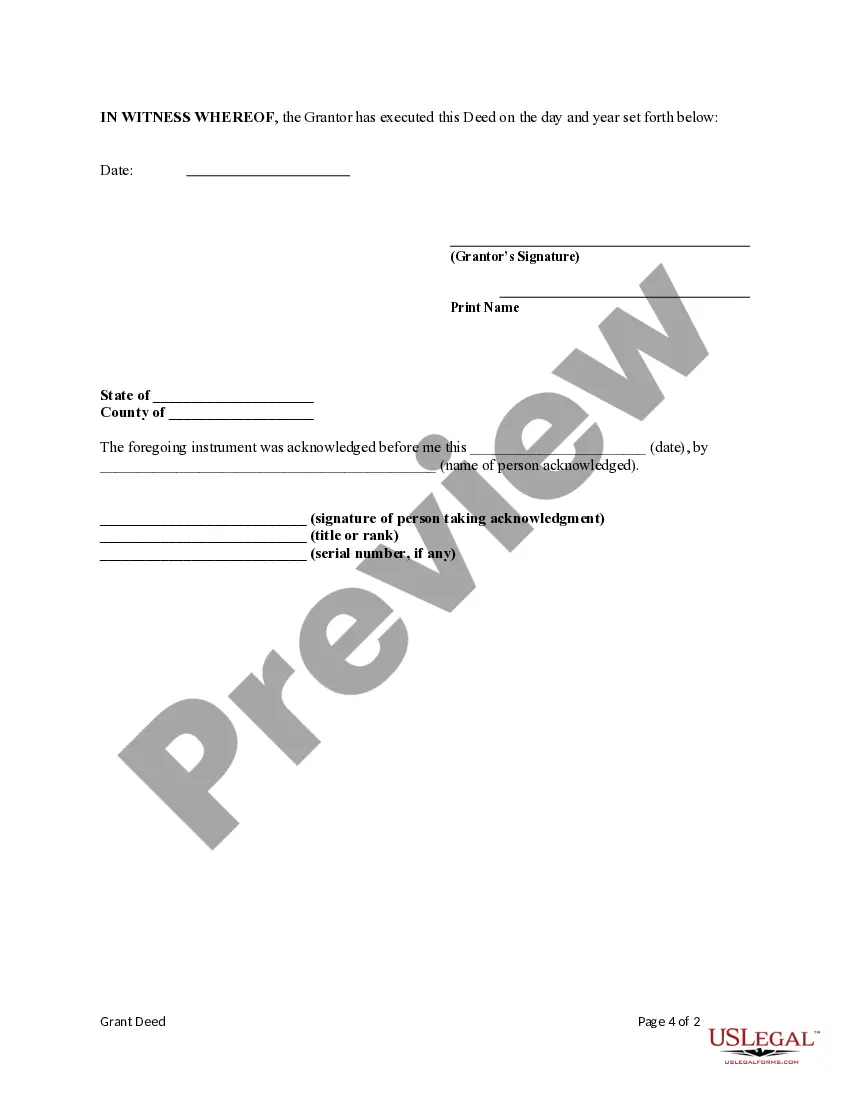
- Signature Blocks: Areas for both the Grantor and Grantee to sign, affirming the transaction.
- Date of Transfer: Specifies the date on which the transfer takes effect.







When this form is needed
This form is typically used when an individual wishes to transfer ownership of real estate directly to another individual. Common scenarios include the sale of a home, transfer of land between family members, or gifting property to someone without involving a real estate agent.
Who can use this document
This form is suitable for:
- Individuals looking to sell or gift real property to another individual.
- Family members transferring property among themselves.
- Anyone seeking to formalize a private transaction without a real estate broker.
Instructions for completing this form
To complete this form, follow these steps:
- Identify the parties: Enter the full names of the Grantor and Grantee.
- Specify the property: Clearly describe the real property being transferred, including its address or legal description.
- Enter the date of transfer: Fill in the date when the transfer will take place.
- Sign the document: Ensure both the Grantor and Grantee sign the deed where indicated.
- Consider notarization: Depending on state requirements, you may need to have the document notarized.
Is notarization required?
This form does not typically require notarization unless specified by local law. However, notarization can add an extra layer of security and legal recognition to the transfer process.
Get your form ready online
Our built-in tools help you complete, sign, share, and store your documents in one place.
Make edits, fill in missing information, and update formatting in US Legal Forms—just like you would in MS Word.
Download a copy, print it, send it by email, or mail it via USPS—whatever works best for your next step.
Sign and collect signatures with our SignNow integration. Send to multiple recipients, set reminders, and more. Go Premium to unlock E-Sign.
If this form requires notarization, complete it online through a secure video call—no need to meet a notary in person or wait for an appointment.
We protect your documents and personal data by following strict security and privacy standards.

Make edits, fill in missing information, and update formatting in US Legal Forms—just like you would in MS Word.

Download a copy, print it, send it by email, or mail it via USPS—whatever works best for your next step.

Sign and collect signatures with our SignNow integration. Send to multiple recipients, set reminders, and more. Go Premium to unlock E-Sign.

If this form requires notarization, complete it online through a secure video call—no need to meet a notary in person or wait for an appointment.

We protect your documents and personal data by following strict security and privacy standards.
Avoid these common issues
- Failing to clearly describe the property being transferred.
- Not including both parties' signatures, which can impact the validity of the deed.
- Using outdated forms that do not comply with current state legal requirements.
Benefits of completing this form online
- Convenience of completing the form online and downloading it for immediate use.
- Editability allows customization based on specific transaction requirements.
- Reliability of forms drafted by licensed attorneys to meet legal standards.
Looking for another form?



Form popularity
FAQ
Filling out a quitclaim deed in Colorado requires entering key information such as the names of the parties involved, a description of the property, and the transaction date. It's crucial to ensure all details are accurate and that you comply with state regulations. Once completed and signed in front of a notary, submit the deed to your local county clerk's office. This process ensures your intent to transfer the property is legally recognized.
Transferring a property title to a family member in Colorado often involves completing a deed appropriate for your circumstances. A Colorado Grant Deed from Individual to Individual is a great option for formally transferring ownership. Make sure to gather the necessary documents, including the existing deed and any relevant identification. The final step is filing the completed document with the county clerk's office.
The best way to transfer property title between family members is to use a Colorado Grant Deed from Individual to Individual, as it clearly establishes the new ownership while protecting both parties' rights. Another option is a quitclaim deed, which can also facilitate quick transfers. Opting for one of these deeds allows for transparency and legal clarity. Always consider evaluating the property’s value and any tax implications.
To transfer a property title to a family member in Colorado, you can utilize a grant deed or a quitclaim deed. It’s vital that the deed includes specific details about the property and the relationship between the parties. After signing the deed, file it with the local county office for it to be effective. This transfer method can be simple and efficient.
To execute a quitclaim deed in Colorado, you need to prepare the deed document with accurate information regarding the property and the parties involved. Once you have completed the paperwork, sign it in front of a notary. Finally, file the quitclaim deed with your county's clerk and recorder. This method is a straightforward way to transfer ownership without the need for extensive legalities.
To change a deed in Colorado, the current owner must file a new deed with the appropriate county clerk and recorder's office. The new document should clearly indicate the change, whether it is a transfer or an update. Using the Colorado Grant Deed from Individual to Individual is essential for ensuring a smooth transfer. It's wise to consult legal assistance when completing this process.
Changing the name on your property title deed in Colorado requires you to execute a Colorado Grant Deed from Individual to Individual. This process usually involves filling out a new deed that reflects the desired name change. Both parties must sign the updated deed; it's beneficial to have it notarized to ensure legal acceptance. Be sure to record the new deed with your county's recorder’s office to maintain accurate records.
To transfer ownership of a property in Colorado, you can use a Colorado Grant Deed from Individual to Individual. This legal document effectively conveys the property from one individual to another. Both the grantor and grantee must sign the deed, and it's advisable to have it notarized for added validity. After completing the transfer, ensure you file the deed with the appropriate county recorder's office to make the change official.
Adding someone to a house deed generally takes a few days if you prepare the Colorado Grant Deed from Individual to Individual correctly. After you complete and sign the necessary documentation, filing it at your county's office is the next step. Expect the actual processing time to vary based on local workflow and office hours.
Changing a deed in Colorado involves drafting a new Colorado Grant Deed from Individual to Individual that reflects the desired changes. After preparing the new deed, you'll need to sign it and have it recorded with the county office. Legal documentation may be necessary for certain changes, so consider consulting with a professional to ensure compliance.