California Quitclaim Deed from an Individual and a Trust to a Trust
Understanding this form
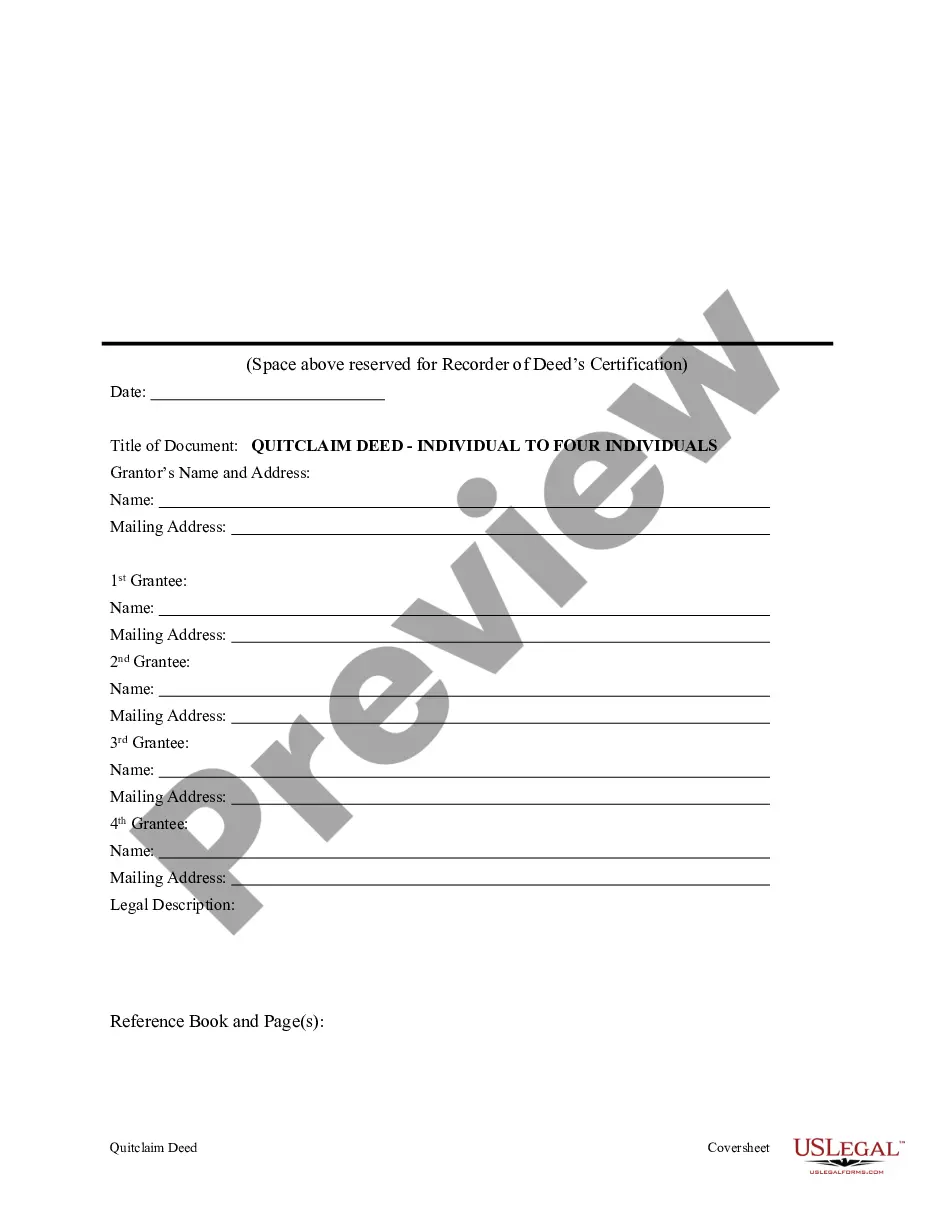
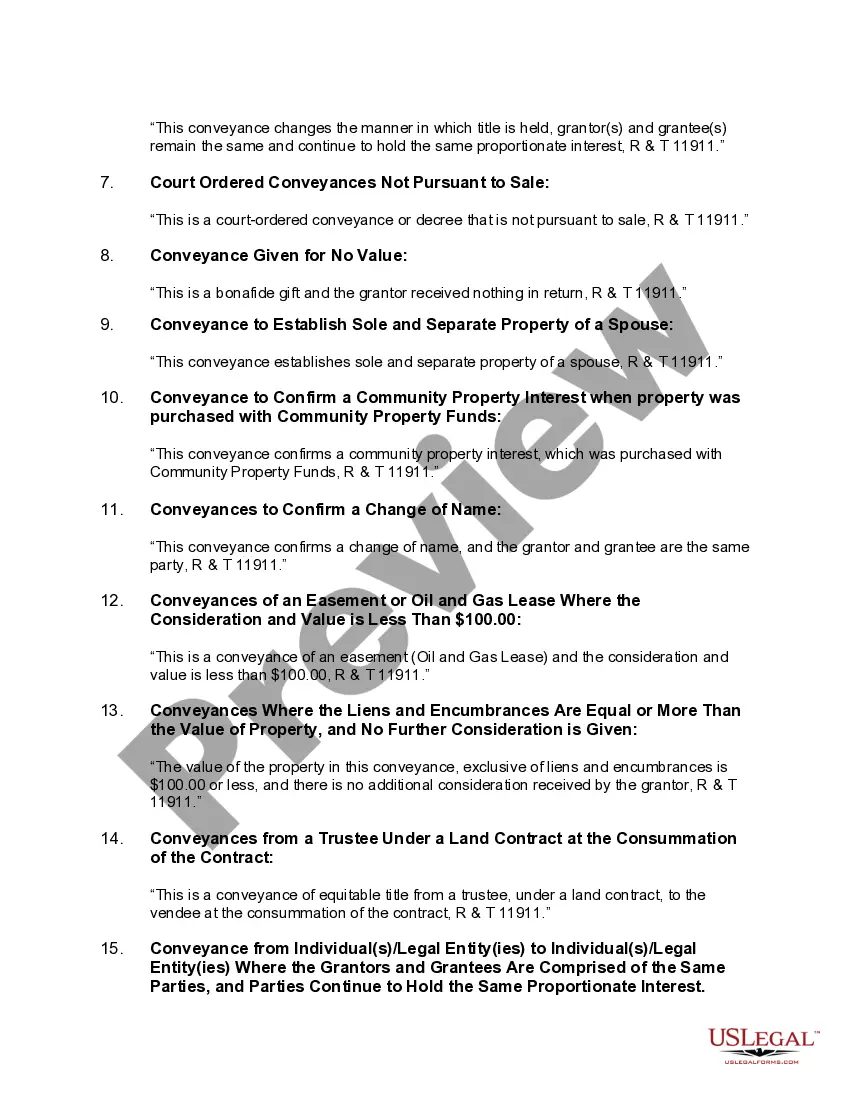
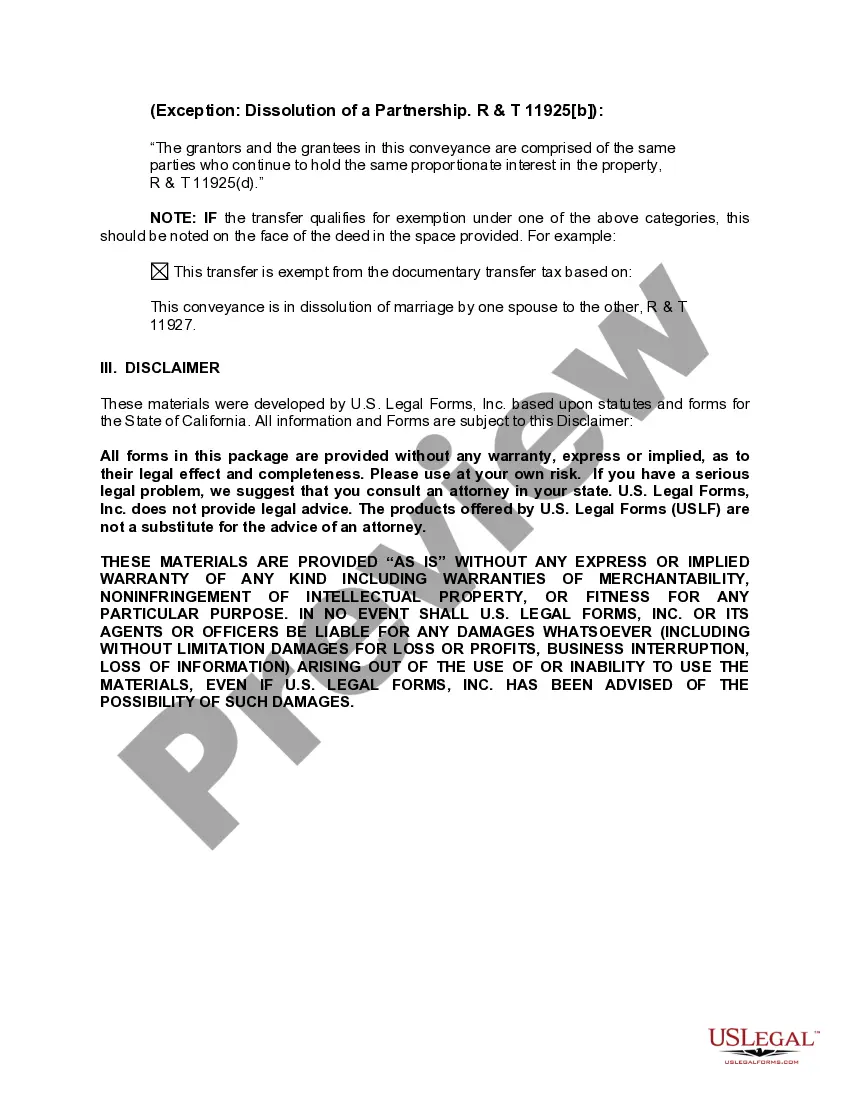
The Quitclaim Deed from an Individual and a Trust to a Trust is a legal document used to transfer property ownership from an individual and a trust to another trust. This form allows the Grantors (the individual and the trust) to convey all rights and claims they have in the specified property to the Grantee (the receiving trust). Unlike other types of deeds, a quitclaim deed does not guarantee that the title is clear, but it effectively transfers the interests of the Grantors. This makes it a useful option when transferring property without a sales transaction or when ensuring interests are held within trusts.
Key components of this form
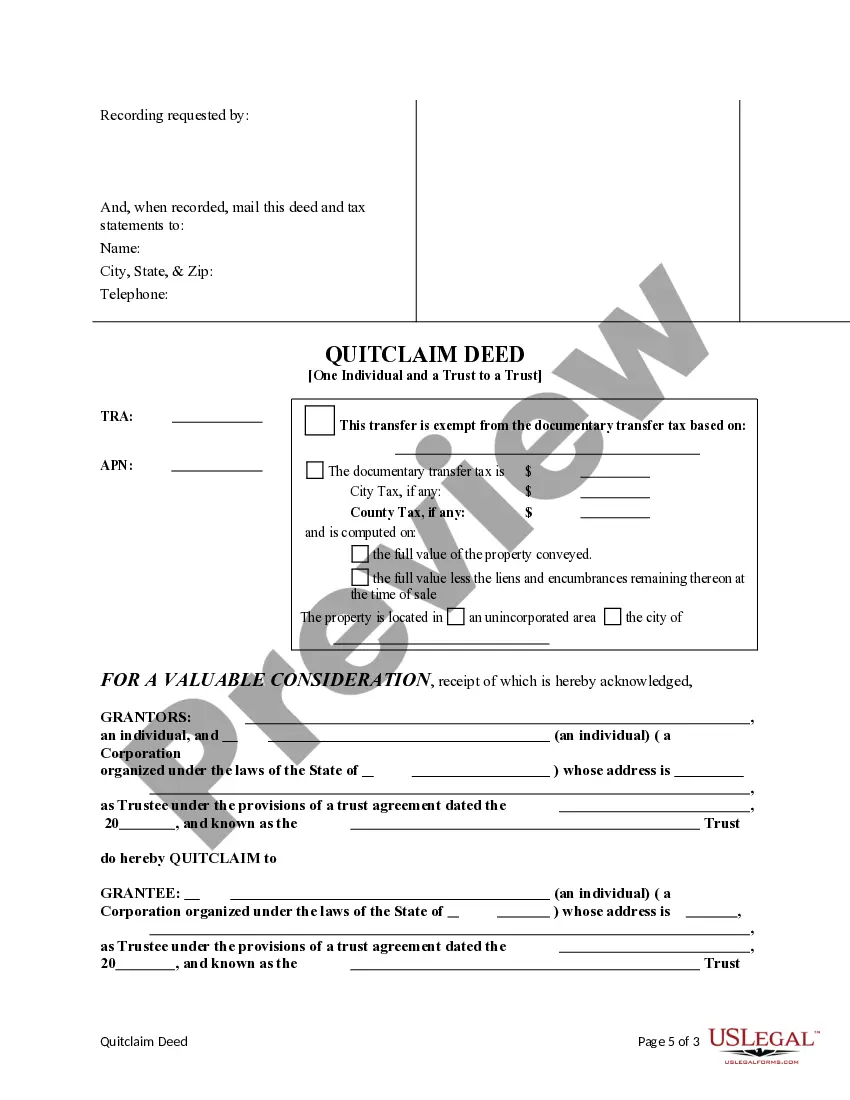
- Identification of Grantors: This section states the names of the individual and trust transferring the property.
- Identification of Grantee: Clearly names the trust receiving the property.
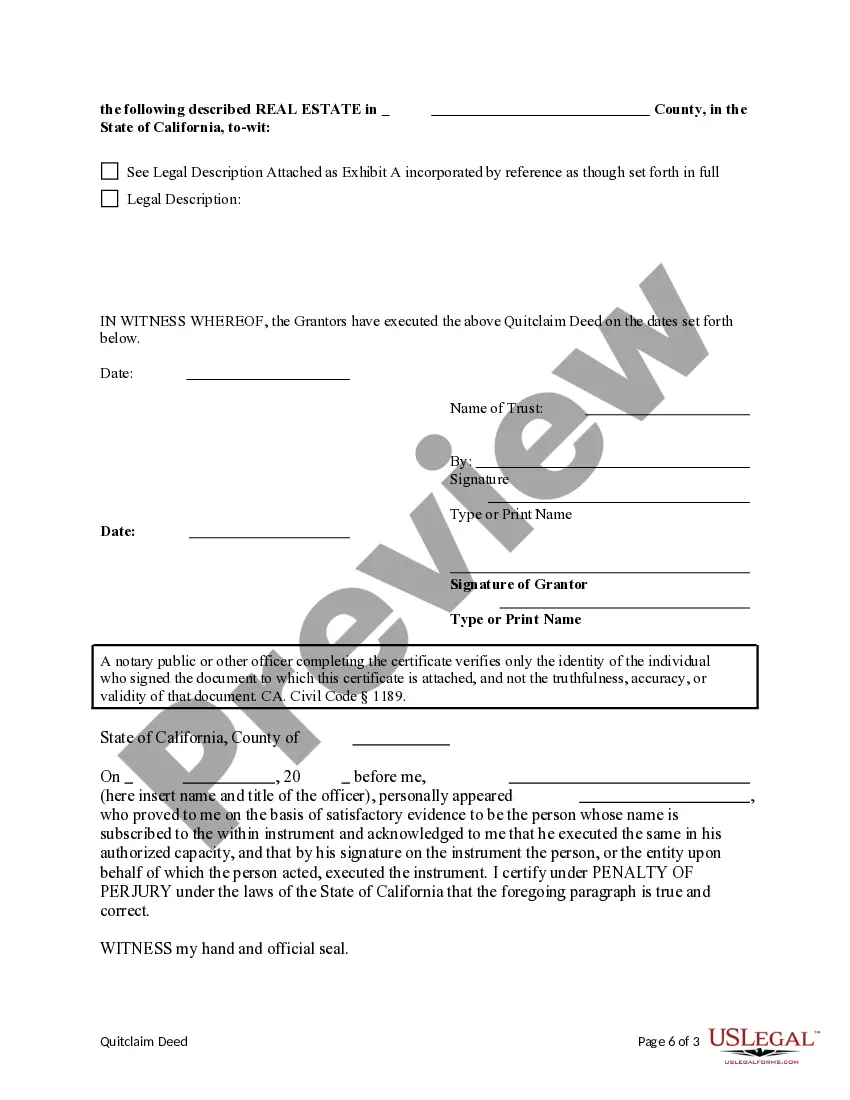
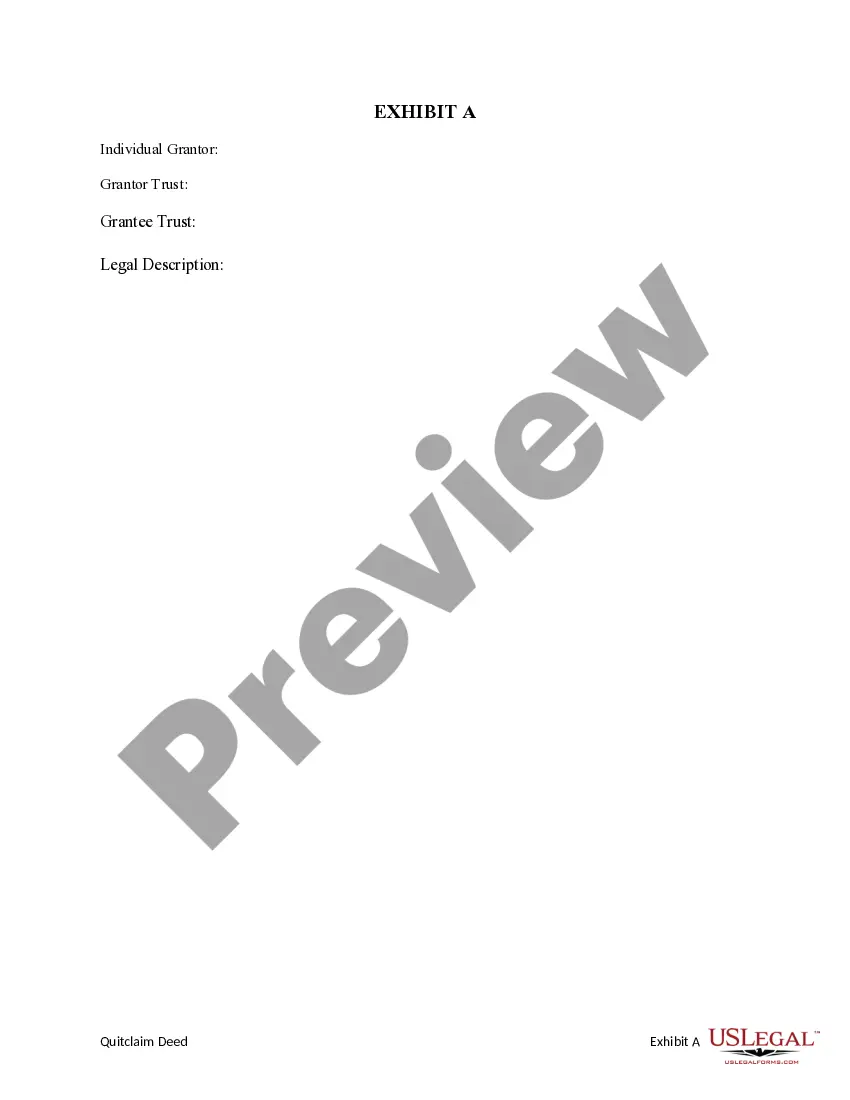
- Property Description: A detailed description of the property being conveyed, including legal description and any boundaries or characteristics.
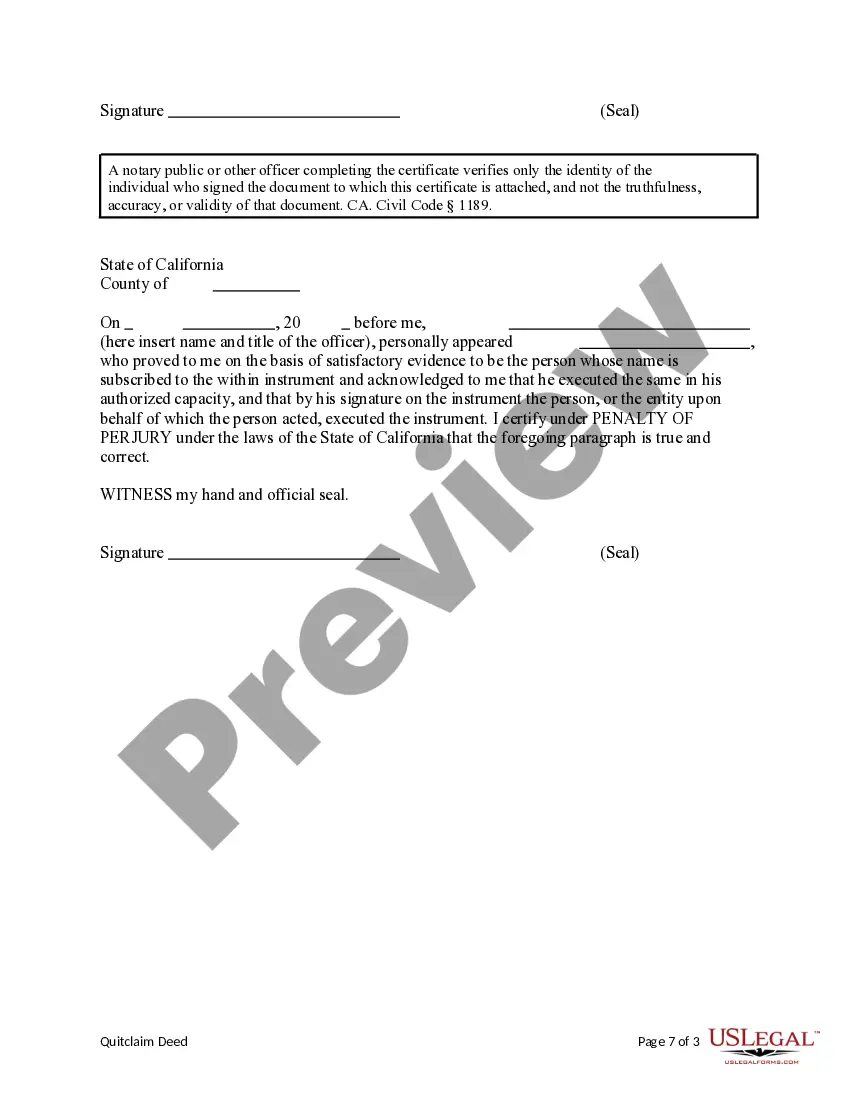
- Signatures: Spaces provided for the signatures of the Grantors, along with dates to validate the deed.
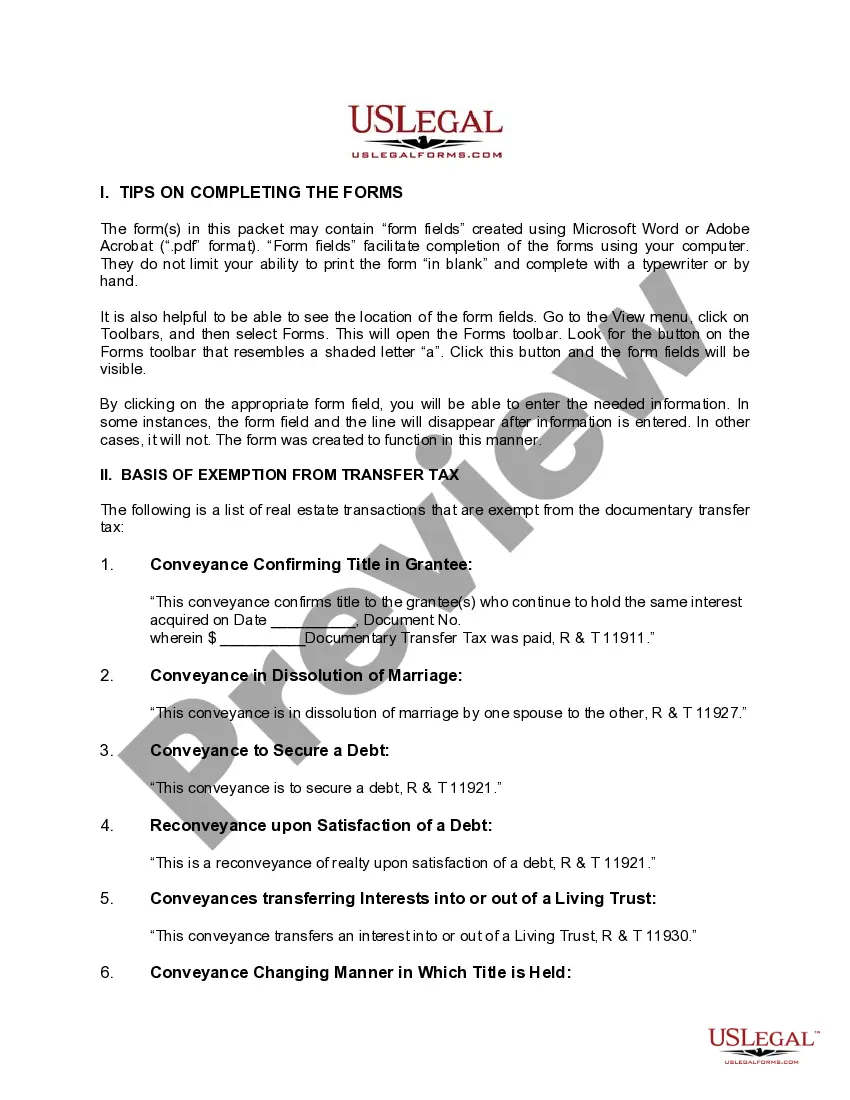
- Exemption Clauses: Options to note any exemptions from transfer taxes applicable to the conveyance.





Common use cases
This quitclaim deed is often used when an individual and a trust wish to transfer property to another trust. Common scenarios include consolidating property ownership within trusts to simplify estate planning or resolving ownership among trusts. Furthermore, it is useful when the transfer is part of a larger estate planning strategy or when ensuring specific assets are managed within a trust structure.
Who needs this form
- Individuals who are Grantors of a trust wanting to transfer property to another trust.
- Trustees looking to consolidate or rearrange trust-owned property.
- Individuals involved in estate planning or asset management who need to ensure proper distribution or management of real estate assets.
How to complete this form
- Identify the parties: Indicate the names of the individual and the trust as Grantors, as well as the name of the receiving trust as the Grantee.
- Specify the property: Provide a thorough legal description of the property being transferred, making sure to include any relevant details.
- Complete exemption information: If applicable, state any exemptions from transfer tax or legal justifications for the deed.
- Sign the document: Both Grantors need to sign and date the form to make it valid.
- Consider notarization: While not always necessary, adding notarization can enhance the document's validity.
Does this document require notarization?
This form does not typically require notarization unless specified by local law. However, having the quitclaim deed notarized can strengthen its validity and acceptance, particularly in property transfer scenarios.
Get your form ready online
Our built-in tools help you complete, sign, share, and store your documents in one place.
Make edits, fill in missing information, and update formatting in US Legal Forms—just like you would in MS Word.
Download a copy, print it, send it by email, or mail it via USPS—whatever works best for your next step.
Sign and collect signatures with our SignNow integration. Send to multiple recipients, set reminders, and more. Go Premium to unlock E-Sign.
If this form requires notarization, complete it online through a secure video call—no need to meet a notary in person or wait for an appointment.
We protect your documents and personal data by following strict security and privacy standards.

Make edits, fill in missing information, and update formatting in US Legal Forms—just like you would in MS Word.

Download a copy, print it, send it by email, or mail it via USPS—whatever works best for your next step.

Sign and collect signatures with our SignNow integration. Send to multiple recipients, set reminders, and more. Go Premium to unlock E-Sign.

If this form requires notarization, complete it online through a secure video call—no need to meet a notary in person or wait for an appointment.

We protect your documents and personal data by following strict security and privacy standards.
Common mistakes to avoid
- Failing to include a complete legal description of the property.
- Not having all required signatures from the Grantors.
- Neglecting to note any applicable tax exemptions on the form.
- Using outdated forms that do not comply with current state laws.
Why complete this form online
- Convenience: Users can easily download and fill out the form at their own pace.
- Editability: The form allows for digital completion, providing easier corrections before printing.
- Reliable formatting: The forms are designed to comply with state-specific requirements, ensuring legal efficacy.
Looking for another form?



Form popularity
FAQ
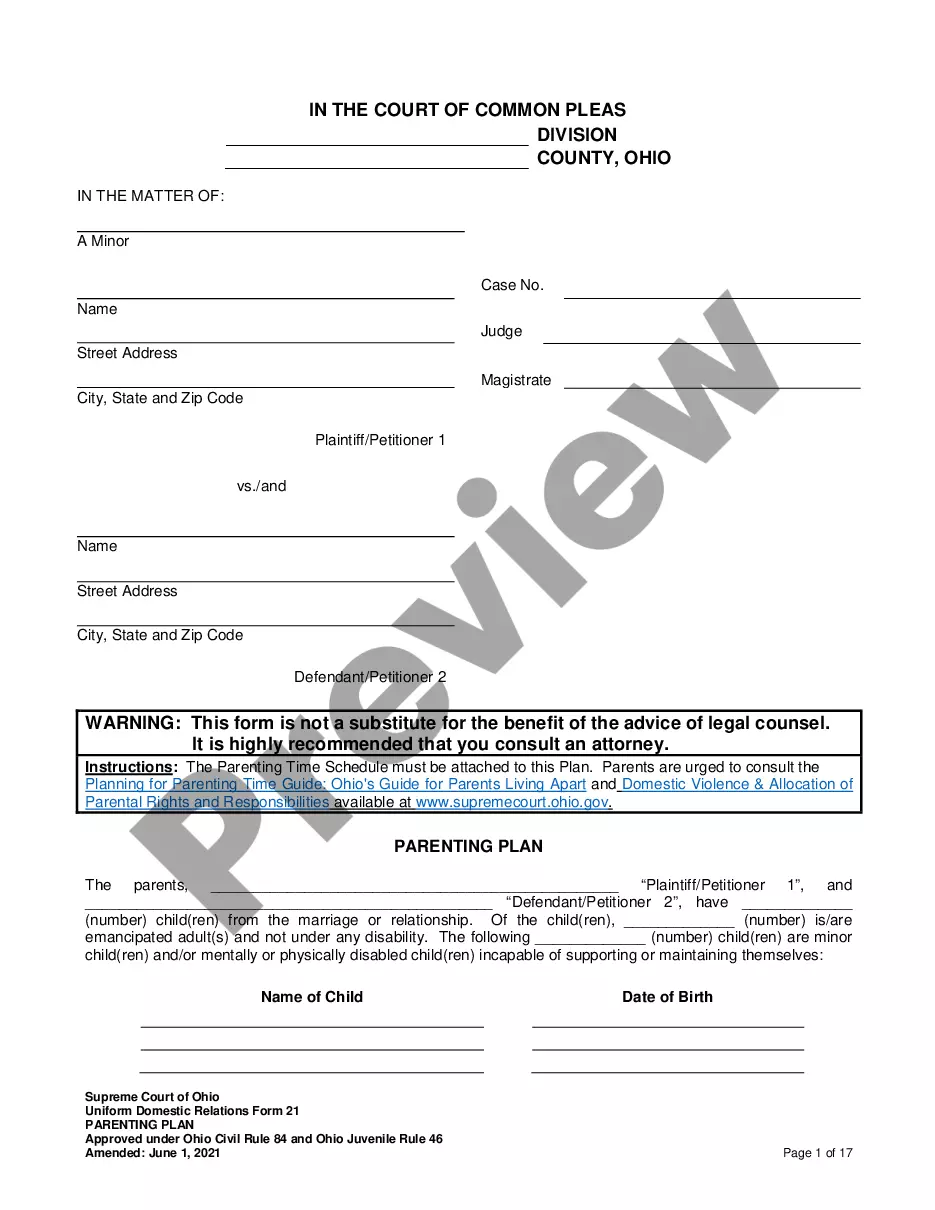
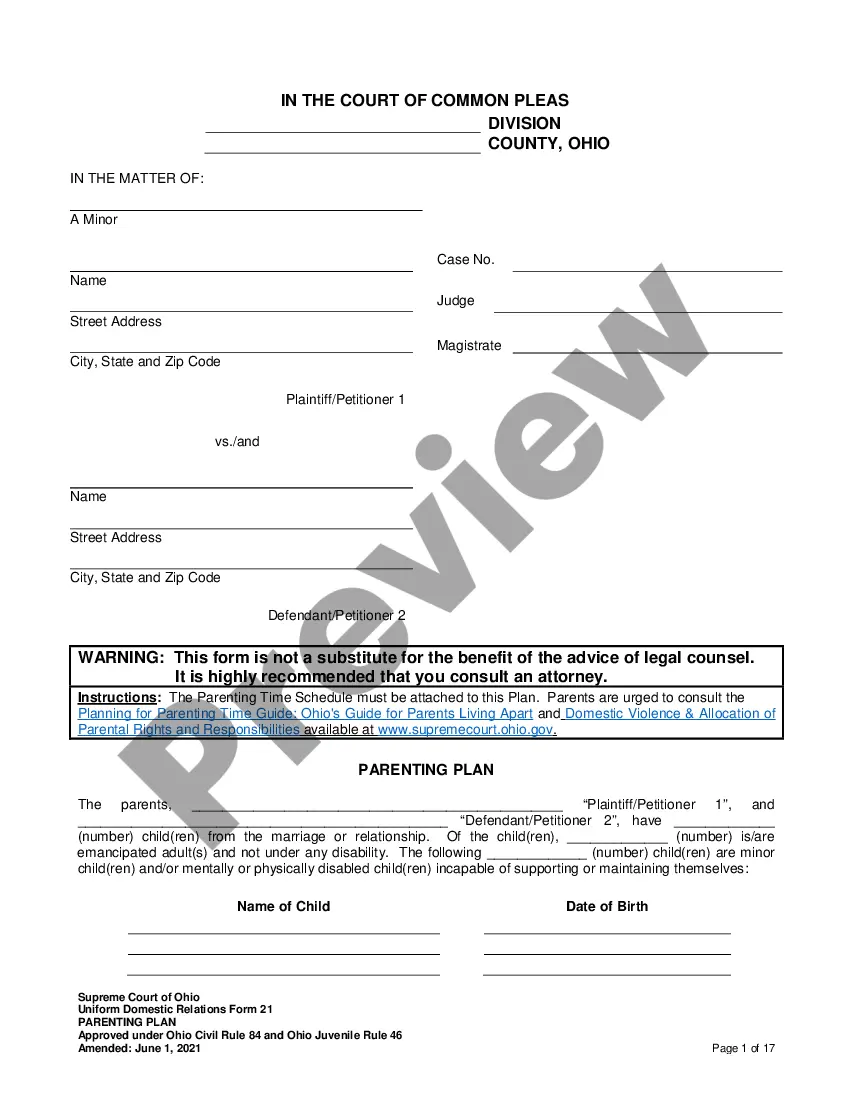
A trust does not automatically supersede a quit claim deed. When you create a California Quitclaim Deed from an Individual and a Trust to a Trust, it allows for the transfer of property ownership while maintaining the terms of the trust. It's essential to understand that while the quit claim deed affects property title, the trust dictates how that property is managed. Therefore, both instruments play important, yet distinct, roles in property and estate planning.
To transfer a deed to a living trust in California, you will need to complete a California Quitclaim Deed from an Individual and a Trust to a Trust. This process involves filling out the deed form, signing it with a notary, and recording it with the county recorder's office. Ensuring the proper execution of this deed is crucial, as it legally transfers your property into the trust. If you're uncertain about the steps, uslegalforms provides useful resources and templates to simplify the task.
While placing your house in a trust can provide benefits, such as avoiding probate, it may come with certain disadvantages. You may face upfront costs related to creating the trust and executing a California Quitclaim Deed from an Individual and a Trust to a Trust. Additionally, after transferring the property, you must maintain trust records and manage assets according to the trust terms, which can be an ongoing responsibility. It's wise to consider these factors carefully.
To put your property in a trust in California, you first create the trust document, clearly specifying the assets included. Next, you execute a California Quitclaim Deed from an Individual and a Trust to a Trust to transfer ownership. It is essential to sign this deed in front of a notary and then record it with your local county office. For additional guidance, uslegalforms offers templates and support to help streamline this process.
Yes, a quitclaim deed can be used to transfer property out of a trust, provided the trustee executes it properly. This action needs to adhere to the trust’s directives, and it often requires additional documentation to ensure compliance with state law. Utilizing resources like US Legal Forms can help streamline this process, offering templates and guidance for your specific needs.
The choice between a quitclaim deed and a trust largely depends on your specific needs. A quitclaim deed is a simple way to transfer property without warranty, while a trust provides more comprehensive estate planning and protection for inherited assets. Consider your long-term goals to determine the best option for managing and transferring your property.
To transfer a deed to a trust in California, you'll need to prepare and execute a new deed that names the trust as the grantee. You must also sign the deed in front of a notary public and then record it with the county recorder’s office. This process helps confirm that the property is now held under the terms of the trust, ensuring your estate plan is in place.
Yes, you can perform a quitclaim deed from a trust to transfer property to another party or trust. This process allows the trustee to relinquish any claim they may have to the property held in the trust. It's important to ensure that the quitclaim deed is properly executed and recorded to maintain clear title.
A quitclaim deed cannot be used to resolve title disputes or to transfer property that is heavily encumbered by liens or mortgages. Additionally, if the property is under a divorce agreement or bankruptcy proceedings, a quitclaim deed might not be appropriate. In these cases, further legal actions may be needed, such as a court order, to effectuate the transfer.