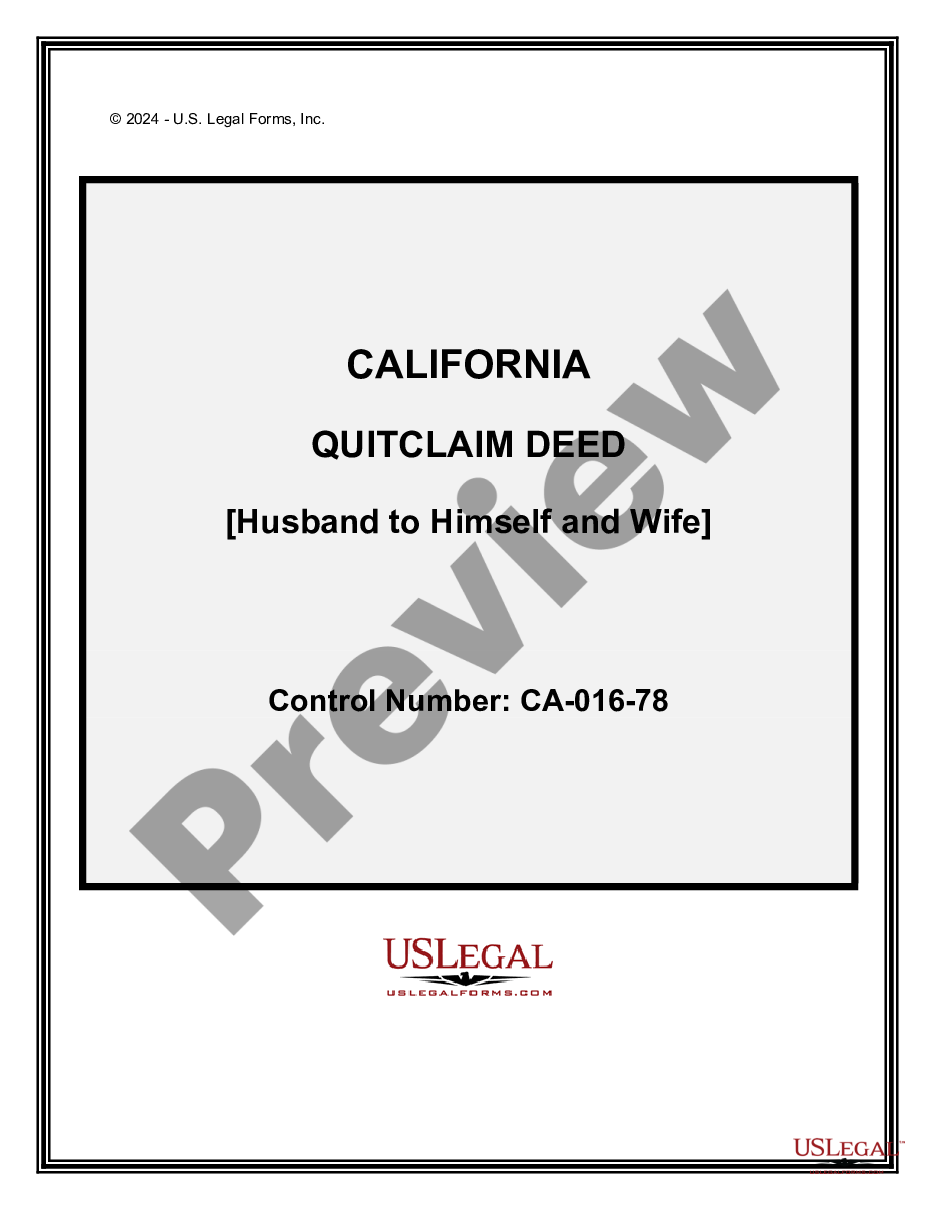
California Quitclaim Deed from Husband to Himself and Wife
Overview of this form
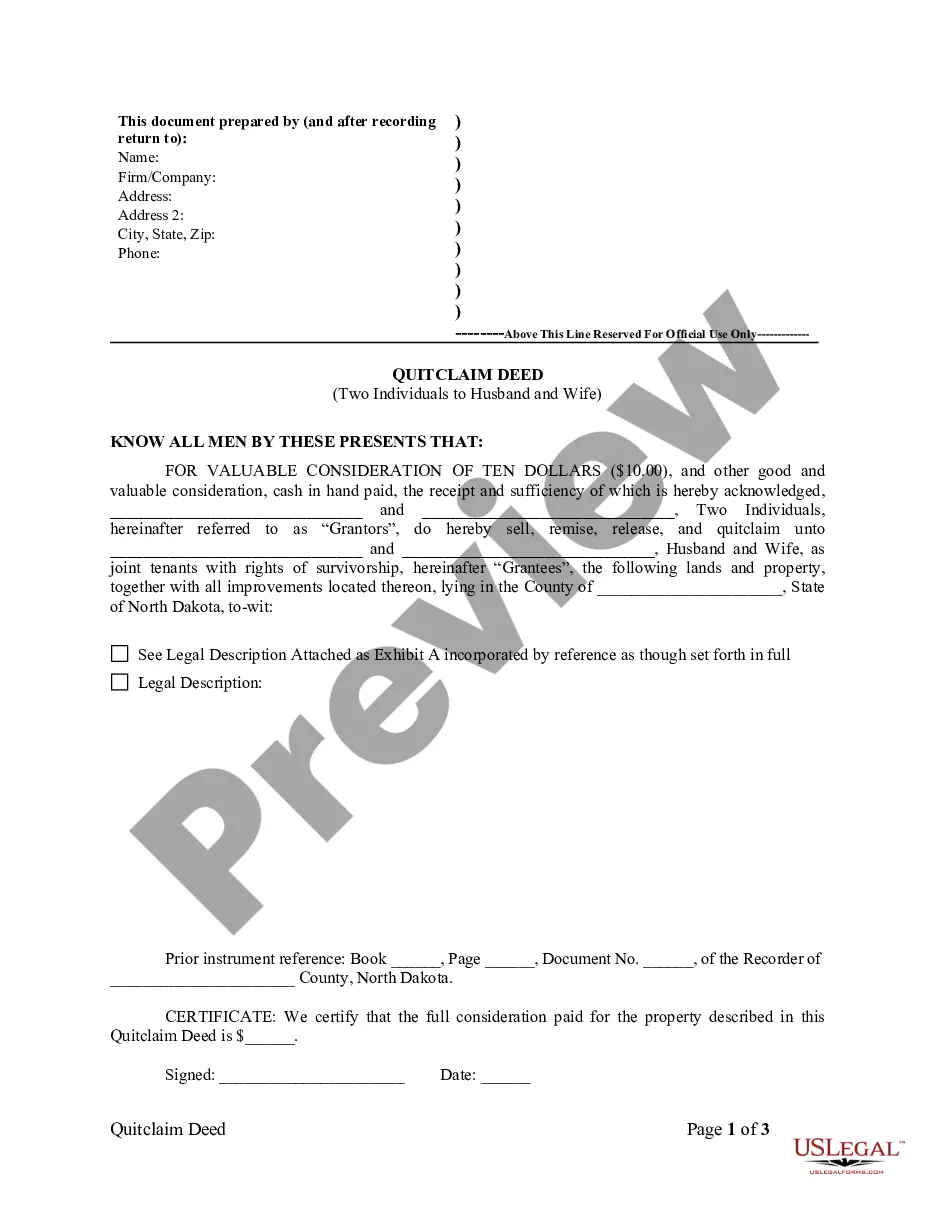
The Quitclaim Deed from Husband to Himself and Wife is a legal document allowing a husband to transfer property ownership to himself and his wife. Unlike a warranty deed, a quitclaim deed does not guarantee that the grantor holds clear title to the property, making it a quick method for ownership transfer. This form is commonly used to clarify or establish joint ownership between spouses while preserving specific rights or reservations concerning the property, such as mineral rights.
Key parts of this document
- Identifies the grantor (husband) and grantees (husband and wife).
- Includes a legal description of the property being transferred.
- Designates the manner in which the grantees will hold the property.
- Addresses any reservations of rights, such as oil, gas, or mineral rights.
- Includes spaces for signatures, dates, and witness or notarization details.







Common use cases
Use this quitclaim deed when a husband wishes to transfer property he owns to himself and his wife. Common scenarios include establishing joint ownership for marital property, transferring property for estate planning, or clarifying property interests in case one spouse has separate ownership interests. It can also be beneficial in simplifying the ownership structure for tax purposes.
Who this form is for
- Married couples seeking to establish joint ownership of property.
- Individuals needing to clarify the ownership structure of marital property.
- Homeowners transferring property between spouses for estate planning.
- Those wanting to reserve certain rights or interests in the property while granting ownership.
How to prepare this document
- Identify the parties involved: the husband as grantor and both husband and wife as grantees.
- Provide a clear legal description of the property being transferred.
- Choose how the grantees will hold the property (e.g., community property, joint tenants).
- Sign and date the form in the designated spaces.
- Gather any necessary witness signatures or arrange notarization, if required.
Does this document require notarization?
To make this form legally binding, it must be notarized. Our online notarization service, powered by Notarize, lets you verify and sign documents remotely through an encrypted video session.
Get your form ready online
Our built-in tools help you complete, sign, share, and store your documents in one place.
Make edits, fill in missing information, and update formatting in US Legal Forms—just like you would in MS Word.
Download a copy, print it, send it by email, or mail it via USPS—whatever works best for your next step.
Sign and collect signatures with our SignNow integration. Send to multiple recipients, set reminders, and more. Go Premium to unlock E-Sign.
If this form requires notarization, complete it online through a secure video call—no need to meet a notary in person or wait for an appointment.
We protect your documents and personal data by following strict security and privacy standards.

Make edits, fill in missing information, and update formatting in US Legal Forms—just like you would in MS Word.

Download a copy, print it, send it by email, or mail it via USPS—whatever works best for your next step.

Sign and collect signatures with our SignNow integration. Send to multiple recipients, set reminders, and more. Go Premium to unlock E-Sign.

If this form requires notarization, complete it online through a secure video call—no need to meet a notary in person or wait for an appointment.

We protect your documents and personal data by following strict security and privacy standards.
Mistakes to watch out for
- Failing to provide a complete legal description of the property.
- Not designating how the grantees will hold the property.
- Omitting signatures or dates, which can invalidate the deed.
- Not checking for local notarization requirements.
Benefits of using this form online
- Immediate access to customizable templates, saving time and effort.
- Edit and download forms easily to reflect changes in ownership or property status.
- Reliability of forms drafted by licensed attorneys, ensuring compliance with state laws.
- Convenient electronic storage for future reference or modifications.
Looking for another form?
Form popularity
FAQ
Filing a quitclaim deed in California involves a few simple steps. First, complete the California Quitclaim Deed from Husband to Himself and Wife form accurately, ensuring all necessary information is included. Next, visit your local county recorder's office to submit the completed form along with the required fees. This process effectively formalizes the transfer of property rights.
To submit a California Quitclaim Deed from Husband to Himself and Wife, you need to file it at your local county recorder's office. Begin by completing the deed with accurate information, ensuring all required details are included. Once filled out, take it to the recorder's office along with any applicable fees. This process guarantees the transfer of ownership is officially recognized.
If you do not record a California Quitclaim Deed from Husband to Himself and Wife, the transfer of ownership may not be recognized against third parties. This means that if disputes arise, your claim to the property could be questioned. Additionally, not recording the deed may lead to complications in future transactions or refinancing. To protect your rights, it is important to ensure proper recording.
Yes, you can transfer shares from husband to wife using a stock transfer form, similar to how a California Quitclaim Deed from Husband to Himself and Wife works for property. This process involves filling out the transfer form, obtaining necessary signatures, and notifying the relevant financial institution. This method ensures that the ownership of shares is legally recognized.
Transferring property from husband to wife after death in India typically involves legal proceedings and adhering to local laws. While this question pertains to a different jurisdiction, in California, you would commonly use a quitclaim deed before death to secure rights. For specific processes in India, consulting a local legal expert is crucial for understanding the required steps.
To add your spouse to the deed in California, use a California Quitclaim Deed from Husband to Himself and Wife. This form allows the current property owner to add their spouse as a co-owner simply and effectively. Ensure to complete all required documentation and record the deed with the county to finalize the addition of your spouse.
The most common way to transfer ownership between spouses is through a quitclaim deed. Specifically, the California Quitclaim Deed from Husband to Himself and Wife is frequently used because it simplifies the transfer by relinquishing any legal claims to the property. This method is straightforward and effective when both parties agree to joint ownership.
Yes, after signing a quitclaim deed in California, a spouse retains rights to the property if the deed grants ownership to both partners. The California Quitclaim Deed from Husband to Himself and Wife solidifies joint ownership, preventing claims from outside parties. However, it is always advisable to consult a legal expert to confirm individual rights post-deed execution.
The process of transferring ownership typically involves preparing a California Quitclaim Deed from Husband to Himself and Wife, signing it in front of a notary, and recording it with the local county recorder’s office. This ensures public notice of the change in ownership. You may want to consult an attorney or use a platform like USLegalForms for guidance and templates to streamline the process.
To transfer ownership from husband to wife, you can use a California Quitclaim Deed from Husband to Himself and Wife. This legal document allows the husband to relinquish any claims to the property and instead grant it to himself and his wife as joint owners. It’s essential to ensure the deed is properly executed and recorded with the county to protect both parties' interests.