Arkansas Last Will for a Widow or Widower with no Children
About this form
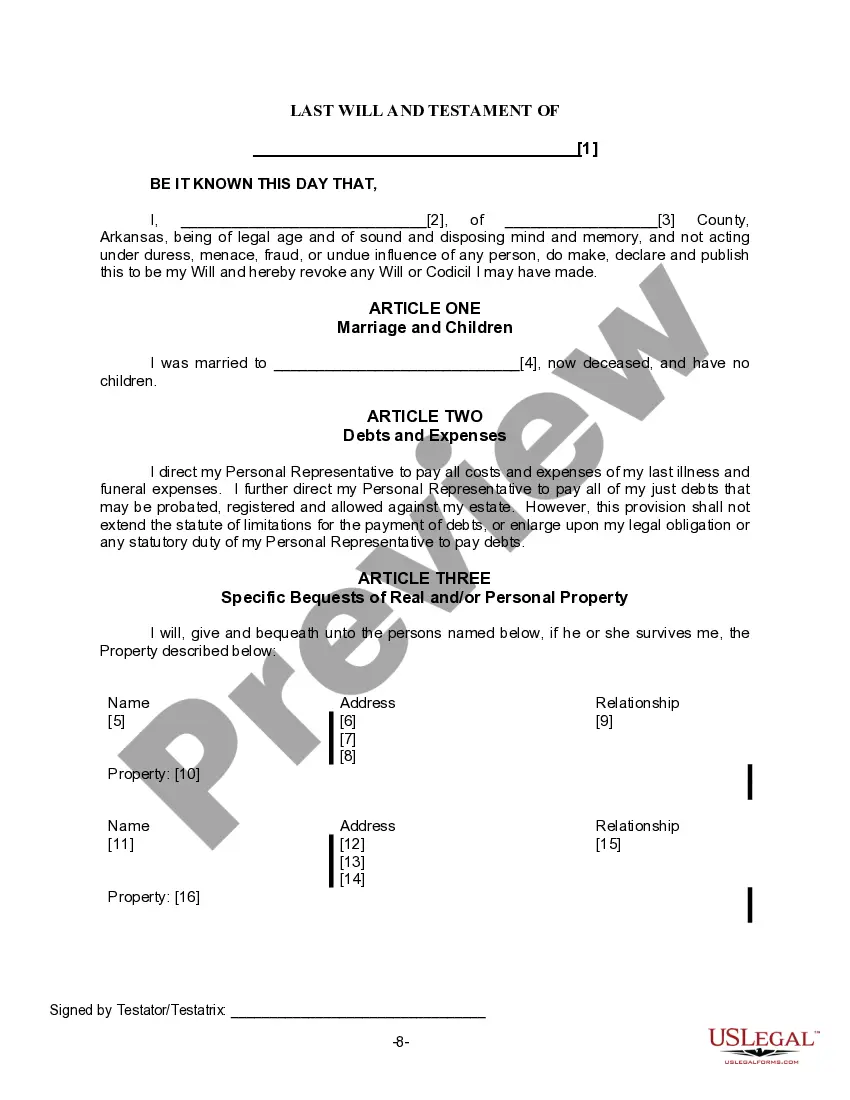
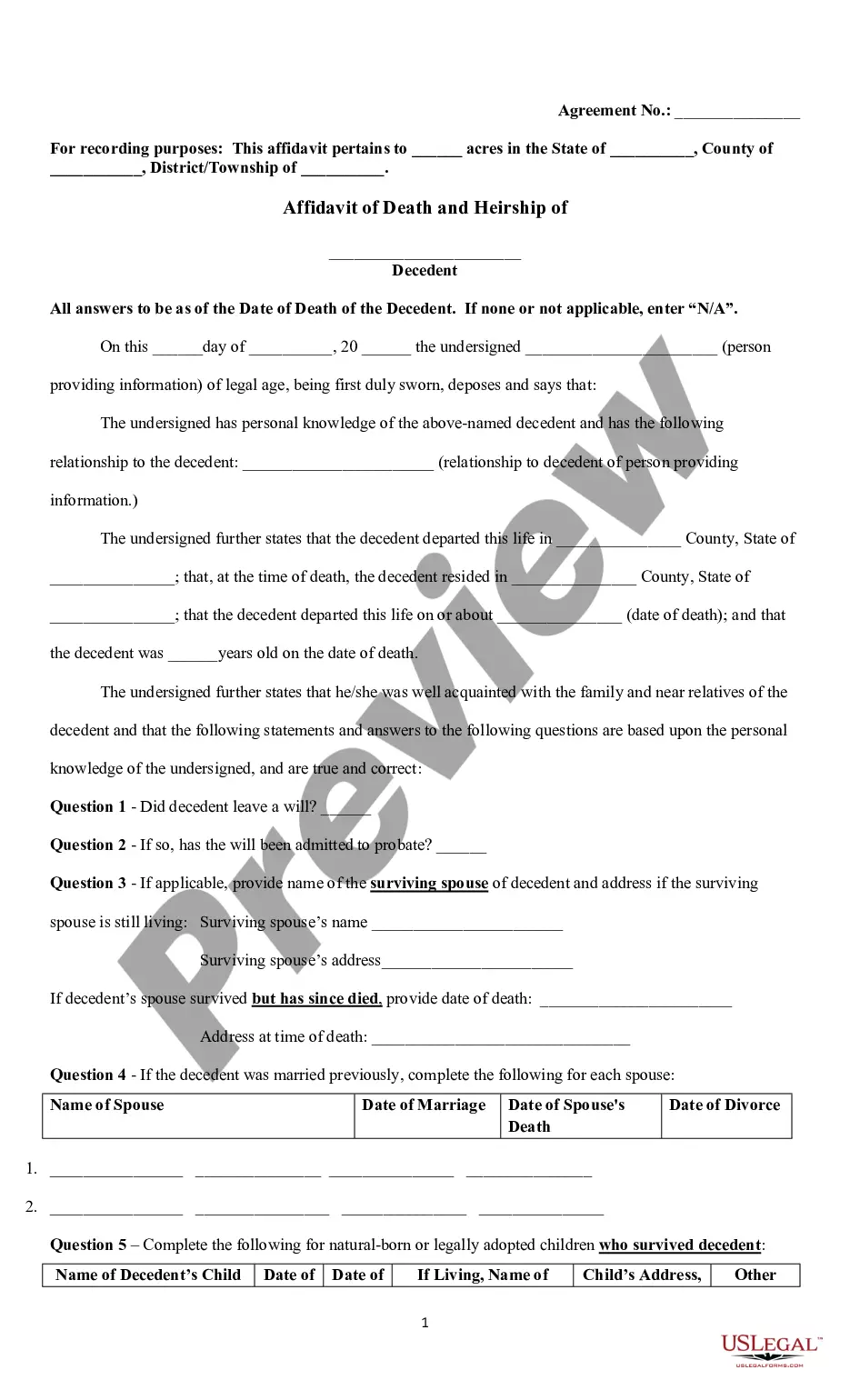
This Last Will for a Widow or Widower with No Children is a legal document that allows an individual, who is a widow or widower without surviving children, to specify how their estate will be distributed after their death. This form enables the appointment of a personal representative or executor and outlines specific bequests, debts, and provisions for the individual's assets, differentiating it from other wills that may include provisions for children or additional family members.
Form components explained
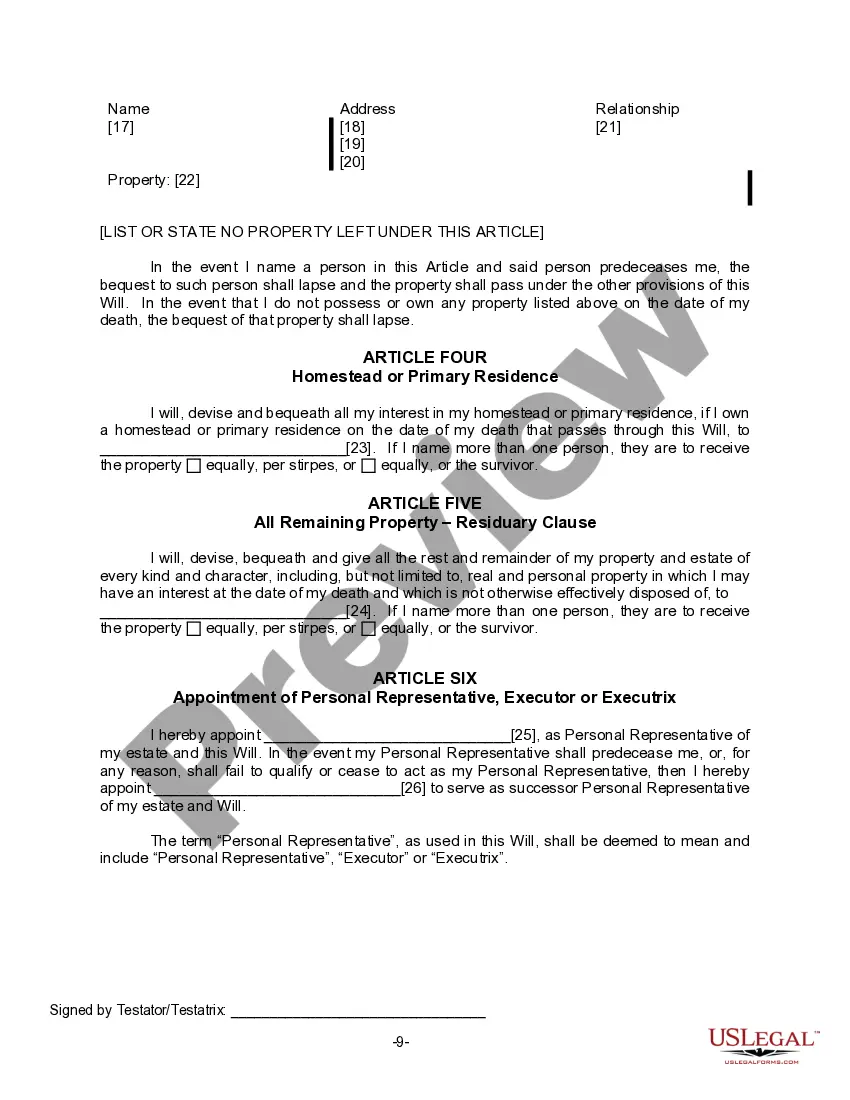
- Personal information: Names and addresses of the testator and beneficiaries.
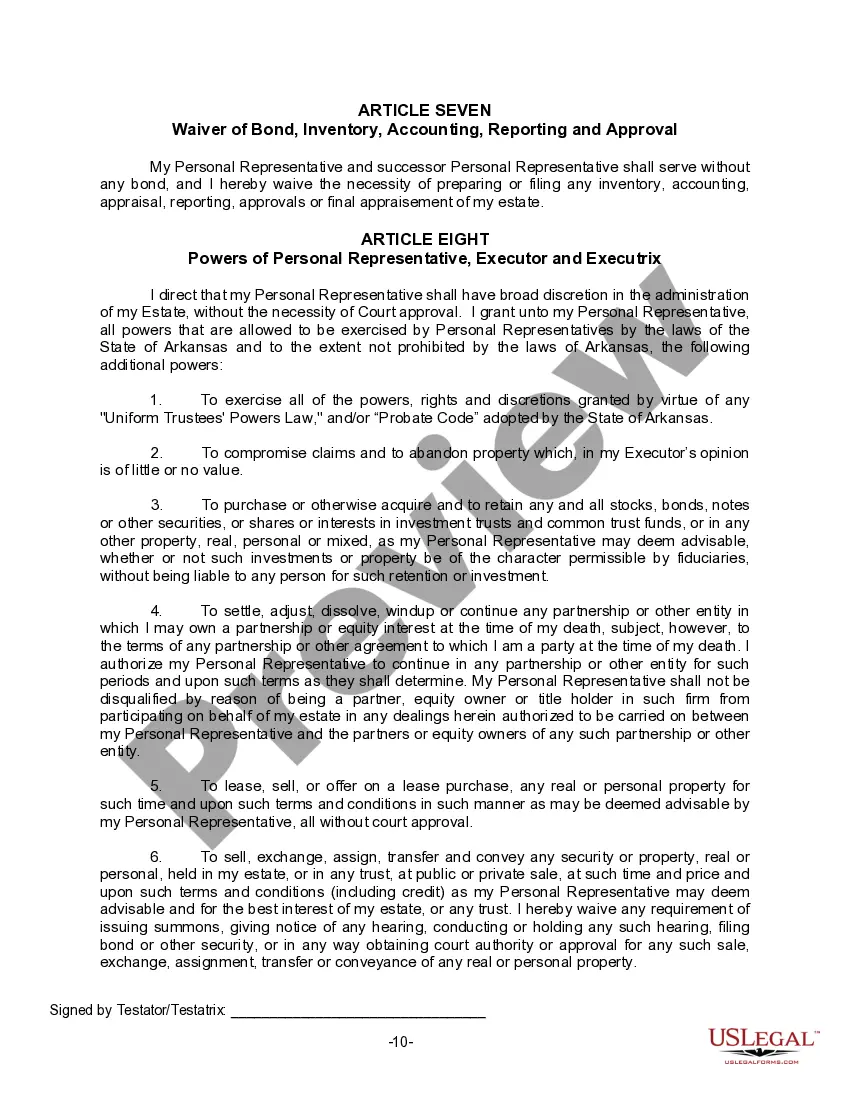
- Appointment of personal representative: Designation of an executor to manage the estate.
- Debts and expenses: Directions for settling debts and final expenses from the estate.
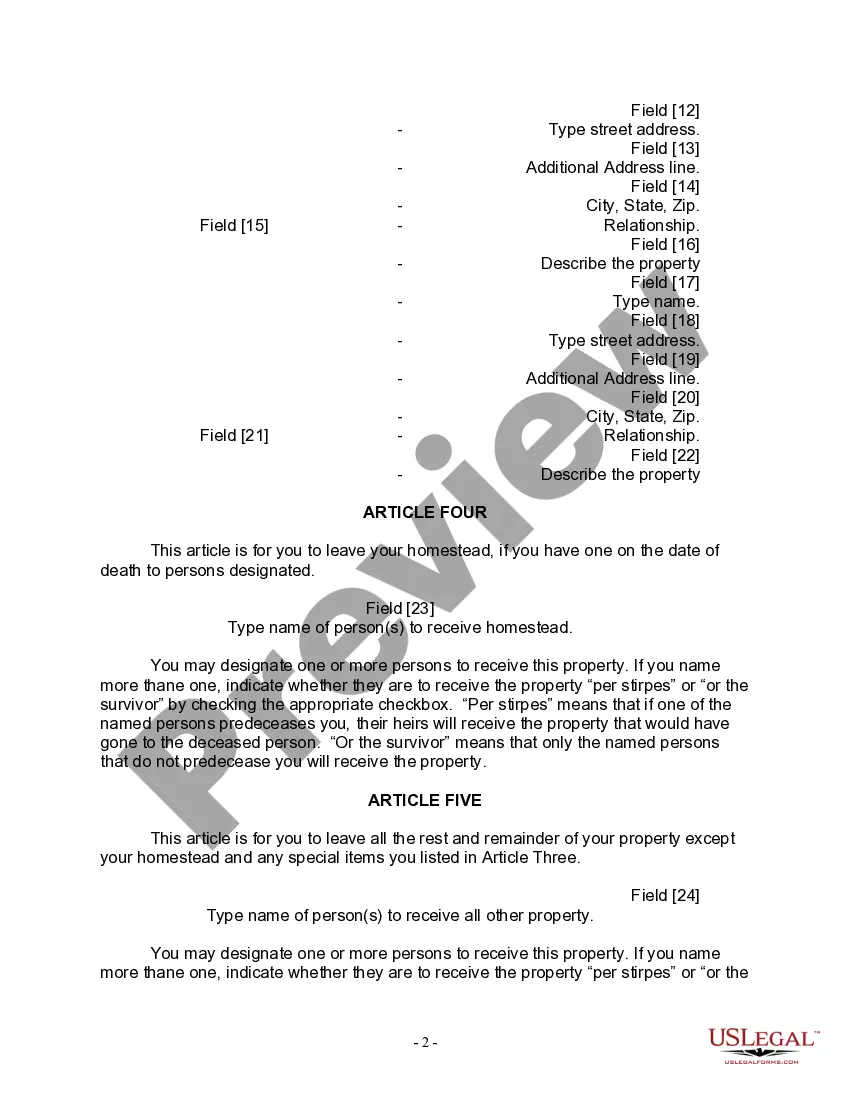
- Specific bequests: Instructions on specific gifts of property to named individuals.
- Residuary clause: Distribution of remaining estate assets not specifically bequeathed.



When to use this document
This form should be used when a widow or widower, who has no children, wishes to ensure their wishes are formally documented regarding the distribution of their estate. It is particularly useful in scenarios where the individual wants to clarify their intentions to prevent disputes among potential heirs after their passing.
Who can use this document
- Individuals who are widowed and do not have any children.
- Those looking to establish a clear plan for their assets after death.
- Persons wanting to appoint someone to manage their estate in accordance with their wishes.
Steps to complete this form
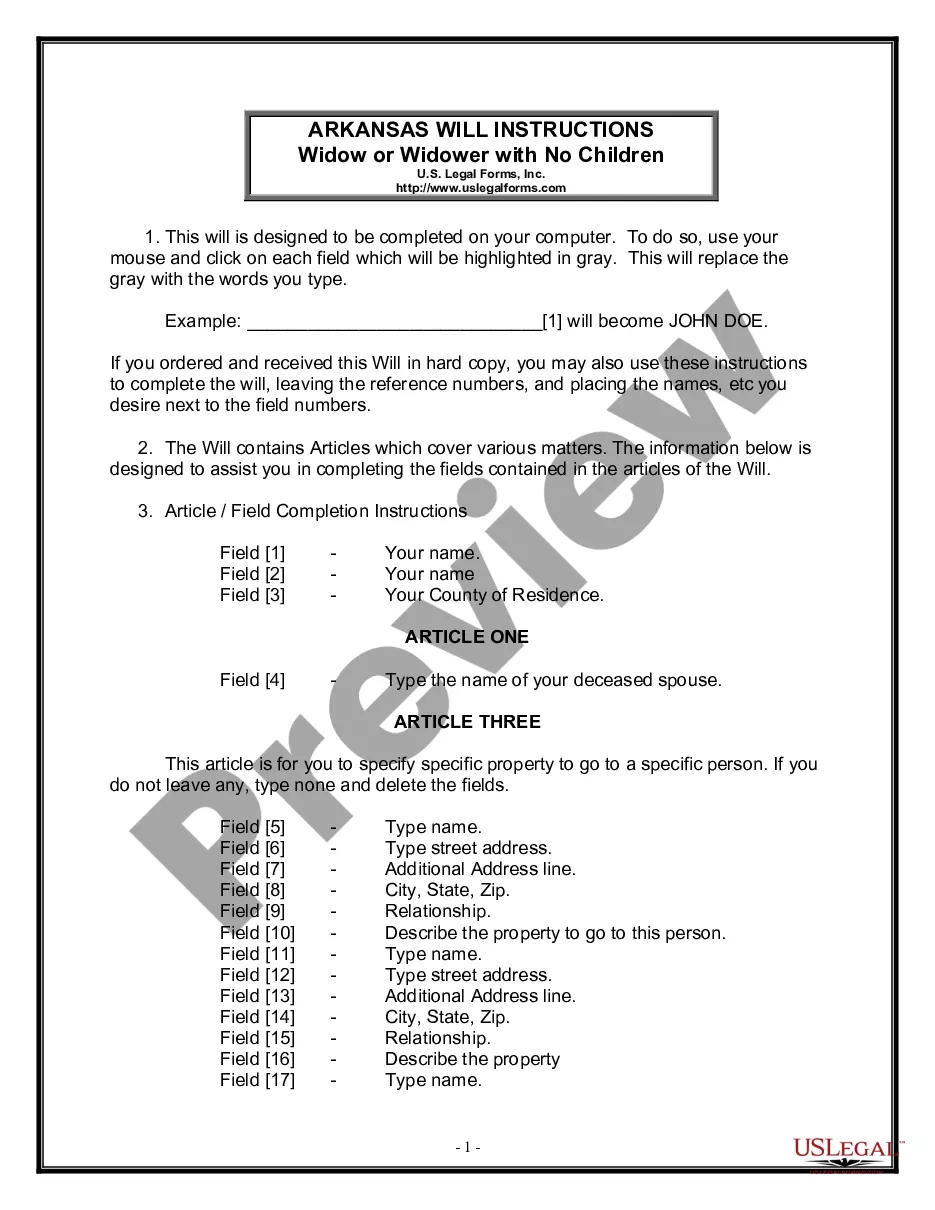
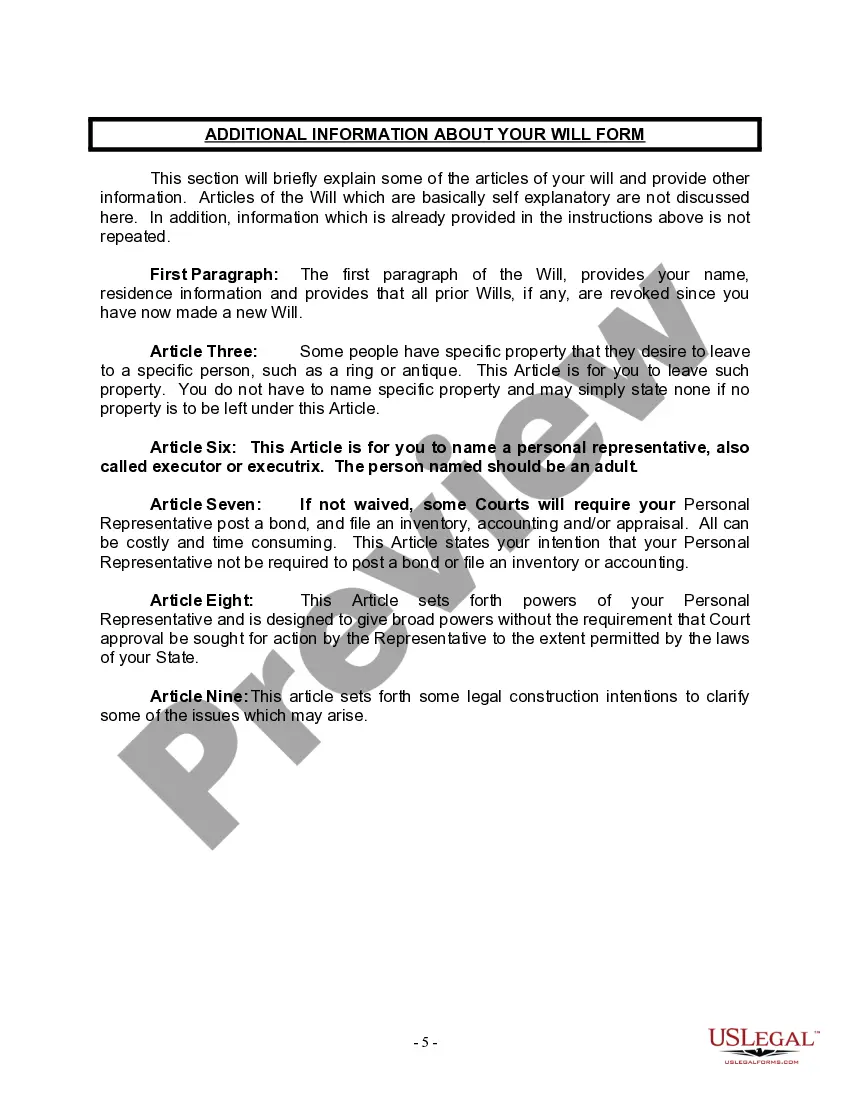
- Begin by filling in your personal information, including your name and county of residence.
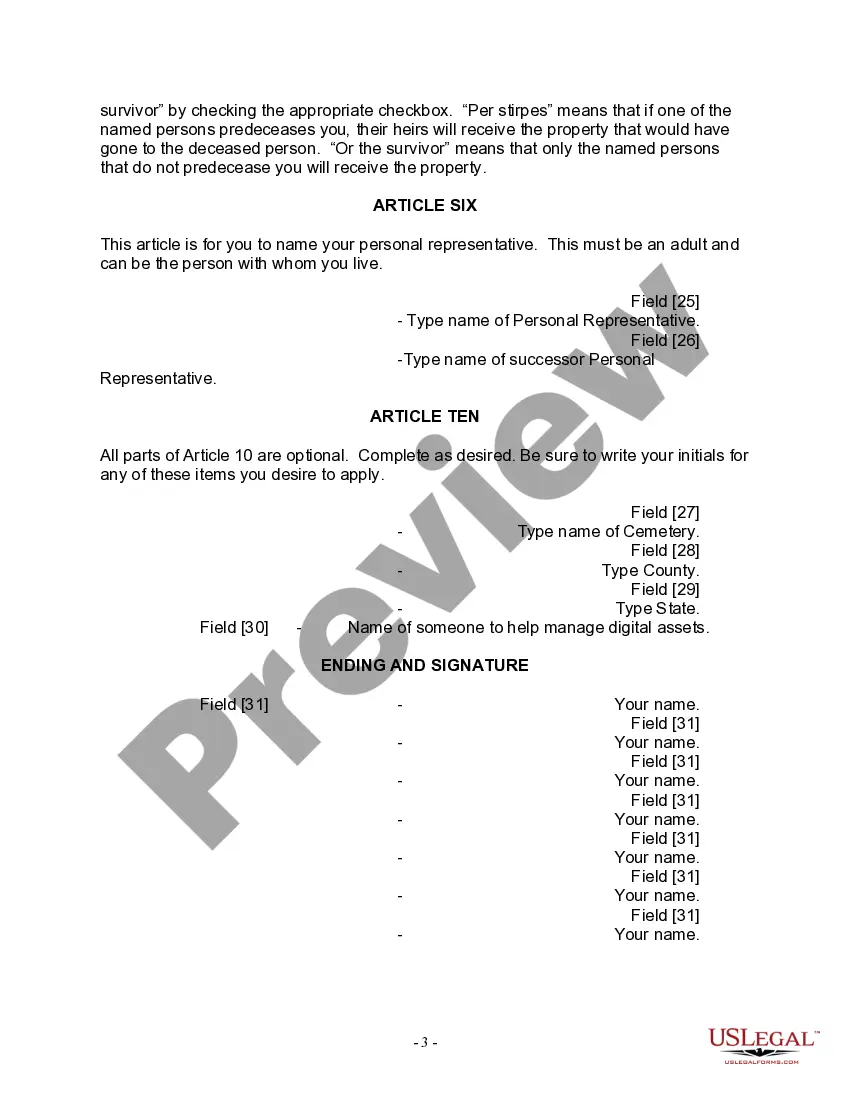
- Identify and appoint a personal representative who will manage your estate.
- List any specific bequests to individuals, including their names and the property being bequeathed.
- Include instructions for debt payment and handling funeral expenses from the estate.
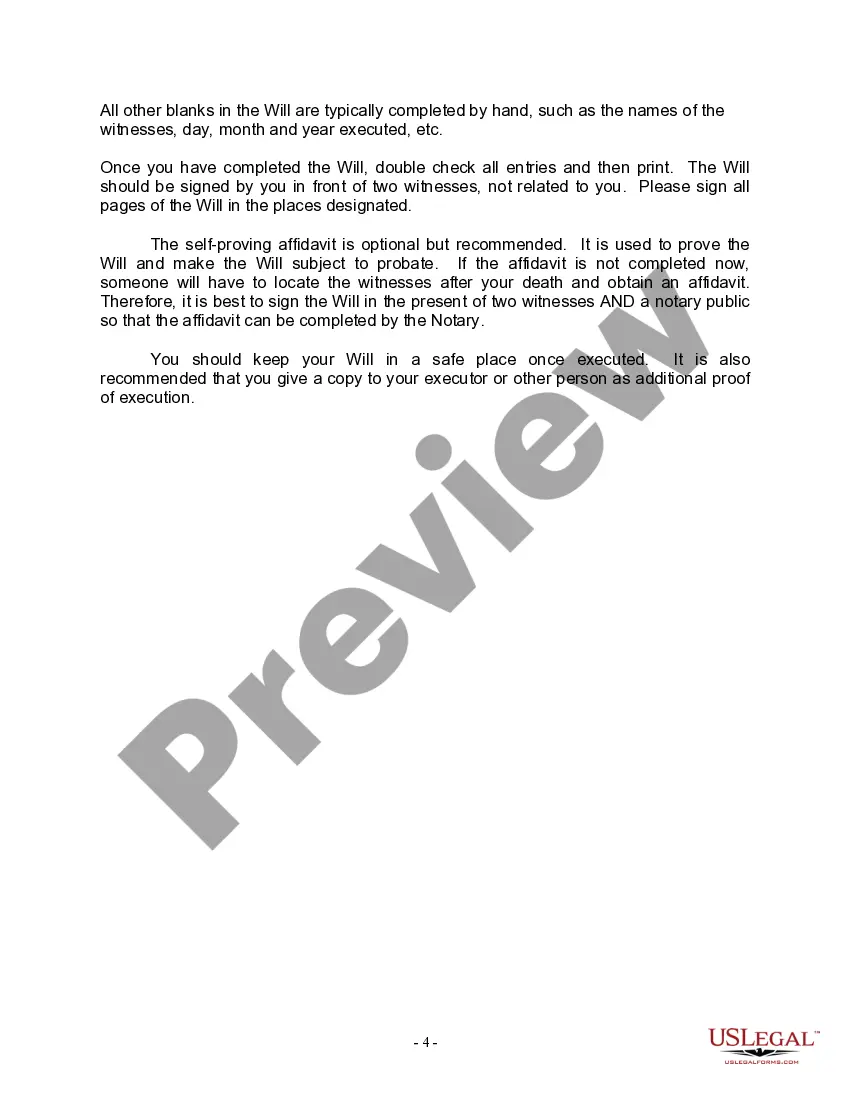
- Ensure you sign the form in the presence of two witnesses and a notary, if required by your state laws.
Notarization requirements for this form
Yes, this form must be notarized to be legally valid in Arkansas. It requires the presence of a notary public to ensure the proper execution of the will, providing an additional layer of verification for your testamentary intent.
Get your form ready online
Our built-in tools help you complete, sign, share, and store your documents in one place.
Make edits, fill in missing information, and update formatting in US Legal Forms—just like you would in MS Word.
Download a copy, print it, send it by email, or mail it via USPS—whatever works best for your next step.
Sign and collect signatures with our SignNow integration. Send to multiple recipients, set reminders, and more. Go Premium to unlock E-Sign.
If this form requires notarization, complete it online through a secure video call—no need to meet a notary in person or wait for an appointment.
We protect your documents and personal data by following strict security and privacy standards.

Make edits, fill in missing information, and update formatting in US Legal Forms—just like you would in MS Word.

Download a copy, print it, send it by email, or mail it via USPS—whatever works best for your next step.

Sign and collect signatures with our SignNow integration. Send to multiple recipients, set reminders, and more. Go Premium to unlock E-Sign.

If this form requires notarization, complete it online through a secure video call—no need to meet a notary in person or wait for an appointment.

We protect your documents and personal data by following strict security and privacy standards.
Typical mistakes to avoid
- Failing to have the will signed in front of the required witnesses.
- Not clearly identifying assets or beneficiaries.
- Neglecting to review and update the will after significant changes in life circumstances.
Benefits of completing this form online
- Convenience of downloading and completing the form at your own pace.
- Editable format allows you to easily make changes as needed.
- Simplicity of access to guidance and instructions throughout the process.
Key takeaways
- This form provides a straightforward way to draft a will for widows and widowers without children.
- It includes essential provisions for distributing assets and appointing a personal representative.
- Proper execution with witnesses and notarization is crucial for legal compliance.
Looking for another form?

Form popularity
FAQ
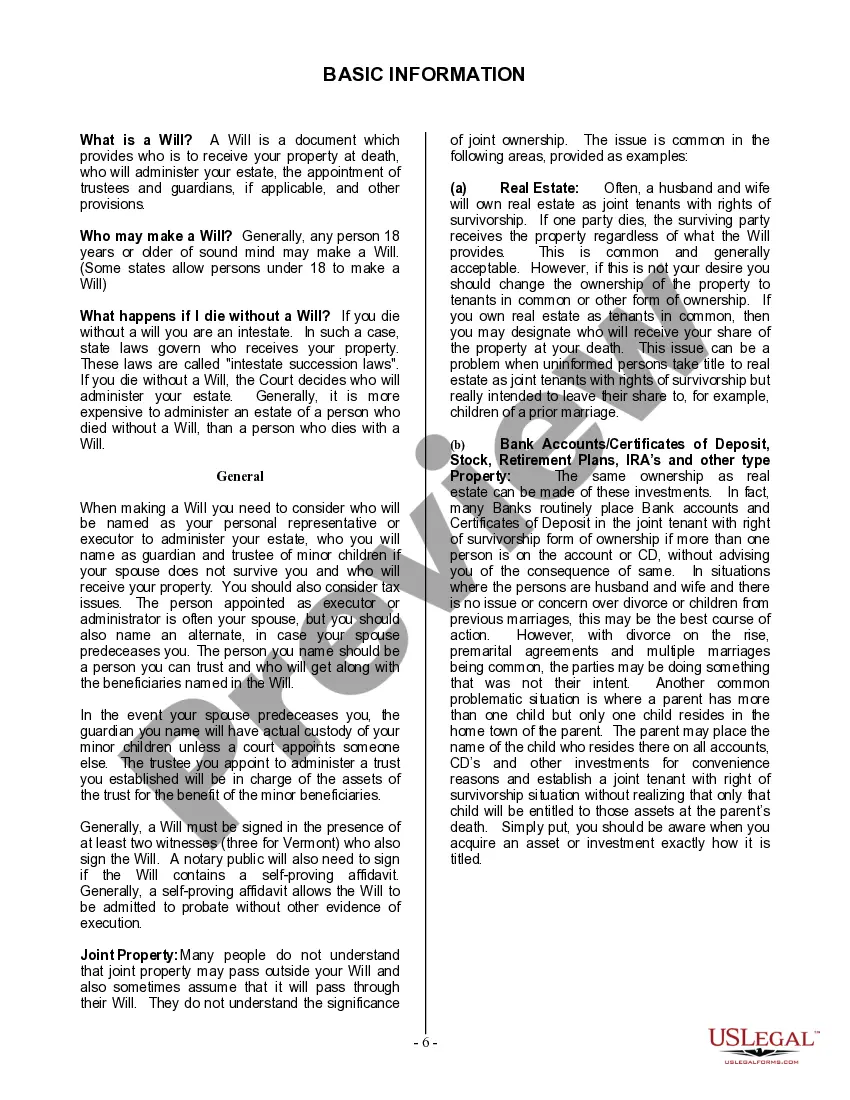
Transferring property after a parent dies without a will in Arkansas typically involves going through probate court. The court will follow state laws to determine how the property is divided among heirs. If you want to avoid complications, consider preparing an Arkansas Last Will for a Widow or Widower with no Children to clarify your wishes.
When a person dies without a will in Arkansas, their estate is distributed according to state intestacy laws. This means that their assets will be divided among relatives in a predefined order, which may not reflect their wishes. To have control over your estate, establish an Arkansas Last Will for a Widow or Widower with no Children.
Creating your own will in Arkansas is quite straightforward. You need to be at least 18 years old, mentally competent, and you can write it by hand or type it. To make an effective Arkansas Last Will for a Widow or Widower with no Children, be sure to clearly state your wishes and sign the document in front of two witnesses who are not beneficiaries.
If someone dies without a will in Arkansas, the state will determine how their estate is distributed. The laws of intestacy will direct inheritance to surviving relatives based on their relationship to the deceased. To ensure that your wishes are met, consider drafting an Arkansas Last Will for a Widow or Widower with no Children.
Yes, in Arkansas, power of attorney does end at the death of the principal. This means that any authority granted to an agent ceases when the person who created the power of attorney passes away. For creating an Arkansas Last Will for a Widow or Widower with no Children, it is essential to designate a personal representative to handle your estate after death.
The cheapest way to create a legal will is often through online services that offer templates and guided assistance. These platforms can help you draft your Arkansas Last Will for a Widow or Widower with no Children at an affordable rate. While budget-friendly options exist, it's crucial to ensure that the service complies with Arkansas legal requirements for wills.
No, wills do not have to be notarized in Arkansas to be legally valid. However, having a will notarized can provide extra security and simplify the probate process later. When drafting your Arkansas Last Will for a Widow or Widower with no Children, you might want to explore notarization for added peace of mind.
Yes, a hand-written will, also known as a holographic will, is legal in Arkansas as long as it meets specific criteria. This type of will does not require witnesses if it is signed and dated by the testator. However, to ensure your Arkansas Last Will for a Widow or Widower with no Children stands in court, consider using a standard format or professional help.
Yes, a widow can be left out of a will in Arkansas, depending on the testator's intentions expressed in the will. However, if you have concerns about your rights, it's vital to consult with a legal expert to understand the implications. Knowing how Arkansas laws apply to an Arkansas Last Will for a Widow or Widower with no Children can help you navigate this situation effectively.
Yes, you can write your own will in Arkansas. However, it's essential to follow the state's legal requirements to ensure your Arkansas Last Will for a Widow or Widower with no Children is valid. Consider using a template or guidance from legal resources to help outline your wishes clearly. A well-structured will can prevent confusion for your loved ones.