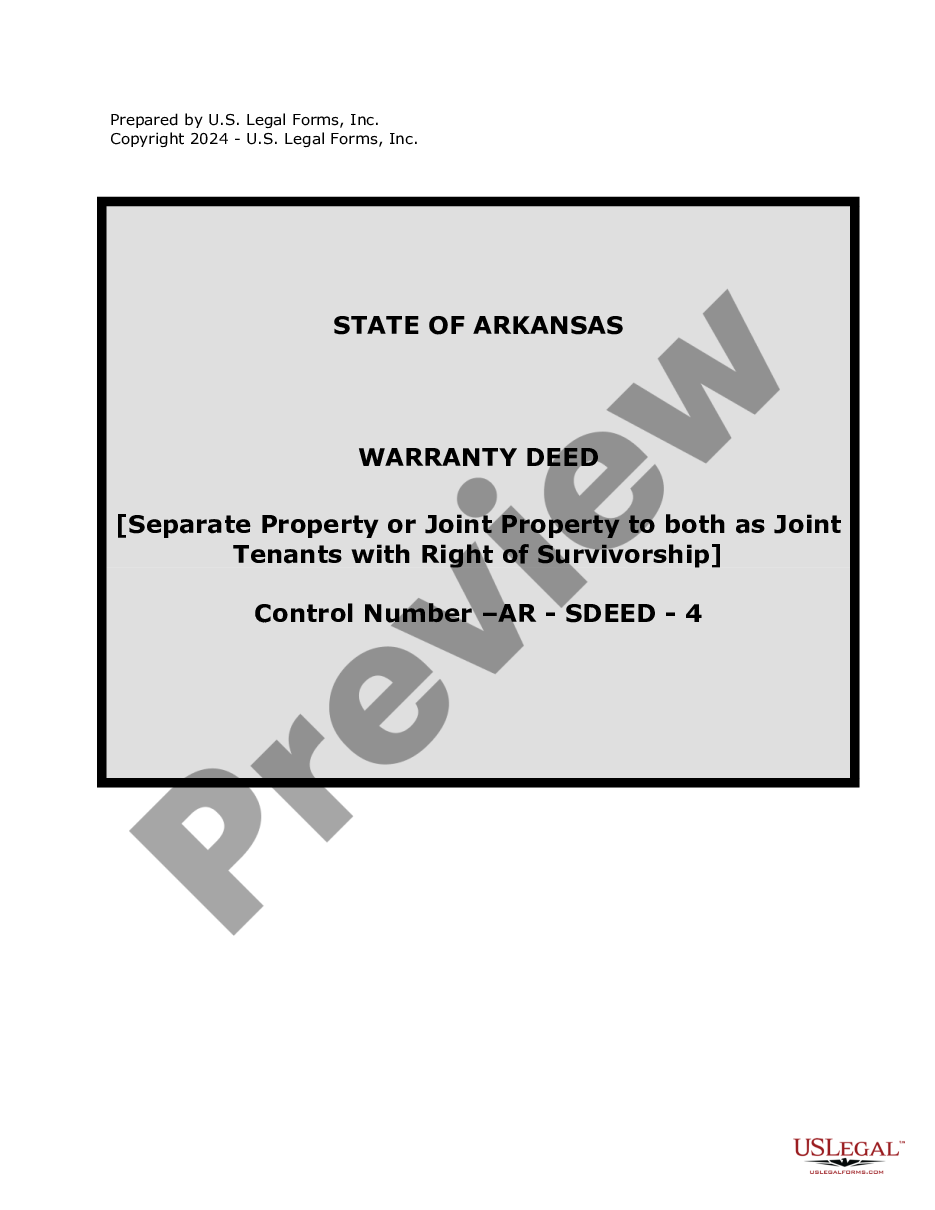
Arkansas Warranty Deed for Separate or Joint Property to Joint Tenancy
What is this form?
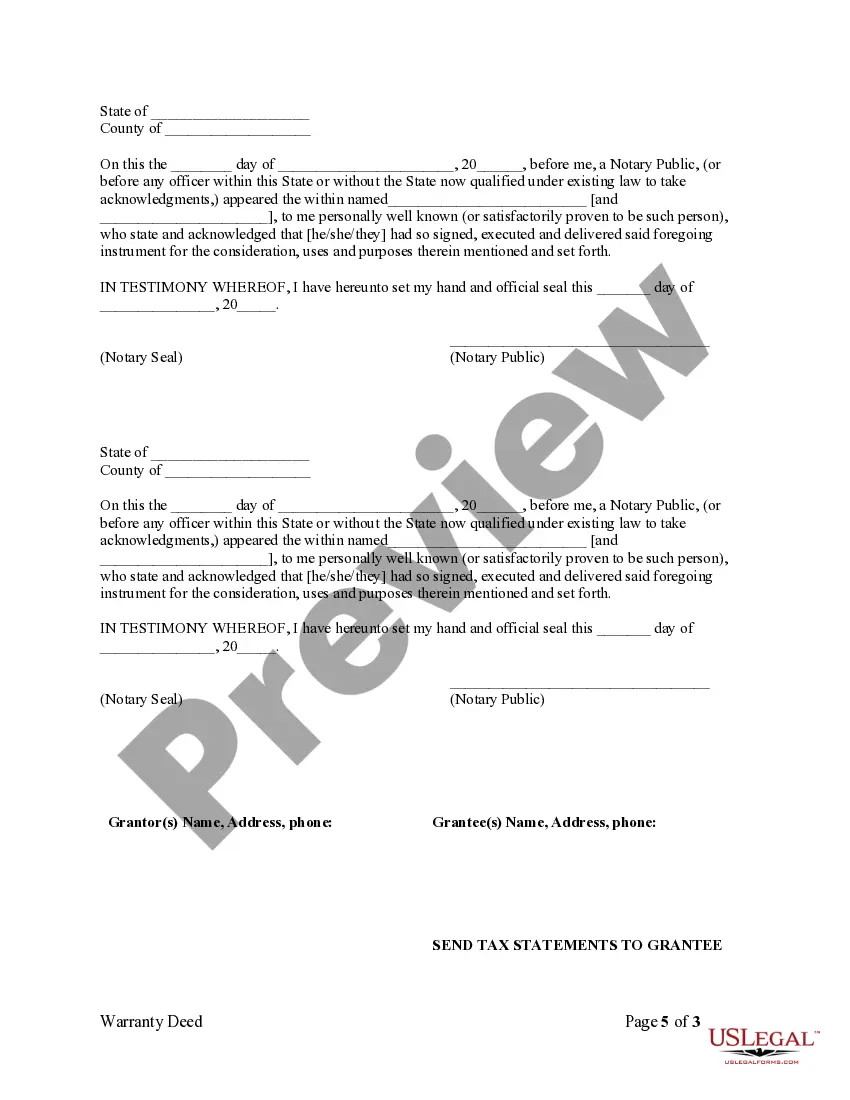
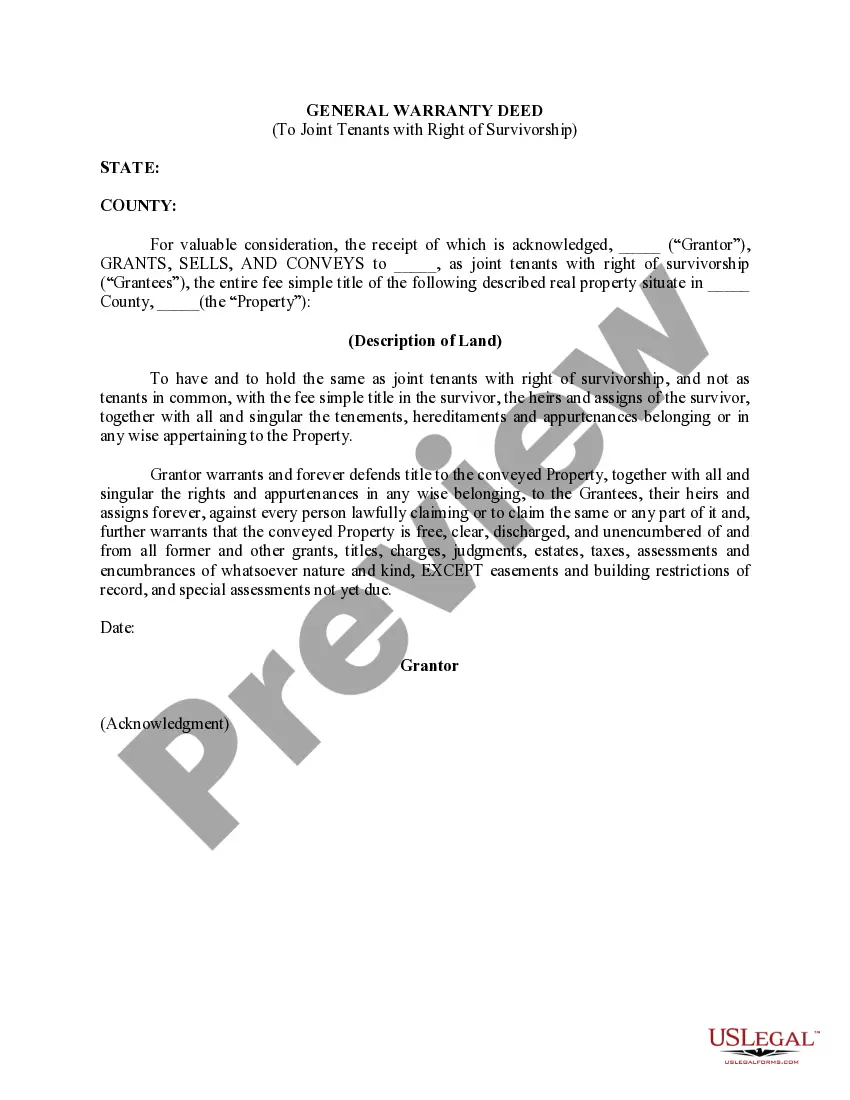
The Warranty Deed for Separate or Joint Property to Joint Tenancy is a legal document used to transfer ownership of property to joint tenants. This form specifically converts separate or joint property into a joint tenancy holding, which allows for rights of survivorship. Unlike other deeds, this form emphasizes the survivorship aspect, ensuring that in the event of one owner's death, the surviving owner automatically gains full ownership of the property without the need for probate.
What’s included in this form
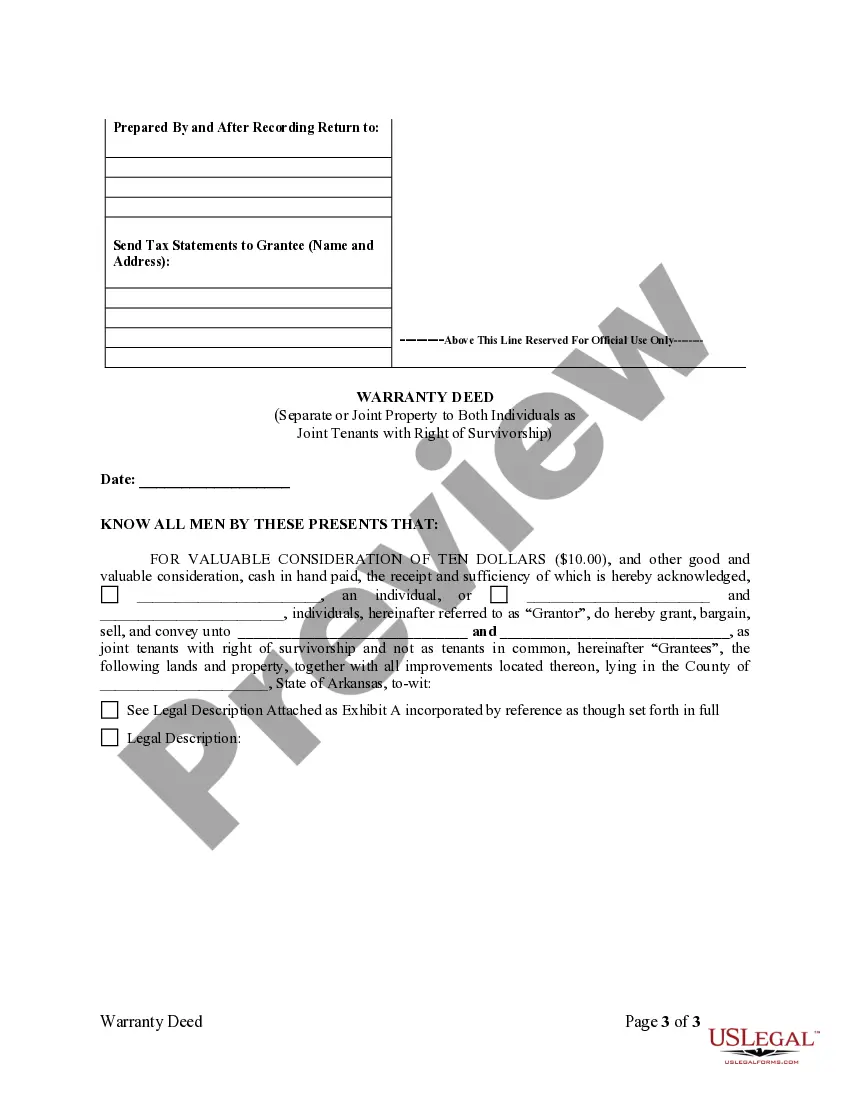
- Identification of the grantor(s) and grantee(s).
- Description of the property being transferred.
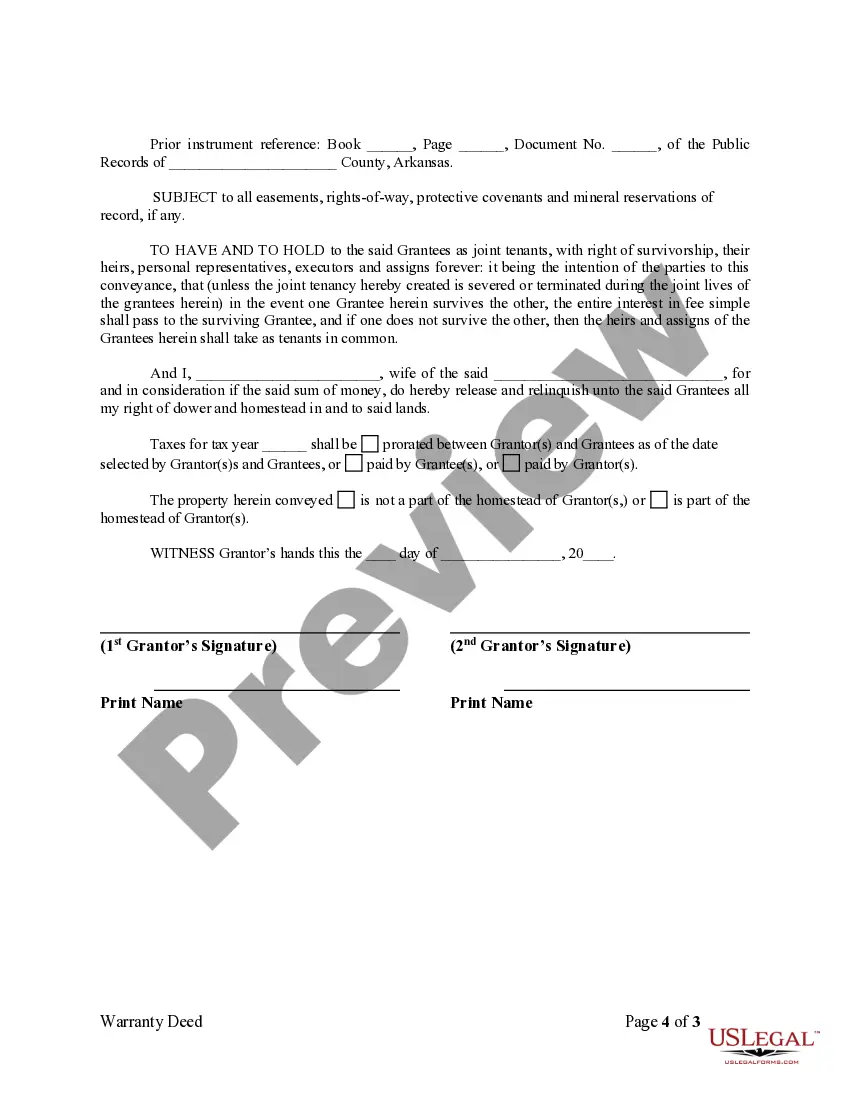
- Statement of intent to establish joint tenancy with right of survivorship.
- Signature lines for the grantor(s) and witnesses.
- Inclusion of any tax proration agreements between parties.



Common use cases
This form should be used when two or more individuals want to own a property together as joint tenants. It is ideal for couples, family members, or business partners who wish to ensure that their interest in the property automatically transfers to the surviving owner(s) upon their death, eliminating potential probate complications.
Intended users of this form
This form is suitable for:
- Married couples wishing to hold property together.
- Partners in a business who want joint ownership.
- Family members looking to share property ownership.
Instructions for completing this form
- Identify the grantor(s) and grantee(s) by entering their full legal names.
- Provide a detailed legal description of the property being transferred.
- Specify the intent for joint tenancy with right of survivorship.
- Enter the date and ensure all signatures from the grantor(s) and witnesses are included.
- Fill out any necessary sections regarding property taxes and homestead status.
Notarization guidance
This form needs to be notarized to ensure legal validity. US Legal Forms provides secure online notarization powered by Notarize, allowing you to complete the process through a verified video call, available anytime.
Get your form ready online
Our built-in tools help you complete, sign, share, and store your documents in one place.
Make edits, fill in missing information, and update formatting in US Legal Forms—just like you would in MS Word.
Download a copy, print it, send it by email, or mail it via USPS—whatever works best for your next step.
Sign and collect signatures with our SignNow integration. Send to multiple recipients, set reminders, and more. Go Premium to unlock E-Sign.
If this form requires notarization, complete it online through a secure video call—no need to meet a notary in person or wait for an appointment.
We protect your documents and personal data by following strict security and privacy standards.

Make edits, fill in missing information, and update formatting in US Legal Forms—just like you would in MS Word.

Download a copy, print it, send it by email, or mail it via USPS—whatever works best for your next step.

Sign and collect signatures with our SignNow integration. Send to multiple recipients, set reminders, and more. Go Premium to unlock E-Sign.

If this form requires notarization, complete it online through a secure video call—no need to meet a notary in person or wait for an appointment.

We protect your documents and personal data by following strict security and privacy standards.
Typical mistakes to avoid
- Failing to include all required signatures from grantors and witnesses.
- Not providing a complete legal description of the property.
- Overlooking the joint tenancy language, which may lead to unintended ownership arrangements.
- Not properly addressing tax implications concerning the property.
Advantages of online completion
- Convenience of completing the form from home or anywhere with internet access.
- Editability allows users to input their information easily and accurately.
- Reliable templates drafted by licensed attorneys to ensure legal compliance.
Looking for another form?
Form popularity
FAQ
For a warranty deed to be valid in Arkansas, it must include specific elements: the names of the grantor and grantee, a legal description of the property, and the signatures of both parties. Additionally, the deed should be notarized and filed with the county clerk's office. Using an Arkansas Warranty Deed for Separate or Joint Property to Joint Tenancy ensures that you meet all necessary legal requirements for a secure property transfer.
While Arkansas recognizes joint tenancy, it is not classified as a joint and several state in terms of liability. Instead, Arkansas has its own unique set of laws and principles governing the ownership and liability interests of co-owners in a property. Understanding these concepts is crucial when drafting an Arkansas Warranty Deed for Separate or Joint Property to Joint Tenancy.
Joint tenants share equal ownership with rights of survivorship; if one passes away, their interest goes to the surviving tenant. Tenants in common, however, can own unequal shares and there is no right of survivorship, meaning a deceased owner's interest can be passed to their heirs. When creating an Arkansas Warranty Deed for Separate or Joint Property to Joint Tenancy, it is important to specify the desired form of ownership.
The right of survivorship in Arkansas enables joint tenants to automatically inherit a deceased owner's share of the property. This legal feature simplifies the transfer process and avoids the need for probate. By using an Arkansas Warranty Deed for Separate or Joint Property to Joint Tenancy, you can establish this right and ensure a smoother transition for your loved ones.
A warranty deed guarantees that the seller has clear title to the property and offers protection against claims. In contrast, a quitclaim deed transfers whatever interest the seller has without any guarantees. For securing joint tenancy rights, an Arkansas Warranty Deed for Separate or Joint Property to Joint Tenancy is often the preferred choice due to its assurances.
Transferring a property title to a family member in Arkansas can be done using a warranty deed. This legal document outlines the transfer from the current owner to the family member, ensuring clear ownership rights. Using an Arkansas Warranty Deed for Separate or Joint Property to Joint Tenancy can clarify the ownership structure and may provide additional protections.
Arkansas does not have community property laws, so it is not classified as a joint property state. Instead, property acquired during marriage generally belongs to the individual who owns it. However, an Arkansas Warranty Deed for Separate or Joint Property to Joint Tenancy can be used to establish joint ownership, which may offer certain benefits for couples.
Yes, Arkansas recognizes joint tenancy as a valid form of property ownership. In this arrangement, two or more individuals hold equal interests in the property with rights of survivorship. This means that if one owner passes away, their share automatically transfers to the surviving owner(s). Understanding how joint tenancy works is crucial when preparing an Arkansas Warranty Deed for Separate or Joint Property to Joint Tenancy.
Yes, a quitclaim deed is legal in Arkansas and can be used to transfer property rights. However, it's important to note that it lacks the protections that a warranty deed offers. If you seek strong legal safeguards during your property transfer, consider using an Arkansas Warranty Deed for Separate or Joint Property to Joint Tenancy instead.
To transfer ownership of a property in Arkansas, you typically need to execute a deed that outlines the transfer. The most common methods include a warranty deed or a quitclaim deed, although a warranty deed is often preferred for security. Choosing an Arkansas Warranty Deed for Separate or Joint Property to Joint Tenancy ensures a smooth and legal transfer.