Arkansas Amendment to Prenuptial or Premarital Agreement
Overview of this form
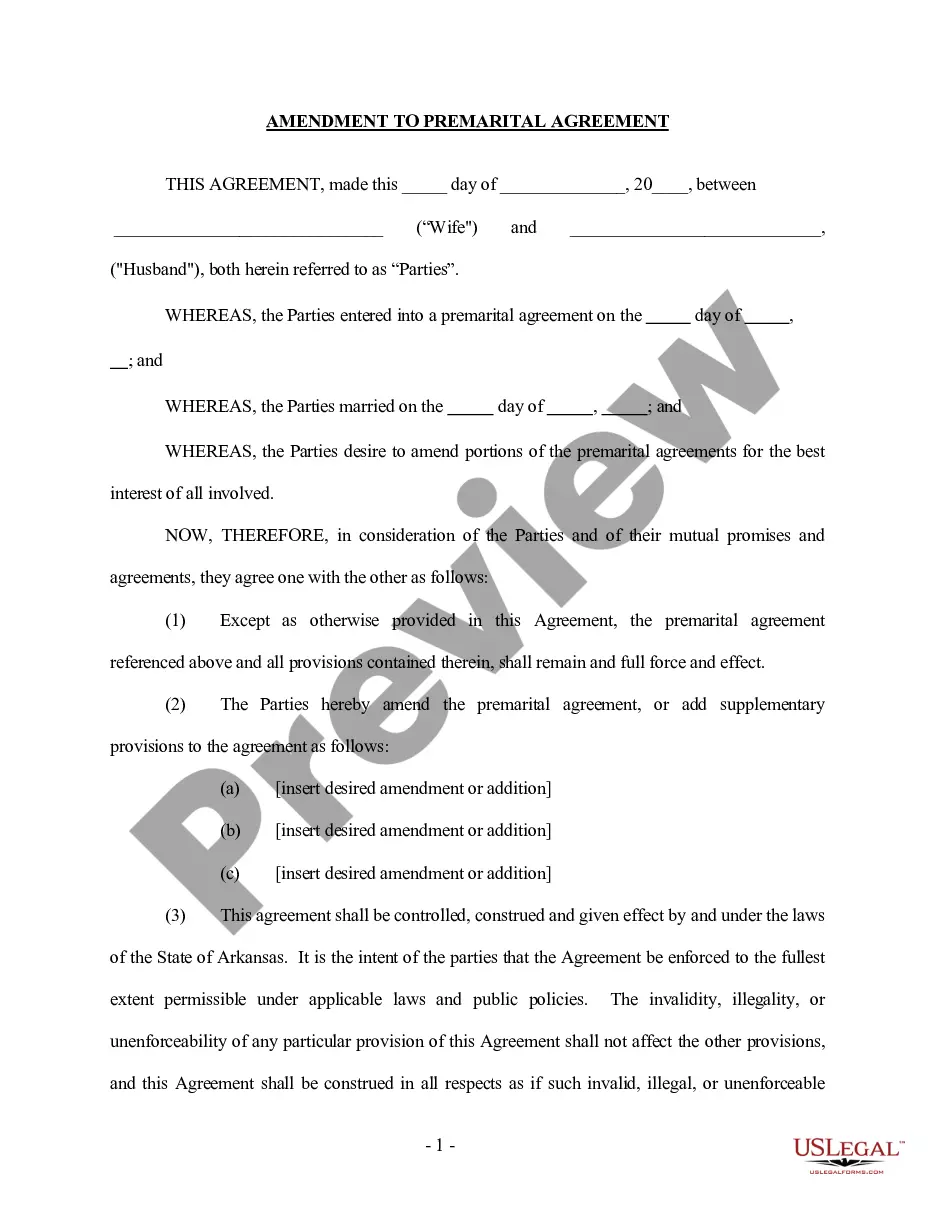
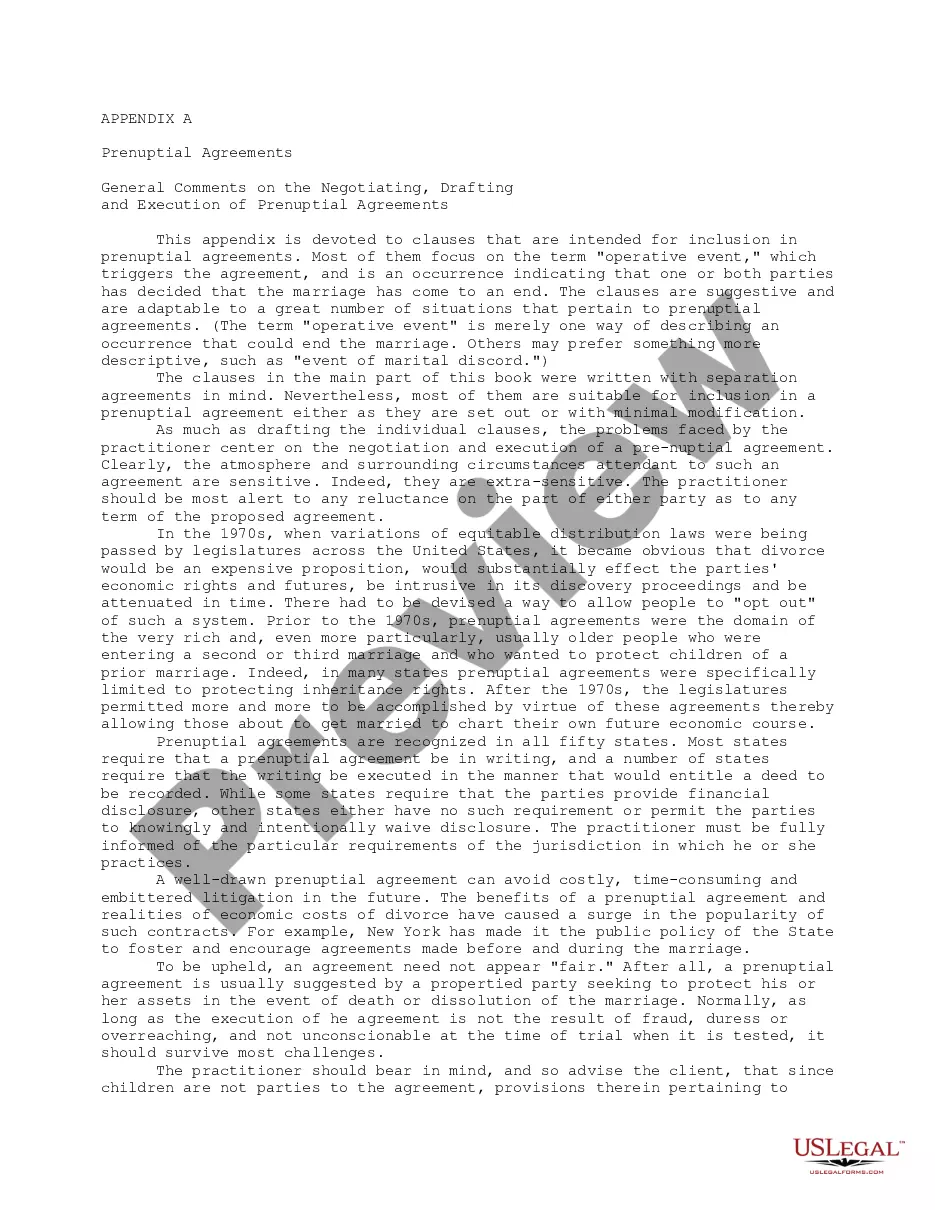
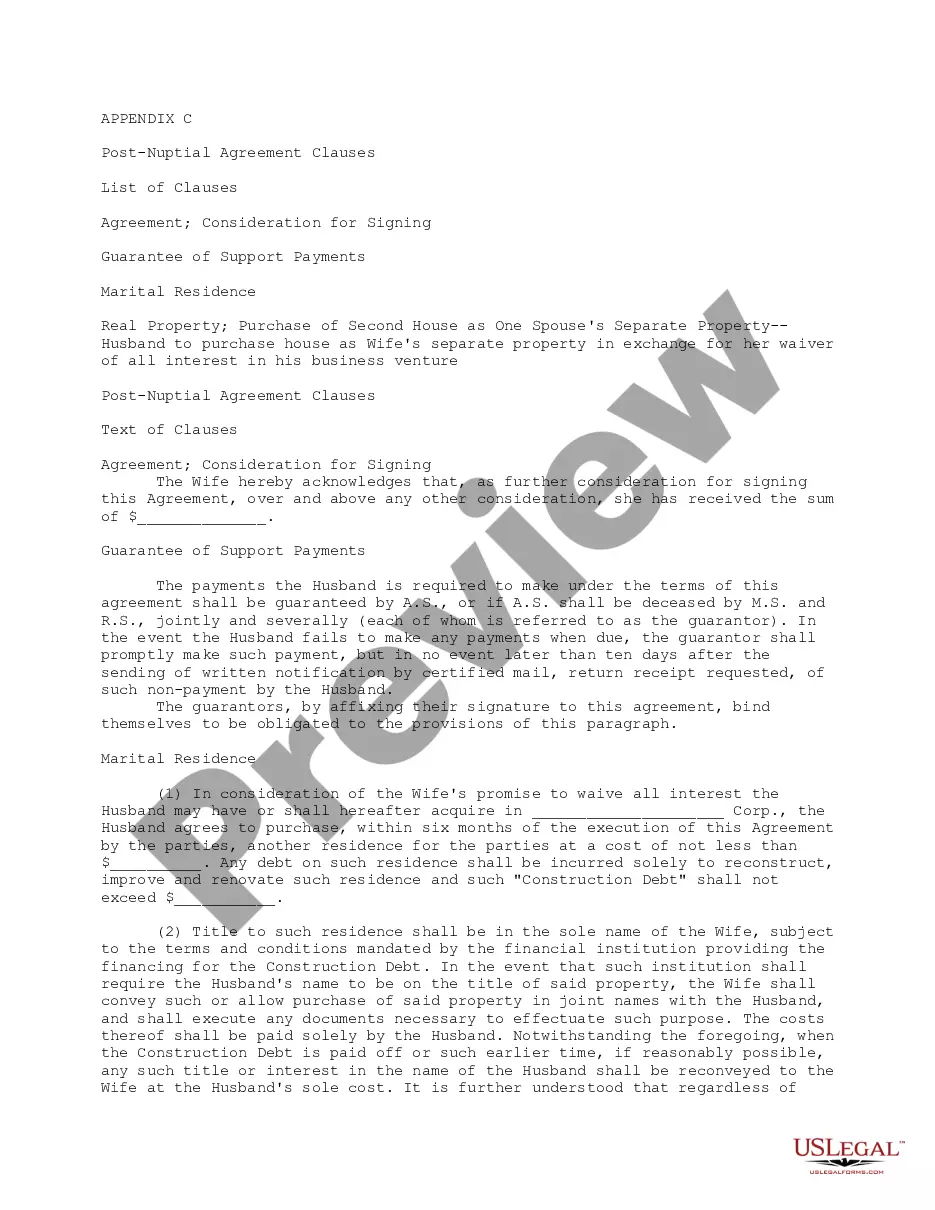
The Amendment to Prenuptial or Premarital Agreement is a legal document designed for couples in Arkansas wishing to modify an existing premarital agreement. This form allows parties to make amendments or additions to their original agreement while ensuring that both individuals consent and that the changes adhere to state laws. Unlike a new prenuptial agreement, this amendment maintains the integrity of the original document while addressing specific updates or alterations desired by the parties involved.
Key components of this form
- Identification of the parties involved (Wife and Husband).
- Provision for amending the existing premarital agreement.
- Legal jurisdiction specified (State of Arkansas).
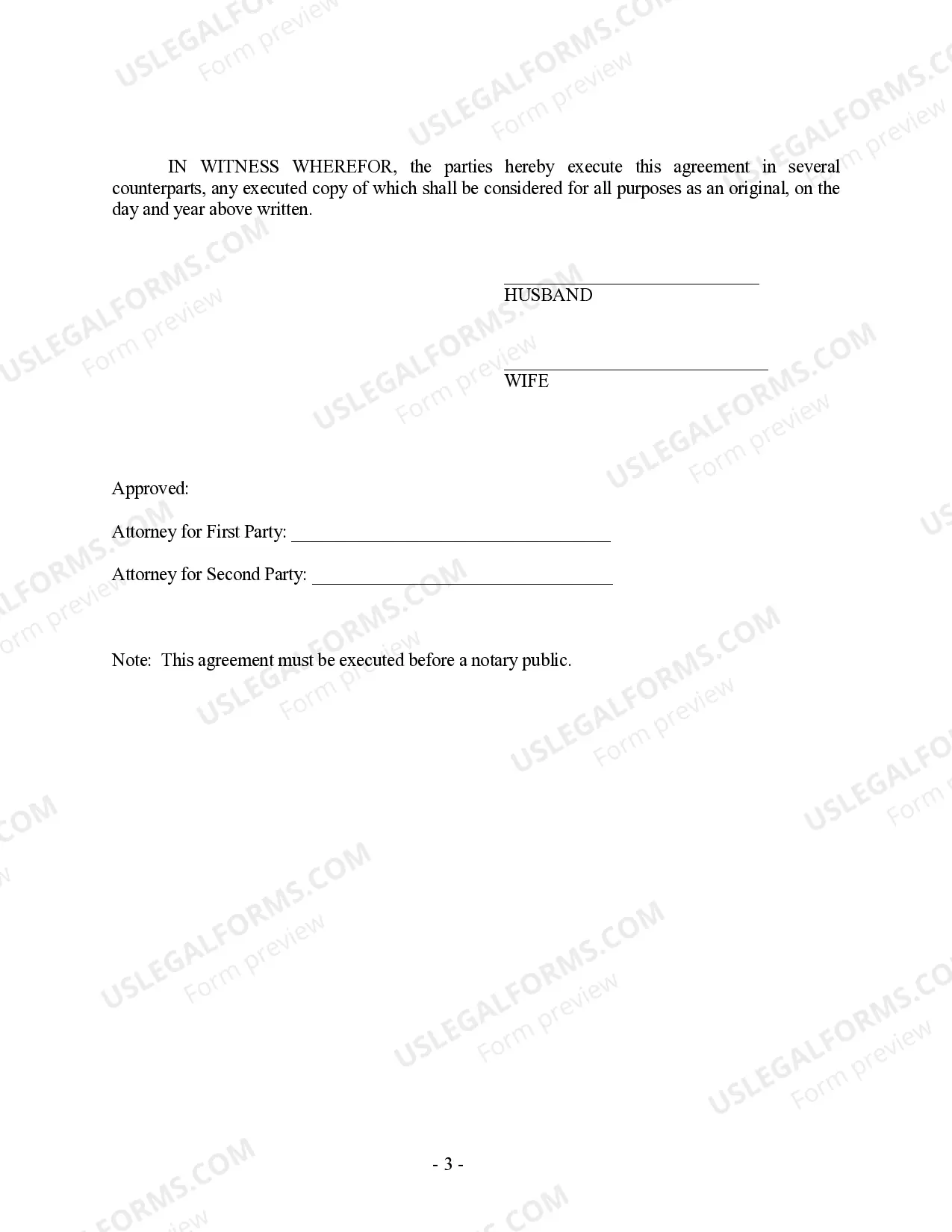
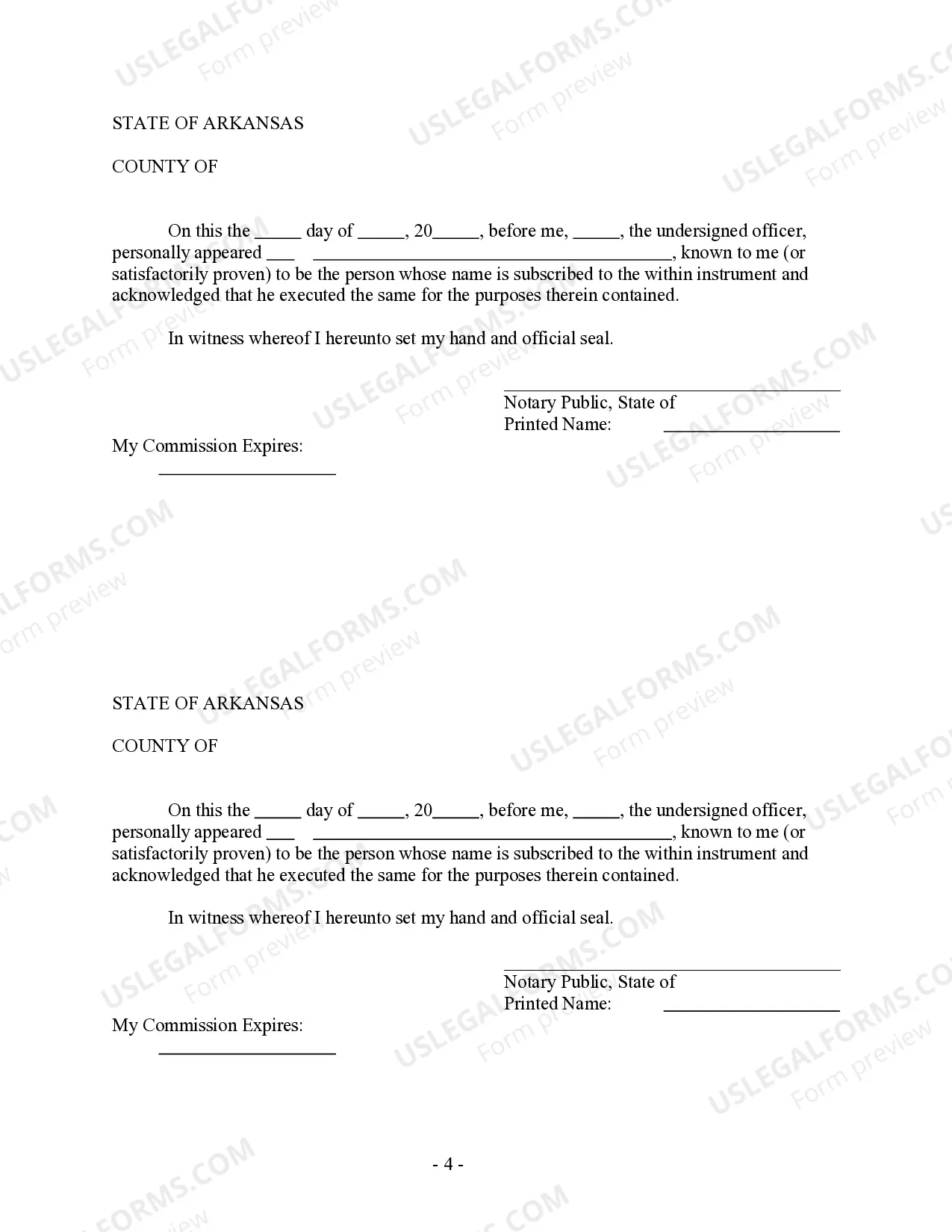
- Requirement for signatures in the presence of a notary public.
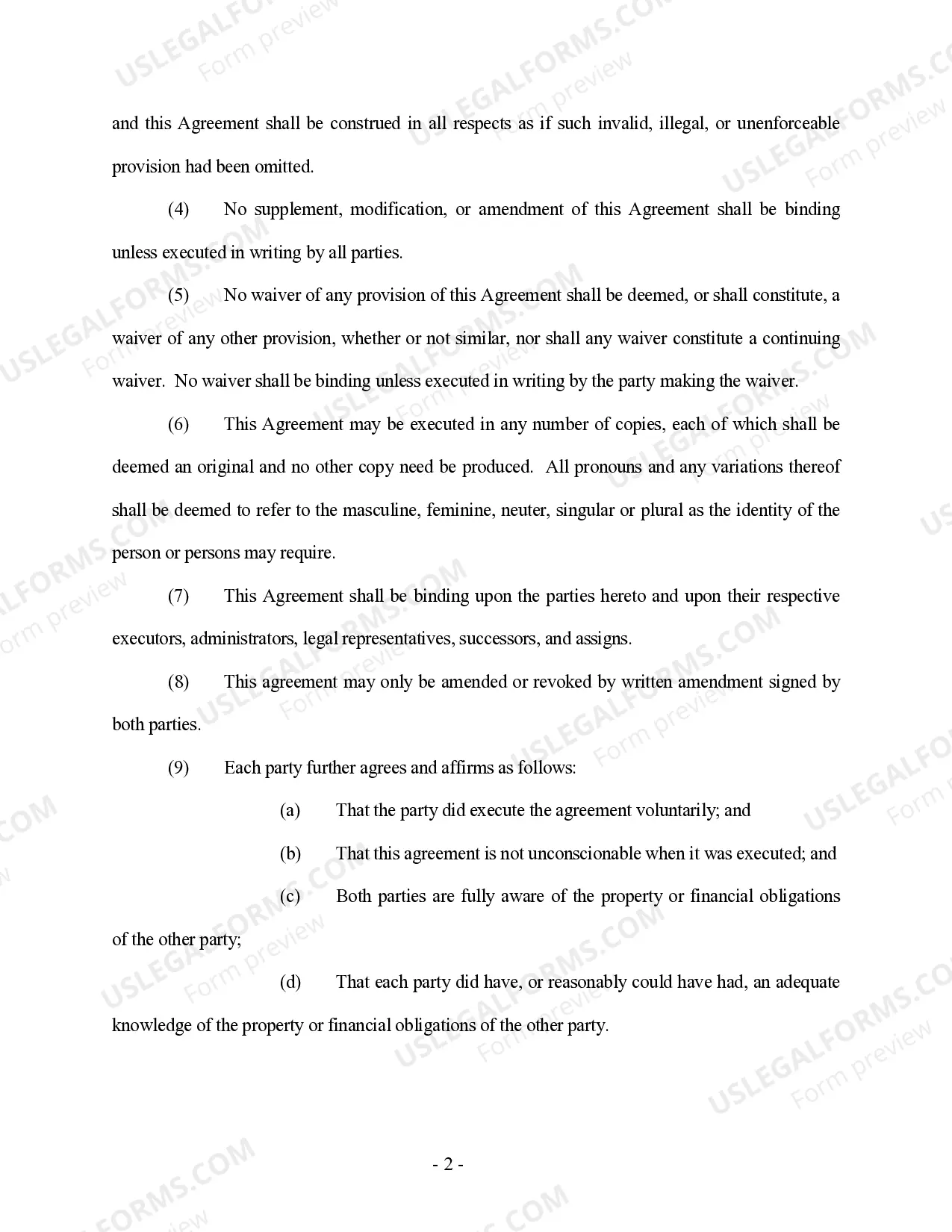
- Clauses addressing enforceability and waiver of provisions.
- Affirmations regarding voluntary execution and financial awareness of both parties.
When to use this form
This form should be used when couples decide to make significant changes to their existing premarital agreement. Situations might include changes in financial circumstances, the addition of provisions related to property, or adjustments due to personal decisions such as starting a family or changes in careers. Using this form helps to ensure that all modifications are documented and legally binding.
Who can use this document
- Couples in Arkansas with an existing premarital agreement.
- Individuals seeking to formally amend their agreement due to changes in their circumstances.
- Those who wish to make clear and binding modifications agreed upon by both parties.
Steps to complete this form
- Identify both parties' names and the date of the amendment.
- Clearly state the specific amendments or additions to be made to the original agreement.
- Include any necessary clauses related to enforceability and waiver.
- Both parties must sign the document in the presence of a notary public.
- Ensure all sections are filled out accurately to avoid legal issues in the future.
Does this form need to be notarized?
To make this form legally binding, it must be notarized. Our online notarization service, powered by Notarize, lets you verify and sign documents remotely through an encrypted video session.
Get your form ready online
Our built-in tools help you complete, sign, share, and store your documents in one place.
Make edits, fill in missing information, and update formatting in US Legal Forms—just like you would in MS Word.
Download a copy, print it, send it by email, or mail it via USPS—whatever works best for your next step.
Sign and collect signatures with our SignNow integration. Send to multiple recipients, set reminders, and more. Go Premium to unlock E-Sign.
If this form requires notarization, complete it online through a secure video call—no need to meet a notary in person or wait for an appointment.
We protect your documents and personal data by following strict security and privacy standards.

Make edits, fill in missing information, and update formatting in US Legal Forms—just like you would in MS Word.

Download a copy, print it, send it by email, or mail it via USPS—whatever works best for your next step.

Sign and collect signatures with our SignNow integration. Send to multiple recipients, set reminders, and more. Go Premium to unlock E-Sign.

If this form requires notarization, complete it online through a secure video call—no need to meet a notary in person or wait for an appointment.

We protect your documents and personal data by following strict security and privacy standards.
Common mistakes to avoid
- Failing to have the amendment signed in the presence of a notary public.
- Not specifying the changes clearly, leading to potential misunderstandings.
- Using the form without properly reviewing the original premarital agreement.
- Neglecting to keep copies of all amendments for personal records.
Why use this form online
- Convenience of downloading and completing the form from home.
- Editability allows for easy adjustments before finalizing the document.
- Access to legally drafted templates ensures reliability and compliance with Arkansas law.
Looking for another form?







Form popularity
FAQ
Exceptions to prenuptial agreements often include situations where one party can prove coercion or lack of understanding during the signing process. Additionally, agreements that violate state laws or public policy are unenforceable. It is vital to draft your Arkansas Amendment to Prenuptial or Premarital Agreement with clarity and legal advice to avoid potential challenges.
Most states, including Arkansas, typically do not allow prenuptial agreements to determine child support and custody arrangements. These decisions prioritize the child's well-being and must be made with the court's guidance. An Arkansas Amendment to Prenuptial or Premarital Agreement can help with other financial considerations but will not override the court's authority on these matters.
In Arkansas, prenuptial agreements must be in writing and signed by both parties to be legally binding. When structured properly, they can outline property division, debt responsibility, and other financial matters to be settled in case of divorce. Utilizing the Arkansas Amendment to Prenuptial or Premarital Agreement allows couples to update the terms as their circumstances change, ensuring ongoing relevance and protection.
Prenuptial agreements are largely valid across the United States; however, certain states may not enforce them if they do not meet specific requirements. For instance, states like Louisiana have unique laws guiding spousal agreements, which may differ. Always consult local legal experts to ensure your Arkansas Amendment to Prenuptial or Premarital Agreement complies with state laws.
Certain topics cannot be included in a prenuptial agreement, such as child custody arrangements and child support provisions. These matters are determined by the court based on the child's best interests. Moreover, any agreement that violates public policy or is illegal in Arkansas cannot be enforced, even if included in an Arkansas Amendment to Prenuptial or Premarital Agreement.
In general, a court can override a prenup if it finds the agreement to be unconscionable or if one party did not disclose their financial situation fully. Additionally, Arkansas law allows changes to a prenuptial agreement through an Arkansas Amendment to Prenuptial or Premarital Agreement, provided both parties agree to the modification. Courts can also invalidate a prenup if it was signed under duress or without proper legal representation.
Adding an addendum to a prenup is entirely possible and often recommended for clarity. An addendum serves as an Arkansas Amendment to Prenuptial or Premarital Agreement, detailing any new agreements made after the original prenup. Ensure both parties sign this document for it to be enforceable. Turning to USLegalForms can help ensure your addendum meets all legal requirements.
Yes, you can create an addendum to your prenup to include new provisions or clarify existing ones. This addendum acts as an Arkansas Amendment to Prenuptial or Premarital Agreement. It's important that both spouses willingly agree to the addendum and properly execute it. Utilizing resources like USLegalForms can simplify drafting a legally sound addendum.
You can make changes to a prenup, but it typically requires a formal process. This involves drafting an Arkansas Amendment to Prenuptial or Premarital Agreement that outlines the new terms. Both partners must consent to the changes, ensuring that the updated agreement is legally binding. Consulting with a legal expert can help you navigate this process smoothly.
Yes, you can renegotiate a prenup after marriage. This process often involves creating an Arkansas Amendment to Prenuptial or Premarital Agreement. Both parties must agree to the terms and sign the new agreement. It’s essential to ensure that the modified prenup meets legal standards and reflects your current circumstances.