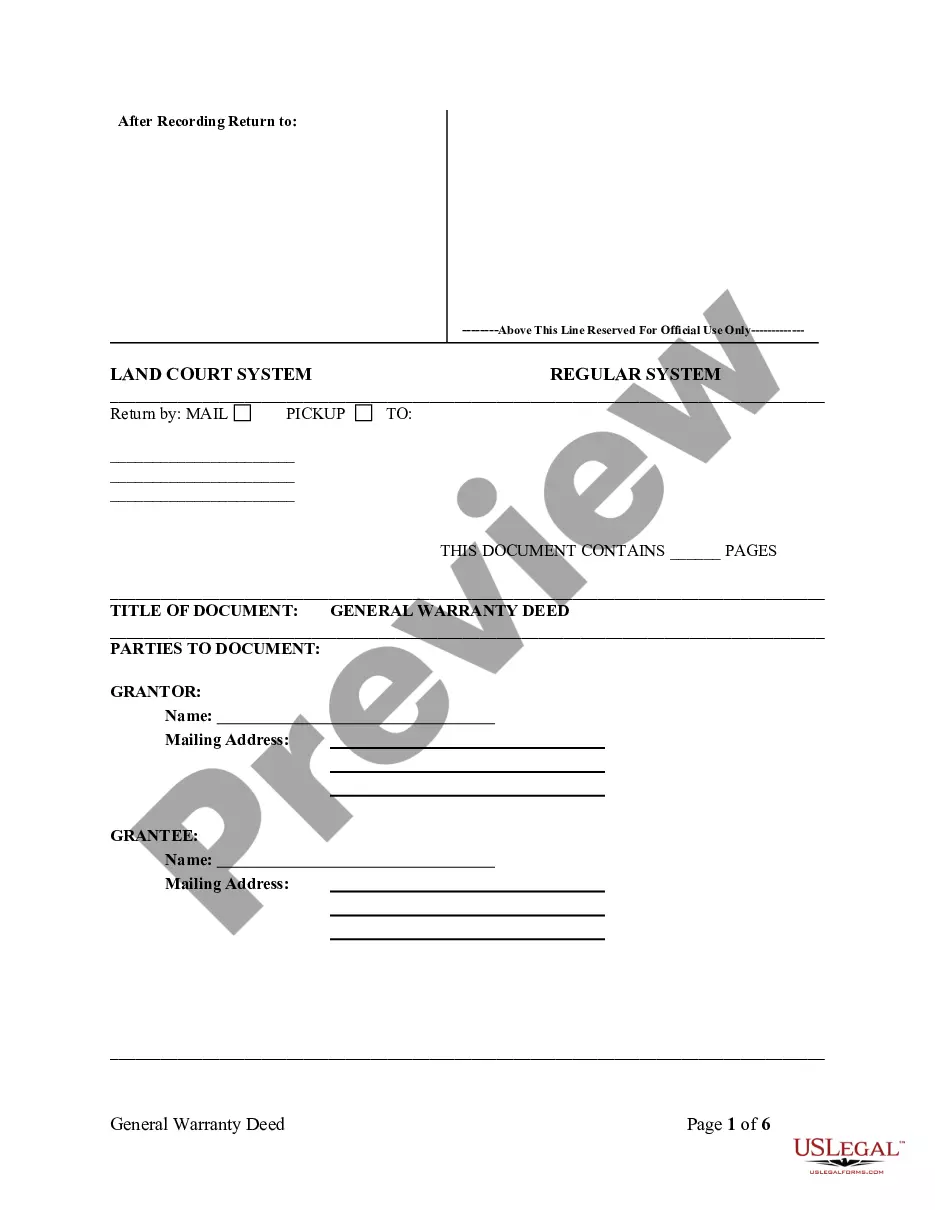
Alabama Last Will and Testament for Married person with Minor Children
Overview of this form
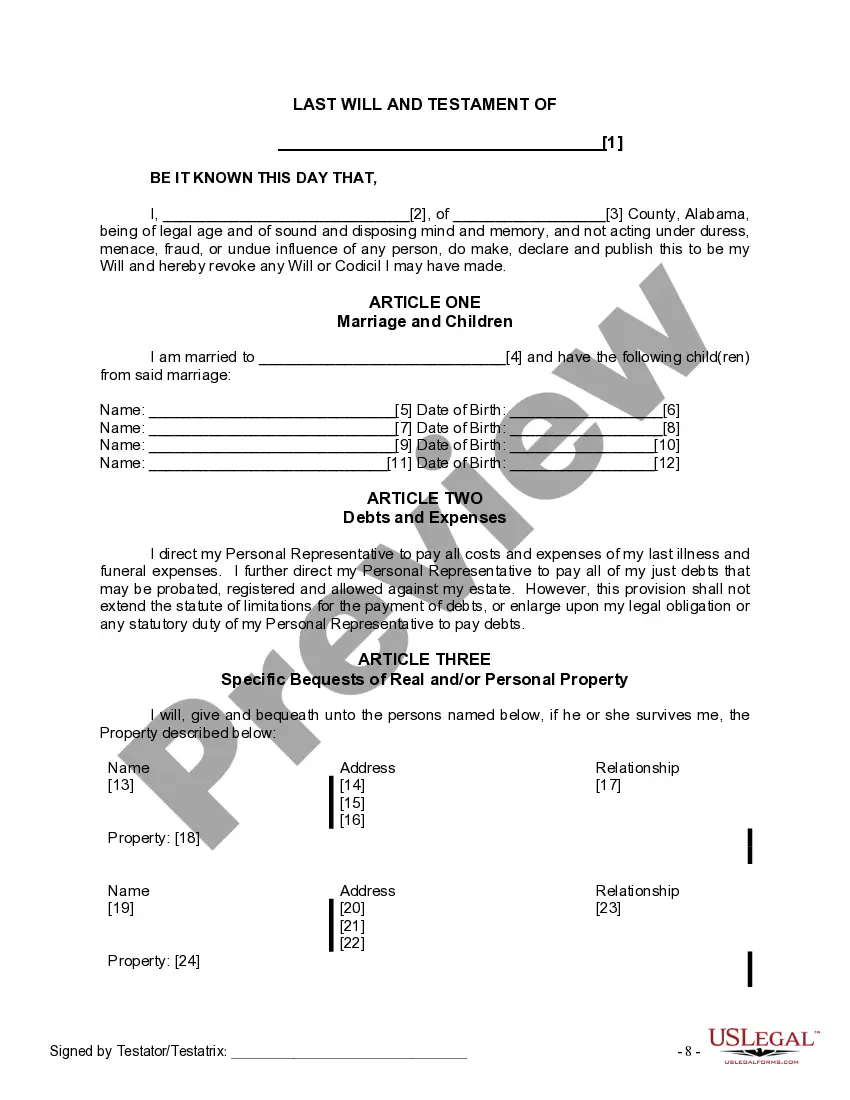
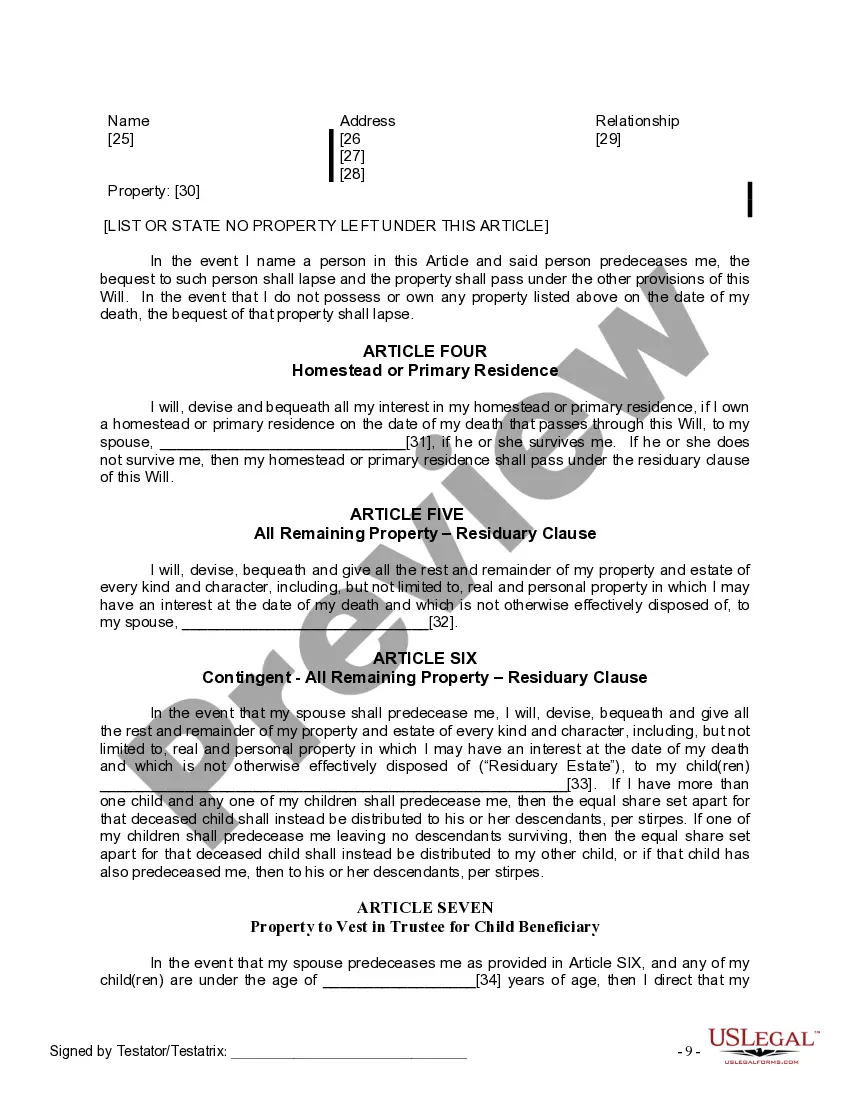
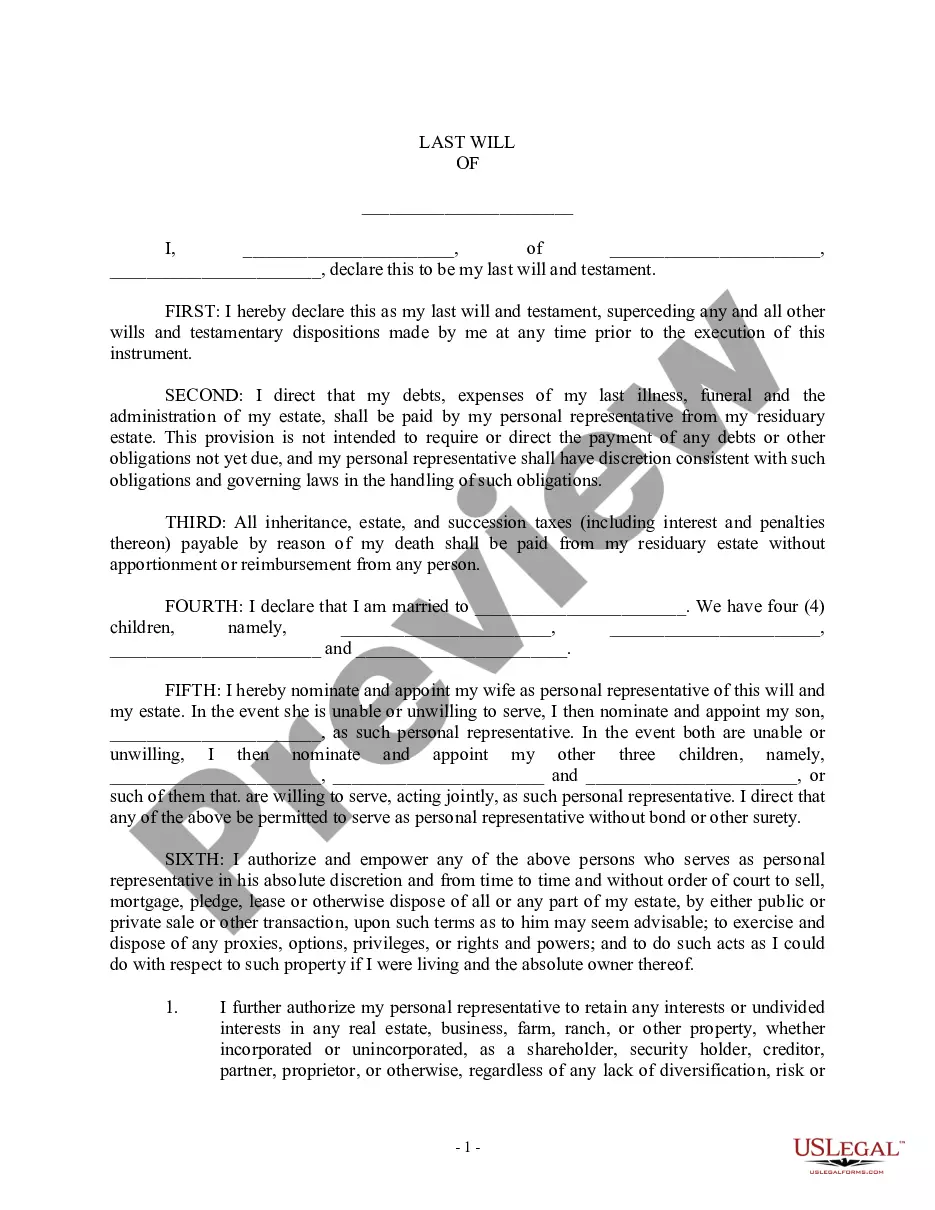
This Last Will and Testament is a legal document specifically designed for married individuals with minor children. It allows you to outline how your assets are to be distributed after your passing, appoint a personal representative, and make provisions for your spouse and children. This type of will ensures that your minor children's financial interests are protected by establishing a trust and designating a trustee. Unlike simple wills, this form includes various articles addressing specific bequests, guardianship, and the handling of debts, making it comprehensive for families.
Form components explained
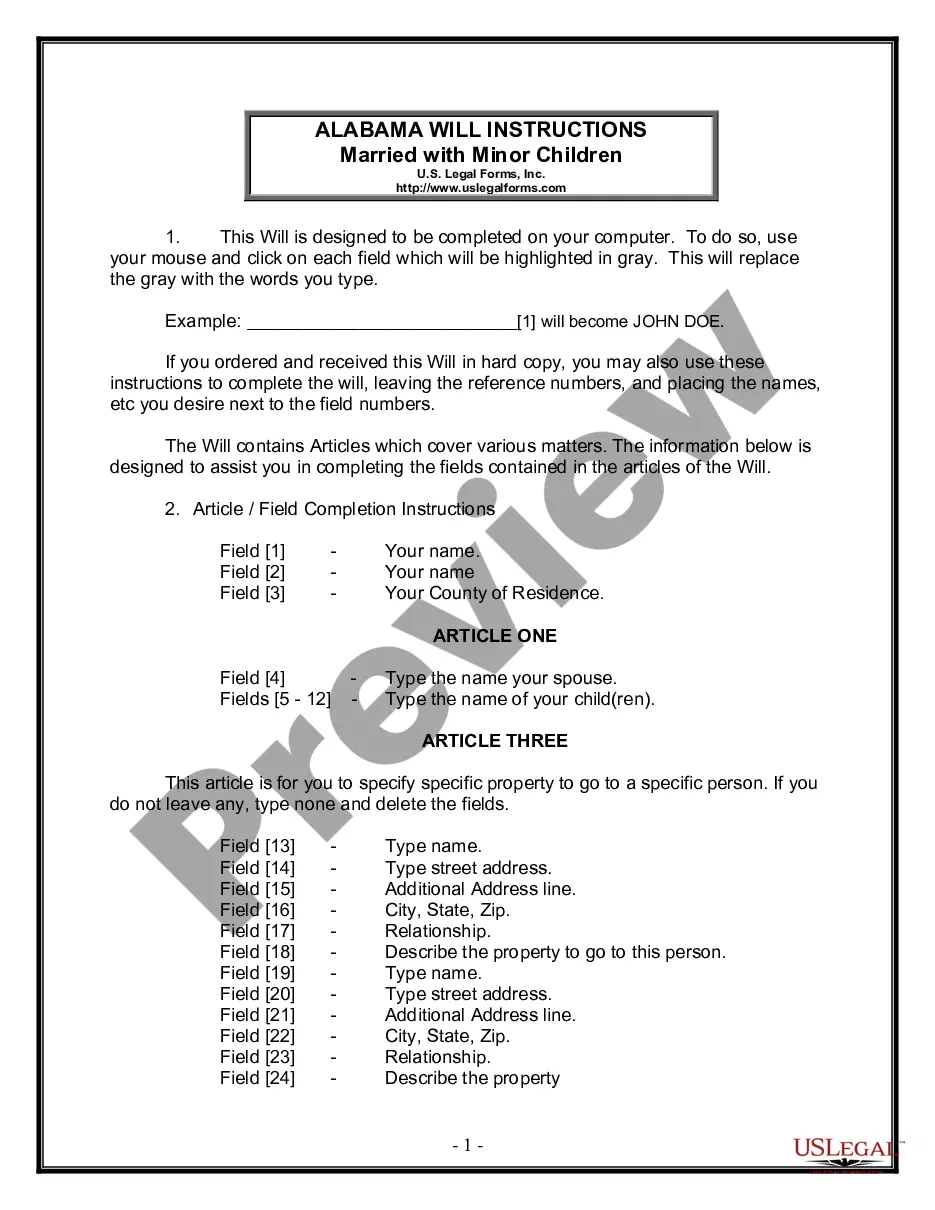
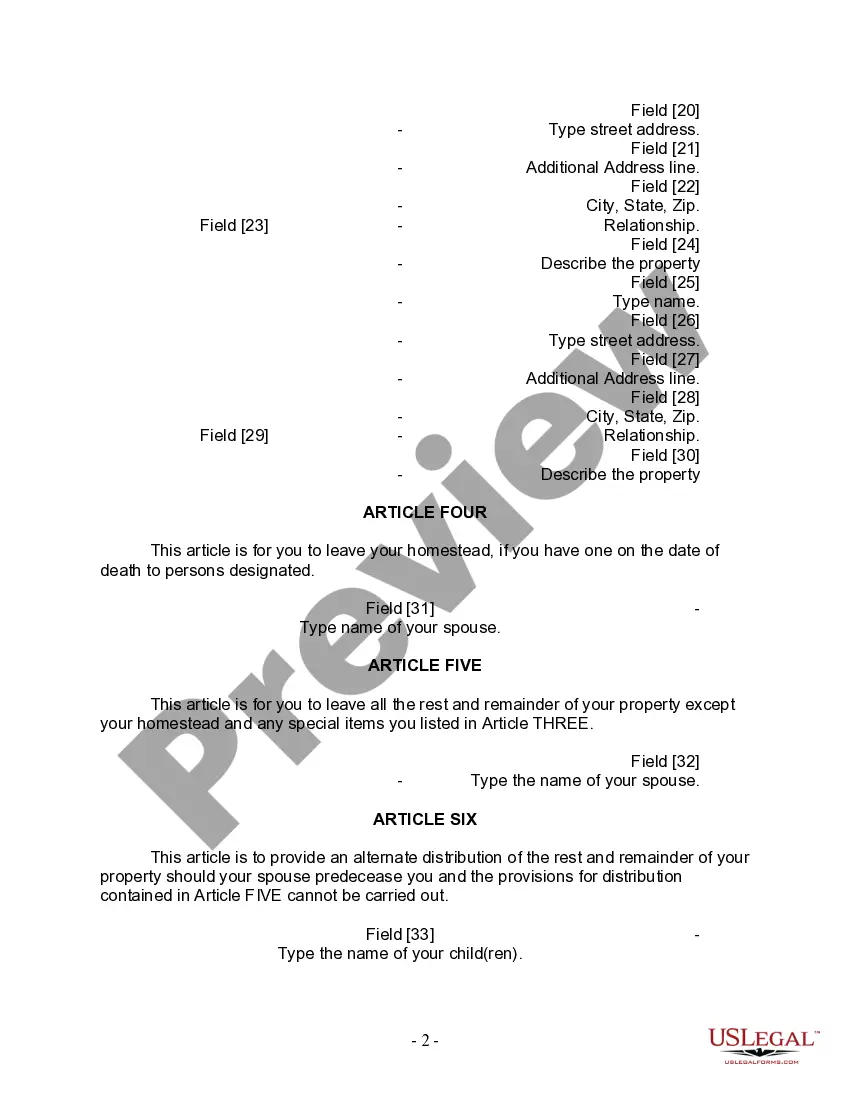
- Article One: Personal details including your name, spouse's name, and children's names.
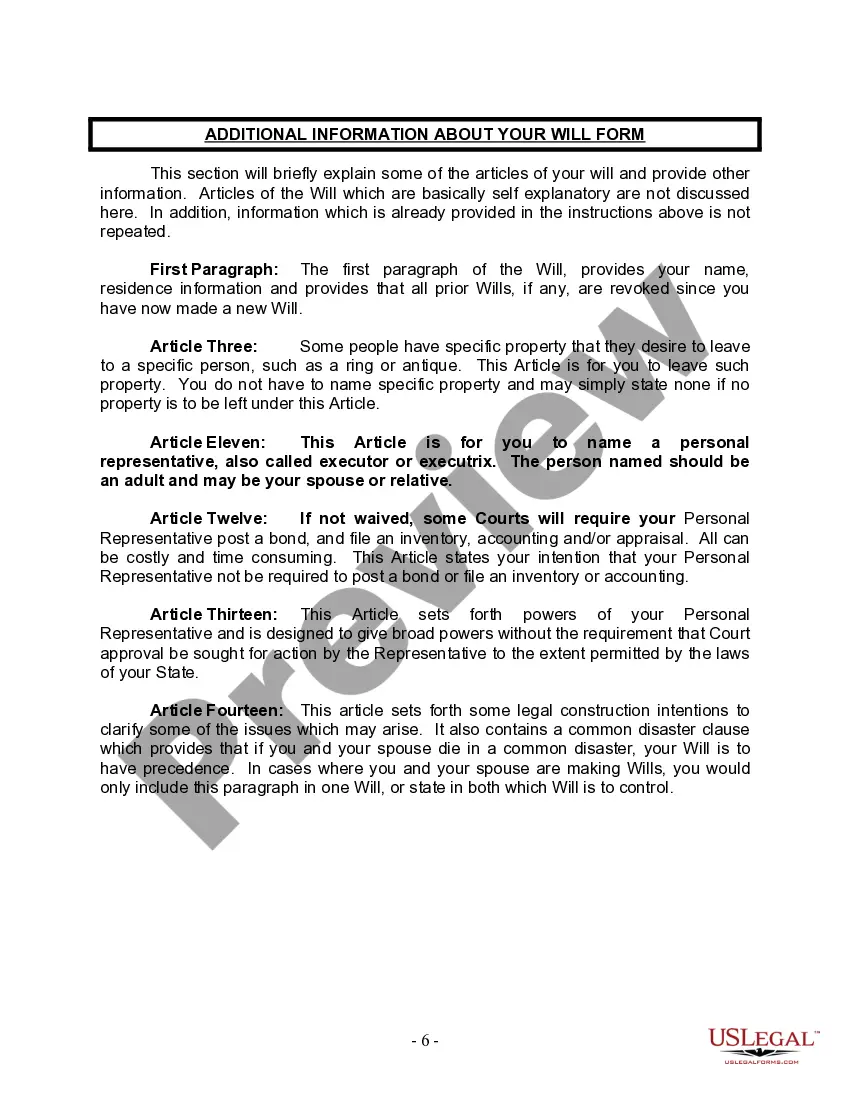
- Article Three: Specific bequests for any property or valuables you wish to leave to others.
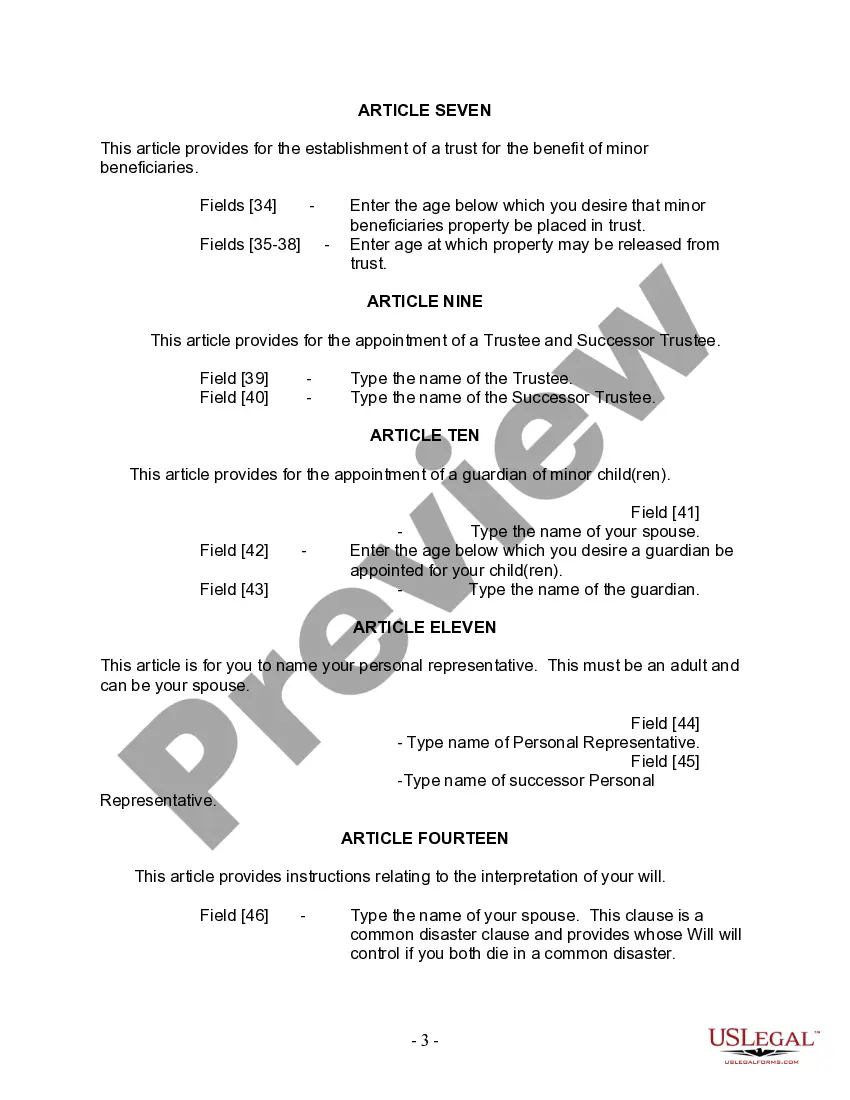
- Article Seven: Establishes a trust for minor beneficiaries to ensure their financial needs are met.
- Article Ten: Appoints a guardian for minor children should both parents pass away.
- Article Eleven: Designates a personal representative to administer your estate.
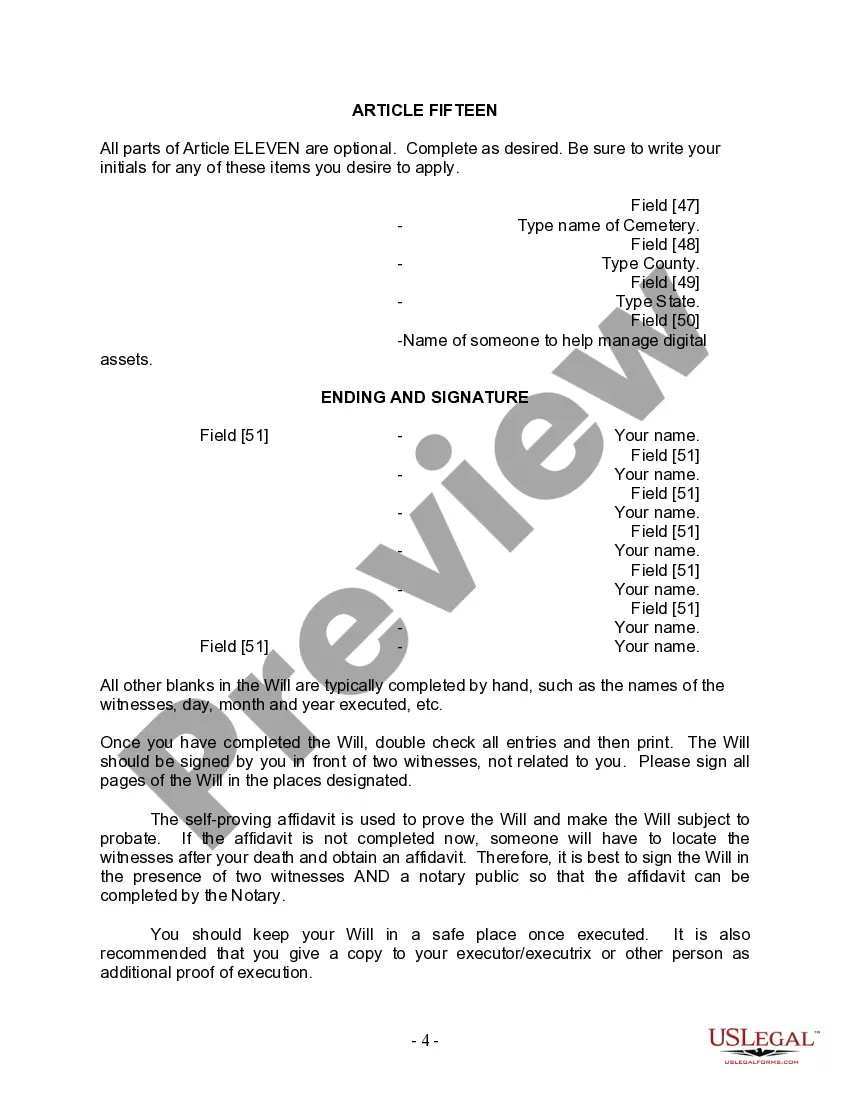
- Self-Proving Affidavit: Simplifies the probate process by allowing the will to be accepted as valid without witness verification.





When this form is needed
This form should be utilized when a married individual with minor children wants to ensure that their wishes regarding the distribution of their estate are followed after their death. It is particularly important in situations where the survivorship of the spouse and care of minor children needs to be clearly defined. Common scenarios include changing family dynamics, such as after the birth of a child, marriage, or divorce, where updating the will becomes essential to reflect the current family structure and intentions.
Who can use this document
- Married individuals with minor children who own property or have substantial assets.
- Persons seeking to appoint a guardian for their children in the event of their passing.
- Individuals wanting to ensure their specific wishes regarding asset distribution are documented legally.
Steps to complete this form
- Begin by entering your full name and county of residence at the top of the form.
- Fill in the names of your spouse and children in the designated fields in Article One.
- Specify any specific bequests you wish to make in Article Three, including the name, address, and relationship of the recipient.
- Complete Article Seven to provide details about the trust, including the age at which beneficiaries can receive their inheritance.
- Designate a guardian for your minor children in Article Ten, including their name and conditions for guardianship.
Does this document require notarization?
Yes, this form must be notarized to be legally valid in Alabama. The self-proving affidavit included in the form requires a notary public's signature, allowing it to be admitted to probate without the need for additional witness testimony.
Get your form ready online
Our built-in tools help you complete, sign, share, and store your documents in one place.
Make edits, fill in missing information, and update formatting in US Legal Forms—just like you would in MS Word.
Download a copy, print it, send it by email, or mail it via USPS—whatever works best for your next step.
Sign and collect signatures with our SignNow integration. Send to multiple recipients, set reminders, and more. Go Premium to unlock E-Sign.
If this form requires notarization, complete it online through a secure video call—no need to meet a notary in person or wait for an appointment.
We protect your documents and personal data by following strict security and privacy standards.

Make edits, fill in missing information, and update formatting in US Legal Forms—just like you would in MS Word.

Download a copy, print it, send it by email, or mail it via USPS—whatever works best for your next step.

Sign and collect signatures with our SignNow integration. Send to multiple recipients, set reminders, and more. Go Premium to unlock E-Sign.

If this form requires notarization, complete it online through a secure video call—no need to meet a notary in person or wait for an appointment.

We protect your documents and personal data by following strict security and privacy standards.
Common mistakes
- Failing to have the will signed in front of the required witnesses.
- Not updating the will after major life events such as divorce, remarriage, or the birth of additional children.
- Overlooking the appointment of a trustee or guardian, which can lead to disputes or challenges after your passing.
Benefits of using this form online
- Convenience of completing the form at your own pace from anywhere.
- Editability allows for easy updates when your circumstances change.
- Access to forms drafted by licensed attorneys, ensuring legal compliance and reducing the risk of errors.
Summary of main points
- This Last Will and Testament for a married person with minor children is essential for ensuring your family's financial security after your passing.
- It covers critical issues such as guardianship, asset distribution, and the establishment of a trust for minor beneficiaries.
- Proper execution, including notarization and witness signatures, is necessary for the document to be legally enforceable.
Looking for another form?


Form popularity
FAQ
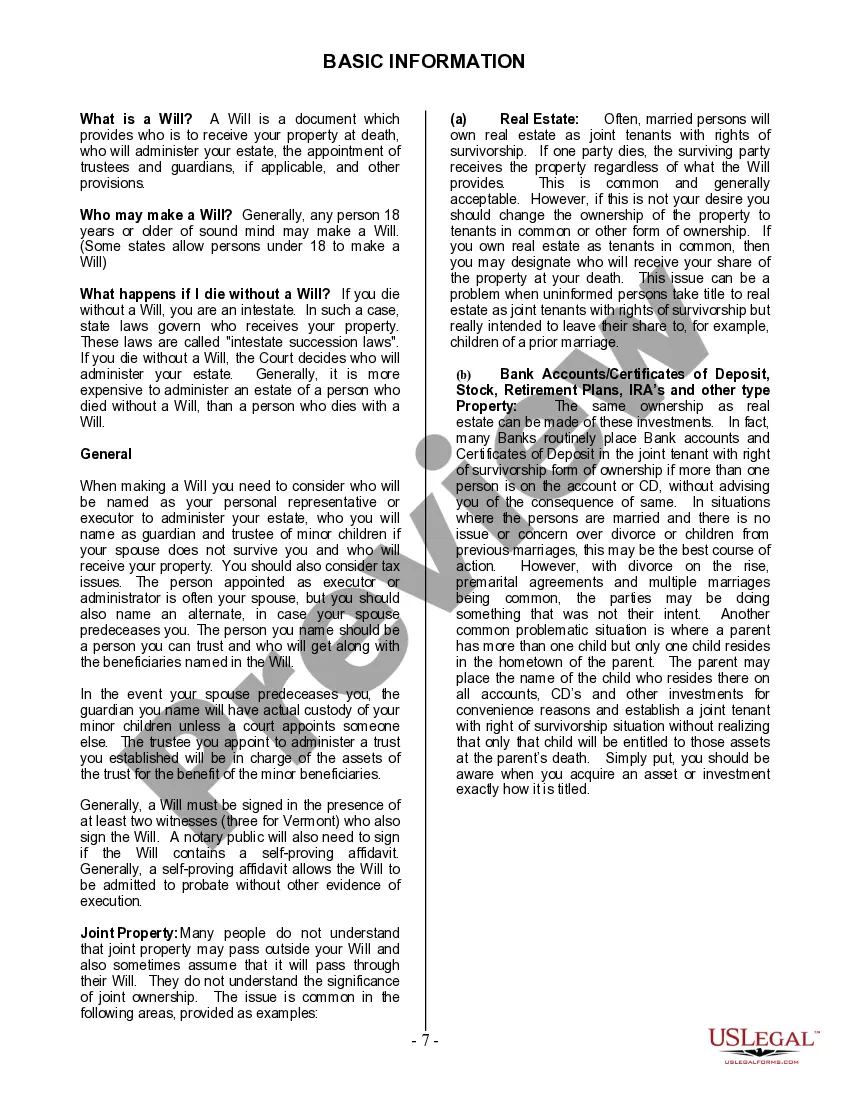
Generally, a last will and testament does not override your marriage rights in Alabama. Your spouse has specific rights to your estate, regardless of what your Alabama Last Will and Testament for Married person with Minor Children states. It is essential to consider state laws regarding marital property and inherited assets when drafting your will to protect your family's interests.
To be valid in Alabama, your will must be in writing and signed by you in the presence of two witnesses. Additionally, the witnesses must also sign the will, confirming they observed you sign it. By ensuring these requirements are met, you can create a legally binding Alabama Last Will and Testament for Married person with Minor Children that accurately represents your wishes.
Yes, in Alabama, you can leave a child out of your will. However, if you choose to exclude a child from your Alabama Last Will and Testament for Married person with Minor Children, it is wise to include a statement explaining your decision. This can help prevent disputes among your heirs and clarify your intentions for your estate.
A will in Alabama does not have to be notarized to be valid. However, if you want to add an extra layer of authenticity, you may choose to have your Alabama Last Will and Testament for Married person with Minor Children notarized. This can help to streamline the probate process and assure your heirs that your will reflects your true intentions.
In Alabama, it is not required to register a will for it to be valid. The validity of your Alabama Last Will and Testament for Married person with Minor Children depends on whether it meets the legal requirements of execution. Once you draft your will, you should keep it in a safe place. However, your executor will need to file it in probate court after your passing.
In Alabama, a living will does not need to be notarized to be valid, but there are benefits to doing so. Notarization can help clarify your medical wishes in situations involving your Alabama Last Will and Testament for Married person with Minor Children. Using a platform like USLegalForms can simplify the process of creating and notarizing your living will, ensuring your family has clear guidance.
Alabama does not require a will to be notarized for it to be valid. However, having your Alabama Last Will and Testament for Married person with Minor Children notarized can provide an extra layer of protection and legitimacy. It helps ensure that your will is recognized and reduces potential disputes over its validity.
There are several factors that can render a will invalid in Alabama. If the will does not meet the required legal formalities, such as proper signing and witnessing, it may be deemed invalid. Additionally, if the testator was not of sound mind or was under duress when creating the will, it could also be challenged, impacting your Alabama Last Will and Testament for Married person with Minor Children adversely.
The Code of Alabama outlines three clear requirements for a valid will. First, the testator must be at least 18 years old. Second, the will must be in writing and signed by the testator. Finally, it should be witnessed by two individuals who are present at the same time, especially if it relates to your Alabama Last Will and Testament for Married person with Minor Children.
In Alabama, a self-proving will simplifies the process for your Alabama Last Will and Testament for Married person with Minor Children. This type of will can be signed in front of a notary, which helps avoid the need to locate witnesses after your passing. While notarization is not strictly required, having it increases the will's enforceability.