Alabama Warranty Deed from Individual to Individual
What this document covers
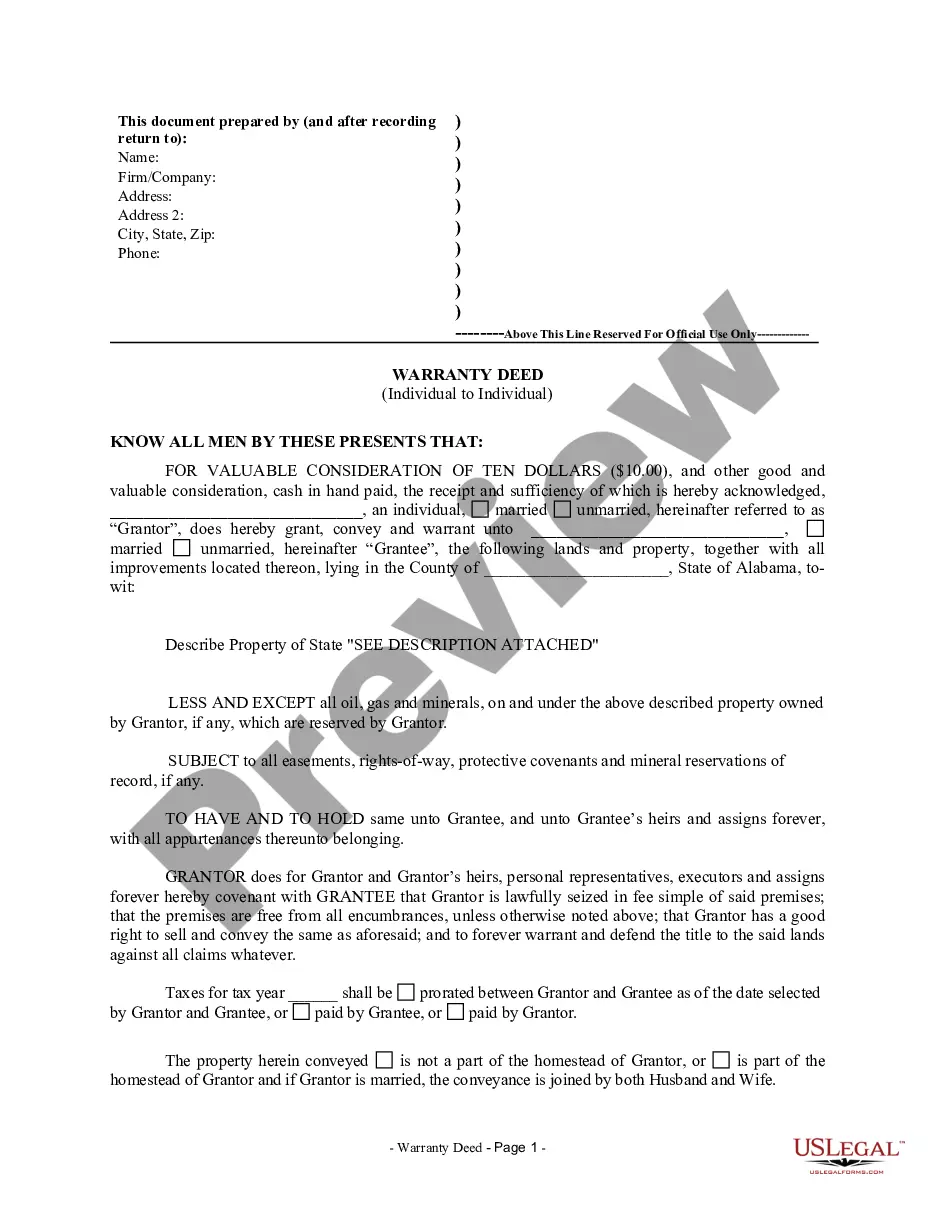
The Warranty Deed from Individual to Individual is a legal document used to transfer ownership of real property from one individual (the Grantor) to another (the Grantee). This form guarantees that the Grantor holds clear title to the property, free from any claims or encumbrances, except as noted. Unlike other types of deeds, this warranty deed specifically assures the Grantee that the property is being transferred with a promise of title protection, making it a reliable choice for property transfers between individuals.
Main sections of this form
- Legal description of the property being transferred, usually attached as an exhibit.
- Details regarding the Grantor and Grantee, including their names and addresses.
- Statement of the Grantor's legal ownership of the property.
- Warranty clause where the Grantor promises to defend the title against future claims.
- Tax allocation responsibilities between Grantor and Grantee.
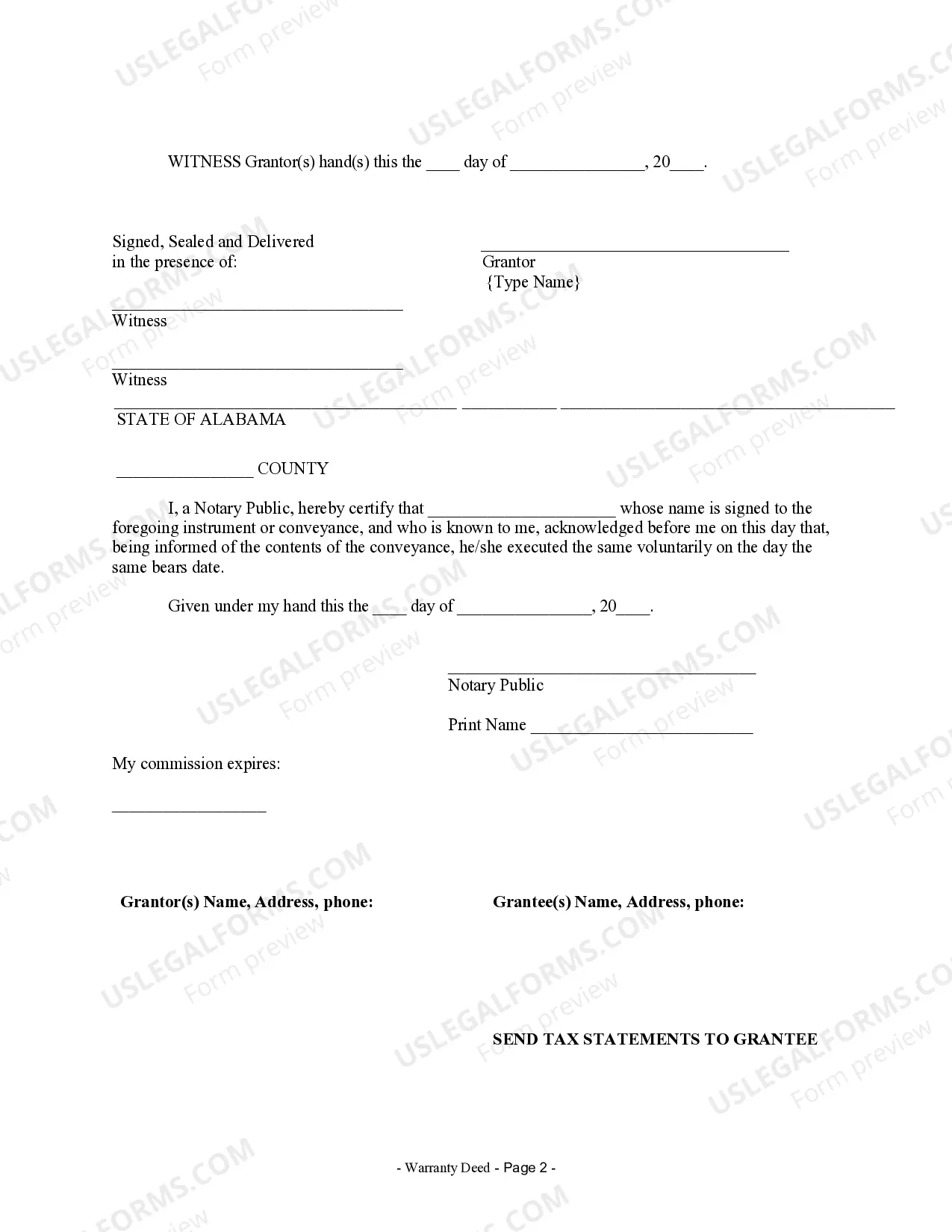
- Notary acknowledgment section to validate the deed.




Common use cases
This Warranty Deed should be used when an individual intends to transfer their ownership interest in real estate to another individual. Common scenarios include family transfers, sales of property between friends, or other situations where no formal business entity is involved. This form helps ensure that the new owner receives the property with a guaranteed title free from liens or legal disputes.
Who this form is for
- Individuals transferring real estate to another individual.
- Property owners looking to ensure a clear title for the Grantee.
- Buyers and sellers engaged in private property transactions.
- Anyone seeking to document a personal property transfer legally.
How to prepare this document
- Identify the parties: provide the full names and addresses of both the Grantor and the Grantee.
- Specify the property: include the legal description of the property being transferred, often as an attached exhibit.
- Enter the warranty details: affirm the Grantor's ownership and promise to defend the title.
- Detail tax responsibilities: indicate if taxes for the current year will be prorated and specify the arrangement.
- Obtain notarization: ensure the Grantor signs in front of a notary public to validate the transaction.
Notarization requirements for this form
To make this form legally binding, it must be notarized. Our online notarization service, powered by Notarize, lets you verify and sign documents remotely through an encrypted video session.
Get your form ready online
Our built-in tools help you complete, sign, share, and store your documents in one place.
Make edits, fill in missing information, and update formatting in US Legal Forms—just like you would in MS Word.
Download a copy, print it, send it by email, or mail it via USPS—whatever works best for your next step.
Sign and collect signatures with our SignNow integration. Send to multiple recipients, set reminders, and more. Go Premium to unlock E-Sign.
If this form requires notarization, complete it online through a secure video call—no need to meet a notary in person or wait for an appointment.
We protect your documents and personal data by following strict security and privacy standards.

Make edits, fill in missing information, and update formatting in US Legal Forms—just like you would in MS Word.

Download a copy, print it, send it by email, or mail it via USPS—whatever works best for your next step.

Sign and collect signatures with our SignNow integration. Send to multiple recipients, set reminders, and more. Go Premium to unlock E-Sign.

If this form requires notarization, complete it online through a secure video call—no need to meet a notary in person or wait for an appointment.

We protect your documents and personal data by following strict security and privacy standards.
Common mistakes
- Failing to include a complete legal description of the property.
- Not obtaining the necessary notarization before submitting the form.
- Omitting signatures from either the Grantor or the Grantee.
- Incorrectly specifying tax responsibilities, leading to confusion post-transaction.
Advantages of online completion
- Convenience: Easily download the form anytime and anywhere.
- Editability: Complete the form digitally, reducing errors and improving clarity.
- Reliability: Access professionally drafted documents that comply with legal standards.
Looking for another form?







Form popularity
FAQ
DEED: A written instrument by which one party, the Grantor, conveys the title of ownership in property to another party, the Grantee. A Warranty Deed contains promises, called covenants, that the Grantor makes to the Grantee.It is even possible that the Grantor does not have any title or ownership interest at all!
A warranty deed is a document often used in real estate that provides the greatest amount of protection to the purchaser of a property. It pledges or warrants that the owner owns the property free and clear of any outstanding liens, mortgages, or other encumbrances against it.
Let's start with the definition of a deed: DEED: A written instrument by which one party, the Grantor, conveys the title of ownership in property to another party, the Grantee. A Warranty Deed contains promises, called covenants, that the Grantor makes to the Grantee.
When a will and a deed both transfer the same piece of property, typically the deed will trump. This is not because deeds automatically override a will, but because a deed is designed to take effect immediately after the grantor delivers it to the grantee, whereas a will does not take effect immediately.
A warranty deed is a higher level of protection produced by the seller upon the real estate closing. It includes a full legal description of the property, and confirms the title is clear and free from all liens, encumbrances, or title defects. Most property sales make use of a warranty deed.Our title agents can help.
It's important to note that a warranty deed does not actually prove the grantor has ownership (a title search is the best way to prove that), but it is a promise by the grantor that they are transferring ownership and if it turns out they don't actually own the property, the grantor will be responsible for compensating
A property deed, or house deed, is a legal document that transfers ownership of real estate from the grantor (seller) to the grantee (buyer). Property deeds are the legal tool of defining ownership. When a property or house is sold, the buyer and seller sign the deed to transfer ownership.
A warranty deed, also known as a general warranty deed, is a legal real estate document between the seller (grantor) and the buyer (grantee). The deed protects the buyer by pledging that the seller holds clear title to the property and there are no encumbrances, outstanding liens, or mortgages against it.