Alaska Warranty Deed to Separate Property of one Spouse to both as Joint Tenants or as Community Property with Right of Survivorship
About this form
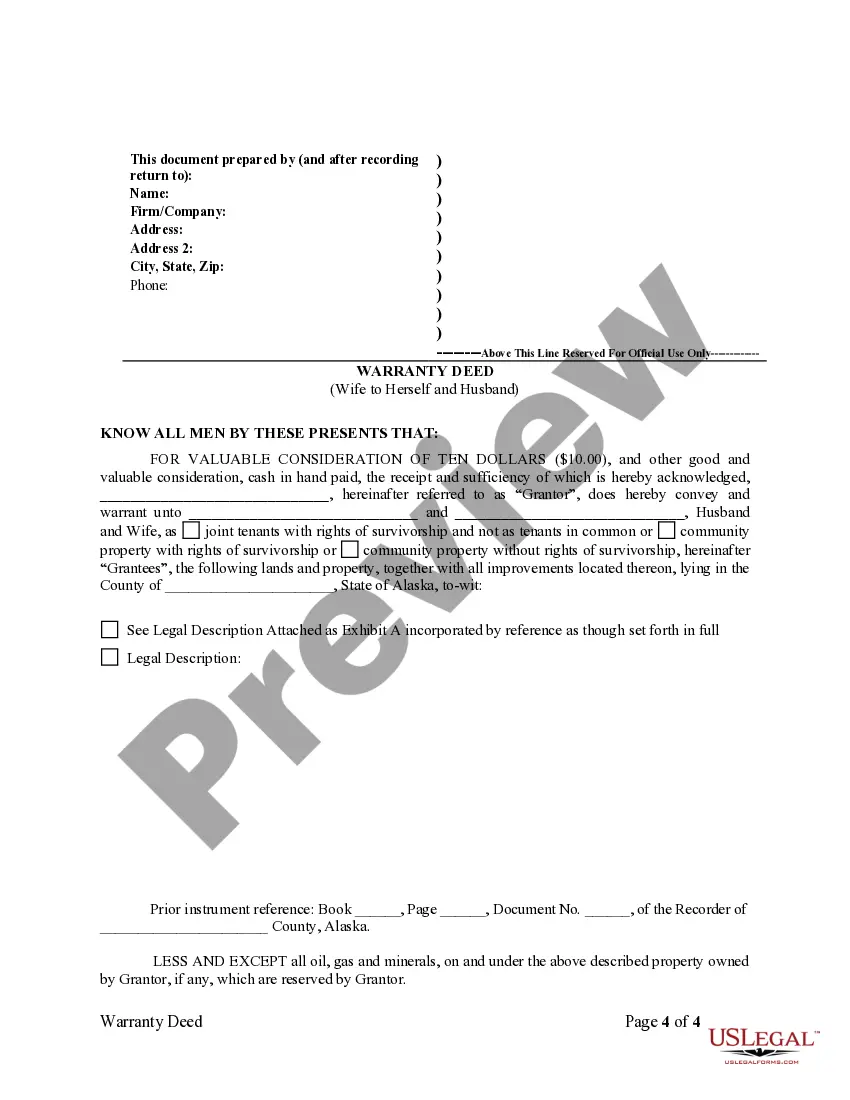
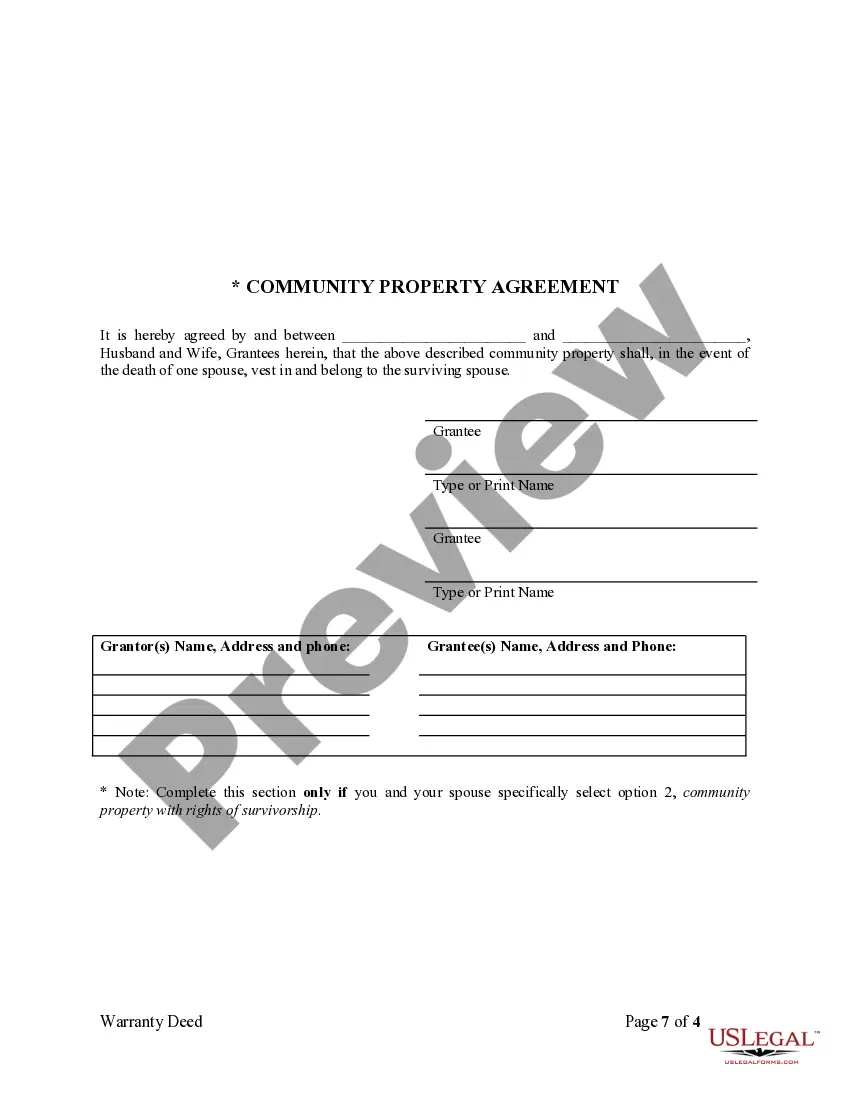
This Warranty Deed is a legal document used to transfer ownership of property from one spouse to both spouses as joint tenants or as community property with the right of survivorship. It ensures that the property is jointly owned, allowing for the seamless transfer of ownership between spouses upon the death of one spouse. This form is particularly useful for couples looking to solidify their joint ownership status in their property holdings.
What’s included in this form
- Grantor's information: This section identifies the spouse transferring the property.
- Grantee's information: This section identifies both spouses as recipients of the property.
- Property description: A detailed description of the property being transferred is included.
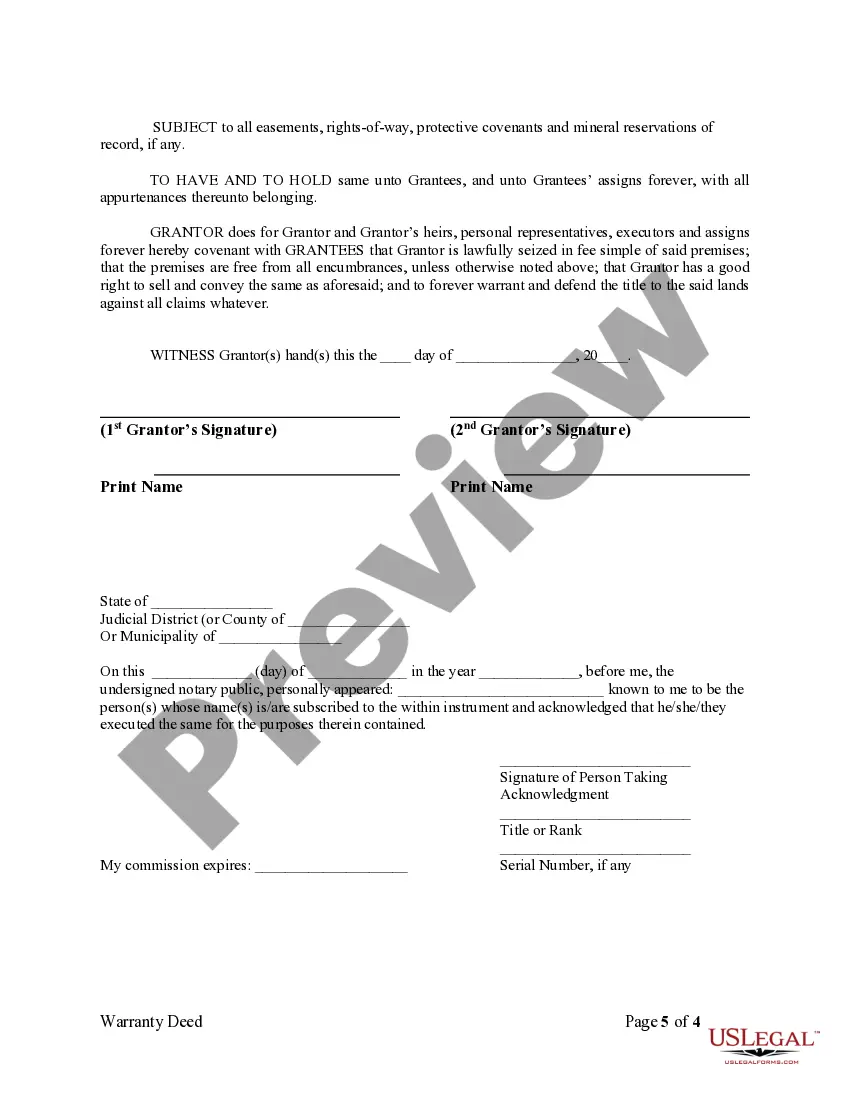
- Legal warranties: The grantor provides assurances about the ownership status of the property.
- Signatures: Both spouses must sign the document to formalize the transfer.
- Notary acknowledgment: A section to be completed by a notary public to validate the deed.





When to use this form
This form should be used when a wife wishes to transfer her separate property to herself and her husband, establishing joint ownership. Situations where this form may be appropriate include marriage, the desire to formally recognize joint property ownership for estate planning, or adding a spouse to the property title for legal protection and survivorship benefits.
Intended users of this form
- Married couples who want to legally co-own property.
- Spouses looking to simplify estate planning and ensure property transfer upon death.
- Individuals interested in adding their partner as a co-owner of an asset.
Steps to complete this form
- Identify the grantor and grantees, ensuring correct names are entered.
- Provide a specific description of the property being transferred.
- Enter the date of the transfer and include the appropriate signatures.
- Complete the notary section with the notary's name, signature, and commission expiration date.
- Review the form fields to ensure all information is accurate before finalizing.
Notarization guidance
This document requires notarization to meet legal standards. US Legal Forms provides secure online notarization powered by Notarize, allowing you to complete the process through a verified video call, available 24/7.
Get your form ready online
Our built-in tools help you complete, sign, share, and store your documents in one place.
Make edits, fill in missing information, and update formatting in US Legal Forms—just like you would in MS Word.
Download a copy, print it, send it by email, or mail it via USPS—whatever works best for your next step.
Sign and collect signatures with our SignNow integration. Send to multiple recipients, set reminders, and more. Go Premium to unlock E-Sign.
If this form requires notarization, complete it online through a secure video call—no need to meet a notary in person or wait for an appointment.
We protect your documents and personal data by following strict security and privacy standards.

Make edits, fill in missing information, and update formatting in US Legal Forms—just like you would in MS Word.

Download a copy, print it, send it by email, or mail it via USPS—whatever works best for your next step.

Sign and collect signatures with our SignNow integration. Send to multiple recipients, set reminders, and more. Go Premium to unlock E-Sign.

If this form requires notarization, complete it online through a secure video call—no need to meet a notary in person or wait for an appointment.

We protect your documents and personal data by following strict security and privacy standards.
Avoid these common issues
- Leaving out important property details or misidentifying the property.
- Not obtaining a notary's acknowledgment when it is necessary.
- Failing to sign the document or missing signatures from both spouses.
- Not checking the local laws or regulations that may affect the deed.
Advantages of online completion
- Convenient access to legal forms without needing to visit a lawyer.
- Editable fields allow you to complete the form accurately using a computer.
- Secure and private method to manage legal documents from home.
Looking for another form?




Form popularity
FAQ
In cases where a couple shares a home but only one spouse's name is on it, the home will not automatically pass to the surviving pass, if his or her name is not on the title.
While the joint tenant with right of survivorship can't will his share in the property to his heir, he can sell his interest in the property before his death. Once a joint tenant sells his share, this ends the joint tenancy ownership involving the share.
In California, most married couples hold real property (such as land and buildings) as joint tenants with right of survivorship.For instance, many married couples share real property as joint tenants. This way, upon the death of a spouse, the surviving spouse will own 100% share of the property.
It's often easier to qualify for a joint mortgage, because both spouses can contribute income and assets to the application. However, if one spouse can qualify for a mortgage based on his own income and credit, the mortgage does not need to be in both spouses' names unless you live in a community property state.
In estate law, joint tenancy is a special form of ownership by two or more persons of the same property. The individuals, who are called joint tenants, share equal ownership of the property and have the equal, undivided right to keep or dispose of the property. Joint tenancy creates a Right of Survivorship.
California married couples generally have three options to take title to their community (vs separate) property real estate: community property, joint tenancy or Community Property with Right of Survivorship. The latter coming into play in California July of 2001.
In California, all property bought during the marriage with income that was earned during the marriage is deemed "community property." The law implies that both spouses own this property equally, regardless of which name is on the title deed.
Overview of Joint Tenants For example, joint tenants must all take title simultaneously from the same deed while tenants in common can come into ownership at different times. Another difference is that joint tenants all own equal shares of the property, proportionate to the number of joint tenants involved.
One of the main differences between the two types of shared ownership is what happens to the property when one of the owners dies. When a property is owned by joint tenants with survivorship, the interest of a deceased owner automatically gets transferred to the remaining surviving owners.