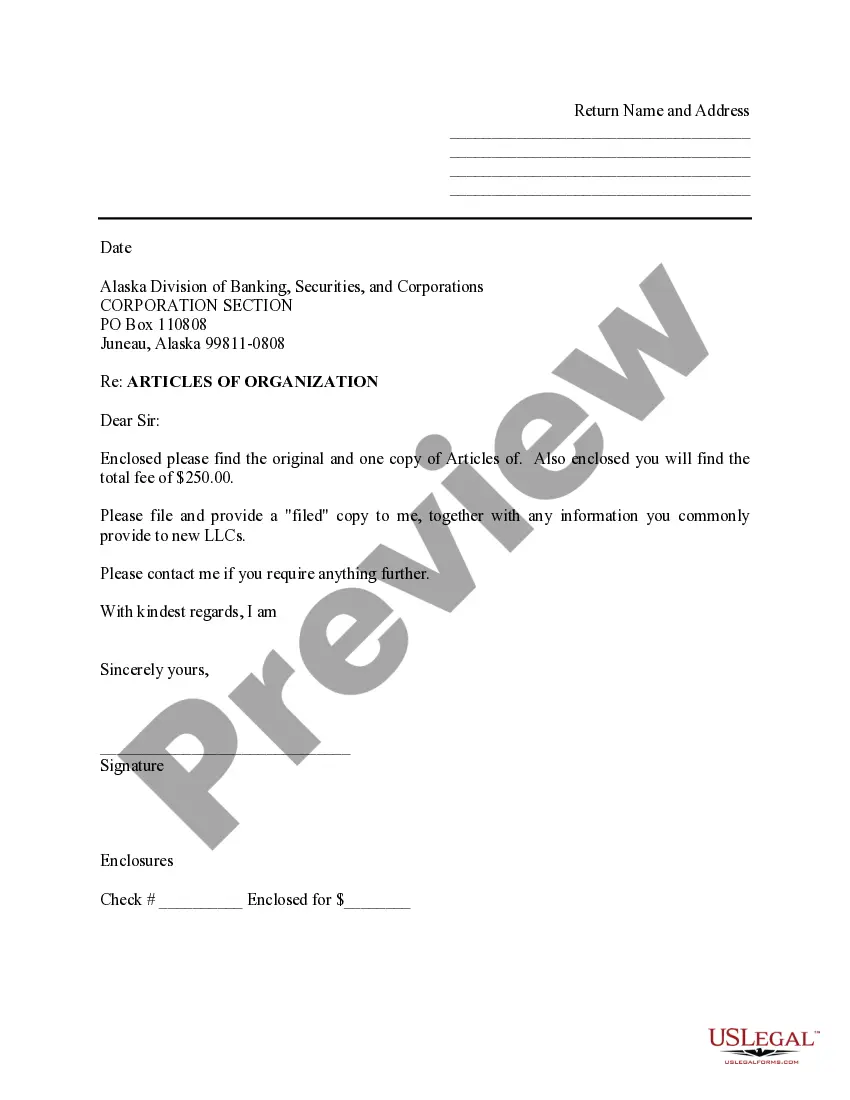
Alaska Letter from Landlord to Tenant about Tenant engaging in illegal activity in premises as documented by law enforcement and if repeated, lease terminates
Overview of this form
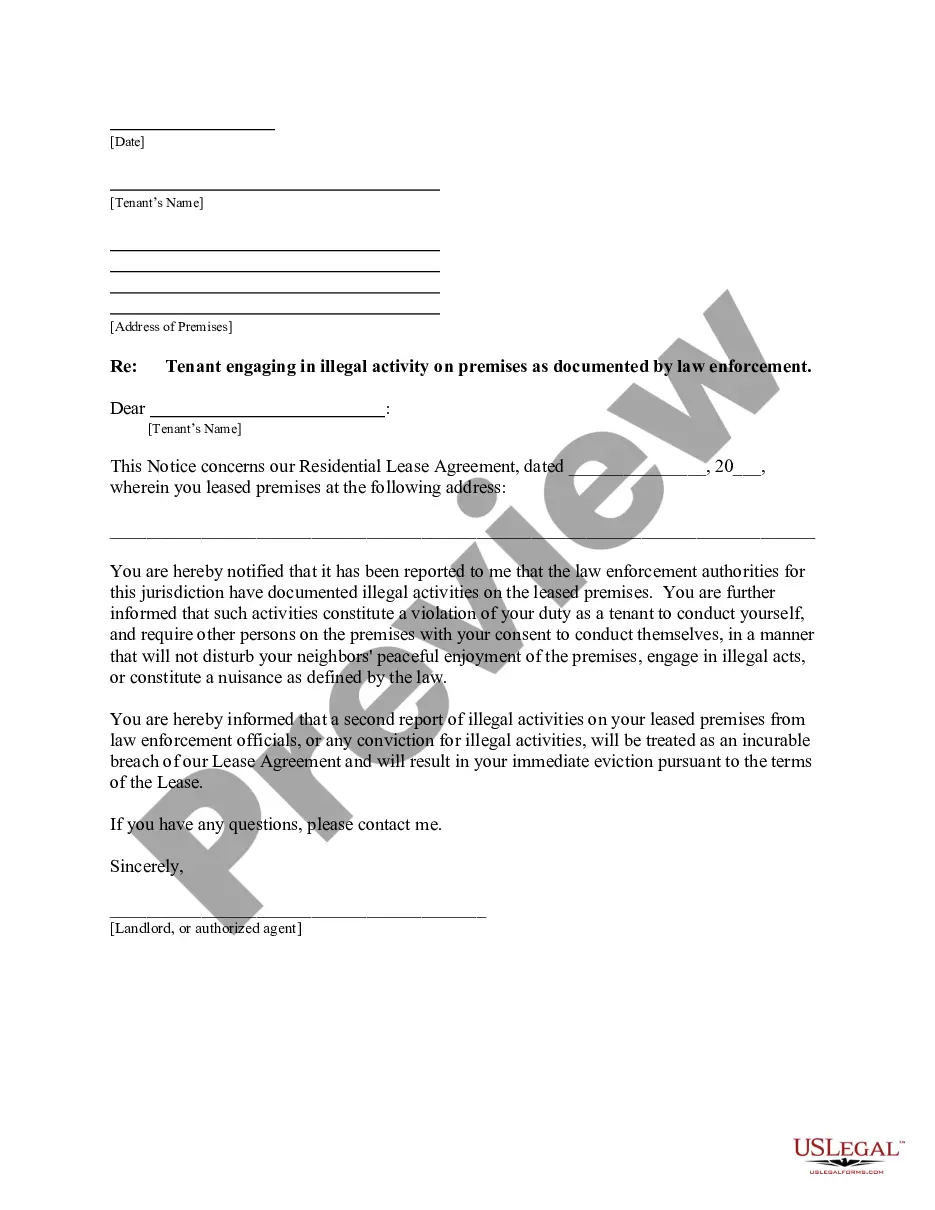
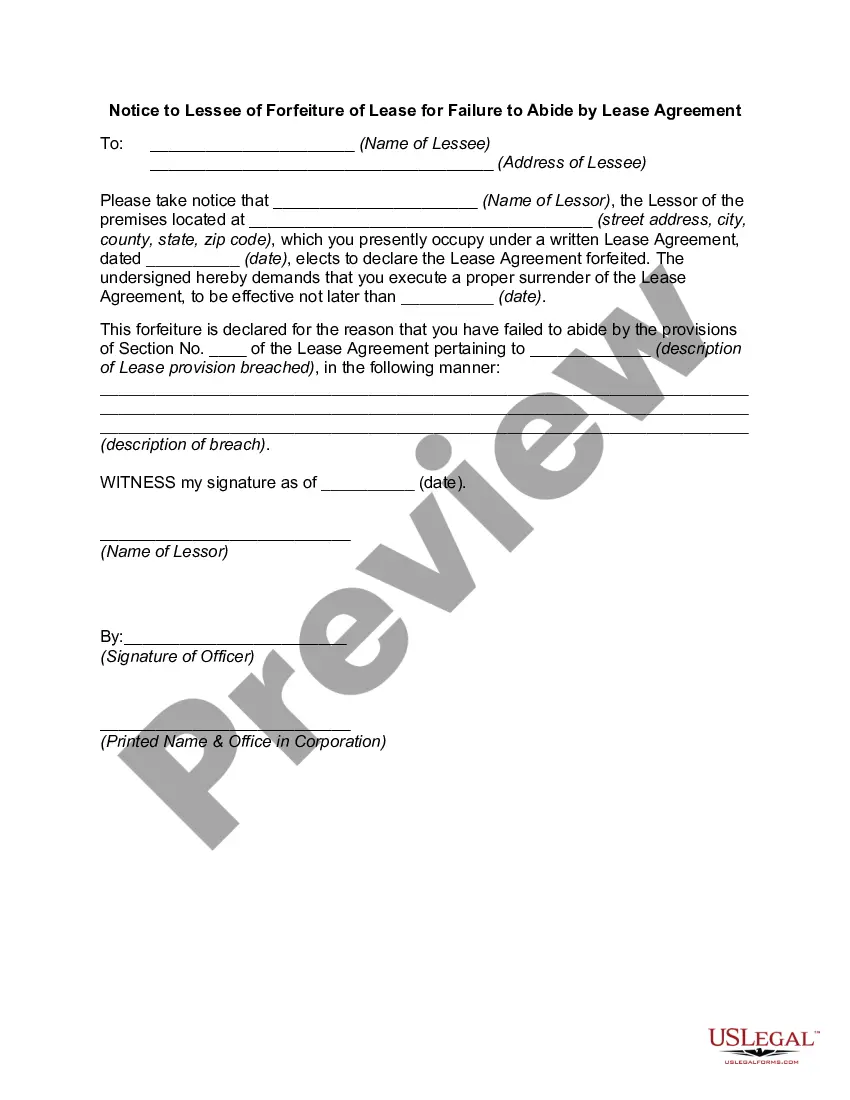
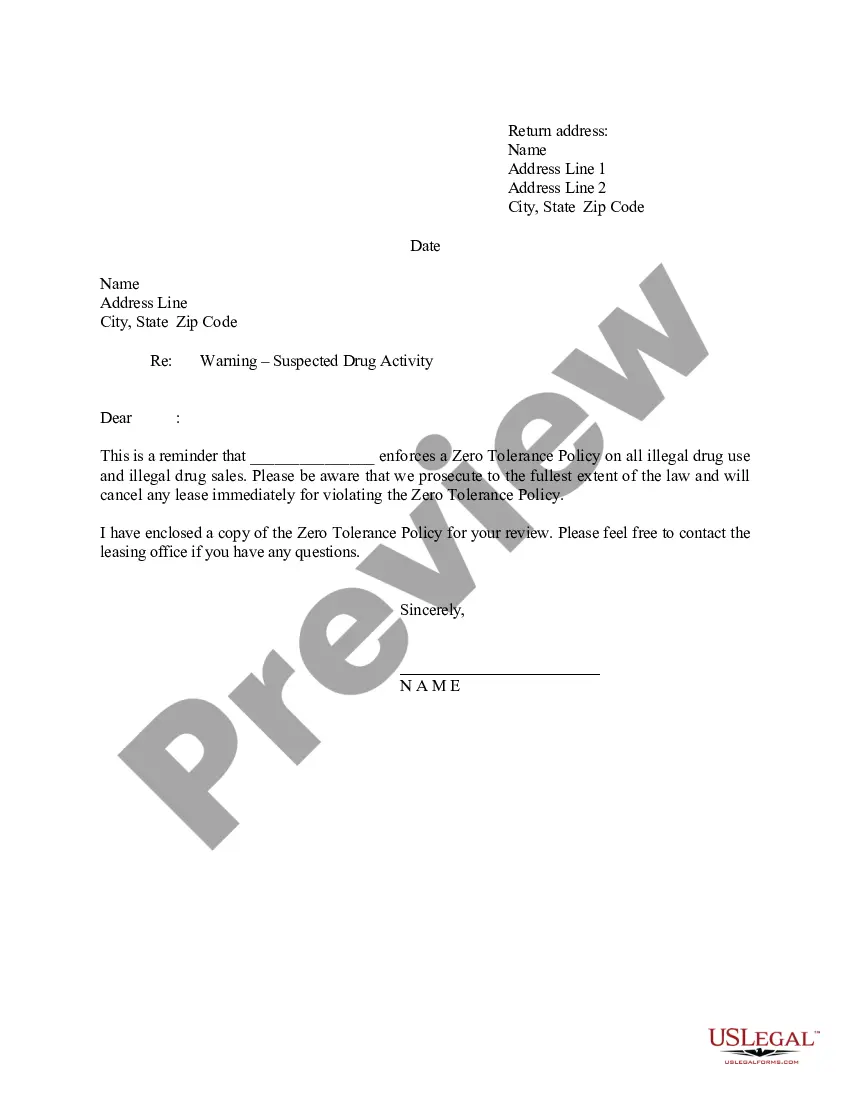
This form is a letter from the landlord to the tenant addressing documented illegal activities occurring on the leased premises. The letter requires the tenant to cease such activities to avoid further breaches of the lease agreement. Unlike general eviction notices, this form specifically highlights the alleged illegal actions that could jeopardize the tenant's residency if repeated.
What’s included in this form
- Identification of the landlord and tenant
- Details of the illegal activities reported by law enforcement
- Statement on tenant responsibilities regarding conduct on the premises
- Warning about potential lease termination upon repeated offenses
- Option for the tenant to contact the landlord for clarification

Common use cases
This form should be used when a landlord receives reports from law enforcement about illegal activities taking place in the rental property. It is essential in situations where the tenant's actions could lead to eviction or other legal consequences, ensuring the tenant is formally notified and given a chance to correct their behavior.
Who needs this form
- Landlords who suspect illegal activities by tenants
- Property managers responsible for maintaining legal compliance
- Real estate professionals seeking to address tenant misconduct
Steps to complete this form
- Identify the landlord and tenantâs names and addresses.
- Specify the illegal activities reported by law enforcement.
- State the tenant's responsibilities regarding conduct on the property.
- Outline the consequences of repeated illegal activity.
- Sign and date the letter before delivering it to the tenant.
Does this form need to be notarized?
This form does not typically require notarization unless specified by local law. Always verify any local regulations to ensure compliance before issuing the letter.
Get your form ready online
Our built-in tools help you complete, sign, share, and store your documents in one place.
Make edits, fill in missing information, and update formatting in US Legal Forms—just like you would in MS Word.
Download a copy, print it, send it by email, or mail it via USPS—whatever works best for your next step.
Sign and collect signatures with our SignNow integration. Send to multiple recipients, set reminders, and more. Go Premium to unlock E-Sign.
If this form requires notarization, complete it online through a secure video call—no need to meet a notary in person or wait for an appointment.
We protect your documents and personal data by following strict security and privacy standards.

Make edits, fill in missing information, and update formatting in US Legal Forms—just like you would in MS Word.

Download a copy, print it, send it by email, or mail it via USPS—whatever works best for your next step.

Sign and collect signatures with our SignNow integration. Send to multiple recipients, set reminders, and more. Go Premium to unlock E-Sign.

If this form requires notarization, complete it online through a secure video call—no need to meet a notary in person or wait for an appointment.

We protect your documents and personal data by following strict security and privacy standards.
Avoid these common issues
- Failing to document the illegal activity properly.
- Not providing a clear warning about the consequences of continued misconduct.
- Omitting the option for the tenant to discuss the matter with the landlord.
Advantages of online completion
- Quick access to a legally reviewed template, saving time.
- Easy customization to fit specific circumstances or state requirements.
- Convenient download and printing options for immediate use.
- The letter serves as a formal notice, outlining the tenant's obligations and potential consequences.
- Failure to comply may strengthen the landlord's position in case of future eviction proceedings.
Quick recap
- The form is crucial for addressing tenant illegal activities documented by law enforcement.
- Landlords must provide clear details and warnings about potential consequences.
- Compliance with state-specific laws is necessary to ensure the letterâs effectiveness.
Looking for another form?

Form popularity
FAQ
A landlord cannot evict a tenant without an adequately obtained eviction notice and sufficient time. A landlord cannot retaliate against a tenant for a complaint. A landlord cannot forego completing necessary repairs or force a tenant to do their own repairs.A landlord cannot remove a tenant's personal belongings.
Month-to-month tenants must be given written notice that their landlord is terminating their tenancy before the end of the rental period. In most cities in Washington State, the landlord must give the tenant at least 20 days' notice before termination.
In some circumstances, a tenant can break a fixed-term agreement early without penalty. A tenant can give 14 days' written notice to end an agreement early without penalty if: they have accepted an offer of social housing (e.g. from DCJ Housing)
Trouble is there is no way of knowing for sure which tenants are bad and which are good until you run a tenant background check. Don't be left in the dark. Make sure you verify all the information in the rental application, run a credit check, and speak with the references, including the previous landlords.
When there is no lease agreement (like in the case of weekly rentals), you can instead use the Alaska Notice to Vacate to inform the other party in advance that you wish to end the tenancy agreement and vacate the premises.
State law requires both landlords and renters to be reasonable about seeking and granting access to a rental unit (RCW 59.18.A landlord cannot enter a renter's home without the occupant's consent. A landlord has a right to enter the renter's home for necessary or agreed repairs and inspections.
Fundamental responsibilities of landlords include: providing and maintaining the property in a clean and reasonable standard; giving proper receipts and maintaining records of all transactions pertaining to the tenancy; paying council rates and taxes; maintaining locks to ensure the property's security; and lodging the
State law regulates several rent-related issues, including late and bounced-check fees, the amount of notice (at least 30 days in Washington) landlords must give tenants to raise the rent and how much time (three days in Washington) a tenant has to pay rent or move before a landlord can file for eviction.
The tenant does indeed make the income that they claim to make (ideally no less than two-and-a-half times the rental price); The tenant has a good credit history; The tenant has a good rental history that can be verified by previous landlords.
Rent Increases: RCW 59.18. 140 requires landlords to give tenants 60 Days' notice before increasing the rent. In a month-to-month rental, the landlord must give you 60 Days' written notice before each rent increase (except in certain subsidized rental units, the landlord must give you at least 30 days written notice).