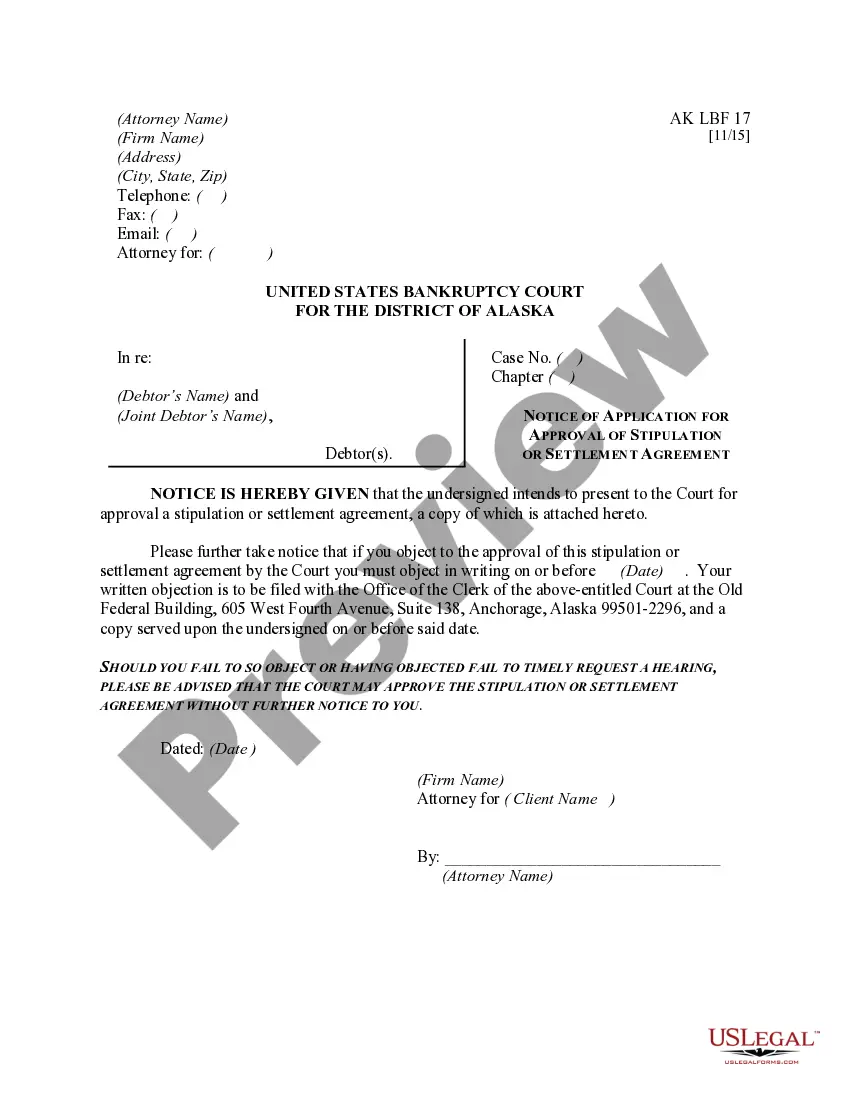
Alaska Letter from Landlord to Tenant where Tenant Complaint was caused by the deliberate or negligent act of Tenant or Tenant's guest
About this form
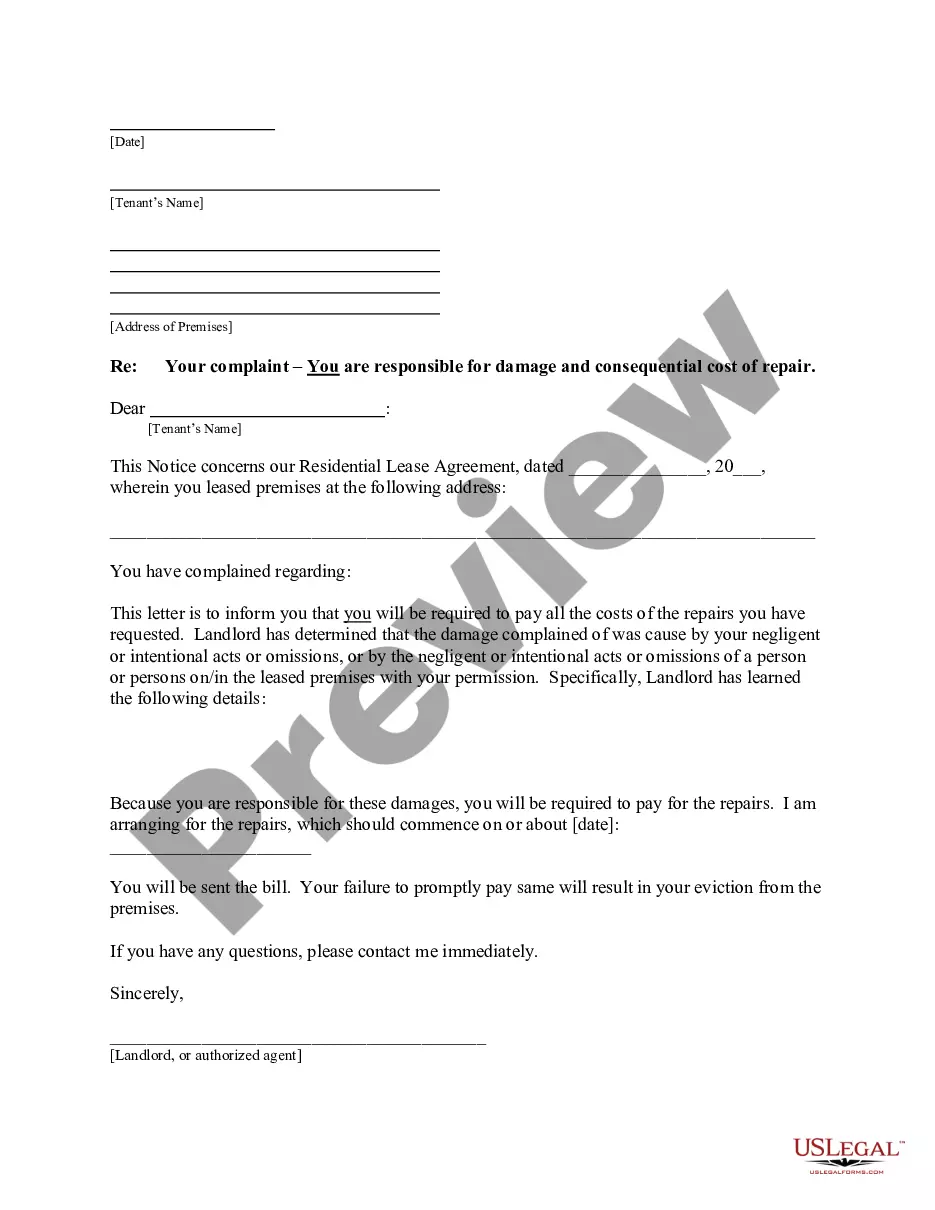
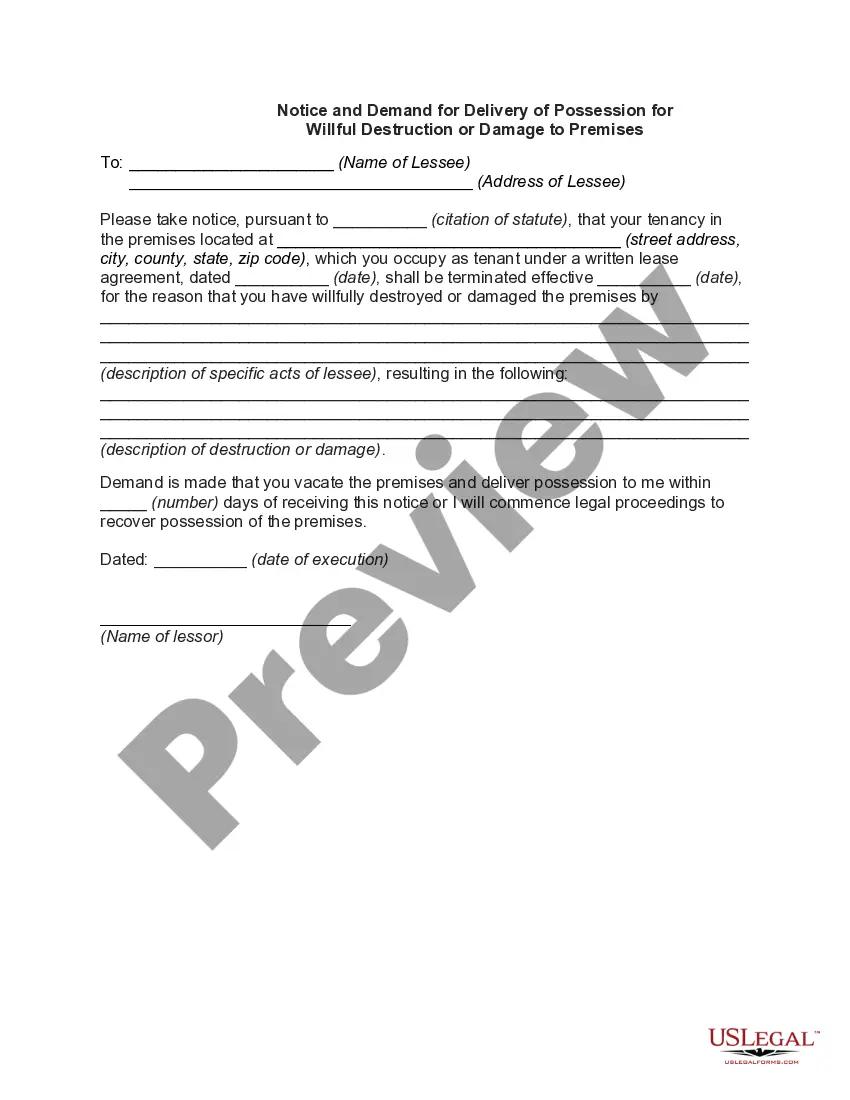
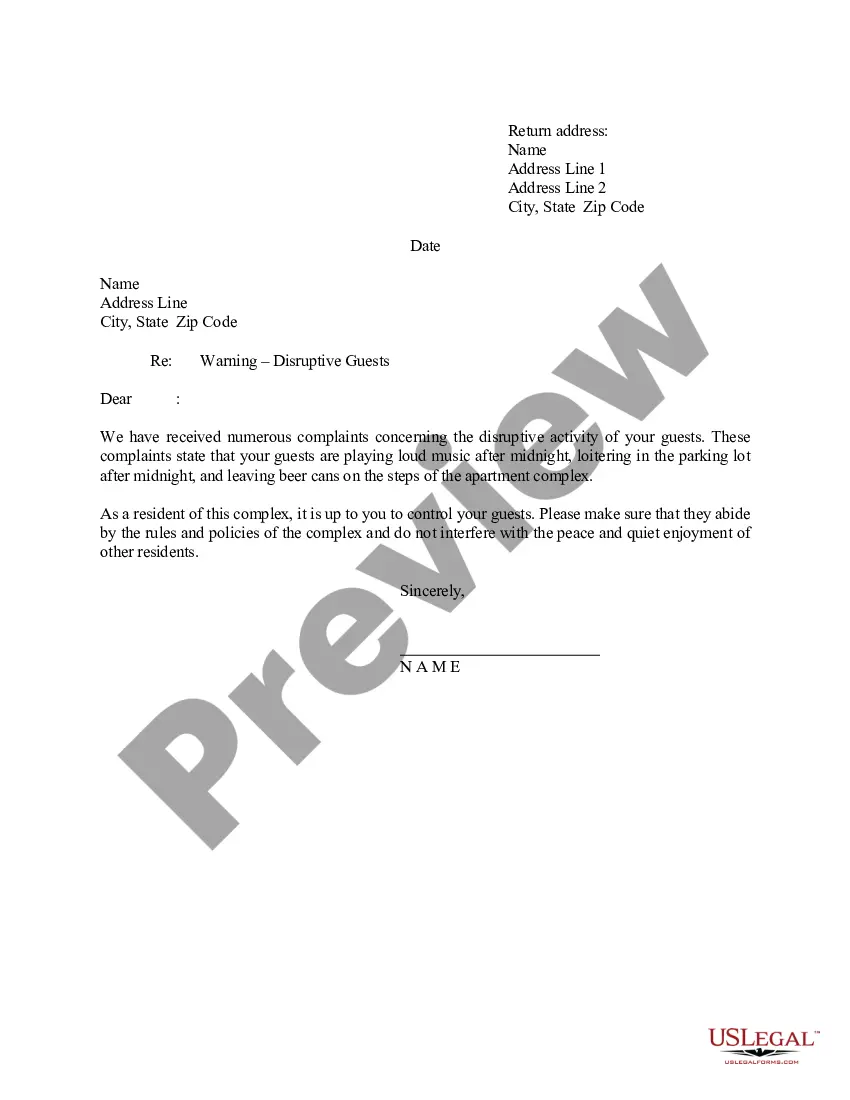
This Letter from Landlord to Tenant addresses a tenant's request for repair costs where the damage was caused by the tenant's or their guest's deliberate or negligent actions. This form serves as a notification from the landlord clarifying the responsibility for repairs, distinguishing it from other repair request forms by focusing on tenant-imposed damages.
Key components of this form
- Identification of the landlord or authorized agent.
- Statement of the tenant's request concerning repairs.
- Clarification of the cause of damage (negligent or intentional acts).
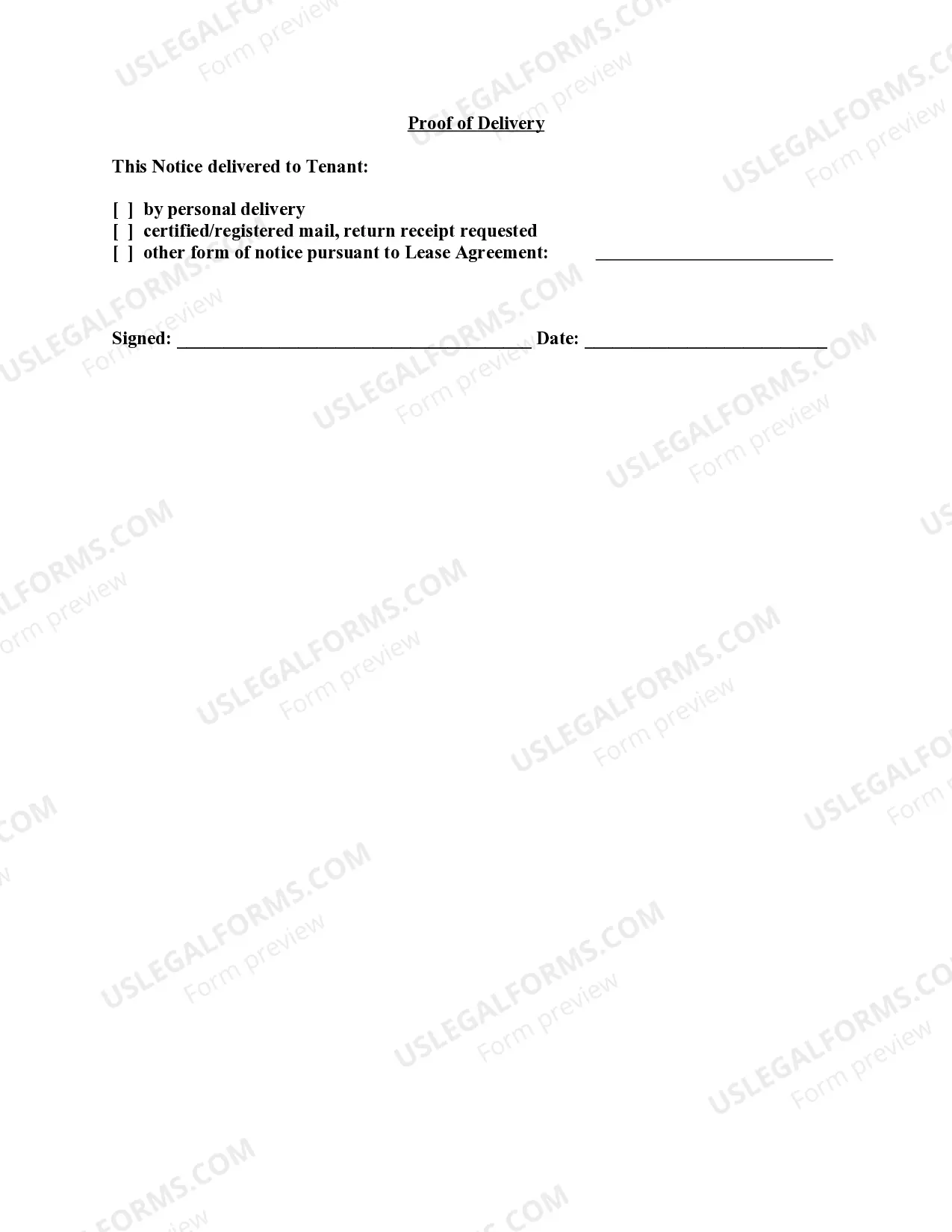
- Proof of delivery methods (personal delivery or certified mail).


When to use this form
This form is necessary when a landlord needs to formally inform a tenant that the costs of repairs for damages are their responsibility due to negligence or intentional acts. It's appropriate in situations where the landlord has determined the damage was not due to normal wear and tear or other non-negligent factors.
Who can use this document
- Landlords seeking to address repair costs incurred due to tenant actions.
- Property managers representing landlords in residential leases.
- Tenants who have awareness of damages caused by themselves or guests, to understand their liability.
How to prepare this document
- Identify the parties involved: the landlord and tenant.
- Detail the nature of the request concerning repairs.
- Clearly state the cause of damage attributed to the tenant or their guests.
- Sign the letter, including the landlord's name or authorized agent.
- Choose the method of delivery for sending the letter to the tenant.
Does this document require notarization?
This form does not typically require notarization to be legally valid. However, some jurisdictions or document types may still require it. US Legal Forms provides secure online notarization powered by Notarize, available 24/7 for added convenience.
Get your form ready online
Our built-in tools help you complete, sign, share, and store your documents in one place.
Make edits, fill in missing information, and update formatting in US Legal Forms—just like you would in MS Word.
Download a copy, print it, send it by email, or mail it via USPS—whatever works best for your next step.
Sign and collect signatures with our SignNow integration. Send to multiple recipients, set reminders, and more. Go Premium to unlock E-Sign.
If this form requires notarization, complete it online through a secure video call—no need to meet a notary in person or wait for an appointment.
We protect your documents and personal data by following strict security and privacy standards.

Make edits, fill in missing information, and update formatting in US Legal Forms—just like you would in MS Word.

Download a copy, print it, send it by email, or mail it via USPS—whatever works best for your next step.

Sign and collect signatures with our SignNow integration. Send to multiple recipients, set reminders, and more. Go Premium to unlock E-Sign.

If this form requires notarization, complete it online through a secure video call—no need to meet a notary in person or wait for an appointment.

We protect your documents and personal data by following strict security and privacy standards.
Common mistakes to avoid
- Failing to accurately document the specific damages and their causes.
- Not including clear details about the repair costs.
- Overlooking the proof of delivery requirements.
Why use this form online
- Convenient and quick access for immediate use.
- Editable templates allow for personalized details.
- Reliability in legal language designed by licensed attorneys.
Legal use & context
- This letter serves as a formal notice of denial regarding repair responsibilities.
- It helps protect landlords from claims of neglect about property maintenance.
- Providing clear communication can minimize potential disputes with tenants.
What to keep in mind
- The form clearly outlines landlord-tenant responsibilities regarding damages.
- It enhances communication and minimizes potential disputes.
- Proper completion and delivery are essential for legal effectiveness.
Looking for another form?

Form popularity
FAQ
Uninhabitable conditions can include dangerous ones, such as holes in the floor, unsafe or exposed wiring, or non-working air conditioning in dangerously hot summer months. Gross infestations of roaches, fleas or other pests are also uninhabitable conditions.
Landlord Rights When Tenant Destroys PropertyIf the tenant is evicted or already abandoned the property the landlord can deduct money from the security deposit. If the damages exceed the funds in the security deposit the landlord can sue the tenant in small claims court.
If you're seeking damages for emotional distress caused by a landlord's discrimination, or punitive damages for especially blatant and intentional discrimination, a lawsuit may well be your best bet. Understand what's involved in suing your landlord. You may file a lawsuit in either federal or state court.
A landlord cannot evict a tenant without an adequately obtained eviction notice and sufficient time. A landlord cannot retaliate against a tenant for a complaint. A landlord cannot forego completing necessary repairs or force a tenant to do their own repairs.A landlord cannot remove a tenant's personal belongings.
They have no right to complain about mess at all. So long as the actual structure of the house is not being damaged it is up to you how tidy you keep it. Obviously if you leave a mess behind when you leave they can make a fuss but whilst you are renting it, it is your home to be kept as you see fit.
Hire a handyman to do the job. New landlords like doing everything on their own. State it in the lease. The truth is that not a lot of landlords specify cleaning in the lease. Provide information and cleaning supplies. Sometimes, tenants just don't have experiences in cleaning. Keep calm and don't lose sleep.
Rest assured there are no privacy laws limiting what a landlord can or can't disclose about a previous tenant. You can say anything you wish. However, our advice is to stick to the facts and only give information that you can support with written proof so that your former tenants won't accuse you of slander.
In most states, if the apartment is left so dirty that it will cost the landlord more than a normal turn cost (the cost for cleaning a unit and preparing it for a new tenant), the landlord may be justified in withholding the deposit.
The landlord had a duty to reasonably maintain the property; The landlord knew or should have known of the dangerous condition; The landlord breached their duty by failing to repair/fix the dangerous condition;