Alaska Warranty Deed from Individual to Husband and Wife
About this form
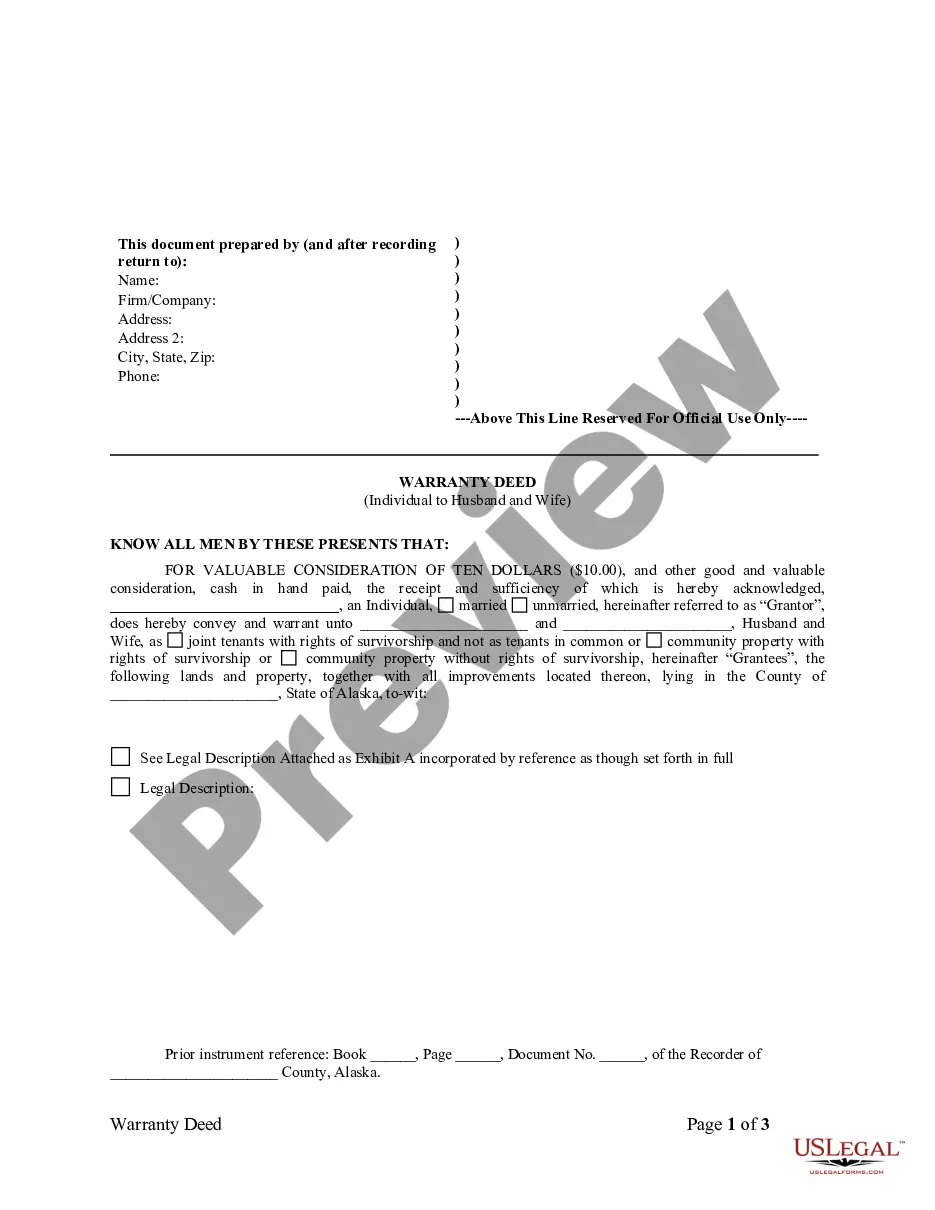
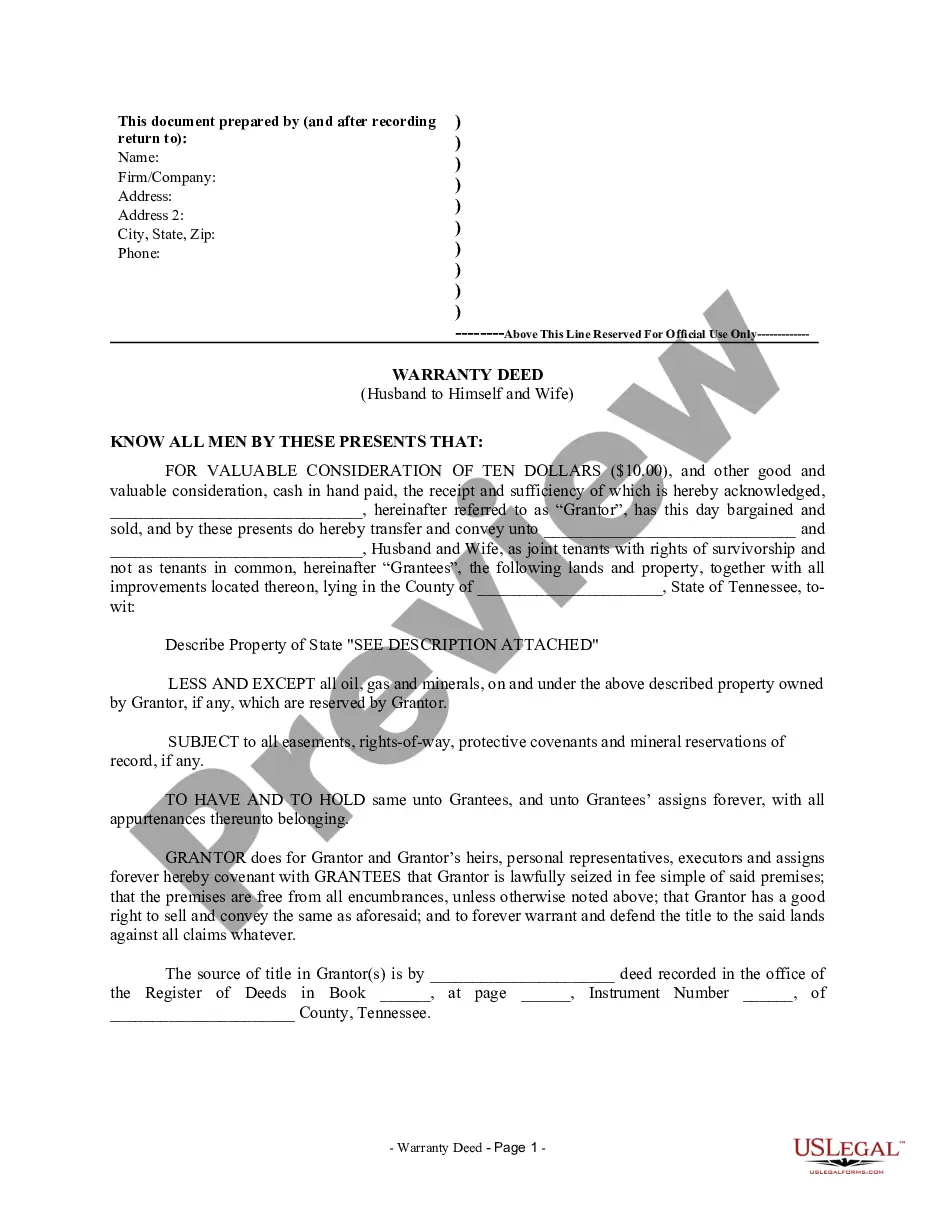
The Warranty Deed from Individual to Husband and Wife is a legal document used to transfer ownership of real property from an individual (the Grantor) to a married couple (the Grantees). This form ensures that the Grantor conveys clear title to the property, free of certain encumbrances, and specifically reserves any oil, gas, or minerals beneath the land. It is crucial for confirming ownership rights and differs from other types of deeds by addressing married couples specifically as the recipients of the property transfer.
Key components of this form
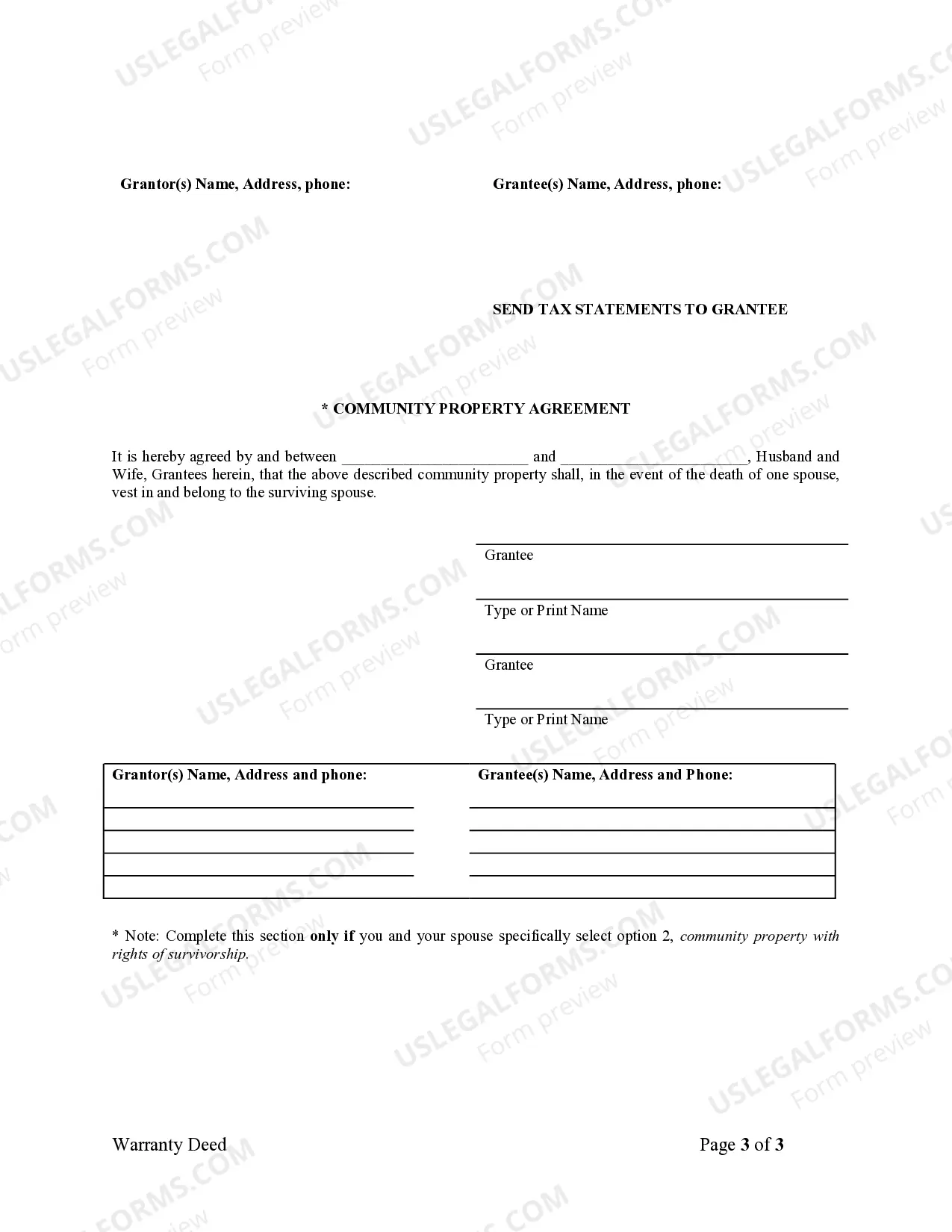
- Identification of the Grantor and Grantees: Includes the names and addresses of both parties.
- Legal Description of Property: A detailed description of the property being transferred, often referenced as an attachment.
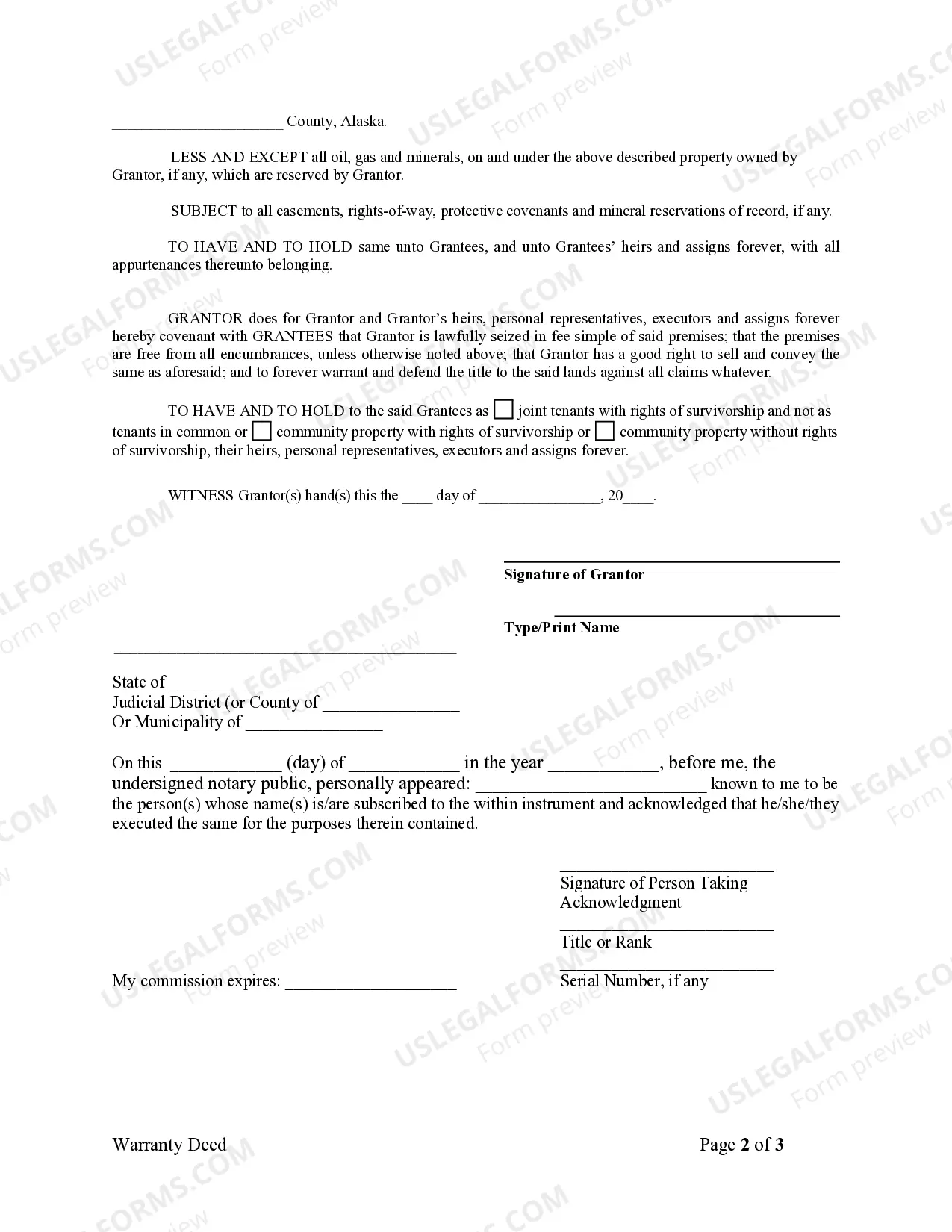
- Grantor's Covenants: Assurance that the Grantor is legally entitled to transfer the property and that it is free from encumbrances, except as noted.
- Reservations: Details any reserved rights regarding minerals and resources beneath the property.
- Notary Section: Verification of signatures by a notary public to authenticate the deed.





When to use this document
This form should be used when an individual wishes to transfer property ownership to a husband and wife. Specific scenarios include personal property transfers between family members, gifting property to a spouse, or during estate planning. It is particularly useful when clear title needs to be established or when property is sold directly between individuals without the involvement of a real estate agent or broker.
Who this form is for
- Individuals transferring property to a married couple.
- Couples acquiring property from an individual.
- Estate planners seeking to gift property to spouses.
How to prepare this document
- Identify the parties: Enter the names and addresses of the Grantor and both Grantees.
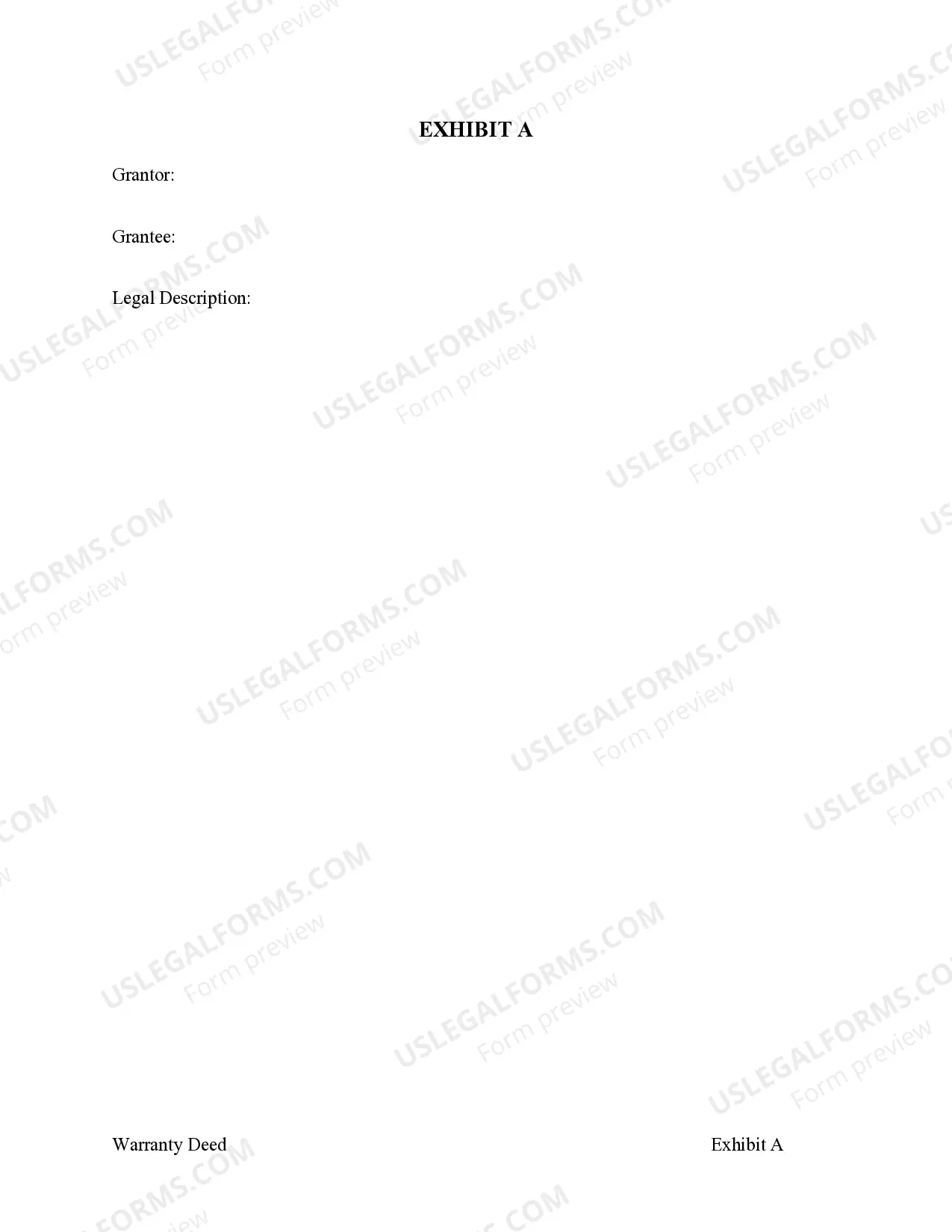
- Specify the property: Provide a clear legal description of the property being transferred, typically attached as an exhibit.
- Include exceptions: Note any reservations for mineral rights or encumbrances applicable to the property.
- Sign the document: The Grantor must sign the document in the presence of a notary public.
- Notarize the form: Ensure the notary public completes their section to validate the deed.
Notarization guidance
This form needs to be notarized to ensure legal validity. US Legal Forms provides secure online notarization powered by Notarize, allowing you to complete the process through a verified video call, available anytime.
Get your form ready online
Our built-in tools help you complete, sign, share, and store your documents in one place.
Make edits, fill in missing information, and update formatting in US Legal Forms—just like you would in MS Word.
Download a copy, print it, send it by email, or mail it via USPS—whatever works best for your next step.
Sign and collect signatures with our SignNow integration. Send to multiple recipients, set reminders, and more. Go Premium to unlock E-Sign.
If this form requires notarization, complete it online through a secure video call—no need to meet a notary in person or wait for an appointment.
We protect your documents and personal data by following strict security and privacy standards.

Make edits, fill in missing information, and update formatting in US Legal Forms—just like you would in MS Word.

Download a copy, print it, send it by email, or mail it via USPS—whatever works best for your next step.

Sign and collect signatures with our SignNow integration. Send to multiple recipients, set reminders, and more. Go Premium to unlock E-Sign.

If this form requires notarization, complete it online through a secure video call—no need to meet a notary in person or wait for an appointment.

We protect your documents and personal data by following strict security and privacy standards.
Common mistakes
- Failing to include a complete legal description of the property.
- Not properly notarizing the deed, which can invalidate the transfer.
- Leaving out reservations for mineral rights, if applicable.
- Not ensuring both Grantees sign the form if required.
Benefits of completing this form online
- Convenience: Download the form from anywhere, at any time.
- Editability: Customize the form to fit your specific property transfer needs.
- Legal reliability: Each form is drafted by licensed attorneys to meet legal standards.
Looking for another form?


Form popularity
FAQ
Adding someone to your house deed requires the filing of a legal form known as a quitclaim deed. When executed and notarized, the quitclaim deed legally overrides the current deed to your home. By filing the quitclaim deed, you can add someone to the title of your home, in effect transferring a share of ownership.
Typically, the lender will provide you with a copy of the deed of trust after the closing. The original warranty deeds are often mailed to the grantee after they are recorded. These are your original copies and should be kept in a safe place, such as a fireproof lockbox or a safe deposit box at a financial institution.
Two of the most common ways to transfer property in a divorce are through an interspousal transfer deed or quitclaim deed. When spouses own property together, but then one spouse executes an interspousal transfer or a quitclaim deed, this is known as transmutation.
A In order to make your partner a joint owner you will need to add his name at the Land Registry, for which there is a fee of £280 (assuming you transfer half the house to him). You won't, however, have to pay capital gains tax, as gifts between civil partners (and spouses) are tax free.
In California, all property bought during the marriage with income that was earned during the marriage is deemed "community property." The law implies that both spouses own this property equally, regardless of which name is on the title deed.
If you live in a common-law state, you can keep your spouse's name off the title the document that says who owns the property.You can put your spouse on the title without putting them on the mortgage; this would mean that they share ownership of the home but aren't legally responsible for making mortgage payments.
In order to make the Warranty Deed legally binding, the Seller needs to sign it front of a notary public. Then signed and notarized deed must be filed at the city or county office for recording property documents. Before filing with this office all previously billed property taxes must be paid in full.
The easiest way to grant your spouse title to your home is via a quitclaim deed (Californians generally use an interspousal grant deed). With a quitclaim deed, you can name your spouse as the property's joint owner. The quitclaim deed must include the property's description, including its boundary lines.
If you've recently married and already own a home or other real estate, you may want to add your new spouse to the deed for your property so the two of you own it jointly. To add a spouse to a deed, all you have to do is literally fill out, sign and record a new deed in your county recorder's office.