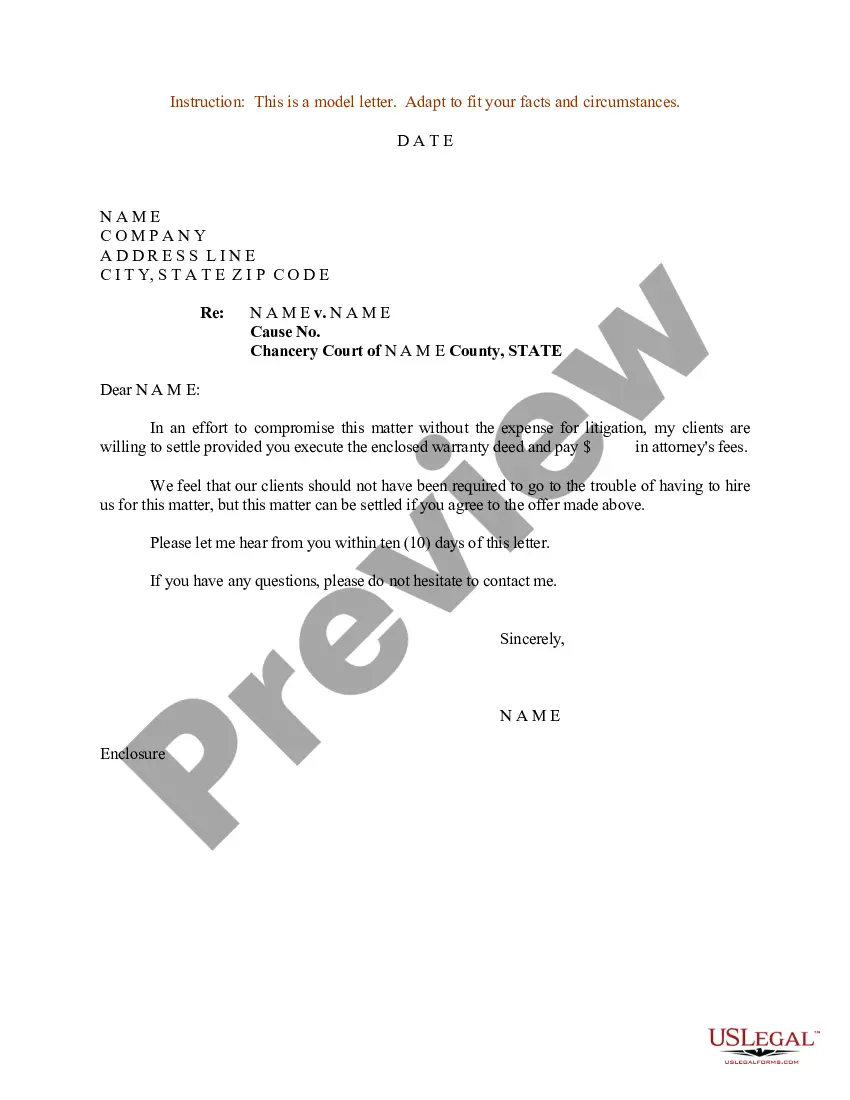
Sample Letter for Settlement - Offer to Settle with Condition
What this document covers
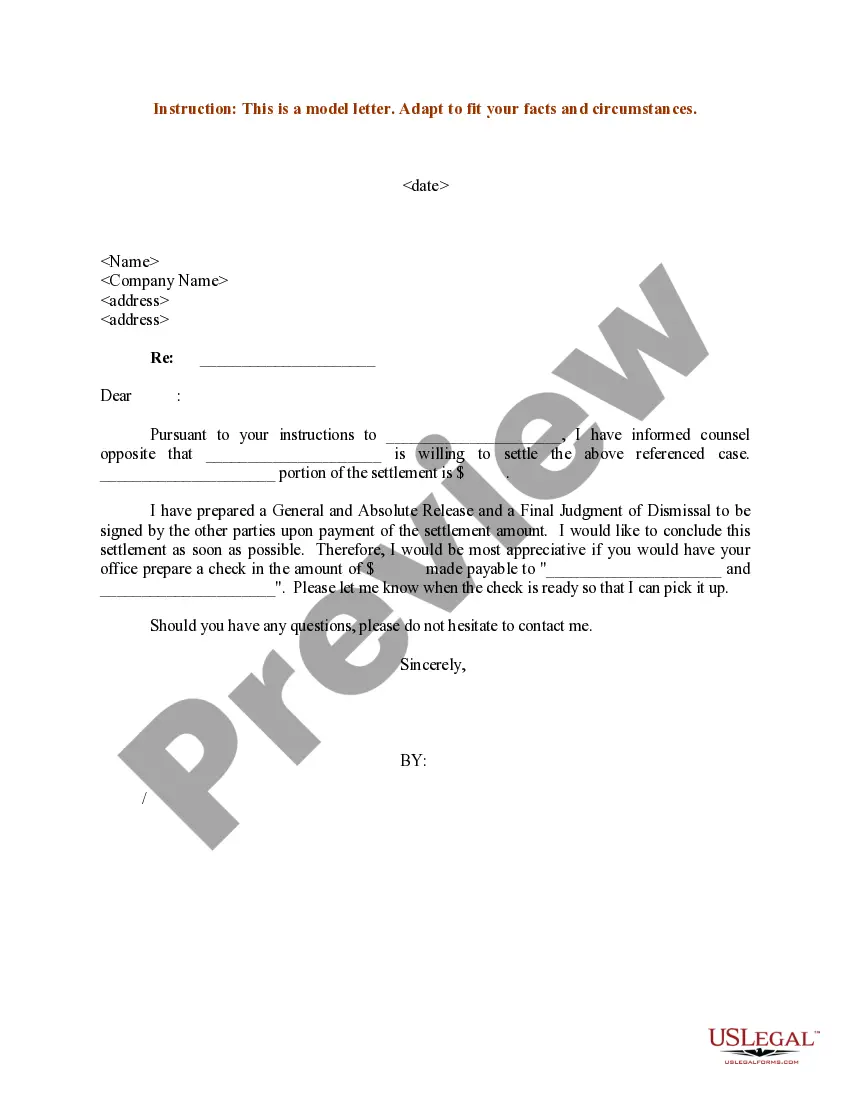
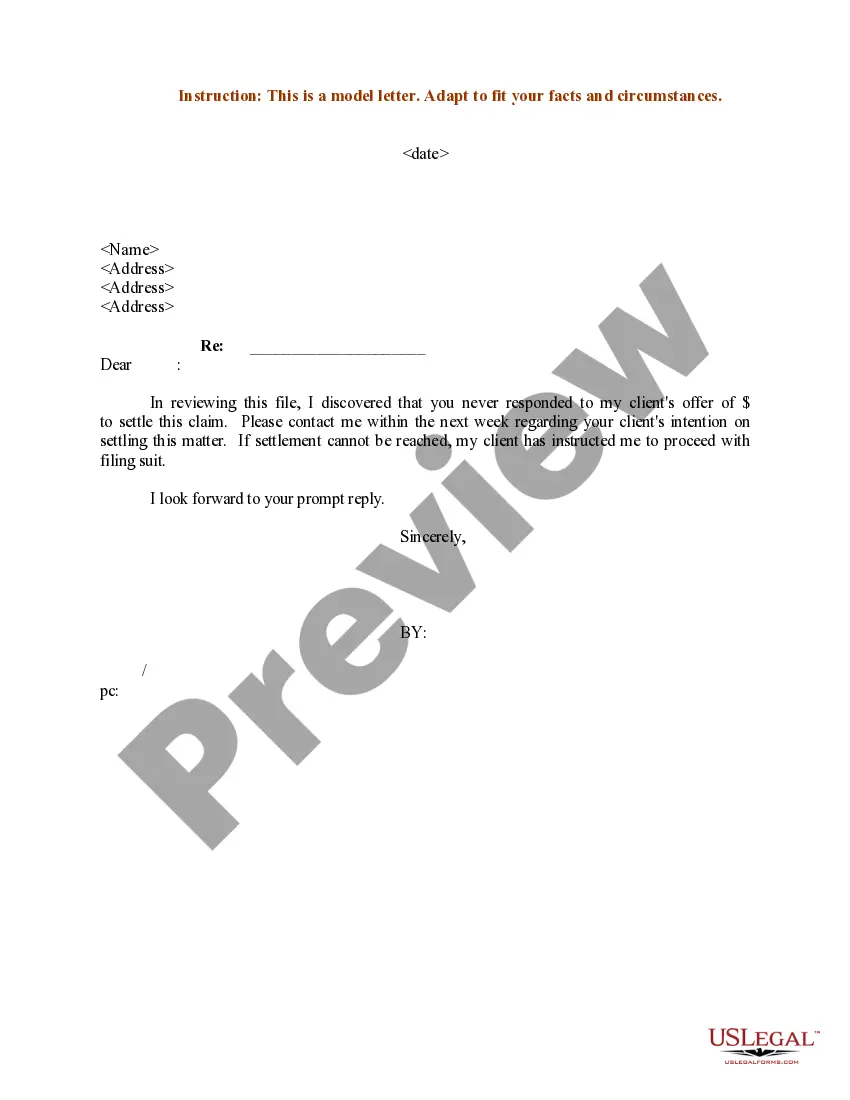
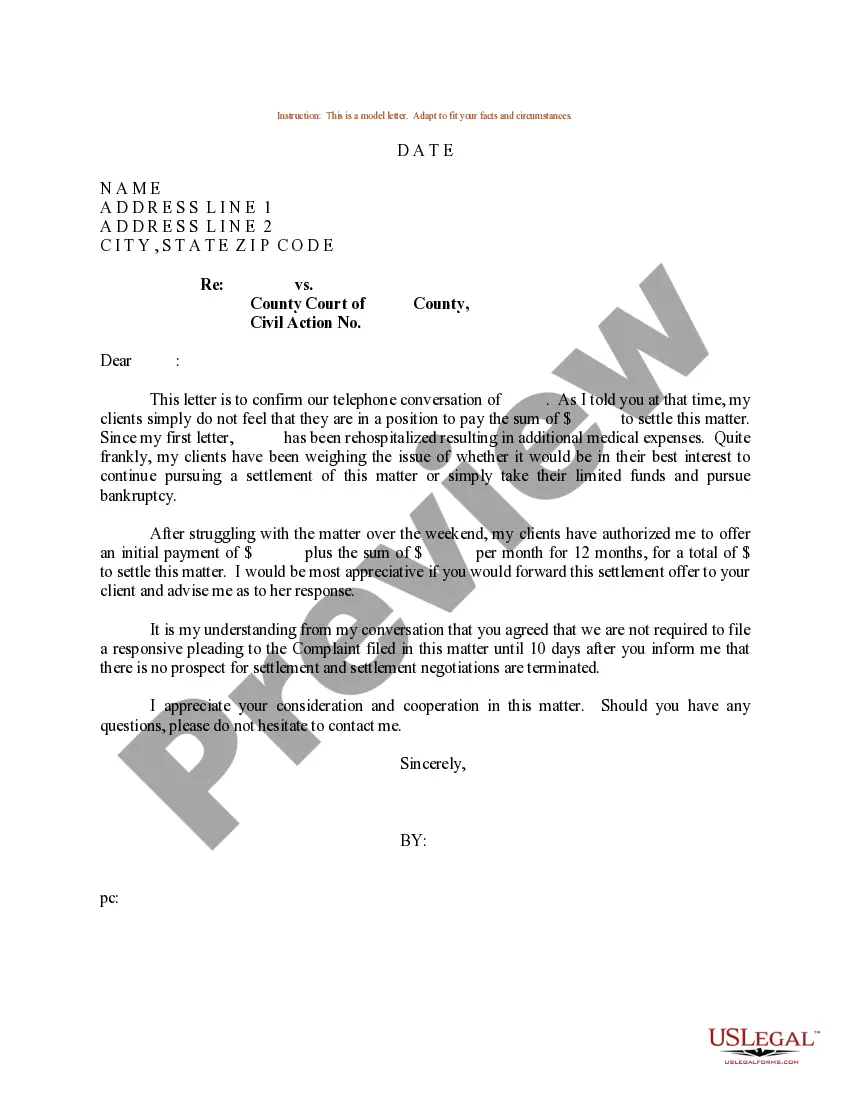
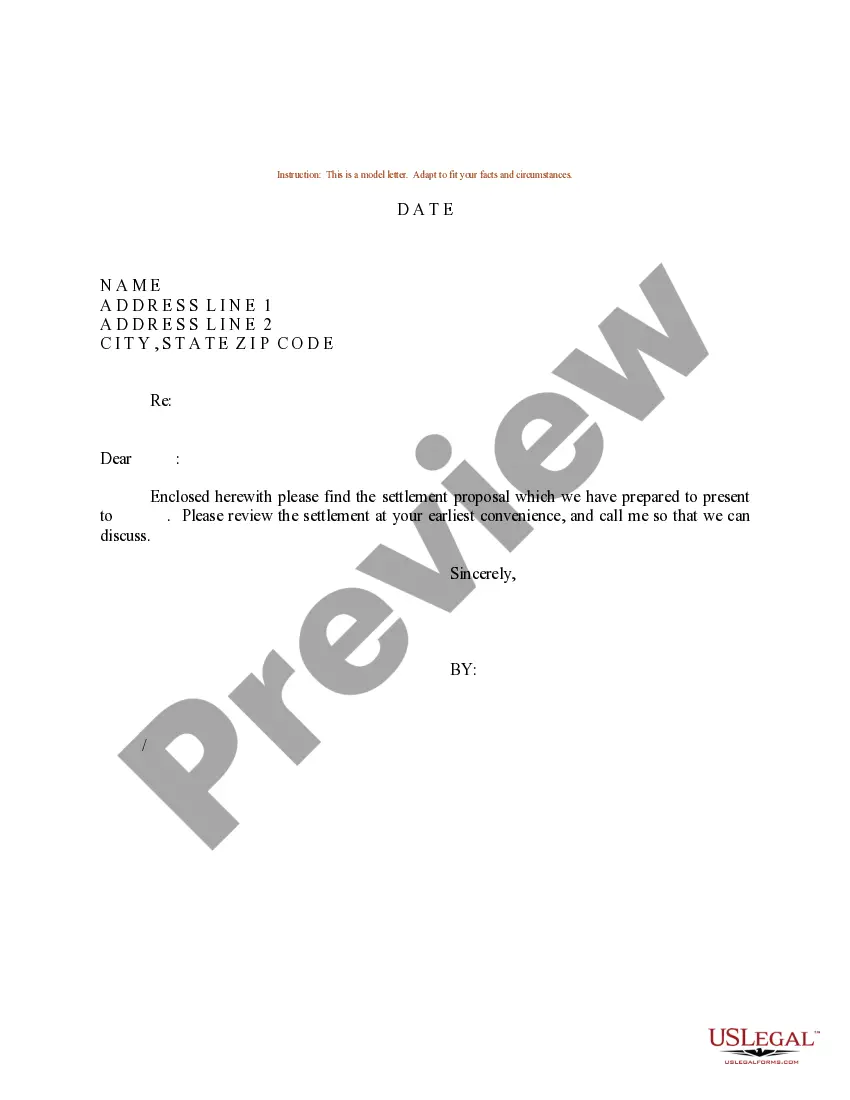
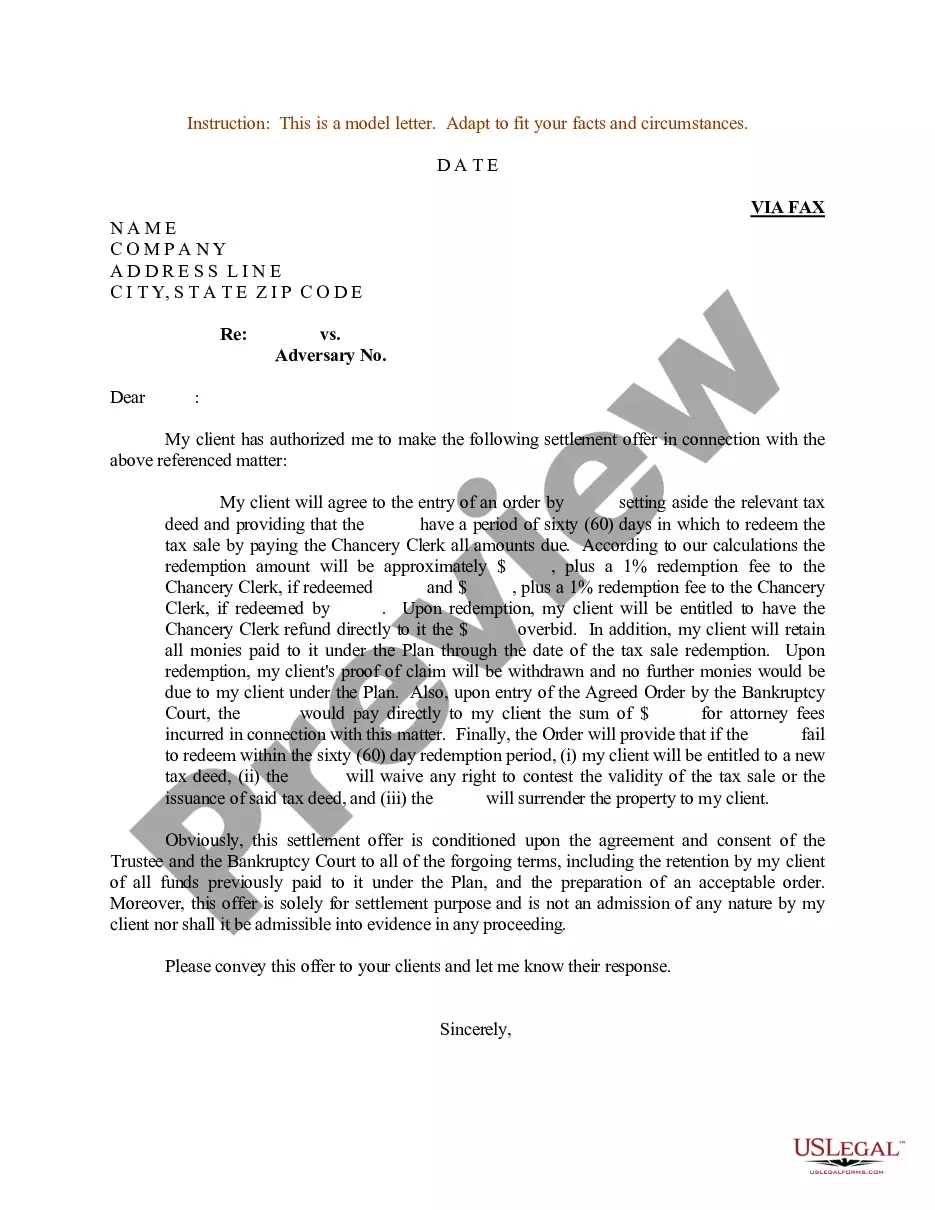
The Sample Letter for Settlement - Offer to Settle with Condition is a legal document used to propose a settlement offer in a dispute. This letter outlines the terms under which one party is willing to resolve a dispute amicably, often before proceeding to court. Unlike other settlement letters, this form includes specific conditions that must be met for the offer to be valid, making it an essential tool for negotiating settlements effectively.
Key parts of this document
- Date: This is the date the letter is written.
- Sender's name and address: The contact details of the person making the settlement offer.
- Recipient's name: The name of the party to whom the settlement offer is addressed.
- Subject line: A reference to the specific dispute or case.
- Settlement terms: Detailed conditions under which the settlement is proposed.
- Closing signature: The sender's name and any required enclosure indication.
When to use this form
This form is used when one party wants to formally propose a settlement to another party regarding a dispute. It is beneficial to use this letter when negotiations have stalled or when there is a need to outline specific conditions that must be met for the settlement to be accepted. This letter can serve as a formal communication that may prevent further legal action if both parties agree.
Who can use this document
- Individuals engaged in a legal dispute seeking an amicable resolution.
- Business entities looking to negotiate settlement terms without court involvement.
- Attorneys drafting settlements for clients in various legal matters.
How to complete this form
- Enter the current date at the top of the letter.
- Fill out your name and address in the sender's section.
- Include the recipient's name and address.
- State the subject or reference of the dispute clearly.
- Clearly outline the terms and conditions of the settlement offer.
- Sign the letter with your name and mention any enclosures if applicable.
Notarization guidance
In most cases, this form does not require notarization. However, some jurisdictions or signing circumstances might. US Legal Forms offers online notarization powered by Notarize, accessible 24/7 for a quick, remote process.
Get your form ready online
Our built-in tools help you complete, sign, share, and store your documents in one place.
Make edits, fill in missing information, and update formatting in US Legal Forms—just like you would in MS Word.
Download a copy, print it, send it by email, or mail it via USPS—whatever works best for your next step.
Sign and collect signatures with our SignNow integration. Send to multiple recipients, set reminders, and more. Go Premium to unlock E-Sign.
If this form requires notarization, complete it online through a secure video call—no need to meet a notary in person or wait for an appointment.
We protect your documents and personal data by following strict security and privacy standards.

Make edits, fill in missing information, and update formatting in US Legal Forms—just like you would in MS Word.

Download a copy, print it, send it by email, or mail it via USPS—whatever works best for your next step.

Sign and collect signatures with our SignNow integration. Send to multiple recipients, set reminders, and more. Go Premium to unlock E-Sign.

If this form requires notarization, complete it online through a secure video call—no need to meet a notary in person or wait for an appointment.

We protect your documents and personal data by following strict security and privacy standards.
Common mistakes
- Not specifying clear terms for the settlement.
- Failing to include accurate contact details for all parties.
- Omitting a subject line or reference to the dispute.
- Neglecting to proofread for grammatical or spelling errors.
Benefits of completing this form online
- Convenient access to the form, allowing for quick downloads.
- Editable fields to customize the letter as needed.
- Reliability and assurance that the form is drafted based on legal standards.
Main things to remember
- The Sample Letter for Settlement allows you to propose terms for resolving a legal dispute.
- It includes specific conditions that must be met for the settlement to be valid.
- It is suitable for a variety of situations, including personal and business disputes.
- Ensure clarity and specificity to avoid misunderstandings during negotiations.
Looking for another form?
Form popularity
FAQ
What percentage should I offer a full and final settlement? It depends on what you can afford, but you should offer equal amounts to each creditor as a full and final settlement. For example, if the lump sum you have is 75% of your total debt, you should offer each creditor 75% of the amount you owe them.
Your debt settlement proposal letter must be formal and clearly state your intentions, as well as what you expect from your creditors. You should also include all the key information your creditor will need to locate your account on their system, which includes: Your full name used on the account. Your full address.
The creditor and/or debt collectors name. The date the letter was drafted. Your name. Your account number.
Your debt settlement proposal letter must be formal and clearly state your intentions, as well as what you expect from your creditors. You should also include all the key information your creditor will need to locate your account on their system, which includes: Your full name used on the account. Your full address.
From the company. I am sorry to state that even after the expiry of 2026. days from my resignation, my full & final settlement is not made which is a cause of concern to me. I, therefore, request that my full & final settlement be done & any amount due be sent to me along with the original Statement at the earliest.
Treat the letter as a contract between you and your creditor. Include your personal information and account number for easy identification. You'll need to outline the amount you can pay and what you expect in return. If you want to propose a good settlement offer, consider offering around 30 percent of what you owe.
Offer a specific dollar amount that is roughly 30% of your outstanding account balance. The lender will probably counter with a higher percentage or dollar amount. If anything above 50% is suggested, consider trying to settle with a different creditor or simply put the money in savings to help pay future monthly bills.