Wyoming Last Will and Testament for Divorced person not Remarried with Minor Children
About this form
This Last Will and Testament is specifically designed for a divorced person who is not remarried and has minor children. It outlines how your property should be distributed upon your death, the appointment of guardians for your minor children, and a personal representative to execute your wishes. This will is tailored to accommodate the unique considerations of individuals with previous marriages and minors, ensuring that your assets are allocated according to your current family structure and preferences.
Key parts of this document
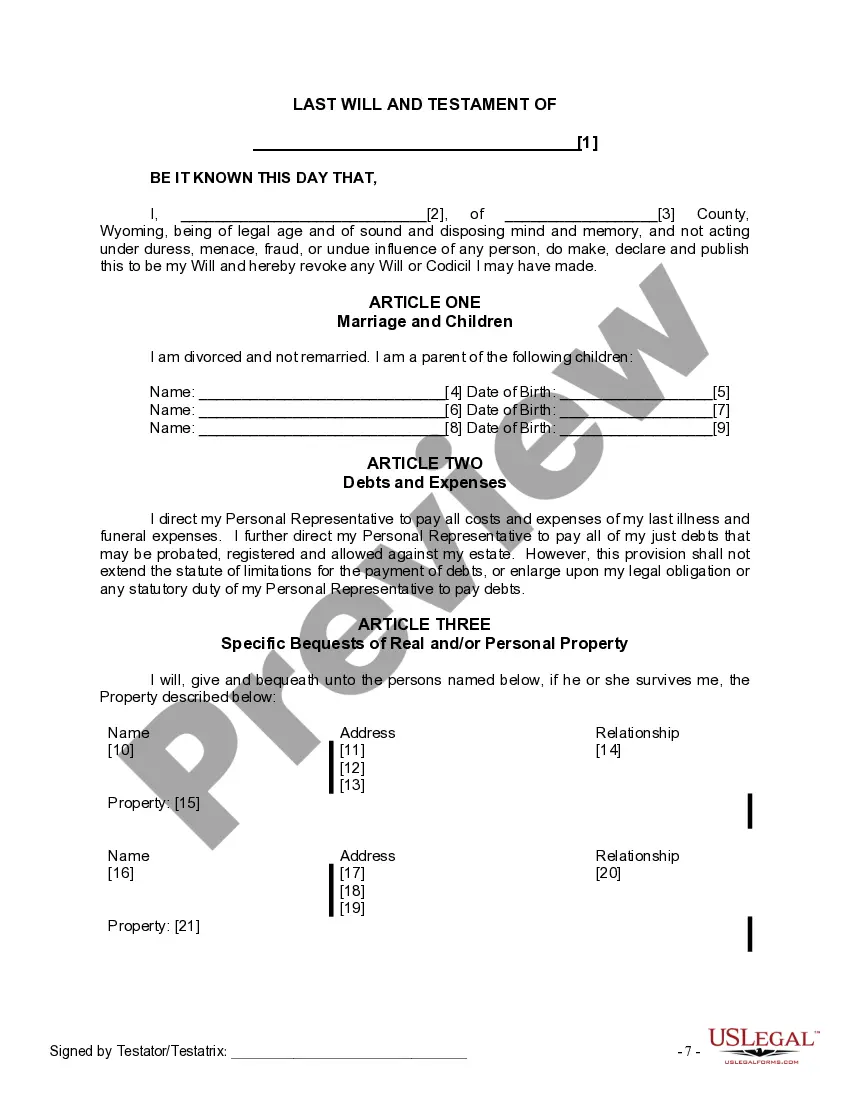
- Article One: Identifies your marital status and lists your children.
- Article Three: Allows for specific bequests of property to named individuals.
- Article Four: Designates how the remainder of your estate will be distributed among your children.
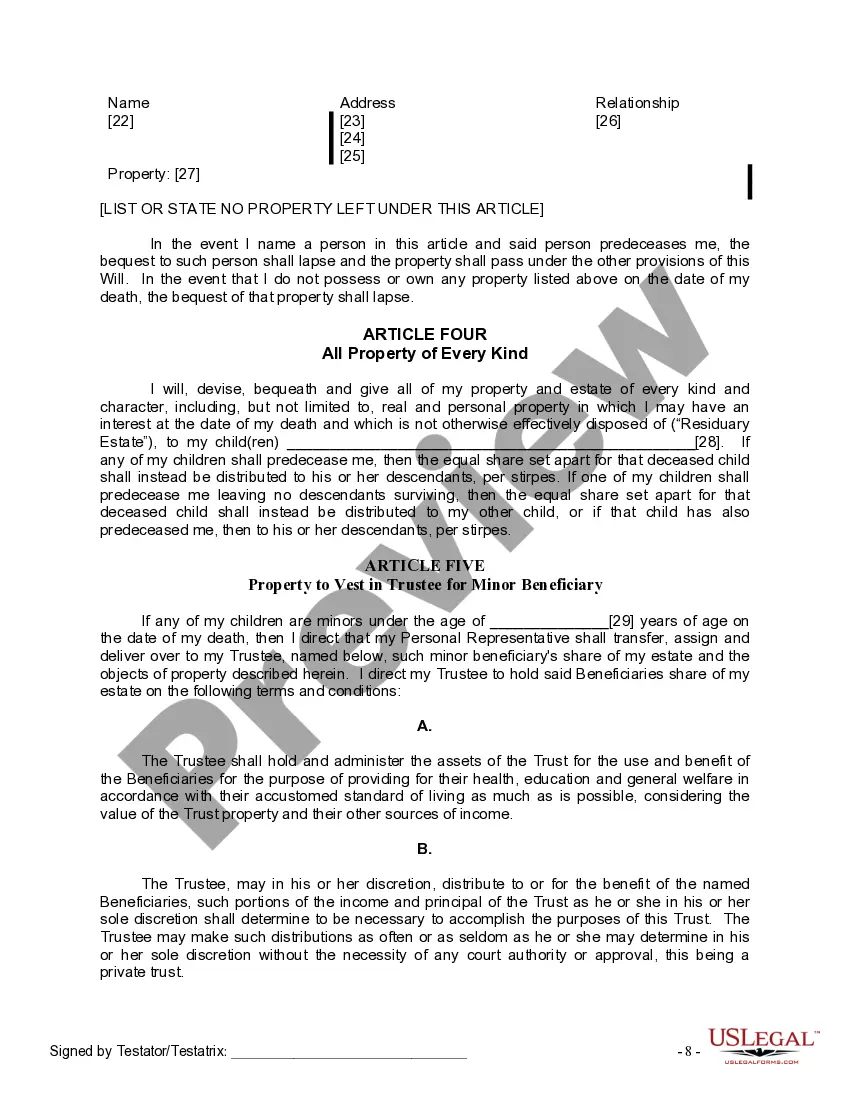
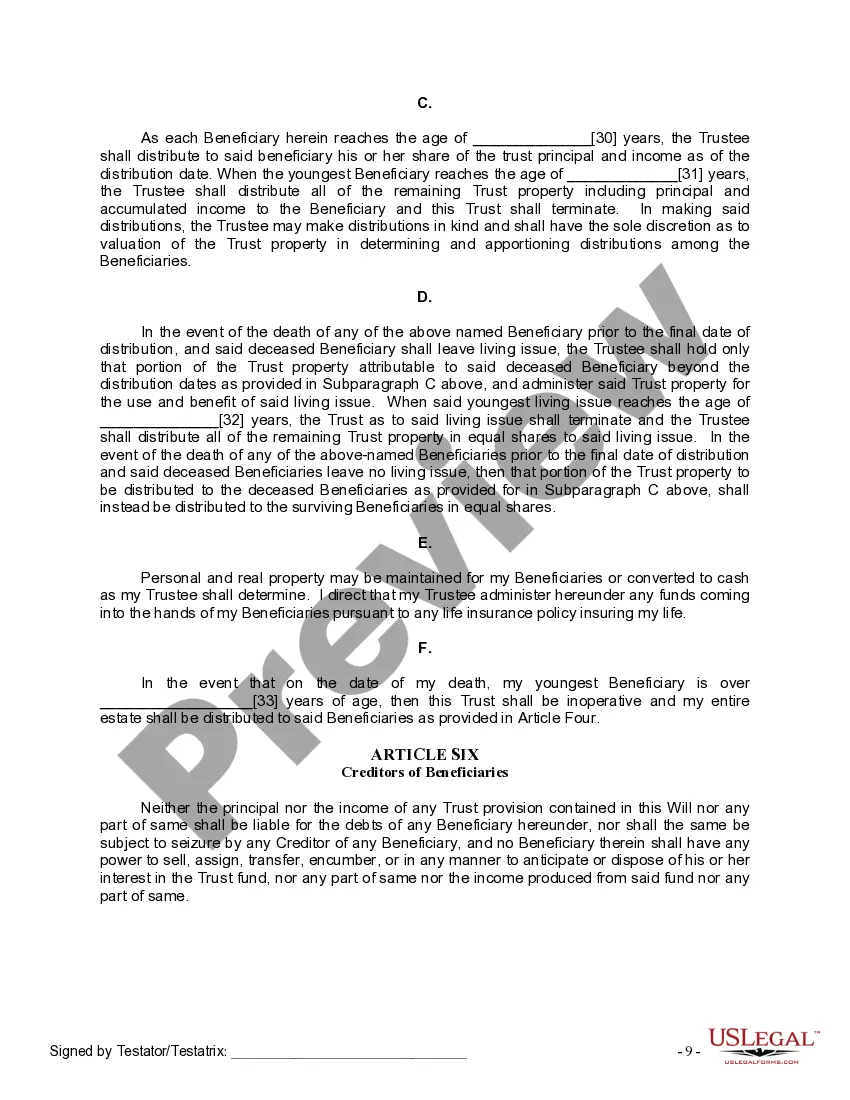
- Article Five: Establishes a trust for minor beneficiaries until they reach a specified age.
- Article Eight: Appoints a guardian for your minor children.
- Article Nine: Names your personal representative to oversee the execution of your will.


When this form is needed
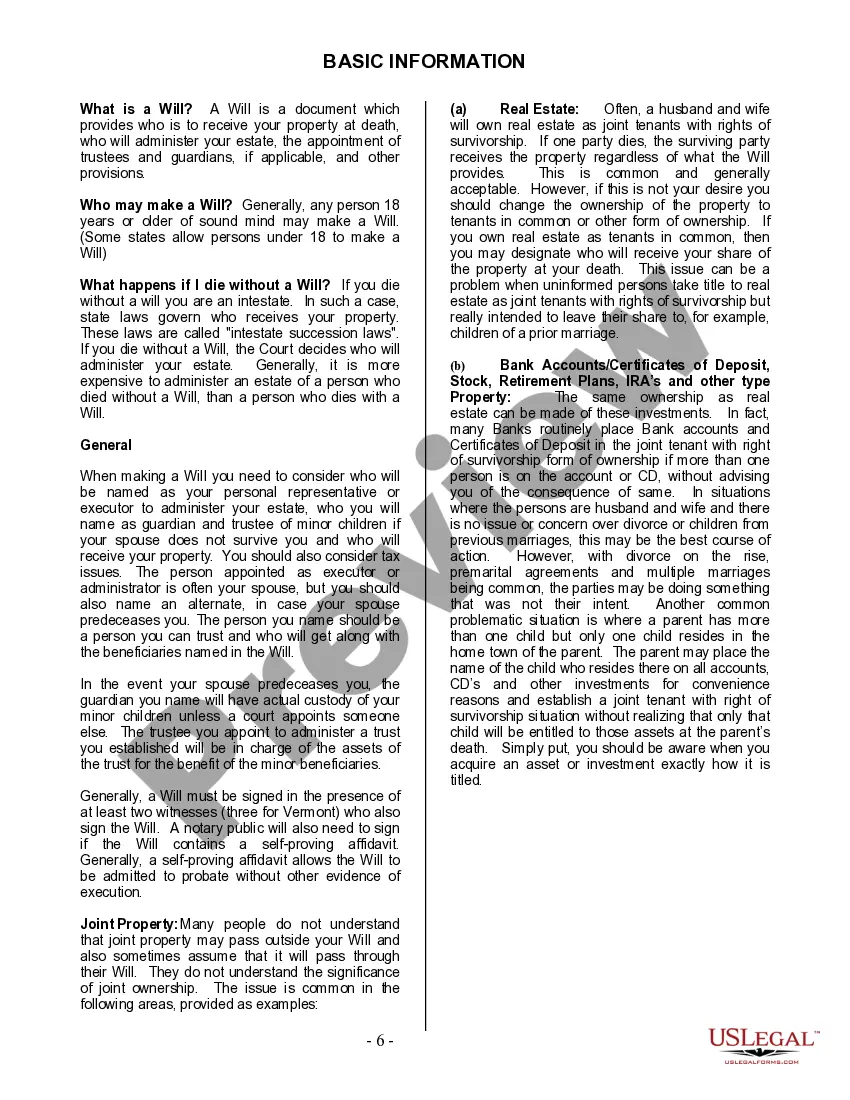
This form is essential when you want to ensure that your minor children are protected and provided for after your death, especially if you are divorced and have not remarried. You should use this Last Will and Testament if you have specific wishes regarding the distribution of your assets or wish to appoint a guardian for your children in the event of your passing.
Who should use this form
This form is intended for:
- Divorced individuals who have children and have not remarried.
- Parents looking to establish guardianship for their minor children.
- Those wanting to outline specific bequests to ensure their wishes are followed.
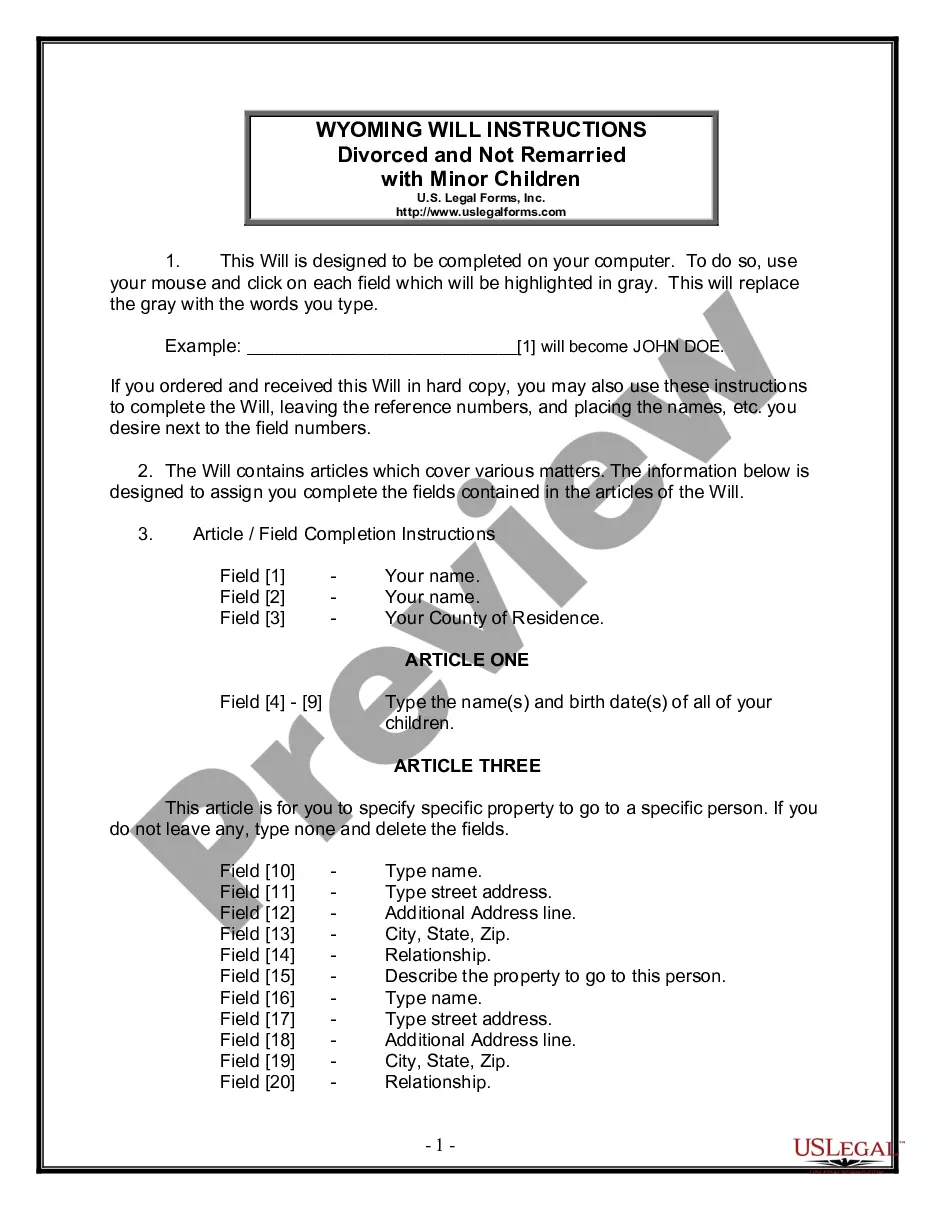
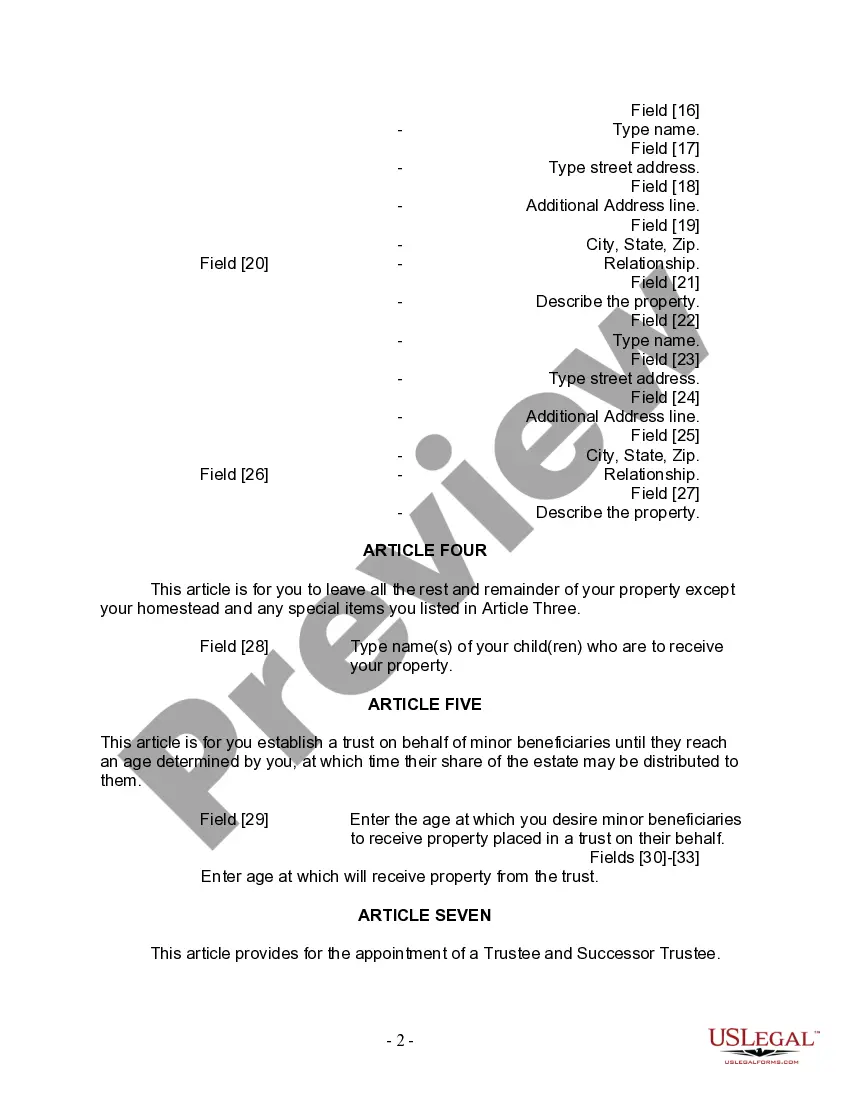
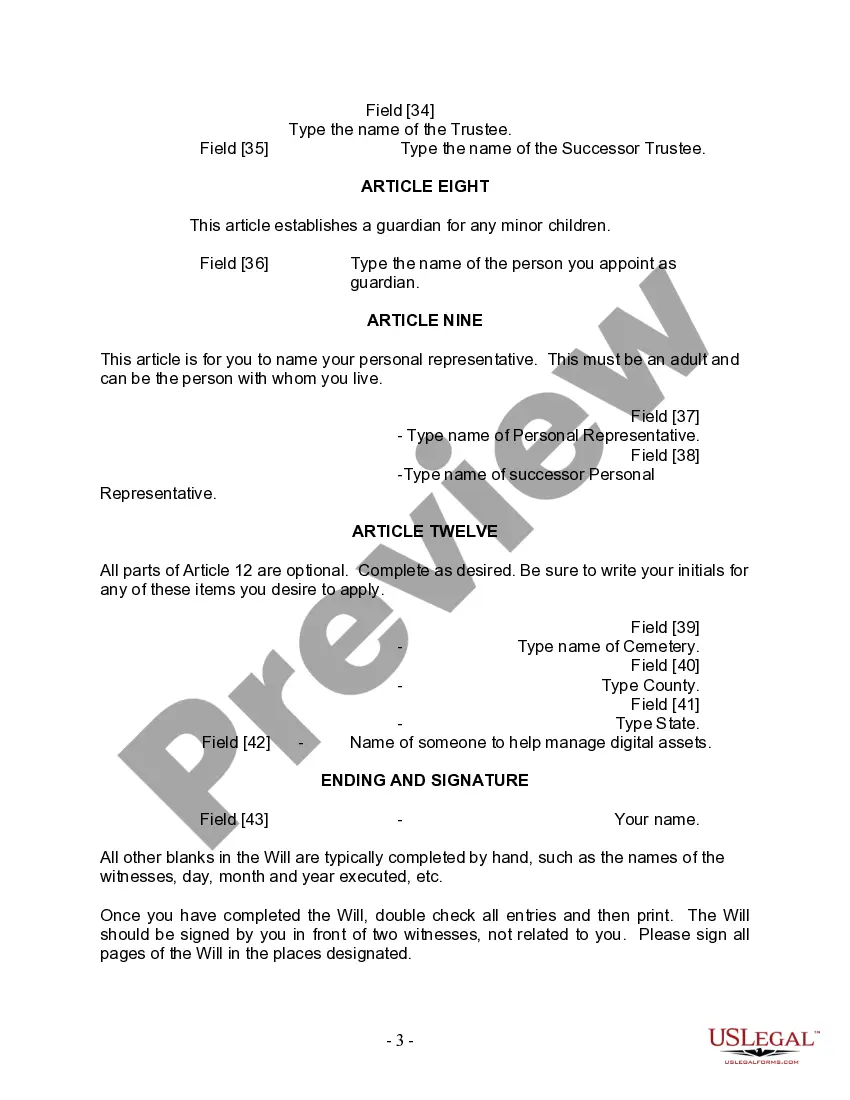
Instructions for completing this form
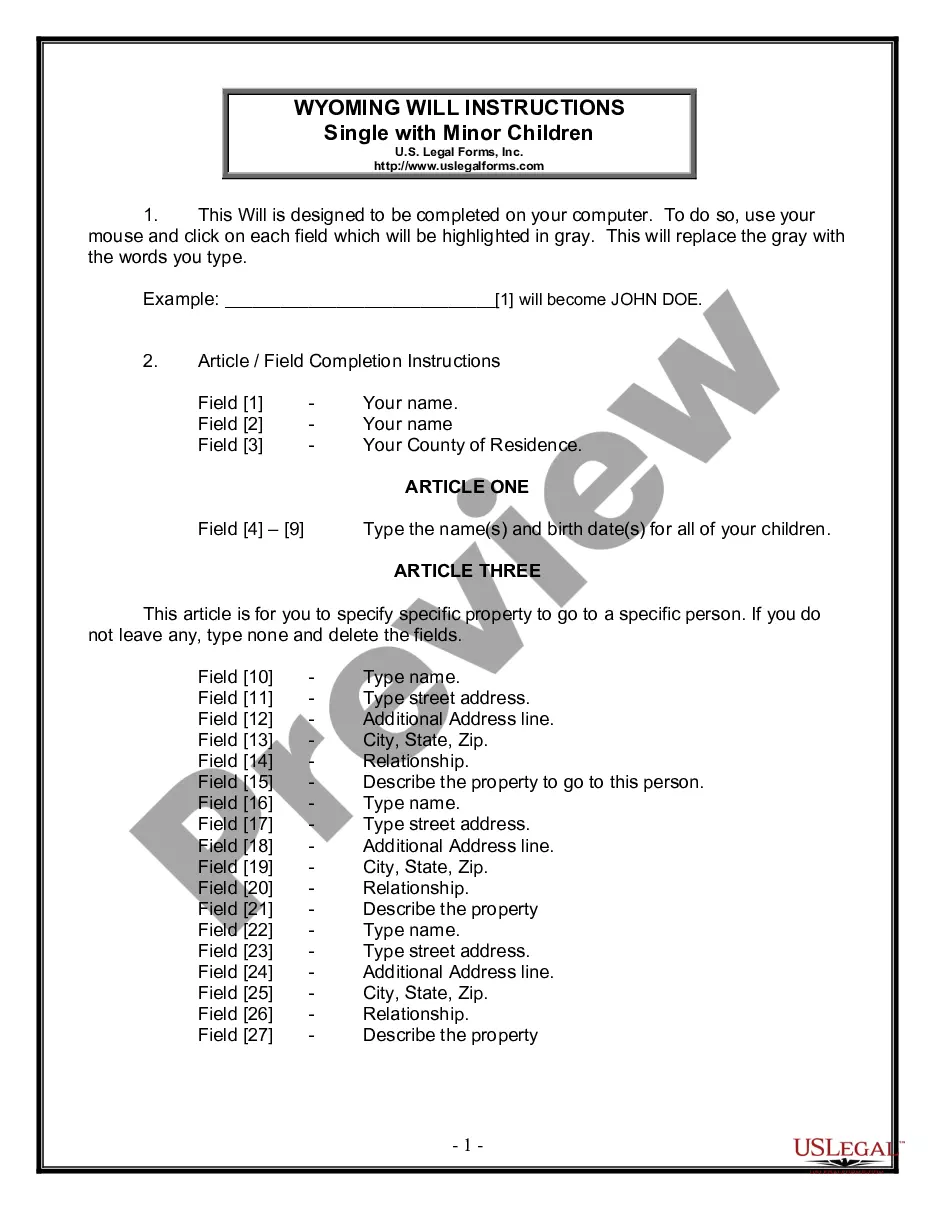
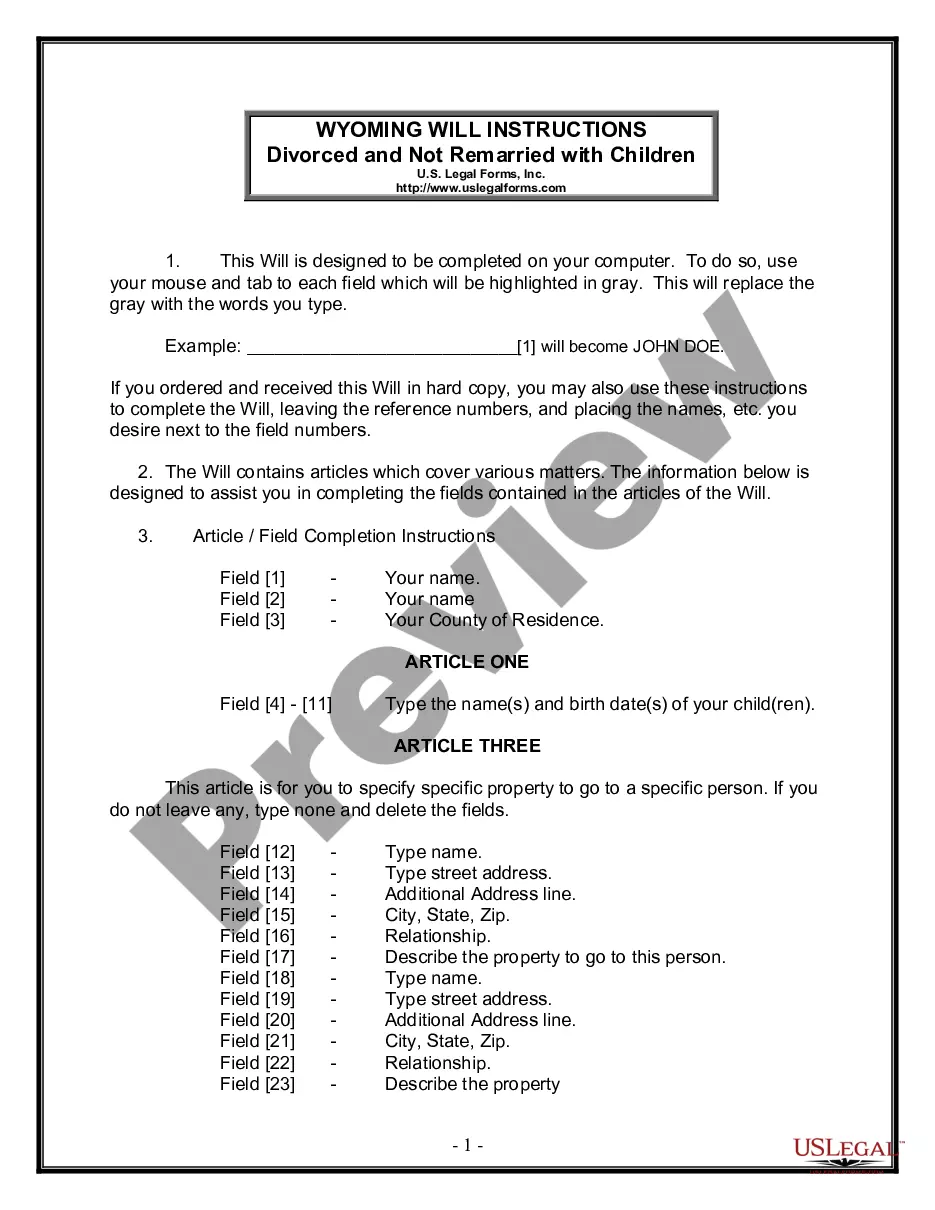
- Identify your name and the county of residence in the designated fields.
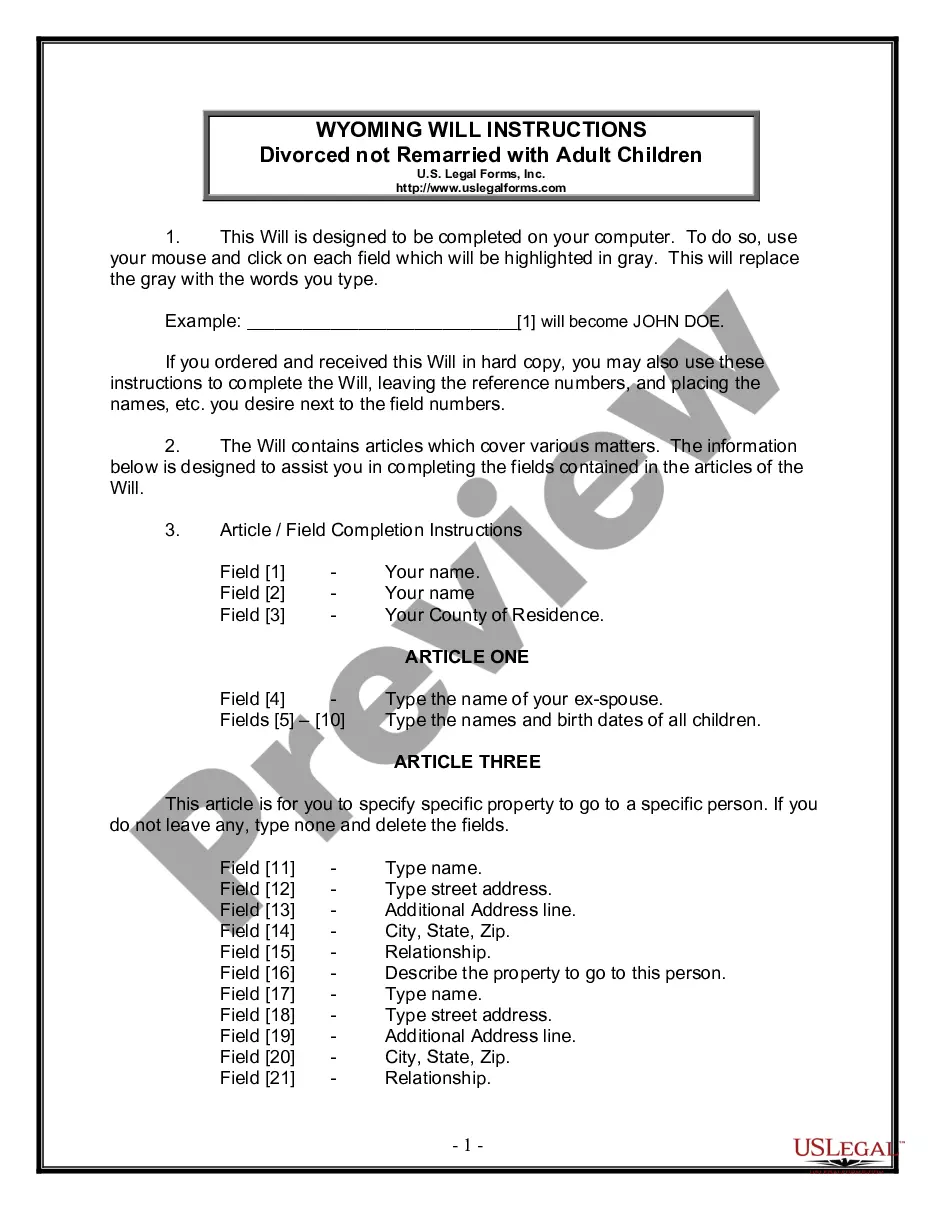
- List the names and birth dates of all your minor children.
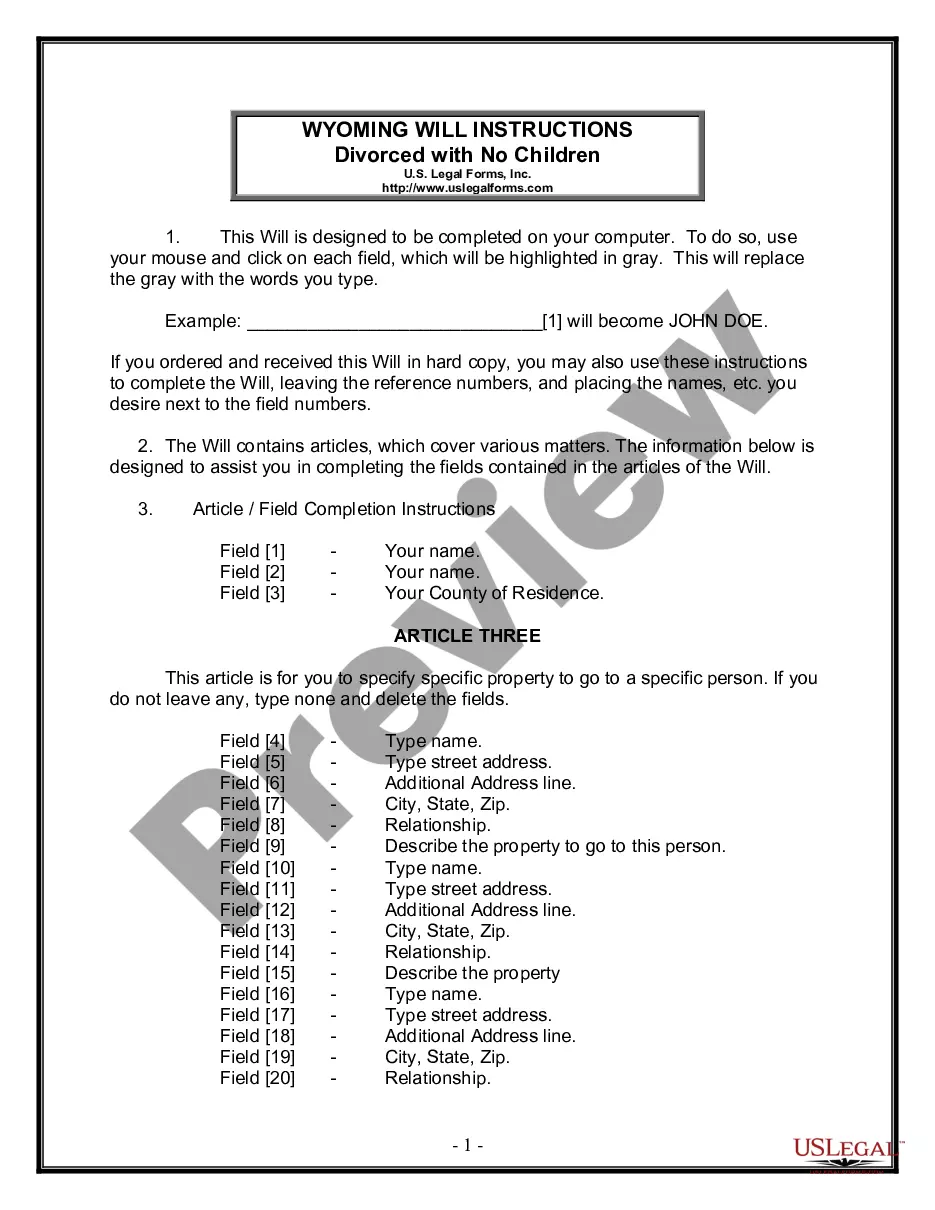
- Specify any specific property you wish to bequeath to named individuals.
- Designate your personal representative and successor to execute your will.
- Select a guardian for your minor children in case of your passing.
- Sign the document in the presence of two witnesses and, if required, have it notarized.
Notarization guidance
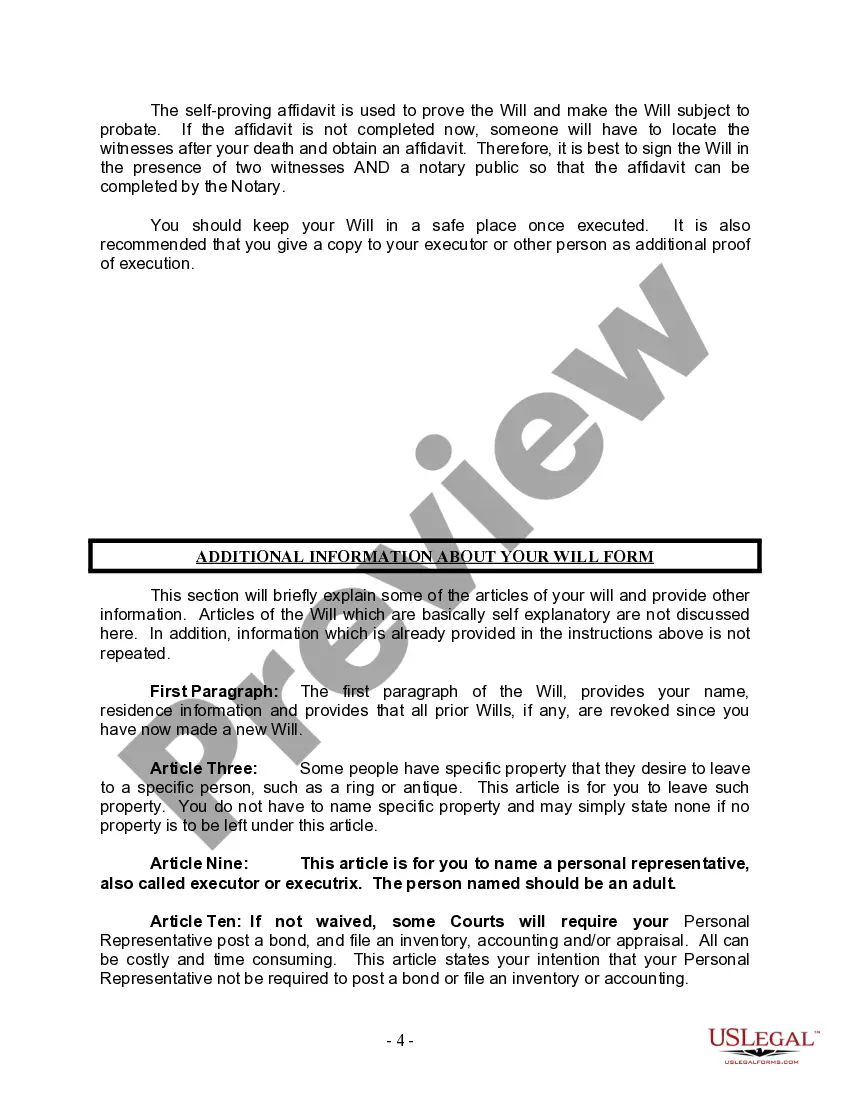
Yes, this form must be notarized to be legally valid in most cases. Having a notary public sign your will, along with two witnesses, helps ensure the documentâs acceptance in probate court.
Get your form ready online
Our built-in tools help you complete, sign, share, and store your documents in one place.
Make edits, fill in missing information, and update formatting in US Legal Forms—just like you would in MS Word.
Download a copy, print it, send it by email, or mail it via USPS—whatever works best for your next step.
Sign and collect signatures with our SignNow integration. Send to multiple recipients, set reminders, and more. Go Premium to unlock E-Sign.
If this form requires notarization, complete it online through a secure video call—no need to meet a notary in person or wait for an appointment.
We protect your documents and personal data by following strict security and privacy standards.

Make edits, fill in missing information, and update formatting in US Legal Forms—just like you would in MS Word.

Download a copy, print it, send it by email, or mail it via USPS—whatever works best for your next step.

Sign and collect signatures with our SignNow integration. Send to multiple recipients, set reminders, and more. Go Premium to unlock E-Sign.

If this form requires notarization, complete it online through a secure video call—no need to meet a notary in person or wait for an appointment.

We protect your documents and personal data by following strict security and privacy standards.
Common mistakes
- Failing to list all minor children accurately, which can lead to unintended distributions.
- Not having the will signed in front of the required witnesses.
- Overlooking the need for a notary in states that require a self-proving affidavit.
- Not reviewing the will after significant life changes, such as a new marriage or additional children.
Advantages of online completion
- Convenient online access to download and complete the form.
- Editable fields allow you to customize your will easily.
- Access to legal templates designed by licensed attorneys, ensuring compliance with state laws.
Summary of main points
Key takeaways about the Last Will and Testament for Divorced Person Not Remarried with Minor Children include:
- This will provides a comprehensive plan for the distribution of your assets.
- It ensures that your minor children are cared for and that a guardian is appointed.
- Proper execution with witnesses and notarization is crucial for the document's validity.
- Regular updates are essential to reflect any changes in your life circumstances.
Looking for another form?




Form popularity
FAQ
In Wyoming, you can make a living trust to avoid probate for virtually any asset you own -- real estate, bank accounts, vehicles, and so on. You need to create a trust document (it's similar to a will), naming someone to take over as trustee after your death (called a successor trustee).
Include personal identifying information. Include a statement about your age and mental status. Designate an executor. Decide who will take care of your children. Choose your beneficiaries. List your funeral details. Sign and date your Last Will and Testament.
In most situations, a will template is an easy and inexpensive way to make sure your wishes are known and carried out. Most people can get everything they need by using a will template, with little cost or hassle.
Contrary to popular belief, you do not need to have an attorney draft a will for you. Anyone can write this document on their own, and as long as it meets all of the legal requirements of the state, courts will recognize one you wrote yourself.
Wyoming recognizes holographic (handwritten) wills so long as the document is entirely in the handwriting of the testator and signed by the hand of the testator himself. A Wyoming holographic will does not need to be witnessed.
A handwritten or typed will can be created at no cost. Many online services set a price at less than $100 for a will. Most estate planners charge more than your average do-it-yourself service, Farrell says. For help with a will, an attorney will likely charge several hundred dollars or more.
No, in Wyoming, you do not need to notarize your will to make it legal. However, Wyoming allows you to make your will "self-proving" and you'll need to go to a notary if you want to do that. A self-proving will speeds up probate because the court can accept the will without contacting the witnesses who signed it.
In order for a will to be valid, it must be: made by a person who is 18 years old or over and. made voluntarily and without pressure from any other person and.signed by the two witnesses, in the presence of the person making the will, after it has been signed.
A will doesn't have to be notarized to be valid. But in most states, you'll want to add a self-proving affidavit to your will, which must be signed by your witnesses and notarized.If you sign your will in a lawyer's office, the lawyer will provide a notary public.