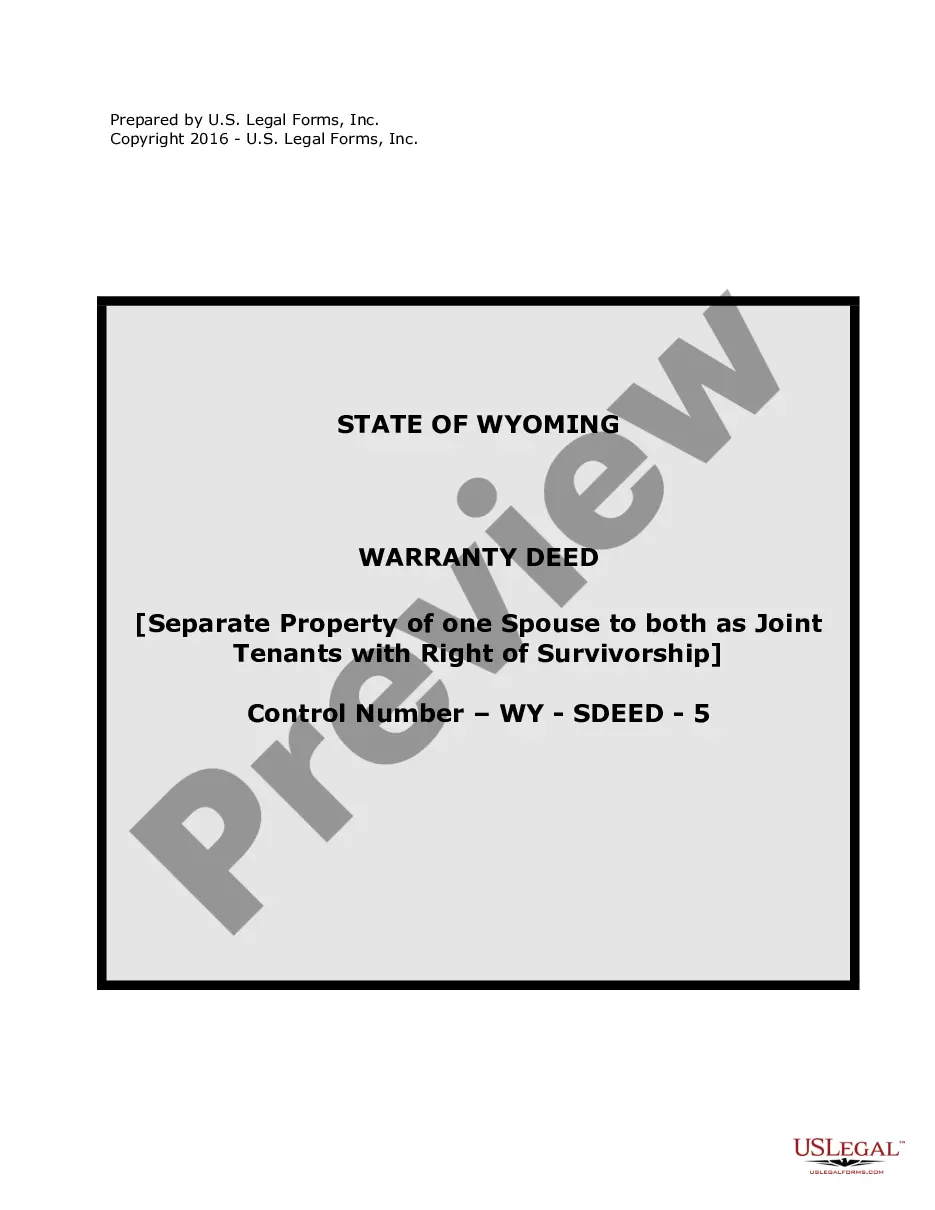
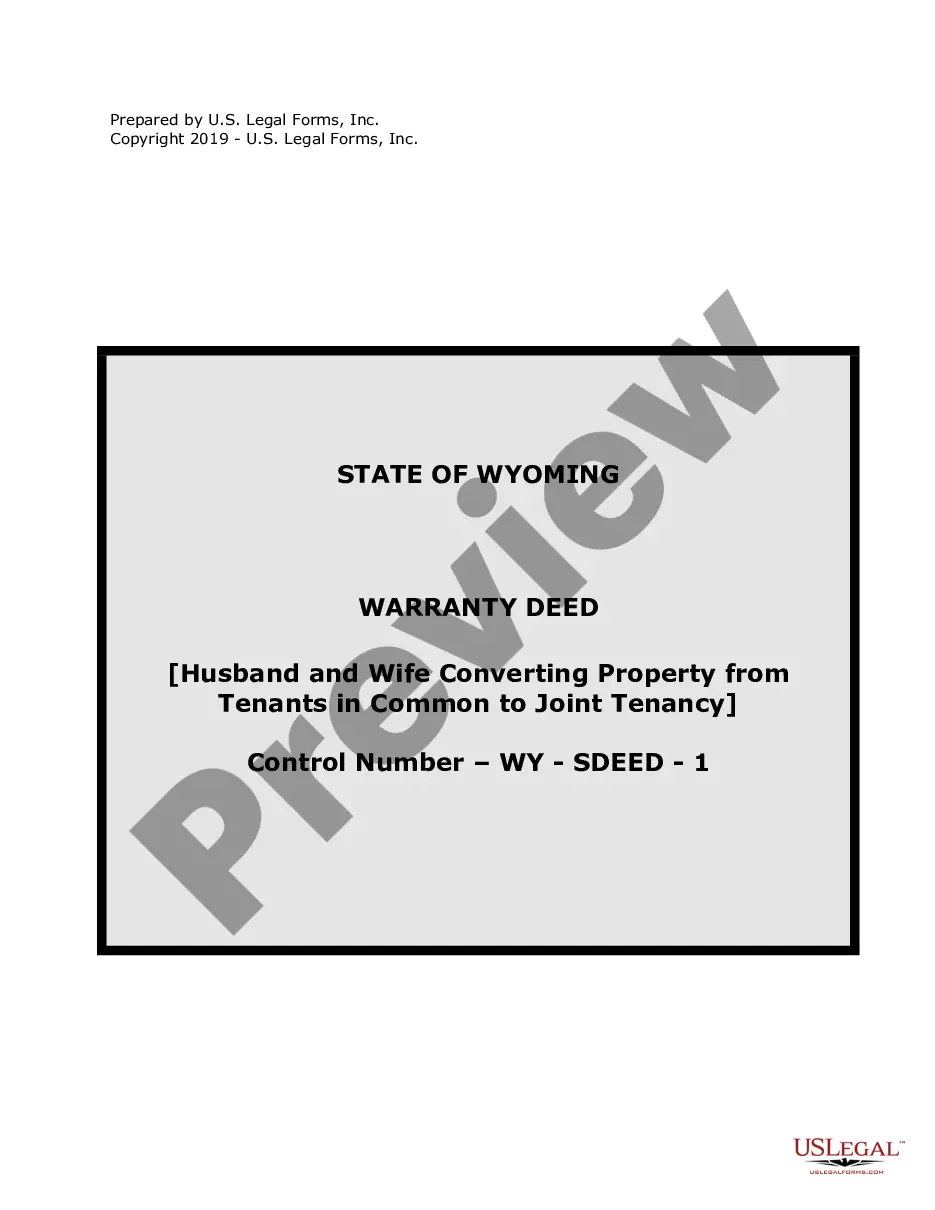
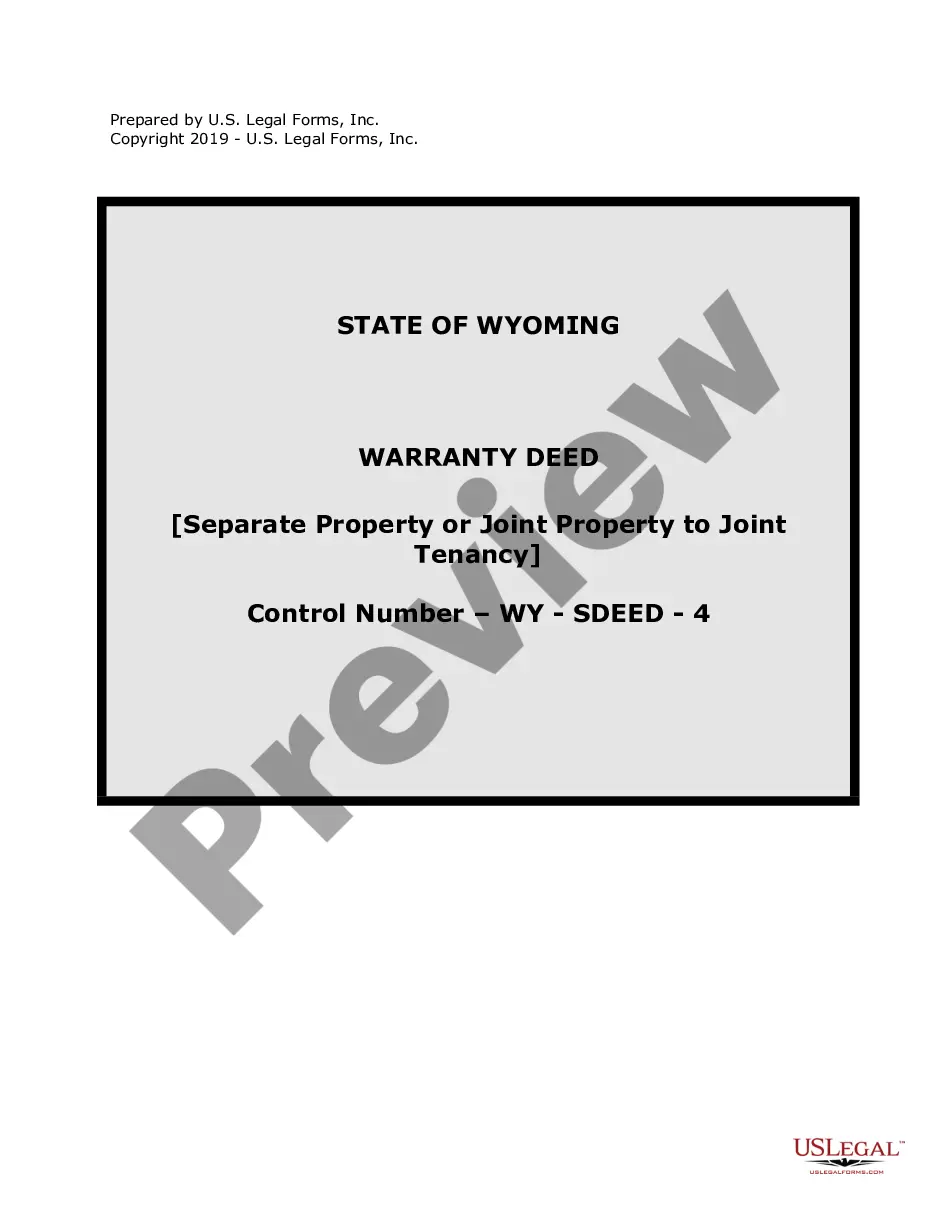
Wyoming Warranty Deed Converting Separate Property of one Spouse to both as Joint Tenants
Understanding this form
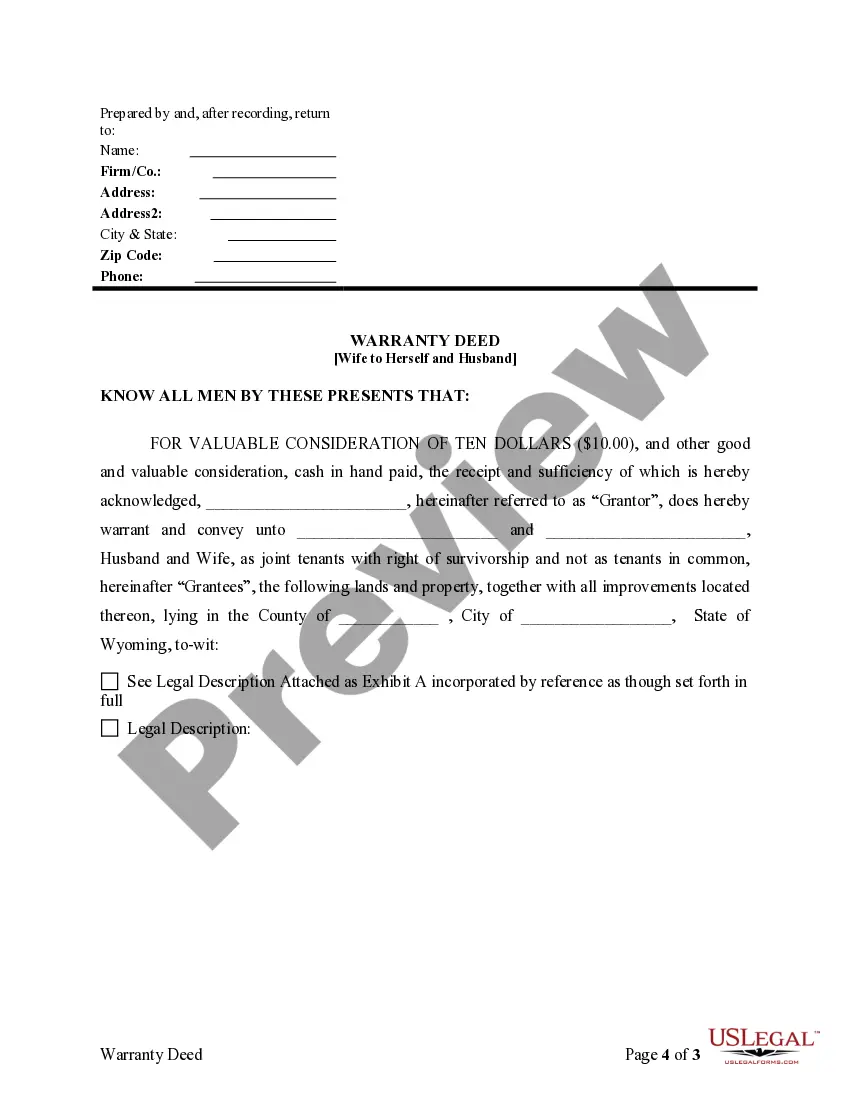
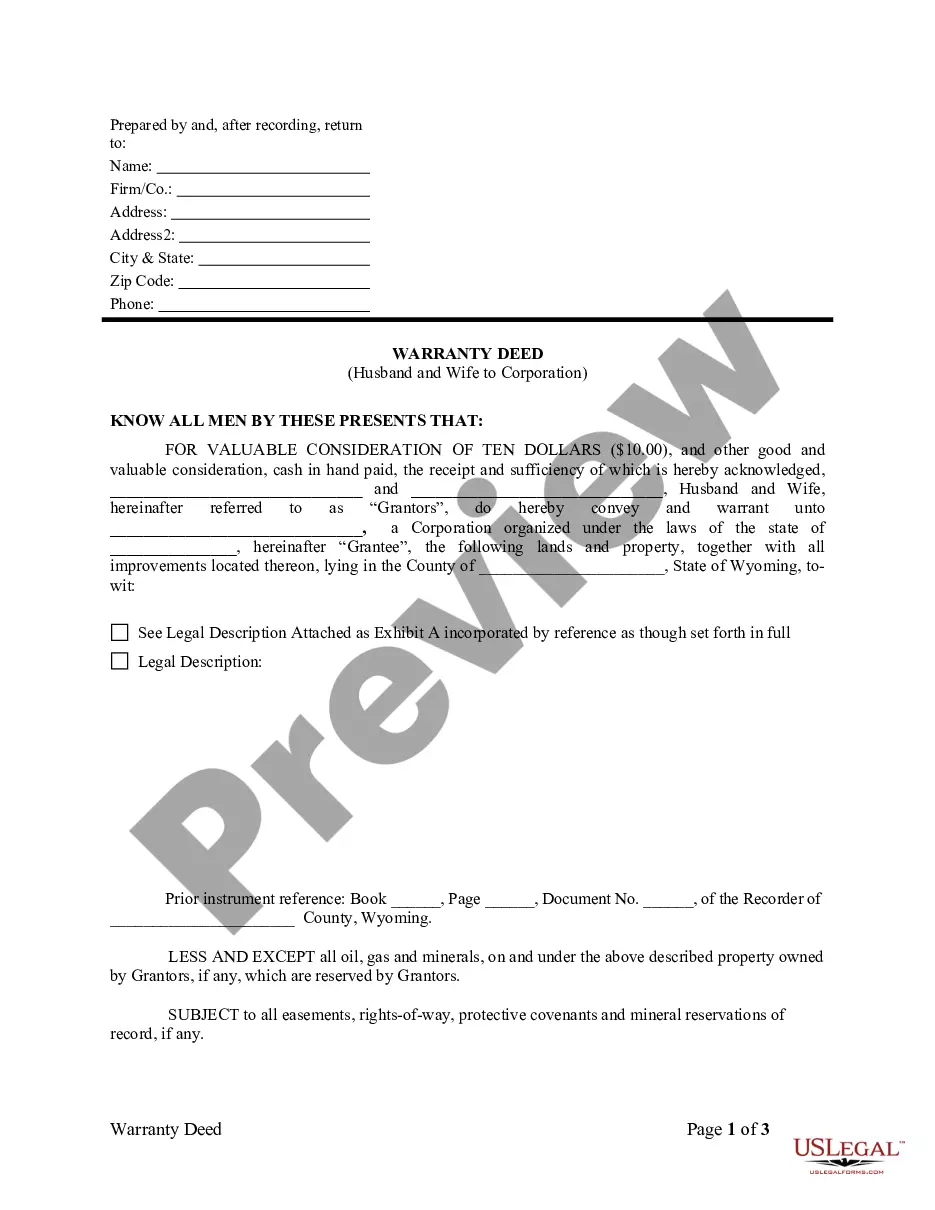
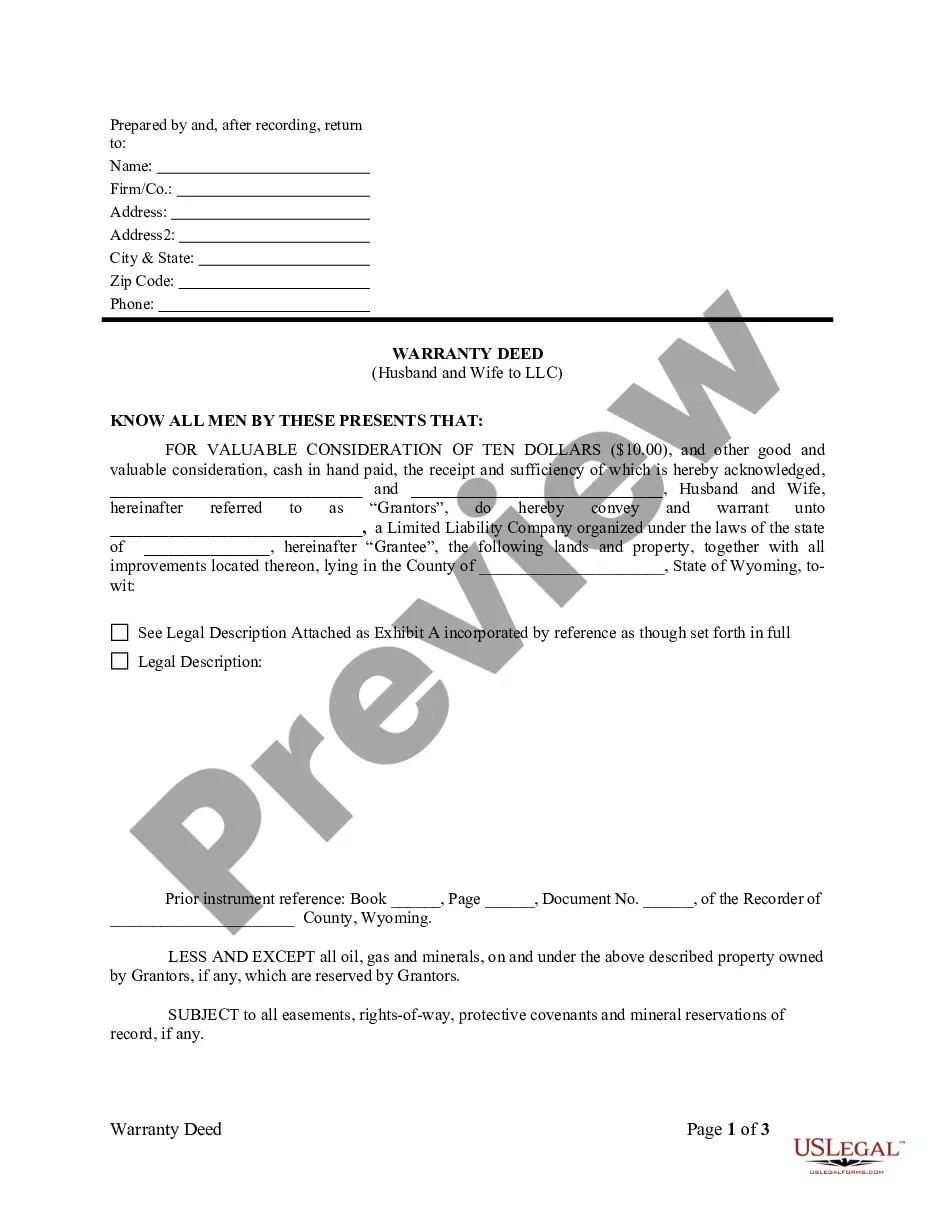
This Warranty Deed is a legal document used to convert separate property owned by one spouse into joint tenancy between both spouses. Unlike other forms of property transfer, this deed specifically establishes joint tenancy with right of survivorship, ensuring that in the event of one spouse's death, the surviving spouse automatically inherits the entire property without the need for probate. This form is essential for married couples who wish to share ownership of property while minimizing future legal complications.
Form components explained
- Grantor and Grantee Information: Identify the spouse transferring the property and the spouse receiving it.
- Property Description: Detailed legal description of the property being transferred.
- Consideration: Statement of the consideration (e.g., ten dollars) being exchanged for the property.
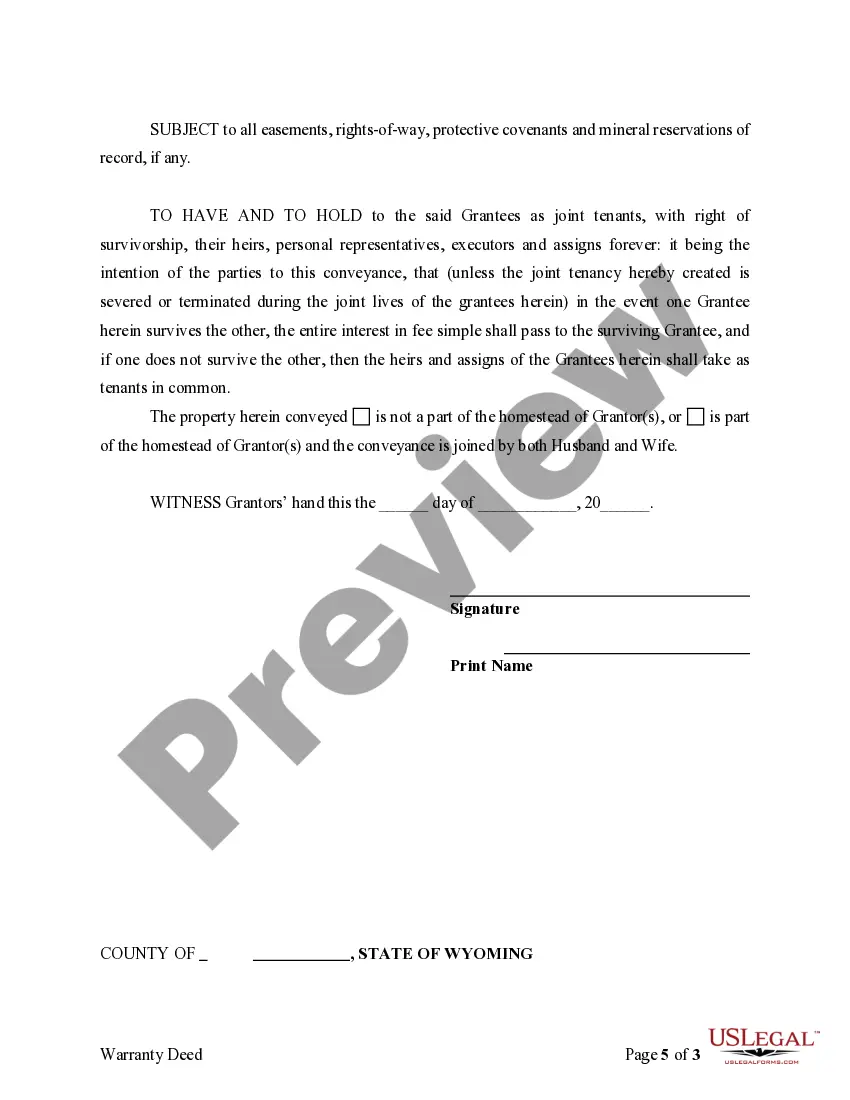
- Homestead Declaration: Indicate whether the property is part of the homestead of the grantor.
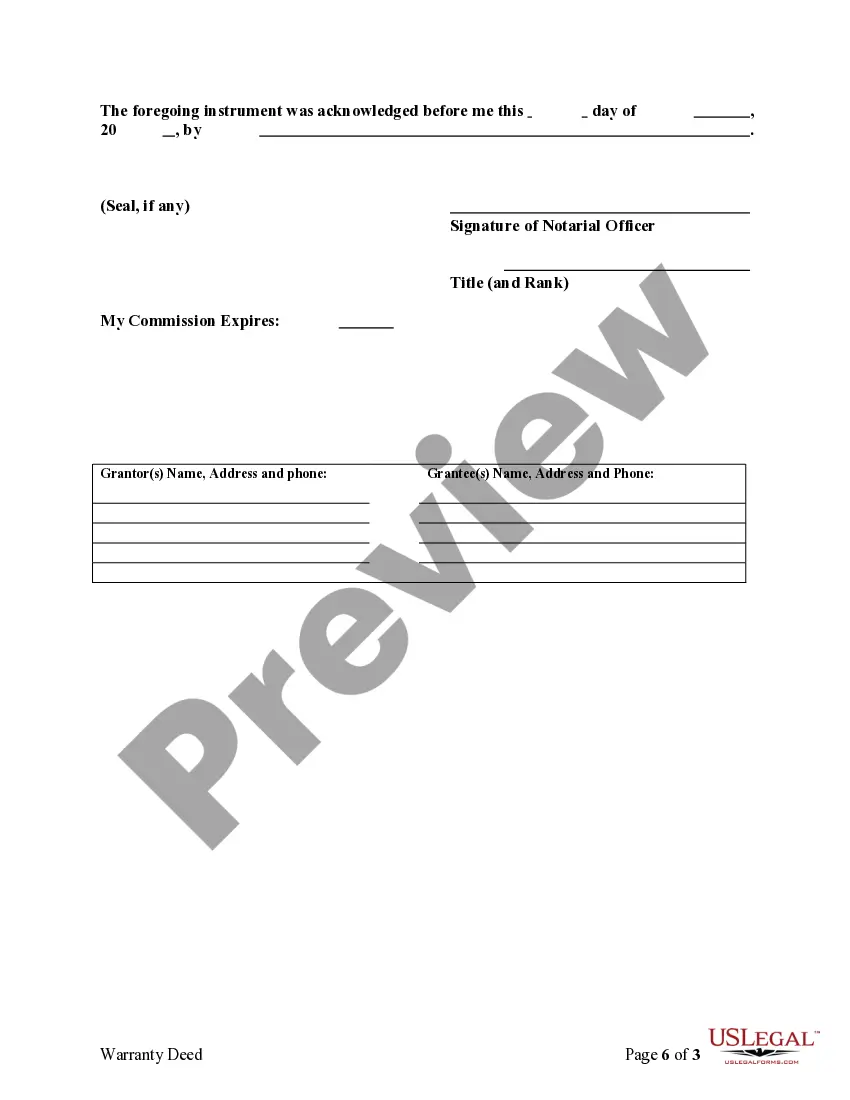
- Signature Section: Space for the grantor's signature, dating the document, and providing necessary witnesses.
When this form is needed
This form should be used when a married couple wishes to convert separate property owned by one spouse into joint ownership. Typical scenarios include when spouses are looking to simplify property ownership, plan for estate matters, or ensure shared ownership and survivorship rights in case one spouse passes away. It is particularly useful in the context of estate planning to avoid probate complications.
Who should use this form
This form is intended for:
- Married couples where one spouse owns property separately.
- Spouses who desire to establish joint ownership of an asset.
- Couples looking to facilitate the transfer of property in a manner that ensures survivorship rights.
Completing this form step by step
- Identify the parties by entering the names of the grantor and grantee.
- Specify the property by providing a detailed legal description as outlined in Exhibit A.
- Enter the consideration amount, typically ten dollars, indicating the value exchanged.
- Determine whether the property is part of the homestead and indicate accordingly.
- Have the grantor sign and date the document, ensuring it is witnessed where required.
Does this document require notarization?
To make this form legally binding, it must be notarized. Our online notarization service, powered by Notarize, lets you verify and sign documents remotely through an encrypted video session.
Get your form ready online
Our built-in tools help you complete, sign, share, and store your documents in one place.
Make edits, fill in missing information, and update formatting in US Legal Forms—just like you would in MS Word.
Download a copy, print it, send it by email, or mail it via USPS—whatever works best for your next step.
Sign and collect signatures with our SignNow integration. Send to multiple recipients, set reminders, and more. Go Premium to unlock E-Sign.
If this form requires notarization, complete it online through a secure video call—no need to meet a notary in person or wait for an appointment.
We protect your documents and personal data by following strict security and privacy standards.

Make edits, fill in missing information, and update formatting in US Legal Forms—just like you would in MS Word.

Download a copy, print it, send it by email, or mail it via USPS—whatever works best for your next step.

Sign and collect signatures with our SignNow integration. Send to multiple recipients, set reminders, and more. Go Premium to unlock E-Sign.

If this form requires notarization, complete it online through a secure video call—no need to meet a notary in person or wait for an appointment.

We protect your documents and personal data by following strict security and privacy standards.
Avoid these common issues
- Failing to provide a complete legal description of the property.
- Not specifying whether the property is part of a homestead.
- Omitting signatures or failing to date the document correctly.
- Using incorrect terminology that could invalidate the deed.
Why use this form online
- Convenience of filling out the form from home without needing an appointment.
- Editability allows for easy correction and adjustment before finalization.
- Access to templates created by licensed attorneys ensures your document meets legal standards.
Looking for another form?
Form popularity
FAQ
The General Rule. In the great majority of states, if you and the other owners call yourselves "joint tenants with the right of survivorship," or put the abbreviation "JT WROS" after your names on the title document, you create a joint tenancy. A car salesman or bank staffer may assure you that other words are enough.
Discuss the terms of the deed with the new owners. Hire a real estate attorney to prepare the deed. Review the deed. Sign the deed in front of a notary public, with witnesses present. File the deed on public record.
When you want to change your property's title to include the right of survivorship, you do it by redeeding the property "as joint tenants with rights of survivorship," or JTWROS. Changing the title vesting to JTWROS allows the ownership of the property to automatically pass to the other owner when one dies.
When you opt to co-own an asset with another individual, you can enter into a legal ownership agreement known as joint tenants with rights of survivorship or JTWROS. Upon the death of one of the owners, the surviving owner automatically becomes sole owner of the property, whether it's a vacation home, a plane, or
Retrieve your original deed. Get the appropriate deed form. Draft the deed. Sign the deed before a notary. Record the deed with the county recorder. Obtain the new original deed.
A co-owner in a property who is willing to give up his or her rights over the property can resort to the relinquishment deed which allows for a smooth transfer. Often, legal heirs who are giving up their stake in a property are asked to sign this deed for clarity. For example, take Mahima Sinha's case.
Step 1: Get a Notice200b200b200b of death f200b200borm. Step 2: Fill in Notice of de200bath form. Step 3: Create an electronic notice of Sale (eNOS) record. Step 4: Get a certified copy200b of the Death Certificate. Step 5: Get the origina200bl Certificate of Title or arrange for it to be produced by the bank.
Adding someone to your house deed requires the filing of a legal form known as a quitclaim deed. When executed and notarized, the quitclaim deed legally overrides the current deed to your home. By filing the quitclaim deed, you can add someone to the title of your home, in effect transferring a share of ownership.
To hold a real estate property in joint tenancy, you and the co-owners have to write the abbreviation for joint tenants with the right of survivorship, or JTWROS, on the official real estate deed or title. This creates a legally binding joint tenancy.