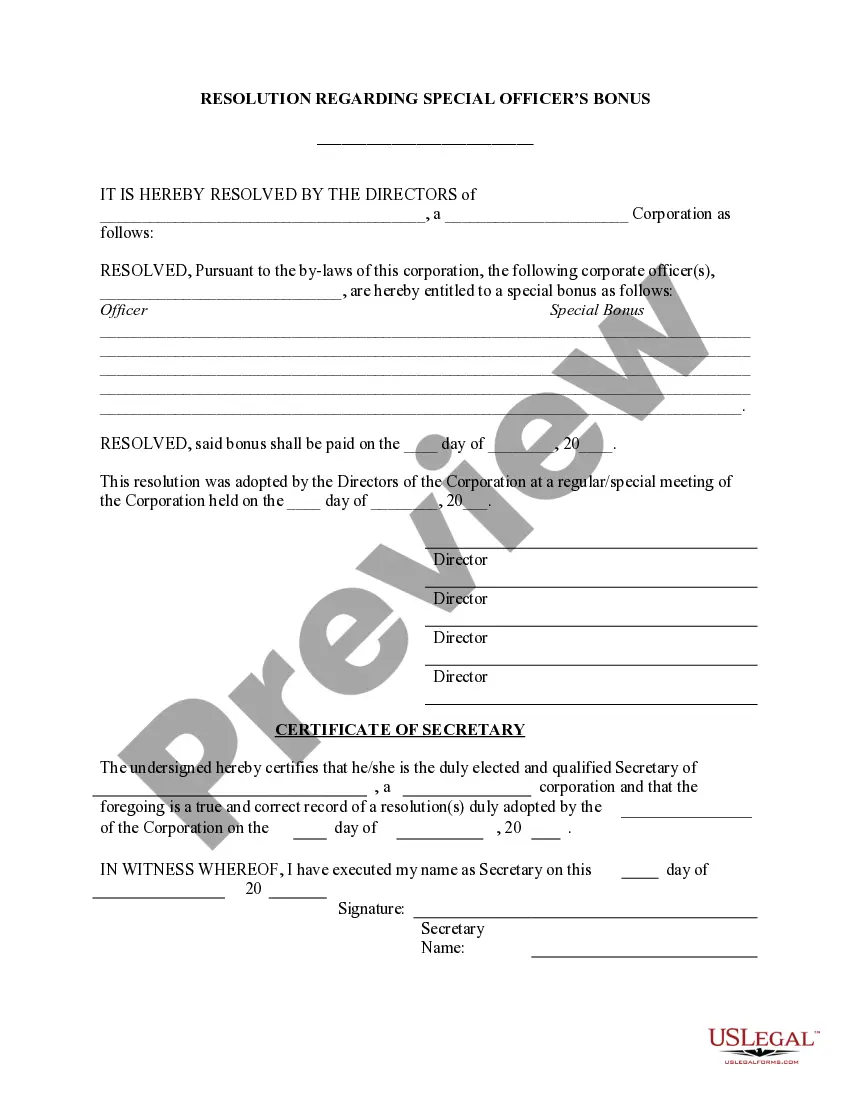
Wyoming Mutual Wills or Last Will and Testaments for Man and Woman living together, not Married with Minor Children
Understanding this form
This form package consists of two mutual wills for an unmarried man and woman living together, both having minor children. It allows each partner to leave property to the other while ensuring the well-being of their children. Unlike standard wills, mutual wills create a binding agreement that both parties adhere to, which can be crucial in blended family situations.
What’s included in this form
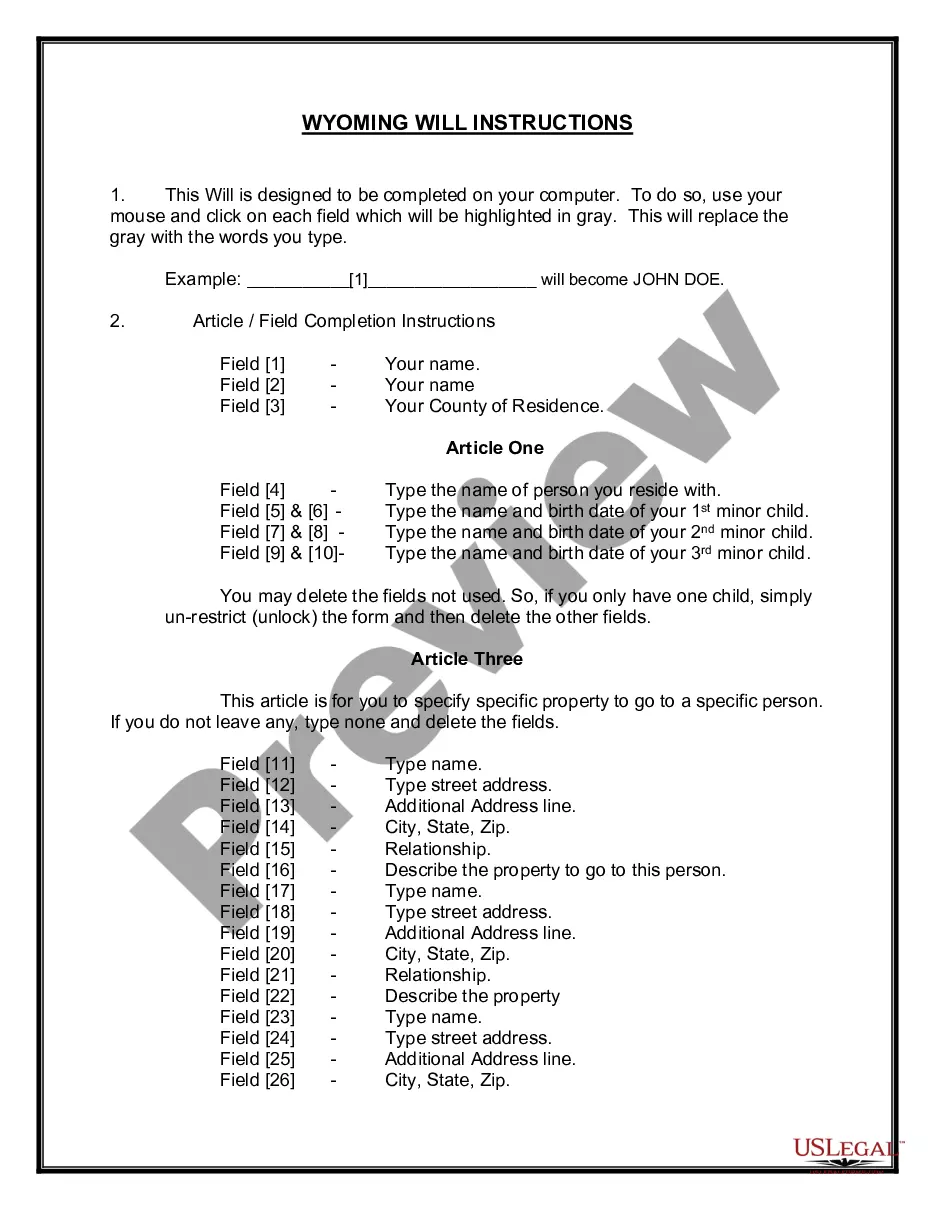
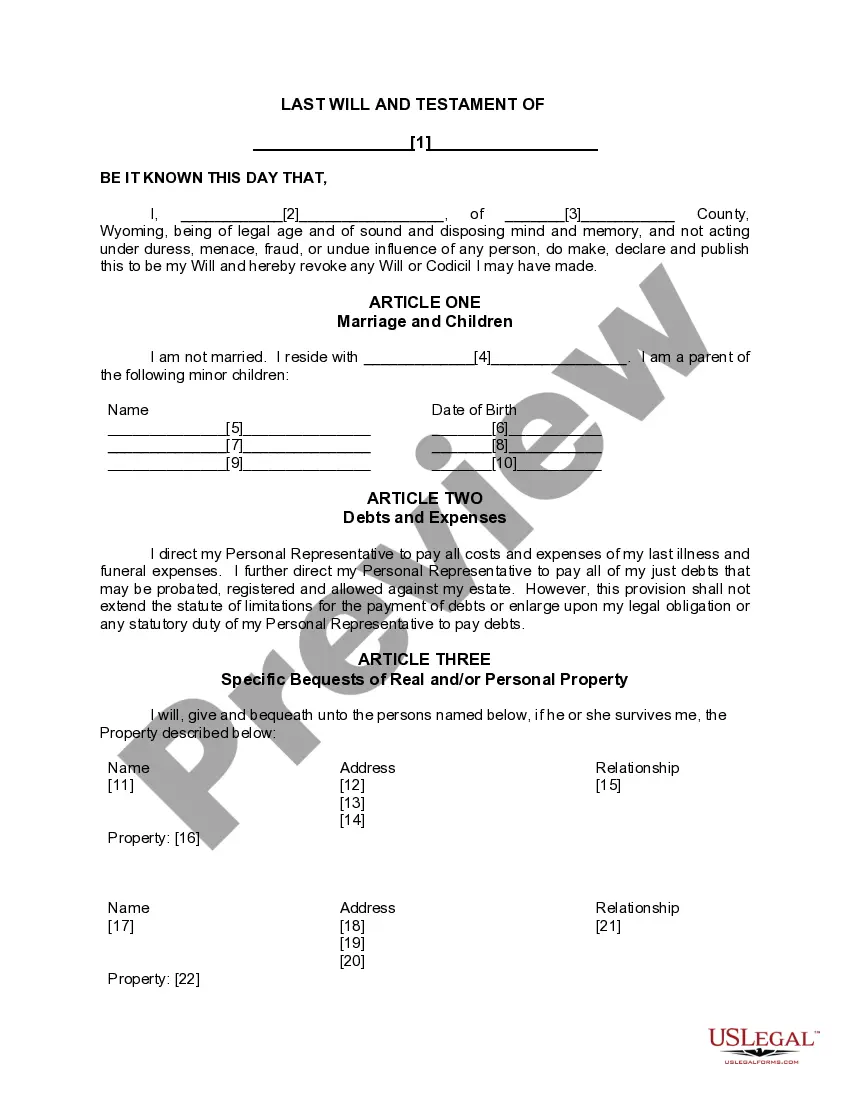
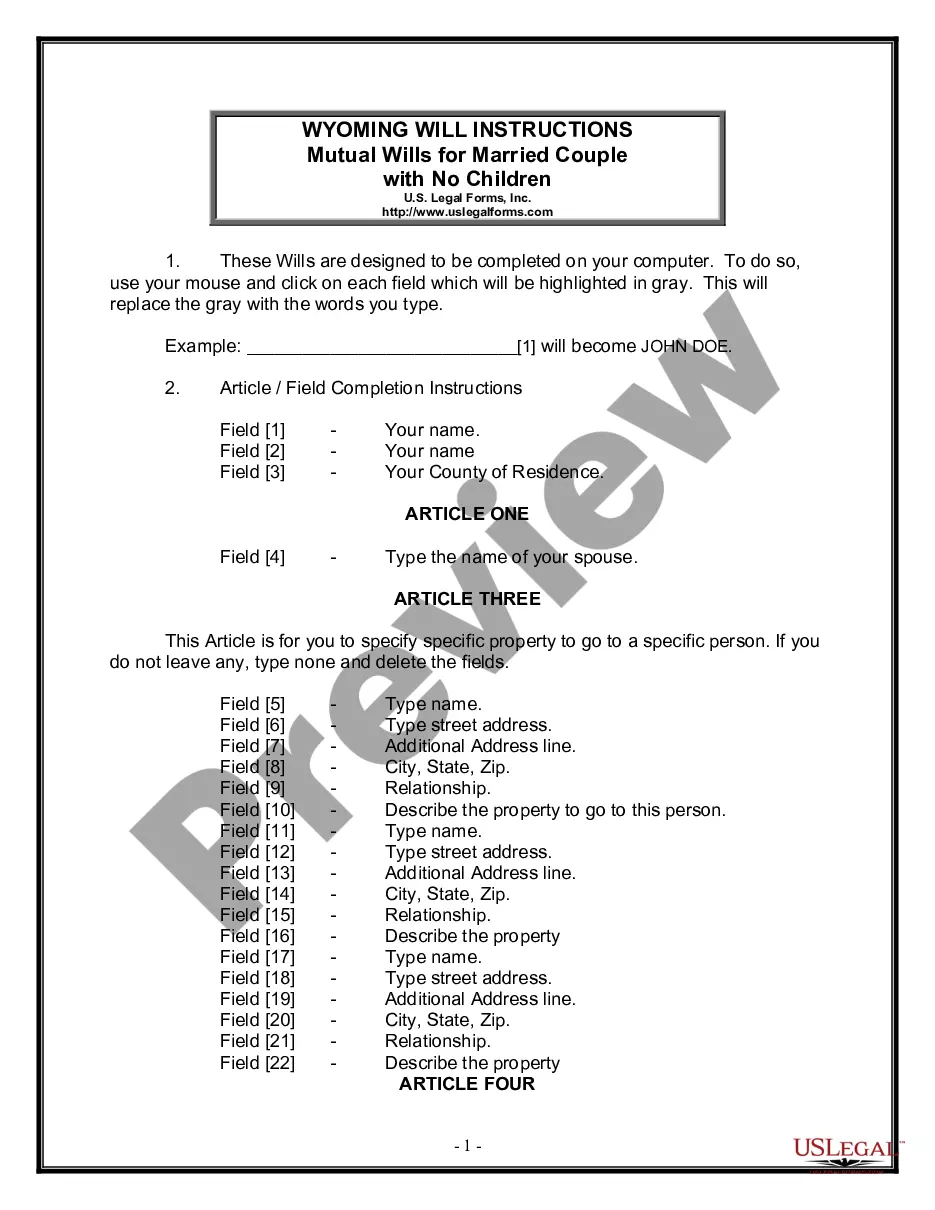
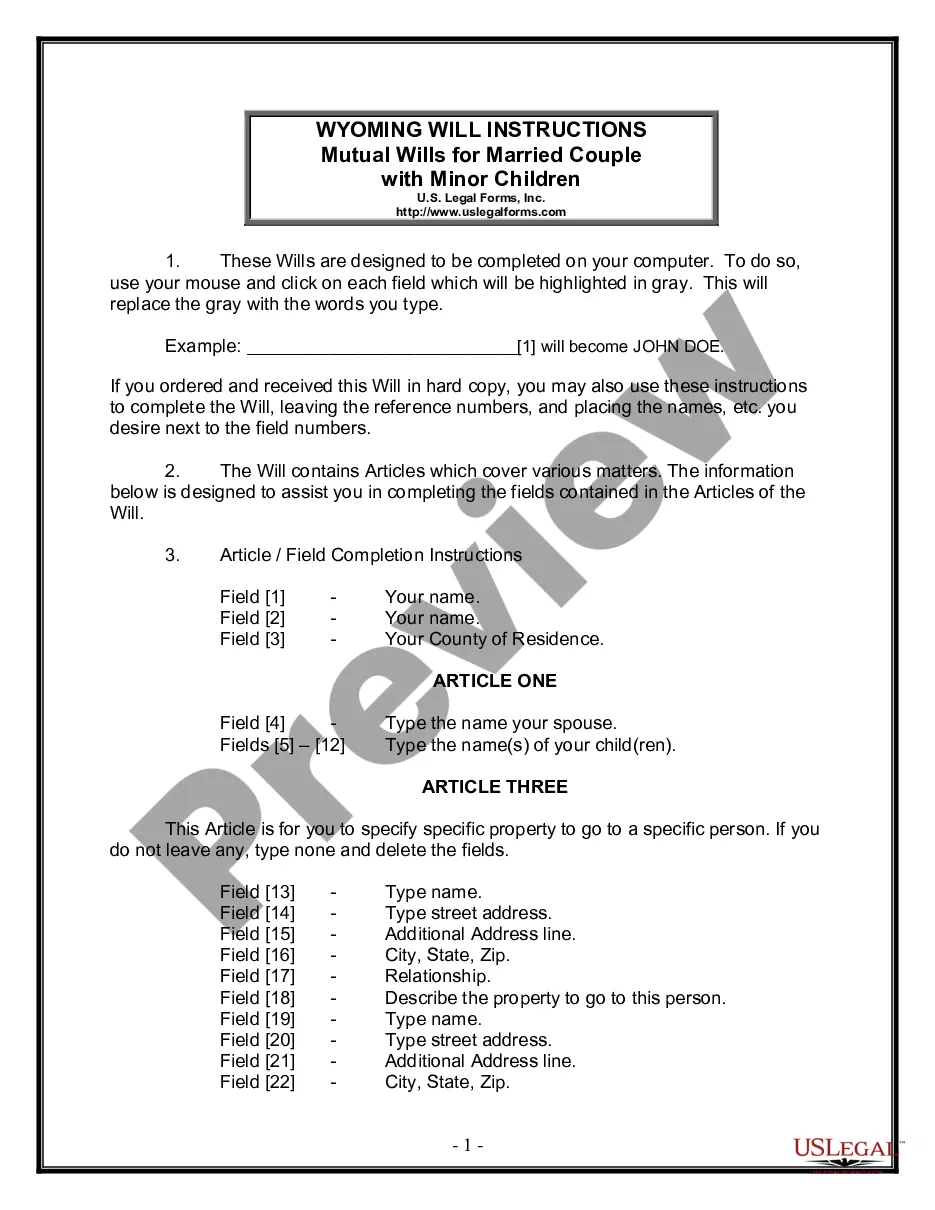
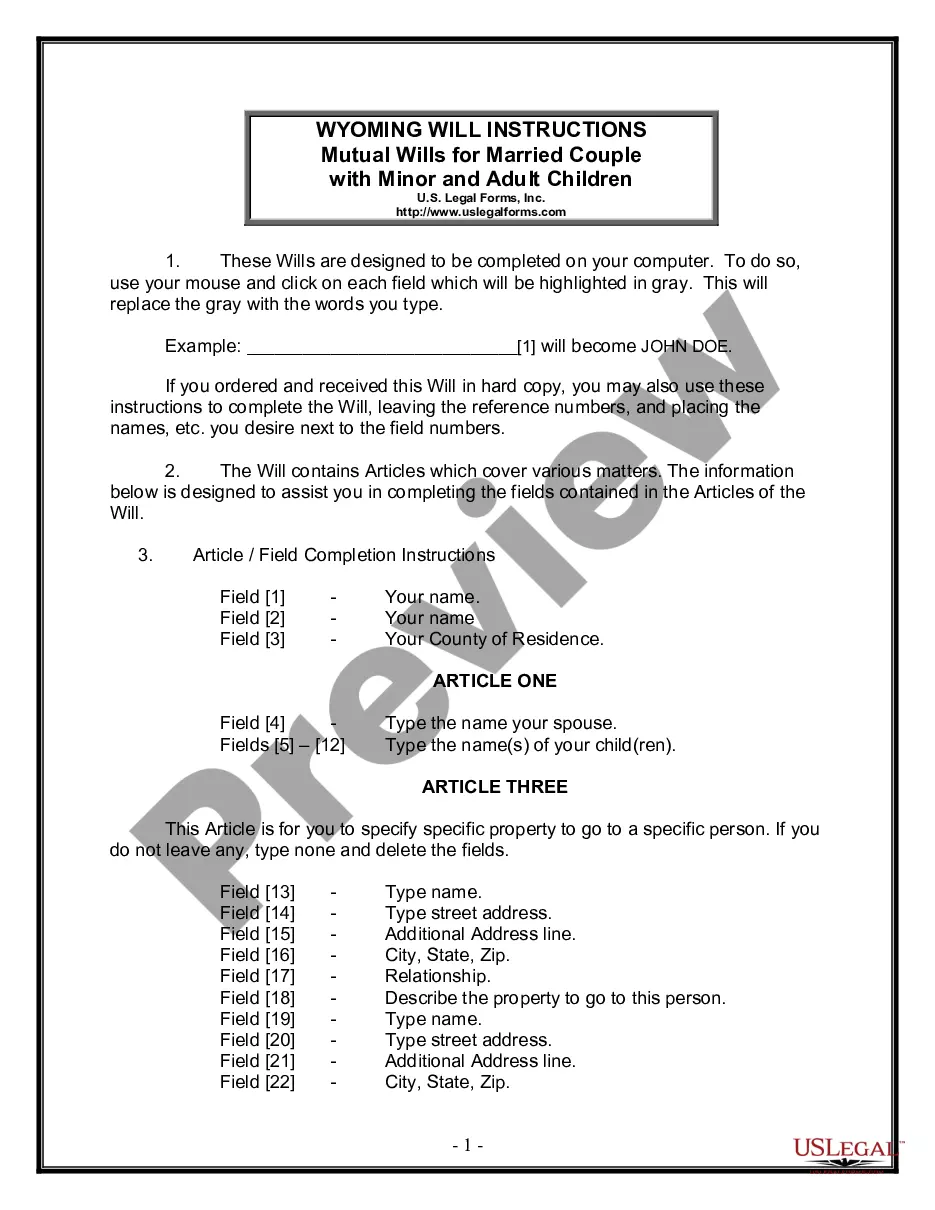
- Article One: Indicates the relationship status and lists the minor children.
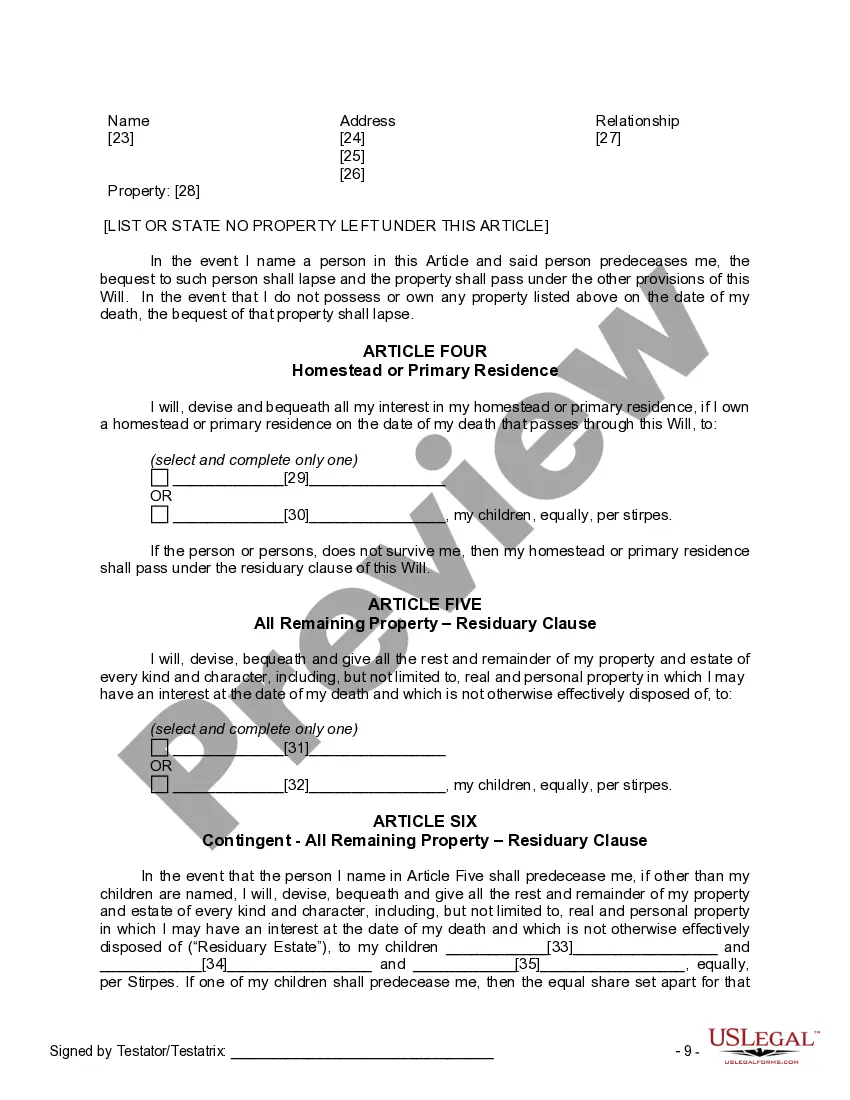
- Article Three: Specifies any specific bequests made to individuals.
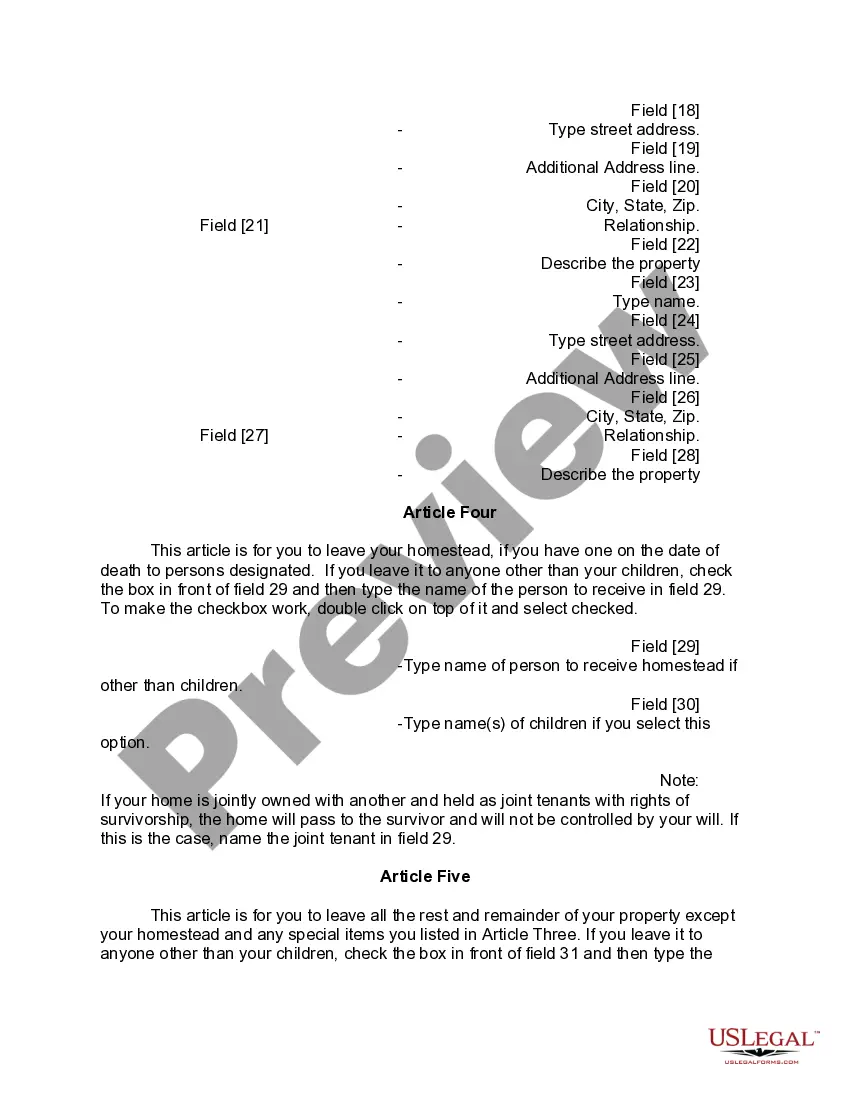
- Article Four: Addresses the disposition of the homestead or primary residence.
- Article Five: Outlines how remaining property is distributed after other bequests.
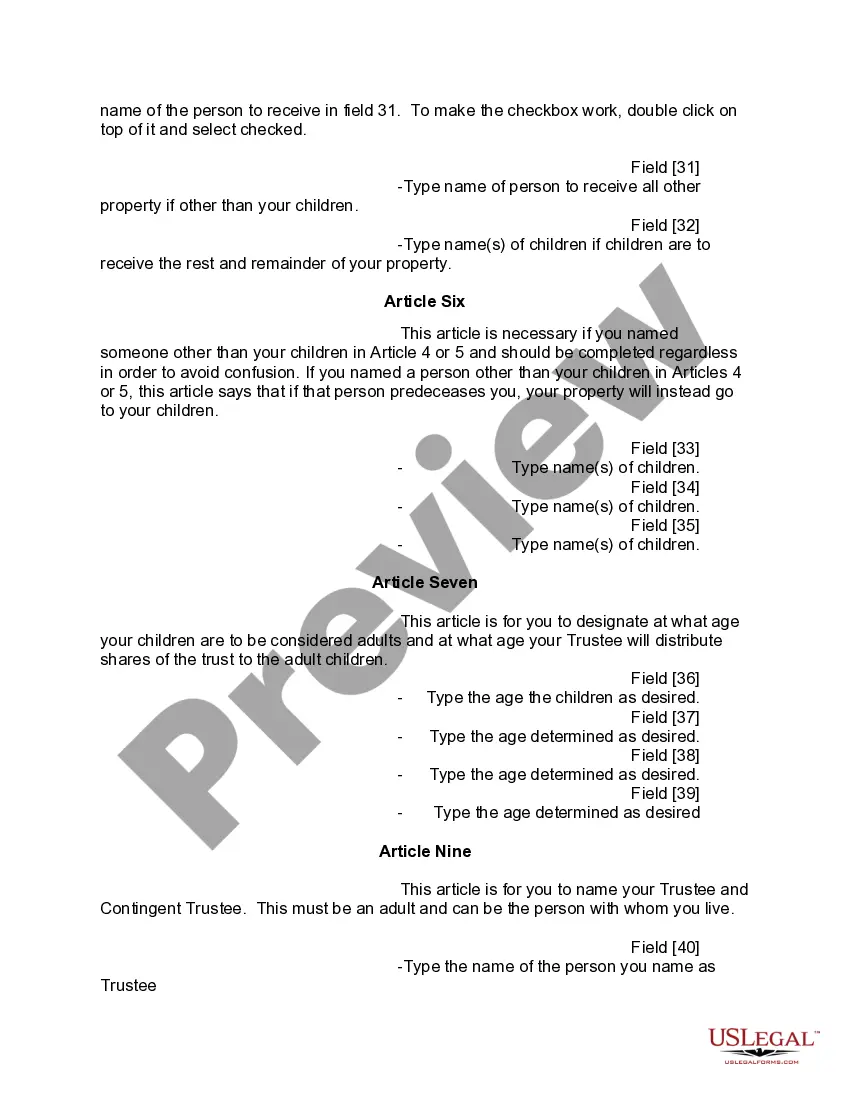
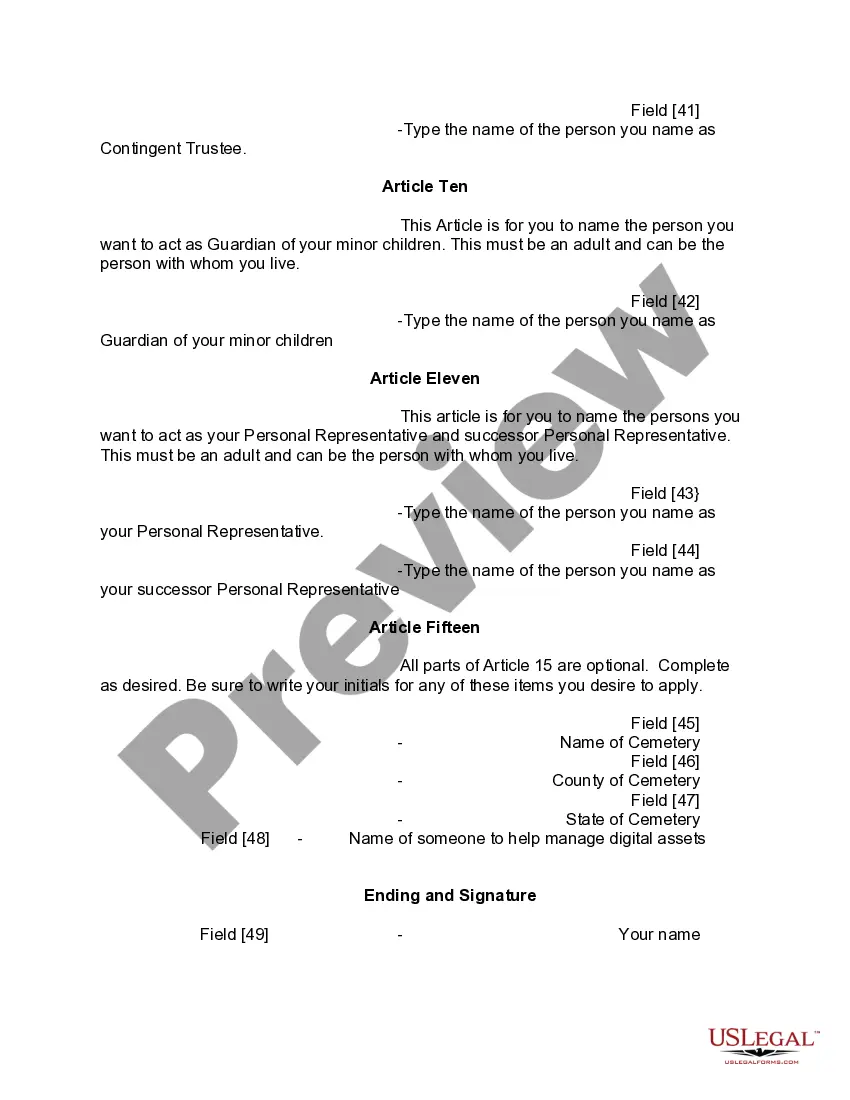
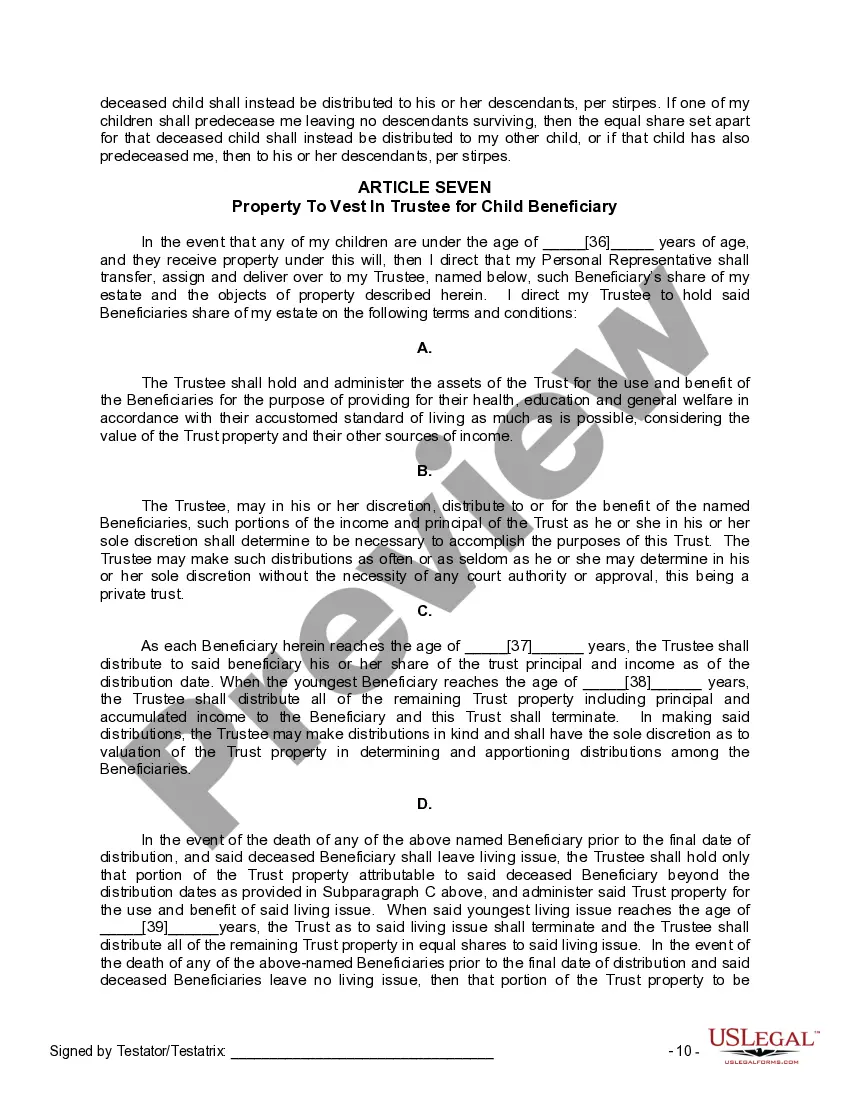
- Articles for Trustee and Guardian: Designates responsibilities for children's care and property management.
- Self-Proving Affidavit: Ensures the validity of the will when presented for probate.


Situations where this form applies
This form is ideal for couples who are not married but wish to make sure that their property is passed on to each other and their children in the event of their death. Use this package if you want to prevent disputes between family members or ensure that both parties' intentions are legally binding, particularly concerning the care and guardianship of minor children.
Who can use this document
- Couples living together who are not legally married.
- Parents of minor children looking to secure their children's future.
- Those who wish to ensure their partner receives their property upon death.
- Individuals wanting to avoid potential disputes over their estate.
How to complete this form
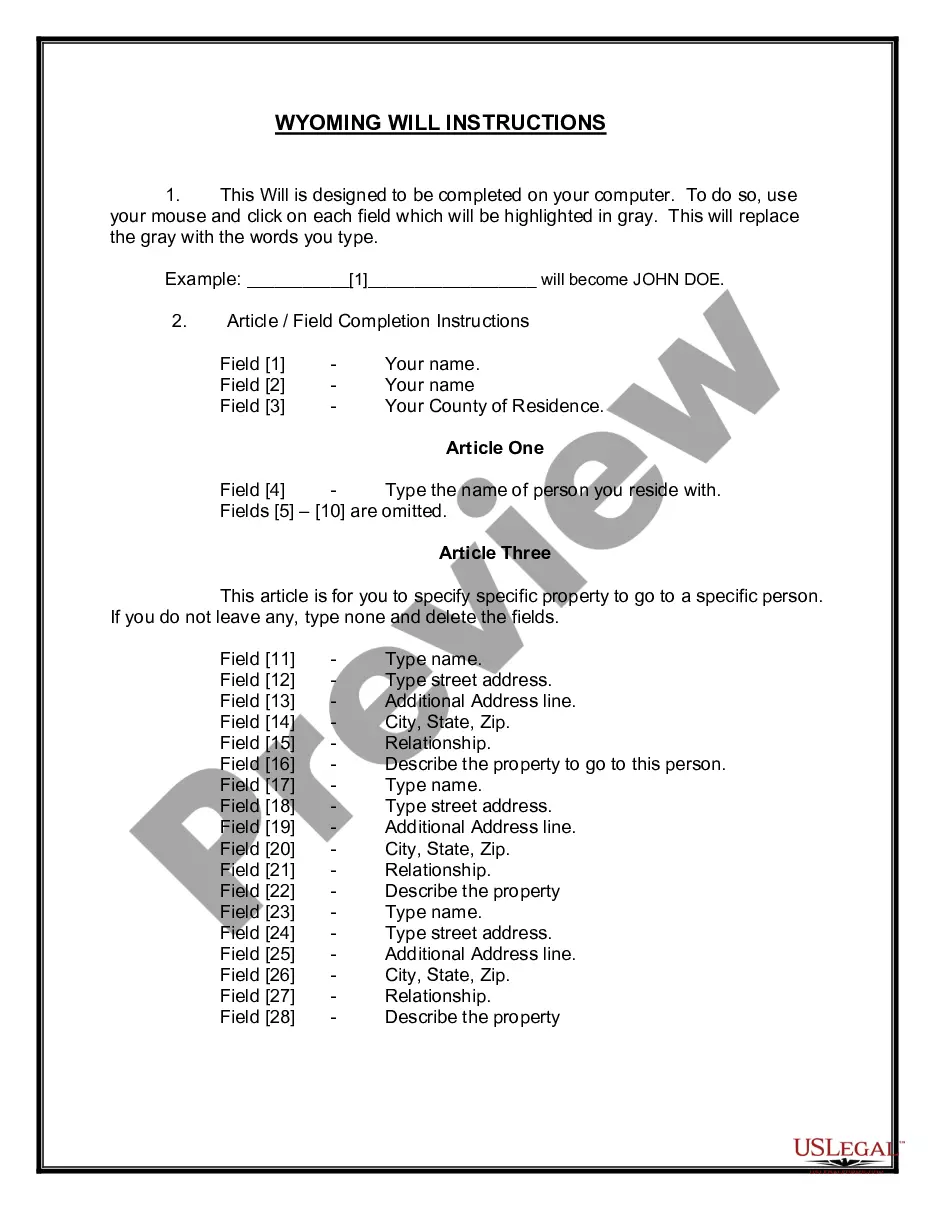
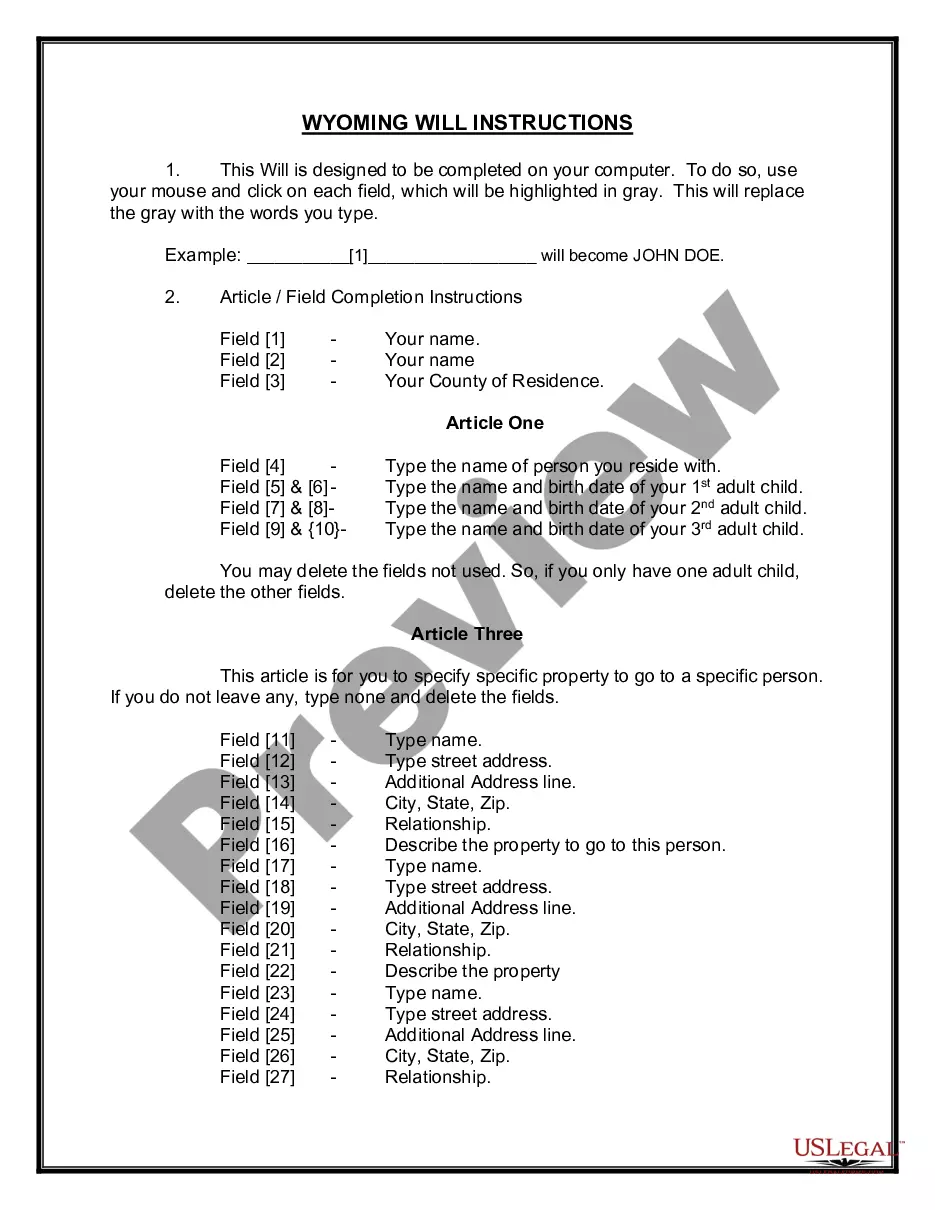
- Identify the parties: Enter your name, your partner's name, and your county of residence.
- List the children: Include the names and birth dates of all minor children.
- Specify bequests: Clearly state any specific items of property you wish to bequeath to individuals.
- Designate guardians: Name a guardian for your minor children and a trustee to manage their inheritance.
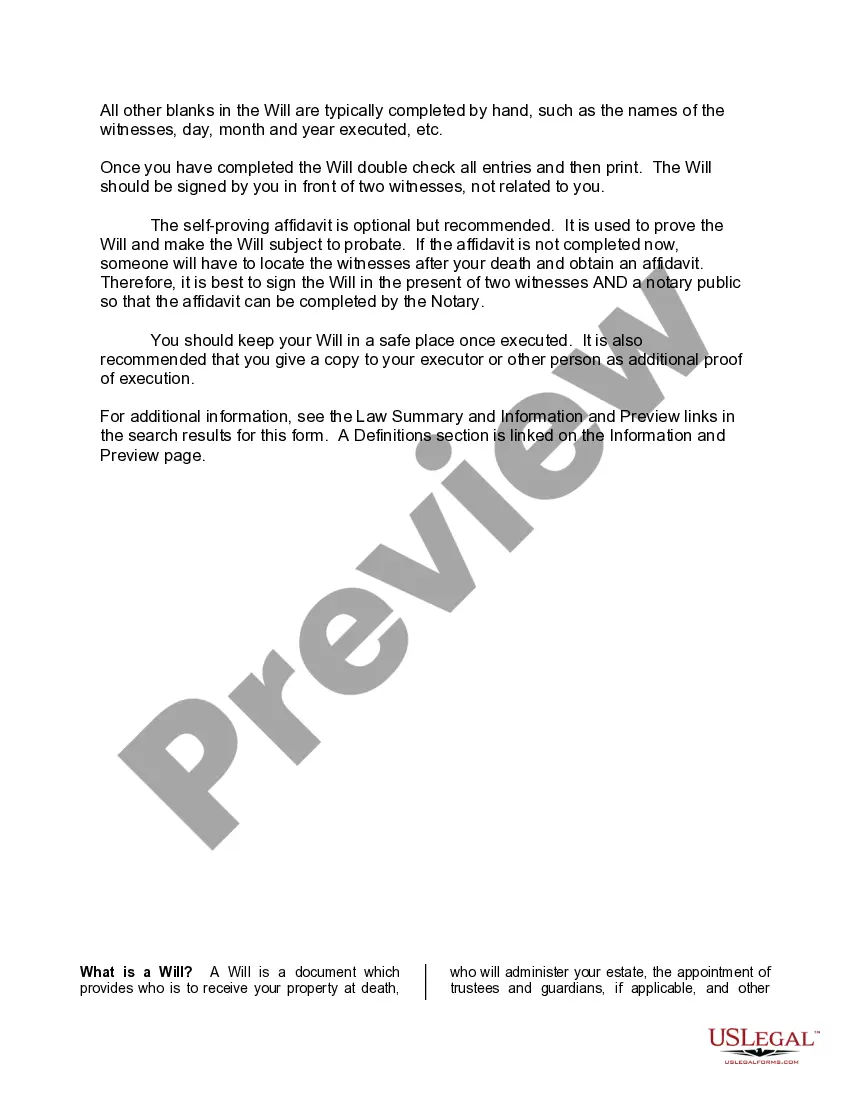
- Complete the self-proving affidavit: If applicable, ensure it is signed and notarized by witnesses.
Notarization requirements for this form
To make this form legally binding, it must be notarized. Our online notarization service, powered by Notarize, lets you verify and sign documents remotely through an encrypted video session.
Get your form ready online
Our built-in tools help you complete, sign, share, and store your documents in one place.
Make edits, fill in missing information, and update formatting in US Legal Forms—just like you would in MS Word.
Download a copy, print it, send it by email, or mail it via USPS—whatever works best for your next step.
Sign and collect signatures with our SignNow integration. Send to multiple recipients, set reminders, and more. Go Premium to unlock E-Sign.
If this form requires notarization, complete it online through a secure video call—no need to meet a notary in person or wait for an appointment.
We protect your documents and personal data by following strict security and privacy standards.

Make edits, fill in missing information, and update formatting in US Legal Forms—just like you would in MS Word.

Download a copy, print it, send it by email, or mail it via USPS—whatever works best for your next step.

Sign and collect signatures with our SignNow integration. Send to multiple recipients, set reminders, and more. Go Premium to unlock E-Sign.

If this form requires notarization, complete it online through a secure video call—no need to meet a notary in person or wait for an appointment.

We protect your documents and personal data by following strict security and privacy standards.
Common mistakes
- Not having the wills witnessed correctly, which could invalidate them.
- Failing to include all minor children or leaving out important names in the guardian designation.
- Neglecting to sign the self-proving affidavit if desired, causing potential challenges during probate.
Benefits of using this form online
- Instant access to legal documents from the comfort of your home.
- Editable forms that allow you to customize the information easily.
- Reliable templates drafted by licensed attorneys to ensure legal compliance.
Looking for another form?










Form popularity
FAQ
Bank accounts. Brokerage or investment accounts. Retirement accounts and pension plans. A life insurance policy.
A will can also be declared invalid if someone proves in court that it was procured by undue influence. This usually involves some evil-doer who occupies a position of trust -- for example, a caregiver or adult child -- manipulating a vulnerable person to leave all, or most, of his property to the manipulator instead
Once filed, the will is a matter of public record. Anyone can see it. Interested parties can also usually learn the name of the executor by getting a copy of the death certificate from the county registrar.
Property in a living trust. One of the ways to avoid probate is to set up a living trust. Retirement plan proceeds, including money from a pension, IRA, or 401(k) Stocks and bonds held in beneficiary. Proceeds from a payable-on-death bank account.
An executor of a will cannot take everything unless they are the will's sole beneficiary.However, the executor cannot modify the terms of the will. As a fiduciary, the executor has a legal duty to act in the beneficiaries and estate's best interests and distribute the assets according to the will.
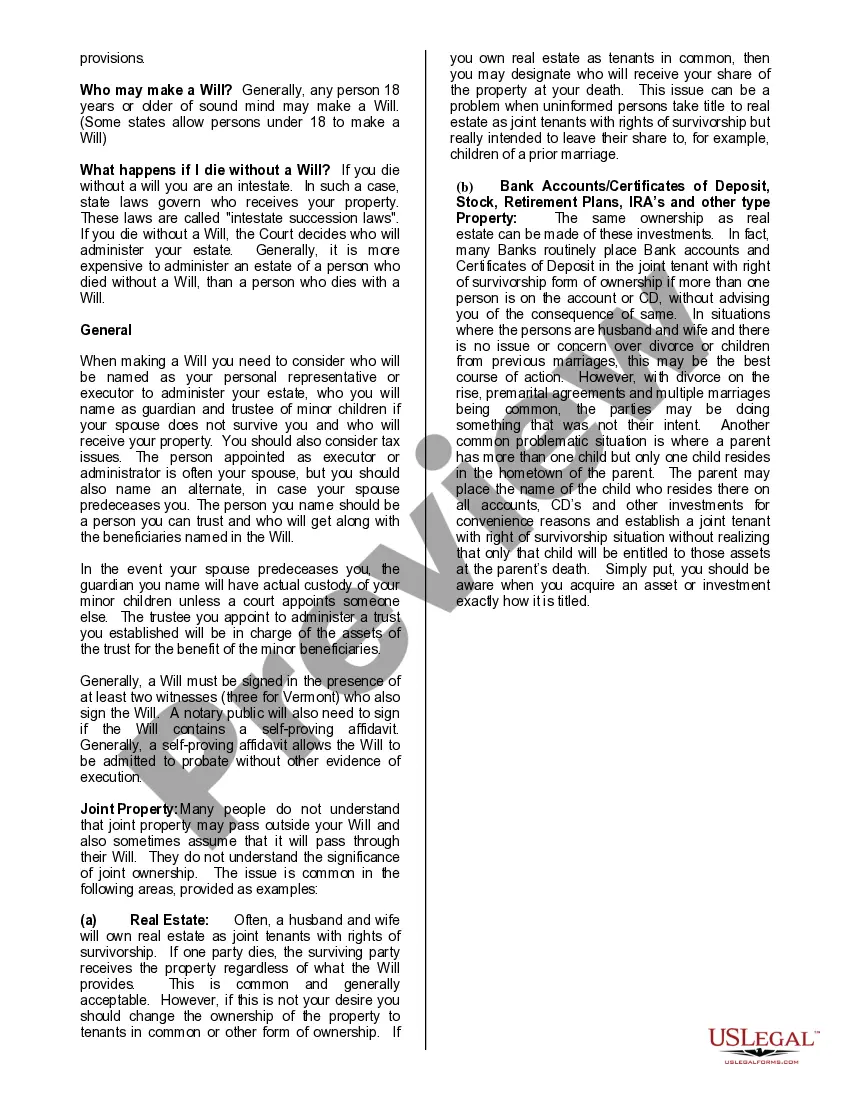
A joint will is a legal document executed by two (or more) people, which merges their individual wills into a single, combined last will and testament. Like most wills, a joint will lets the will-makers name who will get their property and assets after they die. Joint wills are usually created by married couples.
You and your spouse may have one of the most common types of estate plans between married couples, which is a simple will leaving everything to each other. With this type of plan, you leave all of your assets outright to your surviving spouse. The kids or other beneficiaries only get something after you are both gone.
Anyone who is an immediate family member of the deceased, whether or not he or she is listed in the will, is legally entitled to view a copy.Those are the primary parties who may request access to a will, but there are other less groups of people that also have a legal right to view and receive copies of the document.
As an heir, you are entitled to a copy of the Will, whether you are named as a beneficiary or not. If there is a probate estate, then you should receive a copy of the Will. If you do not, you can always get it from the court. If there is no probate estate, then the Will is not going to do anything.