Wyoming Financial Statements only in Connection with Prenuptial Premarital Agreement
Overview of this form
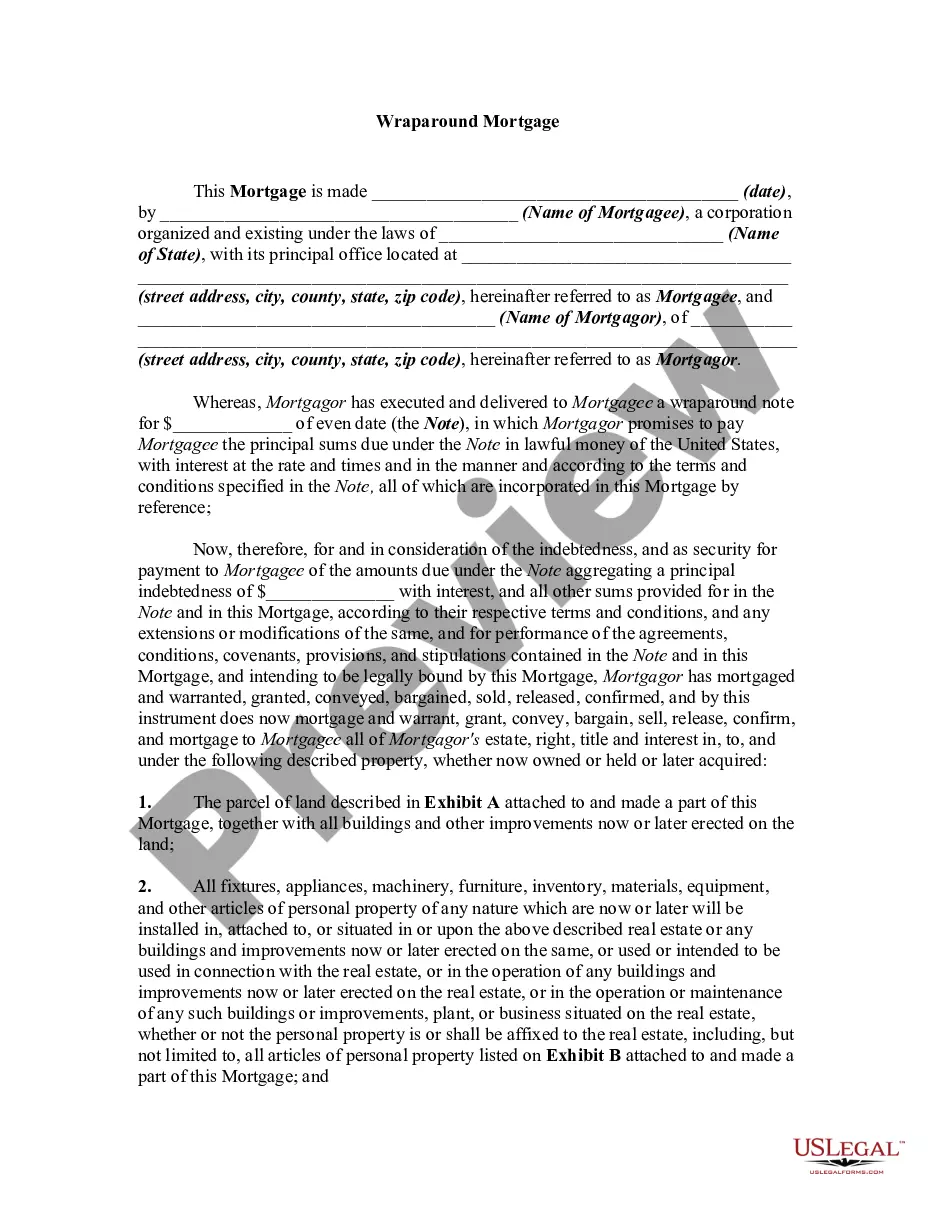
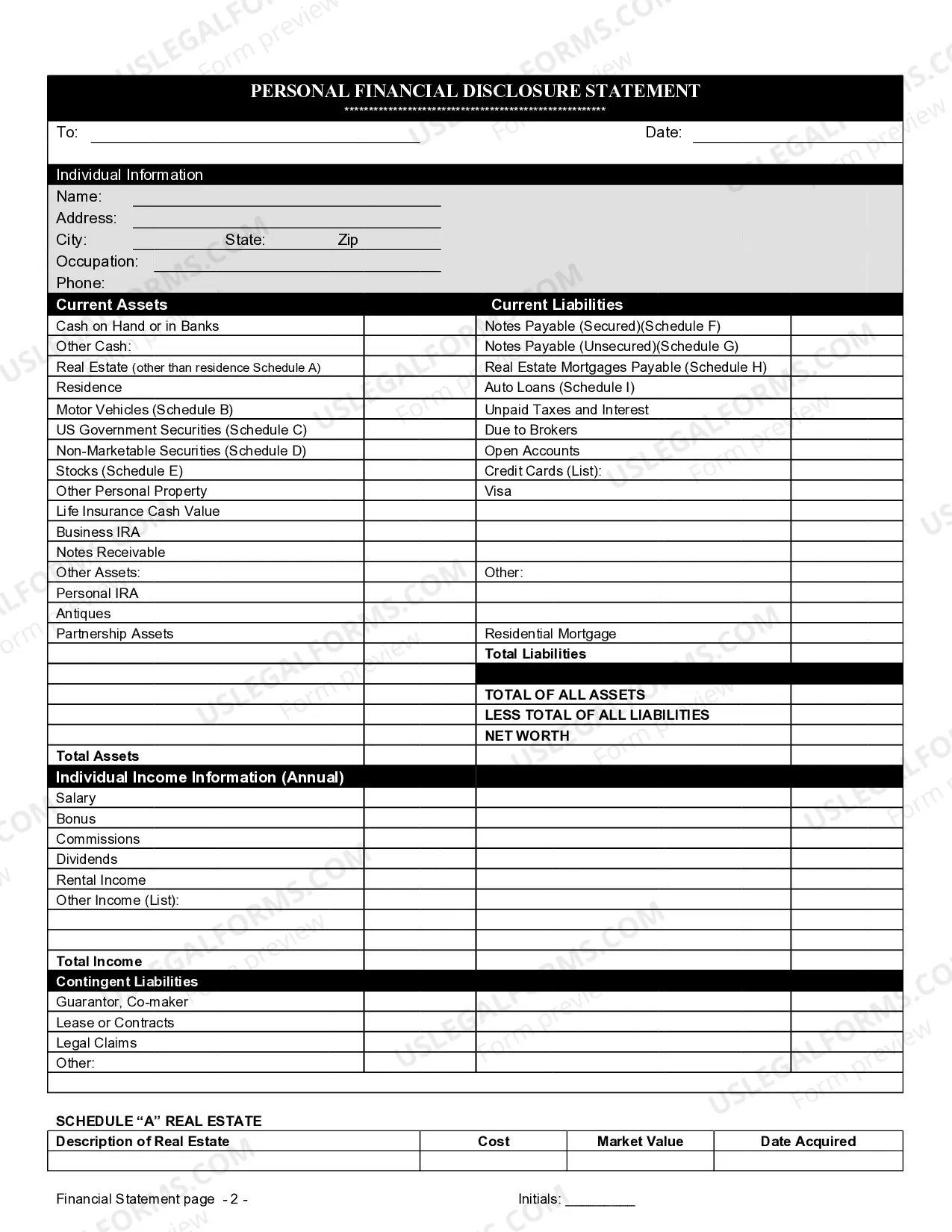
The Financial Statements only in Connection with Prenuptial Premarital Agreement is a legally required disclosure form that both parties must complete prior to signing a prenuptial agreement. This form ensures that each partner fully discloses their financial assets and liabilities, making the agreement enforceable and transparent.
What’s included in this form
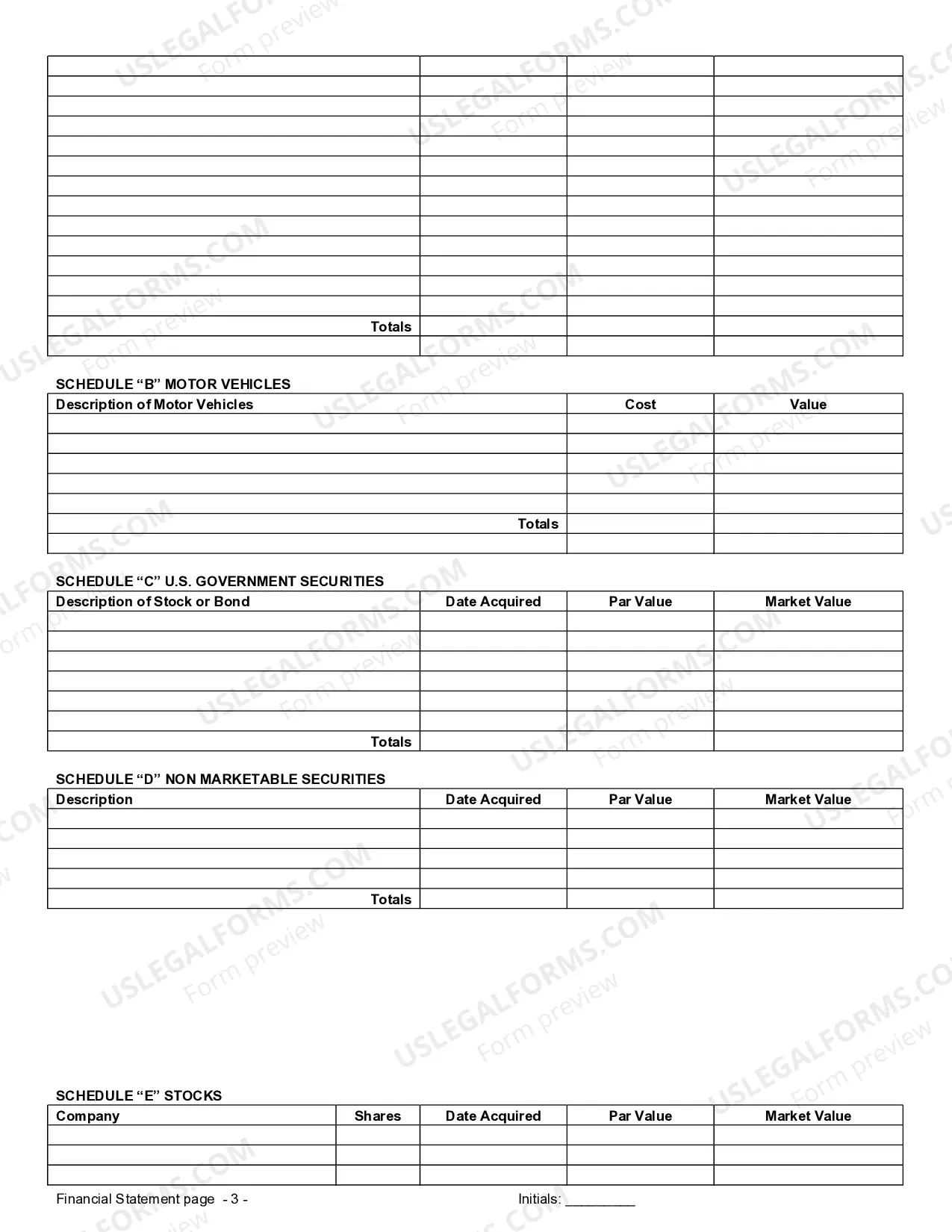
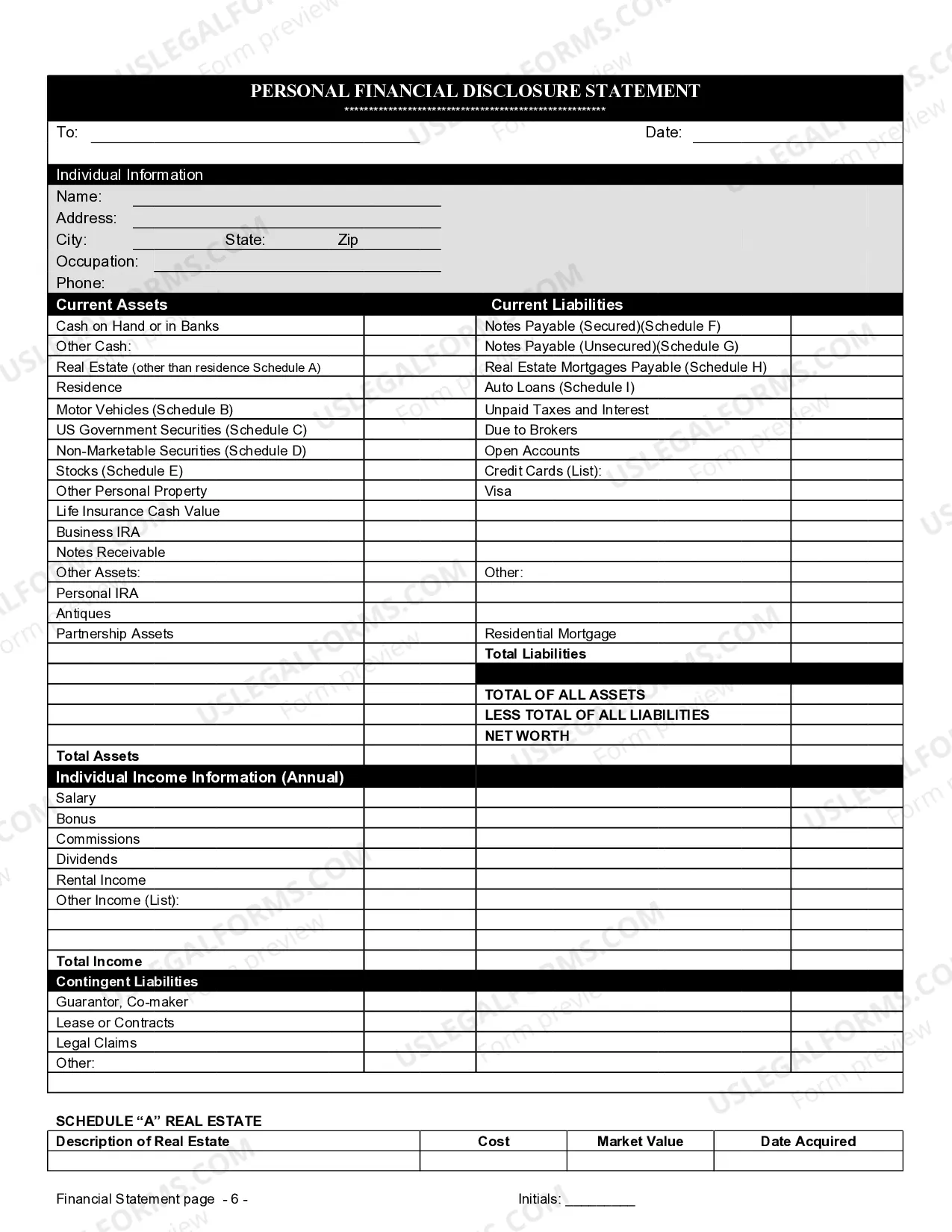
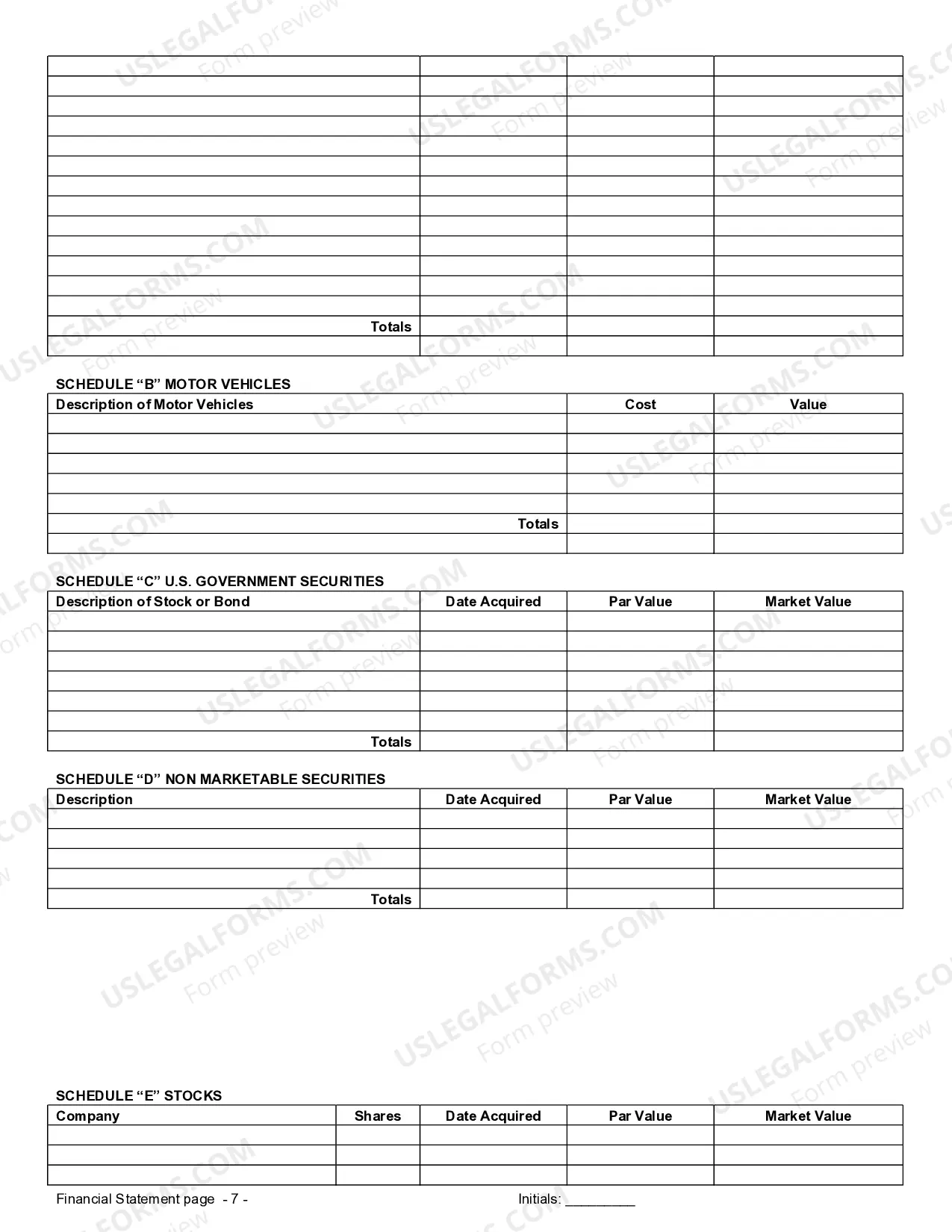
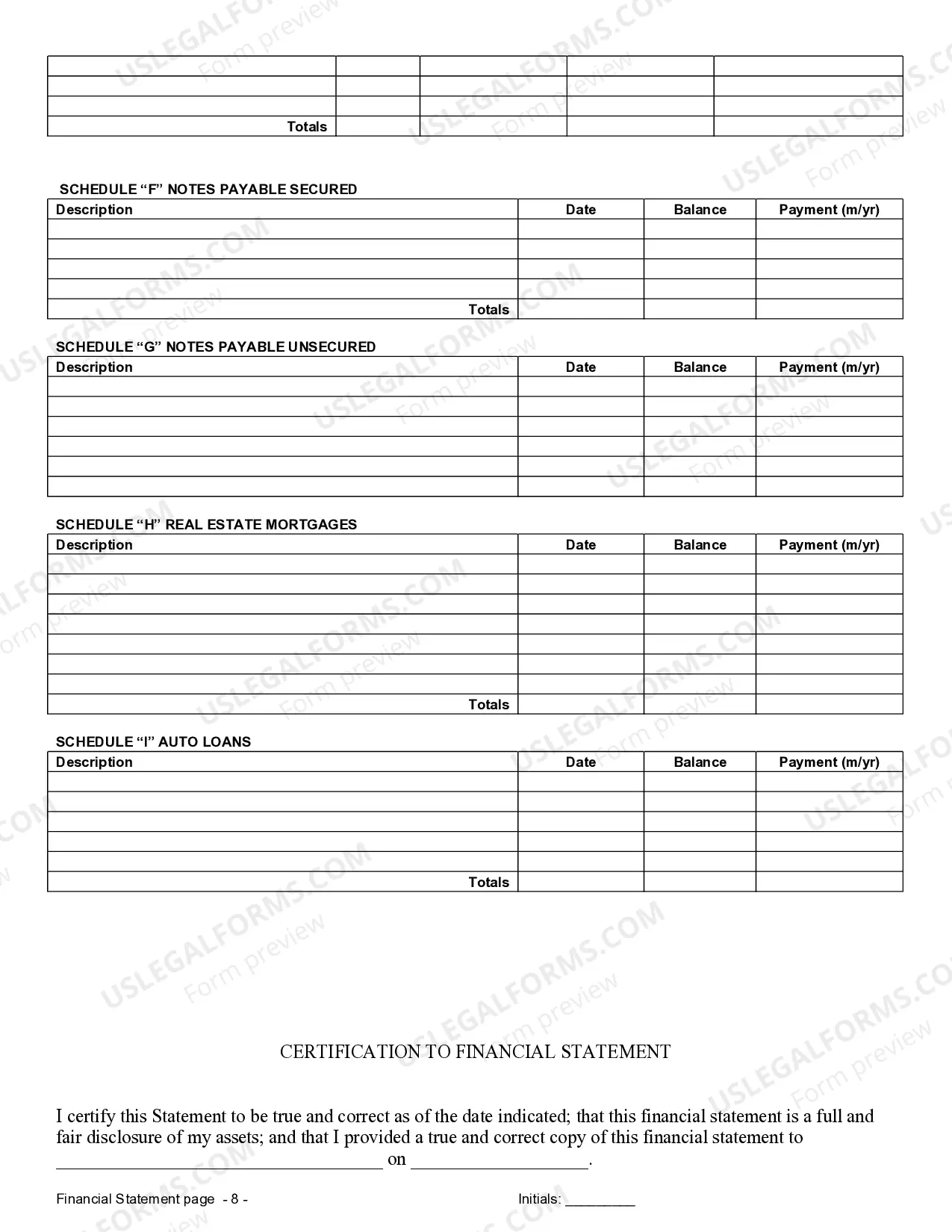
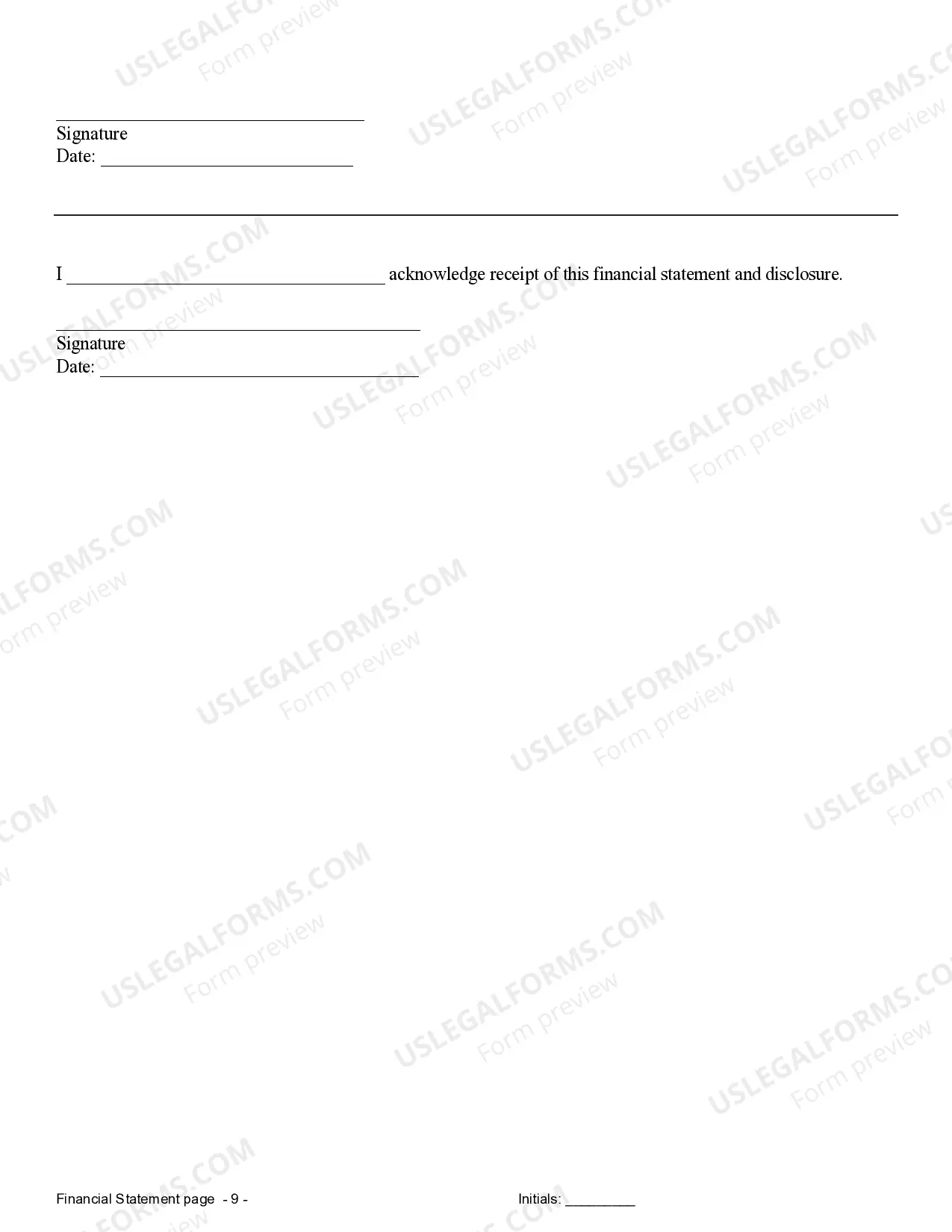
- Personal Financial Disclosure: Each party lists their assets and liabilities.
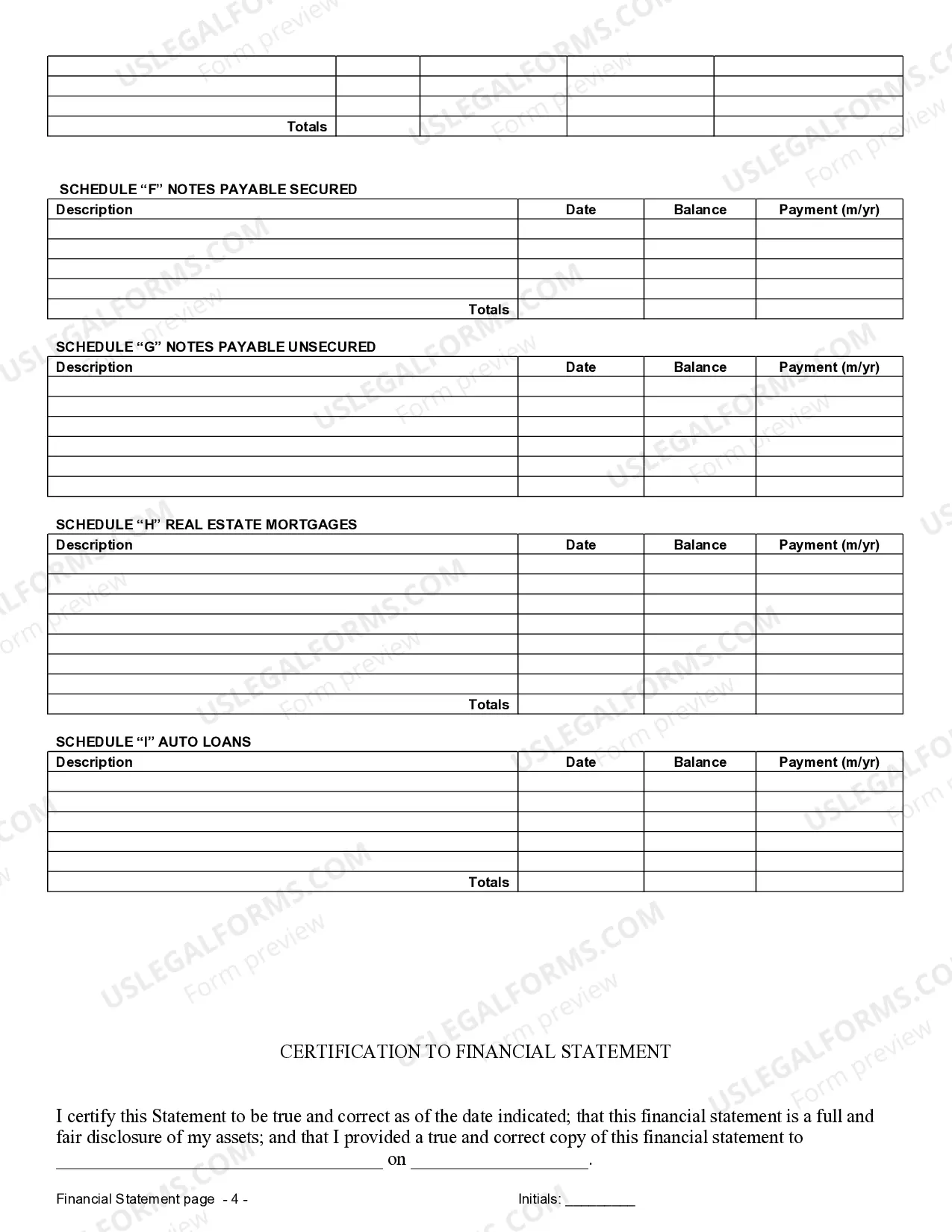
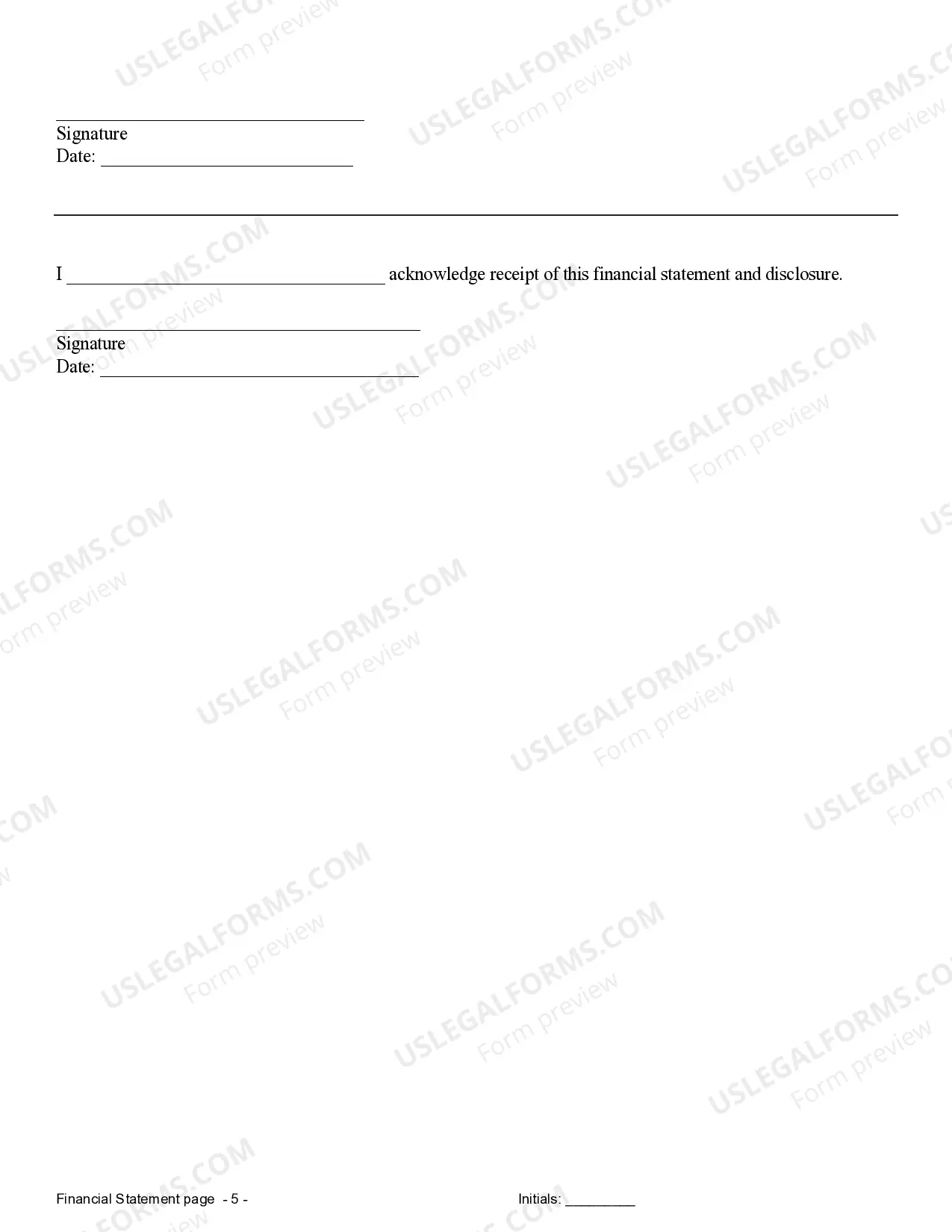
- Signature Lines: Sections for both parties to sign and date the document.
- Acknowledgment: A clause requiring acknowledgment of receipt by the other party.
- Initials: Each page must be initialed for validation.
- Additional Space: Provision to attach extra pages if needed.

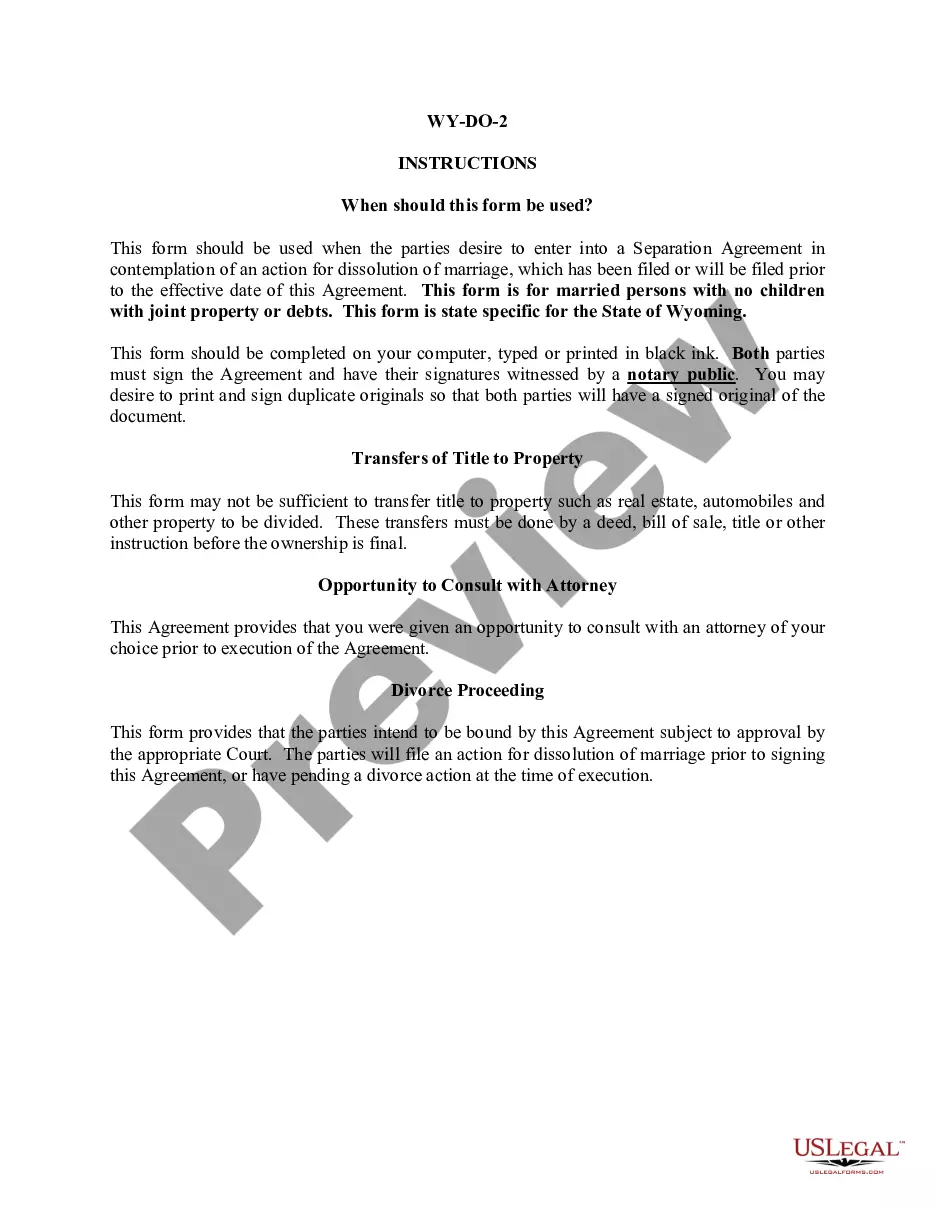
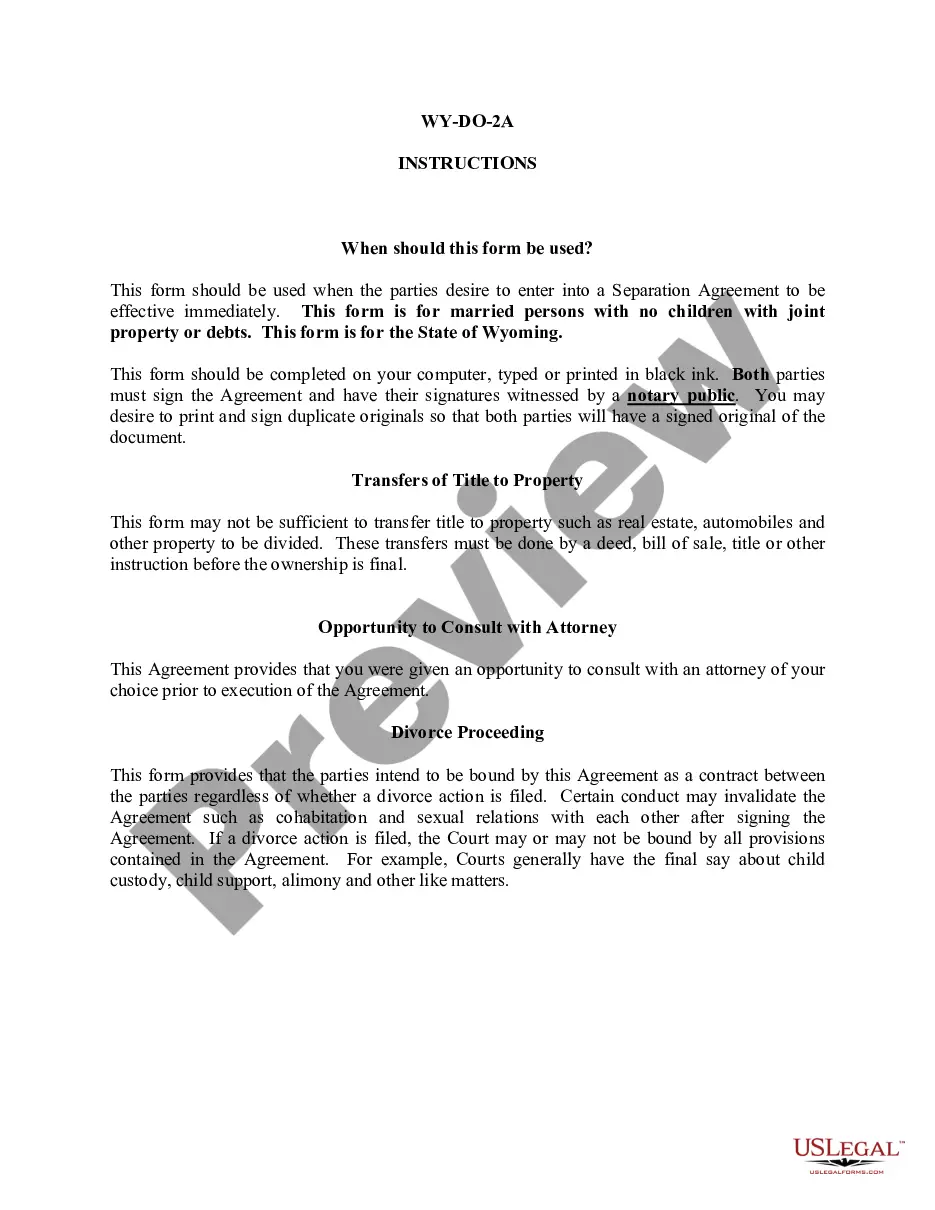
Situations where this form applies
This form is needed when couples decide to enter into a prenuptial agreement, especially when significant financial assets or debts exist. Both parties must provide complete disclosures to protect their interests and ensure fairness before marriage.
Who needs this form
- Couples planning to marry who want to establish a prenuptial agreement.
- Individuals with significant assets or liabilities.
- Parties seeking transparency regarding financial situations before marriage.
How to prepare this document
- Identify and list all personal assets, including bank accounts, real estate, and investments.
- Detail any liabilities, such as loans, credit card debts, and mortgages.
- Initial each page for acknowledgement of information provided.
- Both parties must sign the last page to confirm their disclosures.
- Attach any additional pages needed for further details.
Notarization requirements for this form
This form usually doesn’t need to be notarized. However, local laws or specific transactions may require it. Our online notarization service, powered by Notarize, lets you complete it remotely through a secure video session, available 24/7.
Get your form ready online
Our built-in tools help you complete, sign, share, and store your documents in one place.
Make edits, fill in missing information, and update formatting in US Legal Forms—just like you would in MS Word.
Download a copy, print it, send it by email, or mail it via USPS—whatever works best for your next step.
Sign and collect signatures with our SignNow integration. Send to multiple recipients, set reminders, and more. Go Premium to unlock E-Sign.
If this form requires notarization, complete it online through a secure video call—no need to meet a notary in person or wait for an appointment.
We protect your documents and personal data by following strict security and privacy standards.

Make edits, fill in missing information, and update formatting in US Legal Forms—just like you would in MS Word.

Download a copy, print it, send it by email, or mail it via USPS—whatever works best for your next step.

Sign and collect signatures with our SignNow integration. Send to multiple recipients, set reminders, and more. Go Premium to unlock E-Sign.

If this form requires notarization, complete it online through a secure video call—no need to meet a notary in person or wait for an appointment.

We protect your documents and personal data by following strict security and privacy standards.
Common mistakes
- Failing to list all assets and liabilities accurately.
- Not signing or initialing every page of the document.
- Using vague terms instead of specific figures for assets and debts.
Advantages of online completion
- Easy to download and fill out at your convenience.
- Edit and update the form as needed before finalizing.
- Forms comply with legal standards, ensuring reliability.
Main things to remember
- Both parties must disclose their financial situations when preparing a prenuptial agreement.
- Accurate and complete financial disclosure is essential for fairness and transparency.
- Review state-specific requirements to ensure compliance with local laws regarding prenuptial agreements.
Looking for another form?
Form popularity
FAQ
Pitfall 1: Negotiating a prenuptial agreement may irrevocably damage your relationship and make divorce more likely.Generally speaking, both fiance's should hire attorneys to negotiate and draft a prenup on their own behalf, because the agreement may not be enforceable without involvement of separate legal counsel.
Omitting an asset, even if just by accident, can void the entire agreement. The prenup loophole is that, should the agreement come into a court setting, the only thing one side has to do is find a legitimate asset that was excluded when the agreement was executed. As the law goes, ignorance is no excuse.
One formality that many do not realize the importance of is a full and fair disclosure of assets and debts prior to the prenuptial agreement being signed. In other words, both parties are supposed to disclosure all the assets and debts that they are bringing into the marriage.
A prenup can also be overturned if one or both parties change their mind after initially signing the agreement. They may decide at that time to sign a new agreement suspending the prenup.
The three most common grounds for nullifying a prenup are unconscionability, failure to disclose, or duress and coercion.Duress and coercion can also invalidate a prenup. If the prenup was signed the day before your wedding, it may appear that the parties didn't have much time to fully review the agreement.
Spousal abuse or cheating does not void or invalidate a prenuptial or partition agreement unless the agreement specifically states that.A custom marital agreement can include an infidelity clause, but the ramifications should be carefully considered.
In the event of divorce, a prenup can protect a spouse from being liable for any debt the other spouse brought into the marriage.A prenup can also protect any income or assets you earn during the marriage, as well as unearned income from a bequest or a trust distribution.
Just as a future asset can be protected by a prenup if adequately described, future income can also be treated as belonging to one partner but not both.