West Virginia Last Will and Testament for Married person with Minor Children from Prior Marriage
What is this form?
The Last Will and Testament for a married person with minor children from a prior marriage is a legal document that outlines how a person's assets will be distributed upon their death. This particular will differs from others by specifically addressing the needs of individuals who have children from a previous relationship and are now married. It not only assigns beneficiaries for property but also designates guardians for minor children and facilitates the creation of trusts for their benefit.
Key components of this form
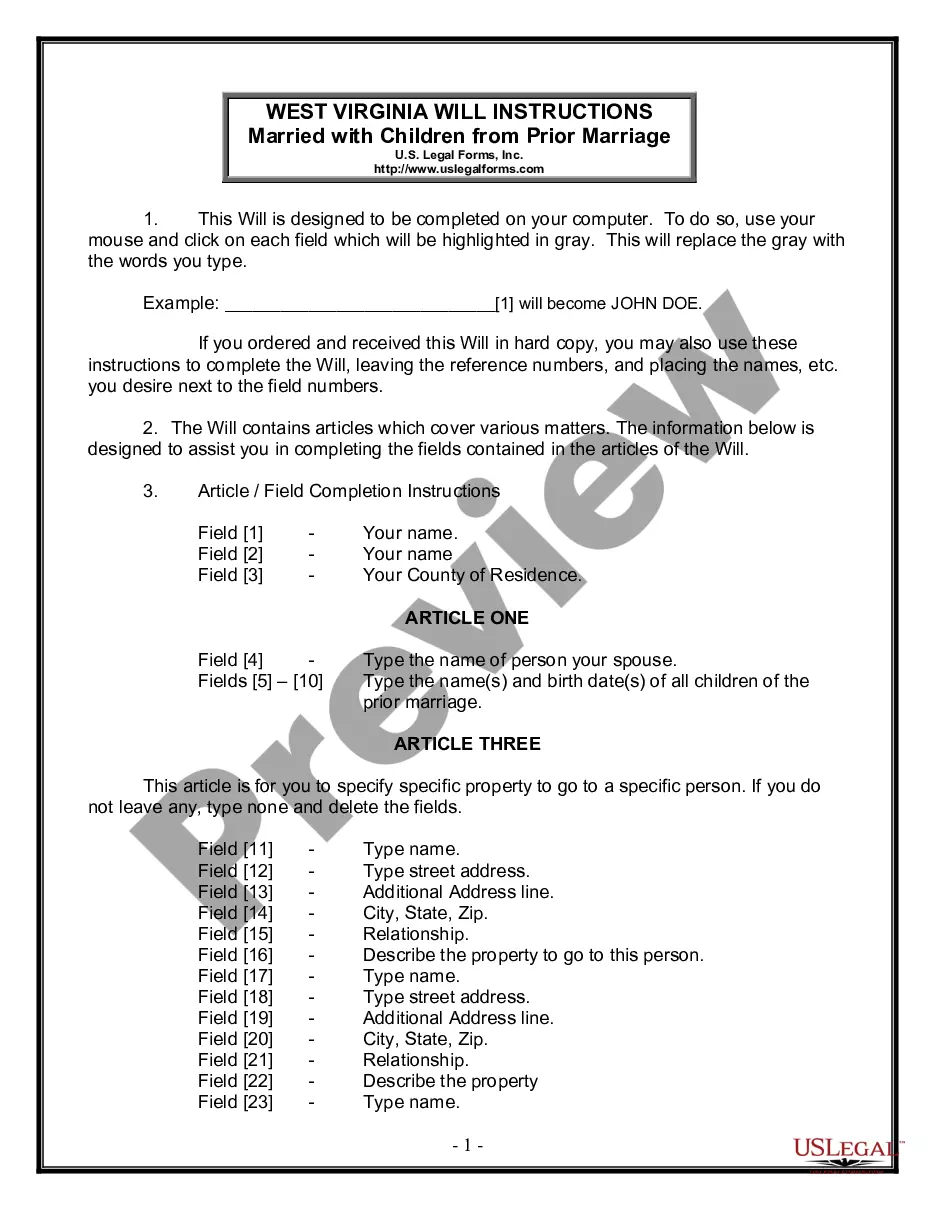
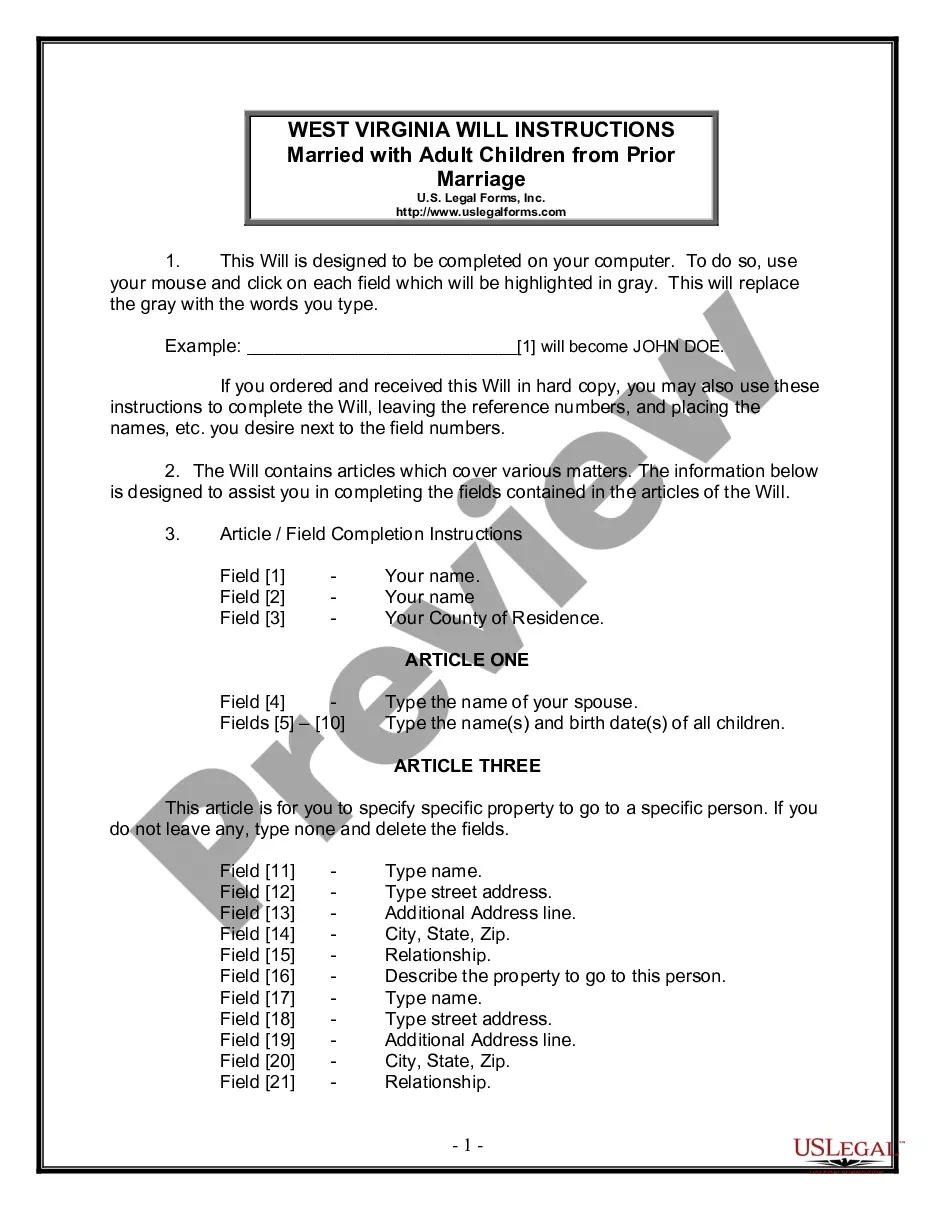
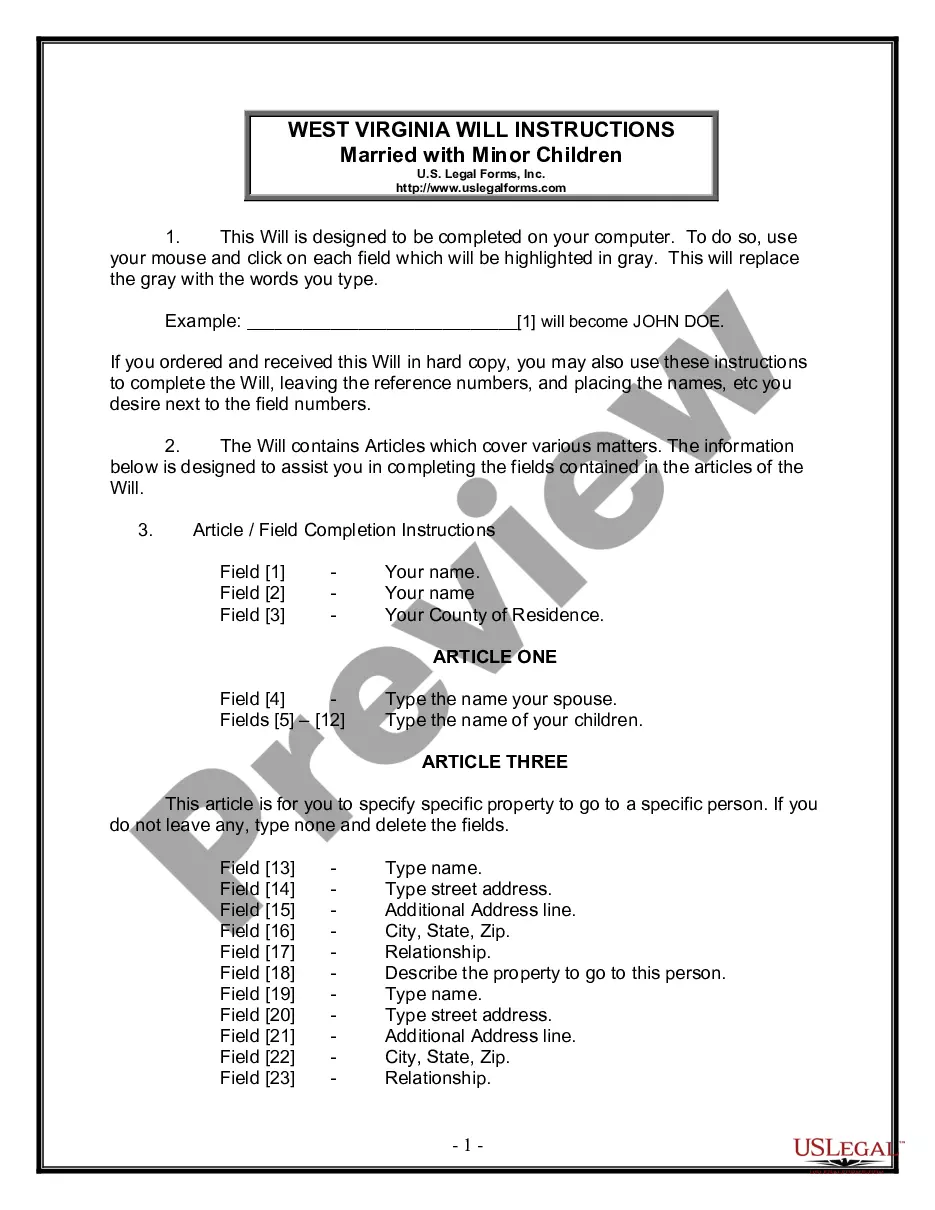
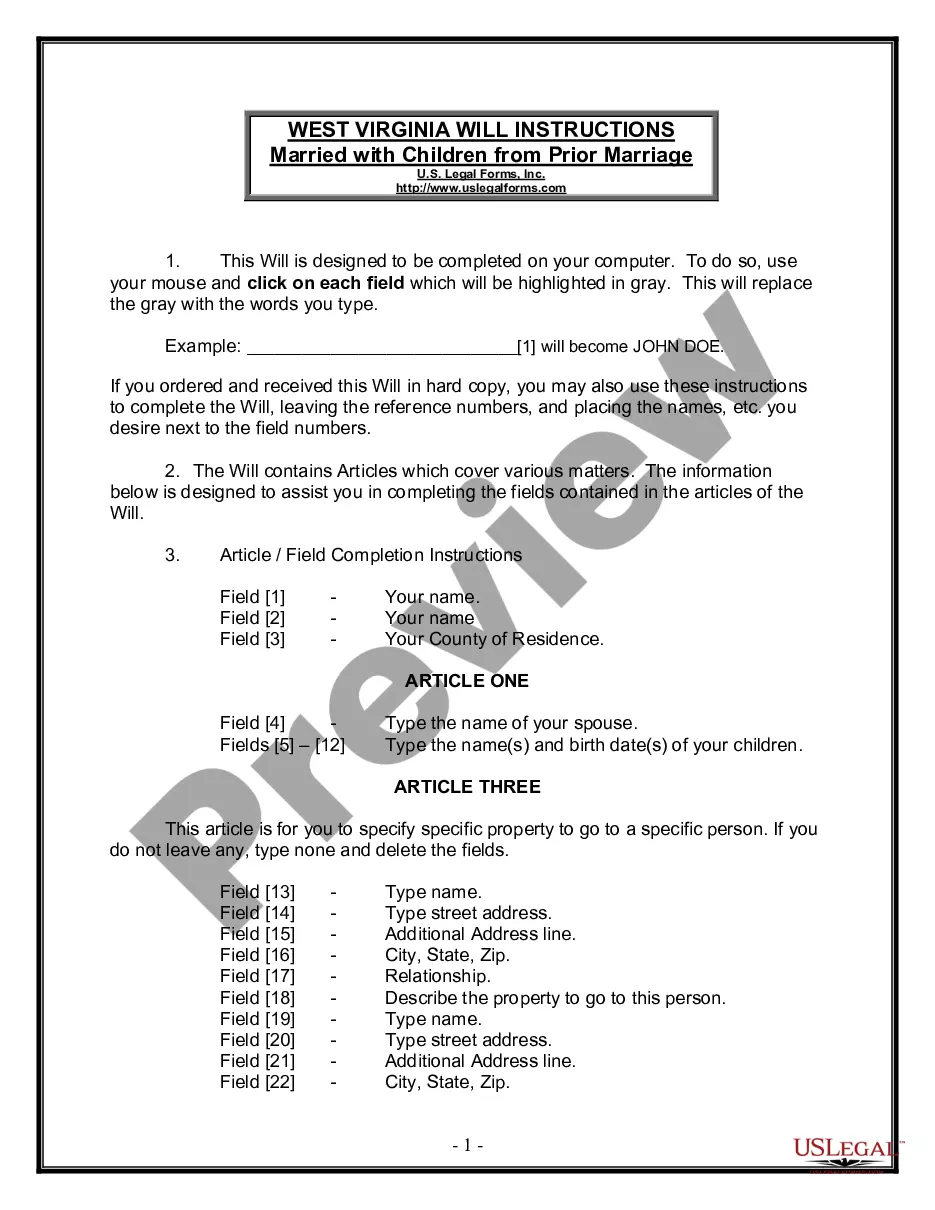
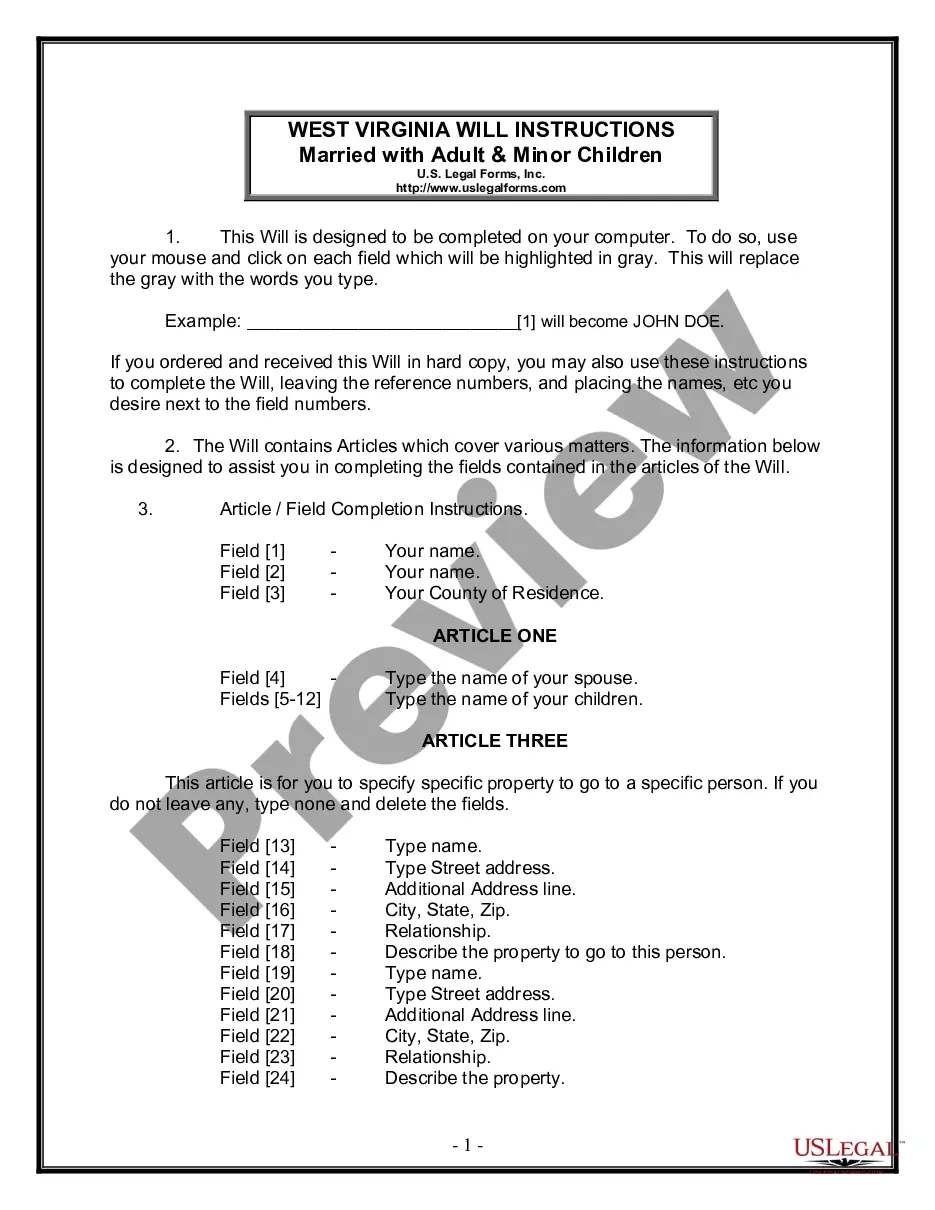
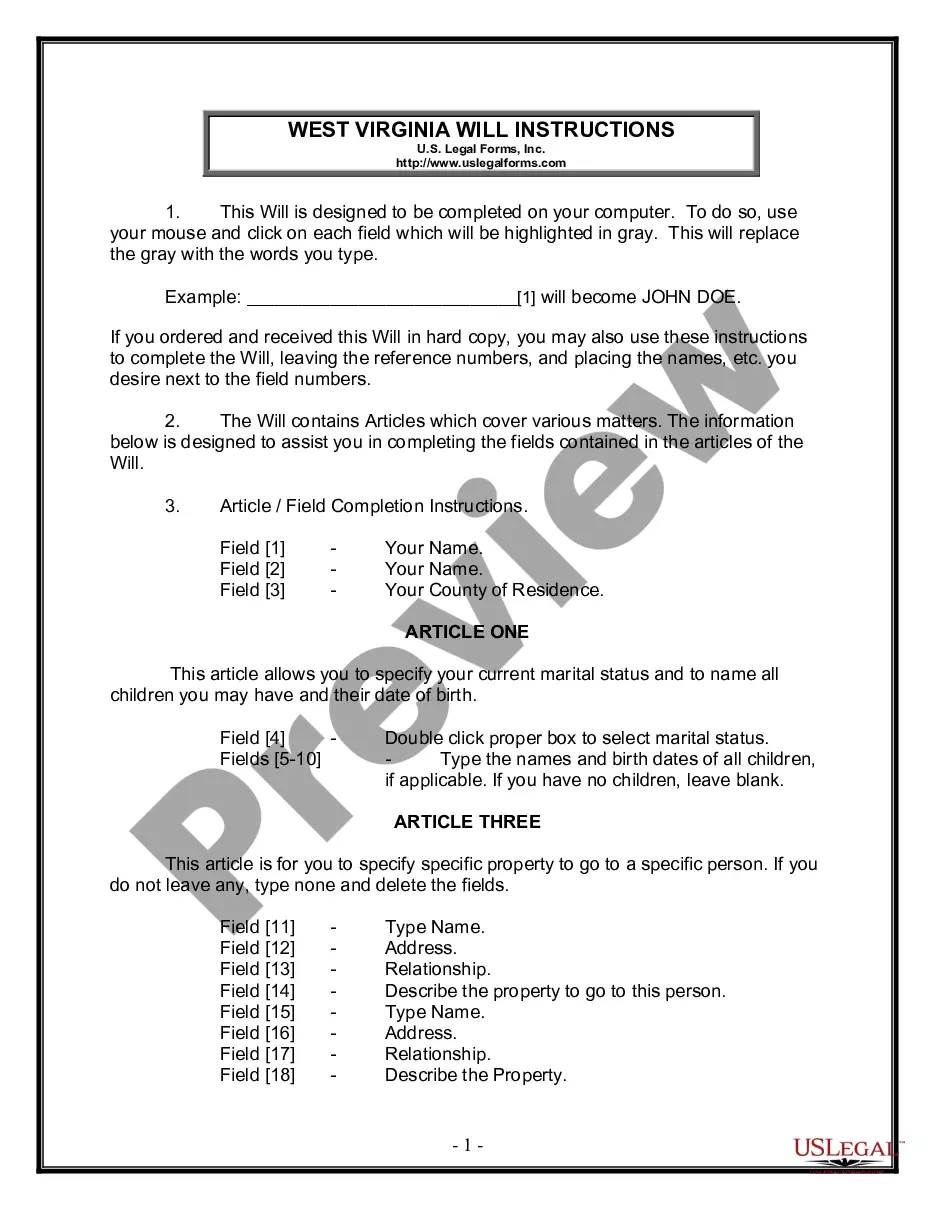
Article One: Names of the testator, spouse, and children from a prior marriage.
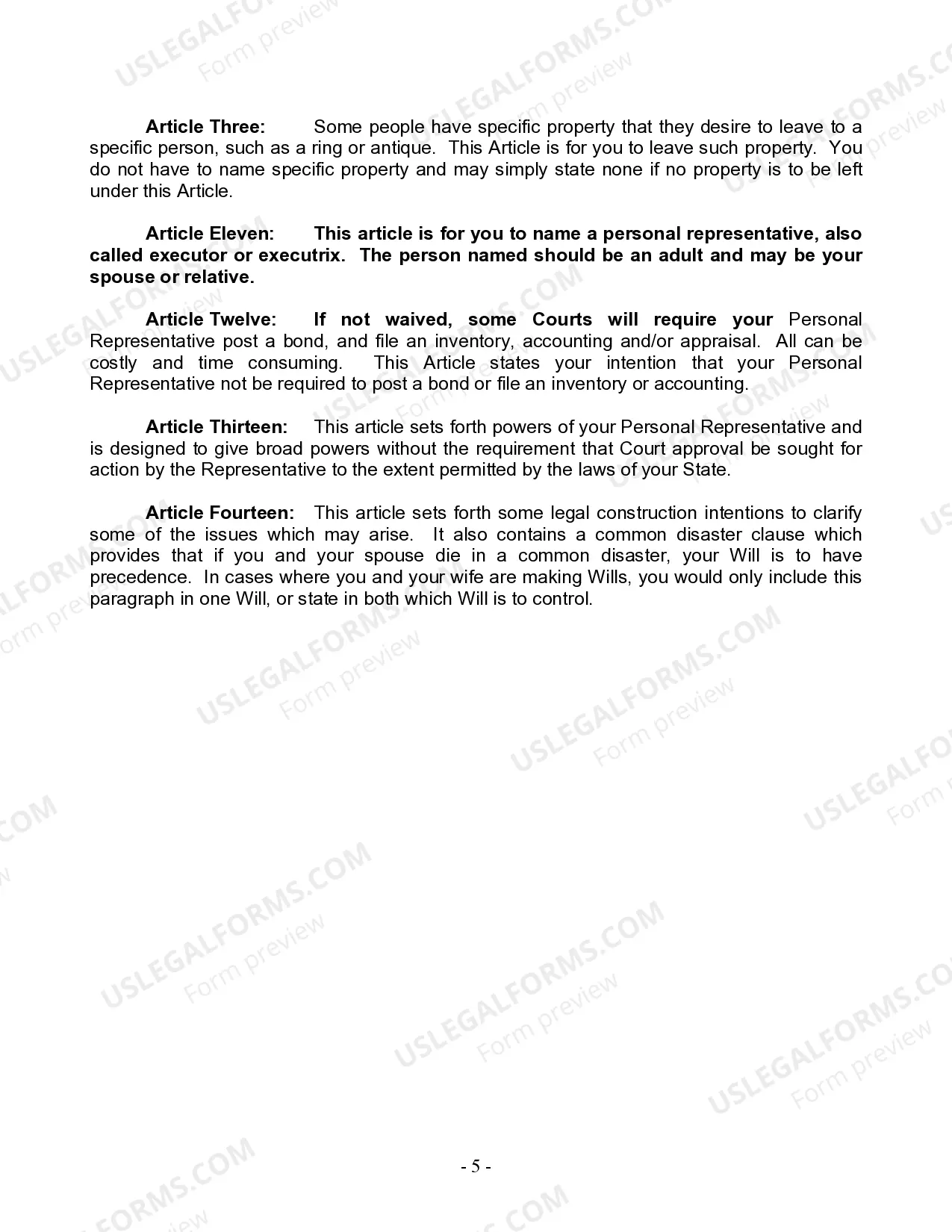
Article Three: Specific bequests of property to designated individuals.
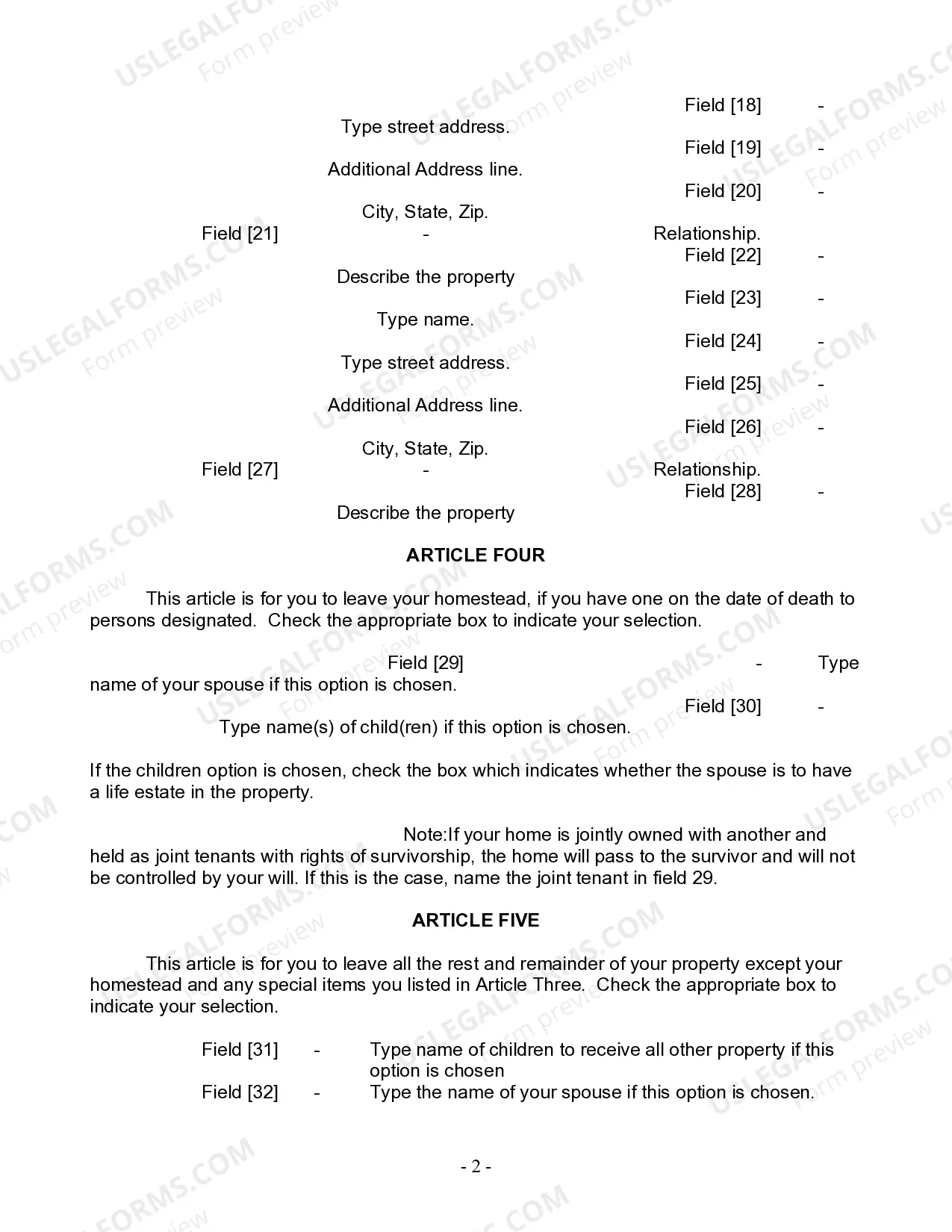
Article Four: Provisions for the primary residence, passing it to either the spouse or children.
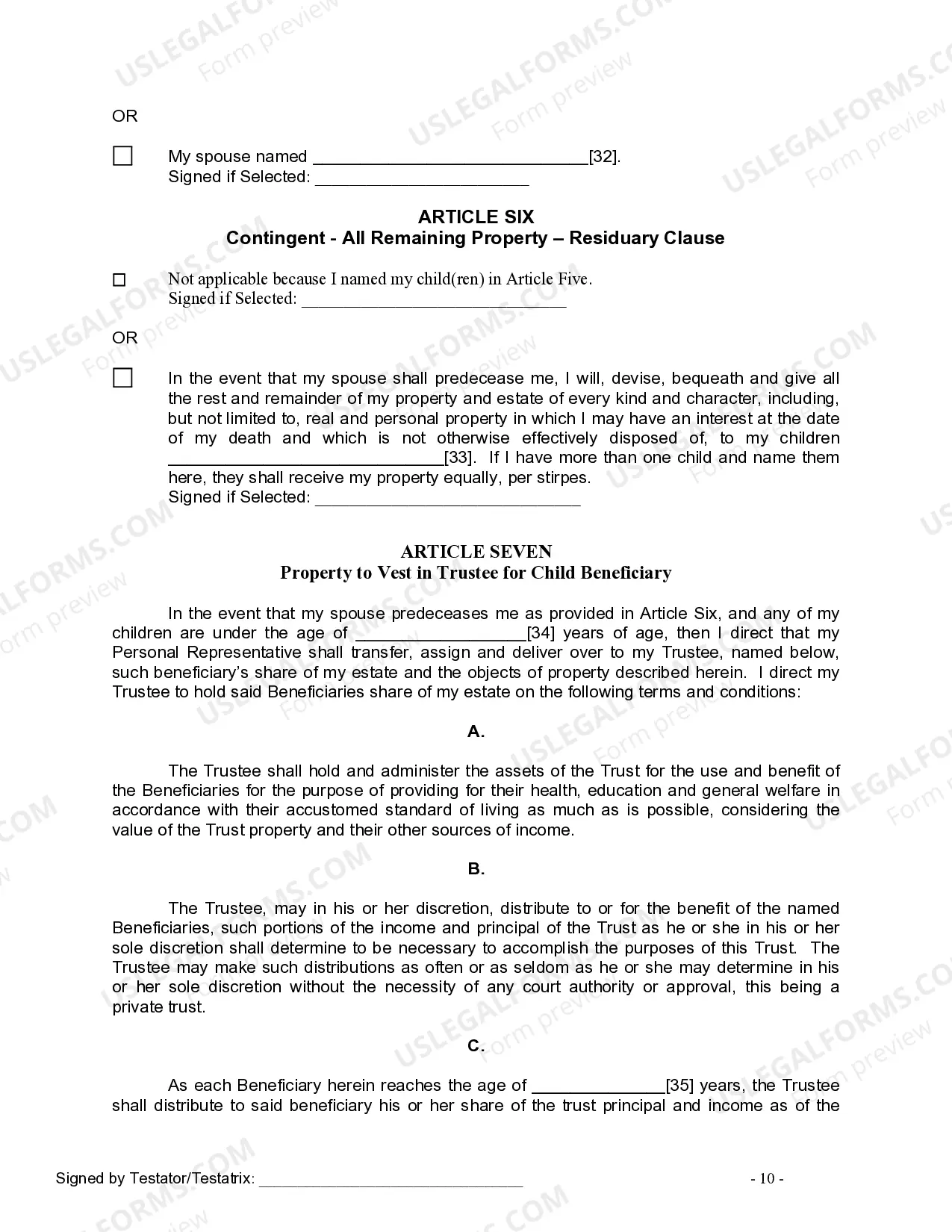
Article Seven: Instructions for establishing a trust for minor children until they reach a specified age.
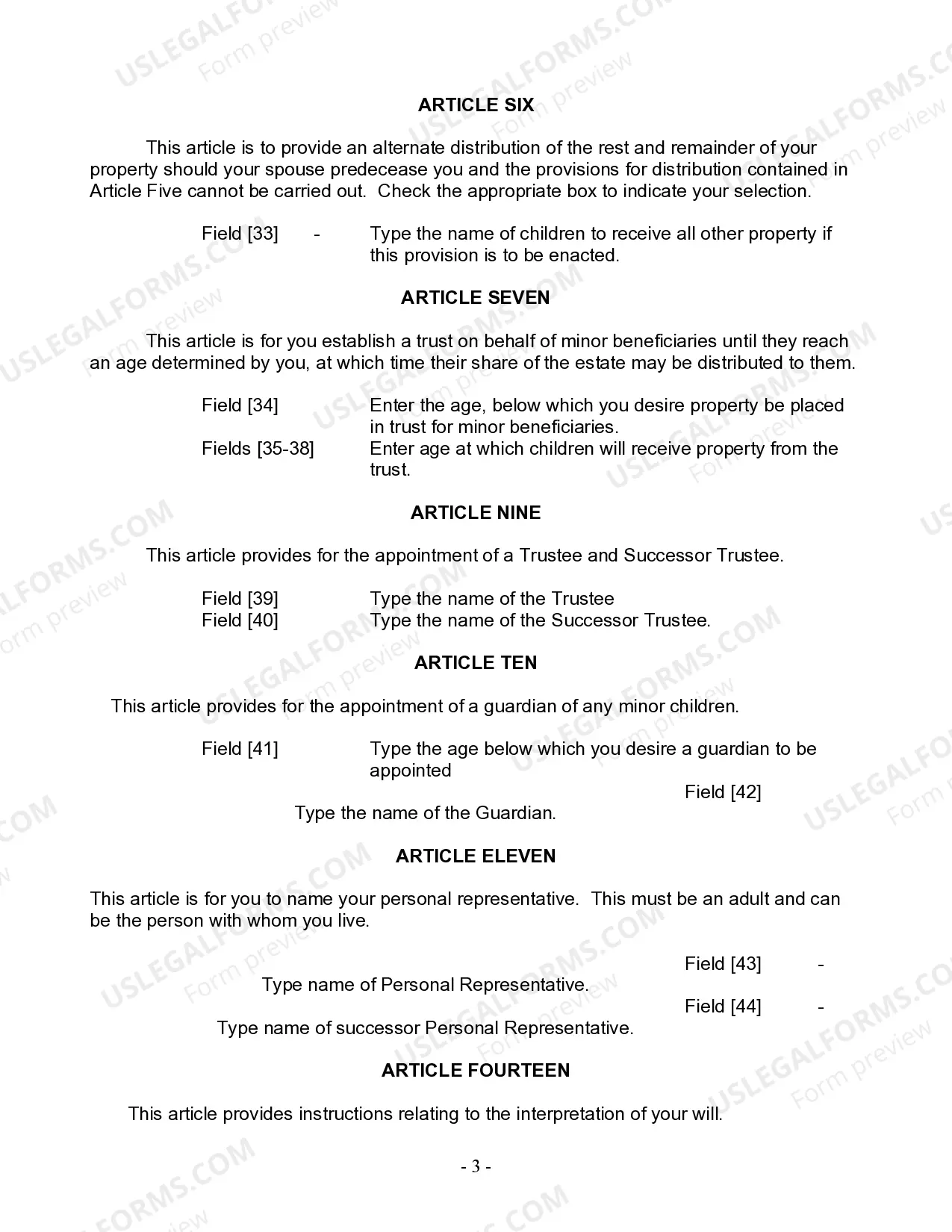
Appointment of Guardians: Designation of guardians for minor children in the event of the testator's death.
Personal Representative: Selection of an executor to manage the estate affairs.




When to use this document
This form should be used by married individuals who have minor children from a previous marriage. It is essential when you want to ensure that your children from the prior marriage are taken care of and that your spouse is also provided for in your estate plan. This will helps to prevent potential conflicts and ensures that your wishes are honored after you pass away.
Intended users of this form
This document is ideal for:
- Married individuals with one or more children from a previous relationship.
- Individuals who want to clearly outline the distribution of their assets.
- Parents who wish to designate guardians for their minor children.
- Anyone intending to create trusts for the benefit of minor children.
Completing this form step by step
To complete the Last Will and Testament, follow these steps:
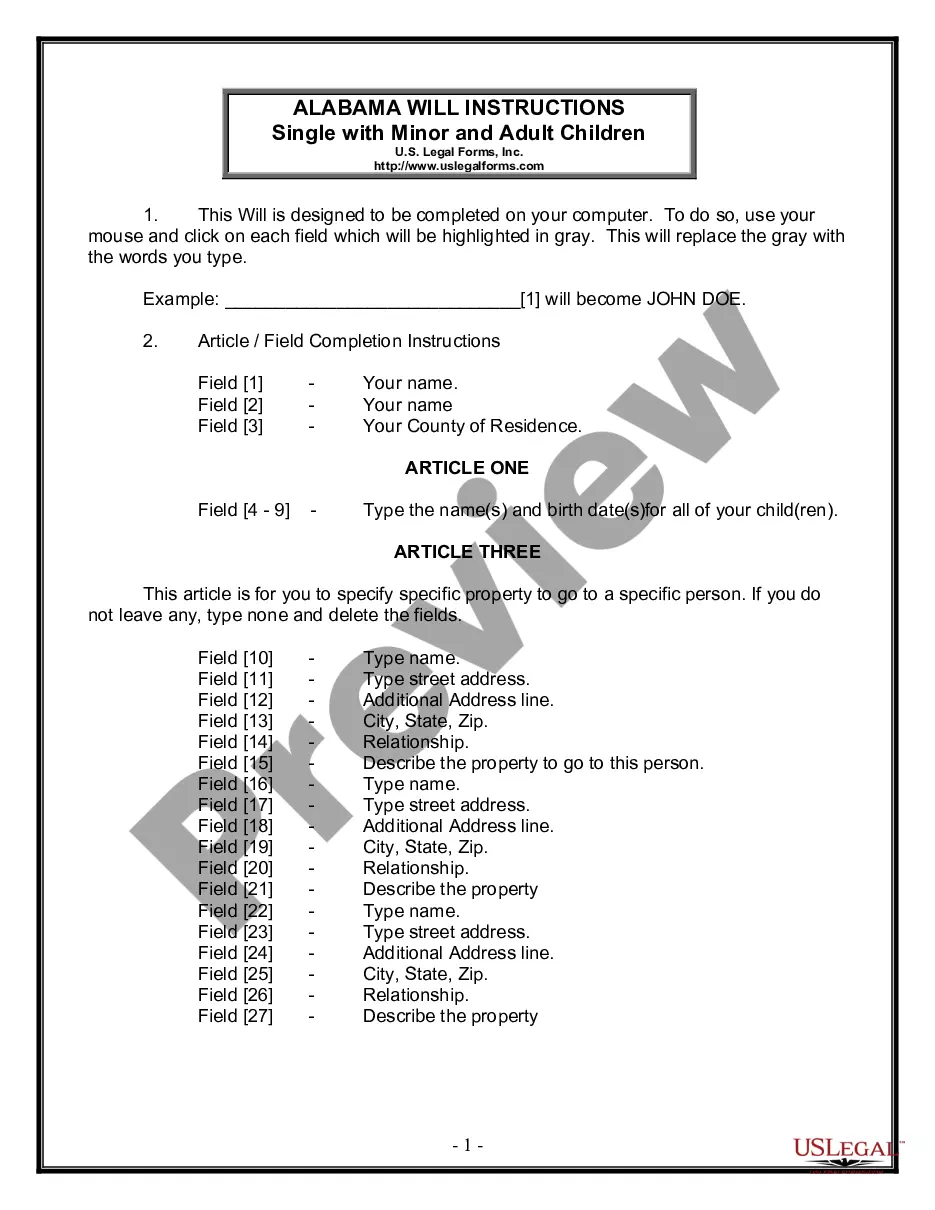
- Identify yourself and your spouse, including full names and county of residence.
- List your minor children from previous marriages, including their names and birthdates.
- Specify any assets you wish to bequeath to specific individuals.
- Choose guardians for your minor children in the event of your death.
- Sign the document in the presence of two witnesses who are not beneficiaries.
- Consider notarizing the will if required by your state for added legal protection.
Is notarization required?
Yes, this form must be notarized to be legally valid. Having a notary public present during the signing of your will ensures its authenticity and can streamline the probate process by providing a self-proving affidavit.
Get your form ready online
Our built-in tools help you complete, sign, share, and store your documents in one place.
Make edits, fill in missing information, and update formatting in US Legal Forms—just like you would in MS Word.
Download a copy, print it, send it by email, or mail it via USPS—whatever works best for your next step.
Sign and collect signatures with our SignNow integration. Send to multiple recipients, set reminders, and more. Go Premium to unlock E-Sign.
If this form requires notarization, complete it online through a secure video call—no need to meet a notary in person or wait for an appointment.
We protect your documents and personal data by following strict security and privacy standards.

Make edits, fill in missing information, and update formatting in US Legal Forms—just like you would in MS Word.

Download a copy, print it, send it by email, or mail it via USPS—whatever works best for your next step.

Sign and collect signatures with our SignNow integration. Send to multiple recipients, set reminders, and more. Go Premium to unlock E-Sign.

If this form requires notarization, complete it online through a secure video call—no need to meet a notary in person or wait for an appointment.

We protect your documents and personal data by following strict security and privacy standards.
Common mistakes to avoid
- Failing to update the will after significant life changes such as divorce or additional children.
- Not clearly naming beneficiaries or guardians, which can lead to disputes.
- Neglecting to have the will signed in front of the required number of witnesses.
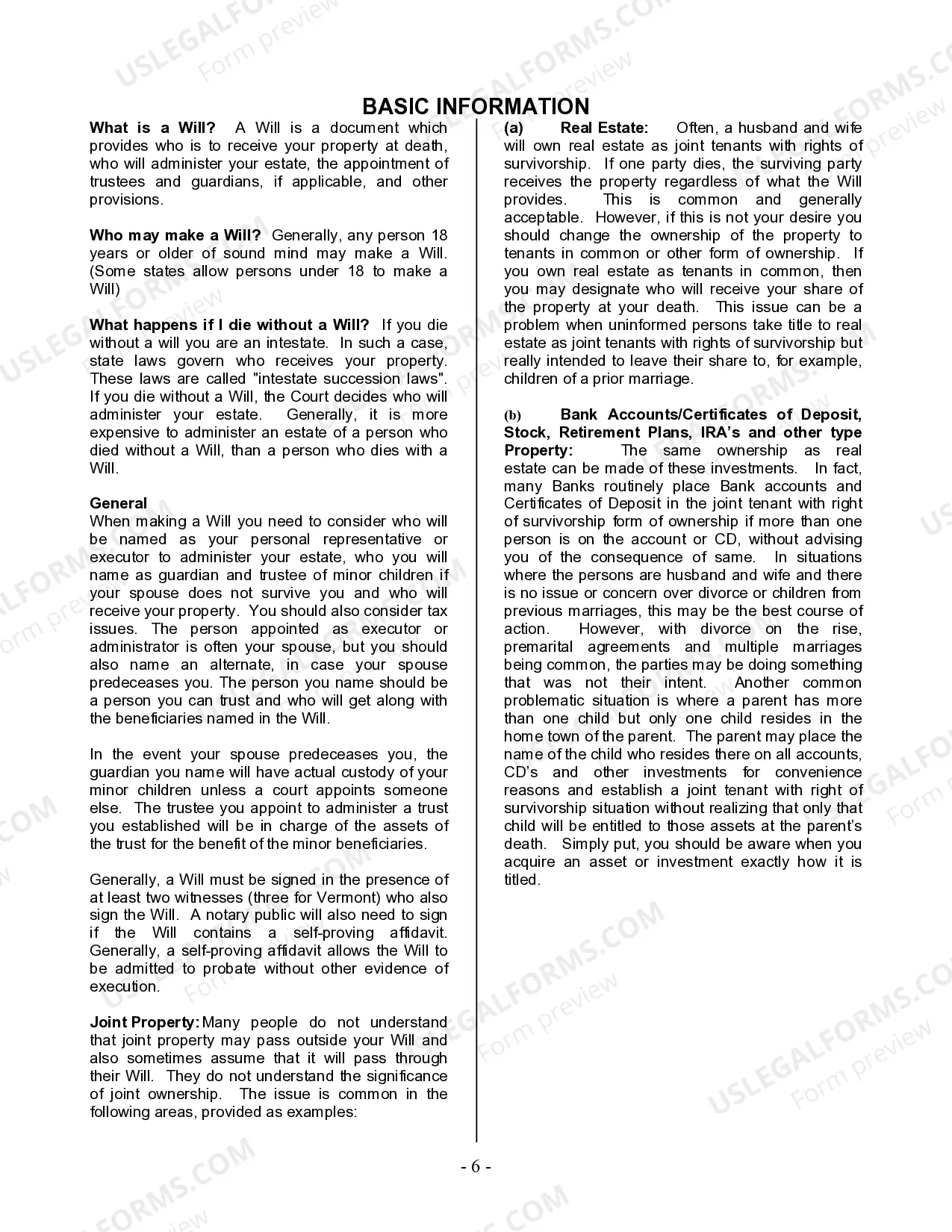
- Assuming joint property will pass by will when it may not.
- Overlooking the need for a trust when minor children are involved.
Advantages of online completion
- Convenience of completing the will online at your own pace.
- Editability to customize your will without the assistance of an attorney.
- Access to professionally drafted content reviewed by licensed attorneys.
- Easy storage and retrieval for future updates or modifications.
- Peace of mind knowing your wishes for your children and spouse are documented.
What to keep in mind
- The Last Will and Testament is crucial for married individuals with children from previous relationships.
- It helps to outline your wishes clearly for property distribution, guardianship, and trust establishment.
- Proper execution with witnesses and notarization is essential for the validity of the Will.
- Review and update your Will regularly to reflect your current family structure and wishes.
Looking for another form?

Form popularity
FAQ
Written will must be written: statements to others about you last wishes are unenforceable; Signed by testator you must sign your will; Two Witnesses you must have two witnesses, who won't get anything in the will; and. Signature of Two Witnesses your two witnesses must sign the will.
If there is anyone to whom the deceased person owed money, they have only 60 days to file a claim against the estate to get paid.
In order for a will to be valid, it must be: made by a person who is 18 years old or over and. made voluntarily and without pressure from any other person and.signed by the two witnesses, in the presence of the person making the will, after it has been signed.
The Will must be filed with the Probate Office of the County Clerk in the county where the decedent lived. A Petition for Probate must be filed as well. This requests the appointment of an executor. If there is no Will, the clerk will appoint someone to serve as the Personal Representative of the estate.
Call the county clerk's office in the county where you believe the document will be probated and ask if a will has been filed. You may have to wait 30 days or more before the will is filed. Go the the clerk's office where the will has been filed and ask to see a copy.
No, in West Virginia, you do not need to notarize your will to make it legal.A self-proving will speeds up probate because the court can accept the will without contacting the witnesses who signed it.
A. You don't have to have a lawyer to create a basic will you can prepare one yourself. It must meet your state's legal requirements and should be notarized.A do-it-yourself will that's poorly drafted can save you money but create a mess for your heirs when you're gone.
The general statute of limitations for a will contest in West Virginia is currently six months.