West Virginia Landlord Tenant Eviction / Unlawful Detainer Forms Package
Overview of this form package
The West Virginia Landlord Tenant Eviction / Unlawful Detainer Forms Package includes essential legal forms for landlords seeking to evict tenants in accordance with state laws. This package is distinct in that it provides specific forms tailored to West Virginia's regulations, ensuring landlords can navigate the eviction process efficiently and legally.
Forms included in this package
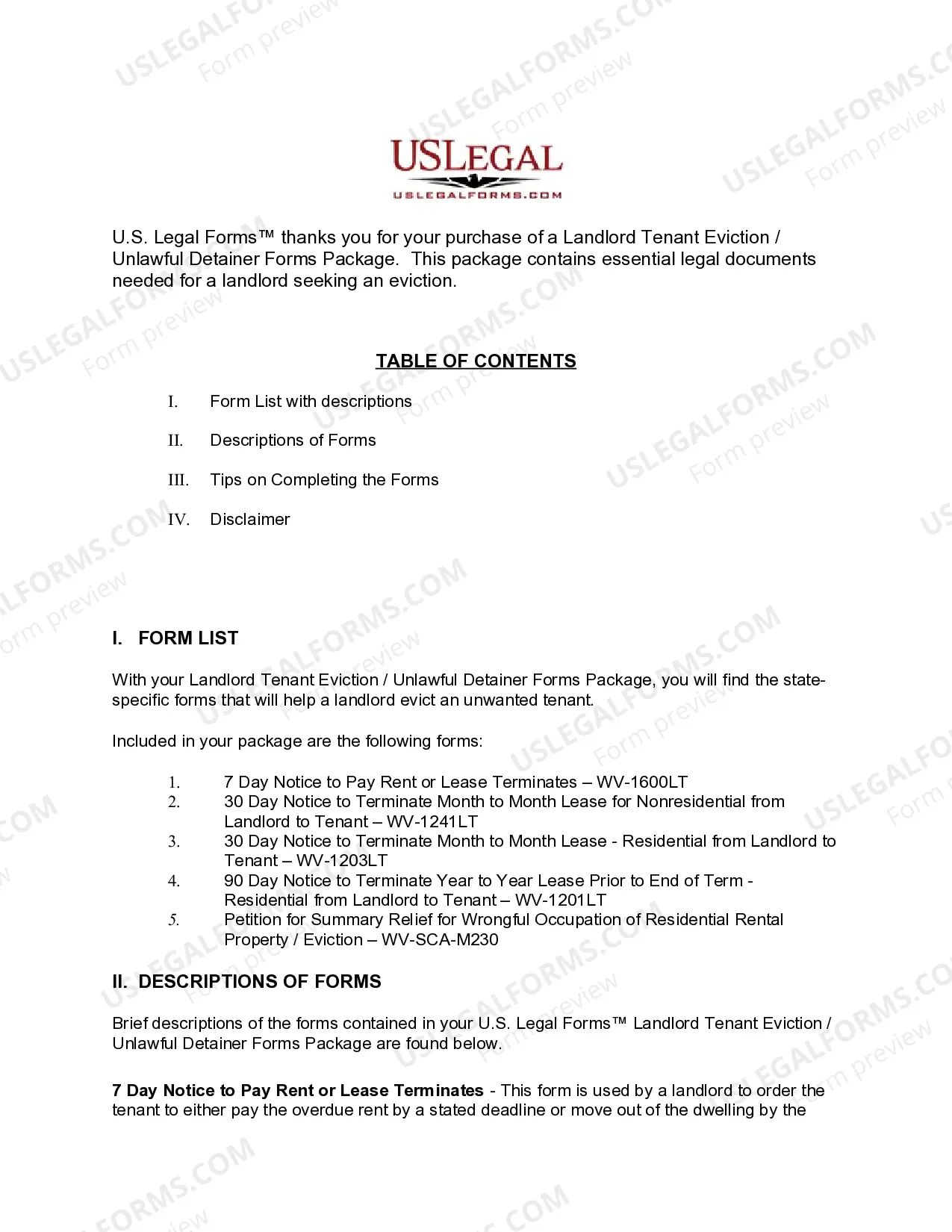
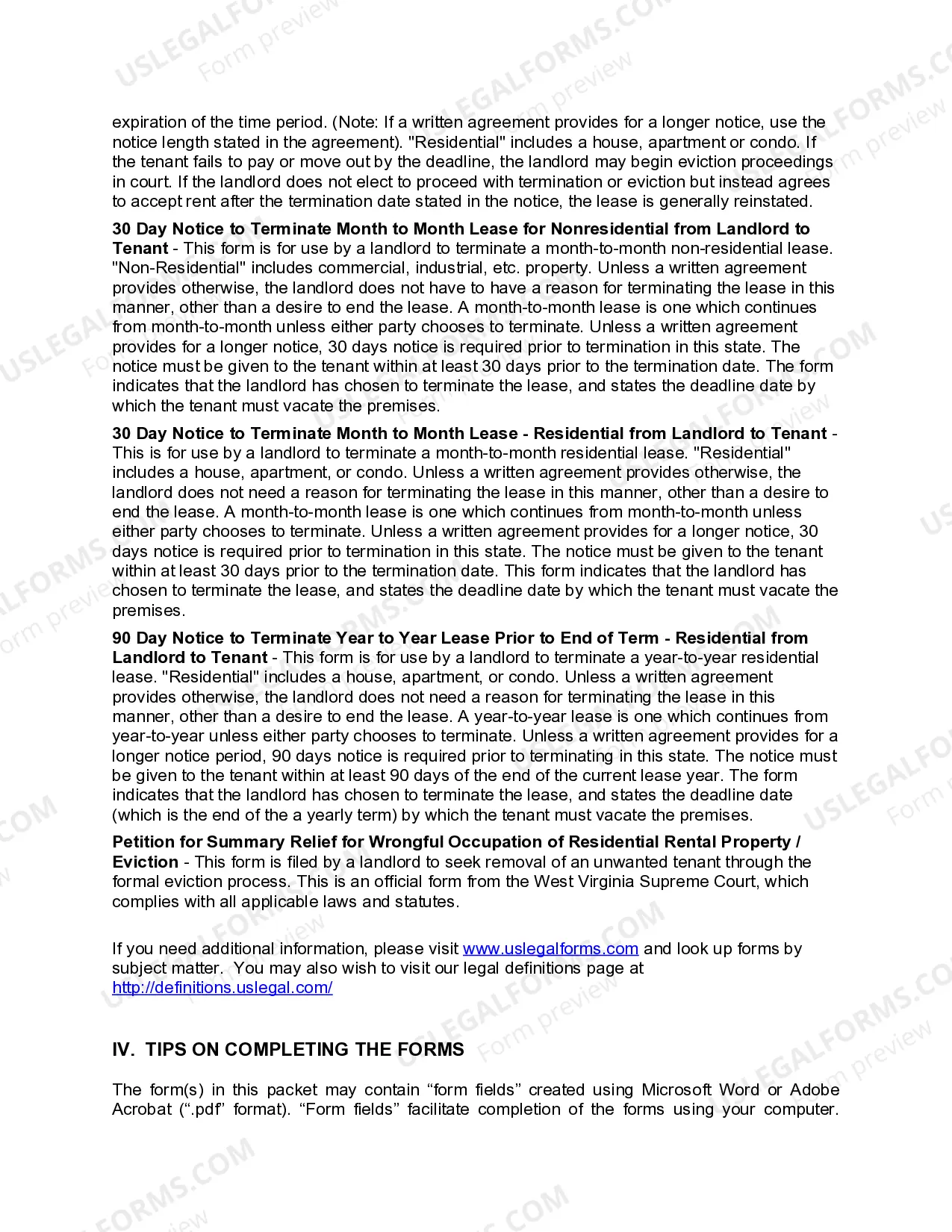
- 90 Day Notice to Terminate Year to Year Lease Prior to End of Term - Residential from Landlord to Tenant
- 30 Day Notice to Terminate Month to Month Lease - Residential from Landlord to Tenant
- 30 Day Notice to Terminate Month to Month Lease for Nonresidential from Landlord to Tenant
- 7 Day Notice to Pay Rent or Lease Terminates
When this form package is needed
This package is useful in various scenarios, including:
- When a tenant has not paid rent and an eviction process is necessary.
- When terminating a month-to-month residential or non-residential lease.
- When seeking to end a year-to-year lease agreement.
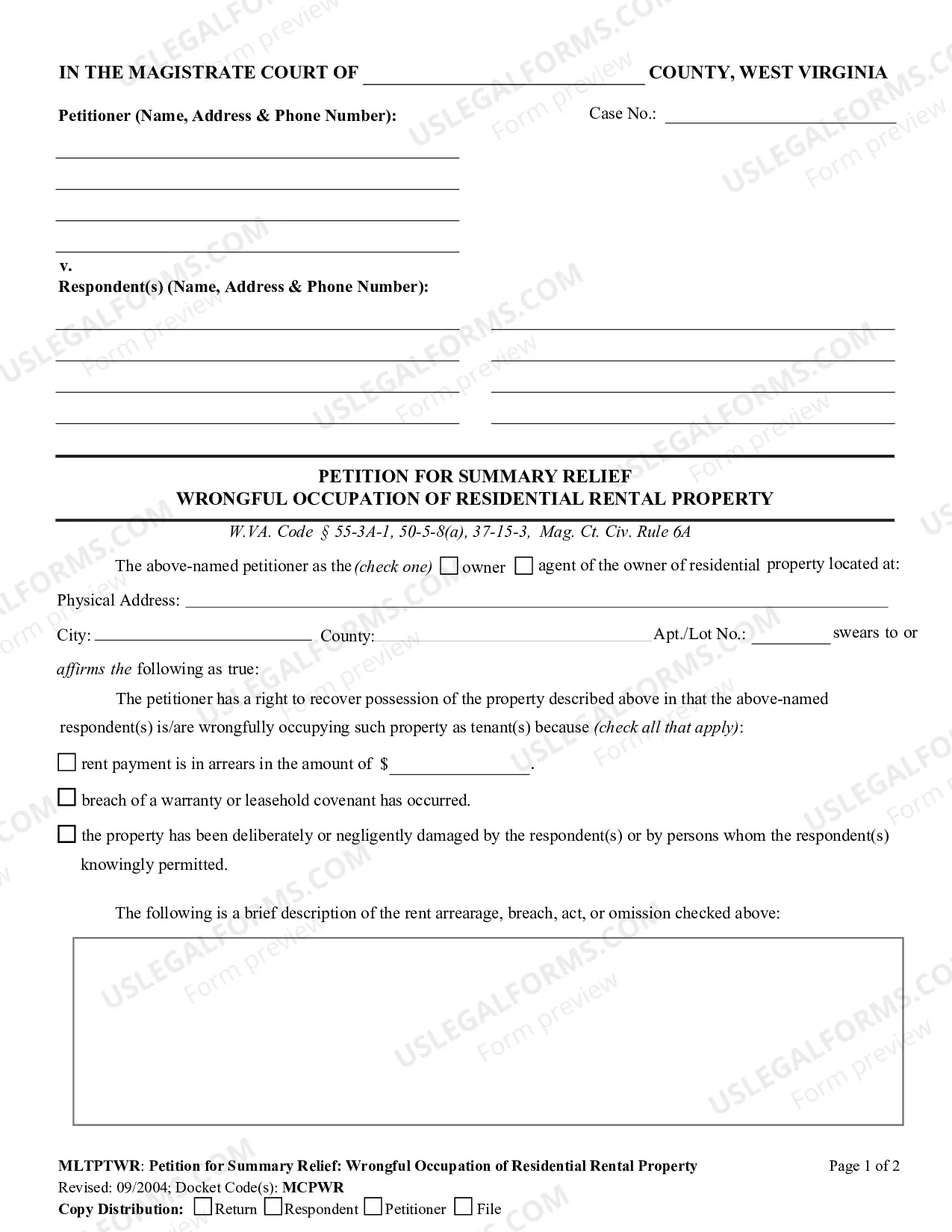
- To initiate formal eviction proceedings through the court system.
Intended users of this form package
- Landlords managing residential or non-residential rental properties in West Virginia.
- Property owners looking to evict tenants for non-payment of rent or other lease violations.
- Individuals unfamiliar with legal procedures who need clear, state-specific forms.
How to complete these forms
- Review the included forms to understand your obligations and the eviction process.
- Identify the tenant and property details that need to be included in each form.
- Enter necessary dates, amounts due, and any other required information accurately.
- Ensure forms are signed and delivered to the tenant as per legal requirements.
- Keep copies of all completed forms for your records.
Notarization guidance for this package
Notarization is not commonly needed for forms in this package. However, if your state’s laws require it, our notarization service, powered by Notarize, allows you to finalize documents online 24/7 without in-person visits.
Get your form ready online
Our built-in tools help you complete, sign, share, and store your documents in one place.
Make edits, fill in missing information, and update formatting in US Legal Forms—just like you would in MS Word.
Download a copy, print it, send it by email, or mail it via USPS—whatever works best for your next step.
Sign and collect signatures with our SignNow integration. Send to multiple recipients, set reminders, and more. Go Premium to unlock E-Sign.
If this form requires notarization, complete it online through a secure video call—no need to meet a notary in person or wait for an appointment.
We protect your documents and personal data by following strict security and privacy standards.

Make edits, fill in missing information, and update formatting in US Legal Forms—just like you would in MS Word.

Download a copy, print it, send it by email, or mail it via USPS—whatever works best for your next step.

Sign and collect signatures with our SignNow integration. Send to multiple recipients, set reminders, and more. Go Premium to unlock E-Sign.

If this form requires notarization, complete it online through a secure video call—no need to meet a notary in person or wait for an appointment.

We protect your documents and personal data by following strict security and privacy standards.
Avoid these common issues
- Failing to provide the required notice period before initiating eviction.
- Ignoring lease terms that may require longer notice periods than state law.
- Not properly filling out forms or omitting necessary details.
- Not keeping a copy of the communication sent to the tenant.
Benefits of completing this package online
- Convenience of immediate access and downloadable forms.
- Editability allows for easy customization of forms to fit specific scenarios.
- Reliability, as forms are drafted by licensed attorneys familiar with West Virginia laws.
Summary of main points
- This package contains state-specific forms for landlord tenant eviction in West Virginia.
- Properly completing and serving these forms is essential for legal compliance.
- Online access to customizable forms increases convenience and efficiency for landlords.
Looking for another form?




Form popularity
FAQ
If you file an eviction (unlawful detainer) case and you decide you do not want to move forward, you can ask the court to dismiss the case.You included more than one tenant in your eviction case but have decided you only want to evict one or some of them, so you dismiss the case as to the others.
Addresses. Date. Tenant names. Status and date of the lease. Why the eviction notice is served (clear and concise explanation) Date tenant must vacate the property. Proof of service or delivery of notice.
Know Your Rights. It goes without saying, but take some time to know your rights as a tenant. Keep Good Records. Make Sure Notice is Proper. Service of the Unlawful Detainer. Talking to an Attorney. Managing Partner Lipton Legal Group, A PC Beverly Hills, CA.
Dear (Name of landlord or manager), This letter constitutes my written (number of days' notice that you need to give based on your lease agreement)-day notice that I will be moving out of my apartment on (date), the end of my current lease. I am leaving because (new job, rent increase, etc.)
Address the Tenant(s) Named in the Residential Lease. List the Lease Information. Notify the Tenant of the Eviction. Give a Reason for the Eviction. Serve the Eviction Notice to the Tenant(s)
A landlord who wants to evict a tenant must have a good reason (legal cause) to do so. West Virginia defines legal cause as failing to pay rent, violating the lease or rental agreement, or damaging the rental unit. To evict the tenant for one of these reasons, the landlord must first terminate the tenancy.
Courts commonly refer to eviction actions as "forcible entry and detainer" or "unlawful detainer" actions. The legal theory is that the landlord alleges the tenant unlawfully continues to have use and possession of the rental property, and the landlord seeks the assistance of the court to have the tenant removed.
The date you're submitting your notice. The date you're moving. Information on your current home the address and the landlord's name. A statement declaring that you intend to leave the home. A straightforward statement that you're providing this letter, 30 days out, per your lease agreement.