West Virginia Notice of Mechanic's Lien by Contractor - Individual
What is this form?
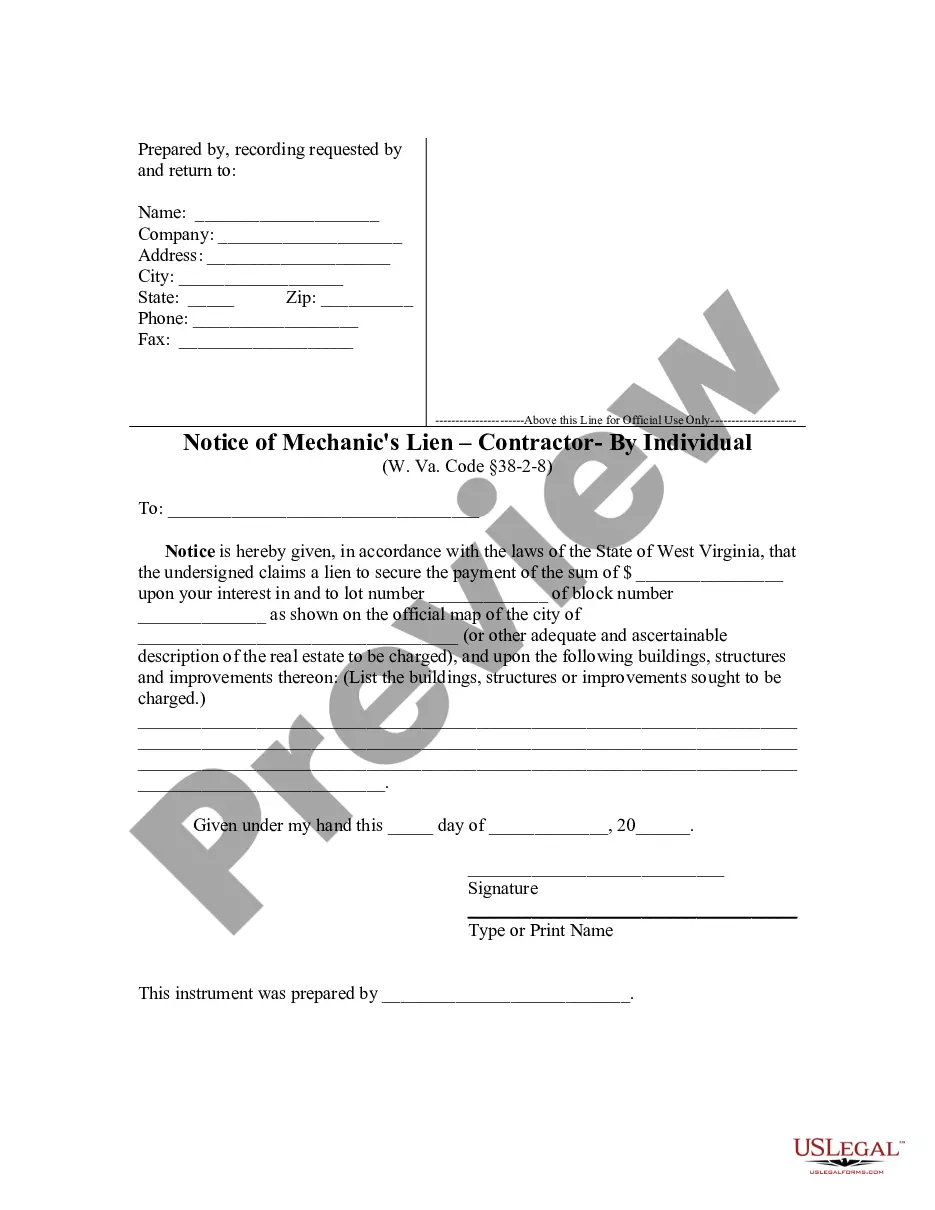
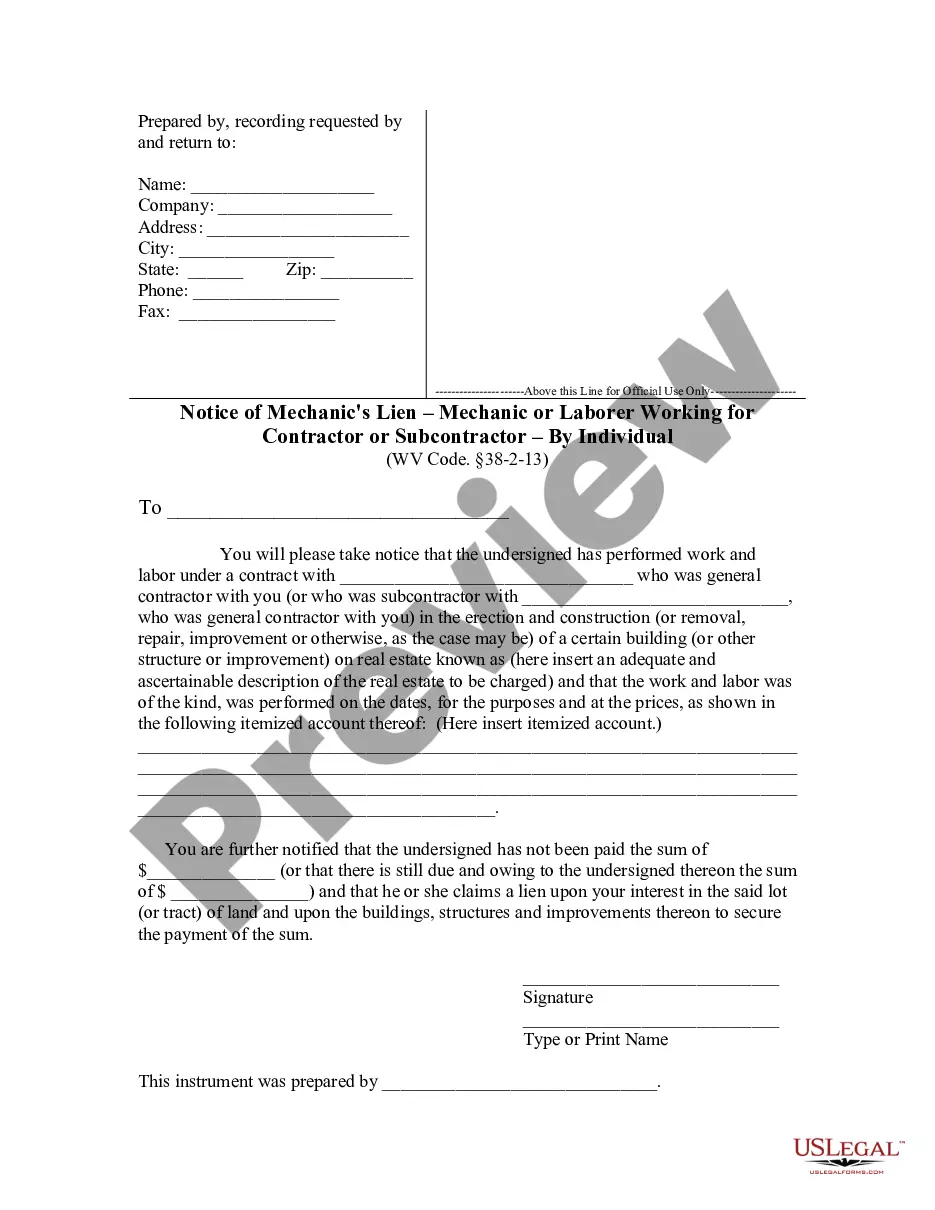
The Notice of Mechanic's Lien by Contractor - Individual is a legal document that allows a contractor to notify the property owner of a claim for unpaid work. This form serves to protect the contractor's right to payment for services or materials provided to improve or repair a property. Unlike other lien forms, this one is specifically designed for individual contractors in West Virginia, following state-specific laws.
Key parts of this document
- Identifying information: Includes the contractor's name, company, address, and contact details.
- Claim details: Specifies the amount owed and the property description related to the lien.
- Property description: Provides a clear identification of the real estate affected, including lot and block numbers.
- Signature section: Contains a signature line for the contractor and spaces for witness declarations.
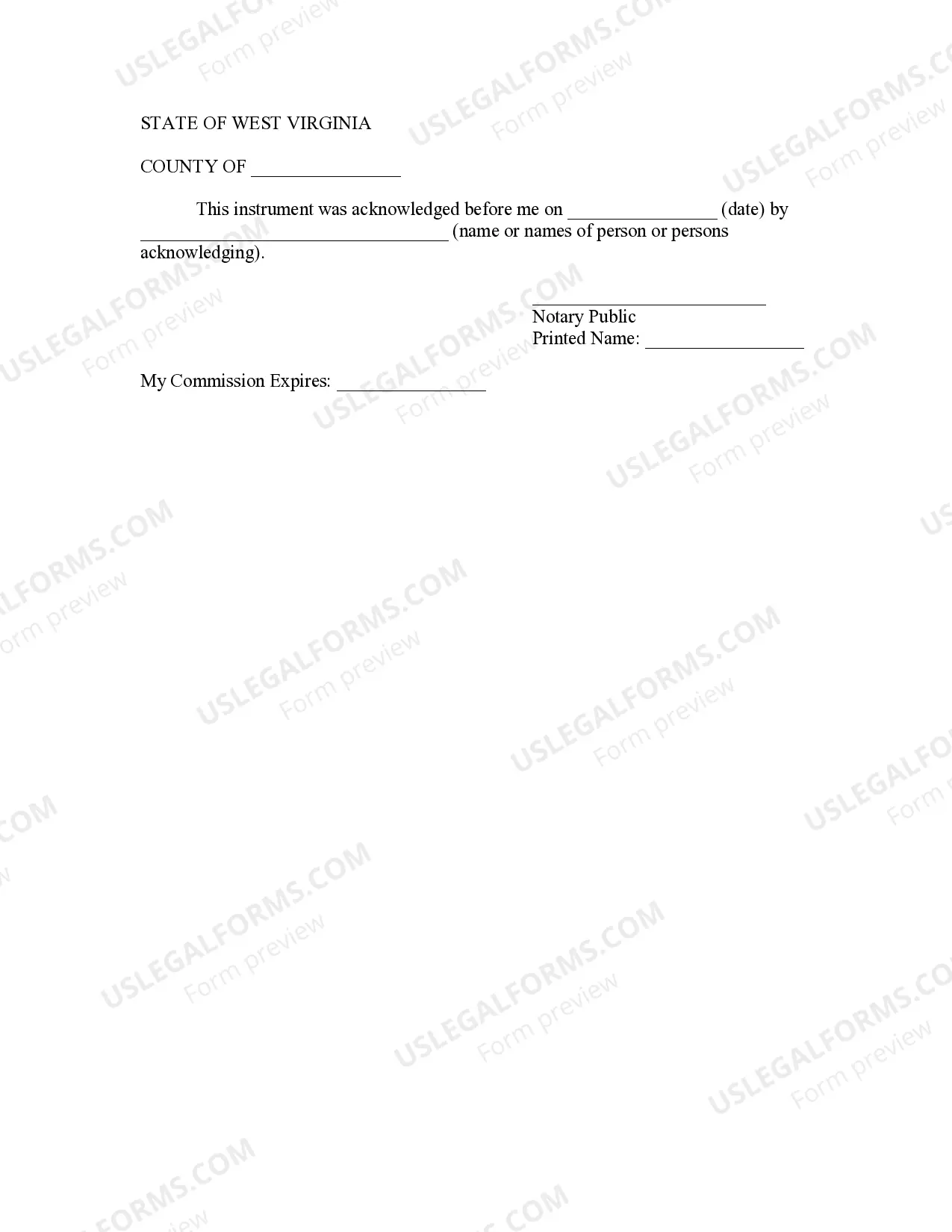
- Notary acknowledgment: A section for notarization, confirming the validity of the document.
Common use cases
This form should be used when a contractor has completed work on a property and has not received payment. It serves as official notice to the property owner that the contractor intends to claim a lien against the property until the outstanding balance is paid. It is typically used in situations involving home renovations, repairs, or construction services.
Who can use this document
This form is intended for:
- Independent contractors performing work on residential or commercial properties.
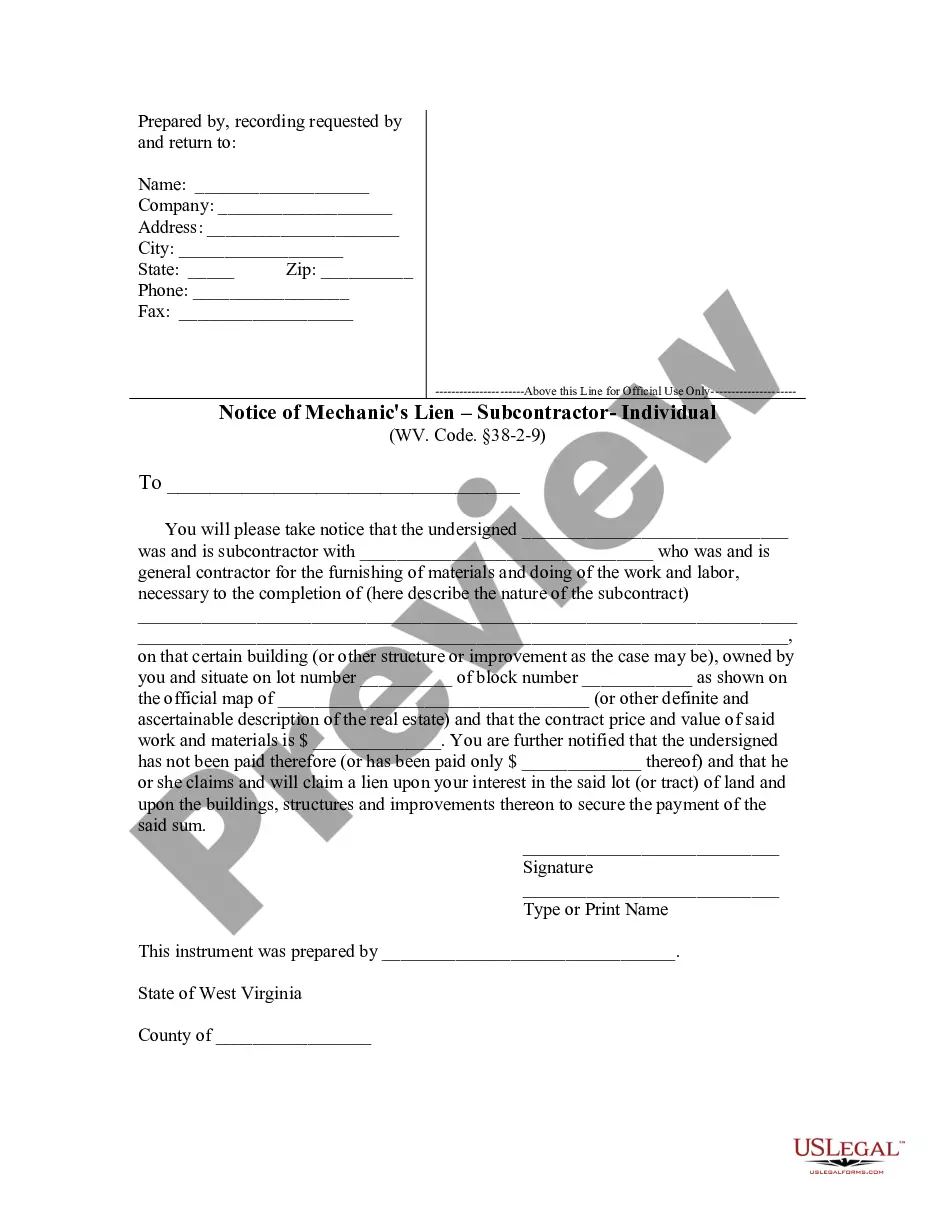
- Subcontractors who need to secure their right to payment from property owners.
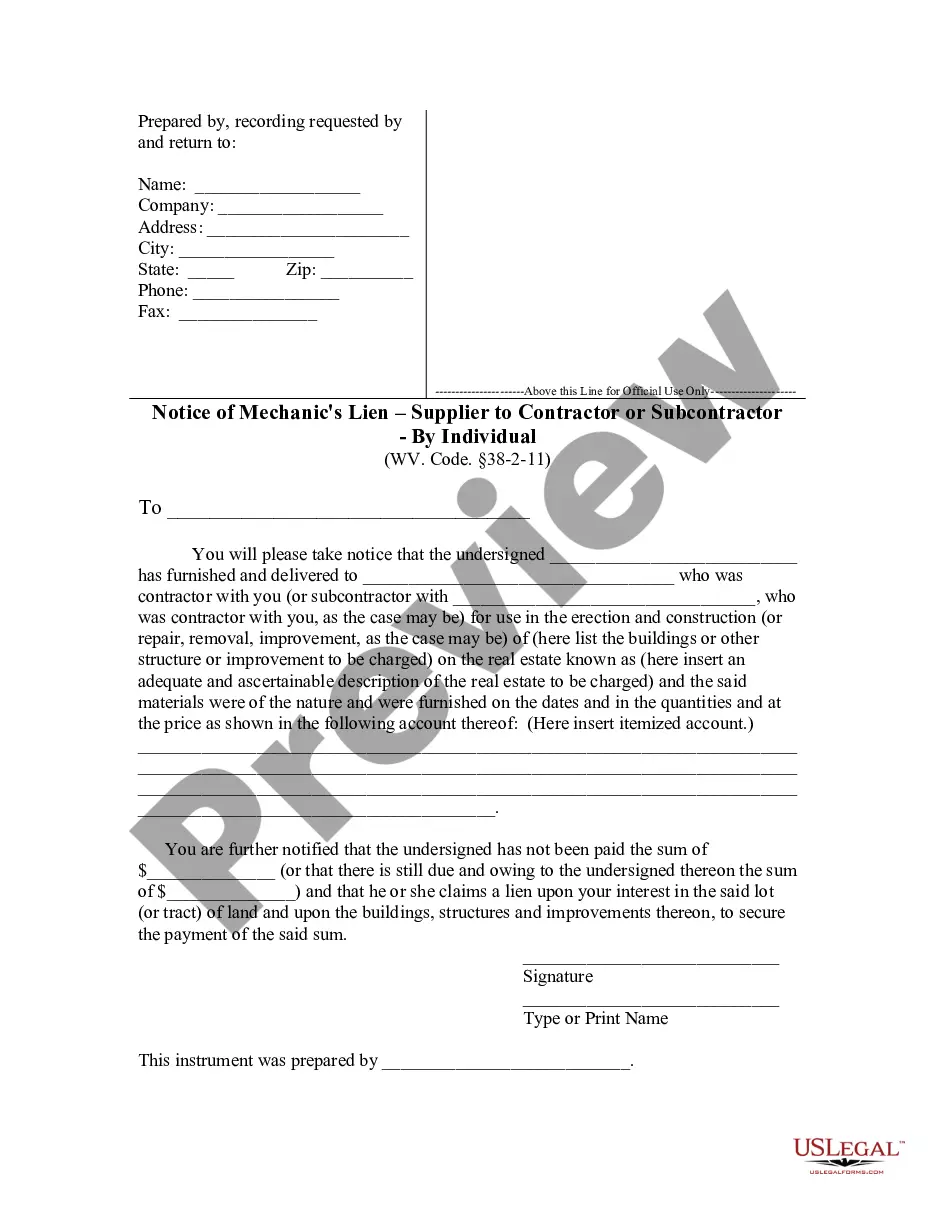
- Property improvement professionals who have not been compensated for their services.
Completing this form step by step
- Fill in your personal information, including name, company name, address, and contact details.
- Identify the property by providing its lot and block number, along with a detailed description.
- Enter the amount owed for the services rendered.
- Include the signature of the contractor and print their name beneath the signature line.
- Have the document notarized to confirm the authenticity of the signatures.
Does this form need to be notarized?
Yes, this form must be notarized to be legally valid. It includes a section for a notary public to attest to the authenticity of the signatures, ensuring the formal acknowledgment of the lien.
Get your form ready online
Our built-in tools help you complete, sign, share, and store your documents in one place.
Make edits, fill in missing information, and update formatting in US Legal Forms—just like you would in MS Word.
Download a copy, print it, send it by email, or mail it via USPS—whatever works best for your next step.
Sign and collect signatures with our SignNow integration. Send to multiple recipients, set reminders, and more. Go Premium to unlock E-Sign.
If this form requires notarization, complete it online through a secure video call—no need to meet a notary in person or wait for an appointment.
We protect your documents and personal data by following strict security and privacy standards.

Make edits, fill in missing information, and update formatting in US Legal Forms—just like you would in MS Word.

Download a copy, print it, send it by email, or mail it via USPS—whatever works best for your next step.

Sign and collect signatures with our SignNow integration. Send to multiple recipients, set reminders, and more. Go Premium to unlock E-Sign.

If this form requires notarization, complete it online through a secure video call—no need to meet a notary in person or wait for an appointment.

We protect your documents and personal data by following strict security and privacy standards.
Typical mistakes to avoid
- Failing to provide a complete property description.
- Omitting the required amount owed.
- Not obtaining the necessary notarization.
- Incorrectly identifying the contractor's company name or details.
Benefits of using this form online
- Convenience: Easily download and fill out the form from home.
- Editability: Customize the form to fit specific project details before printing.
- Reliability: Ensure compliance with the latest legal standards by using professionally drafted templates.
Legal use & context
- This notice secures the contractor's right to payment and can be enforced in court if necessary.
- The requirements for notices and enforcement may vary by state, emphasizing the importance of using state-specific forms.
- Failure to file this notice may result in losing the right to place a lien against the property.
Quick recap
- The Notice of Mechanic's Lien ensures payment security for contractors.
- Correct completion and timely filing of this form are crucial for enforcement.
- It must comply with West Virginia-specific legal requirements.
Looking for another form?





Form popularity
FAQ
The simplest way to prevent liens and ensure that subcontractors and suppliers are paid is to pay with joint checks. This is when both parties endorse the check. Compare the contractor's materials or labor bill to the schedule of payments in your contract and the Preliminary Notices.
A subcontractor or material supplier has 20 days after beginning work or delivering materials to serve you a Preliminary Notice. If the notice is late, the claimant loses lien rights for work done or materials delivered more than 20 days before the notice.
First of all, you can sue your contractor for breach of contract, even without a written contract, and she can sue you as well.See Nolo's article, "Breach of Contract Cases in Small Claims Court," for more on this. However, an alleged oral contract does create difficult evidentiary questions for the judge.
If a license is required for the work performed, an unlicensed contractor NOT ONLY cannot file a valid mechanics lien, but s/he also cannot file suit to recover, either. In California, unlicensed contractors are not entitled to be paid period for anything, and will be thrown out of court if they sue to get paid.
The people who can file mechanic's liens are identified by state law. A subcontractor or supplier to a subcontractor may not be able to file a lien. Also, unlicensed contractors are often barred from filing a mechanic's lien.
Mechanics Liens must be recorded by a "subcontractor" within 90 days of "completion" or "cessation of work" and a general contractor who has a direct contract with the owner must record within 90 days of completion or of cessation of labor, unless completion or cessation of labor has occurred.
Mechanic's liens create a cloud on title, meaning that they appear in public property records. Liens are sometimes said to travel with the land, meaning that anyone who buys your house would take the property subject to the contractor's lien (or, more likely, demand that you pay it off first).
To enforce the lien, the contractor must file a lawsuit within 90 days from the date of recording the lien. If this deadline is passed, the contractor may not be able to enforce the lien and may be required to remove the lien.
In Texas, a mechanics lien expires after 1 or 2 years, depending on the type of project. A lien claimant will need to enforce their mechanics lien before the deadline. 1 year after termination, completion, or abandonment or the project.