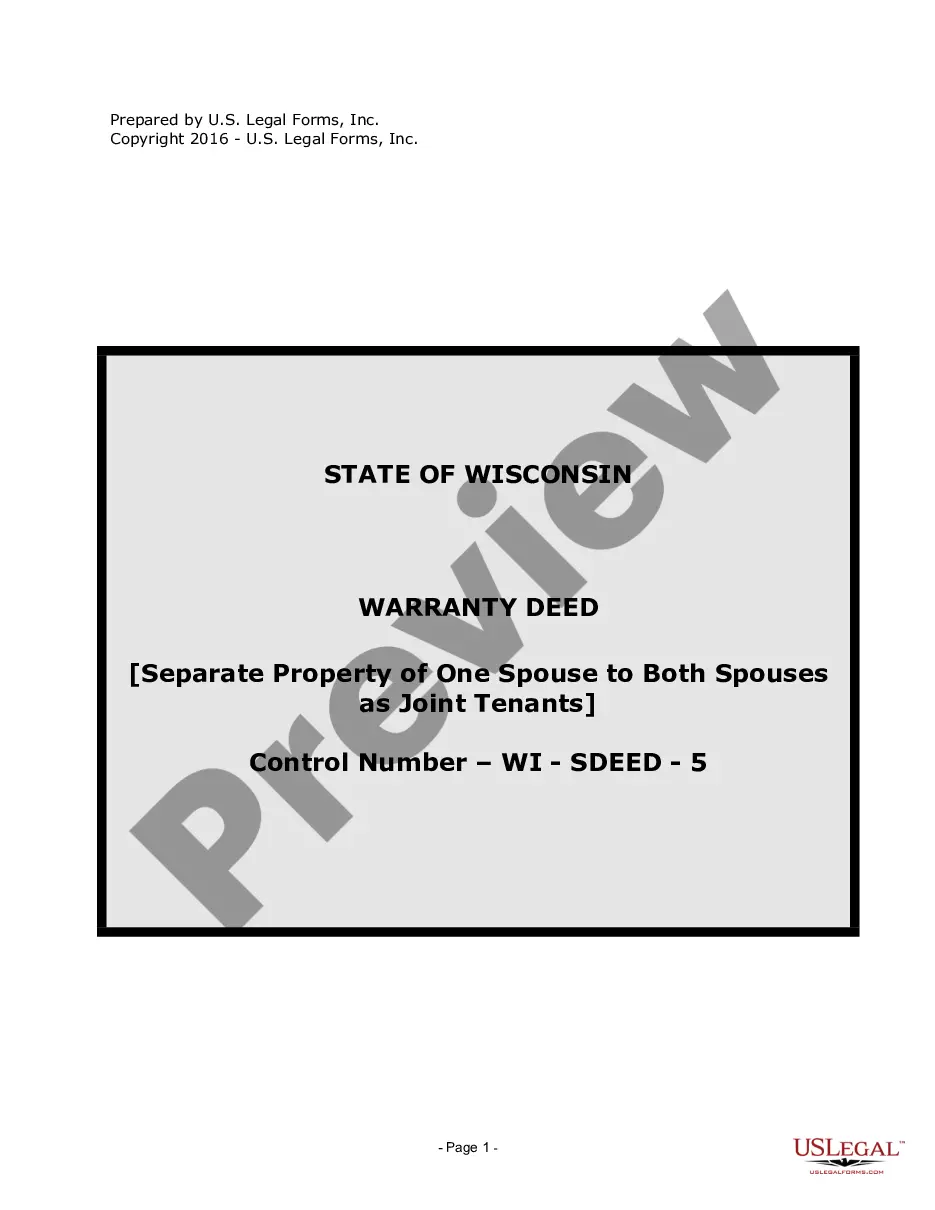
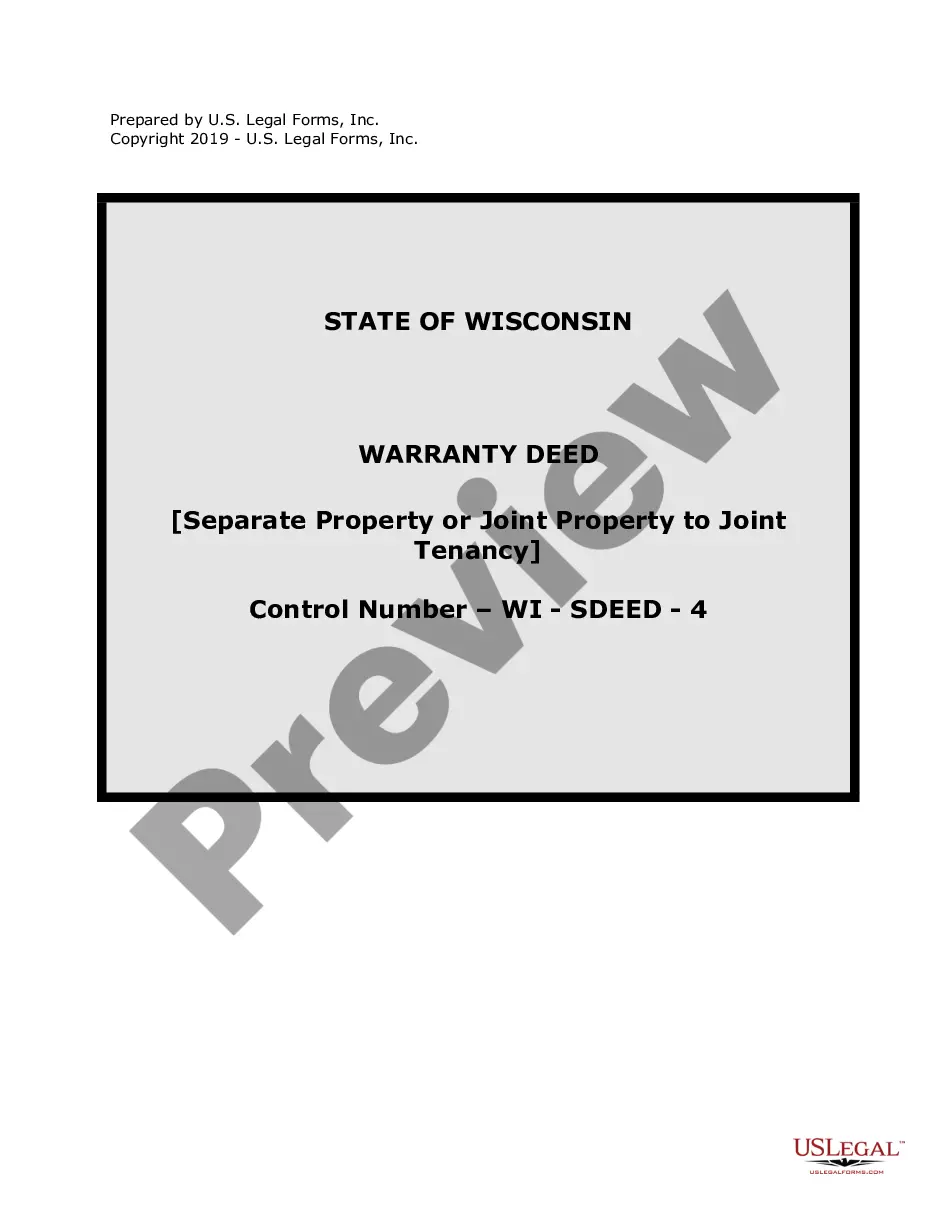
Wisconsin Warranty Deed for Separate Property of one Spouse to both as Joint Tenants
Overview of this form
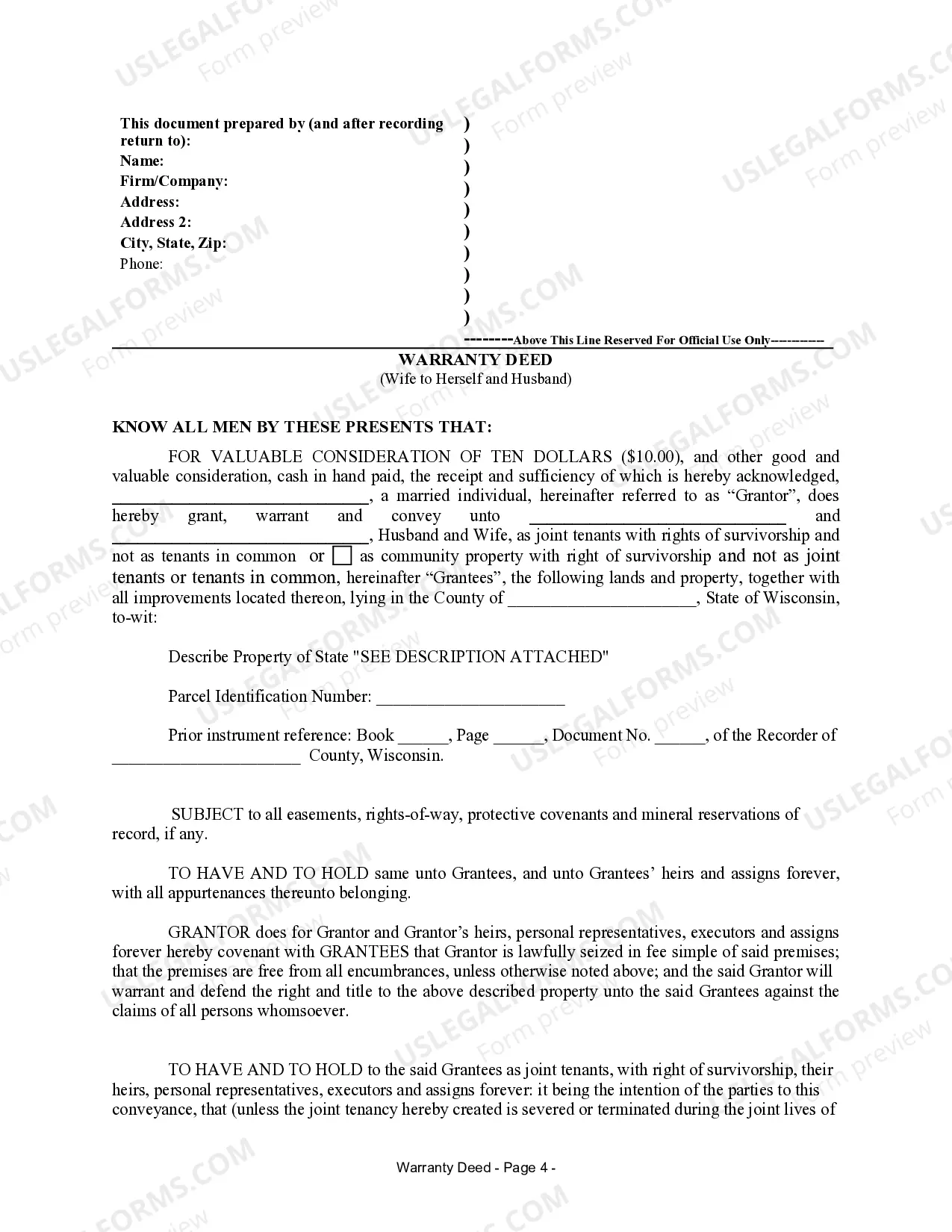
This form is a Warranty Deed that allows one spouse to transfer property solely owned by them to both spouses as joint tenants. This deed ensures that both spouses hold equal ownership of the property with the right of survivorship, meaning that if one spouse passes away, the other automatically inherits the deceased spouse's share. This form differs from other types of deeds as it specifically caters to spouses transferring ownership between themselves.
Key parts of this document
- Grantor and Grantee names: Identifies the spouse transferring the property and the spouse receiving it.
- Property description: Details the property being transferred, including its Parcel Identification Number.
- Joint tenancy clause: Specifies the ownership type as joint tenants with the right of survivorship.
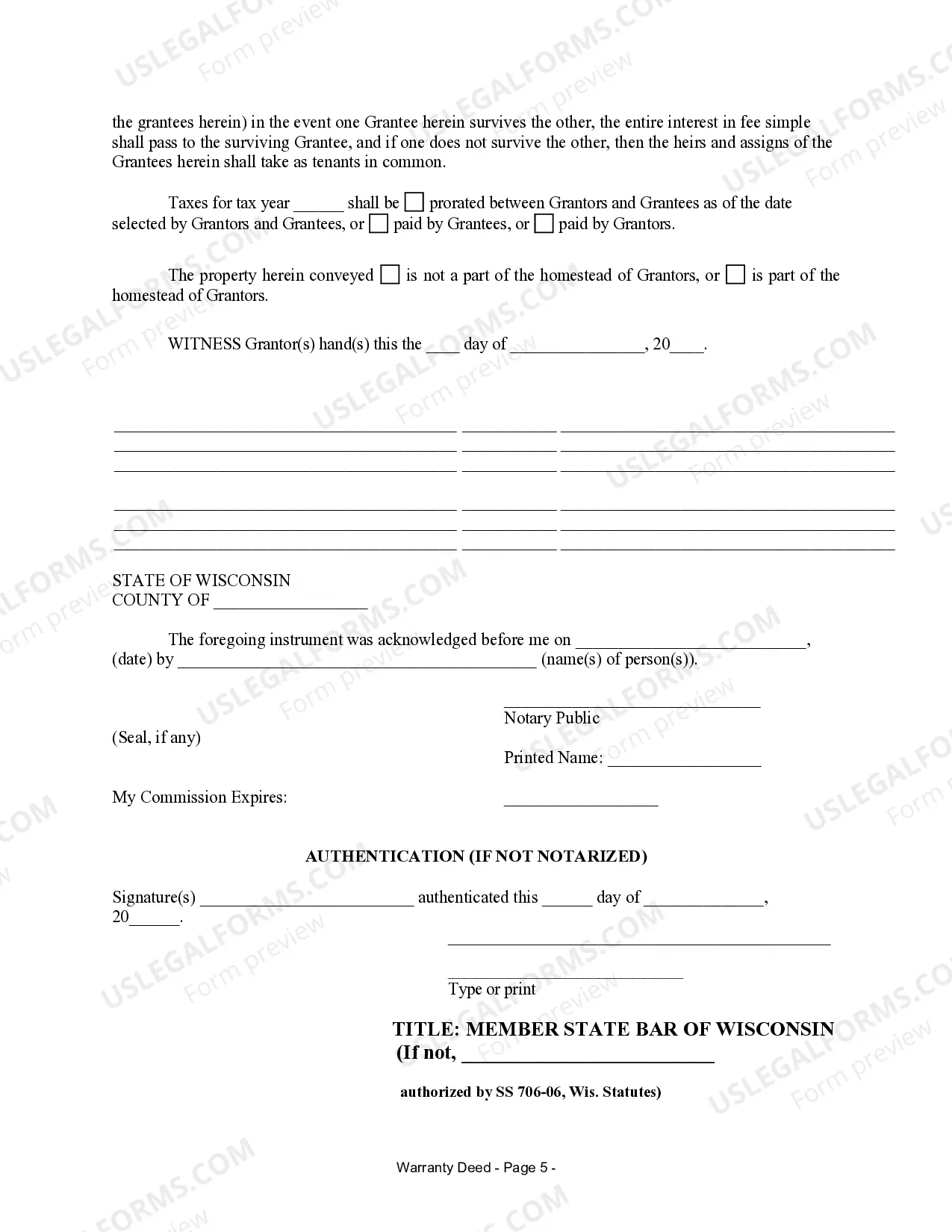
- Notary section: Acknowledges that the document has been officially witnessed by a notary public, ensuring its legal validity.
- Transfer tax provisions: Outlines responsibility for property taxes associated with the transfer.




Situations where this form applies
This form should be used when a spouse wishes to transfer their individually owned property to both spouses as joint tenants. This may occur during marriage for estate planning purposes, to simplify the transfer of property upon death, or when both parties are looking to clearly establish joint ownership of the property.
Who can use this document
- Married couples who own property individually but want to establish joint tenancy.
- Spouses seeking to ensure that the surviving partner inherits property upon death.
- Individuals wishing to make a clear legal record of joint ownership for estate planning.
Instructions for completing this form
- Identify the parties: Enter the names of the spouse making the transfer (grantor) and the receiving spouse (grantee).
- Specify the property: Fill in the legal description of the property and the Parcel Identification Number.
- Select the joint tenancy clause: Indicate that ownership is being transferred as joint tenants with right of survivorship.
- Provide dates and signatures: Sign the document in front of a notary public, including the date of signing.
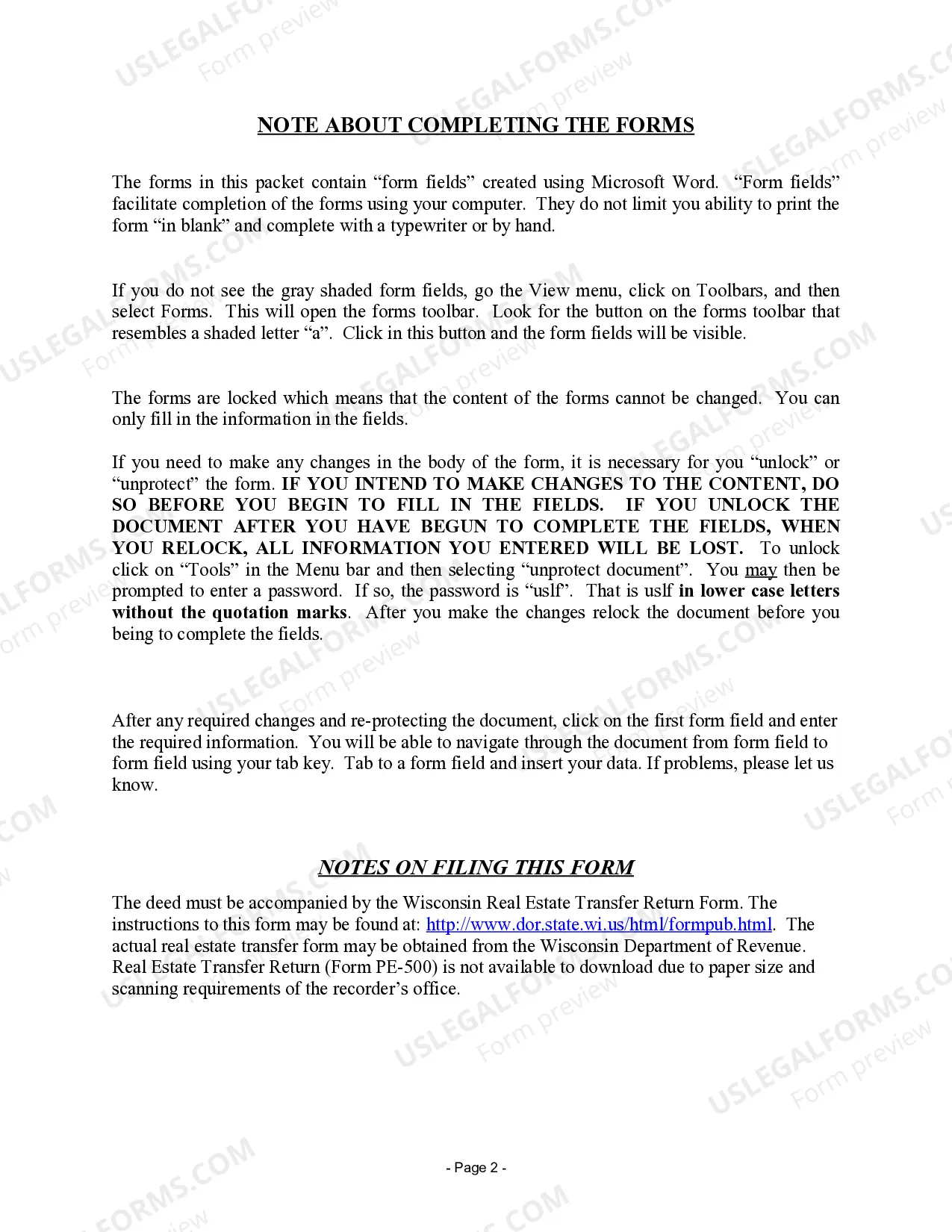
- File the deed: Submit the completed form along with the required Real Estate Transfer Return Form to the appropriate county office.
Does this document require notarization?
This form needs to be notarized to ensure legal validity. US Legal Forms provides secure online notarization powered by Notarize, allowing you to complete the process through a verified video call, available anytime.
Get your form ready online
Our built-in tools help you complete, sign, share, and store your documents in one place.
Make edits, fill in missing information, and update formatting in US Legal Forms—just like you would in MS Word.
Download a copy, print it, send it by email, or mail it via USPS—whatever works best for your next step.
Sign and collect signatures with our SignNow integration. Send to multiple recipients, set reminders, and more. Go Premium to unlock E-Sign.
If this form requires notarization, complete it online through a secure video call—no need to meet a notary in person or wait for an appointment.
We protect your documents and personal data by following strict security and privacy standards.

Make edits, fill in missing information, and update formatting in US Legal Forms—just like you would in MS Word.

Download a copy, print it, send it by email, or mail it via USPS—whatever works best for your next step.

Sign and collect signatures with our SignNow integration. Send to multiple recipients, set reminders, and more. Go Premium to unlock E-Sign.

If this form requires notarization, complete it online through a secure video call—no need to meet a notary in person or wait for an appointment.

We protect your documents and personal data by following strict security and privacy standards.
Typical mistakes to avoid
- Failing to include the Parcel Identification Number, which is necessary for property identification.
- Not obtaining a notarization, which may lead to issues with the deed's acceptance.
- Omitting the joint tenancy clause, leading to unclear ownership status.
- Not properly filing the required Real Estate Transfer Return Form with the deed.
Advantages of online completion
- Convenience: Download and complete the form at your own pace from anywhere.
- Editability: Easily fill out or edit fields using your computer.
- Reliability: Ensure compliance with state legal standards by using professionally drafted documents.
Looking for another form?

Form popularity
FAQ
A warranty deed is a higher level of protection produced by the seller upon the real estate closing. It includes a full legal description of the property, and confirms the title is clear and free from all liens, encumbrances, or title defects. Most property sales make use of a warranty deed.
A property deed is a legal document that transfers the ownership of real estate from a seller to a buyer. For a deed to be legal it must state the name of the buyer and the seller, describe the property that is being transferred, and include the signature of the party that is transferring the property.
A warranty deed, also known as a general warranty deed, is a legal real estate document between the seller (grantor) and the buyer (grantee). The deed protects the buyer by pledging that the seller holds clear title to the property and there are no encumbrances, outstanding liens, or mortgages against it.
It's important to note that a warranty deed does not actually prove the grantor has ownership (a title search is the best way to prove that), but it is a promise by the grantor that they are transferring ownership and if it turns out they don't actually own the property, the grantor will be responsible for compensating
A warranty deed is a document often used in real estate that provides the greatest amount of protection to the purchaser of a property. It pledges or warrants that the owner owns the property free and clear of any outstanding liens, mortgages, or other encumbrances against it.
Typically, the lender will provide you with a copy of the deed of trust after the closing. The original warranty deeds are often mailed to the grantee after they are recorded. These are your original copies and should be kept in a safe place, such as a fireproof lockbox or a safe deposit box at a financial institution.
Marital property includes all income and possessions a couple acquires after their "determination date" (with certain exceptions). The determination date is the latest of: the couple's marriage day; the date when they both took up residence in Wisconsin; or Jan. 1, 1986.
Wisconsin is a Community Property State Similarly, any income earned by either spouse during the marriage is considered marital income.
As defined in section 706.10(5) of the Wisconsin Statutes, a warranty deed conveys real property in fee simple to the grantee and contains covenants by the grantor that he or she holds title to the property and has "good right to convey the same land or its title." The grantor guarantees that the property is "free from