Wisconsin Notice of Default in Payment of Rent as Warning Prior to Demand to Pay or Terminate for Nonresidential or Commercial Property
About this form
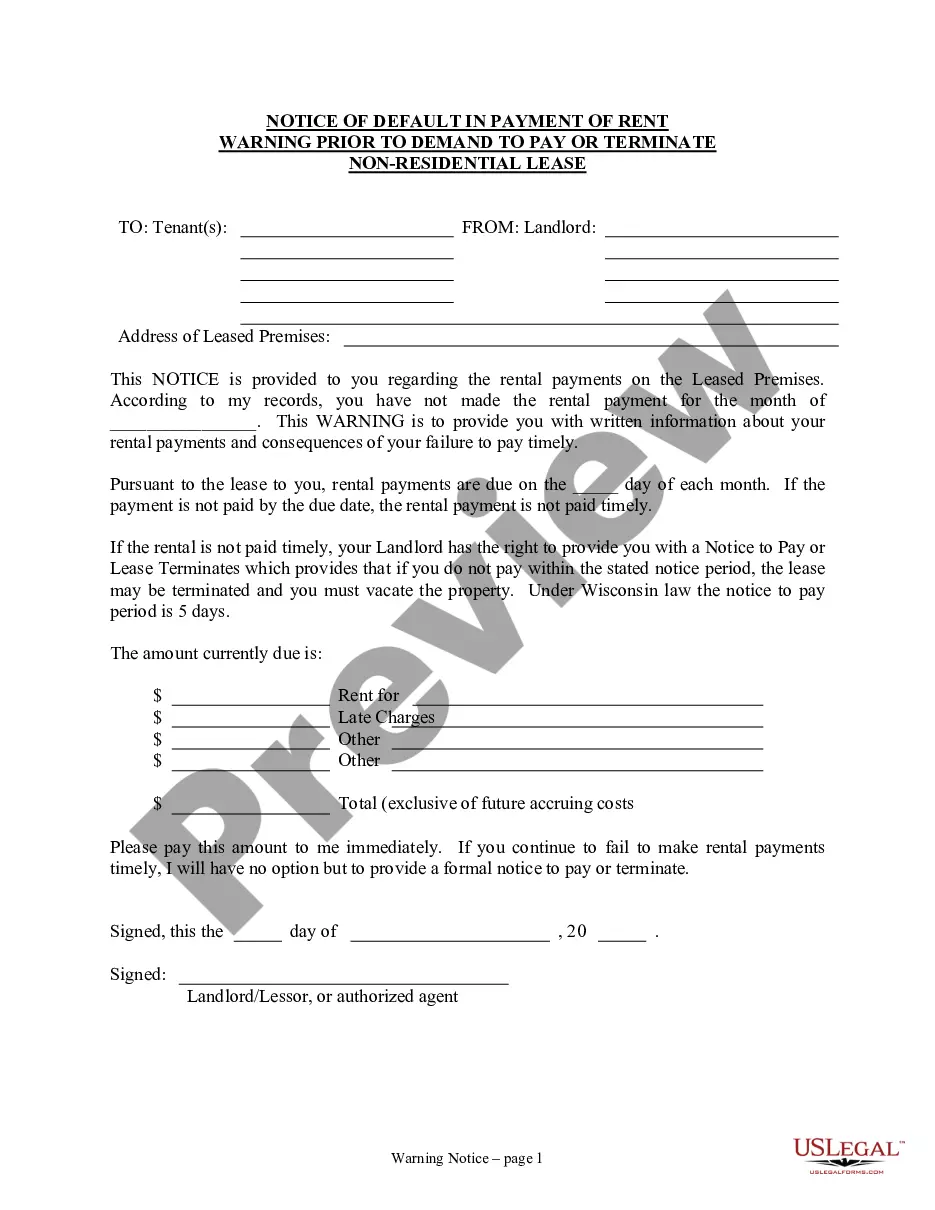
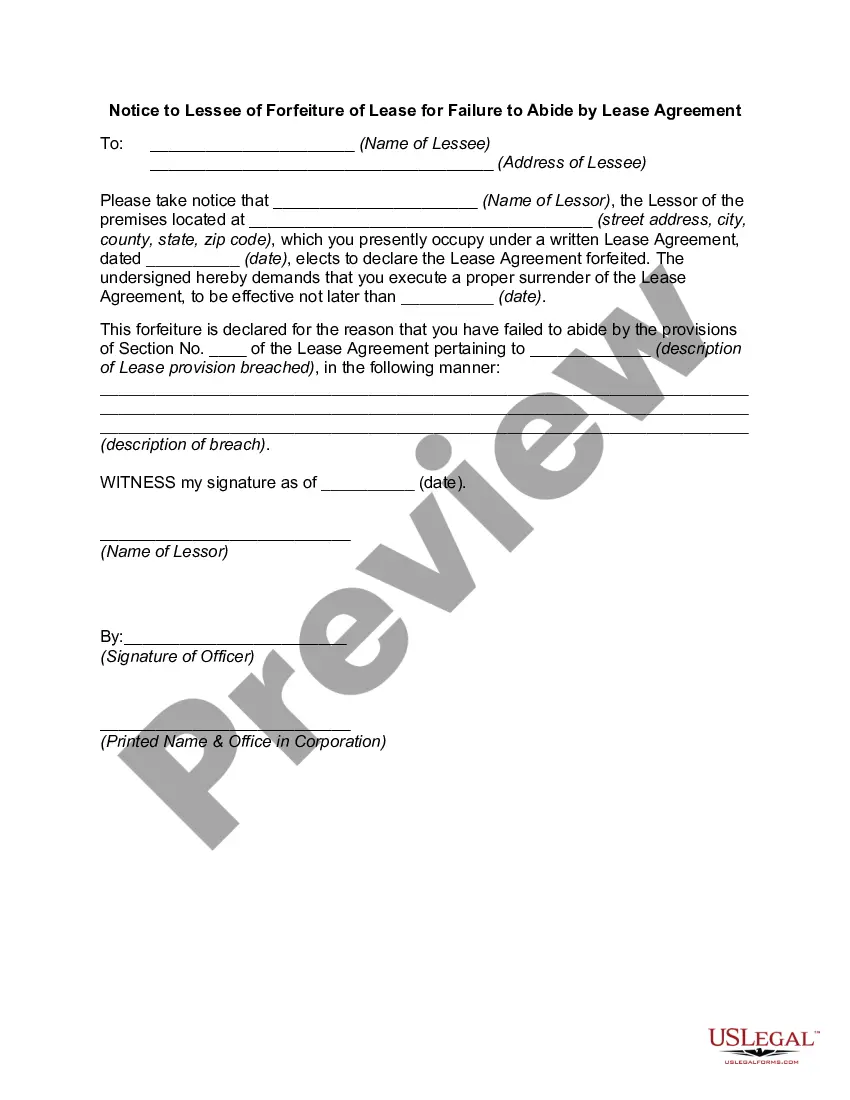
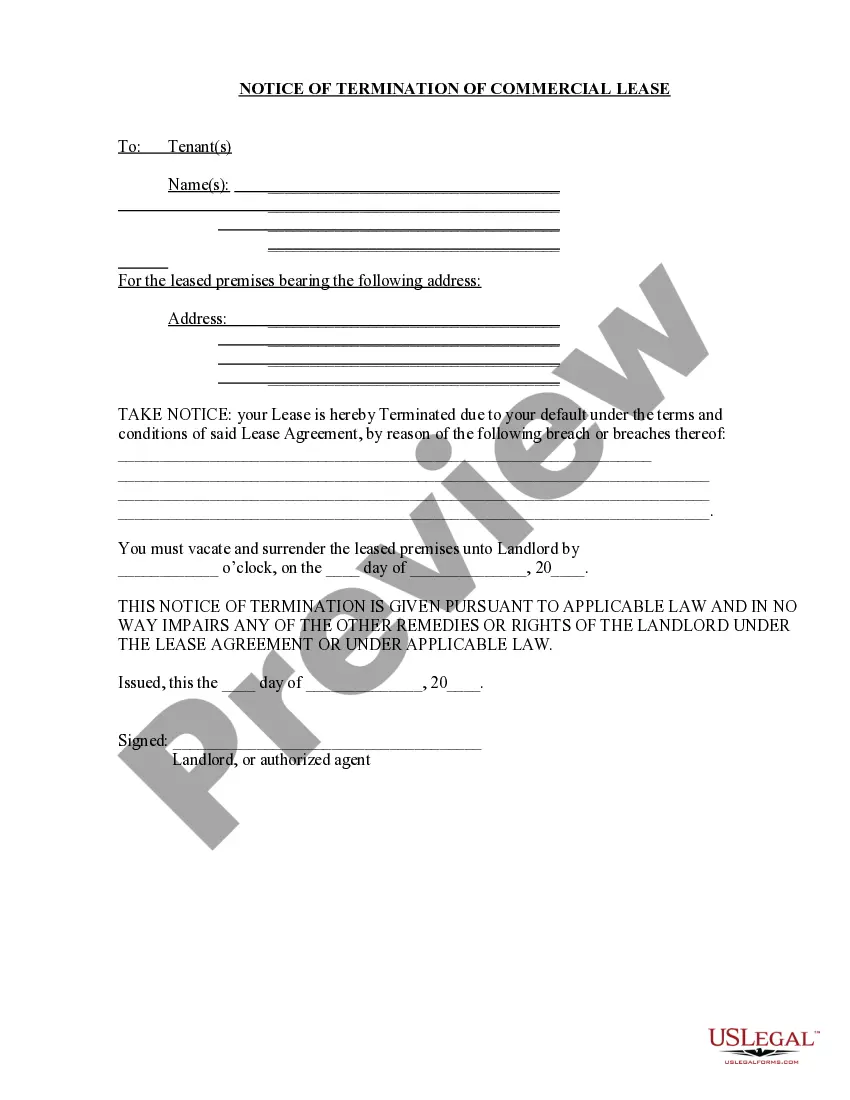
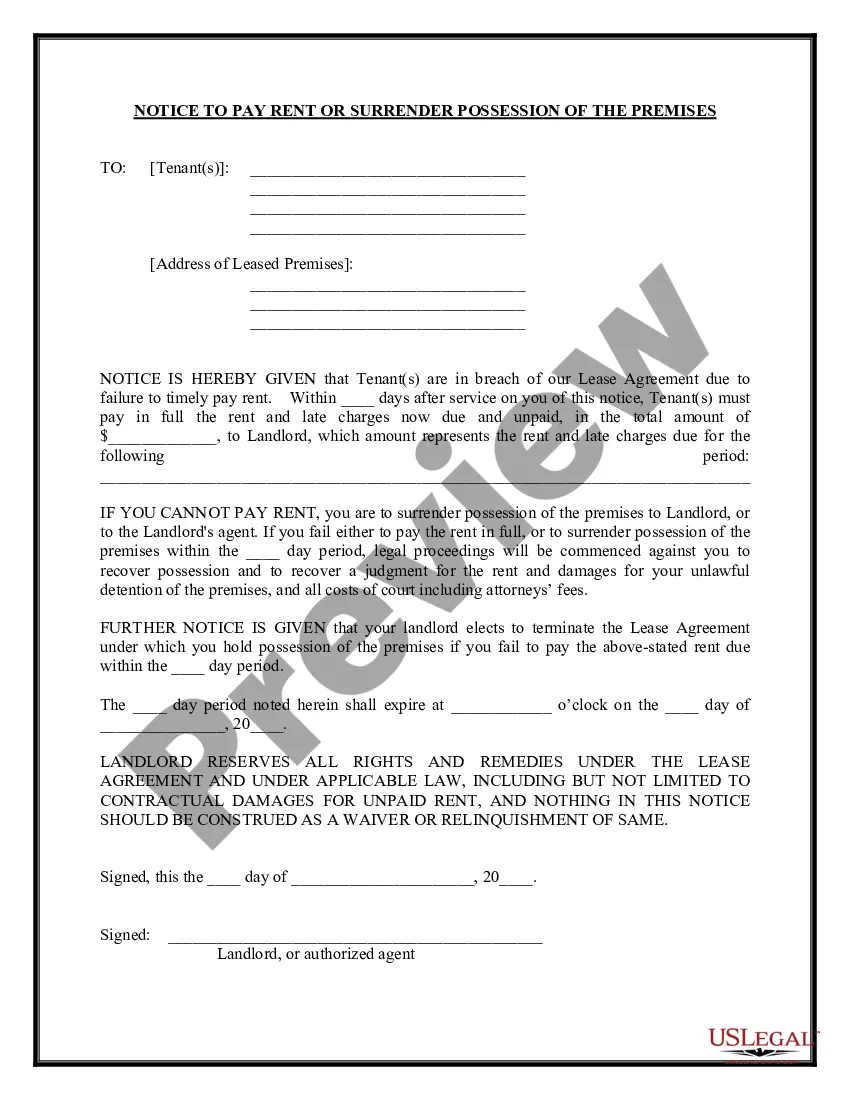
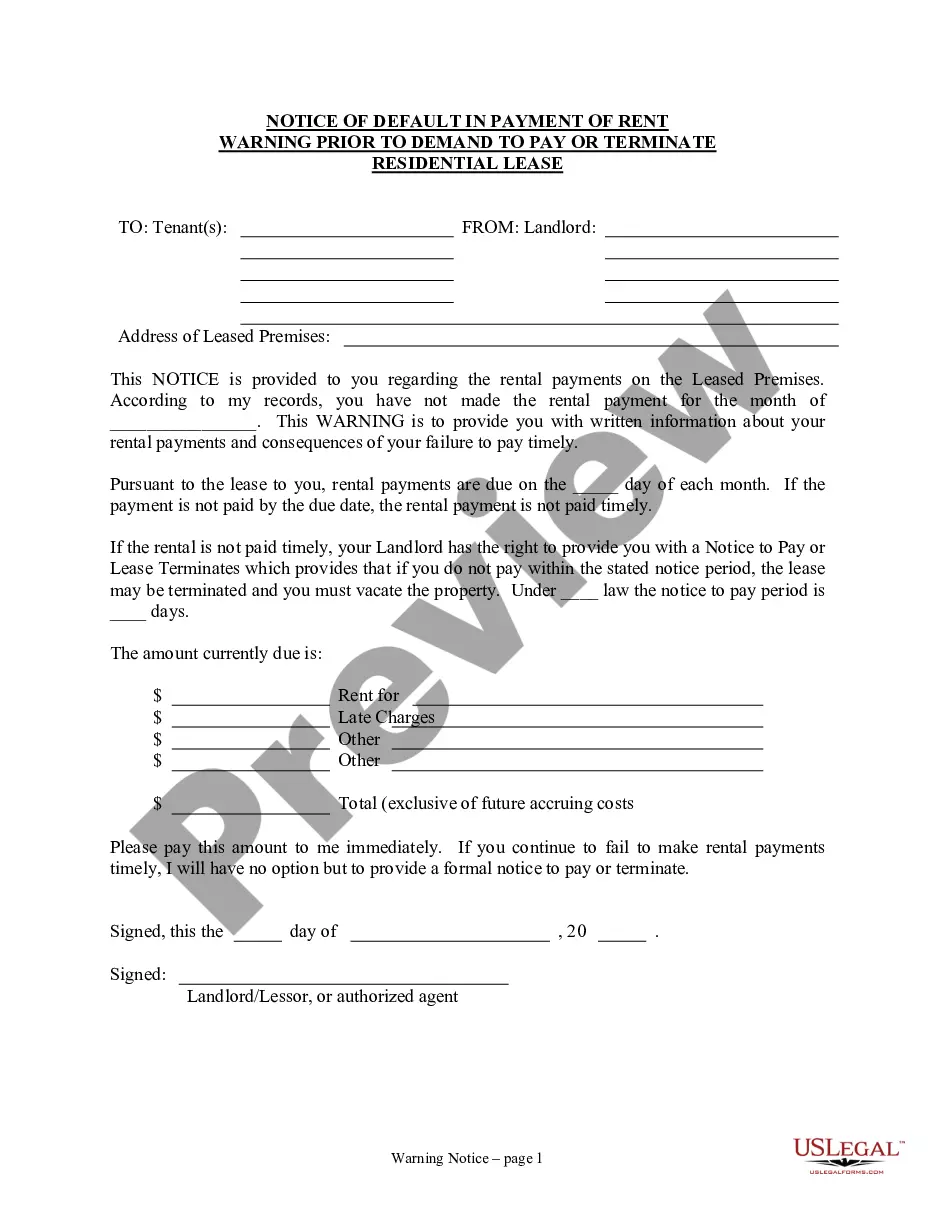
This Notice of Default in Payment of Rent as Warning Prior to Demand to Pay or Terminate for Nonresidential or Commercial Property is a legal document used by landlords to inform tenants of their failure to pay rent. It serves as a preliminary warning that outlines the due date of rent, the specifics of the default, and potential consequences if payment is not received. This form is crucial for landlords who need to notify tenants before taking further legal action regarding their lease agreements.
Main sections of this form
- Landlord and tenant details: Information about both parties involved.
- Leased premises address: The specific location of the commercial property.
- Due date of rent: Clear indication of when rent was due.
- Notice of default: A declaration of the missed payment and its implications.
- Amount due: Clearly state the total amount including any late charges.
- Signature section: Space for the landlord's signature to certify the notice.
When this form is needed
This form should be used when a landlord needs to formally notify a tenant of overdue rent payments for nonresidential or commercial properties. It is often employed as a necessary step before issuing a formal notice to pay or terminate the lease. This notice provides tenants with an opportunity to remedy the default before any further actions are taken, giving them a chance to comply with the lease terms.
Intended users of this form
This form is intended for:
- Landlords or property owners managing commercial properties.
- Property managers acting on behalf of landlords.
- Tenants in nonresidential leases who have fallen behind on rent payments.
How to prepare this document
- Identify the parties involved: Fill in the names of the landlord and tenant.
- Specify the property: Provide the address of the leased premises.
- Enter the due date: Document the date the rent was due and missed.
- State the amount due: List the total amount owed, including any late fees.
- Sign and date the form: Ensure the landlord signs the notice for validation.
Is notarization required?
This form does not typically require notarization unless specified by local law. Ensure youâre compliant with any state-specific requirements that may apply to your situation.
Get your form ready online
Our built-in tools help you complete, sign, share, and store your documents in one place.
Make edits, fill in missing information, and update formatting in US Legal Forms—just like you would in MS Word.
Download a copy, print it, send it by email, or mail it via USPS—whatever works best for your next step.
Sign and collect signatures with our SignNow integration. Send to multiple recipients, set reminders, and more. Go Premium to unlock E-Sign.
If this form requires notarization, complete it online through a secure video call—no need to meet a notary in person or wait for an appointment.
We protect your documents and personal data by following strict security and privacy standards.

Make edits, fill in missing information, and update formatting in US Legal Forms—just like you would in MS Word.

Download a copy, print it, send it by email, or mail it via USPS—whatever works best for your next step.

Sign and collect signatures with our SignNow integration. Send to multiple recipients, set reminders, and more. Go Premium to unlock E-Sign.

If this form requires notarization, complete it online through a secure video call—no need to meet a notary in person or wait for an appointment.

We protect your documents and personal data by following strict security and privacy standards.
Common mistakes to avoid
- Failing to provide accurate tenant contact information.
- Not including the precise amount of rent due, which can cause confusion.
- Neglecting to sign or date the notice, rendering it ineffective.
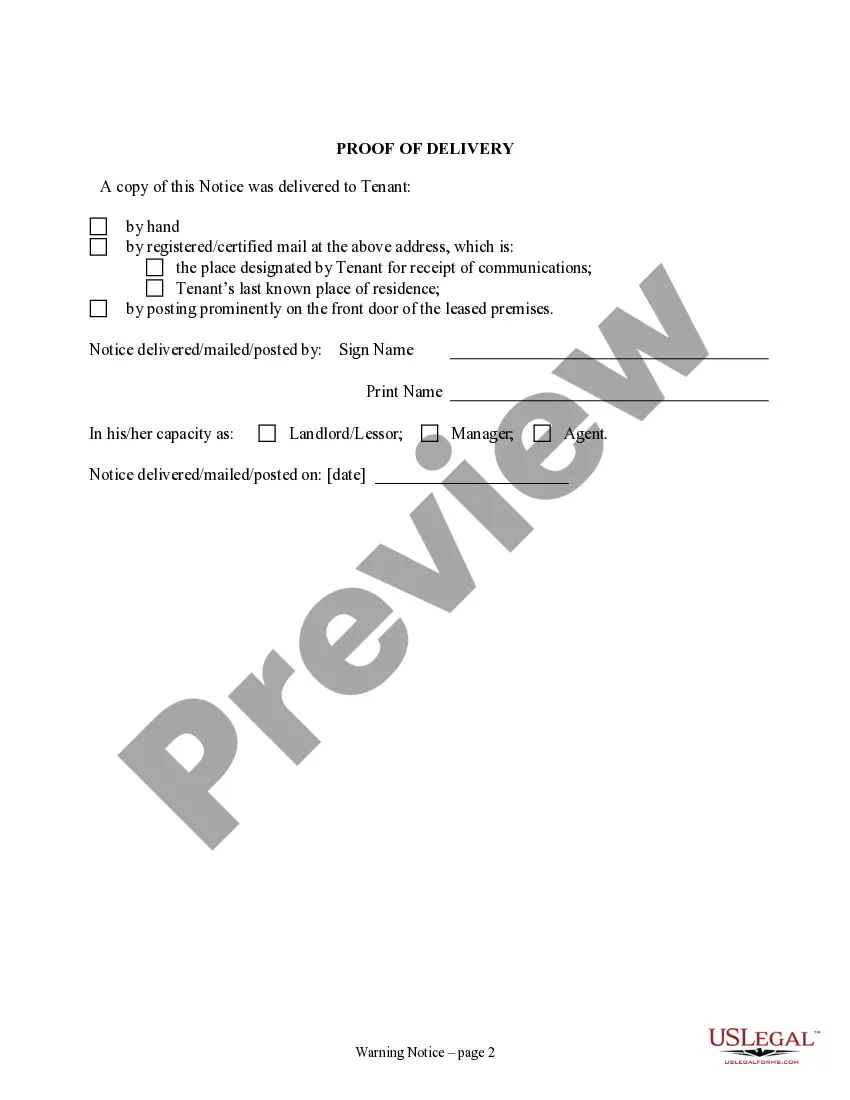
- Not delivering the notice properly as required by law.
Why use this form online
- Easy access to legally vetted forms, drafted by licensed attorneys.
- Convenient download and customization options for immediate use.
- Cost-effective solution for managing lease-related communications.
Legal use & context
- This form is legally enforceable as long as it is completed accurately and delivered according to state law.
- It serves as a formal warning and documentation of the tenant's default status.
- Failure to use this notice properly may impact the landlord's ability to proceed with eviction in the future.
Summary of main points
- Use this notice to formally alert tenants of overdue rent payments.
- Follow state-specific regulations regarding delivery and notification periods.
- Keep clear records of all communications regarding rental payments.
Looking for another form?

Form popularity
FAQ
Landlords are prohibited from harassing or retaliating against tenants who exercise their legal rights. In Wisconsin, the landlord must not terminate, refuse to renew a lease, or fine a tenant for complaining to the landlord regarding the deposit, complaining to a government agency, or exercising a legal right.
If you are renting by the month, the landlord may terminate the rental agreement by giving you a written termination notice at least 28 days before the next rent due date. You must use the same procedure in notifying the landlord of your intent to terminate the rental agreement, Wis.
A landlord can file an eviction claim in small claims court after the tenant fails to either pay rent, fix the lease violation, or move out of the property within the five-day time period. The landlord must file a summons and complaint in the small claims court of the county where the rental property is located.
Your landlord can end the let at any time by serving a written 'notice to quit'. The notice period will depend on the tenancy or agreement, but is often at least 4 weeks.
In Wisconsin, landlords may evict tenants during any time of the year, including during the winter months. Landlords must, however, provide written notice to the tenant providing an adequate notice period prior to filing a summons and complaint in the county clerk's office.
The landlord can enter at reasonable times to inspect the premises, make repairs, or show the premises to prospective tenants. The landlord usually must give 12 hours notice before entry, unless immediate entry is necessary to preserve or protect the premises, such as in case of a fire or a burst water pipe.
In Wisconsin, a landlord can evict a tenant for a variety of reasons, such as tenant nonpayment of rent or violation of rental or lease agreement term. Depending on the circumstances, a tenant facing an eviction may have the legal grounds, or a defense, to challenge the eviction.
The landlord can give the tenant a five-day notice to pay or vacate. This notice informs the tenant that the tenant has five days to either pay rent or move out of the rental unit, or the landlord will file an eviction lawsuit against the tenant.
In Wisconsin, landlords may evict tenants during any time of the year, including during the winter months. Landlords must, however, provide written notice to the tenant providing an adequate notice period prior to filing a summons and complaint in the county clerk's office.