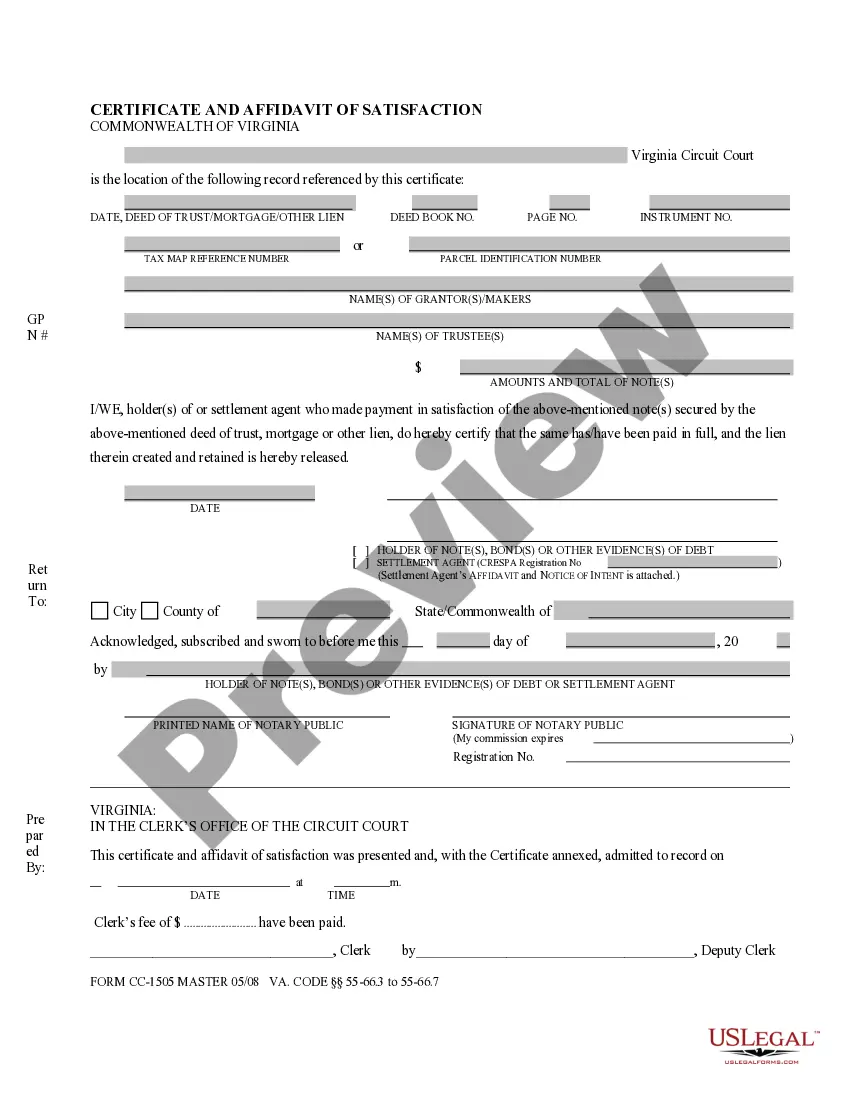
Washington Letter from Landlord to Tenant about Tenant engaging in illegal activity in premises as documented by law enforcement and if repeated, lease terminates
Overview of this form
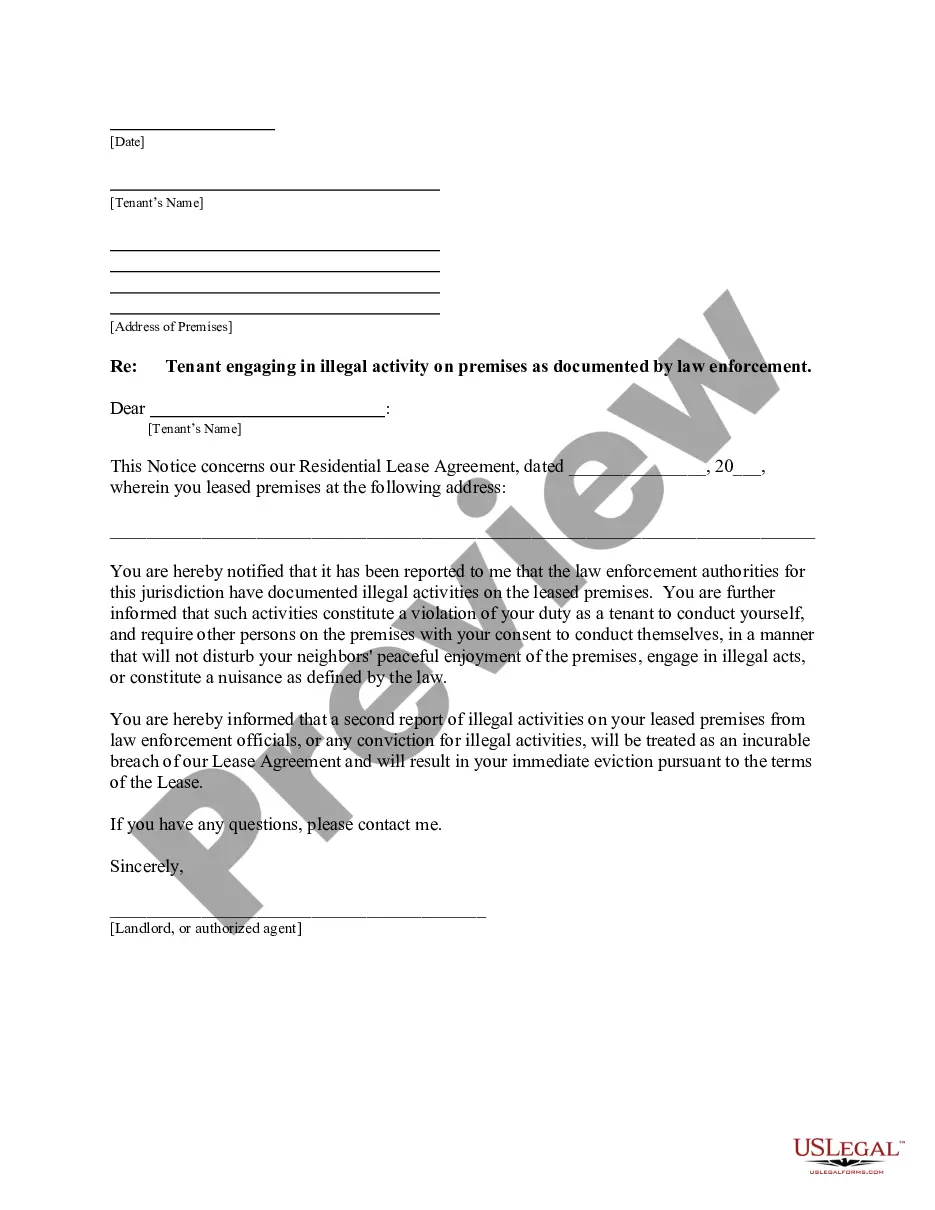
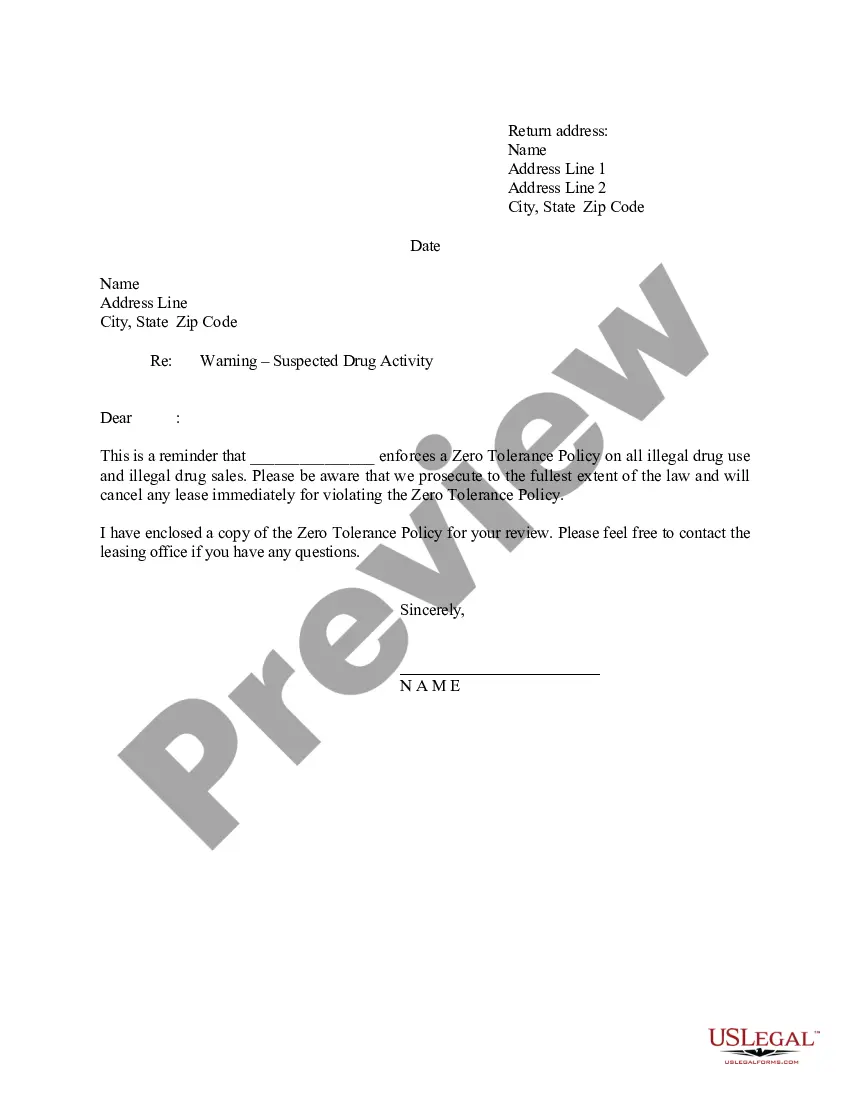
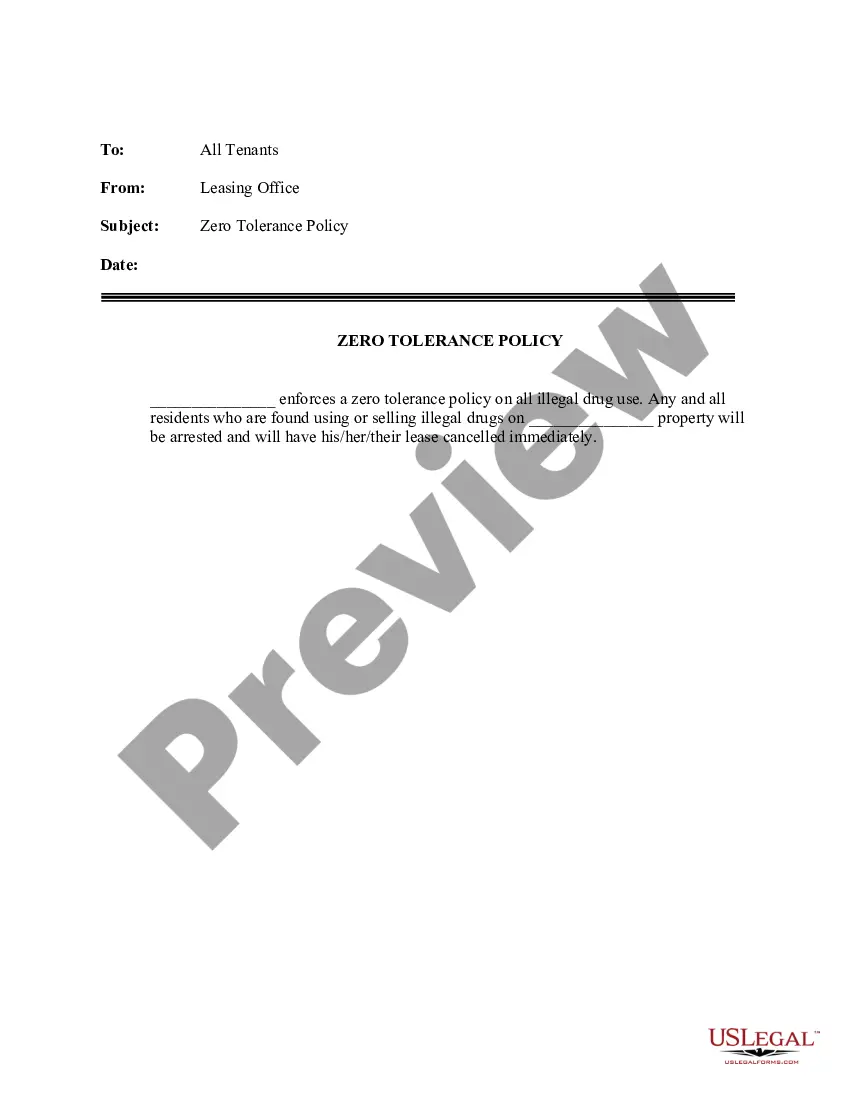
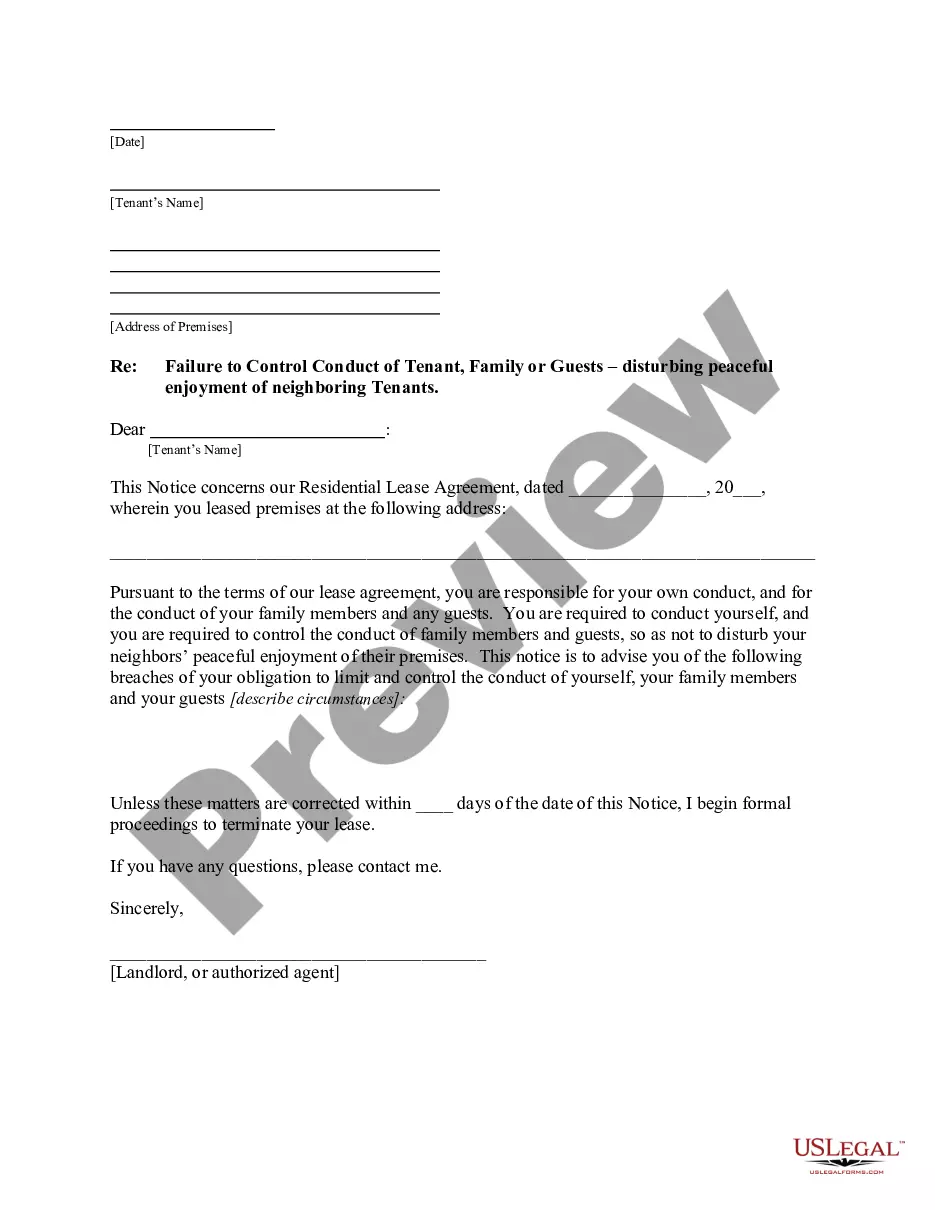
This letter serves as a formal notice from a landlord to a tenant regarding documented illegal activities occurring on the rental premises. It aims to address the issue promptly and clearly, stating that such activities violate the tenant's obligations under the lease agreement. This form is distinguished from other notices by its specific mention of illegal actions documented by law enforcement and the stipulation of potential eviction upon repeated offenses.
What’s included in this form
- Identification of the tenant and landlord.
- Details of the illegal activities reported by law enforcement.
- Explanation of the tenant's obligations under the lease agreement.
- Notice of consequences for repeated illegal activities, including potential eviction.
- Contact information for the landlord for further questions.

When to use this form
This letter should be used when a landlord receives notification from law enforcement regarding illegal activities taking place on the leased property. It is necessary to formally inform the tenant of these activities, establish a record of the situation, and clarify the consequences of further violations. Using this form helps ensure that the landlord complies with legal standards for tenant communication and eviction processes.
Who should use this form
This form is intended for:
- Residential landlords who have tenants suspected of engaging in illegal activities on the rental property.
- Landlords who wish to formally document their communication concerning illegal activities.
- Property managers acting on behalf of landlords to address illegal activities.
- Landlords seeking to comply with legal notification requirements before pursuing eviction for lease violations.
Steps to complete this form
- Identify the parties involved by entering the names of both the landlord and tenant.
- Clearly state the nature of the illegal activities reported by law enforcement.
- Reference specific obligations of the tenant under the lease agreement.
- Outline the consequences of repeated illegal activities, including eviction.
- Provide contact information for the landlord for any queries.
Does this form need to be notarized?
This form does not typically require notarization unless specified by local law. It is advisable to check any specific local requirements regarding the execution of eviction-related notices.
Get your form ready online
Our built-in tools help you complete, sign, share, and store your documents in one place.
Make edits, fill in missing information, and update formatting in US Legal Forms—just like you would in MS Word.
Download a copy, print it, send it by email, or mail it via USPS—whatever works best for your next step.
Sign and collect signatures with our SignNow integration. Send to multiple recipients, set reminders, and more. Go Premium to unlock E-Sign.
If this form requires notarization, complete it online through a secure video call—no need to meet a notary in person or wait for an appointment.
We protect your documents and personal data by following strict security and privacy standards.

Make edits, fill in missing information, and update formatting in US Legal Forms—just like you would in MS Word.

Download a copy, print it, send it by email, or mail it via USPS—whatever works best for your next step.

Sign and collect signatures with our SignNow integration. Send to multiple recipients, set reminders, and more. Go Premium to unlock E-Sign.

If this form requires notarization, complete it online through a secure video call—no need to meet a notary in person or wait for an appointment.

We protect your documents and personal data by following strict security and privacy standards.
Common mistakes to avoid
- Failing to accurately specify the illegal activities reported.
- Omitting or incorrect identification of key parties involved.
- Not providing clear consequences for further violations.
- Neglecting to retain a copy for personal records, which can be essential for future proceedings.
Why complete this form online
- Immediate access to legally compliant templates crafted by licensed attorneys.
- The ability to customize the document to fit specific situations quickly.
- Convenience of downloading and printing the form from home or office.
- Time-saving, as you do not have to search for legal language or formats.
Legal use & context
This form is legally significant as it documents communication from the landlord to the tenant regarding illegal acts, serving as evidence in potential eviction proceedings. Additionally, it fulfills the landlordâs obligation to inform tenants of lease violations before taking further action.
Quick recap
- This letter formally addresses tenant misconduct involving illegal activities.
- It outlines the consequences of continued illegal actions, emphasizing potential eviction.
- Landlords should comply with local laws when using this form to address tenant issues.
Looking for another form?
Form popularity
FAQ
The right to collect rent. Simply by the fact that you are renting, your landlord has the right to collect rent and any prearranged late fees for overdue rent payments. The right to raise your rent according to your lease agreement.Your landlord has the right to evict you, especially if you do not pay your rent.
A landlord cannot evict a tenant without an adequately obtained eviction notice and sufficient time. A landlord cannot retaliate against a tenant for a complaint. A landlord cannot forego completing necessary repairs or force a tenant to do their own repairs.A landlord cannot remove a tenant's personal belongings.
The lease becomes legally binding when all parties have signed: the landlord and all tenants living in the unit who are 18 and older.
The Gross Lease. The gross lease tends to favor the tenant. The Net Lease. The net lease, however, tends to favor the landlord. The Modified Gross Lease.
If a lease requires or involves illegal activities it is void. For example, if a person leases premises for the stated purpose of using the building as a place to make illegal drugs, the agreement is void and unenforceable.
No, a landlord cannot just kick you out. They need to follow the formal eviction process provided in your state. If a landlord uses illegal self-help measures, such as changing the locks or throwing out your belongings, you should be able to hold the landlord accountable and remain on the property.
As a landlord, you have many rights that allow you to manage your rental property effectively and efficiently.Collecting rent deposits and payments, as well as any deposits or payments associated with pets, parking, and/or added amenities. Entering the tenant's unit with notice or due to an emergency. Evicting tenants.
One of your important tenant's rights is to a habitable residence. This means that the home must be safe to live in, without dangerous conditions and with usable heat, utilities, and water. Your landlord is required to make any necessary repairs to keep your unit in reasonable condition while you live there.
If you think your landlord is violating the Fair Housing Act, you can get that landlord in trouble by filing a complaint at HUD.gov. Your remedy for breach of quiet enjoyment is to terminate the lease and move or sue in small claims court.