Vermont Last Will and Testament for other Persons
What this document covers
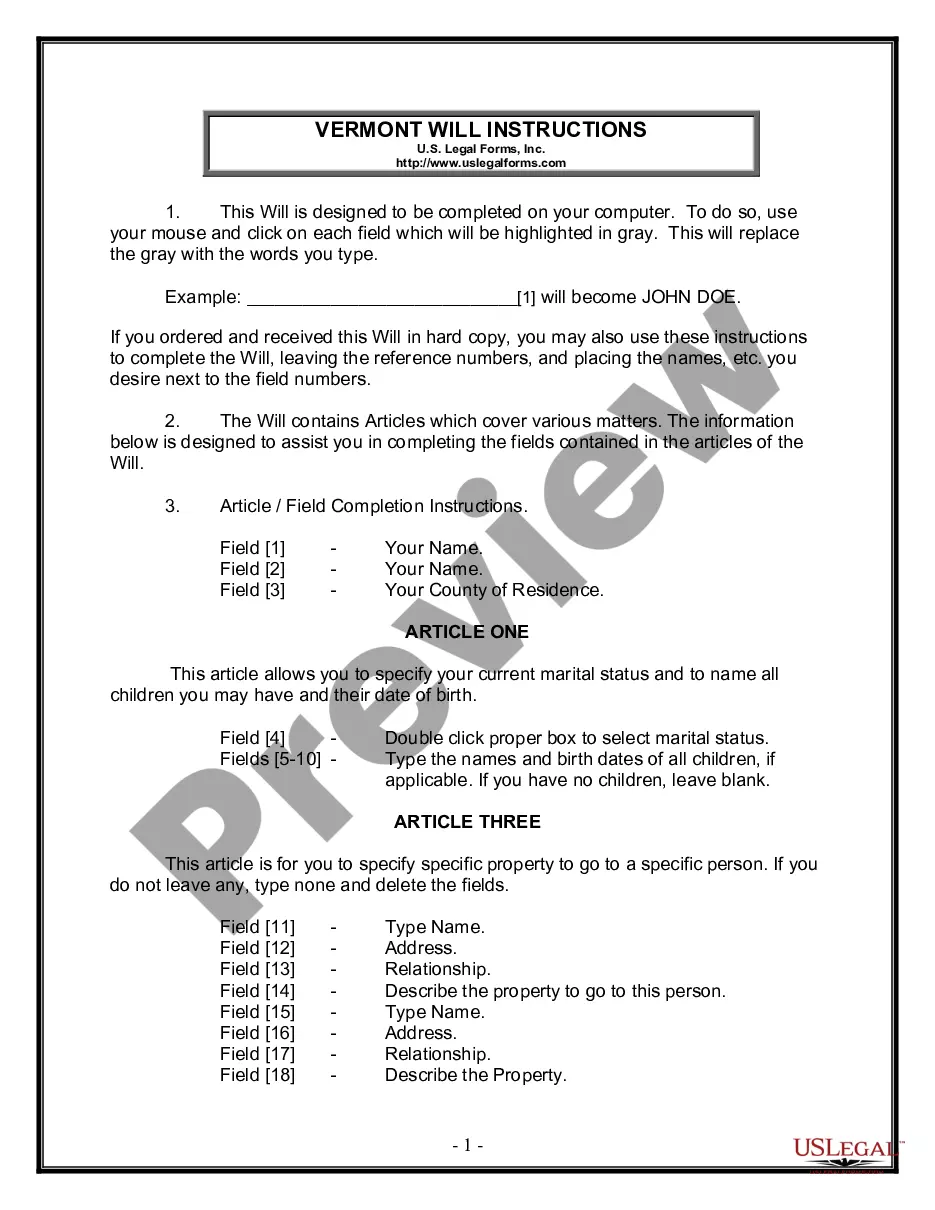
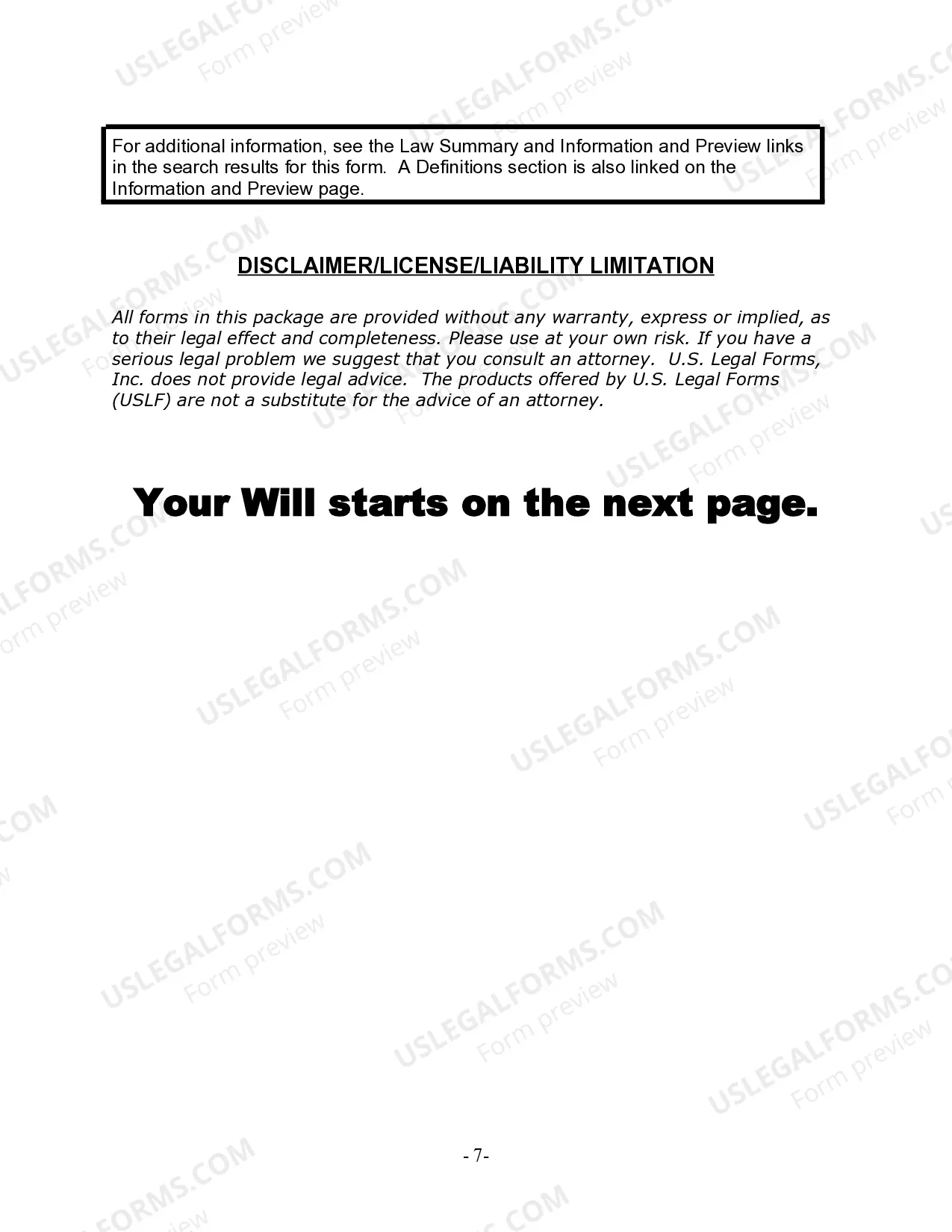
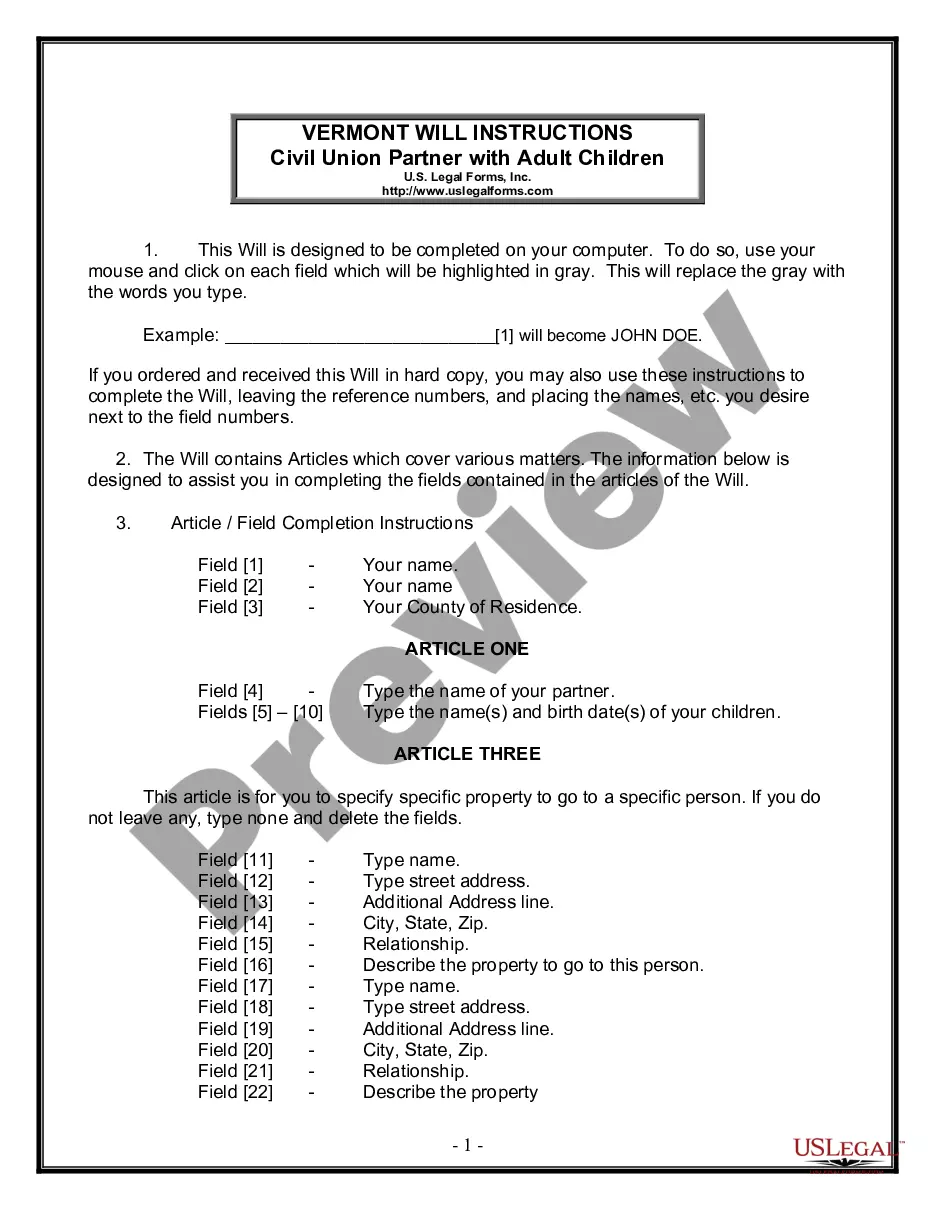
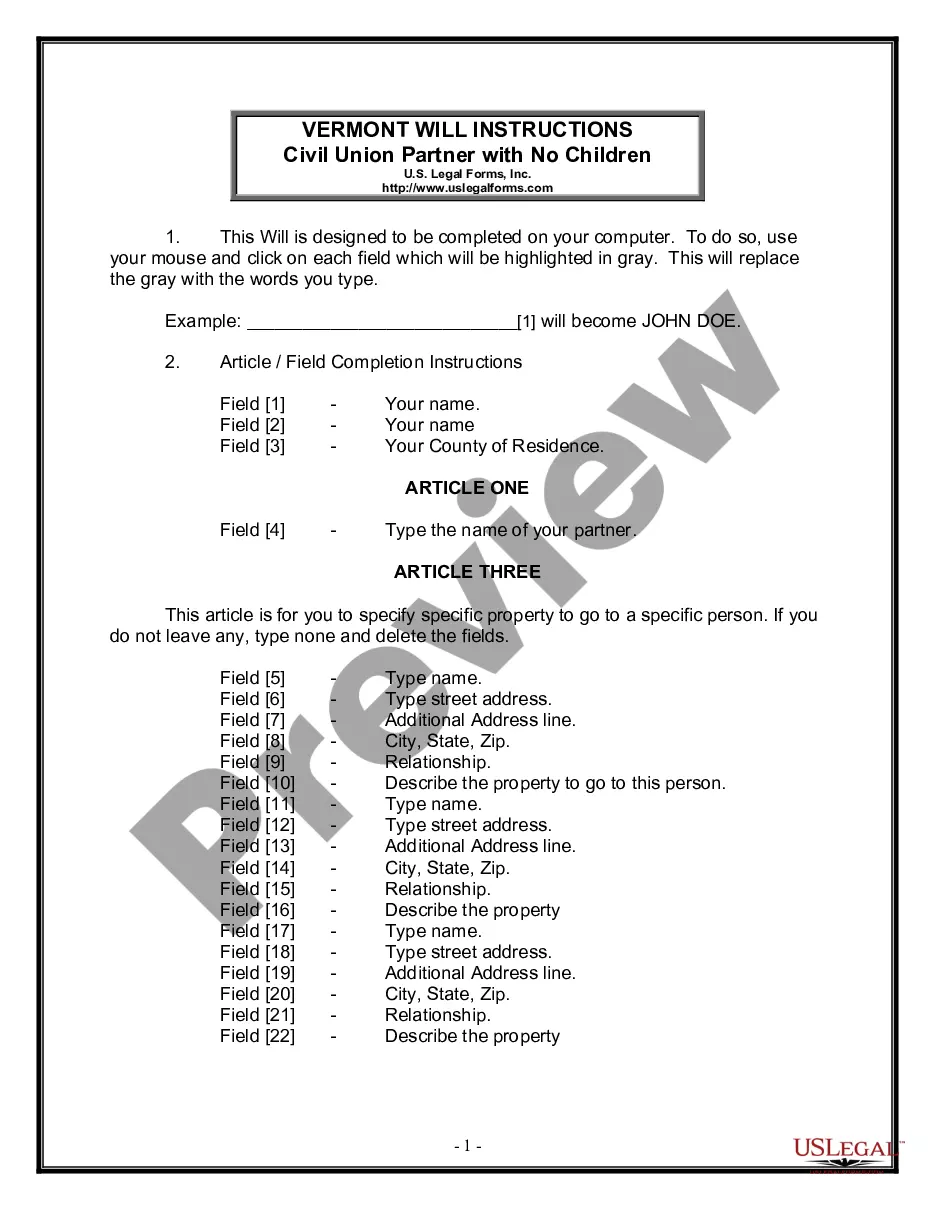
This form is a Last Will and Testament for Other Persons, specifically designed for use in Vermont. It is created for individuals who need a will but cannot find an appropriate document to suit their specific needs. A last will serves as a legal document that specifies who will inherit your property upon your death, identifies the executor of your estate, and may include provisions for guardianship and trusteeship if applicable. This form allows you to complete your will conveniently on your computer.
What’s included in this form
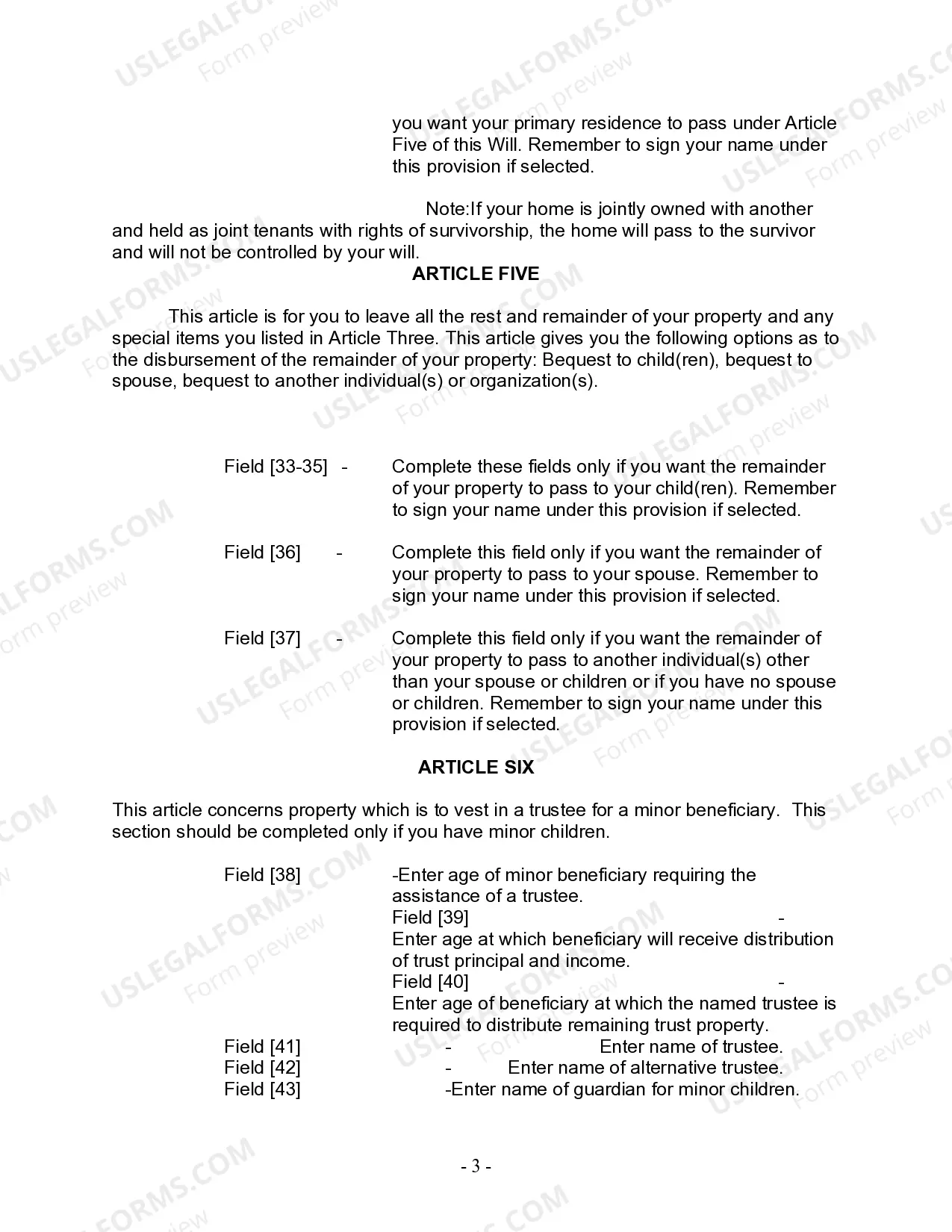
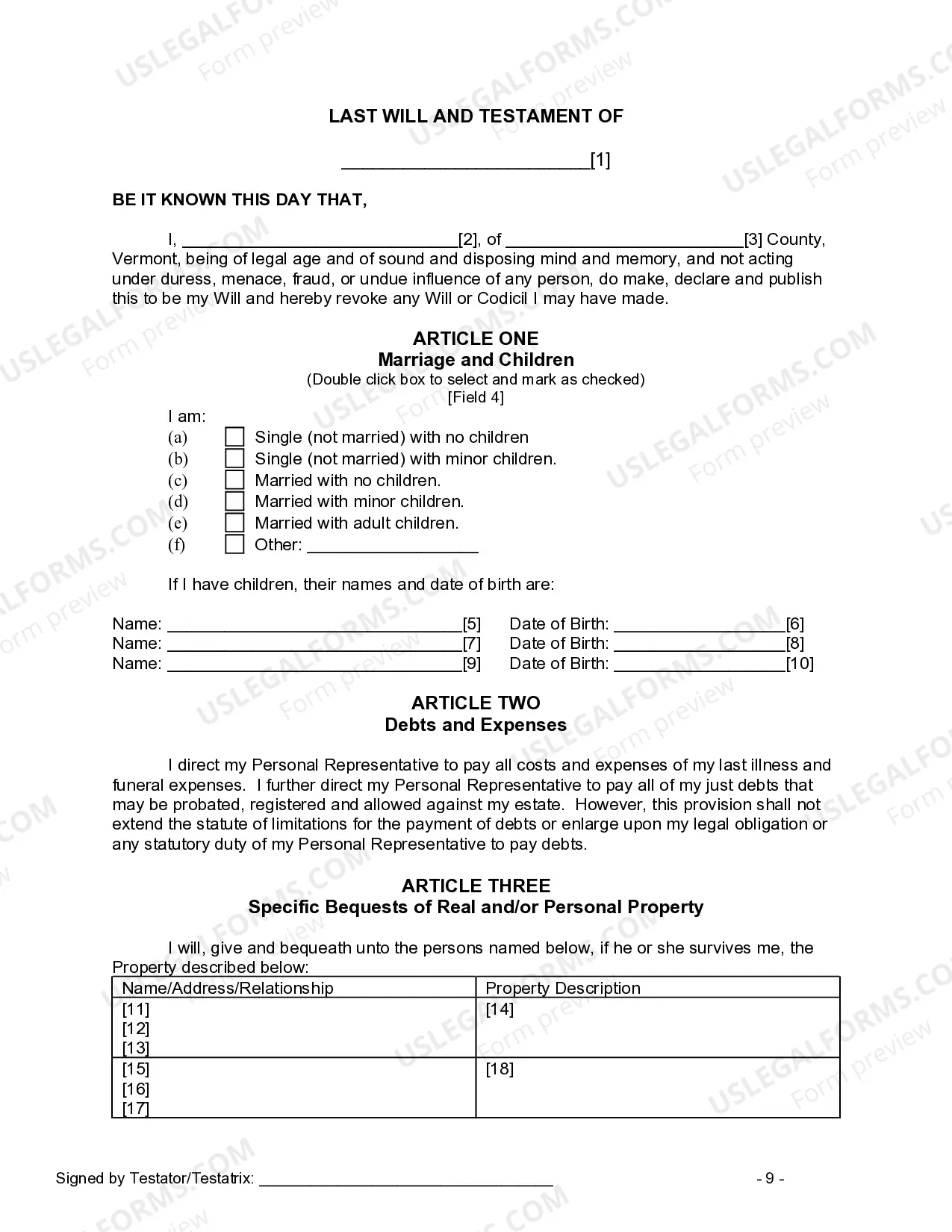
- Your name and address.
- Specification of marital status and children.
- Specific bequests of property to named individuals.
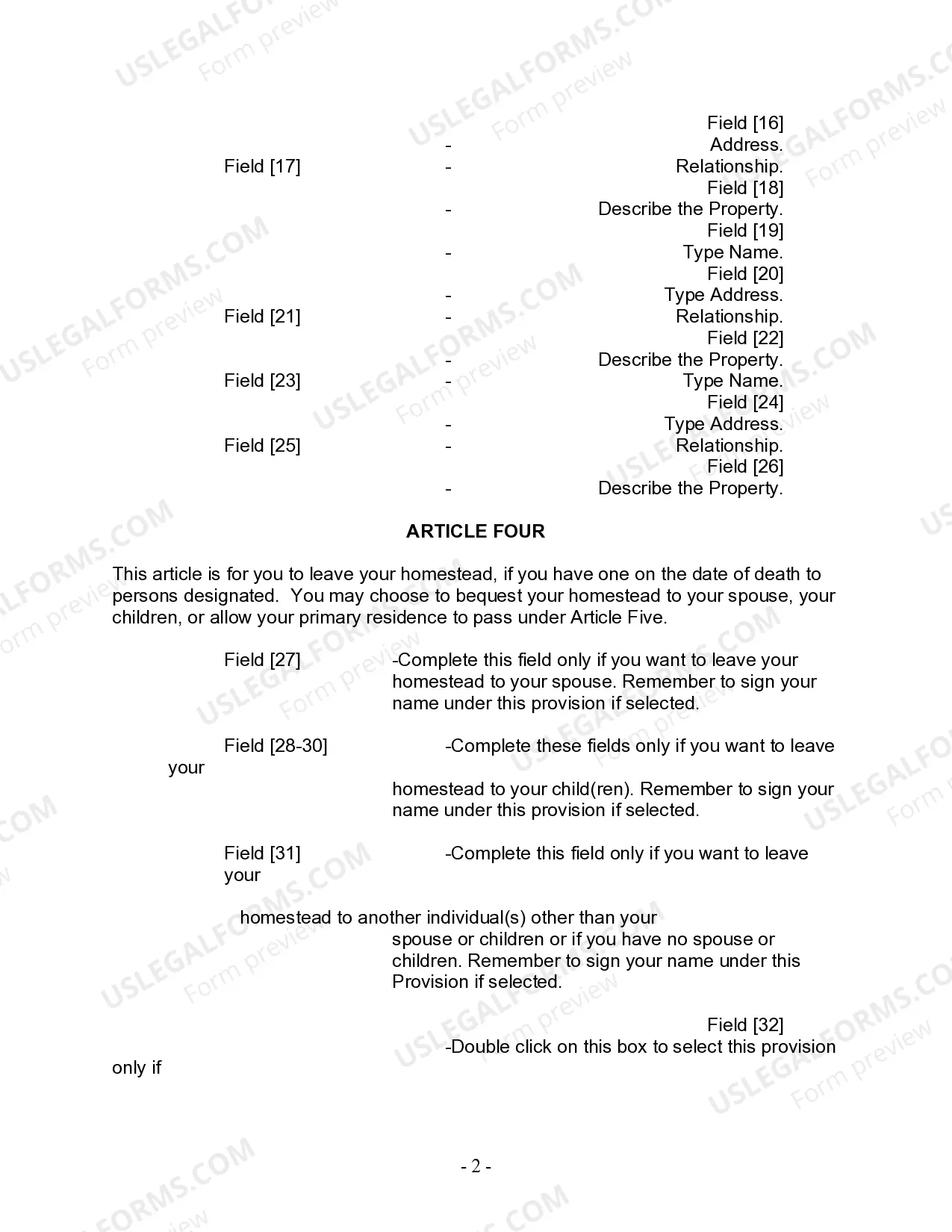
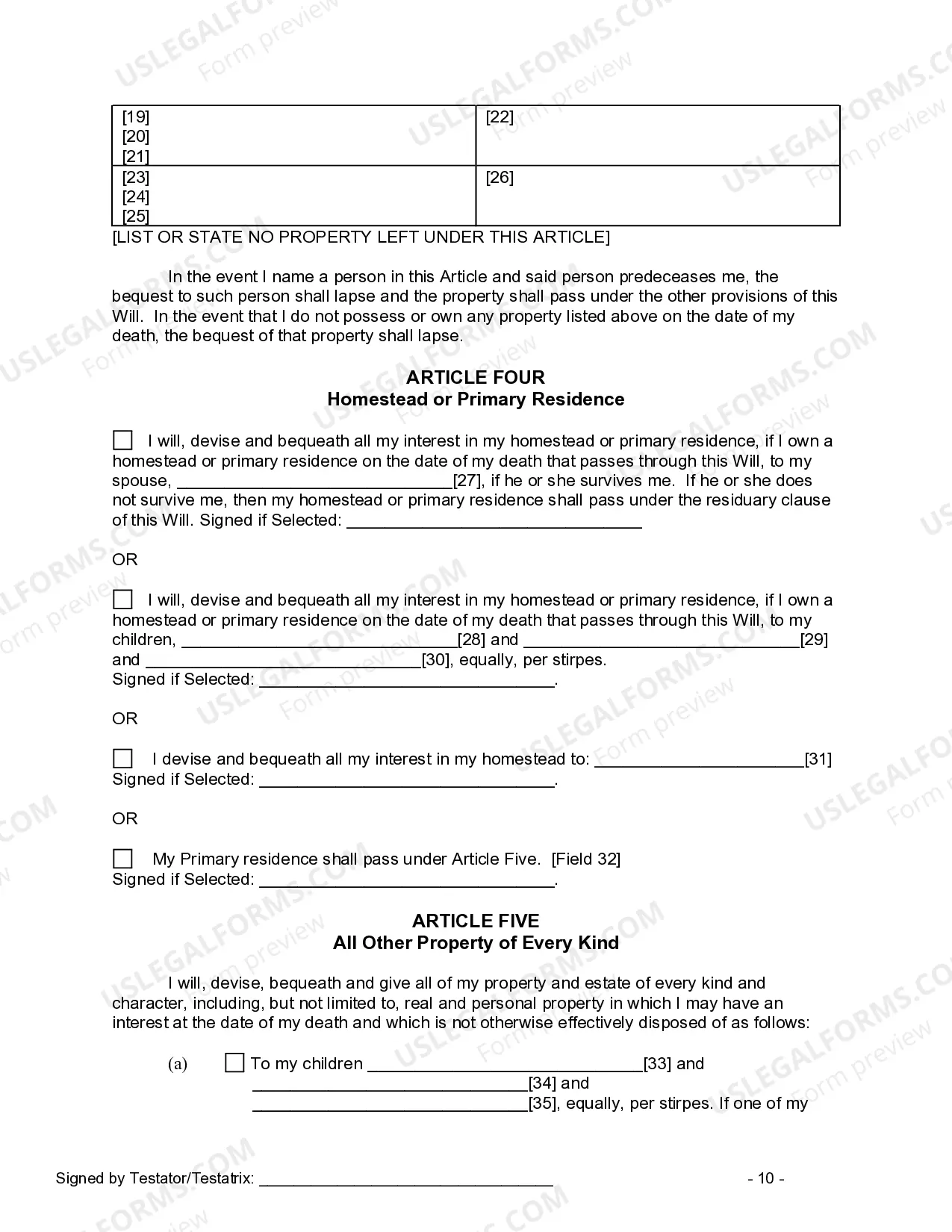
- Designation of homestead or primary residence.
- Disbursement of the remainder of the estate.
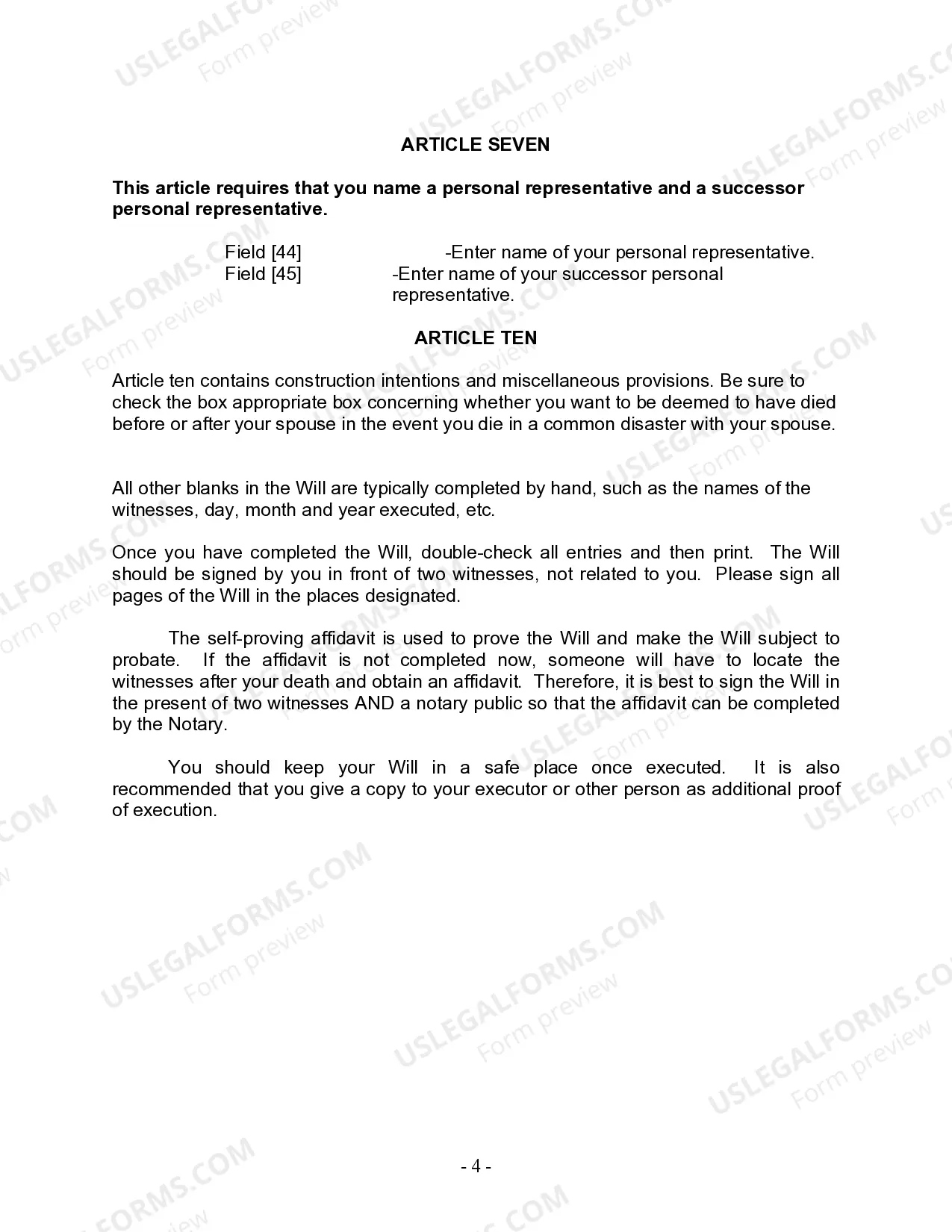
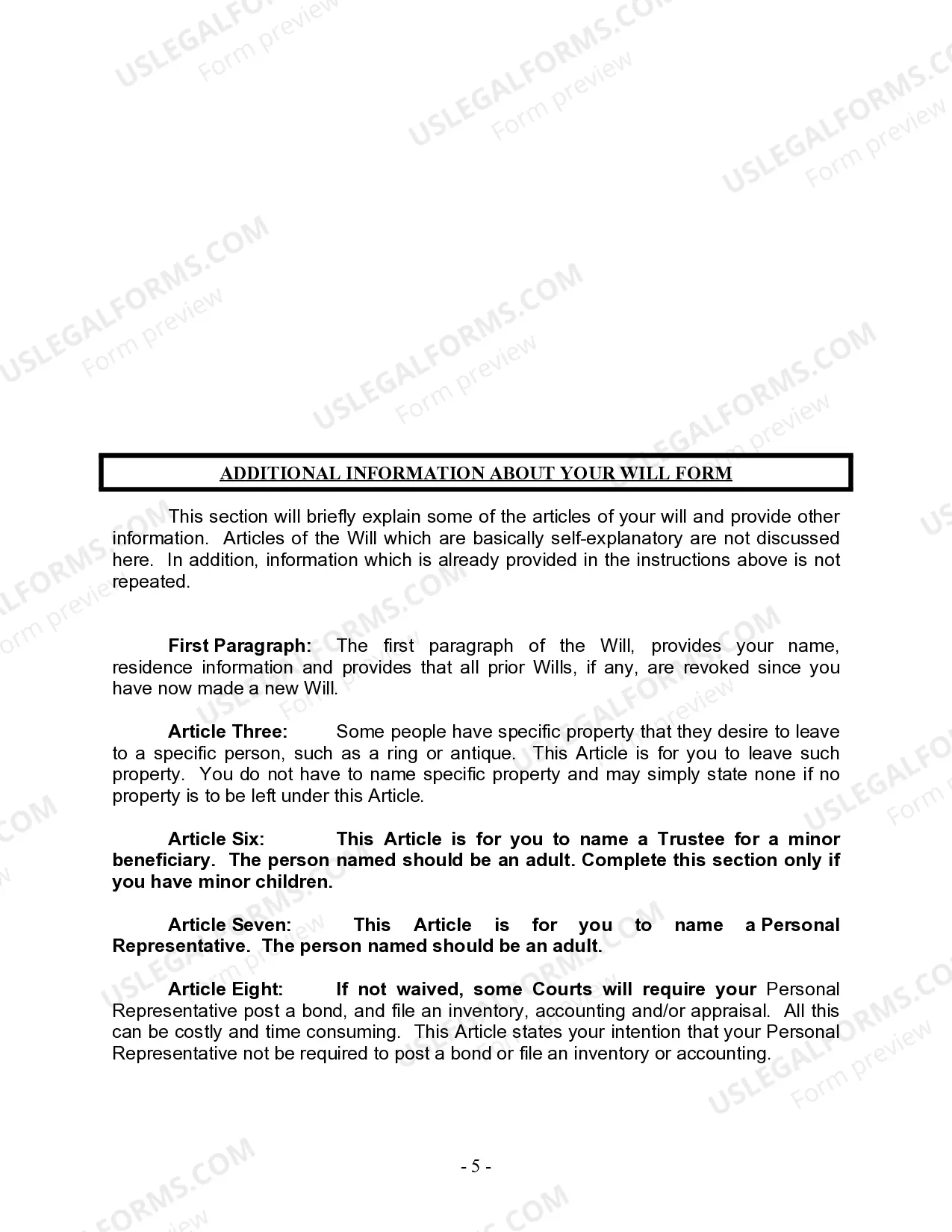
- Appointment of a personal representative and a successor.




Common use cases
This last will form should be used when you want to clearly delineate your wishes regarding the distribution of your assets after your death. Common scenarios include wanting to provide specific gifts to loved ones, designating a guardian for minor children, or ensuring your estate is administered according to your stated wishes. If you have unique needs that are not met by other forms, this customizable will is an ideal solution.
Intended users of this form
- Individuals over the age of eighteen who wish to create a legally binding will.
- Those with assets they want to distribute after death.
- Parents needing to appoint guardians for minor children.
- Anyone wanting to ensure their specific wishes regarding their estate are documented.
Steps to complete this form
- Enter your full name and address at the top of the document.
- Specify your marital status and provide the names and birthdates of your children, if any.
- Detail any specific property you want to bequeath to particular individuals.
- Designate your homestead or primary residence, if applicable.
- Appoint a personal representative to manage your estate after your death.
Is notarization required?
This form must be notarized to be legally valid. US Legal Forms provides secure online notarization powered by Notarize, allowing you to complete the process through a verified video call.
Get your form ready online
Our built-in tools help you complete, sign, share, and store your documents in one place.
Make edits, fill in missing information, and update formatting in US Legal Forms—just like you would in MS Word.
Download a copy, print it, send it by email, or mail it via USPS—whatever works best for your next step.
Sign and collect signatures with our SignNow integration. Send to multiple recipients, set reminders, and more. Go Premium to unlock E-Sign.
If this form requires notarization, complete it online through a secure video call—no need to meet a notary in person or wait for an appointment.
We protect your documents and personal data by following strict security and privacy standards.

Make edits, fill in missing information, and update formatting in US Legal Forms—just like you would in MS Word.

Download a copy, print it, send it by email, or mail it via USPS—whatever works best for your next step.

Sign and collect signatures with our SignNow integration. Send to multiple recipients, set reminders, and more. Go Premium to unlock E-Sign.

If this form requires notarization, complete it online through a secure video call—no need to meet a notary in person or wait for an appointment.

We protect your documents and personal data by following strict security and privacy standards.
Avoid these common issues
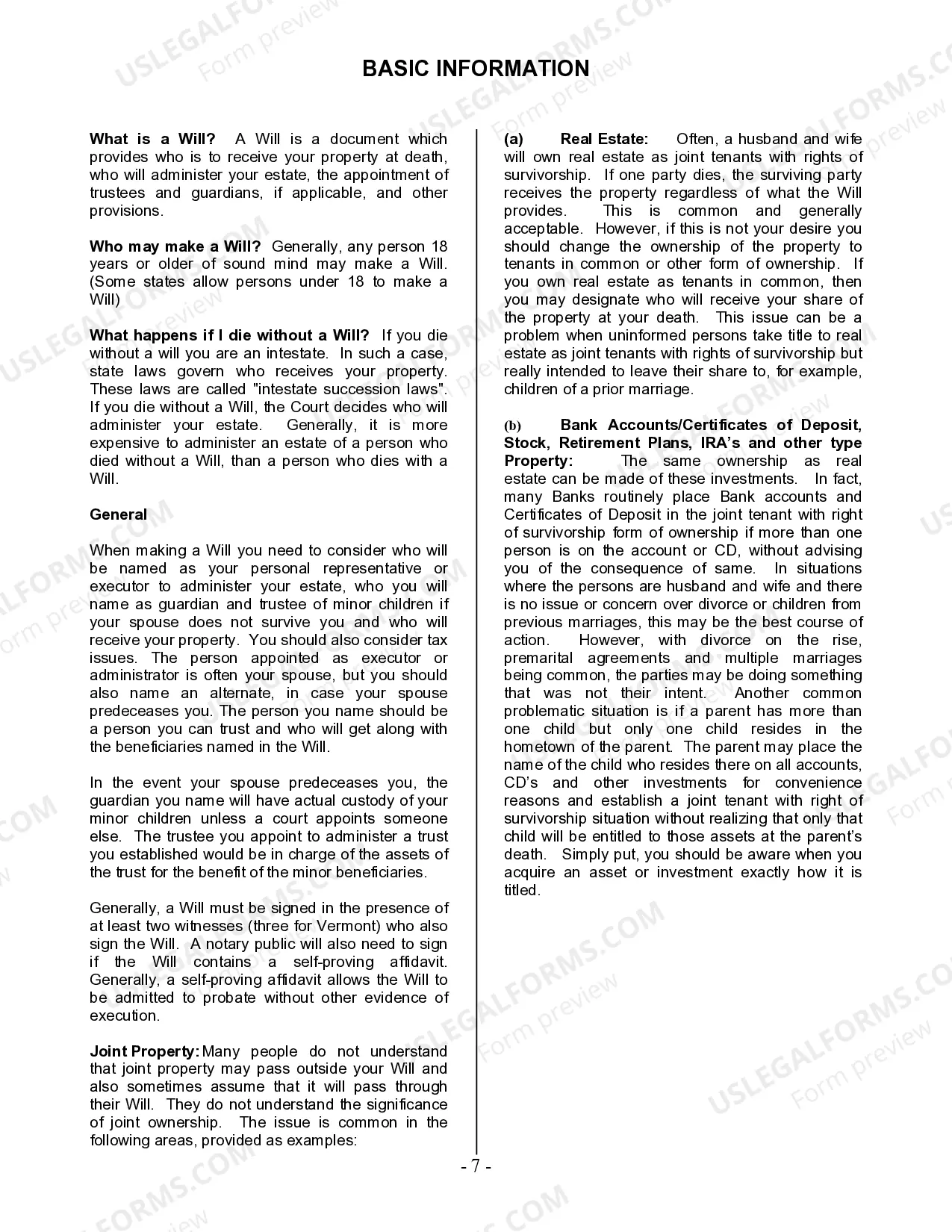
- Failing to sign the will in front of two witnesses, which is required for validity.
- Not updating the will to reflect changes in marital status or family structure.
- Leaving the property descriptions vague, which can lead to confusion among heirs.
- Not discussing your will with your executor or family, which can lead to misunderstandings.
Why complete this form online
- Convenience of completing the form at your own pace from home.
- Editability allows you to revise your will easily as your circumstances change.
- Access to attorney-drafted templates ensures compliance with state laws.
- Immediate downloading provides instant access for completion and execution.
Key takeaways
- The Last Will and Testament for Other Persons is a crucial legal document for estate planning in Vermont.
- It provides clear instructions for asset distribution, guardianship, and the appointment of a personal representative.
- Proper completion and witnessing are vital to ensure the will is legally enforceable and valid.
Looking for another form?



Form popularity
FAQ
As an aside, Vermont Statute Title 32 § 1143 states that executors may be paid $4 per day spent in court, but this is geared towards the court paying appointed agents, and that amount was set in 1866.
In California, estates valued over $150,000, and that don't qualify for any exemptions, must go to probate.If a person dies and owns real estate, regardless of value, either in his/her name alone or as a "tenant in common" with another, a probate proceeding is typically required to transfer the property.
Every financial institution will have a different threshold as to the amount they will transfer without a Grant of Probate. To provide you some guidance, a balance of somewhere in the vicinity of $20,000.00 $50,000.00 will not require a Grant of Probate.
In Vermont, you can make a living trust to avoid probate for virtually any asset you own -- real estate, bank accounts, vehicles, and so on. You need to create a trust document (it's similar to a will), naming someone to take over as trustee after your death (called a successor trustee).
The testator or person making the will must be at least 18 years of age; 2022 the testator must be of sound mind; 2022 the will must be in writing; 2022 the will must be signed by the testator or the testator's name is written by another person in the testator's presence and at the testator's express direction; 2022 the
Retirement accountsIRAs or 401(k)s, for examplefor which a beneficiary was named. Life insurance proceeds (unless the estate is named as beneficiary, which is rare) Property held in a living trust. Funds in a payable-on-death (POD) bank account.
Write a Living Trust. The most straightforward way to avoid probate is simply to create a living trust. Name Beneficiaries on Your Retirement and Bank Accounts. For some, a last will is often a better fit than a trust because it is a more straightforward estate planning document. Hold Property Jointly.
No, in Vermont, you do not need to notarize your will to make it legal. However, Vermont allows you to make your will "self-proving" and you'll need to go to a notary if you want to do that. A self-proving will speeds up probate because the court can accept the will without contacting the witnesses who signed it.