Vermont Last Will and Testament for Divorced and Remarried Person with Mine, Yours and Ours Children
Understanding this form
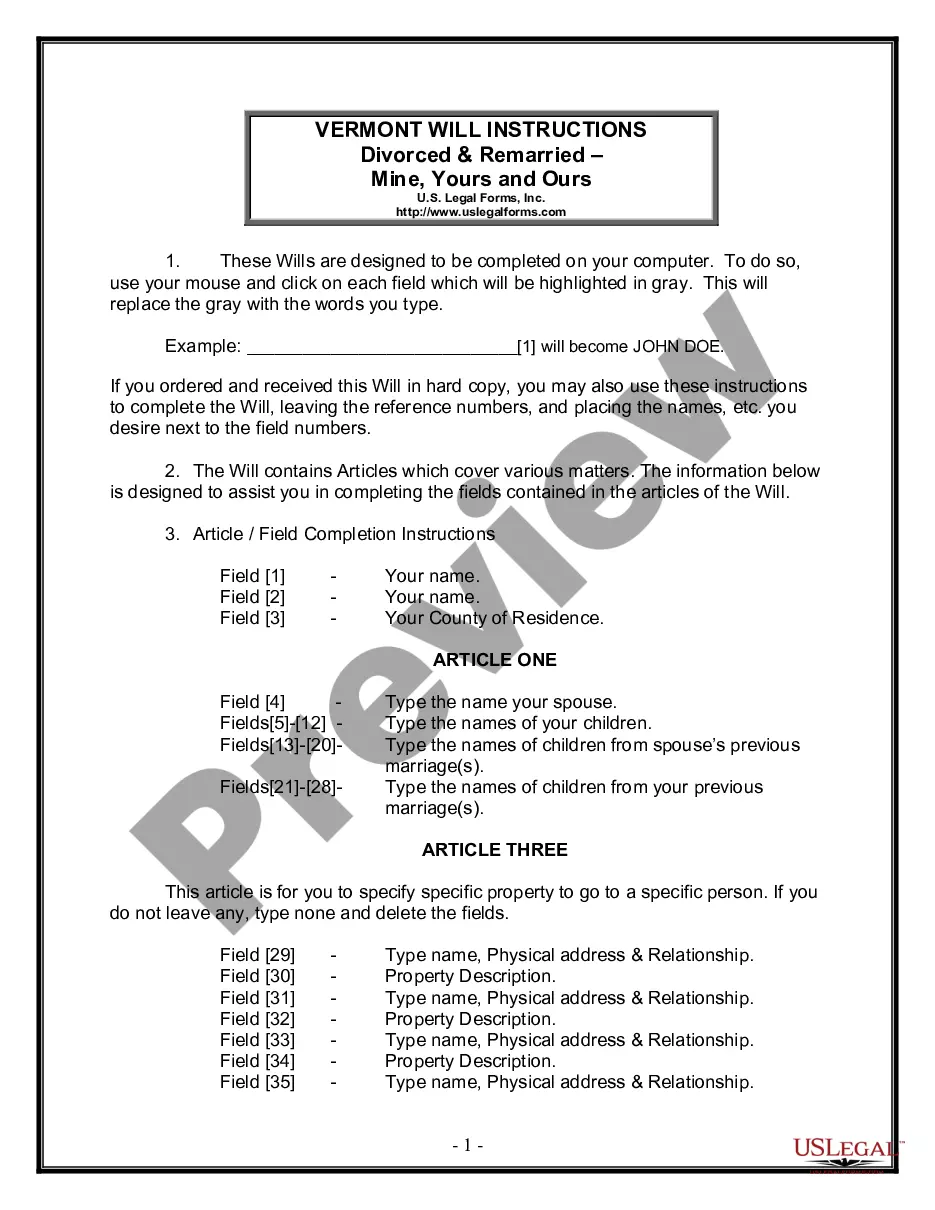
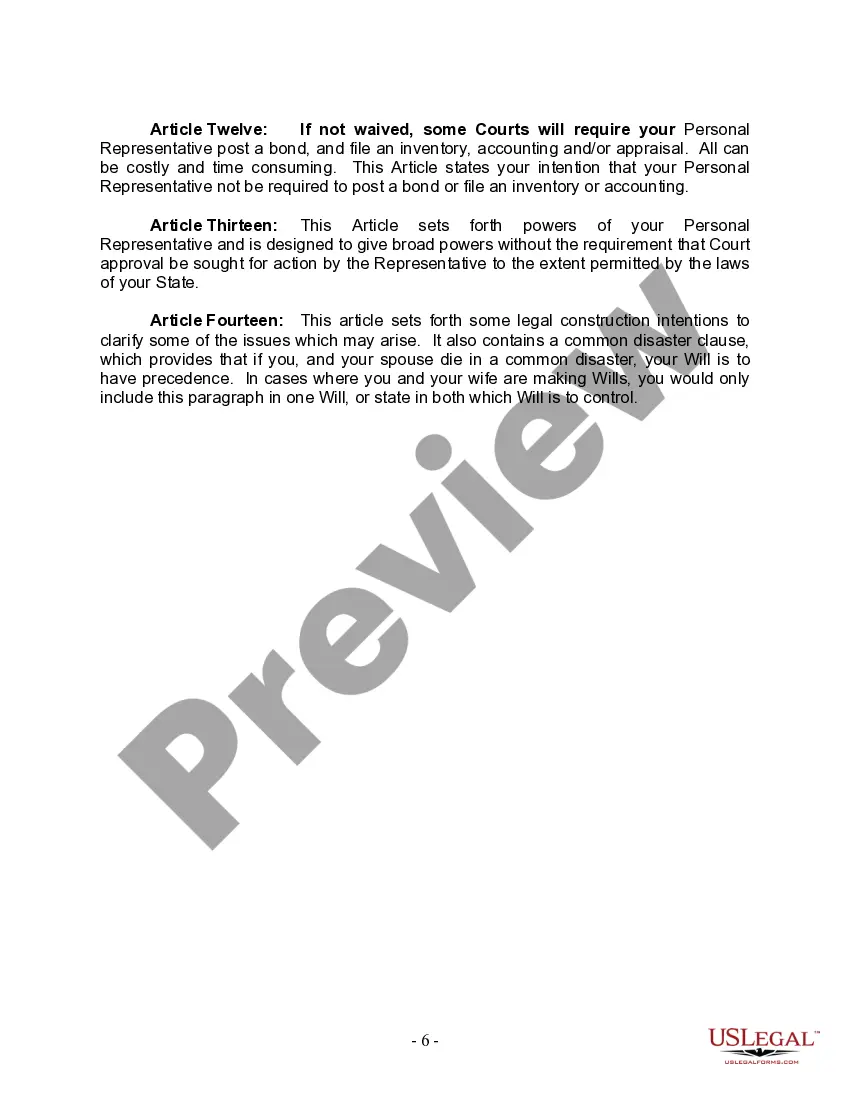
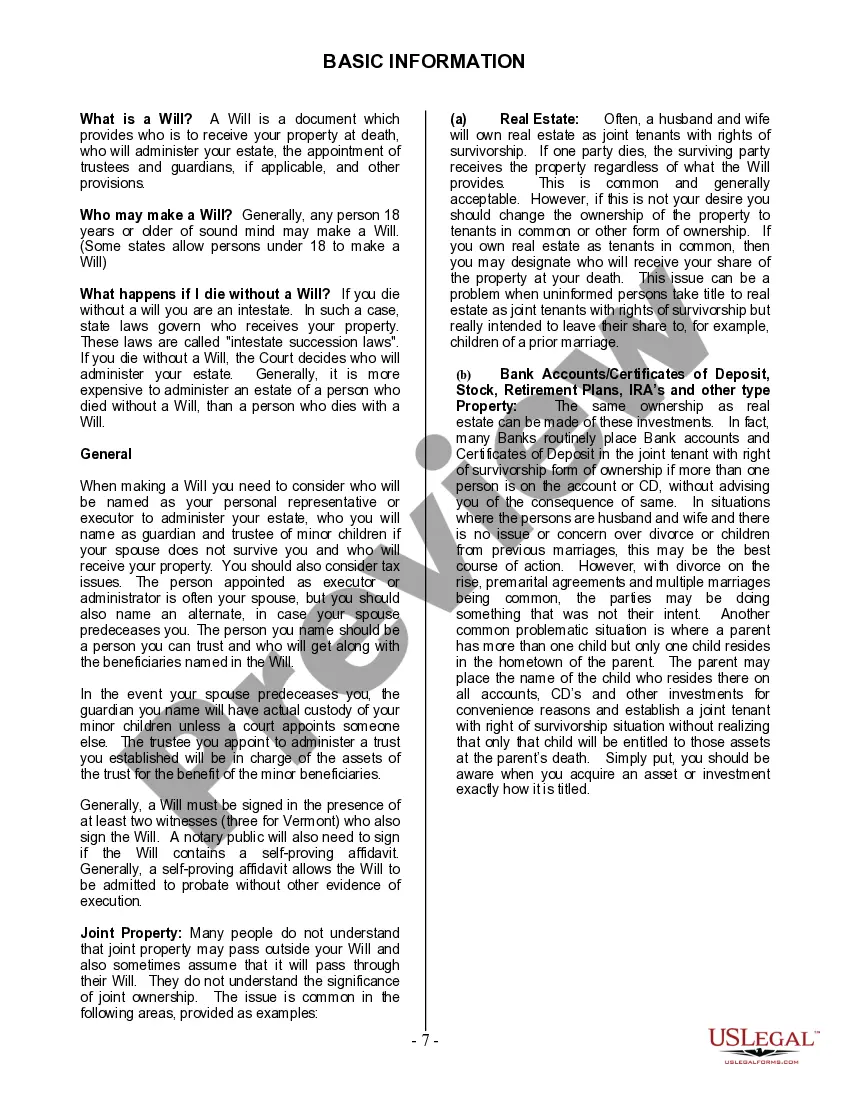
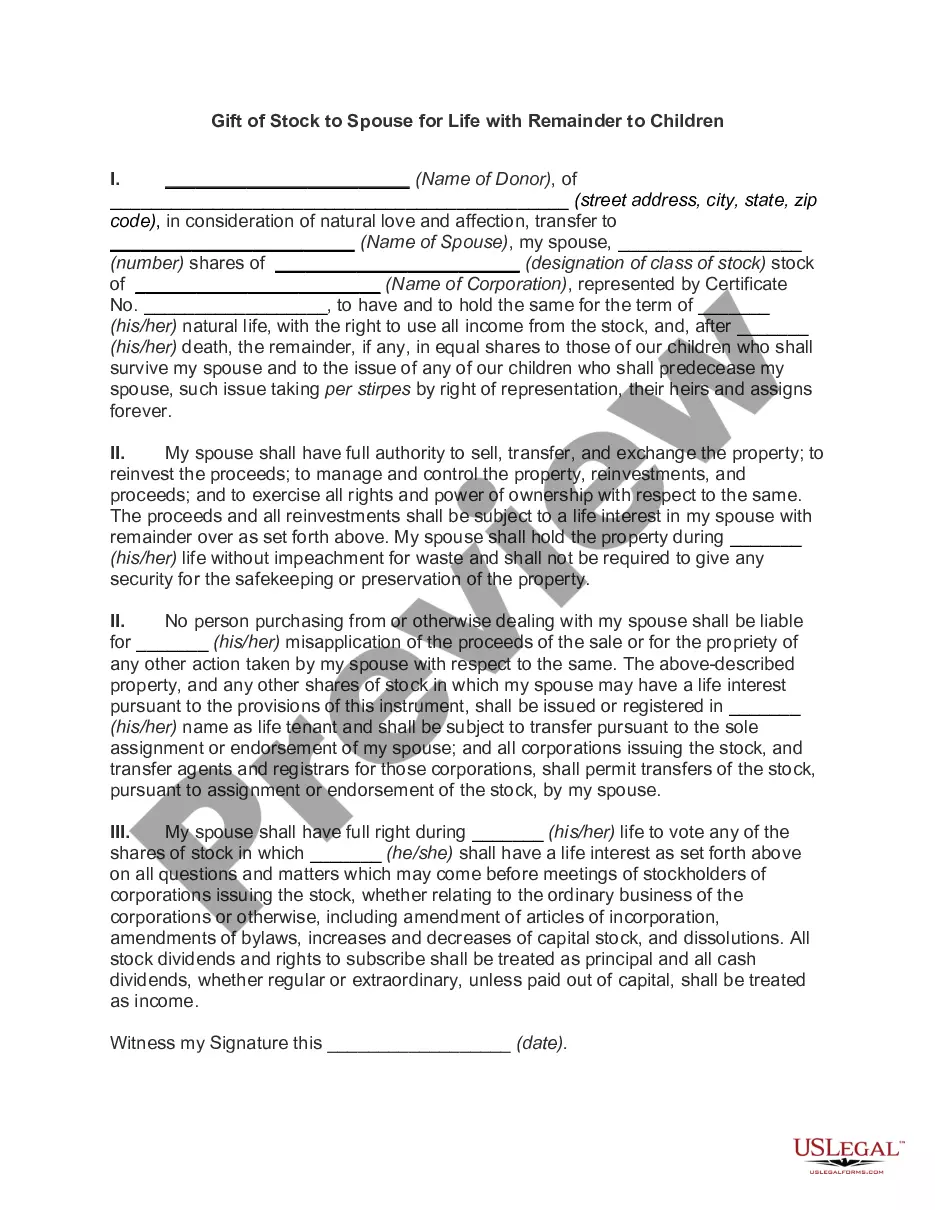
This Last Will and Testament is a legal document specifically designed for a divorced and remarried individual. It accommodates complex family structures by allowing for the inclusion of children from current and previous marriagesâoften referred to as "mine, yours, and ours" children. This form provides clear directives on property distribution, appointment of guardians, and the establishment of trusts for minor children. It is essential in ensuring that your assets are managed according to your wishes in the event of your passing.
Main sections of this form
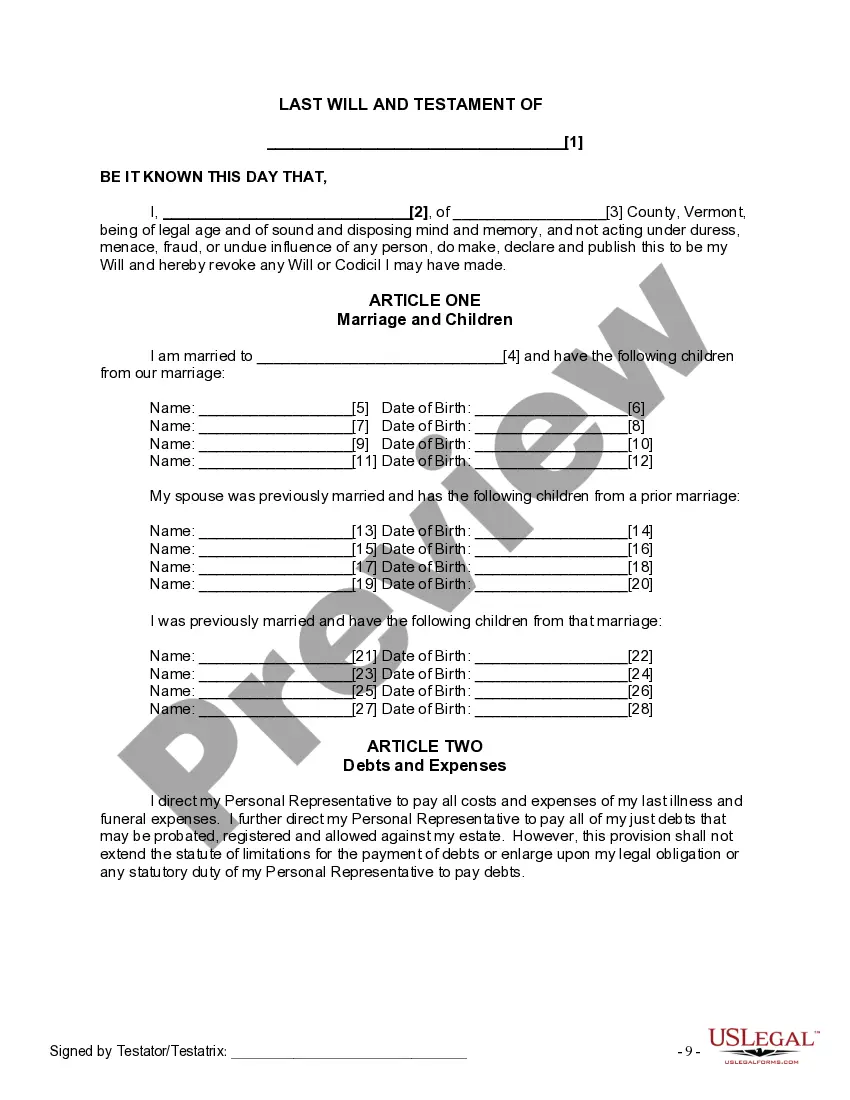
- Personal Information: Sections for entering your name, residency, and the names of your spouse and children.
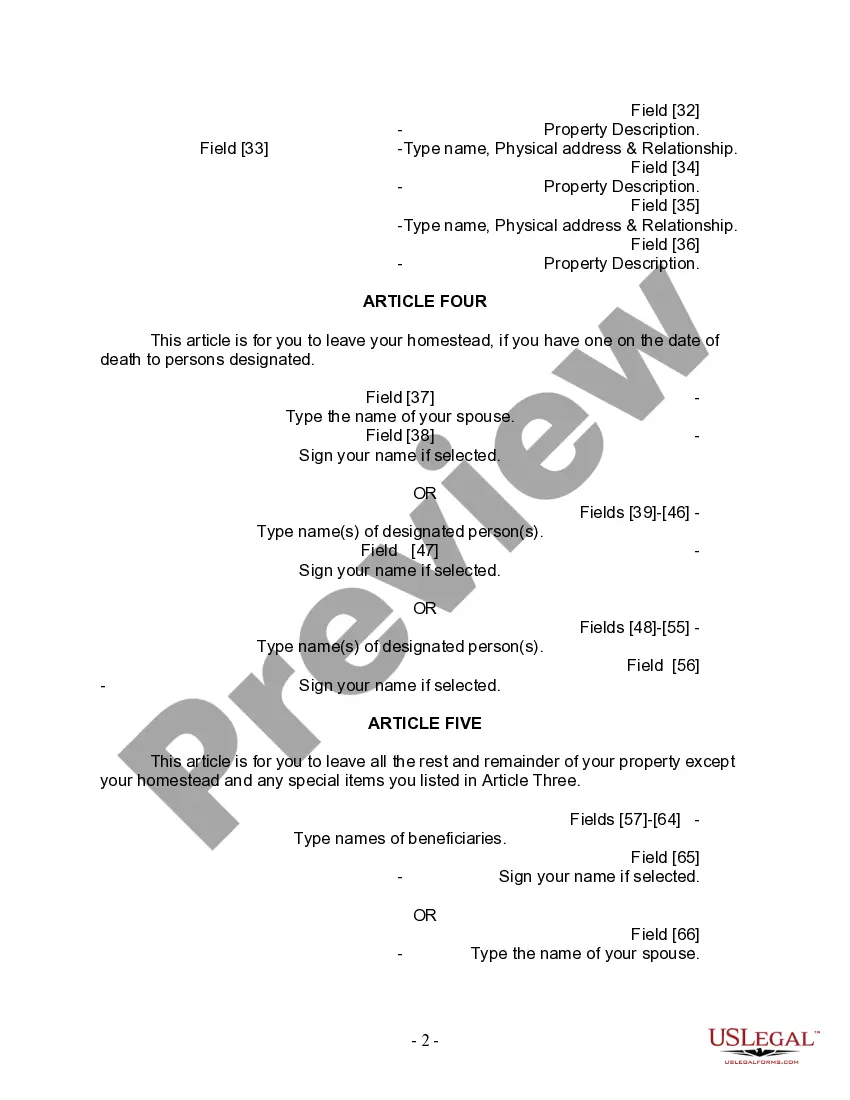
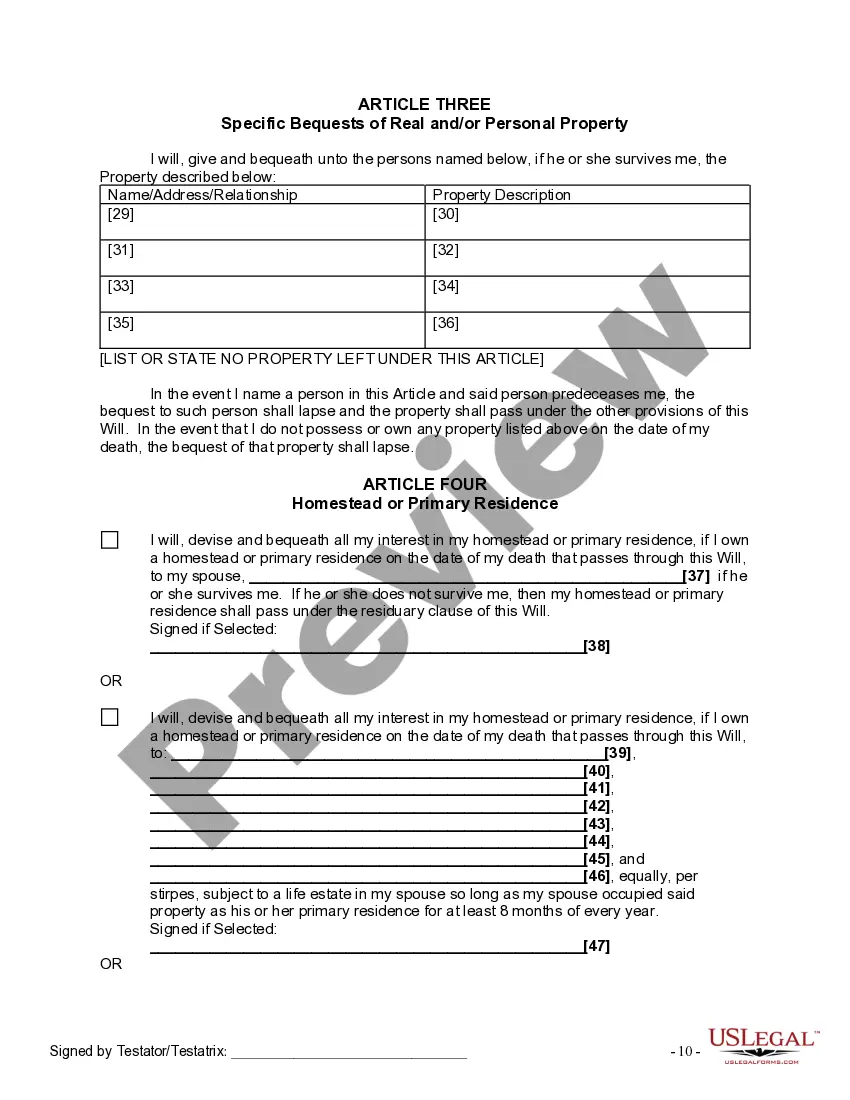
- Specific Bequests: Clauses for assigning particular property to specific individuals.
- Homestead Distribution: Details on how to allocate your primary residence.
- Residuary Clause: Instructions for distributing all remaining assets not explicitly mentioned in the will.
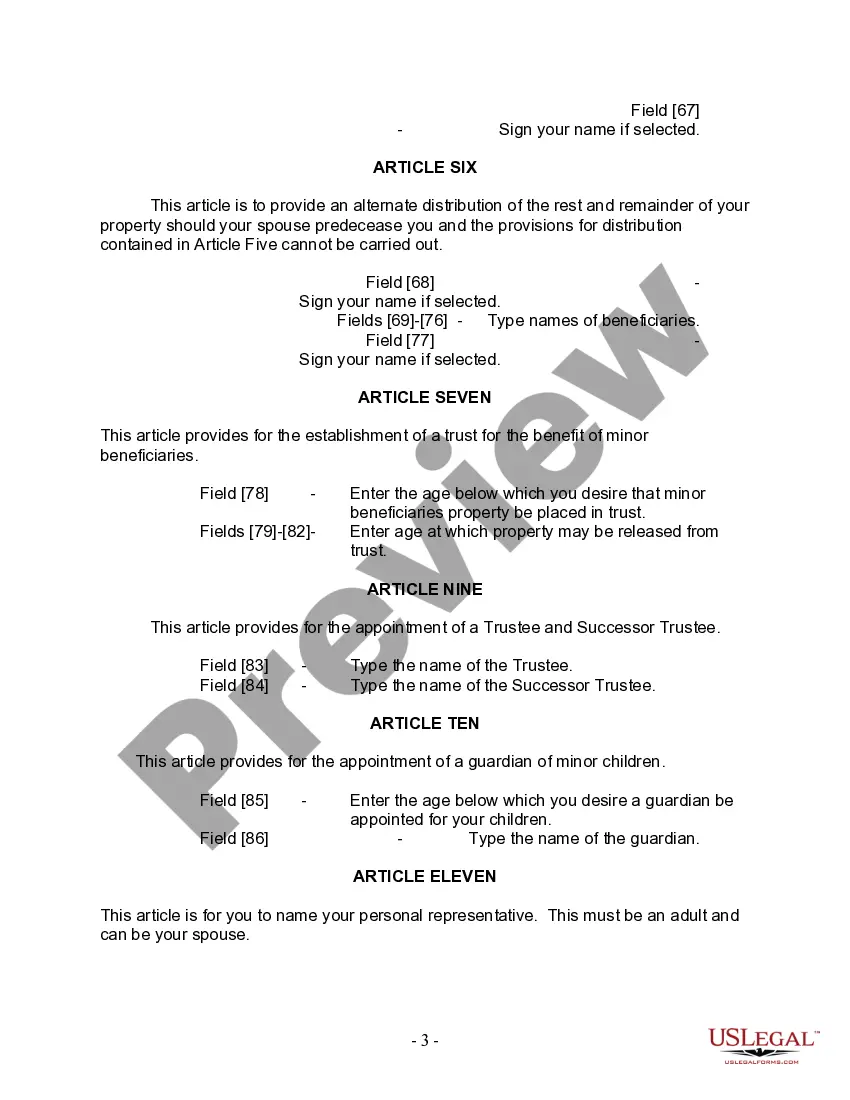
- Trust Provisions: Options to set up trusts for minor children and stipulations on how these trusts will operate.
- Guardian Appointment: Designation of guardians for any minor children in the event of your demise.






Situations where this form applies
This form is useful in various scenarios, such as when you want to ensure that assets are distributed fairly among children from previous marriages and your current marriage, when you have specific wishes for certain possessions, or when minor children are involved that require trusts or guardianship. It is especially critical after divorce and remarriage to ensure clear instructions are provided regarding the distribution of your estate.
Intended users of this form
Intended Audience:
- Individuals who have been divorced and have remarried.
- Parents with children from both current and previous marriages.
- Those looking to clarify their wishes regarding property distribution and guardianship after death.
Steps to complete this form
Steps to Complete the Last Will and Testament:
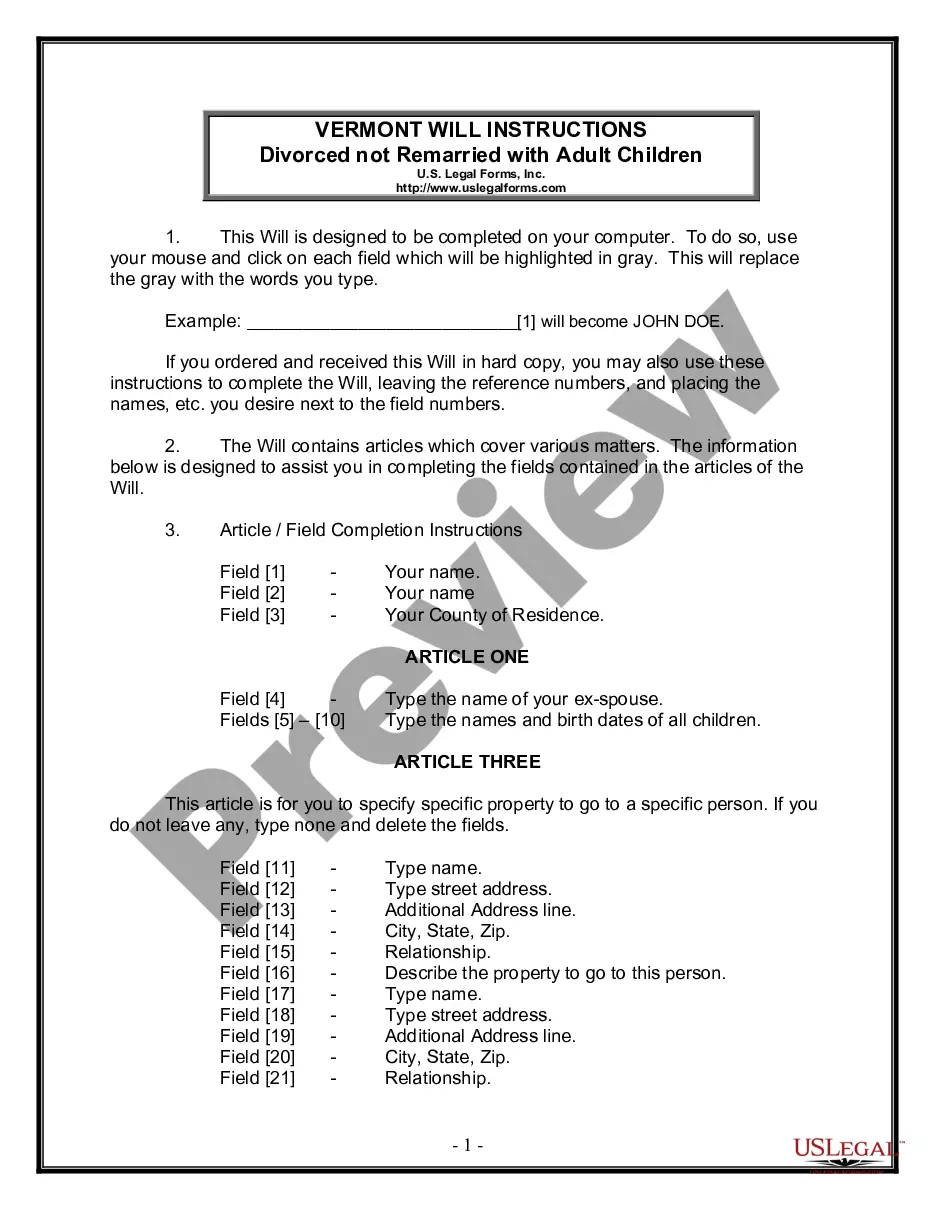
- Identify the parties involved: Enter your name, spouseâs name, and names of all children.
- Specify specific property to be bequeathed to individuals or groups.
- Designate who will inherit your primary residence and other remaining assets.
- Establish trusts for minor beneficiaries when applicable.
- Appoint guardians for minor children if necessary.
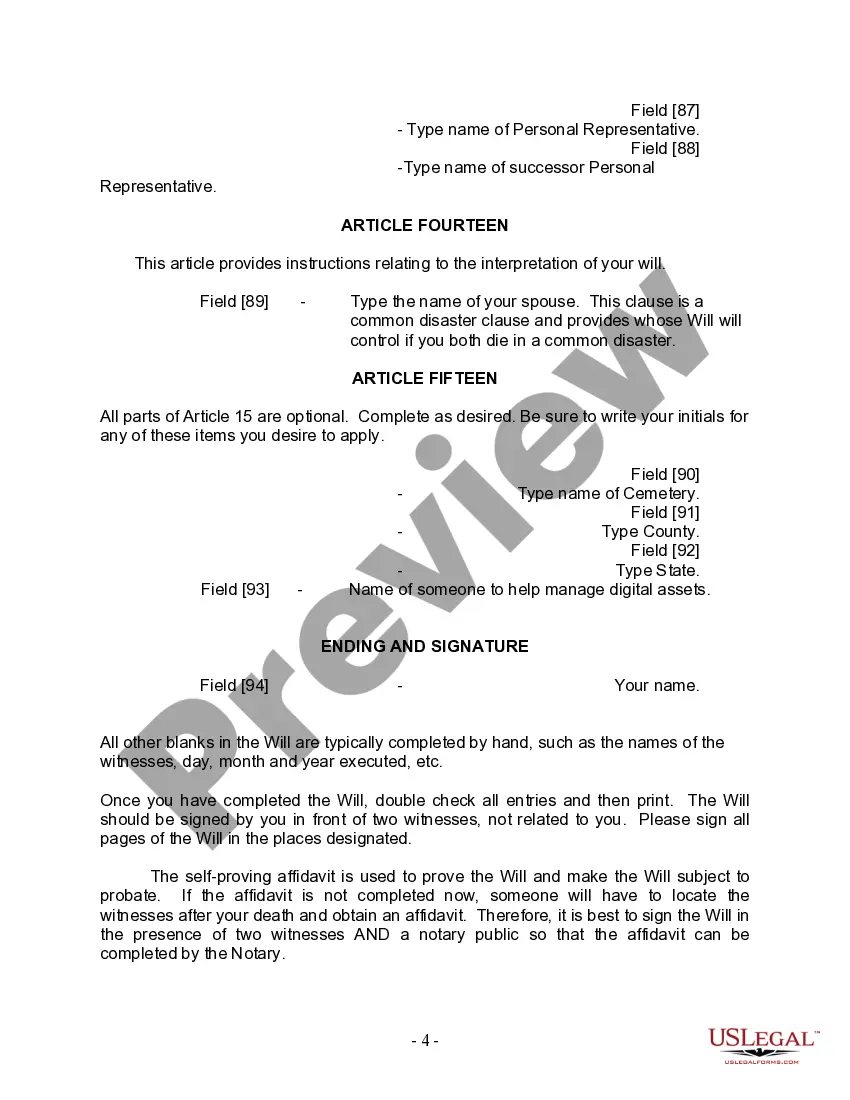
- Sign the will in the presence of two witnesses and a notary public to validate it.
Is notarization required?
Yes, this form must be notarized to be legally valid. To streamline this process, US Legal Forms offers integrated online notarization services, ensuring secure video calls and compliance with legal standards without the need for travel.
Get your form ready online
Our built-in tools help you complete, sign, share, and store your documents in one place.
Make edits, fill in missing information, and update formatting in US Legal Forms—just like you would in MS Word.
Download a copy, print it, send it by email, or mail it via USPS—whatever works best for your next step.
Sign and collect signatures with our SignNow integration. Send to multiple recipients, set reminders, and more. Go Premium to unlock E-Sign.
If this form requires notarization, complete it online through a secure video call—no need to meet a notary in person or wait for an appointment.
We protect your documents and personal data by following strict security and privacy standards.

Make edits, fill in missing information, and update formatting in US Legal Forms—just like you would in MS Word.

Download a copy, print it, send it by email, or mail it via USPS—whatever works best for your next step.

Sign and collect signatures with our SignNow integration. Send to multiple recipients, set reminders, and more. Go Premium to unlock E-Sign.

If this form requires notarization, complete it online through a secure video call—no need to meet a notary in person or wait for an appointment.

We protect your documents and personal data by following strict security and privacy standards.
Avoid these common issues
Common Mistakes to Avoid
- Failing to include all children from previous and current marriages.
- Not updating the will after major life changes, such as divorce or the birth of additional children.
- Neglecting to have the will signed and witnessed properly, which can lead to legal challenges.
Benefits of completing this form online
Benefits of Using This Form Online
- Convenience of completing the will from home, at your own pace.
- Editability allows for easy updates and changes as family circumstances evolve.
- Reliability of attorney-drafted templates that reflect current legal standards.
Looking for another form?
Form popularity
FAQ
Bank accounts. Brokerage or investment accounts. Retirement accounts and pension plans. A life insurance policy.
Make your own will: You can make your own will but you must make sure that it's valid. A will is a legal document so it needs to be written and signed correctly. If you decide to make your own will, it's best to seek advice first.
No, in Vermont, you do not need to notarize your will to make it legal. However, Vermont allows you to make your will "self-proving" and you'll need to go to a notary if you want to do that. A self-proving will speeds up probate because the court can accept the will without contacting the witnesses who signed it.
Create the initial document. Start by titling the document Last Will and Testament" and including your full legal name and address. Designate an executor. Appoint a guardian. Name the beneficiaries. Designate the assets. Ask witnesses to sign your will. Store your will in a safe place.
Find an online template or service. Make a list of your assets. Be specific about who gets what. If you have minor children, choose a guardian. Give instructions for your pet. Choose an executor. Name a 'residuary beneficiary' List your funeral preferences.
A list of your assets such as property, bank accounts, superannuation and investments. the names and addresses of your beneficiaries (the people who'll receive your assets) if you have children under the age of 18, the name/s of whomever you'd like to appoint as their guardian(s)
The testator or person making the will must be at least 18 years of age; 2022 the testator must be of sound mind; 2022 the will must be in writing; 2022 the will must be signed by the testator or the testator's name is written by another person in the testator's presence and at the testator's express direction; 2022 the
A. You don't have to have a lawyer to create a basic will you can prepare one yourself. It must meet your state's legal requirements and should be notarized.A do-it-yourself will that's poorly drafted can save you money but create a mess for your heirs when you're gone.