Vermont Last Will and Testament for Single Person with Adult Children
What this document covers
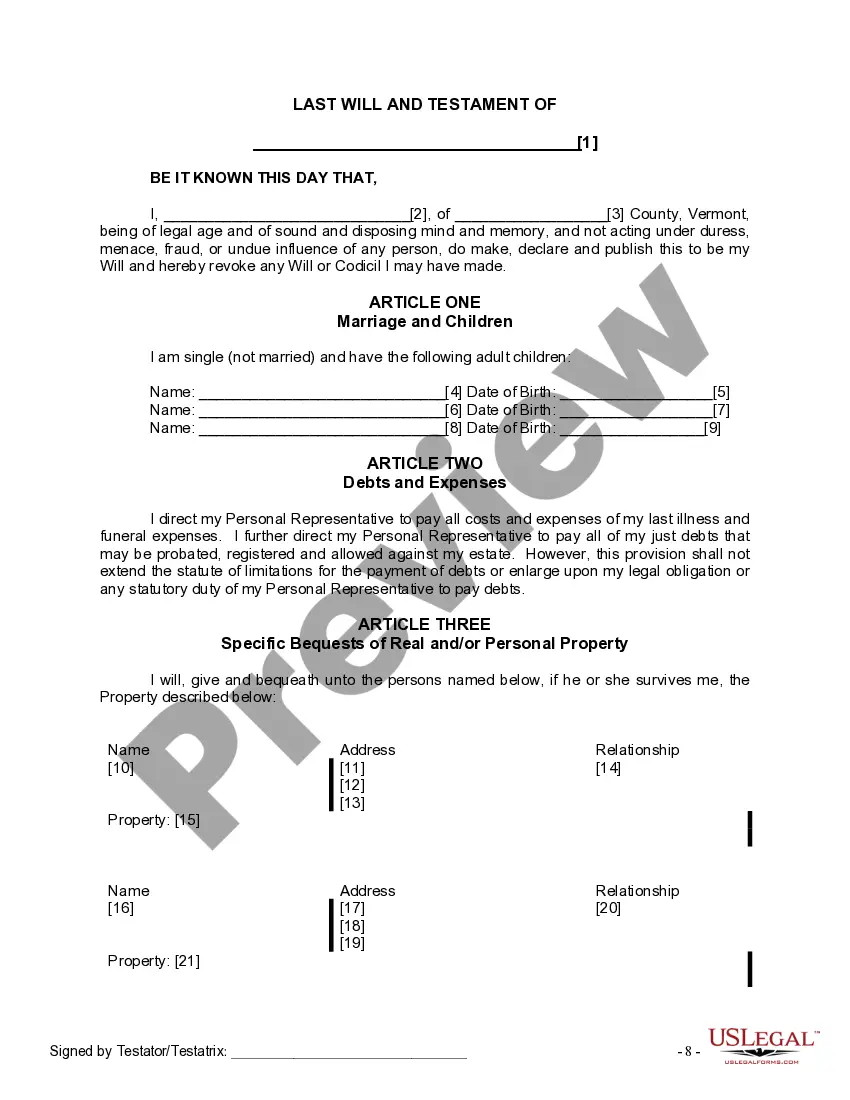
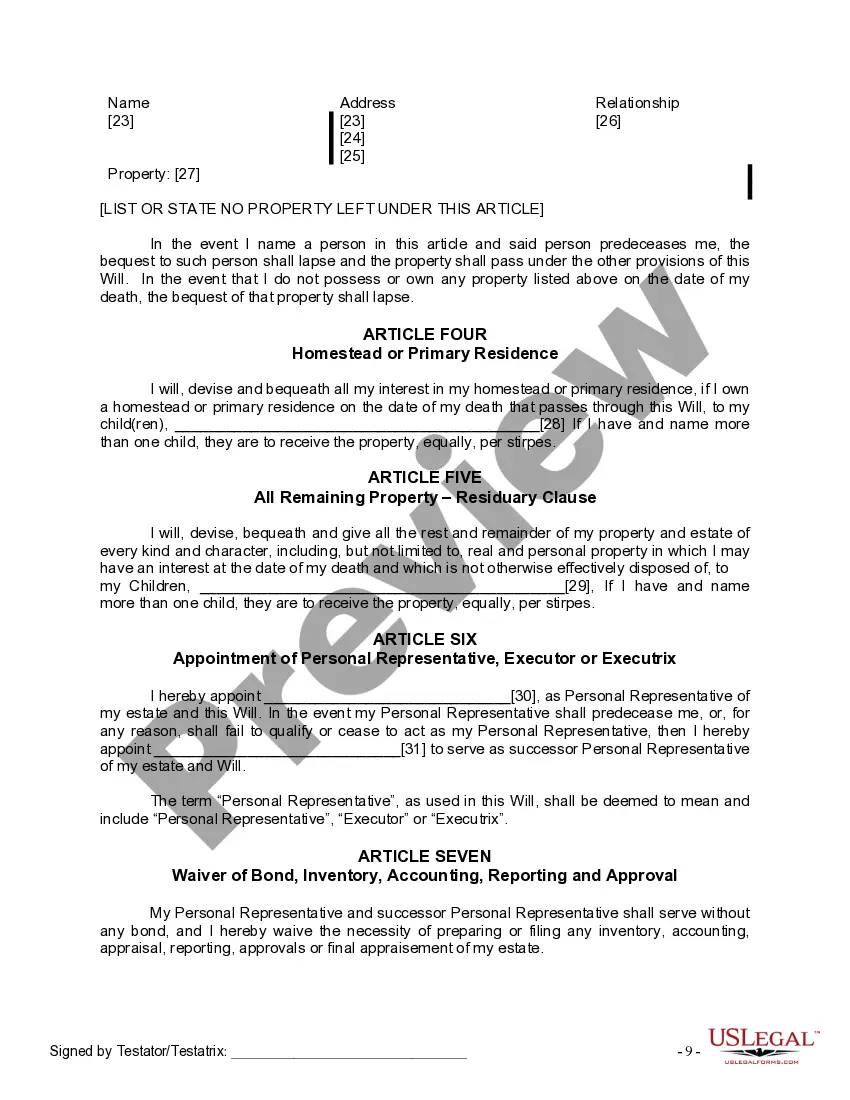
The Last Will and Testament for a Single Person with Adult Children is a legal document that outlines how a single individual wishes to distribute their property after death. This form is specifically designed for those who have never been married and have adult children. Unlike other wills, this document includes special provisions for naming a personal representative, specifying bequests, and detailing how to handle debts and expenses.
Main sections of this form
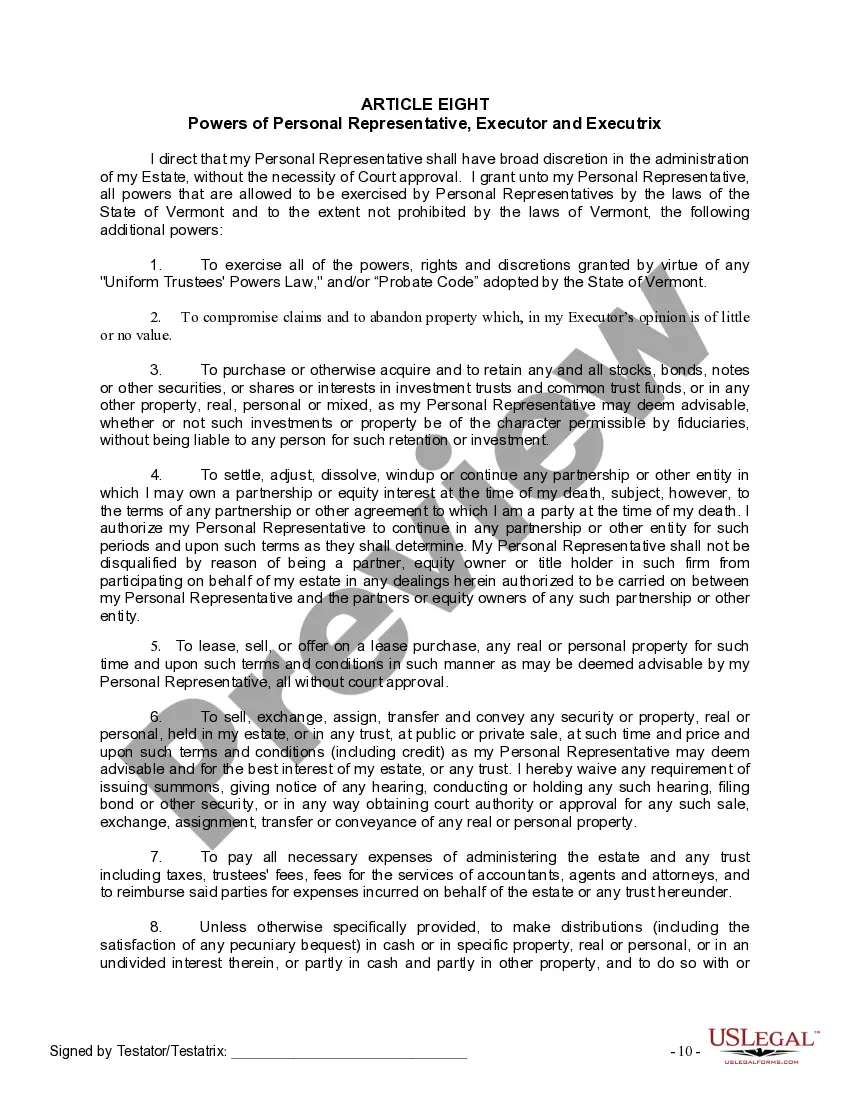
- Appointment of a personal representative or executor for estate management.
- Specification of beneficiaries, detailing who receives property.
- Directions for settling debts and estate expenses.
- Provisions for any specific bequests to designated individuals.
- Instructions for signing and witnessing the will.






Situations where this form applies
This form is essential for individuals who wish to clearly outline their wishes concerning asset distribution after their death, especially those who are single and have adult children. It is advisable to use this form if you want to minimize potential conflicts among heirs and ensure that your property will be divided according to your preferences.
Who should use this form
- Individuals who are single (never married).
- Persons with adult children who want to provide specific bequests.
- Those looking for a clear method to appoint an executor for their estate.
- Anyone wanting to take charge of their estate planning to avoid complications after death.
Instructions for completing this form
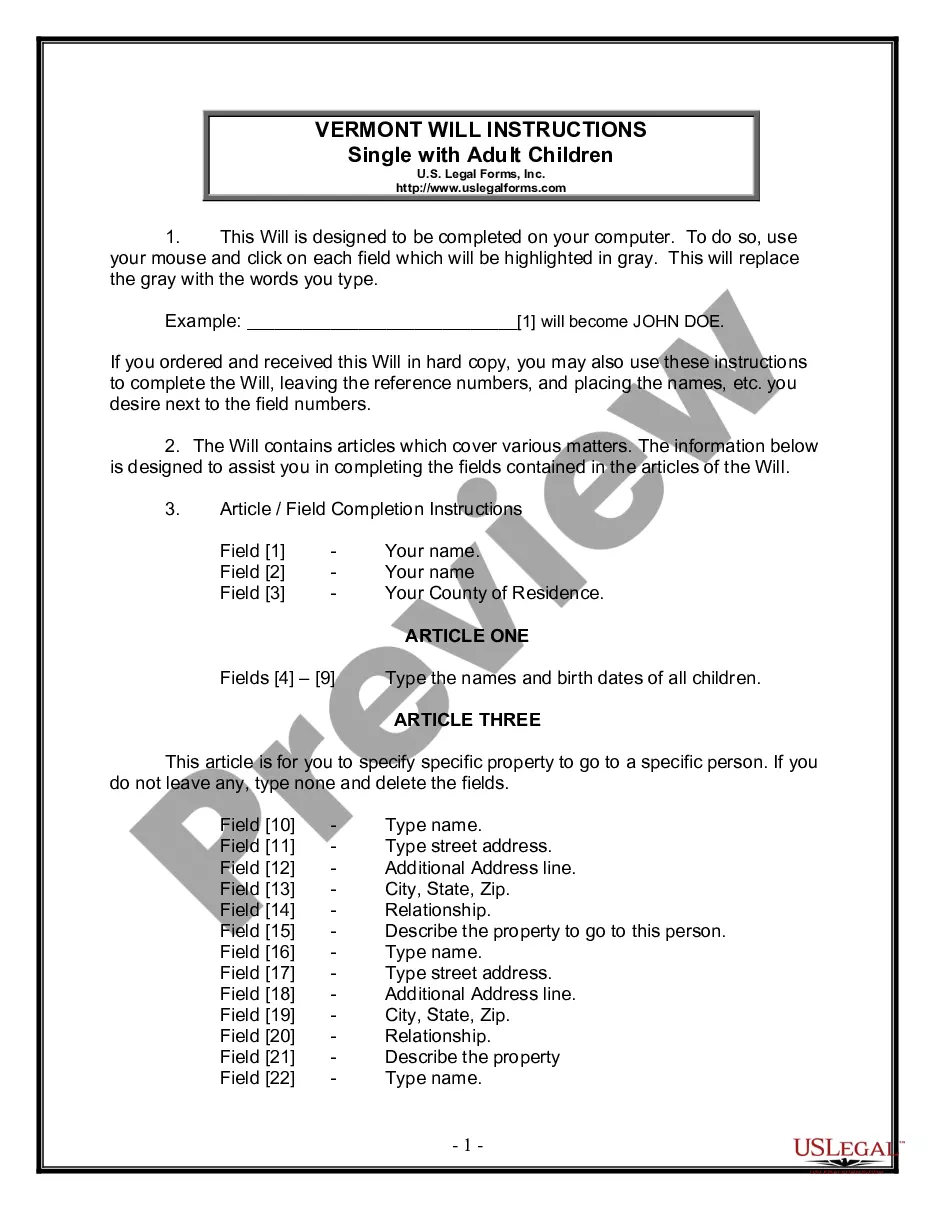
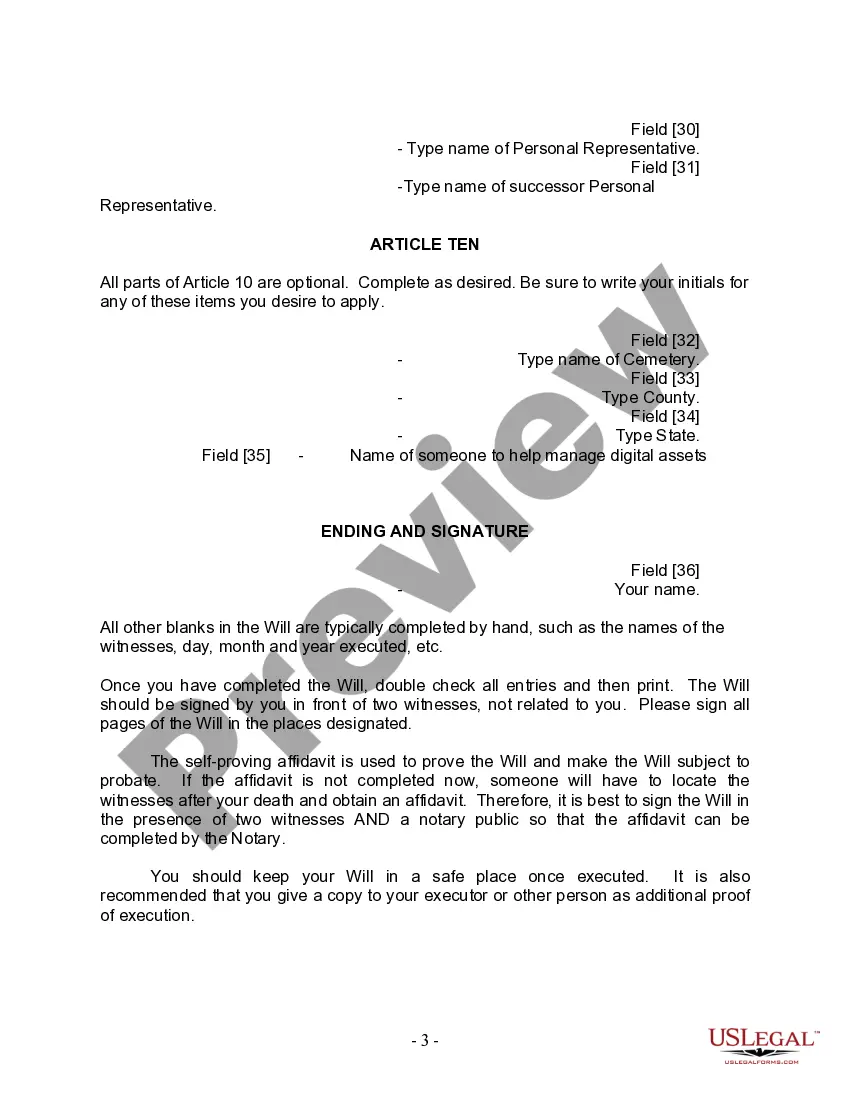
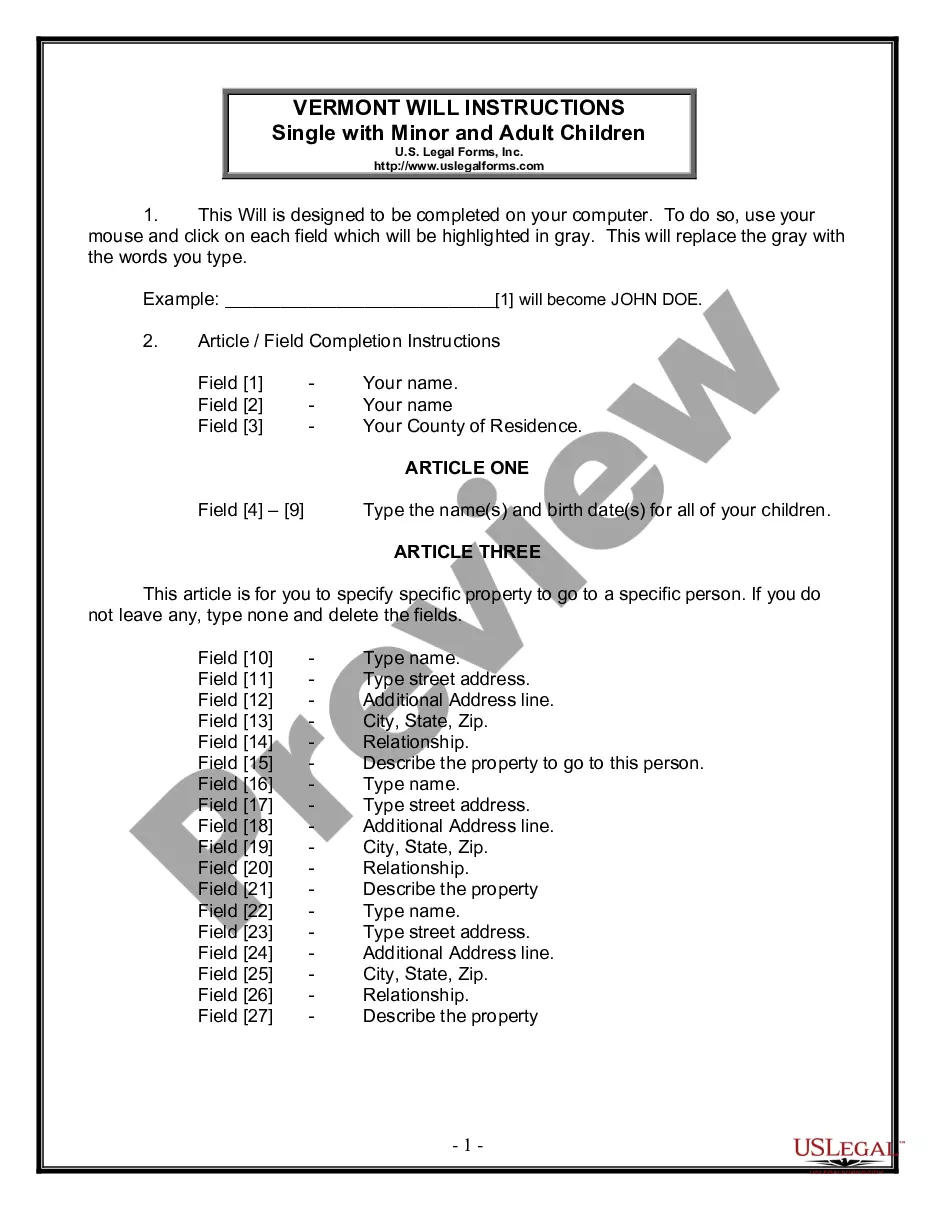
- Begin by entering your full name and county of residence.
- List the names and birth dates of all your adult children.
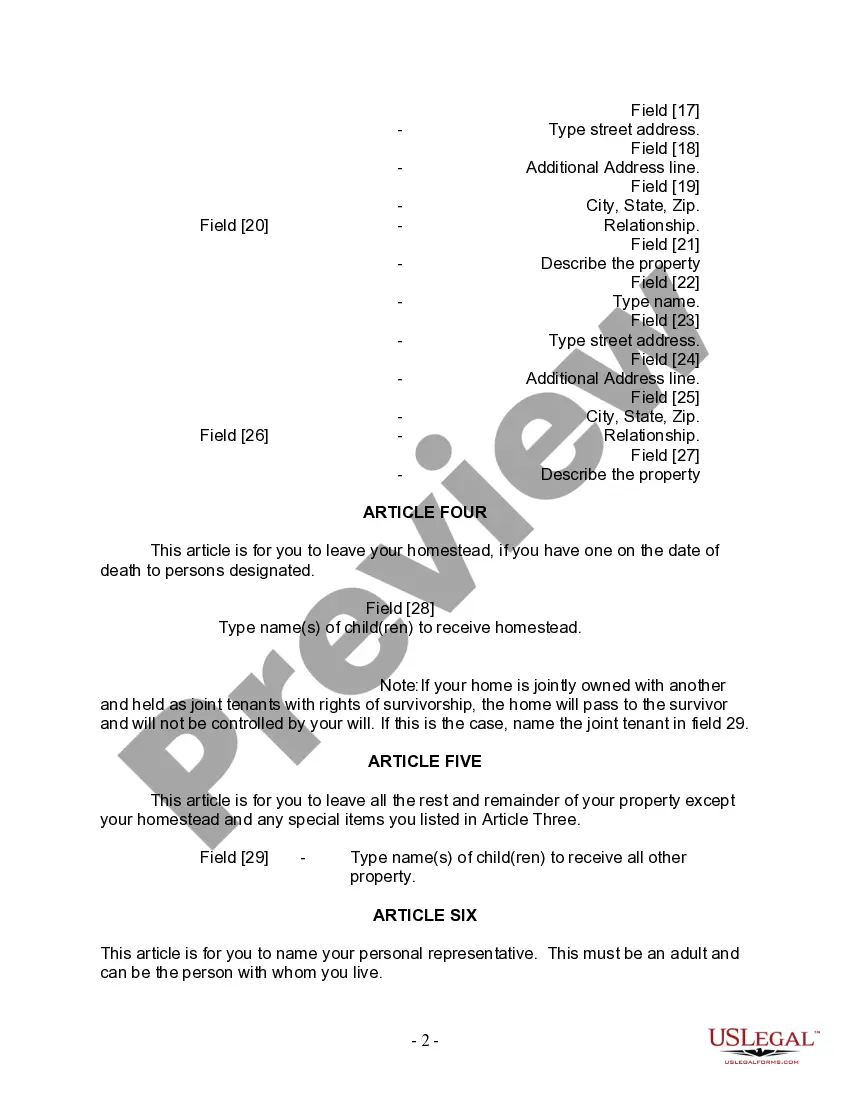
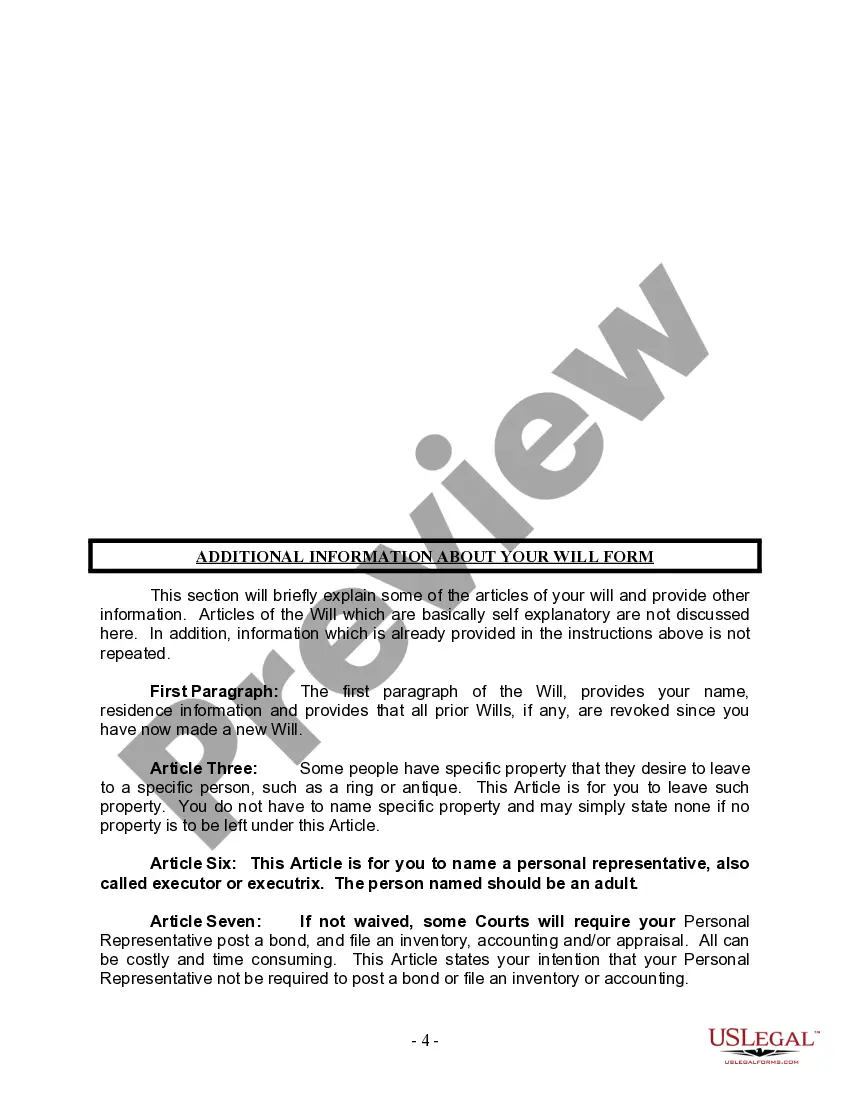
- Specify any particular items or property you wish to bequeath to individuals other than your children.
- Identify your personal representative who will manage your estate after your death.
- Ensure the will is signed in front of two witnesses who are not related to you.
Notarization guidance
Notarization is required for this form to take effect. Our online notarization service, powered by Notarize, lets you verify and sign documents remotely through an encrypted video session, available 24/7.
Get your form ready online
Our built-in tools help you complete, sign, share, and store your documents in one place.
Make edits, fill in missing information, and update formatting in US Legal Forms—just like you would in MS Word.
Download a copy, print it, send it by email, or mail it via USPS—whatever works best for your next step.
Sign and collect signatures with our SignNow integration. Send to multiple recipients, set reminders, and more. Go Premium to unlock E-Sign.
If this form requires notarization, complete it online through a secure video call—no need to meet a notary in person or wait for an appointment.
We protect your documents and personal data by following strict security and privacy standards.

Make edits, fill in missing information, and update formatting in US Legal Forms—just like you would in MS Word.

Download a copy, print it, send it by email, or mail it via USPS—whatever works best for your next step.

Sign and collect signatures with our SignNow integration. Send to multiple recipients, set reminders, and more. Go Premium to unlock E-Sign.

If this form requires notarization, complete it online through a secure video call—no need to meet a notary in person or wait for an appointment.

We protect your documents and personal data by following strict security and privacy standards.
Common mistakes
- Failing to have the will properly witnessed and notarized.
- Not updating the will after major life changes, such as the death of a beneficiary.
- Overlooking to specify alternate beneficiaries.
- Allowing relatives who are beneficiaries to serve as witnesses.
- Neglecting to provide clear instructions for specific bequests.
Benefits of using this form online
- Convenience of accessing and filling out the form from your computer.
- Editable fields allow for easy customization to fit your specific needs.
- Access to legal assistance and guidance directly through the platform if needed.
- Secured online storage minimizes the risk of losing important documents.
- Streamlined process saves time compared to traditional methods of obtaining legal forms.
Legal use & context
- A Last Will and Testament is legally enforceable upon execution according to state laws.
- This form serves as proof of your final wishes and can help reduce disputes among heirs.
- While it provides a comprehensive structure for estate distribution, it is advisable to consult a legal professional for complex estates.
- A will must be executed in accordance with specific state requirements regarding signatures and witnesses.
Main things to remember
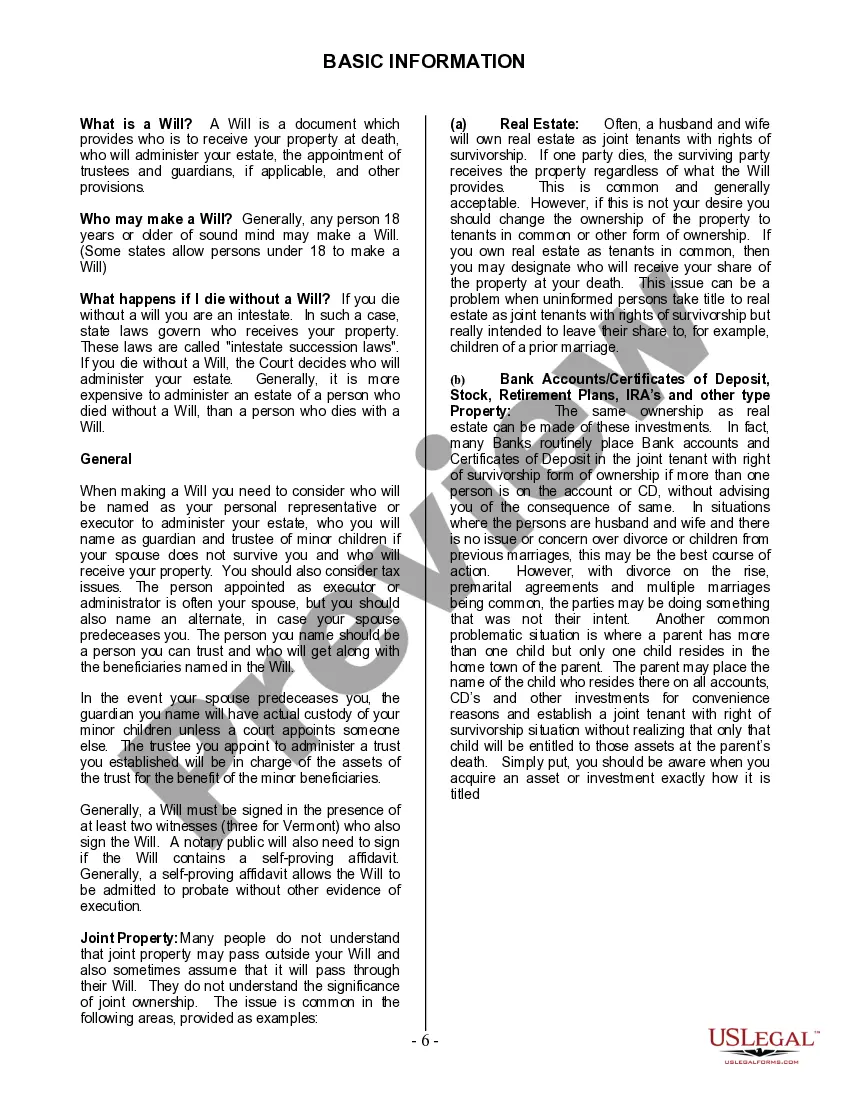
- Using a Last Will and Testament allows you to dictate how your assets are distributed after death.
- This form is tailored for singles with adult children and helps clarify intentions clearly.
- Ensure that the will is signed and witnessed according to state law for it to be valid.
- Consider updating the will as circumstances change (e.g., deaths, marriages).
Looking for another form?



Form popularity
FAQ
As long as it was properly signed and witnessed by two adult independent witnesses who are present at the time you sign your will, it should be legally binding.Using the wrong wording could mean that your instructions aren't followed, or even that your will isn't valid.
You don't have to get a lawyer to draft your will. It's perfectly legal to write your own will, and any number of products exist to help you with this, from software programs to will-writing kits to the packet of forms you can pick up at your local drugstore.
No, in Vermont, you do not need to notarize your will to make it legal. However, Vermont allows you to make your will "self-proving" and you'll need to go to a notary if you want to do that. A self-proving will speeds up probate because the court can accept the will without contacting the witnesses who signed it.
A. You don't have to have a lawyer to create a basic will you can prepare one yourself. It must meet your state's legal requirements and should be notarized.A do-it-yourself will that's poorly drafted can save you money but create a mess for your heirs when you're gone.
The testator or person making the will must be at least 18 years of age; 2022 the testator must be of sound mind; 2022 the will must be in writing; 2022 the will must be signed by the testator or the testator's name is written by another person in the testator's presence and at the testator's express direction; 2022 the
Understand the Legal Requirements in Your State. Select an Executor for Your Will. Choose Beneficiaries. Designate Guardians for Your Dependents. Be Specific about Your Wishes. Be Realistic About Distribution. Include Additional Messages in a Letter. Get Witness Signatures.
The following are the key requirements of a valid Will: It must be in writing; It must be signed by the testator; It must be attested to by witnesses.
In order for a will to be valid, it must be: made by a person who is 18 years old or over and. made voluntarily and without pressure from any other person and.signed by the two witnesses, in the presence of the person making the will, after it has been signed.
It must be in writing. Generally, of course, wills are composed on a computer and printed out. The person who made it must have signed and dated it. A will must be signed and dated by the person who made it. Two adult witnesses must have signed it. Witnesses are crucial.